
Can You Paint a Metal Exterior Door
Yes — you can paint a metal exterior door, and with proper prep it’ll look professional and resist rust for years. Clean off dirt, grease, and loose paint, sand lightly, treat any rust, then apply a metal-specific primer before two thin coats of exterior paint. Use satin or semi-gloss for durability and easy cleaning. Avoid painting in extreme temperatures or humidity. Keep going to learn step-by-step prep, product choices, and maintenance tips.
Can You Paint a Metal Exterior Door?
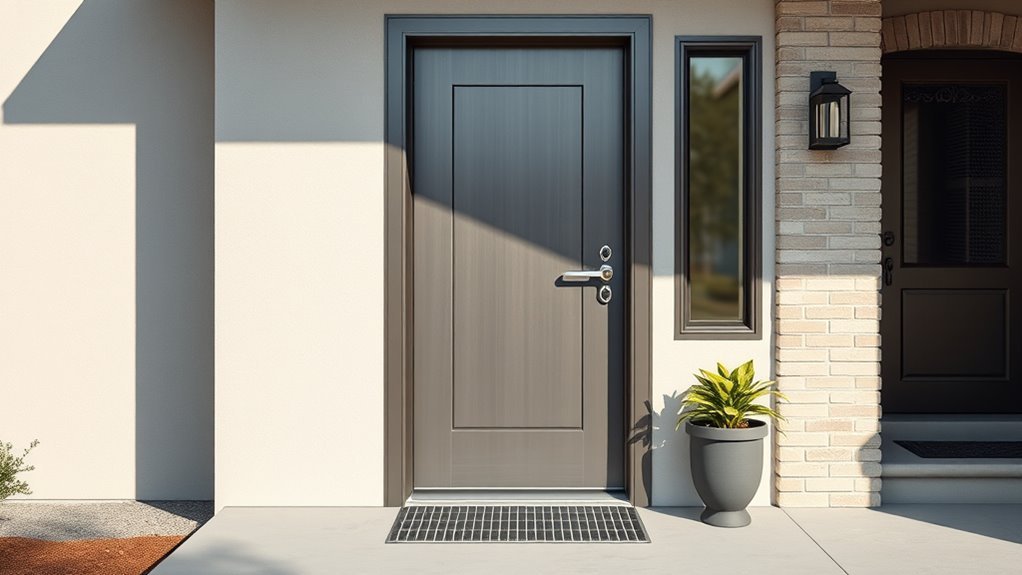
Yes — you can paint a metal exterior door, and doing so can refresh its look, protect it from rust, and extend its life.
Yes — painting a metal exterior door refreshes its look, prevents rust, and extends its lifespan.
You’ll prep surfaces, remove loose paint, and sand to guarantee adhesion. Choose a paint formulated for metal and exterior use; primers designed for galvanization or rust inhibition help.
Consider metal patterns and decorative finishes to add texture or mimic wood grain without sacrificing durability. Use smooth, even coats and allow proper drying between layers.
With thoughtful prep and the right products, you’ll achieve a long-lasting, attractive result that resists weather and wear.
Quick Step-by-Step: Paint a Metal Door in a Weekend
You can tackle a metal exterior door in a weekend by following three focused steps. First, prep and clean the surface thoroughly so paint will stick.
Then prime for adhesion and finish with the right exterior paint and sealant.
Prep And Clean
Before you paint, get the surface clean and roughen the finish so the new paint will stick. Start by removing hardware and laying drop cloths. Wash the door with a degreaser, rinse, and let it dry fully.
Sand lightly with fine-grit sandpaper or use a Scotch-Brite pad to scuff glossy areas. Wipe away dust with a tack cloth.
Inspect for rust and treat small spots with a rust remover before sanding again.
Consider color options now—darker hues show imperfections; lighter ones can hide them.
Check weather considerations: pick a dry, mild day to guarantee proper adhesion and curing.
Prime For Adhesion
Now that the door’s clean and scuffed, prime it so the paint will bond and resist rust. Choose a metal-specific bonding primer—oil-based or an acrylic adhesion primer—depending on manufacturer recommendations.
Apply a thin, even coat with a brush for edges and a foam roller for flat areas, avoiding drips. Let the primer dry fully and sand light imperfections with fine-grit paper; wipe dust away.
If you plan color matching to an existing frame or hardware, test a small primed patch before committing.
Use a primer rated for exterior use to enhance weatherproofing and long-term adhesion.
Paint And Finish
Once the primer’s cured and any sanding dust is wiped away, you’ll be ready to paint the door in a single weekend by working methodically from edges to flat panels. Start with a brush for crevices, then roll broad surfaces with light, even passes to avoid drips.
Apply two thin coats, allowing proper dry time between. Choose a sheen suitable for weather resistance and consider color psychology—pick tones that welcome guests and complement your home.
Finish with a clear, exterior-grade topcoat for durability. Use eco-friendly paints to reduce VOCs and maintain appearance without sacrificing performance or safety.
When Should You Repaint a Metal Exterior Door?
If your metal exterior door shows peeling paint, rust spots, or faded color, it’s time to repaint it to protect the metal and restore curb appeal.
You should also repaint when scratches expose bare metal, after repairs, or if the finish no longer repels water.
Check weather considerations: paint on a dry, mild day (ideally 50–85°F) and avoid high humidity or direct sun.
Repaint when the current coat fails adhesion or you want a new look—choose durable color options suited to exterior exposure.
Regularly inspect annually; addressing problems early prevents corrosion and costly replacement.
What Types of Metal Doors Can Be Painted?
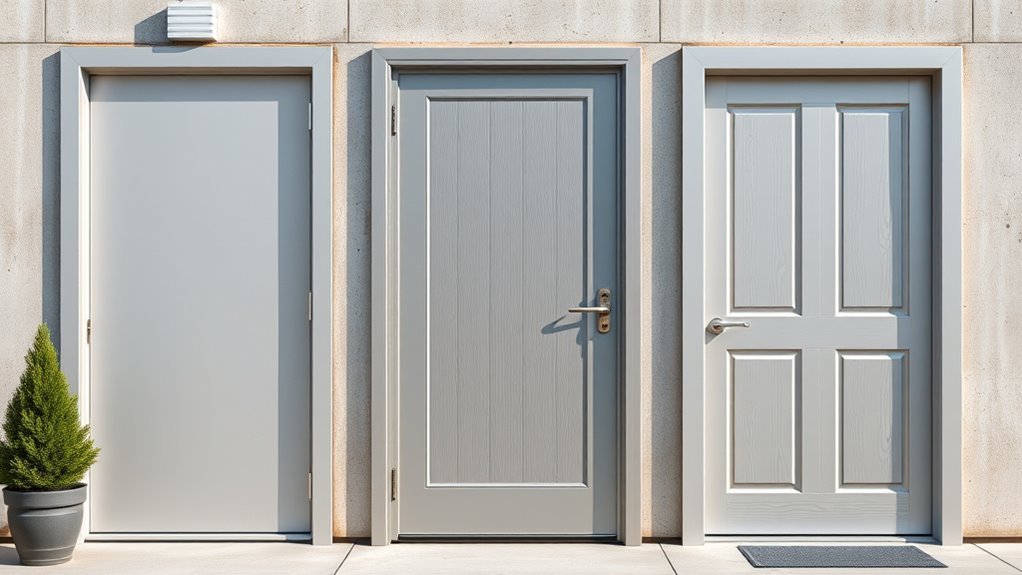
You’ll find most common metal exterior doors can be painted, but the approach varies by material. Steel exterior doors take paint well after proper prep.
While aluminum entry doors need a primer that bonds to non-ferrous metal.
Fiberglass-clad doors with metal frames can also be painted, though you’ll want products suited to both surfaces.
Steel Exterior Doors
Curious which steel exterior doors you can paint? You can confidently repaint smooth, primed steel doors, factory-coated panels, and molded designs if you remove rust, clean thoroughly, and use proper primer and exterior paint.
Decorative accents like faux panels or raised trim need gentle prep so you don’t damage detail. For historical restoration projects, match period-appropriate colors and finishes, and use rust-inhibiting primers to protect original steel.
Avoid painting where factory warranties prohibit it or where severe corrosion has compromised the metal. When done right, painting extends life, refreshes curb appeal, and preserves steel doors for years.
Aluminum Entry Doors
Although aluminum doors resist rust, you can still paint them to change color or refresh faded finishes—provided you prep properly. You’ll remove loose finish, clean oils, and lightly sand to scuff smooth factory coatings.
Use an etching primer formulated for aluminum, then apply exterior acrylic or oil-based paint compatible with the primer. Mask metal accents and remove or protect door hardware to avoid overspray.
Thin, multiple coats give better adhesion and durability than one thick coat. Allow proper drying between coats and cure time before rehanging handles or weatherstripping.
Painted aluminum performs well when prep and product choices match substrate needs.
Fiberglass-Clad Metal Frames
When a metal door is clad in fiberglass, you can usually paint the outer skin without affecting the underlying metal, but you’ll need to confirm the cladding type and manufacturer’s recommendations first.
You’ll inspect the fiberglass for existing coatings, seams, and any molded metal textures that might show through. Light sanding and a primer designed for nonporous surfaces improve adhesion and paint durability.
Use exterior acrylic or urethane topcoats for weather resistance. Avoid strong solvents that could damage the cladding.
If the maker warns against painting, follow that guidance to preserve warranties and long-term performance.
How to Choose the Right Paint for a Metal Exterior Door
Because metal doors face weather, abrasion, and temperature shifts, you’ll want paint that bonds well and resists rust, fading, and chipping. Choose coatings labeled for exterior metal and follow manufacturer prep recommendations.
Because metal doors endure weather and wear, use exterior-grade paint that bonds, resists rust, fading, and chipping.
Pick a finish—satin or semi-gloss—that hides imperfections and sheds water.
Consider color trends for curb appeal and heat reflection; darker shades absorb more heat while lighter tones keep surfaces cooler.
Look for rust-inhibiting primers and topcoats compatible with your door’s factory finish.
If sustainability matters, seek eco-friendly paints with low VOCs and strong durability ratings.
Test a small area before committing to a full coat.
Oil-Based vs. Latex Paint: Which to Choose?
Now that you’ve picked a paint formulated for exterior metal, choose between oil-based and latex coatings—each has strengths depending on durability, feel, and maintenance.
You’ll find oil-based gives a hard, glossy finish that resists wear and cleans easily, ideal if you want fewer touch-ups.
Latex dries faster, has less odor, and offers more color options with easier cleanup.
For coastal or extreme temperature zones, weigh weather considerations: oil tolerates heat and abrasion, latex flexes with temperature swings and resists cracking.
Pick based on local climate, desired sheen, and how often you’re willing to maintain the door.
Do You Need a Primer: And Which One for Metal Doors?
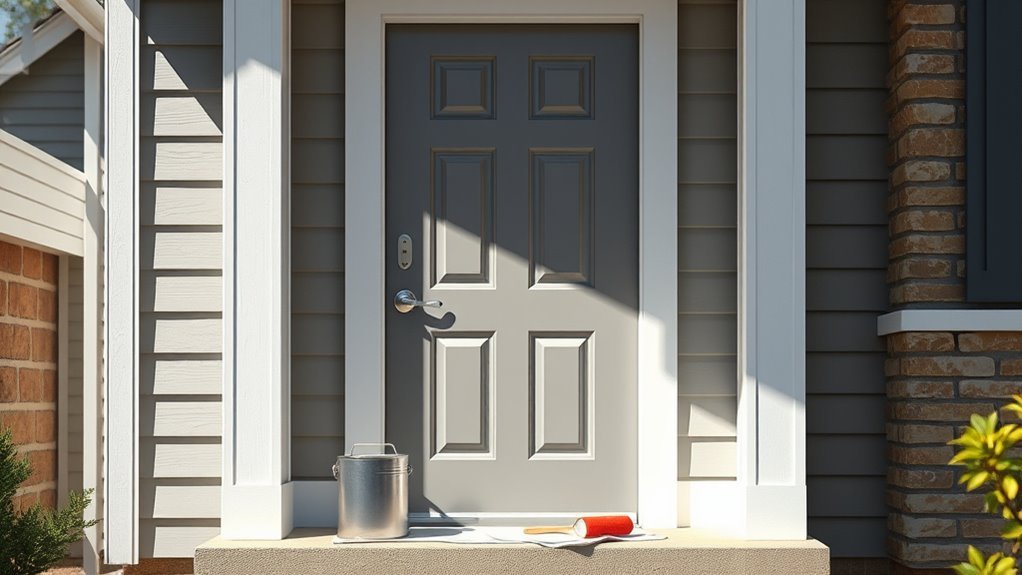
If your metal exterior door has bare spots, rust, or old peeling paint, you should prime it before applying the topcoat; use a rust-inhibiting primer for bare metal and galvanized primers where needed. You’ll remove or mask door hardware, keep paint storage containers sealed, and choose products compatible with your topcoat (oil or latex). Apply thin even coats, allow full cure, and sand lightly between coats for adhesion. Primer boosts durability and prevents stains from bleeding through.
| Primer Type | Best For | Notes |
|---|---|---|
| Oil-based | Bare metal | Strong adhesion |
| Rust-inhibitor | Rust-prone areas | Corrosion protection |
How to Remove Rust From a Metal Exterior Door
How do you get rust off a metal exterior door without damaging the surface? You’ll scrub loose rust with a wire brush, then sand gently with fine-grit paper until smooth.
Scrub loose rust with a wire brush, then sand gently with fine-grit paper until the surface is smooth.
Wipe the area with a damp cloth, then clean using a mild degreaser or vinegar solution to remove residues. Rinse and dry thoroughly to prevent flash rusting.
Treat stubborn spots with a rust converter following product instructions.
Once stable and clean, prime and paint to match your door—this keeps outdoor styling like garden decor cohesive and protects interior accents near the entry from moisture and corrosion.
How to Strip Flaky or Lead Paint From a Metal Door
After removing rust and prepping the surface, you’ll often find old paint peeling or discover it contains lead — both require careful stripping before repainting. You should test for lead, remove door hardware or mask it, work outdoors or in a ventilated area, and use a chemical stripper labeled for metal or a heat gun with a scraper.
Collect debris in sealed bags, wet-sand remaining flakes, and avoid dry scraping that creates dust. Once bare, rinse and neutralize stripper residue.
Then choose your primer and paint color, reinstall door hardware, and proceed to repaint with safe practices.
- Test for lead first
- Remove or mask door hardware
- Use chemical stripper or heat gun
- Wet-sand and bag debris
- Neutralize residue before priming
How to Clean a Metal Exterior Door for Paint Adhesion
Start by removing loose dirt, cobwebs, and debris with a stiff brush or soapy water so the surface’s ready for further prep.
Use a solvent-based degreaser to cut through oils and fingerprints, then rinse and let the door dry completely.
Lightly sand any remaining rough spots or gloss, and wipe the door with a tack cloth or clean rag before priming or painting.
Remove Dirt And Debris
Before you paint, you need to remove dirt, dust, and loose particles so the new finish will stick and look smooth. Start by brushing the surface and edges, paying attention around door hardware and seals used in weatherproofing techniques. Use a soft broom or nylon brush, then rinse with a gentle spray.
Check gaps and the threshold for trapped grit.
- Sweep loose dust with a brush
- Vacuum crevices around hardware
- Wipe down with a damp microfiber cloth
- Rinse off remaining residue with low-pressure water
Allow the door to dry fully before proceeding.
Degrease With Solvent
Now degreasing is essential because oils, grease, and waxes from hands, lubricants, or environmental deposits will keep paint from bonding to metal.
You’ll work outdoors or in a ventilated area, wearing gloves and eye protection. Apply a solvent-based degreaser or tris substitute on a clean cloth or brush, targeting door panels, edges, and any decorative accents where grime hides.
Wipe methodically, changing cloths as they soil, and avoid pooling solvent near weatherstripping. For metallic finishes, use a product safe for metal to prevent discoloration.
Let the surface fully evaporate before proceeding to sanding or priming.
Sand And Wipe Clean
Once the solvent has fully evaporated, sand the door to give paint a profile it can grip. Use 120–220 grit for dulling gloss, then wipe with a lint-free cloth dampened with mineral spirits. You’ll remove dust, residual oils, and particles that stop adhesion.
Sanding also helps with future color matching by ensuring smooth, even coverage. After wiping, let the door dry completely before priming to preserve weatherproofing.
Follow these quick checks:
- Inspect for missed glossy spots
- Remove grit from hardware crevices
- Use tack cloth for final pass
- Test a primer patch
- Confirm hinge alignment
How to Repair Dents and Surface Imperfections on Doors
When you notice dents or surface flaws on a metal exterior door, you can restore a smooth, paint-ready finish with a few straightforward repairs. Start by removing loose paint and cleaning the area; keep door hardware protected and the room ventilated to avoid paint fumes buildup.
For shallow dents, sand and apply a thin layer of metal-repair filler, let it cure, then sand flush.
For deeper damage, use body filler in layers, shaping each as it hardens.
Prime repaired spots with a rust-inhibiting metal primer.
Lightly sand the primer before painting for a seamless, durable finish.
How to Protect Glass, Hardware, and Weatherstripping
How do you keep glass, hardware, and weatherstripping safe while you prep and paint a metal exterior door? You’ll mask glass with painter’s tape and plastic sheeting, remove or cover hardware, and shield weatherstripping so paint won’t gum it.
Consider decorative techniques or historical styles when planning masking lines so protected areas match the final look.
- Use low-tack painter’s tape for glass edges.
- Cover knobs, hinges, and deadbolts with plastic wrap.
- Remove strike plates if possible.
- Protect weatherstripping with foam and tape.
- Label removed pieces for easy reassembly.
Tools and Materials You Need to Paint a Metal Door
Before you start, gather the essential painting tools like brushes, rollers, and a paint tray so you won’t stop midway.
You’ll also need surface-prep materials—sandpaper, a degreaser, and tack cloth—to guarantee the paint sticks.
Finally, pick a metal-appropriate primer and exterior paint formulated for rust resistance and weather exposure.
Essential Painting Tools
Although prepping and painting a metal exterior door isn’t complicated, having the right tools makes the job faster and the finish more durable. You’ll choose brushes, rollers, and a sprayer that suit Creative color schemes or Historical design influences you want to achieve.
Pick quality items to avoid streaks, runs, or missed spots.
- High-quality synthetic brush for trim and edges
- Short-nap roller for smooth metal surfaces
- HVLP or airless sprayer for even coverage
- Fine-grit sanding block for feathering and smoothing
- Painter’s tape and drop cloths to protect surrounding areas
Surface Prep Materials
When you prep a metal door for paint, having the right surface-prep materials saves time and prevents adhesion problems down the line. Gather a sanding block or orbital sander with 120–220 grit paper, wire brush for rust, solvent-safe rags, and a rust converter if needed.
Use a mild detergent or trisodium phosphate substitute to degrease, then rinse and dry thoroughly.
Mask edges with quality painter’s tape and protect hardware with plastic sheeting.
Keep a small scraper and putty for dents.
These steps help achieve accurate color matching later and improve paint durability by creating a clean, keyed surface.
Paints And Primers
If you want your paint to stick and last, choose the right primer and paint for metal: a rust-inhibiting bonding primer (oil- or solvent-based for bare steel, or a metal-specific acrylic for galvanized surfaces) plus a durable exterior enamel or acrylic latex topcoat formulated for metal.
Pick products rated for exterior use and compatible with each other. Consider finish and color matching to existing trim.
Some paints help with noise reduction by adding a slight dampening layer.
Gather brushes, rollers, sandpaper, tack cloth, and a respirator.
Test a small patch first to confirm adhesion and true color.
- Bonding primer
- Metal-specific topcoat
- Brushes/rollers
- Sandpaper/tack cloth
- Respirator
Which Paint Finish Lasts Longest on Exterior Metal Doors?
Because your door faces weather and wear, choosing the right paint finish matters for durability and maintenance. You’ll want a satin or semi-gloss for exterior metal doors: both resist moisture, clean easily, and show fewer surface imperfections than flat paints.
Because exterior metal doors face weather and wear, choose satin or semi-gloss for durability, moisture resistance, and easy cleaning.
Semi-gloss offers slightly better paint durability and stands up to scrubbing, while satin gives a softer look with good resilience.
Consider your home’s style when color matching; sheen affects perceived hue. Avoid high-gloss unless you like showy reflections and worry about scratches.
Proper surface prep and quality exterior paint are still essential for long-lasting results.
How to Prime a Metal Exterior Door Correctly
Before you prime, you’ll need to clean the door thoroughly—wash off dirt, grease, and loose paint with a degreaser and scuff the surface for adhesion.
Treat any rust by sanding to bare metal, applying a rust converter if needed, and wiping away residue.
Then apply a metal-specific primer in thin, even coats, following drying times and sanding between coats when recommended.
Surface Cleaning Steps
When you’re prepping a metal exterior door for primer, thorough surface cleaning is essential to guarantee adhesion and a smooth finish. Remove loose dirt, oils, and residues so primer and weatherproof coatings bond properly. Take off or mask decorative hardware to avoid overspray. Follow this quick, effective routine:
- Wipe with a degreasing cleaner and a microfiber cloth.
- Rinse with clean water and dry completely to prevent trapped moisture.
- Use a household detergent for stubborn grime, then rinse.
- Lightly scuff glossy areas with fine-grit sandpaper for better grip.
- Vacuum or tack cloth to eliminate dust before priming.
Rust Treatment Methods
If rust’s present, don’t skip treating it—you’ll need a clean, stable surface so primer can lock on and prevent future corrosion. You’ll remove loose scale with a wire brush or sandpaper, neutralize remaining rust with a converter, and wipe residue clean. For Rust prevention, apply a metal-compatible primer before finishing. Choose products rated for outdoor Metal coating and mild salt exposure. Inspect seams and hardware, replace badly pitted areas, and let all treatments cure fully before continuing.
| Step | Purpose |
|---|---|
| Wire brush/sand | Remove loose rust |
| Rust converter | Neutralize oxidation |
| Clean/wipe | Remove debris |
| Inspect/repair | Ensure long-term protection |
Proper Primer Application
Since a proper primer bonds the paint and prevents corrosion, you’ll want to apply it evenly and sparingly to clean, dry metal using the right tools and technique. Prep by doing hardware removal, sanding glossy spots, and wiping with solvent.
Choose a metal-compatible, rust-inhibiting primer and consider color matching if you’re tinting primer to reduce topcoat layers.
- Use a quality brush or short-nap roller for flat areas.
- Thin only as manufacturer permits to avoid runs.
- Work in thin, overlapping coats for full coverage.
- Let recommended flash time elapse between coats.
- Inspect for drips, sand lightly, then topcoat.
Brush and Roller: How to Paint a Metal Door Step‑By‑Step
Although painting a metal exterior door looks straightforward, you’ll get the best, longest‑lasting results by following a clear brush-and-roller method.
Begin by ensuring primer is dry and clean; choose color options suitable for your home and climate. Tape edges and protect hardware.
Use a high-quality angled brush for corners and a short-nap roller for flat panels, working top to bottom. Apply thin, even coats, allowing recommended dry time between layers.
Check weather considerations—avoid painting in high humidity or extreme temperatures. Lightly sand between coats if needed, remove tape while paint is tacky, and reinstall hardware once fully cured.
Spray Painting a Metal Exterior Door Like a Pro
When you want a smooth, factory‑finish look quickly, spray painting a metal exterior door is the best option—just plan and prep carefully. You’ll clean, sand, and mask, choose a primer and spray paint suited for metal, and pick color options that complement your home.
Mind weather considerations: avoid high humidity, wind, or temps outside manufacturer recommendations. Spray in even passes, keep a wet edge, and apply multiple thin coats for durability.
- Prep thoroughly: clean, sand, degrease
- Mask edges and hardware
- Use metal primer
- Keep consistent distance and speed
- Allow proper cure time
How to Paint Powder-Coated and Galvanized Metal Doors
Spray painting gives great results on bare or previously painted metal, but powder-coated and galvanized doors need special handling to make new paint stick. Start by cleaning with a degreaser, rinse thoroughly, and sand lightly with fine-grit to scuff the surface.
Use a metal etching primer formulated for galvanized or powder-coated finishes; apply thin, even coats. Choose paints rated for exterior metal to maintain weather resistance and explore color options that complement your home.
Allow full cure between coats, avoid thick layers, and finish with a clear topcoat if desired to boost durability and maintain a smooth, uniform appearance.
Painting in Cold or Humid Weather: Best Practices
If you’re tackling exterior door painting in cold or humid conditions, plan carefully because temperature and moisture directly affect adhesion and drying. Pick products rated for lower temps, work during the warmest, driest part of the day, and keep surfaces clean and bone-dry before you start.
You’ll manage weather considerations and maximize paint durability by choosing fast-curing formulations and monitoring humidity. Use a heater or dehumidifier if needed, avoid condensation, and follow manufacturer limits. Keep tools and paint warm.
Drying may slow, so inspect for tackiness before exposing to elements.
- Check product temperature range
- Wipe and let fully dry
- Use high-quality primer
- Control humidity nearby
- Store paint warm
How Long to Wait Between Coats and Before Reattaching Hardware
Once the surface feels dry to the touch and you’ve confirmed there’s no overnight condensation, plan your recoat and hardware timing around the manufacturer’s recommended dry and recoat times rather than guessing.
Once the surface is dry and condensation-free, follow the manufacturer’s recommended dry and recoat times—not guesses.
Check ambient temperature and humidity—weather conditions affect cure speed, so allow longer waits in cool or humid settings.
Light recoat windows often run 2–4 hours; full cure can take 24–72 hours or more.
Keep paint stored per label to preserve solvents and additives; improper paint storage shortens workable life.
Only reattach locks, hinges, and handles after full cure to avoid sticking, scuffing, or finish failure.
Common Painting Mistakes on Metal Doors: And How to Avoid Them
Don’t skip proper surface prep—you’ll end up with peeling or uneven paint.
Choose paint formulated for metal and exterior use, or you’ll regret the finish and durability.
And be patient: not allowing enough drying time between coats causes tacky, flawed results.
Poor Surface Preparation
Because metal shows every scratch and imperfection, skipping proper surface prep is the quickest way to ruin a paint job—adhesion fails, rust returns, and the finish peels. You need to clean, sand, and treat bare spots so surface durability improves and paint compatibility is assured. Missing steps wastes time and materials.
- Remove rust with a wire brush and rust converter.
- Degrease with a solvent-safe cleaner.
- Sand glossy finishes to create tooth.
- Fill dents and smooth with metal-approved filler.
- Wipe dust away with a tack cloth before priming.
Do each step, and your paint will last.
Wrong Paint Choice
Why pick the wrong paint when the right one makes the job last? You’ll want paint formulated for metal surfaces—no house latex or interior gloss that chips or peels. Choose a product rated for exterior metal to preserve metal door aesthetics and provide lasting weather resistance.
Use rust-inhibiting primers with compatible topcoats, and match finish levels to hide imperfections without sacrificing durability. Pay attention to manufacturer instructions and compatibility charts so coats bond properly.
Pick oil-based or high-quality acrylic enamel designed for metal; that choice prevents premature failure and keeps your door looking smart while standing up to the elements.
Inadequate Drying Time
Picking the right paint and primer only gets you part of the way; if you rush coats or ignore recommended drying windows you’ll invite runs, blushing, and poor adhesion that undo all that careful prep.
You’ll also risk trapping moisture under paint around vintage hardware or decorative accents, causing peeling later. Let each coat fully cure per manufacturer guidance, watch humidity and temperature, and gently test tack before the next layer.
Plan for longer drying in cool or damp weather.
- Wait recommended recoat time, not “when it feels dry”
- Check humidity and temperature
- Remove or mask vintage hardware
- Use thin, even coats
- Test adhesion before finishing
Tips to Achieve a Smooth, Brushstroke‑Free Finish
When you want a sleek, factory-like look on a metal exterior door, the key is controlling paint thickness, brush marks, and drying conditions. Start with a thin, even coat, hold the brush or roller at a consistent angle, and work in long, continuous strokes to minimize overlap and ridges.
Sand lightly between coats with fine-grit paper, wipe dust, and use a tack cloth.
Use a high-density foam roller for smooth coverage and avoid overworking edges.
For accents, plan color matching and decorative stencils before painting.
Spray application gives the most uniform result if you can control overspray and ventilation.
How to Maintain and Touch Up a Painted Metal Door
If you want your painted metal door to keep looking fresh, do a quick inspection every few months and after harsh weather so you can catch chips, rust, or peeling early.
Wipe dirt with mild soap and water, dry thoroughly, and sand tiny rough spots lightly.
Use matching touch-up paint from the original can or a small brush-matched sample.
Keep hardware tight and lubricated so scratches don’t spread.
Keep door hardware snug and oiled to prevent movement-caused scratches and preserve your finish.
Treat the threshold and edges gently to protect your finish and coordinate with garden decor or interior accents for a cohesive look.
- Clean spills promptly
- Sand and prime bare metal
- Apply thin touch-up coats
- Blend edges smoothly
- Recheck monthly
How to Prevent Rust: Coatings, Sealants, and Maintenance Schedule
Before you paint, you’ll want to prep the door by removing rust, cleaning the surface, and using a primer made for metal.
Choose a protective topcoat or sealant—like oil-based enamel, epoxy, or a clear polyurethane—based on exposure and finish preference.
Then set a simple maintenance schedule for inspections, touch-ups, and cleaning to catch corrosion early.
Surface Preparation Essentials
Although metal doors resist wear, you’ll still need to stop rust at its start by prepping the surface correctly. You clean, remove flaking, and feather edges so coatings bond and color matching stays true; proper prep boosts paint durability. Sanding, degreasing, and priming gaps or scratches prevents moisture traps.
Follow a maintenance schedule: inspect seasonally and touch up chips promptly to avoid corrosion spread.
- Scrape loose paint and rust down to sound metal
- Sand smooth for even primer adhesion
- Degrease to remove oils and contaminants
- Apply rust-inhibiting primer to bare spots
- Keep a record of touch-ups and inspections
Protective Coating Options
When you want to stop rust from returning, choose coatings and sealants that create a durable, moisture-blocking barrier and match your door’s exposure and finish. You’ll pick rust-inhibiting primers, oil-based or epoxy paints, and clear polyurethane or acrylic topcoats.
For rough or patterned metal texture, use thin, even coats so detail stays crisp. Silicone or elastomeric sealants protect seams and edges from moisture intrusion.
For coastal or high-humidity sites, prioritize products labeled for superior weather resistance. Apply per manufacturer directions, allow full cure before reinstalling hardware, and keep touch-up supplies on hand for quick spot repairs.
Routine Maintenance Schedule
If you want your metal door to stay rust-free, follow a simple, regular maintenance schedule that combines inspections, touch-ups, and seasonal sealing. You’ll inspect quarterly, clear debris, and address chips right away. Use coatings and sealants suited to your climate, and try creative techniques for matching paint to historical styles if you’re restoring an older door. Keep records of dates and products so future touch-ups’re easier.
- Check for chips, bubbles, or flaking paint monthly
- Clean with mild detergent before any repair
- Sand and prime exposed metal immediately
- Reapply sealant annually or after harsh weather
- Store documentation of coatings and methods
When to DIY vs. Hire a Professional Painter?
Deciding whether you should tackle painting a metal exterior door yourself comes down to your comfort with prep work, the door’s condition, and the finish you want.
Small scratches and a basic color change are doable DIY projects, but extensive rust, intricate detailing, or a high-end finish calls for a pro.
Minor scratches and a simple color update are fine for DIY—leave heavy rust, fine detailing, or luxury finishes to a pro.
If your door has historical significance or carries cultural symbolism, you’ll want precise techniques and period-appropriate colors—hire a specialist experienced with preservation.
Choose DIY when you’re confident sanding, priming, and using exterior-grade paints; hire a pro for structural repairs, corrosion treatment, or flawless, lasting results.
Typical Cost to Paint a Metal Exterior Door
Although prices vary by region and the door’s condition, you can expect to pay anywhere from about $75 to $400 for a basic professional paint job on a single metal exterior door.
You’ll pay more for prep, rust repair, or specialty finishes, and less for a quick refresh. Consider trade-offs: saving by DIY versus getting guarantees.
- Budget for prep and primer; shortcuts cost more later.
- Ask painters about eco-friendly options tied to garden decor projects.
- Get written estimates showing materials and labor.
- Compare warranties and timelines.
- Consider metal recycling options for old doors.
How Long Will a Painted Metal Door Last (Key Factors)?
When you care for the finish and pick the right products, a painted metal exterior door can last many years. Lifespan depends on paint quality, prep, climate, and maintenance frequency.
Using primer and weather-resistant topcoat resists peeling and corrosion; UV exposure shortens life. Color psychology affects fading visibility—you’ll notice wear faster on bold or dark hues.
Keep seals intact, clean dirt and salt, and touch up chips promptly. Quality door hardware prevents moisture intrusion at edges and reduces stress on the finish.
With proper prep and routine care, expect a durable finish for a decade or longer.
Safe Disposal of Leftover Paint and Used Materials
If you’ve got leftover paint and used supplies after finishing your metal door, don’t toss them in the trash or pour them down the drain—improper disposal can harm people, wildlife, and water systems.
You should follow local environmental regulations and published disposal guidelines: use community hazardous-waste drop-offs, participate in paint reuse programs, or solidify small latex cans with cat litter before disposal.
Rinse tools responsibly and keep solvent rags in sealed metal cans. Store remaining paint for touch-ups or label and donate.
- Find local hazardous-waste centers
- Use reuse/transfer programs
- Solidify small latex cans
- Seal solvent rags
- Label and donate
Frequently Asked Questions
Can Painting Change My Door’s Fire‑Rating or Safety Certification?
Yes — paint usually won’t change a door’s fire rating, but you shouldn’t assume that. You’ll want fire resistant coatings tested to relevant safety standards, and you’ll confirm with the manufacturer or local authority before applying.
Will Painted Metal Door Affect My Home Insurance or Warranty?
Like changing your outfit, painting usually won’t void insurance or warranty if you use approved coatings and follow manufacturer instructions. You’ll want to contemplate door color options and paint durability, keep records, and check policy terms first.
Can I Paint Over Factory Stickers or Serial Numbers on the Door?
You shouldn’t paint over factory stickers or serial numbers; you’ll want sticker removal first and proper surface preparation so you can either preserve or transfer them. If required for warranty, remove carefully and document before painting.
Are There Voc‑Free Decorative Finishes Safe for Historic Homes?
Yes — you can use VOC‑free decorative finishes that respect historical preservation; you’ll choose eco friendly finishes like water‑based paints, breathable limewash or natural mineral paints that protect surfaces while meeting preservation standards and indoor air safety.
How Does Painting Affect Noise Reduction or Insulation Performance?
You’ll notice modest gains: painting offers minor soundproofing benefits and slight insulation improvement, mostly by sealing gaps and adding thin thermal mass. It won’t replace dedicated upgrades, but it helps reduce drafts and faint noise.
Conclusion
You can give your metal exterior door new life: sand for adhesion, prime for protection, and paint for appearance. You’ll save money by DIY, or buy time by hiring a pro. You’ll refresh faded color, stop rust, and boost curb appeal. You’ll choose the right paint, follow safety steps, and dispose of leftovers responsibly. You’ll enjoy a durable finish when you prep properly, use quality materials, and maintain the door over time.
