
Can I Paint the Exterior of My House Myself
You can paint your house exterior yourself if you’re willing to learn proper prep, safety, and technique, and to put in the time and effort. Start by evaluating and repairing surfaces, pick compatible primers and paints for your siding, and practice cutting, rolling, and maintaining wet edges. Use secure ladders or scaffolds and follow weather guidelines. DIY saves money on labor but demands care to avoid costly mistakes—keep going to find practical tips and signs you should hire a pro.
Can You Really Paint Your House Exterior Yourself? (Quick Checklist)
Before you commit, run through a quick checklist so you know what you’re getting into:
Assess the surface condition (peeling paint, rot, or mildew).
Measure wall area to estimate paint and materials.
Decide whether you’ll use a ladder, scaffolding, or hire help for high or hard-to-reach spots.
Confirm you have the right paint and primers for your siding.
Factor in time, weather windows, and safety gear.
You’ll evaluate skill level, tools, and patience.
Consider color psychology for curb appeal and match historical styles if your neighborhood demands it.
Plan prep, cleanup, and contingency for unexpected repairs.
When DIY Actually Saves Money: Labor, Materials, Risk
If you’re comfortable with ladders and prep work, doing the painting yourself can cut labor costs substantially.
You’ll need to balance savings against buying quality materials and the chance of mistakes that require fixes.
Let’s weigh those material and risk tradeoffs so you can decide if DIY really adds up.
Labor Cost Savings
When you tackle exterior painting yourself, the biggest potential savings come from cutting out labor costs—but those savings only hold if you estimate time, skill level, and risks realistically.
Do a clear cost comparison: add up contractor quotes versus your hours, equipment rental, and prep work.
Factor in safety considerations like ladder use, heights, and weather delays—mistakes or injuries escalate costs fast.
Be honest about learning curves; imperfect technique can mean repainting sooner.
If your schedule, stamina, and comfort with hazards match the job, DIY can save significant money.
If not, hire pros to avoid expensive rework and injuries.
Material And Risk Tradeoffs
You’ve already seen how labor drives the biggest savings, but materials and the risks tied to them can flip the math quickly. You’ll save on labor, but pricey primers, specialty finishes, or eco friendly paints can cut gains. Consider replacement vs. repair, ladder hazards, weather delays, and color psychology choices that force repaints. Balance upfront cost, durability, and safety—hire pros for tall, detailed, or risky jobs.
| Factor | Impact |
|---|---|
| Paint type | Cost vs. longevity |
| Eco friendly paints | Higher price, lower VOCs |
| Tools | One-time vs. rental |
| Weather risk | Delays, damage |
| Safety | Injury cost vs. hire |
Easiest Exterior Surfaces for DIY Homeowners (Vinyl, Wood, Brick)
Although each material has its quirks, vinyl, wood, and brick stand out as the easiest exterior surfaces for DIY painters because they respond well to straightforward prep and common tools.
For vinyl, clean, prime with a vinyl-specific product if needed, and choose fade-resistant color palettes; satin or low-sheen paint finishes work best.
Wood takes more prep—sanding and sealing—but accepts paint predictably; pick breathable primers and semi-gloss or satin for durability.
Painted brick needs cleaning and masonry primer; use elastomeric or masonry paint for coverage.
Match products to material, plan weather windows, and tackle one surface at a time.
Essential Skills You Must Master Before You Start
Before you pick up a brush, make sure you’ve mastered a few core skills that will keep the job safe, efficient, and long-lasting.
Master a few core painting skills first—prep, priming, and technique—to ensure safe, efficient, long-lasting results
You’ll need surface prep: cleaning, scraping, sanding, and patching so paint adheres and lasts. Learn proper priming and when to seal wood or masonry.
Practice cutting clean edges, rolling evenly, and maintaining wet edges to avoid lap marks.
Understand color psychology to choose hues that suit light, scale, and curb appeal.
Know how to read labels and apply eco-friendly paints correctly, including drying times and recommended conditions for best durability.
Safe Ladder & Scaffold Practices for Exterior Painting
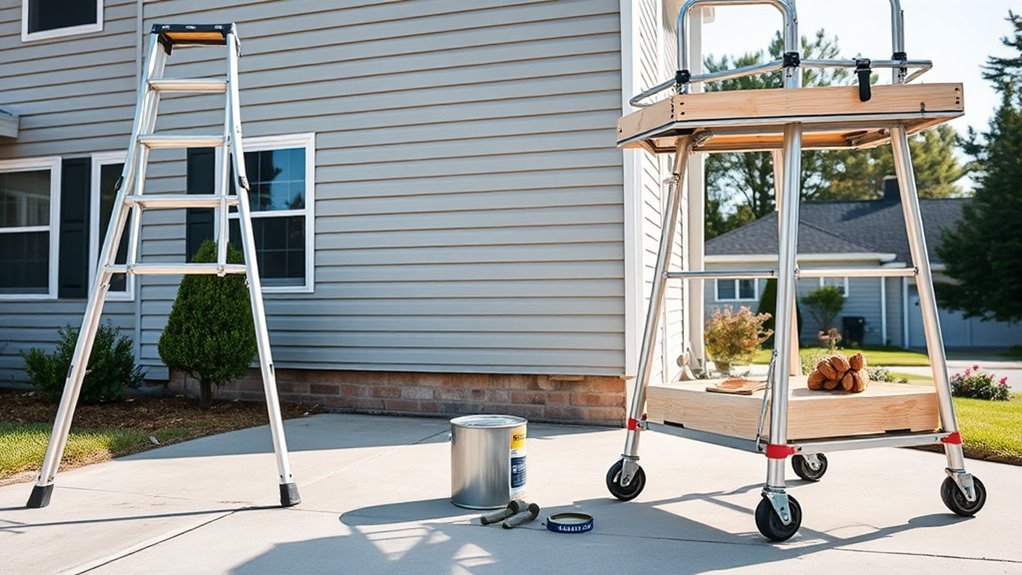
Before you start painting, make sure you set up your ladder on firm, level ground and secure its top and bottom to prevent slipping.
Check your scaffold components for damage, proper assembly, and stable footing. Never use missing or bent guardrails.
If anything looks unsafe, stop and fix it before you climb.
Proper Ladder Setup
When you’re working on exterior painting, setting up your ladder correctly keeps you stable and prevents most falls. You’ll pick a firm, level spot, lock spreaders, and angle the ladder 75° (4:1 rule). Keep three points of contact, don’t overreach, and tie the top to a secure anchor. Think about color selection and eco-friendly paints—choose lightweight tools and a helper to hand supplies.
- Inspect for damage.
- Clear the base area.
- Use a ladder leveler on slopes.
- Secure the ladder at the top.
Stay cautious; a proper setup protects you.
Scaffold Safety Checks
How will you know your scaffold’s safe to work from? Inspect base plates, plumb lines, and locking pins before climbing. Confirm scaffold stability on level ground and use mudsills or adjustable bases where needed.
Check guardrails, toe boards, and platforms for secure fastening and damage. Guarantee access ladders are tied off and free of debris. Follow load ratings—don’t overload with people or materials.
Anchor scaffolds to the structure per manufacturer instructions. Wear safety harnesses when local rules or height suggest it, and attach lanyards to certified anchors.
Reinspect after wind, rain, or any impact to maintain a safe worksite.
Tools and Equipment Every DIY Exterior Painter Needs

If you want a professional-looking exterior paint job and to stay safe, you’ll need the right tools and equipment—quality brushes and rollers, durable drop cloths, proper ladders or scaffolding, and the correct prep and safety gear.
You’ll also weigh color selection and paint types early so tools match finishes. Essential items let you work faster, cleaner, and with confidence.
- High-quality brushes and rollers — for smooth coverage and fewer touch-ups.
- Extension poles, ladder or scaffold — reach safely and efficiently.
- Prep tools: scrapers, sandpaper, caulk gun — create lasting adhesion.
- Safety gear: gloves, goggles, respirator — protect yourself.
Estimate Time & Cost for a DIY Paint Job
With your tools picked and prep planned, you’ll next want a realistic estimate of how long the project will take and what it’ll cost so you can schedule labor, buy materials, and avoid surprises.
Start by measuring square footage, factoring coats, drying time, and weather delays; a small house can take a weekend per coat, larger jobs several weeks.
Measure square footage, allow for coats, drying, and weather—small homes a weekend per coat, larger jobs weeks.
Tally paint, primer, caulk, brushes, scaffolding rental, and disposal.
Consider how color psychology affects choices—complex hues may need extra coats.
If you choose eco friendly paints, expect slightly higher material costs but lower VOC concerns and better resale appeal.
Choosing Exterior Paint & Primer That Lasts
Want paint that actually stands up to sun, rain, and temperature swings? You want durable exterior paint and primer that protect and flatter your home. Choose high-quality acrylic latex and a bonding primer for long life.
Think about color selection for curb appeal and heat reflection. Pick finish options—flat hides flaws, satin resists mildew, semi-gloss trims easily cleaned.
Consider UV resistance, weather warranties, and pigment quality. Test samples on siding to watch aging in real light.
Finally, buy enough to maintain a consistent lot number; matching later is harder than you think.
Prep Steps That Make Your Paint Job Stick
Before you slap on a coat, you’ll need to clean and repair every surface so paint can adhere without peeling.
You’ll also want the right primer and sealant for the material and exposure to lock in durability.
Get these prep steps right and your paint job will last longer with fewer touch-ups.
Surface Cleaning And Repair
Good prep makes paint stick and last, so start by thoroughly cleaning and repairing every surface you’ll paint. You’ll remove dirt, mildew, flaking paint, and loose caulk so new coats adhere and your color selection and paint texture look fresh.
Repair rotted wood, tighten loose siding, and fill cracks; sand glossy spots for even bonding. Work methodically; take photos to track progress and avoid missed areas.
- Pressure-wash gently to avoid damage.
- Scrape and sand peeling sections.
- Replace rotten boards promptly.
- Re-caulk gaps for weatherproof seams.
Proper Priming And Sealant
When you prime and seal properly, you lock out moisture, block stains, and give paint a uniform surface to grab onto, so your finish looks smoother and lasts longer. Start by choosing priming techniques suited to your substrate: oil-based for raw wood, bonding primers for glossy surfaces, and mildew-resistant primers for damp areas.
Sand and clean between coats so adhesion isn’t compromised. Select sealant types based on exposure: clear acrylic for trim, elastomeric for stucco, and silicone for flashing. Apply sealants in thin, even beads, tooling joints for contact. Proper priming and sealing reduces peeling and extends paint life.
Repairs That Need a Pro: Rot, Stucco, Siding
If you spot soft wood, crumbling stucco, or warped siding, don’t assume it’s just a cosmetic issue you can patch yourself — these problems usually need a pro. You’ll want expert rot repairs and stucco maintenance to stop hidden damage, assess structural integrity, and guarantee proper water barriers.
A contractor will match materials, replace framing, and apply correct flashing. Hiring pros prevents recurring issues and protects paint longevity.
Consider these emotional triggers when deciding:
- Relief — knowing the root cause is fixed
- Anxiety — over unseen mold or pests
- Trust — in skilled workmanship
- Pride — a safe, finished exterior
Weather, Seasons, and the Best Time to Paint
You’ll get the best results when temperatures stay within the paint manufacturer’s recommended range—usually between about 50°F and 85°F.
Plan for several consecutive dry days so paint can cure properly, and check humidity along with rain forecasts.
Choose seasonal formulas (fast-drying in cool weather, UV-resistant in summer) to match your climate and timing.
Ideal Temperature Range
Although paint can go on in a range of conditions, the best results come from working within the manufacturer’s recommended temperature and humidity windows—typically between 50°F and 85°F (10°C–29°C) with relative humidity under 70%.
You’ll want stable, moderate temperatures so coatings cure evenly, colors match your color theory expectations, and the paint finish looks professional. Painting too cold slows curing; too hot causes blistering.
Choose mornings or late afternoons to avoid extremes.
Emotionally, remember why you started:
- Pride in a durable exterior.
- Relief from weather worries.
- Joy at true color reveal.
- Confidence in lasting results.
Dry Days Required
When will you get the clear stretch of dry weather you need? You’ll watch forecasts and pick a window with several consecutive dry days so paint bonds and cures properly. Humidity matters as much as rain; check dew points and choose paint brands with fast-dry formulas if needed. Plan around weekends and chores, and avoid mornings with heavy dew. Also match drying time to your chosen color schemes—darker hues can retain heat and dry differently. Use this simple planner:
| Days to Paint | Forecast | Notes |
|---|---|---|
| 1–2 | Partly dry | Prep only |
| 3+ | Clear | Full coats |
Seasonal Paint Choices
Knowing the right stretch of dry weather is only part of the plan; the season you paint in affects temperature, humidity, and how paint behaves on your siding and trim. You’ll pick timing based on curing needs, sun exposure, and how colors look in different light.
Consider Color coordination with landscaping and roof tones, and choose paint finishes that handle moisture and wear.
Plan for cooler evenings in fall or steady warmth in late spring. Your comfort and safety matter, too—avoid extreme heat.
Which season fits your schedule and local climate will determine durability and final appearance.
Step-by-Step Painting Technique for Clean Coverage
Before you start brushing or rolling, set up a clear sequence: prep surfaces, cut in edges, apply full coats, and finish details so each step builds on the last for even, durable coverage.
Work from top to bottom and tackle one wall at a time.
Use a quality brush for corners and a roller for broad areas, keeping a wet edge to avoid lap marks.
Match paint finishes to surfaces—trim gets semi-gloss, siding often benefits from satin.
Consider color theory when sampling swatches in different light.
Let each coat dry fully, inspect for missed spots, then touch up cleanly.
Common DIY Mistakes and How to Avoid Them
You’ve followed the prep, cutting, and coating steps, but DIY painting still trips up many homeowners through avoidable mistakes. You can fix them by staying deliberate and calm, avoiding rushed decisions that ruin finish or mood.
- Choosing the wrong Color selection—test swatches at different light times to avoid regret.
- Skipping proper surface cleaning—paint won’t adhere to dirt or mildew.
- Ignoring weather—temperature and humidity cloud drying and durability.
- Overlooking environmental impact—use low-VOC paints and contain runoff to protect soil and water.
Follow those steps, and your exterior will look intentional and last longer.
Red Flags That Mean You Should Hire a Pro
If your home shows structural damage, extensive rot, or widespread mold, call a pro—these issues go beyond paint and need specialized repair to keep the job safe and lasting.
Other red flags include peeling across large surfaces, lead paint concerns on older homes, steep or complex rooflines, and inaccessible areas that require scaffolding.
If your house has ornate trim or historical architecture, pros protect period details and match traditional techniques.
Also hire help when you want advanced color psychology guidance for curb appeal or resale, or when warranties, permits, or insurance limitations complicate the project.
How to Find and Vet Exterior Painting Contractors
When you’re ready to hire help, start by compiling several local contractors so you can compare credentials, pricing, and timelines. Check licenses, insurance, and references, and ask for photos of completed work.
Compile several local contractors, compare credentials, pricing, and timelines; verify licenses, insurance, references, and photos of past work.
Discuss color psychology to guarantee the hue fits your home’s mood and neighborhood, and request samples. Verify they offer eco friendly paints if you want lower VOCs.
Get written estimates with scope and cleanup details. Trust your gut on communication and punctuality.
- Reliability
- Transparency
- Craftsmanship
- Respect for your property
Choose the contractor who meets criteria and feels right.
Aftercare: Maintenance Schedule to Keep Paint Looking New
Once the painters finish and you’ve signed off on the job, set a simple maintenance schedule to keep that fresh look lasting years. Inspect annually for chips, wash siding twice yearly, and touch up trim after severe weather. Use eco friendly paints for repairs to preserve sheen and reduce VOCs. Think about color psychology when choosing touch-up areas—bright trims revive curb appeal. Track tasks in this quick table:
| Task | Frequency | Notes |
|---|---|---|
| Inspection | Yearly | Check caulk, seams |
| Washing | Biannually | Soft wash, gentle cleaner |
| Touch-ups | As needed | Match batch, use eco friendly paints |
Frequently Asked Questions
How Do HOA Rules Affect My Exterior Paint Color Choices?
HOA rules limit your color choices, requiring approved palettes and specific color contrast ratios; they’ll often specify acceptable paint texture and finish. You’ll need prior approval, submit samples, and follow guidelines to avoid fines or rework.
Can Painting My Exterior Improve Home Resale Value?
Yes — painting your exterior can boost resale value if you choose appealing color selection and invest in paint longevity; buyers notice fresh, durable finishes, and smart, neutral tones paired with quality application will raise curb appeal and perceived maintenance.
What Permits Might Be Required for Exterior Painting Projects?
Often none — but wait: local rules can surprise you. You’ll likely need permits for scaffolding, historical districts, or large leads. Check zoning; plan surface preparation and paint selection to meet code and safety requirements.
How to Handle Paint Fumes Around Pets and Indoor Air Quality?
You should protect pet safety and indoor air quality by keeping pets away, ventilating well, using low-VOC paints, sealing off entry points, running air purifiers, and wiping paws and fur before they reenter treated areas to minimize fumes and residues.
Are There Eco-Friendly Paint Options With Good Durability?
Sure — you’ll love that “gentle” eco option: you’ll get durability without toxins. Use eco friendly primers, high-quality natural paint finishes, and proper prep; you’ll extend life, resist weather, and still keep VOCs and waste down.
Conclusion
Think of your house like a ship: you can learn to sail it, patch the sails, and trim the rigging, but rough seas or a broken mast call for an experienced captain. If you’ve got basic skills, safe gear, and patience, DIY painting can keep your vessel proud and seaworthy. Know your limits, watch for warning signs, and call a pro when storms threaten—then your home will weather beautifully for years.
