
Can You Use Latex Paint on Cabinets
Yes — you can use latex paint on cabinets, and it’s a good DIY option when you prep properly. It cleans up with water, dries quickly, and gives a durable finish for low- to moderate-use cabinets if you sand, prime, and apply thin coats with a protective topcoat. Choose satin or semi-gloss for easier cleaning. It’s not as tough as oil or cabinet-specific enamels for heavy wear, and below you’ll find tips, limits, and product picks.
Can You Use Latex Paint on Cabinets? Quick Answer
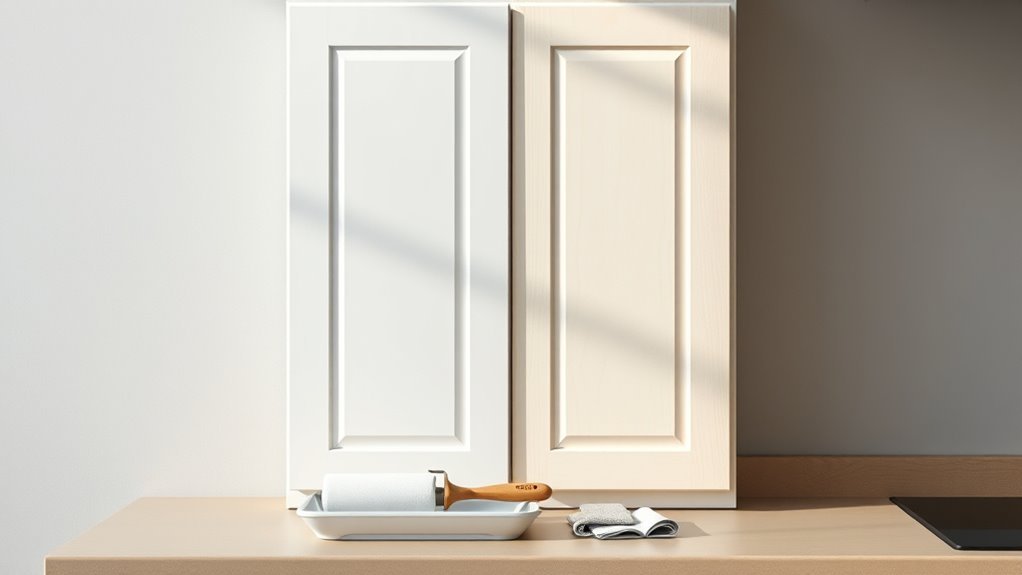
Yes—you can use latex paint on cabinets, and it’s a practical choice for many DIYers because it cleans up with water, dries relatively fast, and resists yellowing. You’ll get durable coverage if you prep surfaces, sand smooth, and use a quality primer.
Choose color options that suit your kitchen’s lighting and hardware, and test swatches before committing. For cabinets, pick a paint finish that balances durability and appearance—satin or semi-gloss usually works best for wipeability and sheen.
Apply thin, even coats, allow proper drying between layers, and protect newly painted doors during reassembly.
When Should You Use Latex Paint on Cabinets?
You should pick latex for cabinets when you want easy cleanup, low odor, and a durable finish for light- to medium-traffic areas.
Keep in mind latex isn’t ideal for high-wear surfaces unless you use a tough primer and topcoat. It can show brush marks more than some alkyd alternatives.
We’ll cover the best use cases, limitations, and key considerations so you can decide if it’s right for your cabinets.
Best Use Cases
When your priority is quick drying, easy cleanup, and lower cost, latex paint’s a great choice for cabinets in low- to moderate-traffic areas like guest bathrooms, craft rooms, or pantry doors. You’ll appreciate easy color matching and consistent paint texture when rejuvenating surfaces, and you can tackle projects without specialized tools.
Choose latex when you want fast turnaround, budget-friendly updates, and straightforward maintenance.
Consider these typical best-use scenarios:
- Guest bathroom cabinets where use is infrequent and looks matter
- Craft or hobby room storage that needs repainting periodically
- Pantry doors and shelving for a clean, washable finish
- Rental units needing quick, affordable refresh
Limitations And Considerations
Although latex paint works well in many situations, it isn’t the best choice for high-traffic or heavy-use cabinets where durability and chip resistance matter most.
You should pick latex when cabinets see moderate use, when easy cleanup and quick drying matter, or when you plan regular refreshes.
Avoid latex on surfaces that face knocks, frequent opening, or heat and moisture unless you add a durable topcoat.
Consider color matching challenges: latex can shift slightly when sealed or layered, so test samples under your lighting.
Store leftover cans properly; paint storage affects longevity and future touch-ups.
When to Choose Oil or Cabinet-Specific Paints Instead
If durability and a flawless finish matter more than quick cleanup, reach for oil-based or cabinet-specific paints instead of standard latex. You’ll pick them when you need superior adhesion, smoother leveling, and resistance to scuffs.
Consider color matching needs and environmental impact trade-offs: oil paints can offer richer depth but higher VOCs, while cabinet-specific waterborne formulas balance performance with lower emissions.
- You want enduring wear in high-traffic kitchens and baths.
- You need a glassy, furniture-like finish for cabinetry.
- You require reliable color matching across sheen levels.
- You prefer options that reduce environmental impact without sacrificing durability.
How Cabinet Material Affects Paint Results
What your cabinets are made of changes how latex paint performs, so you’ll want to adjust prep and product choices for solid wood, veneer, MDF, or laminate.
Solid wood takes paint well but may need stain-blocking and sanding.
Veneer needs gentler prep to avoid peeling.
MDF and laminate often require special primers or bonding primers to get a durable finish.
Solid Wood vs. Veneer
Because the base material determines how paint adheres and wears, you’ll get different results on solid wood than on veneered cabinets. Solid wood sands, takes stain or paint well, and accepts repairs. Veneered pieces need gentler prep to avoid peeling.
Consider finish texture, seam vulnerability, and long-term durability. Think about color matching and eco-friendly options when choosing primers and paints.
- Solid wood: can be sanded, filled, refinished.
- Veneer: thinner surface, sensitive to aggressive sanding.
- Adhesion: use proper primer for each substrate.
- Repairs: solid wood forgives; veneer needs careful patching.
MDF And Laminate
Moving from solid wood and veneer, you’ll find MDF and laminate behave very differently under paint.
You’ll prep MDF by sanding edges, sealing with a primer to prevent swelling, then apply latex for smooth, consistent coverage.
Laminate needs deglossing or bonding primer; without it, latex can peel.
For both, test color matching under your lighting—laminate’s sheen alters perceived hue.
Choose low-VOC latex and eco-friendly options when possible to reduce fumes.
Use fine-grit sanding between coats and a durable topcoat for high-traffic cabinets.
Proper prep and products determine longevity and finish quality.
How to Prep Cabinets for Painting
Ready to get your cabinets painting-ready? You’ll remove hardware, clear surfaces, and plan around color options and budget considerations before sanding.
Clean thoroughly with degreaser, then sand to dull gloss and remove imperfections. Wipe dust with a tack cloth and keep parts organized.
- Remove doors and label locations
- Deep-clean frames and panels
- Sand lightly, feather edges and repair chips
- Degrease and wipe down completely
Mask surrounding areas and lay drop cloths. Let cleaned, sanded surfaces dry fully.
Reattach hardware only after paint cures; this prevents nicks and uneven finishes.
Best Primers to Use With Latex on Cabinets

Before you start painting, pick a primer that matches your cabinet material and adhesion needs.
You’ll often choose between oil-based bonding primers for tough surfaces, shellac-based primers for stain-blocking, or high-adhesion latex primers for easier cleanup and flexibility.
Each option performs differently, so you’ll want to match primer properties to your project.
Oil-Based Bonding Primer
Why choose an oil-based bonding primer for cabinets? You’ll get strong adhesion to slick surfaces, stain blocking, and a build that holds up when you sand between coats. It helps latex topcoats grip and reduces bleed-through from knots or tannins.
- Use it on laminate or previously painted doors to improve longevity.
- Pair with thoughtful color combinations to guarantee uniform coverage under thin latex shades.
- It lets you confidently choose hardware options without worrying that solvent exposure will lift the finish.
- Apply in thin, even coats, sand lightly, then finish with your chosen latex cabinet paint for durability.
Shellac-Based Primer
When you need the quickest sealing power and the best odor- and stain-blocking performance before applying latex on cabinets, reach for a shellac-based primer. You’ll find it bonds to knotty pine, smoke-stained surfaces, and tannin-rich woods faster than most primers, cutting through odors and blocking stains so your topcoat stays true.
It sands smooth for excellent color matching when you switch hues, and its thin film minimizes blotchiness under latex. Expect superior finish durability against chipping and moisture when properly applied, though you’ll need good ventilation and alcohol cleanup since shellac is solvent-based.
High-Adhesion Latex Primer
Looking for a primer that bonds like glue to slick cabinet surfaces? You’ll want a high-adhesion latex primer designed for slick or previously painted wood. It lets you skip sanding in some cases, improves color choices by creating an even base, and accepts varied finish textures without peeling.
Apply thin, even coats and let each dry fully.
- Choose a primer labeled “high-adhesion” or “bonding”
- Test on a small area before full application
- Use a quality brush or microfiber roller for smooth laydown
- Sand lightly between coats for best adhesion and durability
Which Latex Sheen Gives the Most Durable Finish
Because sheen affects both appearance and performance, choosing the right latex finish matters more than you might think.
Because sheen shapes both look and durability, picking the right latex finish matters more than it seems.
For cabinets, semi-gloss and satin are your best bets: semi-gloss offers the hardest, most washable surface, resisting scuffs and moisture, while satin balances durability with softer finish textures that flatter wood grain and modern color palettes.
Flat and eggshell aren’t ideal where wear is heavy.
High-gloss gives extreme durability but highlights flaws and requires careful prep.
You’ll want a sheen that hides flaws just enough, cleans easily, and complements your chosen palette without sacrificing long-term resilience.
Tools: Brush, Roller, or Sprayer-What to Pick
Although your choice of tool won’t change the paint itself, it’ll shape how smooth, fast, and durable your cabinet finish turns out, so pick with purpose. You’ll choose based on edge control, surface texture, and setup.
Brushes give detail and trim work; rollers speed coverage on flat panels; sprayers deliver the smoothest factory-like look but need masking.
Consider color options that show brush marks more, and think about environmental impact—sprayers can overspray and waste paint, rollers shed less, and brushes minimize waste.
Match tool to cabinet style, your skill, and cleanup willingness.
- Brush: trim and corners
- Roller: panels fast
- Sprayer: ultra-smooth finish
- Cleanup: time vs waste
Step-by-Step Painting Workflow for Cabinets
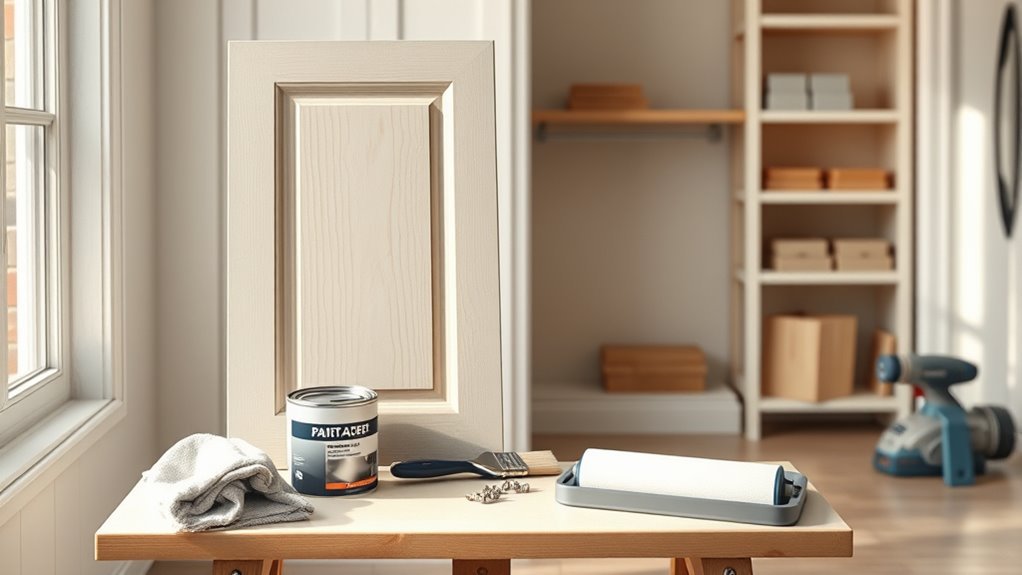
Start by prepping the cabinet surfaces—clean, sand, and prime any bare wood or repaired areas so the paint can stick.
Then apply latex paint in thin, even coats with your chosen brush, roller, or sprayer.
Sanding lightly between coats will help achieve a smooth finish.
Finish with a durable topcoat or sealer and reattach hardware once everything is fully cured.
Surface Prep Steps
Before you pick up a brush, prepare the cabinet surfaces so the paint will adhere and the finish will last. You’ll clean grease, remove hardware, and assess damage.
Sand glossy areas and wipe dust; scuffing helps latex bond. Use a mild deglosser or fine-grit sandpaper, then vacuum and tack cloth.
If stains bleed, apply a primer. Consider color matching for doors or replacements, and choose eco-friendly finishes when possible to reduce VOCs.
Follow with caulking gaps and repairing chips so surfaces are smooth and uniform before painting.
- Remove hardware and clean thoroughly
- Sand and degloss surfaces
- Prime stain-prone areas
- Caulk and repair chips
Painting And Finishing
Once you’ve prepped the cabinets, follow a clear, paced workflow so each coat cures properly and you get a durable, professional finish.
Start by priming all surfaces with a high-adhesion primer, sanding lightly between coats.
Apply thin, even latex paint layers using a brush for edges and a foam roller for flat panels.
Allow recommended dry times; don’t rush recoating.
After the final coat, inspect and touch up as needed.
Choose color options that suit lighting and wear patterns.
Finish with a clear protective topcoat or poly for enhanced paint durability, curing fully before rehanging doors and hardware.
Dry Times, Recoat Windows, and Full Curing
While latex paint feels dry to the touch in about 1–2 hours, you’ll need to wait longer before recoating or using the cabinets. You’ll balance fast recoat windows with full curing time to avoid tacky finishes and damage. Consider color options and environmental impact when planning ventilation and schedule.
- Recoat: typically 4–6 hours for acrylic latex; check manufacturer guidelines.
- Light use: 24–48 hours before gentle handling.
- Full cure: 7–30 days depending on humidity, temperature, and coat thickness.
- Faster curing: increase airflow, moderate heat, and thin coats for even drying.
Preventing Chips, Peeling, and Brush Marks
If you want cabinets that stand up to daily use, focus on surface preparation, the right products, and proper technique to prevent chips, peeling, and brush marks. Sand, clean, and prime thoroughly so paint bonds; skip any shortcuts.
Use high-quality latex formulated for trim or cabinetry to maximize paint durability and minimize brush marks. Apply thin, even coats with a quality synthetic brush or foam applicator, maintaining a wet edge. Allow full recoat windows and cure times between coats.
Choose color options wisely—darker or glossier finishes hide wear differently—and finish with a durable clear topcoat for extra protection.
Repairing and Refinishing Latex-Painted Cabinets
Even the best-prepped and painted cabinets will show wear over time, so you’ll want to know how to repair chips, sanding scratches, or areas where latex has peeled before you refinish the whole piece.
Patch small chips with wood filler, sand smooth, then prime bare spots. Feather sand edges around peels to blend. Match paint using swatches—consider current color trends or historical styles if restoring period pieces.
When refinishing, use thin, even coats and sand lightly between them for durability. Finish with a clear protective coat for high-use areas.
- Clean and degloss first
- Fill and sand defects
- Prime exposed wood
- Repaint in thin coats
Cost, Time, and Durability: Latex vs Oil vs Enamels
When weighing latex, oil, and enamel for cabinets, consider how much you’re willing to spend, how long you can wait, and how tough the finish needs to be.
Latex costs less, dries fast, and lets you get back to use quickly; it’s easier for DIYers and simpler for color matching but can scuff more.
Latex is affordable, dries quickly, great for DIY and color matching, but may scuff more easily.
Oil-based paints and enamels cost more and need longer curing, yet they deliver harder, more durable surfaces and smoother leveling.
Enamels often provide the longest wear.
Also weigh environmental impact: latex has lower VOCs, oils and some enamels emit more, affecting indoor air and disposal.
Best Latex Paint Products for Cabinets (Brand Picks)
Now that you’ve weighed cost, drying time, durability, and VOCs, pick a latex formula that matches your cabinet use and finish goals. Choose brands known for paint durability and rich color options so your cabinets resist scuffs and still look fresh. Consider satin or semi-gloss for cleanability.
- Benjamin Moore Advance: furniture-grade finish, great leveling, strong paint durability.
- Sherwin-Williams ProClassic: reliable wear resistance, wide color options.
- Behr Marquee: one-coat coverage claims, durable for everyday kitchens.
- Farrow & Ball Modern Emulsion: premium pigments, excellent finish for high-end looks.
Realistic Maintenance and Lifespan Expectations
Because how you prep, the formula you pick, and how much traffic your kitchen sees all affect outcomes, expect latex-painted cabinets to need touch-ups every few years and full repainting around 7–12 years.
You’ll inspect hinges, edges, and high-contact spots annually, addressing chips and stains before they spread.
Use compatible primers and high-quality latex for better paint durability, and keep a small reserved can for seamless color matching later.
Clean gently with mild detergent, avoid abrasive pads, and tighten hardware to reduce wear.
With routine care and prompt spot repairs, you’ll extend finish life and delay full refinishing.
Frequently Asked Questions
Are Latex-Painted Cabinets Safe for People With Chemical Sensitivities?
Yes — they can be, if you choose low‑VOC or zero‑VOC latex, ventilate well to reduce chemical odor, and allow full curing; expect good paint durability but pick formulations and finishes designed for sensitive individuals.
Can I Paint Cabinet Interiors and Shelves With Latex Paint?
Absolutely — you can paint cabinet interiors and shelves with latex paint; it’s incredibly practical! Start with cabinet cleaning, do thorough paint preparation, use low-VOC latex, apply thin coats, and let each coat cure fully.
How Does Humidity Affect Latex Paint Adhesion on Cabinets?
Humidity affects latex paint adhesion on cabinets: you’ll face adhesion challenges when moisture’s high, causing slow drying, blushing, and peeling; low humidity speeds drying but can cause poor flow, so aim for moderate conditions and proper surface prep.
Will Latex Paint Yellow Over Time on White Cabinets?
You won’t usually see yellowing quickly; crisp white stays bright unless color fading occurs from sun exposure or poor surface preparation. If you prep, prime, and use quality latex, your cabinets will resist yellowing longer.
Can I Use Latex Paint on Outdoor or Garage Cabinets?
Yes — you can use latex on outdoor or garage cabinets, but you’ll want durable exterior latex, prime properly, and seal for paint durability; you’ll also check color matching under outdoor light so finishes stay true and resilient.
Conclusion
Yes — you can use latex paint on cabinets, and it’s popular: about 60% of DIYers prefer water-based paints for indoor projects because they dry faster and clean up with soap and water. If you’re painting cabinets that get light-to-moderate use, latex (especially latex enamel or acrylic) gives good durability with less odor and faster turnaround than oil. Prep carefully, use a high-quality latex enamel, and expect touch-ups every few years for best results.
