
How Long Does Wood Paint Take to Dry
You’ll usually feel wood paint dry to the touch in 30 minutes to a few hours, but safe handling, recoating, and full cure take longer. Thin latex or acrylic coats dry fastest (1–6 hours touch, 24–72 hours cure); oil and alkyds feel dry in 6–24 hours but can take days to weeks to harden fully. Temperature, humidity, coat thickness, and wood type change times, so follow label directions — keep going for tips on timing and tricks.
How Long Does Wood Paint Feel Dry to the Touch?
Although surface-dry times vary by paint type and conditions, you can generally expect wood paint to feel dry to the touch within 30 minutes to a few hours. You’ll notice touch-dry paint no longer feels tacky and won’t pick up dust, but that doesn’t mean it’s fully cured.
Factors like temperature, humidity, wood grain absorption, and paint sheen alter drying speed—glossy finishes often feel dry quicker than flat ones because they form a film faster. Thin coats dry sooner; thicker coats take longer.
Always follow manufacturer guidance and wait longer for handling if conditions are cool or humid.
When Is Wood Paint Safe to Handle?
When you can pick up or move a painted wood piece without leaving marks depends on more than just touch-dry times; you should wait until the paint is firm enough to resist denting or smudging, which is usually when it’s gone from tacky to set—commonly 4–24 hours for most latex or oil-based paints under good conditions. Check firmness by pressing an inconspicuous edge; if the paint resists and the Wood grain detail isn’t disturbed, it’s safer to handle. Also note Paint sheen can change slightly as it cures.
| Test | Expectation | Action |
|---|---|---|
| Firmness | No dent | Handle carefully |
| Smudge | None | Safe |
| Edges | Grain intact | Move |
| Sheen | Stable | Store |
When Can You Recoat Wood Paint?
When you’re ready to recoat wood paint, consider the factors that affect drying time—temperature, humidity, paint type, and coat thickness—all alter how quickly the first layer sets.
Follow the manufacturer’s recoat timing guidelines as a baseline, then use a tack test (light touch) to confirm the surface is dry but not fully cured.
Waiting the recommended window ensures proper adhesion and prevents tacky, uneven finishes.
Drying Time Factors
Because several variables influence how quickly paint dries on wood, you’ll want to check them before recoating. You’ll feel more confident when you assess surface porosity, paint texture, humidity, and temperature. Those factors affect tackiness, absorption, and final color, so color matching hinges on proper drying. Inspect a small area rather than guessing.
- Surface porosity — more porous wood soaks paint faster, drying unevenly.
- Paint texture — thicker or textured paint slows drying and can trap solvents.
- Humidity and airflow — high humidity delays drying; good ventilation speeds it up.
- Temperature — cold conditions prolong tackiness and extend wait times.
Recoat Timing Guidelines
If you want a smooth, durable finish, wait until the paint feels dry to the touch and no longer tacky before recoating. Check manufacturer recoat windows—usually 2–4 hours for thin coats, 24 hours for thicker ones.
Sand lightly between coats to promote adhesion and remove dust. Verify consistent color mixing so shade and sheen stay uniform across layers.
Choose the right brush selection for your paint type: natural bristles for oil, synthetic for water-based.
Work in stable temperature and humidity to avoid extended cure times.
When unsure, test a small area before completing the entire surface.
When Can Painted Wood Bear Weight or Furniture?
You can usually touch painted wood within a few hours, but that “dry-to-touch” stage doesn’t mean it’s ready for weight.
Paint needs to cure fully—often days to weeks depending on the formula—before it regains full hardness.
For furniture or load-bearing uses, wait the manufacturer’s recommended cure time (commonly 7–30 days) to avoid dents, scratches, or tacky finishes.
Dry-To-Touch Time
When can painted wood actually hold weight or support furniture? You’ll usually feel the surface is dry-to-touch within 1–6 hours, depending on color mixing, paint texture, humidity, and temperature. Don’t assume touch equals strength; light contact’s fine, heavy use isn’t.
- Relief — seeing dry paint lets you breathe easier, but test gently.
- Caution — dried surface can still dent or mark under pressure.
- Patience — waiting longer avoids ruining finishes and color mixing nuances.
- Confidence — after recommended wait times, you’ll safely place items without worry.
Cure Versus Dry
Although the paint may feel dry within hours, it can take days to weeks to fully cure and reach the strength needed to bear weight or support furniture. You should avoid placing heavy items until coatings cure; curing improves paint adhesion and resists scuffing. Temperature, humidity, and finish type affect cure. Also note woodgrain patterns can influence how paint settles and bonds. Test small areas gently before loading. Below is a quick visual of considerations.
| Factor | Effect |
|---|---|
| Temperature | Speeds or slows cure |
| Humidity | Affects drying and adhesion |
| Finish type | Hardness varies |
| Woodgrain patterns | Alters surface bonding |
| Time | Determines safe use |
Weight-Bearing Timeline
After curing time and surface factors are considered, plan a weight-bearing timeline based on the paint type, coat thickness, and environmental conditions. You’ll want to wait longer for oil-based or heavy enamel layers; thin acrylic dries quicker but still needs cure time.
Consider painting techniques and color selection—darker colors can absorb heat and speed cure. Test by applying gentle pressure, then increase load gradually.
For furniture, wait at least 72 hours for light use, a week for regular use, and longer in cool, humid spaces.
- Anxiety eased when you test progressively.
- Pride in careful technique grows.
- Relief when furniture holds.
- Confidence in your color choice.
How Long Does Wood Paint Take to Fully Cure?
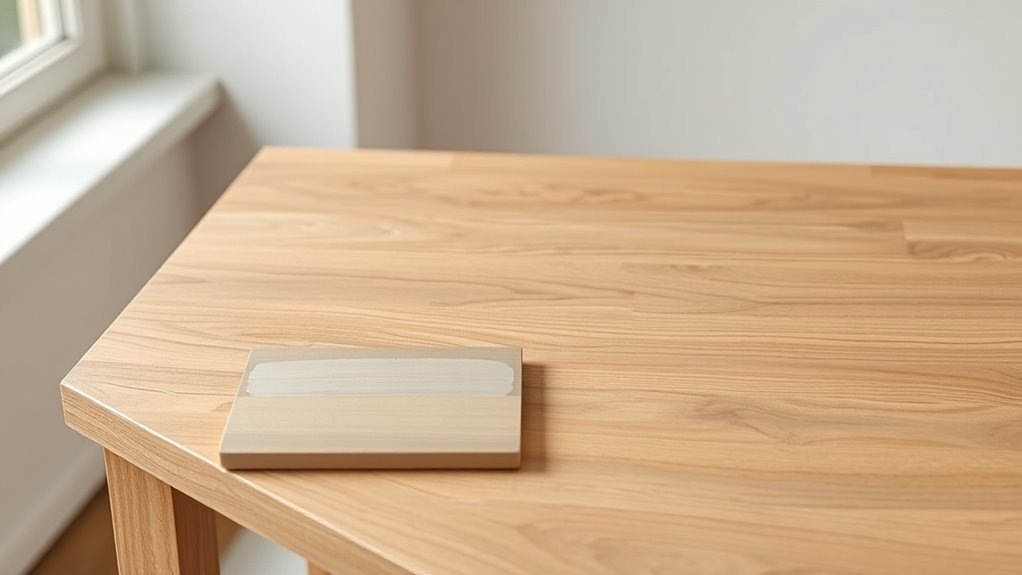
Because drying only makes paint feel dry on the surface, you’ll need to wait longer for wood paint to fully cure so it reaches maximum hardness, adhesion, and chemical resistance. You’ll typically wait days to weeks depending on formula, humidity, temperature, and wood grain orientation. Lower sheen finishes often feel dry sooner but can take as long to cure. Avoid heavy use until cure time passes.
| Factor | Typical effect |
|---|---|
| Humidity/Temp | Higher humidity slows cure |
| Paint type | Waterborne faster, solvent slower |
| Surface prep | Proper sanding aligns with wood grain and improves adhesion |
Check manufacturer cure times.
How Long Does Oil-Based Paint Take to Dry on Wood?
When you’re working with oil-based paint on wood, remember that “dry” and “cure” aren’t the same: the paint can feel dry to the touch long before it reaches full hardness.
Drying time typically ranges from 6 to 24 hours between coats, but full curing can take days to weeks.
Temperature, humidity, ventilation, and coat thickness all affect how quickly the paint dries.
Drying Vs. Curing Time
Though oil-based paint often feels dry to the touch within 6 to 8 hours, you’ll need to wait much longer before the coating fully cures and can handle heavy use. You’ll notice paint color and brush techniques affect surface feel, but drying is just surface hardening; curing is chemical cross-linking that strengthens the film.
Treat dryness as a cue, not clearance. Protect the piece until curing completes to avoid dents, tackiness, or uneven sheen.
- Frustration — when scratches appear too soon.
- Relief — once curing finishes.
- Pride — for a flawless finish.
- Regret — if you rush it.
Factors Affecting Drying
If you’re working with oil-based paint on wood, expect the surface to feel dry within 6–8 hours under ideal conditions. Temperature, humidity, and airflow control how quickly it actually dries; warmer, drier, ventilated spaces speed evaporation.
Coat thickness matters — thin layers dry faster than heavy coats — so apply evenly to avoid delayed curing or tackiness. Old finishes or contaminated wood slow reaction and can complicate color matching, so prep thoroughly.
Solvent-based cleaners help paint removal mistakes, but test first. Patience between coats guarantees proper bonding and prevents soft spots; follow manufacturer cure times for best results.
How Long Does Water-Based (Latex) Paint Take to Dry on Wood?
Because water-based (latex) paints dry by evaporation and polymer coalescence, they usually feel dry to the touch within 30 minutes to an hour on interior wood. Though full curing can take up to two weeks depending on humidity, temperature, and coat thickness. You’ll notice paint color deepens as solvents evaporate; thin, even coats and a steady application technique speed drying and reduce tackiness.
Water-based paints often feel dry in 30–60 minutes, though full curing can take up to two weeks.
Expect longer dry times outdoors or in damp rooms. Protect surfaces gently until cured. Follow label guidance for recoating intervals.
- Relief — when it’s touch-dry.
- Pride — after a smooth finish.
- Frustration — with slow drying.
- Satisfaction — at full cure.
How Does Alkyd Paint Differ From Oil Paint in Drying?
When you compare alkyd and traditional oil paints, you’ll notice they dry by different mechanisms—alkyds mainly oxidize through modified resins while classic oil paints rely on natural oil polymerization.
They also use different solvents and resins, so alkyds often thin and clean up with mineral spirits and cure faster than long-bodied oils.
Expect shorter tack and faster return-to-service with alkyds, while oils take longer to cure and can leave a richer, more slowly hardening texture.
Drying Mechanism Differences
Although both alkyd and traditional oil paints feel similar, they dry by different chemical processes. You’ll notice paint color and paint texture change as alkyds oxidize faster, forming a firm surface, while oils cure slowly through polymerization. That alters tack time, sheen, and how the finish ages.
- You feel relief when alkyds set quicker, speeding projects.
- You may worry as oils remain soft longer, risking marks.
- You’ll appreciate alkyds’ predictable film for trim and furniture.
- You’ll admire oils’ deep leveling for fine antiques and rich patina.
Solvent And Resin Types
To understand why alkyds and oils behave so differently, look at what’s inside them: the solvents that carry the paint and the resins that form the film.
Alkyds use faster-evaporating synthetic solvents and modified resins, so they tack up and dry to the touch sooner than traditional oil.
Oil paints rely on slow-evaporating solvents and drying oils that polymerize, so they take longer before you can handle a piece.
When choosing paint, consider Paint Color effects on perceived drying and how solvent clarity influences finish.
Also match your Brush Selection to solvent strength and resin viscosity for smooth application and even drying.
Cure Time And Texture
Because alkyds rely on quick-evaporating solvents and modified resins, they develop surface tack and feel dry far sooner than traditional oil paints. But that doesn’t mean they’re fully cured.
You’ll notice alkyds lose paint smell faster and appear hard, while oil paints continue crosslinking slowly, deep into the wood grain and substrate. That ongoing cure affects durability, sheen, and how the finish sands or burns in.
- Anxiety — you fear smudging a “dry” alkyd.
- Relief — paint smell fades sooner with alkyds.
- Patience — oils reward you over weeks.
- Satisfaction — true cure reveals lasting texture.
How Long Does Acrylic Paint Take to Dry and Cure on Wood?
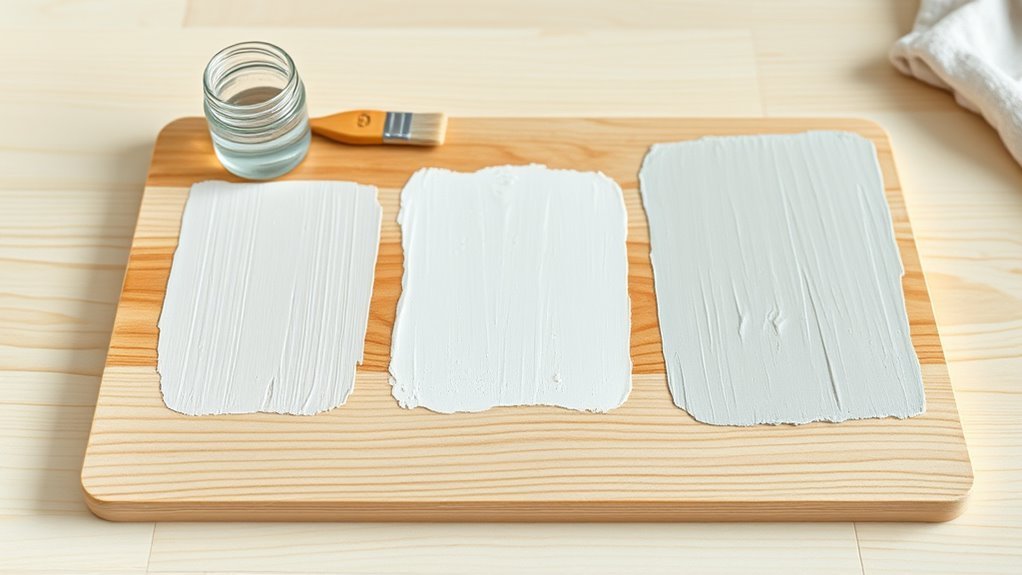
When you paint wood with acrylics, the surface will feel dry to the touch within 20–60 minutes for thin coats.
Acrylic paint on wood typically feels touch-dry in 20–60 minutes for thin, even coats.
But full curing—when the paint reaches maximum hardness and durability—usually takes 24–72 hours for normal indoor conditions and up to 2 weeks for thick layers or high humidity.
You should sand lightly between coats to follow wood grain and improve paint adhesion.
Thin, even layers speed drying and reduce tackiness; higher humidity, low temperature, or heavy texture slow set.
Allow recommended curing time before handling or sealing to guarantee durability and prevent fingerprints or coating failure.
How Fast Does Spray Paint Dry on Wood Surfaces?
Although conditions vary, spray paint is one of the fastest options for coating wood. You’ll notice surface dry times in 10–30 minutes and handle-ready in an hour or two, depending on temperature, humidity, and coat thickness. Thin, even passes preserve wood grain detail; heavy layers obscure it.
Gloss level and paint sheen change perceived drying—higher sheen often feels tacky longer. Let coats flash between applications to avoid runs and allow proper cure over days. If you want quicker results, work in warm, dry conditions and use light coats.
Be patient: full hardness can take up to a week.
- Relief — instant coverage feels satisfying.
- Anxiety — runs can ruin the finish.
- Pride — smooth sheen looks professional.
- Calm — patience yields durable results.
Does Wood Stain Dry Faster Than Wood Paint?
If you’re comparing the two, wood stain generally dries faster than wood paint because stains penetrate the wood and rely mainly on solvent evaporation.
Paint forms a film that needs more time to set and cure. You’ll notice stain soaks into wood grain, speeding surface dryness and revealing texture sooner.
Paint sits atop fibers, requiring longer tack-free and cure periods to achieve strong paint adhesion.
Choice depends on look and durability: choose stain for quicker turnaround and visible grain, choose paint when you need opaque coverage and robust adhesion, but expect longer drying and curing times.
How Long Do Common Primers Take to Dry on Wood?
Because primer type, temperature, humidity and wood porosity all affect drying, you’ll see wide variation in how long primers take to dry on wood. You’ll generally wait:
- Shellac-based: 15–30 minutes — fast relief, but strong odor.
- Oil-based: 6–24 hours — sturdy, patience-testing.
- Latex (water-based): 30 minutes–2 hours — convenient and forgiving.
- Specialty stain-blocking: 1–6 hours — reassuring for tricky woods.
Plan around the primer’s recoat window rather than just touch-dry time, especially if your chosen paint color needs uniform coverage.
Also consider finish sheen recommendations before topcoating for best results.
Does Paint Sheen Affect Wood Paint Drying Time?
You might notice sheen affects how fast paint feels dry — higher gloss paints often dry to the touch quicker because their binders level and film faster.
However, curing time can still vary: glossy finishes may harden differently than satin or matte, so full cure can take longer despite a quick surface dry.
Consider both sheen level and manufacturer cure times when planning recoats or use.
Sheen And Drying Speed
When you’re choosing a finish, sheen does play a role in how quickly wood paint seems to dry: higher-sheen paints like gloss and semi-gloss often cure faster on the surface and feel dry sooner.
While flatter sheens can stay tacky longer because they contain more pigment and binders that slow solvent evaporation. You’ll notice sheen influence on appearance and drying consistency; thin films dry quicker, thick coats delay cure.
Choose sheen with purpose to match use and patience.
- Pride in a glossy rush.
- Frustration with tacky flats.
- Relief when consistency holds.
- Confidence in your choice.
Gloss Levels And Cure
How does sheen really change drying and curing? You’ll find gloss levels influence both surface feel and cure timeline: high-gloss paints form a tighter film with greater gloss consistency, so surface solvents evaporate faster. But full cure—crosslinking—can take longer.
Lower sheens often allow more penetration depth into wood, promoting mechanical bonding and sometimes quicker functional dryness. That said, formulation, pigment load, and humidity matter more than sheen alone.
When you choose a sheen, expect faster initial dry on glossier finishes but plan for extended cure time for hardness and durability. Always follow manufacturer cure recommendations for best results.
How Does Wood Species Affect Paint Drying?
Although different woods may look similar, their grain, porosity, and natural oils change how paint soaks in and dries, so you should pick your paint and prep methods with the species in mind.
You’ll notice how wood grain alters absorption and how finish sheen highlights texture; oily species like teak resist paint, needing deglossing and primer. Hardwoods can slow drying; softwoods may soak up more, thinning the coat.
Match primer and paint to species, test a small patch, and allow extra curing time for dense or oily woods.
- Frustration when paint beads
- Relief after proper priming
- Pride in a smooth finish
- Calm knowing you tested first
How Do Porosity and Grain Change Wood Paint Drying?
Because porosity and grain determine how paint soaks into wood, you’ll see big differences in drying speed and finish quality between boards, even of the same species.
Because wood porosity and grain control paint absorption, drying and finish vary greatly—even between boards of the same species
You’ll notice open pores and coarse wood grain absorb more binder and solvent, thinning surface film and prolonging cure.
Tight grain and low porosity variations keep paint more on the surface, so it skins over faster and shows brush marks more clearly.
You can adjust by sealing highly porous areas or using thinner coats on dense grain to balance absorption.
Inspect wood grain and porosity variations before starting for predictable drying and finish.
How Does Wood Moisture Content Delay Paint Drying?
Porosity and grain tell you how paint will move into the wood, but moisture content controls how long solvents and binders actually stay wet. If the wood grain holds extra water, evaporation slows and paint texture stays tacky longer.
You’ll see bubbling, poor adhesion, or a blotchy finish when moisture pushes finish out of pores. Check moisture meters and wait for recommended levels before painting. Reduce humidity and make sure wood dries naturally to avoid rework.
- Frustration when drip marks form.
- Anxiety over peeling months later.
- Relief after proper drying.
- Pride in a smooth paint texture.
How Does Temperature Speed Up or Slow Paint Drying?
Temperature has a big impact on how quickly paint dries on wood: warmer air speeds evaporation and chemical curing, while cold conditions slow both processes.
You’ll get the best results when you paint within the manufacturer’s recommended temperature range—usually between about 50°F and 85°F (10°C–29°C).
If it’s too hot or too cold, expect longer drying times or adhesion problems.
Temperature Effects On Drying
If you raise the ambient temperature a few degrees, paint solvents evaporate faster and the film sets quicker, while colder conditions slow evaporation and prolong tackiness. You’ll notice color choices look clearer sooner and paint textures level faster when warmth aids curing; too much heat can blister or trap solvents. You can’t rush chemistry, but you can control it.
- Warmth speeds drying — you’ll feel relief as tack fades.
- Cold drags timing — you’ll worry about smudges and sticky surfaces.
- High heat risks defects — you’ll despair at bubbled finishes.
- Moderate control calms you — you’ll finish with pride.
Optimal Temperature Ranges
You’ve seen how warmth speeds drying and cold slows it, so now look at the specific temperature bands that give reliable results. You’ll want 50–77°F (10–25°C) for steady curing: paint films set without rush, preserving color blending and allowing texture smoothing. Higher temps speed solvent evaporation but can trap brush marks; lower temps extend tack time and risk poor adhesion. Use controlled heat or ventilation rather than direct sun. Monitor humidity too—high moisture negates warm benefits. Refer to this quick guide for visualization:
| Temperature | Effect | Recommendation |
|---|---|---|
| <50°F | Very slow | Avoid |
| 50–65°F | Steady | Good |
| 66–77°F | Ideal | Best |
| >77°F | Fast | Use caution |
How Does Humidity Affect Wood Paint Drying?
Because moisture in the air competes with solvents in the paint, high humidity slows the evaporation that helps paint dry, so you’ll notice longer tacky times and slower curing on humid days.
High humidity slows solvent evaporation, making paint tackier and slower to cure—expect longer drying times.
You’ll see humidity impact clearly: denser air traps moisture, altering paint consistency and delaying film formation.
Lower humidity speeds drying but can cause cracking if too fast.
Balance matters; follow label recommendations and choose products rated for your conditions.
- Frustration when coats stick
- Anxiety over ruined finishes
- Relief with predictable drying
- Confidence using right timing
How Do Airflow and Ventilation Change Drying Times?
When you boost airflow and ventilation, paint solvents evaporate faster and drying times shorten because moving air sweeps moisture away from the surface. You’ll notice tack-free times drop and recoat windows tighten.
Position fans to pull damp air out rather than blow directly across wet strokes, since aggressive wind can cause uneven drying and color fading. Cross-ventilation helps solvent escape from both sides of the piece.
Work with proper brush techniques—smooth, even strokes reduce trapped moisture and film irregularities that slow drying. Monitor temperature and humidity too; balanced conditions plus good airflow give predictable, faster paint drying without sacrificing finish quality.
How Does Coat Thickness Alter Drying and Curing?
If you apply a thicker coat, solvents and water take longer to escape and the paint’s surface may seem dry well before the interior cures, so plan longer tack-free and recoat intervals for heavy films.
You’ll notice paint texture deepens with thickness; brush strokes and sagging become more likely, and trapped solvent can dull finish or cause blisters.
Thicker films also change Environmental impact: slower curing raises VOC emissions over time and increases energy for ventilation.
Balance appearance and durability by following manufacturer film thickness, using proper tools, and allowing extended cure time to avoid costly repairs.
How Do Multiple Coats Change Drying Times?
When you add multiple coats, paint build-up can slow solvent evaporation and extend both tack-free and dry-to-handle times.
You’ll also need to wait the recommended between-coat drying period so the new layer bonds without trapping moisture.
Keep in mind the final cure can take longer after several coats, even if each coat feels dry.
Coat Build-Up Effects
Although each new coat may look like it’s just adding color, it also changes how quickly the layers beneath and above dry. You’ll notice thicker build traps solvents, slows curing, and can obscure wood grain or alter paint sheen.
That shift affects tackiness, adhesion, and final feel, so pace your coats and adjust drying expectations.
- Frustration when tacky layers stick together.
- Relief as a smooth sheen finally appears.
- Anxiety over trapped moisture causing blistering.
- Satisfaction when a solid, even build protects the wood.
Monitor thickness, temperature, and ventilation to avoid problems.
Between-Coat Drying
Because each new coat sits on and interacts with the one beneath it, multiple layers change drying dynamics and you’ll need to adjust timing accordingly. You’ll wait longer between coats if the lower layer is still tacky; thin coats dry faster, and Color mixing can affect opacity so you may need extra thin passes. Use proper Brush techniques to avoid trapping solvents. Monitor tack and humidity, and sand lightly when dry to promote adhesion.
| Situation | Action |
|---|---|
| Thin coat | 1–2 hours |
| Thick coat | 6–24 hours |
| High humidity | Add time |
| Quick recoat needed | Light sanding and test |
Final Cure Time
How long will your painted wood actually reach full strength? You’ll wait beyond surface dry: final cure depends on layers, temperature, and humidity. Each coat bonds, filling wood grain and altering paint sheen; thin coats cure faster, thick ones trap solvents and slow curing. Plan patience—rush and you’ll mar the finish.
- You feel relief as coats build depth.
- You dread runs when layers sit wet too long.
- You delight in smooth paint sheen after full cure.
- You gain confidence when time rewards durability.
Expect 7–30 days for most systems; check manufacturer guidance.
Which Primers Speed Up or Slow Down Drying?
When you want paint on wood to dry faster, the primer you choose matters a lot; some primers promote quick curing while others can hold moisture and extend tackiness. You’ll pick primer types based on solvent: oil-based and shellac primers often speed initial drying by sealing wood, while water-based primers can slow drying in humid conditions.
Heavy-bodied primers with high solids delay tack-free time. Also watch for primers containing drying inhibitors—plasticizers or high levels of pigment can trap moisture.
Match primer to environment and topcoat: choose fast-sealing, low-solids primers to hasten cure, avoid inhibitor-rich products when you need quicker turnaround.
How Do Additives and Extenders Change Drying Behavior?
After choosing a primer that fits your drying needs, additives and extenders let you fine-tune how the paint cures on wood. You can slow drying to improve flow or speed it to avoid dust; choices affect paint color acceptance and final finish durability.
Use extenders for smoother blending, retarders to lengthen open time, dryers to shorten tack time, and flow agents to reduce brush marks. Pick carefully: wrong mixes can weaken adhesion or alter sheen.
Test small areas to balance work time with resilience so your surface looks right and holds up.
- Extenders — patience rewarded.
- Retarders — controlled calm.
- Dryers — urgency handled.
- Flow agents — pride in detail.
How Do Paint Brands and Formulas Differ in Dry Time?
Because manufacturers tailor formulations around resin type, solvent system, and pigment load, you’ll notice significant dry-time differences between brands and product lines. You’ll find fast-drying acrylics versus slower alkyds.
Within each category, pigment choice and color theory influence opacity and heat absorption, subtly altering cure speed. Paint texture—matte, satin, gloss—also affects surface skinning and solvent release, changing tack time.
Manufacturers balance additives and coalescents to meet performance targets, so two cans labeled “interior” can dry differently. Read technical data sheets for tack, recoat, and full-cure times, and test a small area to confirm real-world results.
How Does Indoor Versus Outdoor Drying Differ?
Shifting from brand and formula differences, you’ll also see big contrasts between drying indoors and outdoors because environmental conditions drive evaporation and curing.
Indoors, controlled humidity and stable temperatures help paint bond with wood grain and reduce the stress that leads to paint peeling, but poor airflow can prolong tackiness.
Outdoors, sun and wind speed surface drying yet can trap solvents beneath the skin, risking cracking.
You should choose timing and protection based on exposure and finish.
- Relief — indoor calm prevents surprises.
- Urgency — outdoor sun pressures you.
- Anxiety — humidity threatens adhesion.
- Confidence — correct conditions save the finish.
How Can You Speed Drying Safely (Heat, Fans, Dehumidifiers)?
If you want to speed up paint drying without ruining the finish, use controlled airflow, gentle heat, and humidity reduction together rather than relying on one extreme method.
Position fans to move air across the surface, not blast it; that prevents dust and brush marks while supporting even solvent evaporation.
Use a low-heat space heater or warm room setting—keep temperature steady to avoid skinning or bubbling.
Run a dehumidifier to lower moisture, accelerating cure for waterborne paints.
Maintain proper brush techniques and thin, even coats so layers dry faster.
Remember basic color theory for final appearance; drying affects sheen and hue perception.
What Not to Do When Trying to Speed Paint Drying?
Don’t blast paint with direct heat like a blowtorch or heater vent, because it can blister, crack, or yellow the finish.
You also shouldn’t over-thin paint to make it runnier—too much thinner weakens adhesion and prolongs curing.
Stick to manufacturer thinning recommendations and gentle, even drying methods.
Apply Heat Directly
While it might be tempting to blast your freshly painted wood with a hair dryer or space heater to speed things up, applying direct heat can cause the paint to dry unevenly, blister, or crack. You’ll undo careful work: rapid heat application forces the surface to cure before solvents evaporate evenly, stressing the film.
Instead, you should focus on gentle temperature control—raise room warmth a little, improve airflow, and keep humidity steady. Don’t rush the bond between layers; you’ll regret bubbles and flakes.
Consider patience and mild environmental adjustments to protect finish integrity.
- Panic
- Regret
- Frustration
- Relief
Over-Thin The Paint
Because thinning paint too much breaks the film’s integrity, you’ll get faster evaporation but a weaker, tacky finish that wrinkles and sands away poorly. Don’t dilute beyond manufacturer recommendations to chase drying speed.
You’ll sacrifice paint texture, hide, and adhesion; thin coats can sag or show brush marks and hurt color matching between layers. If you need thinner consistency for spraying, use the specified reducer and test on scrap wood.
Let each proper-thickness coat dry fully rather than piling on thin washes. Controlled ventilation and moderate heat are better than over-thinning, which creates long-term problems despite quicker surface dryness.
How Do You Test If Paint Is Dry Enough to Sand?
Before you grab the sandpaper, make sure the paint feels dry to the touch, has lost its tackiness, and shows no soft spots when you press gently with a fingertip; check several areas, especially edges and raised grain.
You’ll also consider paint color consistency and how brush techniques affected film thickness—thicker strokes dry slower.
Test gently with a fingernail: it shouldn’t dent.
Lightly run fine-grit sandpaper in an inconspicuous spot; smooth resistance means ready.
Wait longer if it gums.
- Relief when no tackiness remains
- Confidence from uniform paint color
- Satisfaction after a clean, light sand
- Patience rewarded by a flawless finish
How Do You Test If Paint Is Cured for Regular Use?
If you want to know whether painted wood is ready for regular use, check beyond surface dryness: cured paint has reached its full hardness and chemical resistance, so it shouldn’t mark, dent, or release solvent odors when handled.
Test lightly by pressing a fingernail and sliding a clean coin across an inconspicuous spot; cured finish resists permanent marks. Try moderate impact with a soft cloth-wrapped fingertip to detect dents.
On an inconspicuous spot, press a fingernail and slide a coin; a cured finish won’t mark or dent.
Smell for lingering solvents; absence suggests cure. Observe over weeks for color fading under sunlight exposure to confirm stability.
Note how brush techniques affected texture—smooth, even strokes typically cure with consistent hardness.
What Are Signs Paint Is Not Drying or Curing Properly?
When paint isn’t drying or curing properly, you’ll notice clear, specific signs that warn you something’s wrong: tacky or gummy surfaces days after application, persistent solvent or fresh-paint odors, surface whitening or blushing in humid conditions, runs and sags that never fully level, and coatings that remain soft or dent easily under light pressure.
You might also see uneven gloss or altered paint color where solvent pools or poor brush techniques trapped air. These symptoms tell you the finish hasn’t set and can worsen if ignored.
- Frustration at ruined appearance
- Anxiety over wasted materials
- Urgency to fix before worsening
- Disappointment in results
How Do You Troubleshoot Tacky or Soft Paint on Wood?
If paint on your wood feels tacky or soft, first check the drying conditions like temperature, humidity, and ventilation that can slow curing.
Next, inspect how the paint was applied—coat thickness, drying times between layers, and using compatible products all matter.
Also look for surface contamination such as oil, wax, or silicone and clean or sand the area before recoating.
Check Drying Conditions
Because paint cures through a chemical reaction, your drying environment has a huge impact on whether wood paint feels tacky or soft. You’ll check humidity, temperature, ventilation, and contaminants to pinpoint problems.
Painting texture and color matching matter, but fixable conditions often cause tackiness. Measure conditions, adjust a dehumidifier or heater, and increase airflow gently—don’t blast heat.
Remove dust or oil that slows cure, and wait longer if nights are cool. If you’re anxious, test a small area before recoating.
Follow this checklist to protect your finish and calm your worry:
- Check humidity levels.
- Monitor room temperature.
- Improve ventilation.
- Remove contaminants.
Inspect Paint Application
Often just a few application errors cause paint to stay tacky, so start by inspecting how the paint was put on. Check layer thickness, drying times between coats, and whether you used correct thinning. Poor color mixing or overloaded brushes can trap solvents; scrape a small area to test cure. If you find uneven film or runs, sand and recoat correctly. Note proper paint disposal for contaminated rags or excess. Use this quick checklist:
| Issue | Likely Cause | Fix |
|---|---|---|
| Tacky center | Thick coat | Thin/recoat |
| Soft edges | Inadequate dry time | Wait between coats |
| Wrinkling | Excess paint | Sand/remove |
Address Surface Contamination
After checking application errors, you should rule out surface contamination, since dust, oils, wax, or old finish residues can keep paint from curing properly. You’ll want to test suspect areas by cleaning a small patch, then recoat to see if tackiness disappears. Surface contamination often undermines paint adhesion, leaving soft spots despite correct drying times.
- Feel — run your hand to sense oily or sticky zones; frustration turns to action.
- Clean — use TSP or a degreaser; relief follows.
- Scuff — sand glossy residues; hope returns as adhesion improves.
- Repaint — spot-prime and monitor; satisfaction when cured.
How Do You Prevent Runs, Drips, and Long Dry Times?
If you want smooth, drip-free results and faster drying, start with the right prep and technique. Sand lightly, remove dust, and thin paint only as manufacturer recommends; over-thinning causes runs. Control humidity and temperature, use thin coats, and let each layer cure. Pay attention to color mixing—uneven pigments can affect viscosity. Choose an appropriate finish sheen for the project; flat hides flaws, gloss shows imperfections.
| Step | Why it helps |
|---|---|
| Thin coats | Promote quick solvent evaporation |
| Proper tools | Even application, fewer drips |
| Environmental control | Prevents slow curing and sagging |
What Are Best Practices for Painting Bare Wood to Dry Faster?
Start by prepping the bare wood: sand smooth, remove dust, and apply a suitable primer so paint bonds and dries evenly.
Pick quick-drying primers and paints—water-based acrylics or fast-cure lacquers will shorten wait times.
Finally, control temperature, humidity, and airflow to speed curing without compromising finish.
Prepare The Surface
While you can rush into painting, preparing bare wood properly speeds drying and improves the finish. You’ll start by cleaning away dust, grease, and mildew so paint bonds and drying stays consistent.
Sand with the grain to smooth flaws and open pores; this controls absorption and helps the paint sheen sit evenly.
Prime bare wood to seal tannins and speed topcoat cure.
Finally, remove sanding dust thoroughly—tack cloth or vacuum—so the surface’s texture and grain read true and your paint dries without blisters or uneven gloss.
- Remove contaminants
- Sand with the grain
- Prime sealed wood
- Clear all dust
Choose Fast-Drying Products
Because choosing the right products makes the biggest difference, pick fast-drying primers and topcoats formulated for wood and low-VOC solvent blends so you’ll cut cure time without sacrificing durability.
You should test a small area to verify the primer seals tannins and highlights wood grain without raising fibers.
Use quick-flash primers and waterborne alkyds that allow recoat within hours.
Select a paint sheen appropriate to traffic—satin or semi-gloss dries faster and cleans better than flat.
Thin coats dry quicker, so apply multiple light layers rather than one heavy coat.
Follow manufacturer recoat intervals for best results.
Control Environmental Conditions
If you want paint to dry faster on bare wood, control the jobsite environment: keep temperature, humidity, and airflow within the paint maker’s recommended range. Raise the room temperature a few degrees if possible. Lower humidity with a dehumidifier. Direct steady airflow across the surface with fans (but avoid strong winds that cause dust).
You’ll pair environmental control with proper surface preparation: sand smooth, remove dust, and apply a primer suited to the wood. Monitor conditions during curing and avoid painting near open windows on humid days.
Follow these steps to feel confident and proud of the finish:
- Relief — the space feels orderly.
- Confidence — results match expectations.
- Satisfaction — smooth, fast cure.
- Pride — a job well done.
What Are Best Practices for Painting Previously Finished Wood?
When you’re repainting previously finished wood, proper prep is the key to a durable, smooth result. You’ll strip loose finish, clean grime with mild detergent, and sand lightly to degloss; focus on texture matching so new paint lays evenly.
Fill dents or gouges, sand repairs flush, then tack with a lint-free cloth. Prime with a stain-blocking primer suited to the old finish—oil or water-based—ensuring adhesion and color blending between old and new layers.
Use thin, even coats, follow manufacturer recoat times, and sand between coats if needed. Finish with appropriate topcoat for protection and longevity.
What Drying Schedule Should You Follow for Common DIY Projects?
Now that you’ve prepped and primed previously finished wood, plan a drying schedule that matches the project and products you’re using. You’ll factor temperature, humidity, coat thickness, and whether you did paint removal or extra wood prep. Follow sensible timing so each layer cures and you don’t mar the finish.
- Wait tack-free times (usually 1–3 hours) before light handling — relief when it holds.
- Allow full recoat windows (4–24 hours) to avoid peeling — confidence grows.
- Give furniture 48–72 hours before gentle use — peace of mind.
- Cure 7–30 days before heavy wear — satisfaction.
How to Plan a Weekend Painting Timeline for Wood?
Because weekend projects demand tight timing, plan each step so paint can dry between coats without rushing you.
Begin Friday evening by prepping: sand to follow the wood grain, clean, and apply primer if needed.
Begin Friday evening by prepping—sand with the grain, clean thoroughly, and prime where needed.
Saturday morning, apply the first coat, noting paint texture and ambient temperature; allow recommended tack-free time.
Late afternoon, lightly sand for smoothness, remove dust, then apply the second coat.
Sunday, inspect for thin spots and touch up small areas, letting them set.
If a final protective finish is required, schedule it Sunday evening only if manufacturer dry times permit.
What Special Steps Speed Drying for Exterior Decks?
For exterior decks, you can speed drying by choosing fast‑drying paint or stain formulas designed for outdoor use.
Make sure you thoroughly prepare and clean the surface so the coating adheres and cures evenly.
If conditions are cool or damp, boost drying with gentle heat and increased airflow using fans or temporary heaters.
Choose Fast‑Drying Formulas
If you want exterior deck paint to dry faster, pick a fast‑drying formula and couple it with prep and timing that help evaporation—low‑VOC acrylics and alkyd hybrids dry quicker than traditional oil paints. Thinner coats, warm dry air, and good airflow also speed up the process.
You’ll also want to consider color mixing—lighter tints often cure faster—and use efficient brush techniques to lay thin, even films. Choose products labeled “fast dry” and follow recoat intervals.
Emotionally, you’ll feel relief as projects finish sooner and pride in a durable result.
- You’ll be excited.
- You’ll feel relief.
- You’ll be proud.
- You’ll breathe easier.
Prepare And Clean Surface
When you prep and clean your deck properly, paints dry faster because they adhere to a clean, stable surface instead of getting trapped on dirt, mildew, or loose fibers. Scrub mildew, sand rough spots, and remove old flaking finish so paint texture stays even and color retention lasts. Rinse and let the wood dry fully; moisture under film delays curing. Use a deck cleaner, degreaser, and a stiff brush. Seal bare end grains. Test a small area for adhesion. Consistent prep reduces recoat time and failures, helping coatings bond uniformly and maintain appearance longer.
| Step | Purpose |
|---|---|
| Mildew removal | Better adhesion |
| Sanding | Smooth paint texture |
| Rinse | Remove residues |
| Drying wait | Prevent trapped moisture |
| End‑grain seal | Improve color retention |
Use Heat And Airflow
Although you can’t rush chemistry, you can speed drying by boosting heat and airflow around the deck. Warm, dry air and steady circulation help solvents evaporate and films cure more quickly.
You should use gentle heat application—space heaters or heat lamps at a safe distance—to raise surface temperature without blistering finish. Pair that with airflow enhancement: fans or portable blowers moving air across boards.
Monitor humidity and keep sources steady until tack-free. Take care with open flames and electrical safety, and avoid direct heat that cooks the coating.
- Relief: warmth feels urgent and reassuring.
- Pride: faster results reward your effort.
- Calm: steady air reduces anxiety.
- Confidence: controlled drying protects your work.
What Special Steps Speed Drying for Furniture and Trim?
Because furniture and trim sit in the open and get handled a lot, you’ll want to speed drying with targeted steps that don’t compromise the finish.
Choose quick-drying formulations suited to furniture finishes and consider paint color choices that affect curing heat absorption.
Opt for quick-dry formulations made for furniture — and remember darker colors can slow curing by absorbing heat.
Thin coats dry faster, so sand lightly between two or three thin layers.
Use a fan and moderate heat, but avoid direct hot airflow that can blister.
Lower humidity with a dehumidifier, and schedule work during dry days.
Allow tack-free time before light handling, and wait full cure before heavy use to protect durability and appearance.
How Should You Store and Handle Painted Wood Before Cure?
Speeding drying for furniture and trim helps, but you still need careful storage and handling until paint fully cures. You’ll protect surfaces from dust, bumps, and moisture; avoid stacking pieces or leaning them where edges contact each other. Keep the room ventilated and at stable temperature, and don’t attempt paint removal or additional wood treatment until the paint has cured to avoid damage.
- Place items on padded, separated supports to prevent dings and anxiety.
- Keep pets and kids away to avoid heartbreak.
- Monitor humidity; high moisture invites smudges and tackiness.
- Label drying pieces so you don’t rush handling.
When Should You Apply a Topcoat or Sealer After Painting?
When deciding whether to seal painted wood, wait until the paint is fully dry to the touch and, ideally, has reached its initial cure—usually 24–72 hours for water-based paints and 48–96 hours for oils—so the topcoat adheres properly and won’t trap solvents or tackiness.
Check multiple spots and follow manufacturer cure times. Use a compatible sealer to preserve color matching and test a small, inconspicuous area first.
Apply thin, even coats with proper drying time between layers to avoid clouding or brush marks. Sealing too soon can harm the finish; waiting improves paint durability and gives a smoother, longer-lasting result.
What Safety and Environmental Precautions While Paint Dries?
While the paint’s drying, take steps to protect your health and the environment: ventilate the area, keep kids and pets away, and dispose of rags and leftover paint properly. You’ll reduce fumes, limit environmental hazards, and prevent accidents by following simple rules.
Remember ventilation importance—open windows, run fans, and avoid enclosed spaces. Seal containers tightly and label leftovers for proper disposal. Keep a fire-safe container for solvent-soaked rags.
- Fear — imagine a child breathing fumes.
- Relief — know fresh air is flowing.
- Responsibility — prevent pollution.
- Pride — you handled cleanup safely and sustainably.
How Do Product Labels and Warranties Explain Dry Times?
After you’ve secured ventilation and handled leftovers safely, check the paint can for the manufacturer’s stated dry times—those numbers tell you how long the surface will be tack-free, ready for recoat, and fully cured under ideal conditions.
Labels often specify drying at specific temperature and humidity ranges, so follow those to protect paint texture and adhesion.
Warranties may require you to wait full cure before heavy use or guarantee color retention only if application and drying instructions were met.
Keep records and photos in case you need to claim; manufacturers may deny coverage if you altered recommended conditions or timelines.
Quick Reference: Typical Dry and Cure Times by Paint Type
Although conditions vary, you can use typical ranges to plan projects and set expectations for drying, recoating, and full cure times for different wood paints. You’ll find quick guides useful whether you’re testing paint color or choosing brush types.
Latex dries to touch in 1 hour, recoats in 4–6, cures in 2 weeks.
Oil-based feels dry in 6–8 hours, recoats in 24, cures in 7 days.
Alkyd mixes sit between those.
Enamel and spar varnish need longer for outdoor durability.
Use this list to match urgency and finish expectations so you won’t rush a coat or ruin a surface.
- Latex: fast, forgiving, quick turnaround.
- Oil: richer depth, patience rewarded.
- Alkyd: balanced performance, dependable sheen.
- Varnish/Enamel: long cure, lasting protection.
Which Common Myths About Paint Drying on Wood Are False?
If you’ve ever waited impatiently between coats or blamed humidity for a paint job gone wrong, several common beliefs about paint drying on wood deserve debunking.
You might think thicker coats always take longer—true, but thin coats dry faster and cure properly if you respect recoat windows.
Sanding doesn’t ruin woodgrain patterns; it helps paint adhere and preserves texture when done right.
All paints don’t dry the same; formulations and temperature matter more than myths about “instant” finishes.
And choosing bold paint color options won’t affect drying time.
Follow product instructions and environmental guidelines for reliable results.
Frequently Asked Questions
Can Paint Color or Pigment Affect Drying Time on Wood?
Yes — pigment and color can change drying times; darker pigments often thicken paint, so you’ll adjust paint consistency, and the Wood surface absorption interacts with color load, causing you to wait longer or shorter depending on those variables.
Can Painted Wood Be Packaged or Shipped Before Full Cure?
Yes — you can ship before full cure if you’re careful: for example, a furniture maker waits 48 hours for tack-free paint before packing. You’ll assess packaging readiness and shipping considerations like temperature, ventilation, and handling.
Do VOC Levels in Paint Influence Drying Speed?
Yes — VOC impact matters: higher-VOC paints usually dry faster, and solvent evaporation speeds curing. Pigment influence also affects drying because heavier pigments can slow surface film formation, so you’ll notice variations between formulations and colors.
Will Sanding Between Coats Always Reduce Total Drying Time?
No — sanding between coats won’t always reduce total drying time. You’ll improve surface preparation and adhesion, but paint formulation, VOCs, temperature, and humidity mainly control drying, so sanding speeds curing only indirectly.
Can Undercoats Like Shellac Block Bleed-Through and Change Dry Time?
Like a heavy-duty umbrella, shellac undercoats block bleed-through and typically speed surface set; you’ll get improved primer adhesion and better paint durability, but note shellac can alter topcoat drying characteristics, so test first.
Conclusion
So you think paint drying is a spectator sport? Good—grab popcorn and remember: touch-dry comes fast, cure takes patience. Don’t smudge, don’t stack, and definitely don’t act like your freshly painted shelf is a gym. Read labels because they actually know more than your optimism. Let it cure before heavy use, keep it ventilated, and resist the urge to “just” test a corner. In short: behave, or your paint will teach you patience.
