
How to Determine if Paint Is Oil or Latex (Simple Test)
You can tell oil from latex quickly by sight and a couple of simple tests. Look at sheen and texture—oil is often glossier and smoother, latex can be matte or slightly textured. Check the can or labels if available. Rub a hidden spot with rubbing alcohol—latex will soften or come off; try acetone or lacquer thinner on a tiny scrape—oil will soften or lift. Follow safe precautions and keep going to learn full testing and prep steps.
Quick Answer: Tell Oil vs. Latex Paint at a Glance
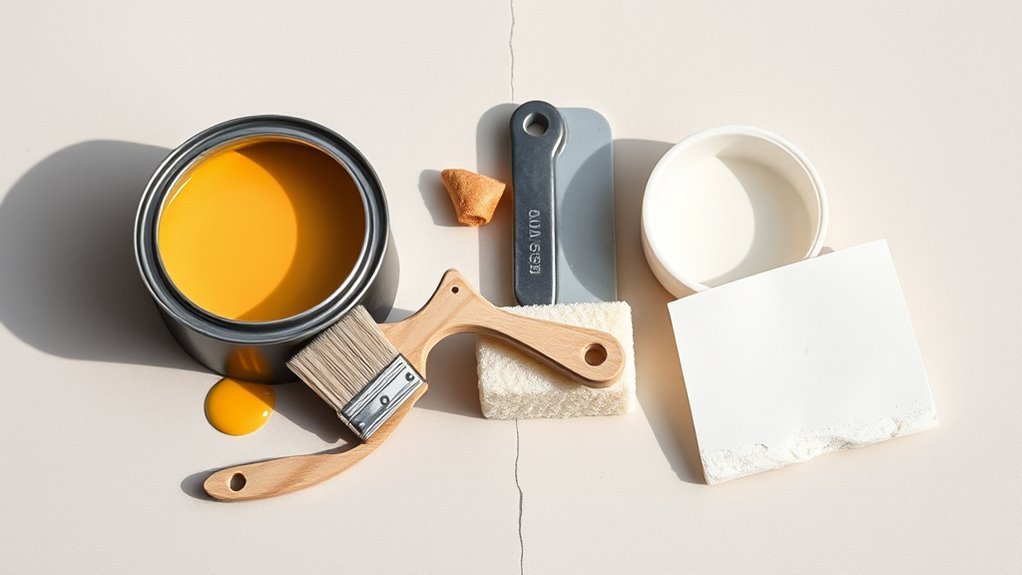
If you need a fast way to tell oil from latex paint, look at sheen, drying time, and cleanup. You’ll spot differences quickly: oil often levels out to a smoother surface texture and holds richer color comparison across batches, while latex can appear slightly matte or textured when it dries.
Test drying time by touching a discrete spot; latex skins in an hour, oil can stay tacky for much longer. For cleanup, use water for latex and mineral spirits for oil. These quick checks let you identify the type without tools, saving time before sanding or repainting.
Visual and Tactile Clues: Color, Sheen, and Surface Feel
When you inspect a painted surface up close, color, sheen, and how the paint feels under your fingertips give immediate clues about whether it’s oil- or latex-based. You’ll notice oil paint often has richer color consistency and a smoother, sometimes slightly tacky surface, while latex can look flatter or fresher and feel more plasticky or coarse. Sheen helps: high gloss and deep, even reflection often point to oil; matte or eggshell suggests latex. Use touch lightly; fresh oil may feel tacky. Quick table for reference:
| Feature | Oil paint | Latex paint |
|---|---|---|
| Color consistency | Rich, even | Variable |
| Surface texture | Smooth/tacky | Slightly coarse |
Check the Paint Can, Labels, and Building Records First
Before you test the paint, check any leftover cans or labels for clear wording like “oil-based” or “latex.” You can also note product codes and manufacturer names to look up specifications online.
If cans aren’t available, quickly scan building records or past renovation invoices for paint brand and type.
Inspect The Labeling
Start by checking any paint cans, labels, or building records you can find, since manufacturers usually list the base (oil/alkyd or latex/water) right on the label or product data sheet.
Read ingredient lists, technical sheets, and application instructions — terms like “alkyd,” “solvent-based,” or “waterborne” tell you the base.
Note sheen and recommended clean-up; oil recommends mineral spirits, latex says soap and water.
If labels mention adhesion to glossy surfaces, compare finish for color comparison and surface texture clues versus surrounding paint.
Photograph or copy records so you won’t lose identification details later.
Look For Product Codes
If you can’t find clear wording that says “oil” or “latex,” look for product codes on the can, label, or in building records—they’ll tell you the exact formulation if you decode them. Check for batch numbers, SKU, or alphanumeric codes; manufacturers list base type in technical sheets tied to those codes.
Note any paint system codes that reference solvent or water bases. Match the code to the maker’s online guide or call customer service.
Use color consistency and surface texture notes you’ve observed to confirm you’ve found the right entry—codes plus real-world samples give a reliable ID.
Review Building Records
When you have access to the job site or leftover materials, check the paint can and any labels first—those markings often give the quickest confirmation of oil or latex. If labels aren’t available, review building records: purchase receipts, contractor job logs, or renovation permits often note product type, brand, or VOC class.
You can match recorded brand names to manufacturer specs for Color matching guidance and proper Brush techniques recommendations. Don’t forget maintenance logs that list touch-up products.
Keep photocopies or digital photos of records with the can for future reference so you avoid mismatched coatings.
Rubbing‑Alcohol Test for Latex Paint
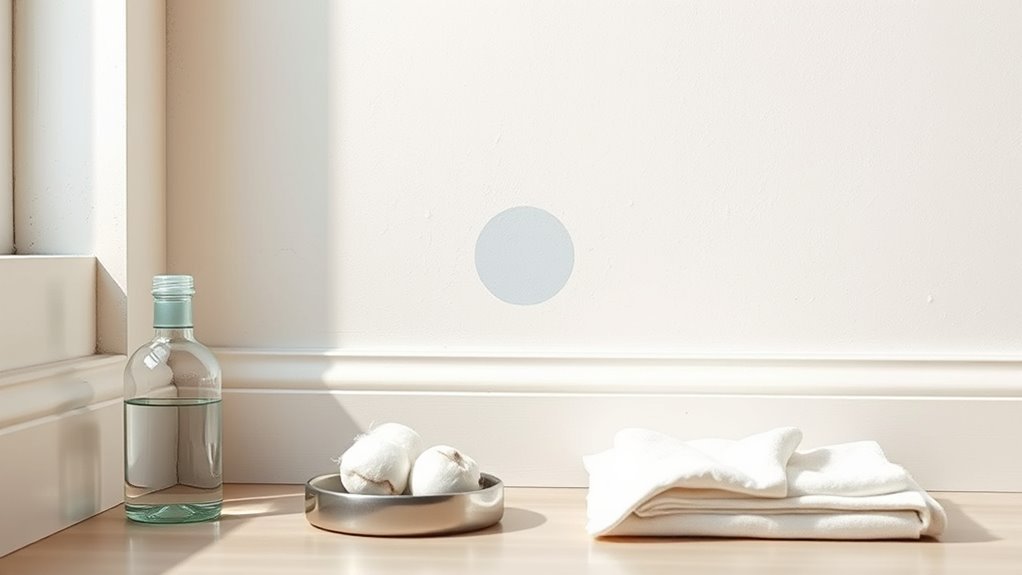
Want a quick, low‑mess way to check for latex paint? Dampen a cotton ball with rubbing alcohol, press it against a small painted area, and rub gently for a few seconds. If paint softens or comes off onto the cotton, it’s likely latex.
If the paint stays, it’s probably oil‑based. Use an inconspicuous spot and test multiple areas if finishes vary. This method helps you assess paint durability and informs color matching decisions before repainting.
Clean the test area with water afterward. Don’t over‑rub or test large areas to avoid unnecessary damage to the existing finish.
Acetone or Lacquer‑Thinner Test for Oil‑Based Paint
Curious whether that stubborn, nonreactive finish is oil‑based? Dampen a cotton swab with acetone or lacquer thinner and rub a small, hidden spot. If the surface softens, dissolves, or lifts, it’s likely oil‑based; if nothing happens, it’s probably latex.
Work in a ventilated area and wear gloves—these solvents’re strong. Don’t overdo testing: pick a hidden corner to avoid visible damage.
Once confirmed, plan your next steps: choose proper color matching and the right brush selection for oil paint to guarantee smooth application. Clean tools immediately with appropriate solvent after use.
When to Send a Paint Sample for Lab Analysis
If the acetone test leaves you unsure—because the surface only partially softened, the area’s been repainted multiple times, or you’re dealing with old lead‑containing layers—you should send a paint sample to a lab for definitive analysis.
Send a chip that includes all layers so technicians can identify binder type, pigments, and hazards. Labs give precise results useful for color matching and for selecting compatible primers or topcoats.
You’ll also learn whether your *desired* brush techniques will disturb underlying layers. Collect samples cleanly, seal them, and include photos and notes about the site to speed accurate interpretation and recommendations.
How to Prepare and Test a Small Painted Area Safely
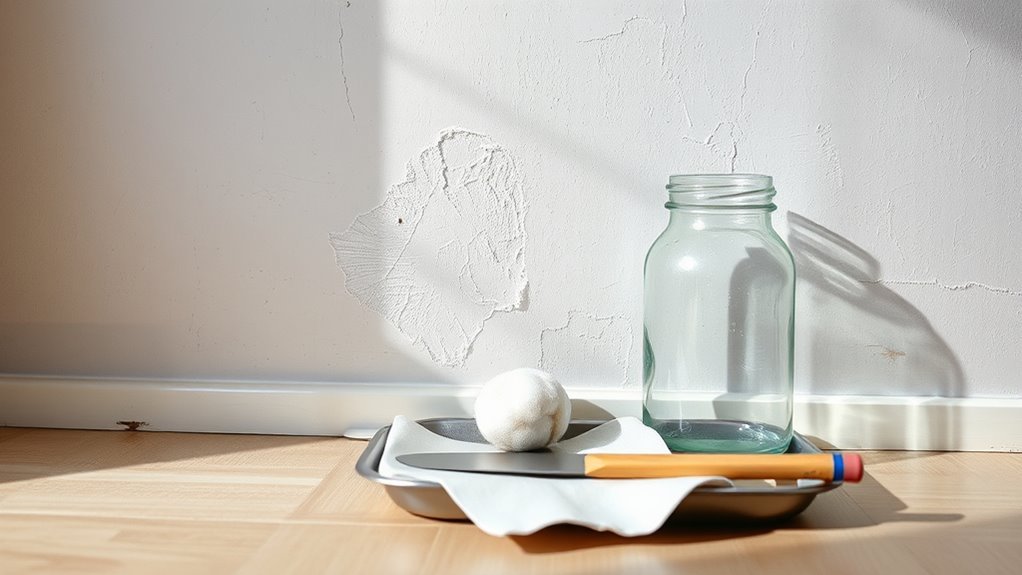
Before you start testing, clear and protect the area. Put on gloves and a respirator rated for paint particles and vapors. Work with good ventilation so you don’t breathe dust or fumes.
Choose a discreet spot. Remove loose debris with a soft brush, and tape off a 1–2 inch test patch. Use a small razor or utility knife to scrape a tiny sample for a solvent test (alcohol for latex, mineral spirits for oil).
Wipe gently, note results, and record color and finish—useful for matching and documenting historical color trends. Consider the environmental impact of disposal.
After ID: Sanding, Priming, and Repainting for Oil vs. Latex
Once you know whether the existing paint is oil or latex, you’ll sand the surface to scuff glossy areas and remove loose material so new paint will adhere.
Check primer compatibility next—use a bonding primer for oil-over-latex or a latex primer designed for previously oil-based finishes, and always follow the manufacturer’s label.
Finally, wipe away dust, let the primer cure, and repaint with the appropriate finish.
Sanding Surface Prep
When you’re preparing to sand, focus on creating a clean, dull surface so new primer and paint will bond reliably.
Start by cleaning dirt, grease, and chalk from areas showing color fading or surface cracking; solvent wipes or mild detergent work well.
Use 120–150 grit sandpaper for latex over oil and 180–220 grit for smoothing latex finishes.
Sand with the grain, don’t oversand, and feather edges where paint is peeling.
Remove dust with a vacuum and tack cloth.
Check for remaining loose paint and repeat sanding only where adhesion issues persist before moving on to priming.
Primer Compatibility Check
After sanding and removing dust, you’ll need to confirm primer compatibility so your new coat adheres and performs as expected. Check the existing paint type—oil or latex—then choose a primer formulated to bond with it; use an oil-based primer over oil paint or a bonding primer for mixed surfaces.
Test a small patch to verify color consistency and sheen once primed and dried. Assess brush compatibility by trying your desired brush and stroke; some primers are thicker and need synthetic or natural bristles.
Allow full cure before repainting. Label and note results for future projects to avoid adhesion or finish issues.
What to Do When Paint Tests Give Mixed or Unclear Results
If your spot tests give mixed or unclear results, don’t panic—ambiguous outcomes are common, especially on older surfaces or overcoated areas. You can still proceed methodically: check color consistency across layers and note odor differences when sanding or testing solvents. Then follow these steps.
- Re-test in a hidden area after cleaning to remove contaminants.
- Use a stronger solvent (mineral spirits then denatured alcohol) and observe reaction time.
- Sand gently to expose substrate; oil layers often feel slicker.
- When unsure, strip a small section and bring a sample to a paint store for professional analysis.
Frequently Asked Questions
Can Old Lead-Based Paint Affect the Rubbing-Alcohol Test Results?
Yes — lead paint can reduce test accuracy; if you’re testing over old lead paint, its surface condition or coatings might interfere, so don’t rely solely on the rubbing-alcohol result and confirm with a lead-specific test.
Can Oil and Latex Paints Be Safely Mixed for Touch-Ups?
Like oil and water, they don’t mix well: you shouldn’t blend oil and latex for touch-ups. You should match paint compatibility and perform proper surface preparation so coatings adhere, preventing peeling and uneven finish.
How Do Primers Differ for Oil-Based vs. Latex Paint?
Oil-based primers use alkyd resins for stain blocking, while latex primers use acrylics for flexibility; you’ll adjust application techniques—brush/roll thicker coats for oil, thin even layers for latex—and choose compatible primer composition.
Can Temperature or Humidity Alter Test Outcomes?
Soggy, shivery, startling — yes, temperature sensitivity and humidity impact testing. You’ll get slower drying, muddled reactions and false feels when it’s cold or humid, so you’ll need controlled conditions to confirm results reliably.
Are There Environmental Disposal Rules for Oil-Based Paint?
Yes — you’ll need to follow paint disposal rules: oil-based paint is hazardous, so you’ll comply with environmental regulations, use hazardous waste collection or approved drop-offs, and never pour it down drains or into the environment.
Conclusion
You can quickly narrow down whether a paint is oil or latex using labels, rubbing alcohol, or stronger solvents, and send a lab sample if you need certainty. Test a small, hidden spot safely, wear gloves and ventilate, then follow the right prep—sand, prime, and repaint—based on your result. If tests conflict, treat it like oil-based until proven otherwise. Your approach should be steady and sure, like using a compass on a foggy night.
