
How to Remove Tape From Wall Without Damaging Paint
You can remove tape without ruining paint by warming the adhesive with a hair dryer, lifting a scored edge gently with a razor held flat or a plastic putty knife, then peeling slowly at a 30–45° angle while the paint is still slightly tacky. For stubborn residue, use soapy water, vinegar, or a mild oil, test first, and rinse well. If paint starts to lift, stop and prime and touch up; explore the steps below for more tips.
Quick Answer: Remove Tape From Wall Without Damaging Paint
If you want a fast, safe way to remove tape without peeling paint, pull it back slowly at a low angle (about 45 degrees) while keeping the strip taut; you’ll minimize stress on the finish.
Work in short sections, and if the tape resists, warm the adhesive lightly with a hair dryer to ease adhesive removal.
Keep fingers close to the wall to control the pull and avoid sudden jerks that damage paint.
For delicate surfaces, use a plastic scraper to lift an edge first.
These steps prioritize paint protection while removing tape efficiently and reduce touch-up needs.
When to Remove Painter’s Tape After Painting
For crisp edges, remove painter’s tape while the paint is still slightly wet so it doesn’t pull dried paint with it.
If you’re working with oil-based or high-build coatings, though, wait for the paint to fully cure to avoid lifting or stretching.
Decide based on the paint type and follow the manufacturer’s recommended timing.
Remove Tape While Wet
When the paint is still tacky, you should pull the tape off right away to prevent dried edges from lifting and to get a cleaner line. You’ll peel slowly at a 45° angle, keeping the strip close to the surface so you don’t tug on drying film.
For delicate wall textures, pull along the contour to avoid pulling paint from high points. If tape hazards like adhesive residue or tearing happen, stop and wet the tape slightly to soften the adhesive, then continue.
Clean any residue with a damp cloth and mild soap, blotting rather than scrubbing to protect the finish.
Wait For Full Cure
Although you’ll be tempted to remove the tape as soon as the surface looks dry, you should wait until the paint has fully cured to avoid peeling or lifting, which can happen even after the top layer feels dry.
Give modern latex paint at least 24–72 hours and oil-based finishes longer — check manufacturer cure times.
When you remove tape, score the edge and pull at a 45° angle to minimize stress.
If time’s tight, consider tape alternatives or test a small area first.
Proper wall preparation and clean edges reduce the chance you’ll need to redo trim or touch up paint.
Test Paint Adhesion Before Pulling Tape
Before you pull the tape, check the paint firmness by gently pressing a fingernail or your fingertip against the edge to see if it’s set.
If it feels soft, do a low-tack test with a small scrap of tape to see whether it lifts any paint.
If needed, warm the edge with a hair dryer or test a solvent in an inconspicuous spot to loosen the adhesive without harming the finish.
Check Paint Firmness
If the paint’s loose or chalky, pulling tape can peel off chunks of finish, so you should test adhesion first. You’ll check paint firmness by pressing a fingernail gently into a hidden spot, rubbing a small area with a cloth, and inspecting for powdery residue.
Good surface preparation and paint durability matter: older or poorly prepped walls stick to tape more. Don’t skip this quick assessment—catching weak adhesion lets you choose safer removal methods or touch up beforehand.
Follow these three quick checks:
- Fingernail press
- Cloth rub test
- Visual powder/residue inspection
Use A Low-Tack Test
When paint seems sturdy but you still want to be sure, do a low-tack test: stick a short strip of low-adhesion tape (painter’s or testing tape) to an inconspicuous corner, press it down, then peel it back slowly at a 45-degree angle to see if any paint lifts.
Try different Tape types if you used varied brands earlier; thinner painter’s tape is gentler than heavy-duty masking.
Test across Wall textures—smooth, eggshell, or textured drywall—since adhesion varies.
If the test shows no damage, proceed with caution; if paint lifts, stop and reassess removal method to avoid wider harm.
Try Heat Or Solvent
Since your low-tack test showed whether the paint will lift, try applying a little heat or a solvent patch to further gauge adhesion before you pull off the main tape. You’ll confirm adhesion without risking a large strip.
Use a hair dryer on low heat or a cotton swab with isopropyl alcohol on an inconspicuous edge. Observe for softening, discoloration, or lifting.
- Warm the tape edge gently with a hair dryer to loosen adhesive.
- Dab a tiny solvent patch (isopropyl alcohol) to test paint reaction.
- Peel a small corner slowly, checking for paint adhesion.
These tape removal techniques support reliable paint adhesion testing.
Lift Tape Edges Safely Without Scoring Paint
Before you pull the tape up, score the edge lightly with a plastic putty knife or old credit card so you lift adhesive without scratching the paint. You’ll work the blade under a corner, easing up just enough to separate tape from surface. Keep pressure gentle and angle shallow to avoid gouging or lifting paint film.
Use short, controlled motions and re-score as needed rather than forcing the tape. This method helps with tape removal and paint preservation by minimizing stress on the coating.
If adhesive resists, pause and soften it with a hair dryer before continuing to protect the finish.
Peel Tape at the Right Angle and Speed
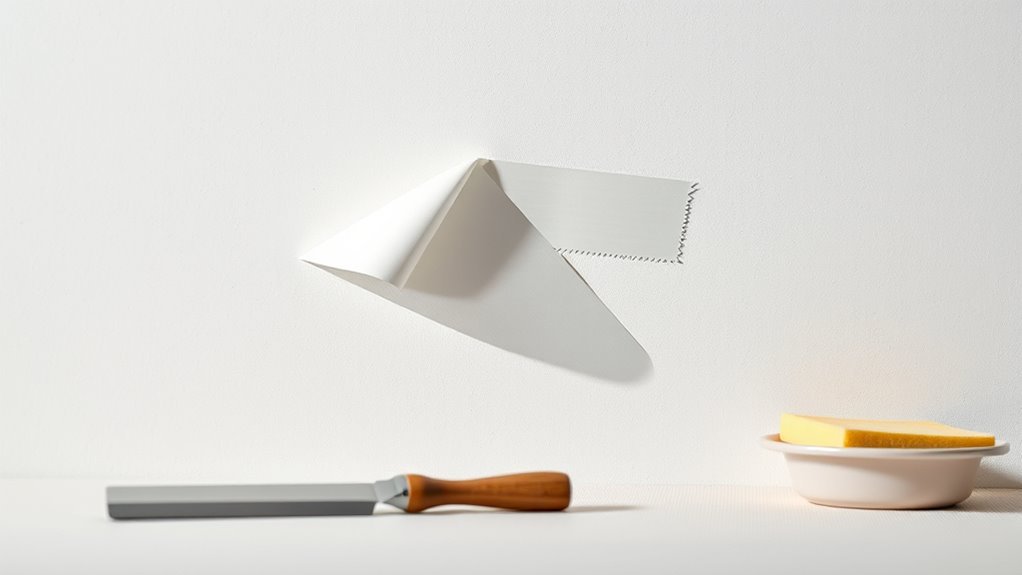
Peel the tape slowly and steadily to avoid tearing the paint.
Keep the strip at a low angle close to the wall so the adhesive pulls away rather than lifting the finish.
If the tape’s stubborn, warm it with a hair dryer first to soften the glue before you peel.
Peel Slowly And Steadily
When you pull tape off the wall, do it slowly and at a low, consistent angle so the adhesive releases without lifting paint. You’ll steady your hand, keeping motion even and deliberate; sudden tugs stress the bond between paint and wall. Use gentle, continuous pressure and pause if you see resistance.
These tape removal techniques pair well with basic paint adhesion testing beforehand so you know how aggressive you can be. If paint seems fragile, slow down more and peel back in short, controlled sections. Practice on an inconspicuous spot to build confidence.
- Slow, steady pull
- Small sections
- Pause and assess
Keep Low Angle
If you pull the tape back at a low, shallow angle—about 30 to 45 degrees—you let the adhesive release along the wall instead of yanking paint off with it. Keep your wrist steady and peel slowly; sudden jerks increase risk.
Work in short sections, maintaining that low trajectory so stress stays near the tape edge. Check as you go from different camera angle perspectives or with a simple lighting setup to spot lifting paint or residue early.
If you see trouble, stop and readjust angle or pace. Consistent low-angle peeling preserves paint and gives you predictable results.
Warm Tape First
Although you might be tempted to yank tape straight off, warming it first makes removal much cleaner and safer for the paint. You’ll use gentle heat to soften adhesive so Tape removal is smoother and Paint preservation is more reliable.
Aim a hair dryer or heat gun (low) at the tape for a few seconds, testing a corner.
- Heat briefly to loosen glue and avoid paint lift.
- Peel slowly at a low angle, keeping steady speed.
- Reapply heat if resistance increases to protect finish and guarantee clean edges.
Safe Heat Methods: Hair Dryer vs. Heat Gun
Because heat softens adhesive, using a hair dryer or a heat gun can make tape peel off walls more cleanly—but they’re not interchangeable. You’ll prioritize heat safety and paint compatibility: set a hair dryer to medium, keep it moving, and hold it several inches away to warm tape without scorching paint.
Reserve a heat gun for stubborn adhesive, using its lowest setting and short bursts while testing a hidden spot first. Never concentrate heat long in one area.
Wear gloves, ventilate the room, and stop if paint blisters or softens. Work slowly to lift tape as adhesive loosens.
Use Rubbing Alcohol to Loosen Tape Adhesive
When heat can’t fully loosen stubborn residue, reach for rubbing alcohol to break down the adhesive without harming most paints. Dampen a soft cloth or cotton pad, blot the tape edge, and let it sit briefly. You’ll peel gently along the wall, keeping pressure low to protect decorative techniques and varied wall textures. Test a hidden spot first to confirm no finish change.
If heat fails, dab rubbing alcohol on the tape edge, let sit, then peel gently—test a hidden spot first.
- Apply alcohol sparingly to avoid soaking.
- Work in small sections, reapplying as needed.
- Wipe residue with a clean cloth, then rinse lightly.
Finish by drying the area to prevent streaks.
Vinegar, Warm Water, and Other Gentle Solvents
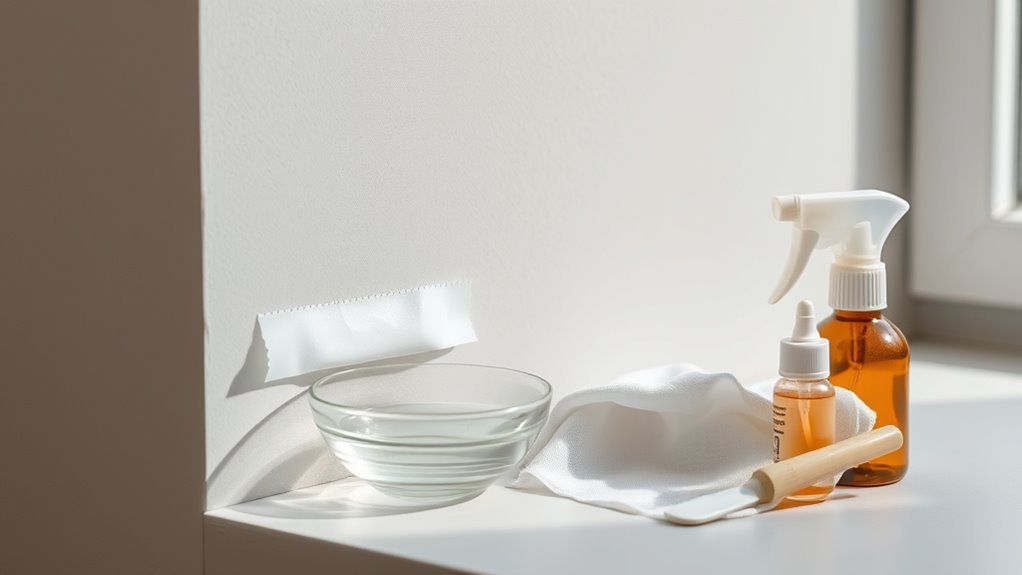
If heat or rubbing alcohol feels too strong for your paint, try gentler options like white vinegar or warm, soapy water to soften adhesive without harsh chemicals.
Use a 1:1 vinegar cleaning solution or mild dish soap in warm water, dampen a cloth, and blot the residue—don’t soak the wall. Let the solution sit briefly, then rub gently in small circles.
Test a hidden spot first to ensure no color change. Rinse with a clean, damp cloth and dry.
These gentle solvents remove most sticky bits safely; repeat once if needed, progress slowly to protect paint.
Household Oils and Cooking Spray for Residue
You can use household oils or a light cooking spray to loosen sticky tape residue, but pick a non-staining option like mineral oil or vegetable oil.
Apply a small amount, let it sit a few minutes to soften the adhesive, then gently wipe or scrape it away.
Afterward, clean the area with mild soap and water to remove any oily film so the paint stays intact.
Choose The Right Oil
Because adhesive residue responds differently to oils, pick one that’s gentle on paint but effective at breaking down tackiness. When choosing oil, consider odor, color, and solvent strength so you won’t stain or strip finishes. Test a hidden spot first.
- Olive or vegetable oil — mild, cheap, low risk for painted walls.
- Mineral oil or baby oil — clearer, less odor, good for visible areas.
- WD-40 or citrus-based sprays — stronger; use sparingly and avoid porous or delicate paints.
For oil application, use a soft cloth and minimal product to lift residue without over-saturating the paint.
Application And Dwell Time
Now that you’ve picked an appropriate oil, apply it sparingly to the residue and let it sit so the adhesive softens without soaking the paint. You’ll test a small inconspicuous spot, watch dwell time, then gently rub. Use brief intervals—2–5 minutes for light residue, longer for stubborn glue—and document what works. These tape removal techniques reduce risk and inform any future paint touch up procedures. Don’t scrub hard; reapply small amounts if needed and wipe with a soft cloth. Below is a quick reference to guide timing and action.
| Situation | Dwell | Action |
|---|---|---|
| Light film | 2 min | Wipe |
| Sticky tape | 5 min | Rub |
| Old adhesive | 10 min | Reapply |
| Sensitive paint | 1–2 min | Blot |
| Test spot | N/A | Inspect |
Remove Residue Safely
If you’ve got sticky residue left after peeling tape, household oils and non-aerosol cooking sprays can loosen adhesive without harsh chemicals. Dab a small amount on a soft cloth, test an inconspicuous spot to check effects on paint sheen and wall texture, then proceed slowly.
Rub gently in circular motions until residue lifts, then wipe with mild soapy water to remove oiliness.
- Use a cotton cloth and minimal oil.
- Test first for sheen change or texture softening.
- Rinse thoroughly and dry to prevent staining or lingering tack.
Commercial Adhesive Removers: When to Use Them
Commercial adhesive removers can save you time and protect paint when simple solutions fail, but you should reach for them selectively. You’ll consider Commercial adhesives strength, paint age, and Surface preparation before using solvents. Test in an inconspicuous spot, follow label instructions, ventilate, and wear gloves. Use small amounts, blot—don’t rub—and rinse residue promptly. If paint softens or dulls, stop.
| When to use | When to avoid |
|---|---|
| Heavy residue | Freshly painted walls |
| Sticky backing | Delicate finishes |
| After testing | Weak or chalky paint |
| Stubborn spots | Vintage or flaking paint |
| Controlled application | Unventilated spaces |
Which Tapes Are Safest for Fresh Paint
When you’re dealing with fresh paint, pick low-tack painter’s tapes and paper-based masking tapes designed for delicate surfaces so you won’t pull off the finish when you remove them. You’ll want tapes that release cleanly after short dwell times and resist bleeding on textured or glossy surfaces.
For Creative wall designs and Alternative wall coverings, choose tapes labeled “delicate” or “for freshly painted surfaces.” Consider these safe options:
- Low-tack blue painter’s tape for clean lines.
- Paper-based masking tape for delicate trims.
- Drafting or artist’s tape for temporary accents.
Test a small hidden area before full use.
Choose the Right Painter’s Tape for Your Project
Because the right tape balances adhesion and gentleness, you’ll protect fresh paint while getting sharp lines and easy removal. Pick tape based on surface and duration: delicate-paper for newly painted walls, medium-adhesion for standard trim, and high-adhesion for textured or exterior surfaces.
Check Tape textures—smooth for crisp edges on flat walls, creped for rough or uneven areas. Match tape width to your cut lines and avoid cheaper brands that shed adhesive.
Do Wall preparation first: clean, dry, and remove dust so tape sticks evenly. Test a small patch and peel slowly at a 45° angle for best results.
How Temperature & Humidity Affect Tape Grip
How does the weather in your room change tape performance? You’ll notice Temperature effects and humidity influence adhesive strength: cold makes adhesive stiff, heat softens it, and high moisture can weaken the bond. Adjust timing and handling so you don’t damage paint.
How room temperature and humidity alter tape—cold stiffens, heat softens, and moisture weakens adhesive; time and handle wisely.
- Apply tape when the room is moderate (60–80°F) to avoid brittle or gooey adhesive.
- Reduce humidity before taping; moisture can lift edges and promote seepage under the tape.
- Remove tape slowly at a 45° angle when conditions are stable; extreme temperature swings increase peel resistance and risk paint pull.
Removing Tape From Latex, Oil, and Textured Walls
If your walls are latex, oil-based, or textured, you’ll need to adjust your removal technique to match the surface so you don’t strip paint or snag texture.
For latex, peel slowly at a 45° angle; warm the tape edge with a hairdryer to relax adhesive.
For oil-based paint, test a small corner first and use a plastic scraper gently to lift without gouging.
For pronounced wall texture, pull parallel to grooves and work in short sections to avoid ripping raised areas.
These tips respect modern decorating trends and varied wall texture, keeping finishes intact while removing tape safely.
Remove Tape From Painted Doors and Cabinets
Moving from walls to doors and cabinets, you’ll find the smaller, flatter surfaces change how tape behaves and how you should remove it. You’ll work more gently than on larger wall textures because paint layers are thinner and edges show damage quickly. Test an inconspicuous spot first, warm adhesive with a hair dryer, then peel slowly at a low angle.
For sticky residue, use a mild solvent safe for your finish.
- Heat gently, peel slowly.
- Use plastic scraper, not metal.
- Clean residue with safe solvent.
Creative decorating projects benefit when you protect finishes and proceed carefully.
Remove Tape From Wallpaper Without Damage
When removing tape from wallpaper, warm the adhesive first with a hair dryer on low so it peels without tugging the paper.
Peel the tape back slowly at a low angle to keep the paper intact.
If any sticky residue remains, lift it gently with a soft cloth and a mild adhesive remover suited for wallpaper.
Warm The Adhesive
Because heat softens the glue, gently warming the tape makes it peel away from wallpaper with far less risk of tearing or lifting paint. You’ll rely on basic adhesive chemistry: heat lowers bond strength, so the tape releases more cleanly.
Match your method to wall texture and test a hidden spot first. Use low heat and steady motion, avoiding saturation or sharp tools that damage paper.
- Hair dryer on low, keep 6–8 inches away for 20–30 seconds.
- Heat pack wrapped in cloth, press briefly.
- Warm iron through a towel, move continuously to prevent scorching.
Peel Tape Slowly
Although you’ve softened the adhesive, peel the tape slowly and at a low angle to keep the paper from lifting. You’ll work with tape texture—smooth tapes release differently than cloth. Use steady pressure, keep the angle shallow, and stop if the wallpaper starts to stretch. Monitor for adhesive residue but don’t scrub yet; you’ll address residue in the next step. If edges buckle, warm lightly and continue. Stay patient: quick jerks tear paper. The table below helps you choose pace and angle based on tape type.
| Tape type | Angle | Recommended speed |
|---|---|---|
| Smooth | 30° | Slow |
| Cloth | 15° | Very slow |
| Paper | 20° | Slow |
Remove Residue Gently
Now that you’ve peeled the tape slowly, tackle any leftover adhesive with care to protect the wallpaper’s finish. Test a hidden spot first, since different tape textures and adhesive types react differently. Use mild solutions and gentle tools to avoid lifting paper.
- Try a damp microfiber cloth with warm water, blotting—don’t rub.
- For stubborn residue, apply a small amount of citrus-based remover, wait, then wipe gently.
- If adhesive persists, use a plastic scraper at a low angle and finish with a dry towel.
Work patiently, testing as you go to preserve pattern and glue integrity.
Remove Tape From Trim, Baseboards, and Corners
When you remove tape from trim, baseboards, and corners, work slowly and pull at a low angle so you don’t peel paint or gouge the surface.
For delicate edges, score along the tape with a razor blade held flat to avoid lifting paint.
Heat stubborn adhesive lightly with a hairdryer to loosen glue, then peel back gently.
Use a fishing line or dental floss to saw through tape in tight corners without prying.
After removal, clean residue with a mild solvent on a microfiber cloth, testing an inconspicuous spot first.
These Tape removal steps protect finish and guarantee Paint preservation.
Remove Old Packing Tape Without Stripping Paint
You handled edges and baseboards carefully — the same patience helps with old packing tape stuck to painted walls. Work slowly to avoid lifting paint used in creative wall art or on surfaces finished with decorative paint techniques.
- Soften adhesive: warm with a hair dryer on low, then peel at a shallow angle.
- Dissolve residue: apply a small amount of isopropyl alcohol or a gentle adhesive remover on a cloth, blot, then wipe.
- Clean and protect: rinse with mild soap, dry, and touch up tiny nicks with matching paint.
Test solvents on an inconspicuous spot first.
Remove Sticky Labels and Backing Paper Safely
When you need to remove sticky labels or backing paper, start with gentle adhesive removal to avoid lifting paint. Use a soft cloth and mild solvent like rubbing alcohol or a citrus-based adhesive remover, testing a small hidden spot first.
Finish with residue cleanup techniques—warm soapy water and a microfiber cloth—to restore the surface without damage.
Gentle Adhesive Removal
If a sticky label or paper backing won’t peel off cleanly, work slowly and use gentle heat or a mild solvent to loosen the adhesive without scrubbing paint away. You’ll respect adhesive chemistry by avoiding aggressive solvents that break paint binders; test a hidden spot first.
Use a hairdryer on low, or a citrus-based cleaner applied sparingly, and lift edges with a plastic scraper or credit card.
Consider tape alternatives like low-tack mounting strips next time to prevent stubborn residue. Follow this brief, careful process to protect finish and avoid gouging.
- Warm, low heat
- Mild solvent, spot-tested
- Plastic scraper
Residue Cleanup Techniques
Because adhesive residues can attract dirt and damage paint over time, tackle them promptly and gently to protect the finish. You’ll soften sticky labels with mild soapy water or a little oil, test inconspicuously, then scrape with a plastic card. For backing paper, dampen edges and peel slowly. Consider tape alternatives and proper wall preparation next time to avoid repeat issues.
| Feeling | Action | Result |
|---|---|---|
| Frustration | Soak | Release |
| Relief | Scrape | Clean |
| Confidence | Protect | Preserve |
| Hope | Choose | Prevent |
Clean Adhesive Without Streaking Painted Surfaces
Once you’ve peeled the tape away, remove leftover adhesive gently so you don’t streak the paint; using a soft cloth dampened with a mild solvent and wiping in one direction keeps the finish even and minimizes smearing.
After peeling the tape, gently lift adhesive with a soft cloth and mild solvent, wiping one direction to avoid streaks.
Work small areas, testing solvent on an inconspicuous patch first. If residue persists, try gentle rubbing with a cotton pad soaked in rubbing alcohol or a citrus-based remover, then immediately blot dry.
Consider alternative wall coverings if repeated cleanup damages the finish, and keep paint touch-up techniques ready for tiny fixes.
Follow this order for best results:
- Test solvent patch
- Wipe one direction
- Blot and dry
Protect Delicate or Chalky Paint Finishes First
When your paint feels chalky or flakes easily, take extra precautions before removing tape so you don’t strip finish or spread dust. You’ll test a small hidden area for Paint compatibility and gently remove loose powder with a soft brush. Surface preparation matters: vacuum or soft-wipe away dust, wear gloves, and score tape edge with a utility blade at a shallow angle. Pull tape slowly at a 45° angle, keeping it low and parallel to the wall. If residue loosens, pause and reassess to avoid further damage.
| Test area | Tool | Action |
|---|---|---|
| Hidden corner | Soft brush | Dust first |
| Small patch | Razor | Score edge |
| Edge trim | Gloves | Pull slowly |
| Chalky spot | Vacuum | Clean gently |
| Questionable paint | Solvent swab | Compatibility test |
Repair Minor Paint Lifts After Tape Removal
First, check how much paint lifted by gently running your fingertip over the area to assess severity.
If only the edges are peeling, press them back down and secure with a small dab of painter’s adhesive or clear-drying PVA.
For larger lifts, you’ll want to sand lightly and spot-prime before repainting.
Assess Paint Lift Severity
Although small paint lifts can look alarming at a glance, you can often fix them without repainting the whole wall. Start by gauging how much paint came away and whether the underlying surface is intact. Check the edges, size, and adhesion before choosing a repair approach. Note the paint color match and whether wall texture matters for blending.
- Measure area: tiny (pinhead) versus larger (inch+).
- Inspect substrate: plaster, drywall, or primer exposure.
- Test adhesion: press nearby paint; does it flex or flake?
Document findings so you pick the right materials and technique.
Reattach Peeling Edges
Now that you’ve assessed the lift and confirmed the surrounding paint is stable, you can reattach small peeling edges to restore a smooth finish. Gently lift the flap, clean beneath with a soft brush, and apply a tiny dab of PVA or re-emulsifying adhesive suited to the paint and Tape textures involved. Press edge down with a plastic putty knife and hold briefly with low-tack tape. Let dry fully, then feather a bit of matching paint if needed.
| Step | Tip |
|---|---|
| 1 | Clean debris |
| 2 | Choose adhesive |
| 3 | Apply sparingly |
| 4 | Press firmly |
| 5 | Touch up paint |
Troubleshoot: What to Do If Paint Peels During Removal
If paint peels while you’re removing tape, stop immediately to prevent further damage and assess the affected area. You’ll want to limit peeling, lift loose flakes, and decide whether touch-up or repair is needed. Consider switching to alternative masking techniques next time and try eco friendly adhesive removers on stubborn residue.
- Gently lift loose paint with a plastic scraper, avoiding bare drywall gouges.
- Clean residue with a mild, eco friendly adhesive remover, let dry, then sand lightly.
- Prime bare spots before repainting; feather edges so new paint blends.
Act promptly to minimize repairs.
Remove Tape From Exterior Painted Surfaces Safely
When working on exterior walls, pull tape slowly and at a low angle to reduce the chance of lifting paint or damaging trim. Test a small section first, since sun, moisture, and temperature affect adhesion.
Support fragile edges with your free hand, and warm stubborn tape briefly with a hair dryer to soften adhesive without overheating siding or trim.
Match removal speed to wall texture—rough surfaces need gentler tugs. Use a plastic scraper for raised areas, keeping blades flat to avoid gouging exterior finishes.
Clean residue with a mild solvent recommended for your paint type, rinse, and let surfaces dry before inspection.
Prevent Future Tape-Related Paint Damage
Having protected and removed tape carefully on exterior surfaces, you can take simple steps to prevent paint damage in future projects. Plan your wall prep, choose low-tack decorative masking tape, and test adhesion on a hidden spot. Clean and dry surfaces first so tape sticks without pulling paint. Store tape properly to keep edges clean.
Protect exterior finishes by planning prep, using low‑tack masking, testing adhesion, and removing tape carefully to avoid peeling.
- Use low-tack decorative masking for delicate finishes.
- Do thorough wall prep—wash, sand lightly, and prime where needed.
- Remove tape slowly at a 45° angle while the paint’s slightly tacky, not fully cured.
These habits reduce peeling and save touch-ups.
Quick Checklist: Tools and Supplies You’ll Need
Because good results start with the right gear, gather a handful of reliable tools before you begin. You’ll want items that protect paint while supporting creative decorating and using eco friendly adhesives when possible. Keep things simple: gentle heat, steady pull, and soft cleanup.
| Tool | Purpose | Tip |
|---|---|---|
| Hair dryer | Soften adhesive | Low heat |
| Fishing line | Lift tape edge | Pull at angle |
| Plastic scraper | Remove residue | Nonmetal |
| Microfiber cloth | Clean surface | Damp, mild soap |
| Adhesive remover | Final cleanup | Eco-friendly option |
Pack these, work slowly, and test a hidden spot first.
Frequently Asked Questions
Can I Remove Tape From Plaster or Lath Walls Without Damage?
Yes — you can remove tape from plaster or lath walls without damage if you go slowly, score edges, warm adhesive, and lift gently; watch wall texture and avoid paint peeling by testing a hidden spot first and using mild solvents.
Will Adhesive Residue Harm Matte vs. Satin Finishes Differently?
At the drop of a hat, you’ll find adhesive residue affects matte more than satin: Adhesive strength can mar matte’s delicate surface, while satin’s higher Finish durability usually resists marks; test first and proceed gently to avoid damage.
Can Children or Pets Be Present While Using Heat or Solvents?
You shouldn’t have children or pets nearby when using heat or solvents; you’ll need to guarantee child safety and pet safety by turning off access, ventilating the room, and supervising until residues and fumes are fully cleared and cooled.
How Long Can Tape Stay on Painted Surfaces Before Permanent Bonding?
Like a slow hug, you’re usually safe for a few days to two weeks before adhesive strength and tape durability increase; beyond several months you risk permanent bonding, so check and remove tape within weeks.
Is It Safe to Reuse Painter’s Tape After Removal?
You generally shouldn’t reuse painter’s tape; it loses adhesion and risks paint damage. For reliable results, replace it. Use proper tape removal techniques and consider painter’s tape durability only for short-term reuse in noncritical areas.
Conclusion
You’ve learned to lift tape lightly, limit lingering time, and pull at a low, slow angle to protect painted surfaces. Before pulling, probe paint’s grip with a tiny test; if it tugs, warm gently or score discreetly. For exteriors, plan around temperature and humidity. Prevent peeling by prepping properly and using the right tape. With careful, consistent care and cautious, calm handling, you’ll save surfaces, stress, and costly repainting.
