
Is Latex Paint Water or Oil Based?
Latex paint is water-based, so you’ll clean brushes with soap and water and it dries by water evaporation rather than slow oil curing. The word “latex” actually means a synthetic polymer emulsion (acrylic, vinyl-acrylic), not natural rubber. It dries faster, has lower VOCs, and resists yellowing, while oil-based (alkyd) paints cure by oxidation and need solvents. If you want durability or special adhesion tips, keep going for practical guidance and testing methods.
What Search Intent Does This Article Satisfy?

What do readers want when they search “latex paint water or oil based”? You’re looking for a clear, practical answer: whether latex behaves like water- or oil-based paint, how that affects surfaces, cleanup, drying, and compatibility.
You want quick tips for color blending and paint mixing, plus signs to look for on labels or test methods at home. You expect guidance that helps you choose the right product for walls, trim, or furniture without jargon.
You also want confidence about finishing, durability, and whether primers or solvents are needed, so your project goes smoothly and your colors stay true.
Quick Answer: Is Latex Paint Water or Oil-Based?
Yes — latex paint is a water-based formulation, so you’ll clean brushes with soap and water. It dries faster than oil options.
Compared to oil-based paints, latex has lower odor, less yellowing, and easier cleanup.
Though oil can offer a tougher finish in high-wear areas, keep those differences in mind when you pick paint for durability versus convenience.
Water-Based Formulation
Curious whether latex paint is water- or oil-based? You’re looking at a water-based formulation: pigments and binders suspended in water that dry as the water evaporates.
You’ll notice easy cleanup with soap and water, faster drying times, and less odor, which makes projects simpler. For color mixing, latex responds predictably but needs thorough stirring to avoid streaks.
Your brush selection matters—use synthetic brushes or rollers designed for water-based paints to get smooth coverage and avoid bristle swelling.
Oil-Based Comparison
While latex paint is water-based, you should know how it stacks up against oil-based alternatives. Oil paints use organic solvents as the carrier, which gives them a different feel, drying behavior, and cleanup method.
You’ll notice oil-based coatings often level smoother and resist wear longer, but they yellow over time and can accelerate color fading on lighter tones.
They emit stronger fumes and have a heavier environmental impact due to volatile organic compounds, requiring careful ventilation and disposal.
Choose latex if you want easier cleanup, faster drying, and lower environmental impact; pick oil only for specific durability or finish needs.
What “Latex” Means on a Paint Can
When you see “latex” on a paint can, it refers to synthetic polymer binders rather than natural rubber. You’re usually looking at a water-based formula, though the term can cause misconceptions about ingredients and performance.
We’ll explain what those binders do and how they differ from true oil-based paints.
Meaning Of “Latex
What does “latex” on a paint can actually mean? You’ll learn it’s a label tracing historical context to early rubber-like emulsions, not natural latex. It signals a water-based emulsion where polymer particles disperse in water, so cleanup, drying, and environmental impact differ from solvent paints.
You get ease of use, lower odor, and quicker cleanup with water. Picture these scenarios:
- A roller gliding over a sunlit wall, water beads on a drop cloth.
- A can rinsed under a kitchen tap, suds swirling away.
- A ventilated room with faint odor, painters packing up at dusk.
Synthetic Polymer Binders
Because “latex” on a paint can refers to the synthetic polymer binder rather than natural rubber, you should think of it as a dispersed plastic that holds pigments and filler together once the water evaporates.
You’ll encounter synthetic polymers like acrylics, vinyl acrylics, and styrene-butadiene in formulations, each altering adhesion, flexibility, and durability. Understanding paint chemistry helps you pick the right finish and performance for surfaces and conditions.
These binders form a continuous film as solvents leave, encapsulating pigments and additives. When you read labels, focus on binder type—it’s the defining factor in behavior, longevity, and appropriate application.
Water-Based Misconceptions
Although the word “latex” might make you picture rubber, on a paint can it simply signals a water-based product where synthetic polymer binders—like acrylic or vinyl—are dispersed in water. You shouldn’t assume it’s low-quality or identical to all other water-based formulas.
You’ll notice differences in durability, color fading resistance, and environmental impact across brands. Knowing that “latex” refers to binder type helps you pick appropriate finishes and prep methods.
Picture performance scenarios:
- A sunlit siding slowly losing hue, showing color fading over years.
- A cleanup with soap and water, no solvents.
- A low-VOC label signaling reduced environmental impact.
How Water-Based Latex Paint Is Made
When you look closely at how water-based latex paint is made, you’ll see it’s basically an engineered mix of polymer binders, pigments, water, and performance additives that get combined and milled to precise specifications. You start by selecting binders and additives for adhesion and durability, then measure pigments for color blending and control.
During pigment dispersion, mills break agglomerates so particles suspend evenly, ensuring consistent tinting and hiding power. Solvents and surfactants adjust viscosity and flow; preservatives prevent spoilage.
Quality control tests viscosity, opacity, and drying. Finally, you filter and package the paint under sterile conditions for shipment.
How Oil-Based (Alkyd) Paint Differs Chemically
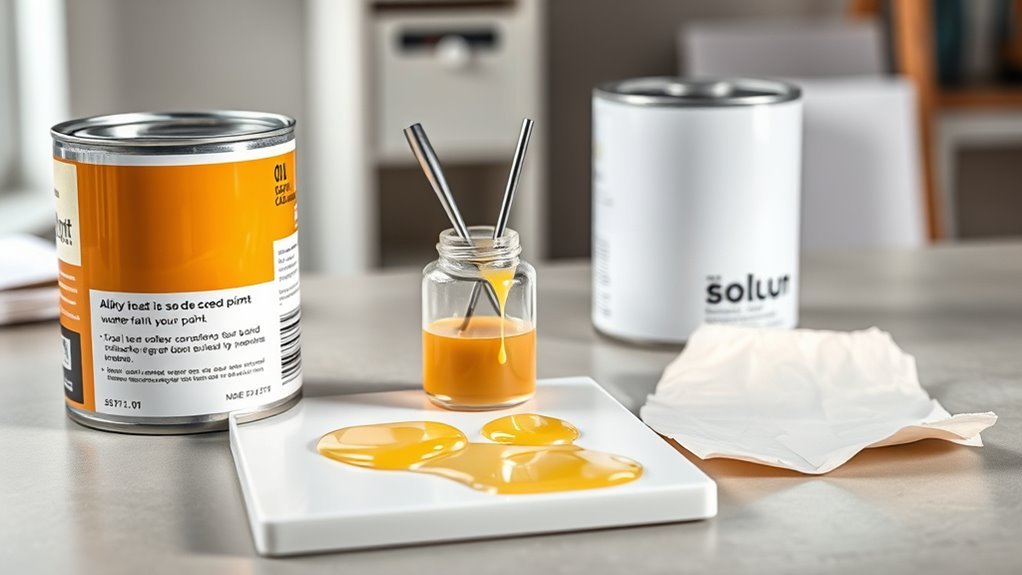
Shifting from water-based formulations, oil-based (alkyd) paints use long-chain synthetic or natural oils chemically modified into polyester-like resins that cure by oxidative crosslinking rather than by water evaporation. You’ll notice denser molecular networks, higher solvent content, and greater film flexibility.
Their chemistry ties to historical development: early alkyds improved durability for wood and metal, but solvents raised concerns about environmental impact and air quality.
- Imagine viscous, amber resin flowing and slowly hardening into a glossy coat.
- Picture solvent molecules leaving as polymer chains lock together.
- Visualize tougher, more chemically bonded surfaces resisting wear and moisture.
How to Tell Water vs Oil by Smell and Dry Time
You can often tell water- and oil-based paints apart by their smell and how long they take to dry.
Water-based (latex) paint has a mild, almost non-offensive odor and dries to the touch in about an hour.
Oil-based paint gives off a strong solvent smell and can take 6–8 hours or more to dry.
Keep ventilation in mind, since odor and drying time both change with temperature and airflow.
Smell Differences
Although the chemical scent hits different rooms more strongly, you can quickly tell water-based and oil-based latex paints apart by smell and how fast they dry. You’ll notice water-based paints smell cleaner, and manufacturers often use scent masking. Oil-based paints have a heavier, solvent-like odor that resists simple odor removal.
Trust your nose: open a can or sniff a fresh brush to compare. Look for lingering sharpness versus mild sweetness.
Visualize the experience:
- A ventilated garage with strong solvent tang
- A sunlit room with faint, soapy aroma
- A closed closet that keeps the heavy smell trapped
Drying Time Comparison
When you check drying times, water-based latex usually feels ready to the touch in an hour or two and can be recoated within 4–6 hours.
While oil-based (alkyd) formulas stay tacky much longer—often 6–8 hours to the touch and 24 hours or more before recoating.
You’ll use smell and dry time to tell them apart: if solvents linger and recoating takes a day, it’s likely oil.
Fast-drying latex reduces dust attraction and speeds project completion, but watch for color fading in intense sunlight.
Adjust application techniques—thin coats and proper ventilation—to optimize cure and finish regardless of paint type.
How to Test Paint: Rub and Solvent Tests
If you’re trying to tell whether a paint is water- or oil-based, simple rub and solvent tests give quick, reliable clues. You can check a hidden spot: rub gently with a cloth dampened with water; if pigment lifts, it’s likely water-based.
To identify paint type quickly, rub a hidden spot with damp cloth—pigment lift indicates water-based.
For stubborn finishes, use denatured alcohol or mineral spirits on a small area to see if the film softens or smudges. Remember color matching can hide subtle differences and paint branding won’t always state the base, so testing beats guessing.
- A damp cloth revealing tacky residue
- A spirit causing softened film
- Clean edge after testing
When Marketing Hides the Paint Base: What to Watch For
Why doesn’t the label always tell you the whole story? You’ll see paint branding that emphasizes “easy clean” or “durable finish” without stating whether the binder is water- or oil-based. Manufacturers use marketing tactics to blur chemistry, swapping technical terms for lifestyle claims.
When you shop, check the ingredient list, VOC levels, and whether the product calls itself alkyd, acrylic, or latex. Don’t rely on color names or gloss levels. Ask staff or consult data sheets online.
That way you’ll spot when branding distracts from composition and choose the right product for adhesion, durability, and compatibility.
Cleaning: Latex (Soap/Water) vs Oil (Solvents)
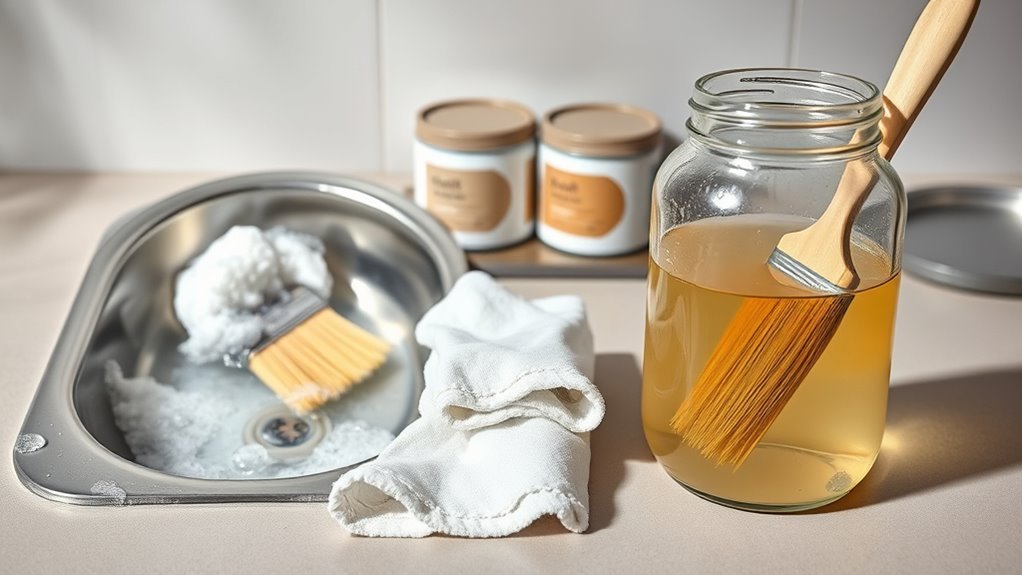
Marketing may hide whether a paint is water- or oil-based, but cleaning requirements give the chemistry away: latex paints clean up with soap and water, while oil-based or alkyd paints need solvents like mineral spirits or paint thinner.
When you clean brushes, rags, or spills, you’ll notice how water rinses latex but clogs with oil. That affects Paint mixing and color matching—you’ll prefer water-based tints for easy cleanup and quicker adjustments.
Take care disposing solvent rinse water safely.
Visualize the difference:
- Sudsy bucket rinsing brushes, clear runoff
- Greasy solvent-soaked rags, strong odor
- Wet palette with swift color matching
How Finish (Sheen) Affects Performance
Although sheen might seem like just appearance, it actually governs durability, washability, and how light reveals surface imperfections, so choosing the right finish matters for performance.
You’ll notice higher latex sheen levels resist scuffs, clean more easily, and reflect more light, so walls with heavy traffic benefit from satin or semi-gloss.
Lower sheens like matte hide flaws and reduce reflections but sacrifice easy cleaning.
When specifying paint gloss, balance aesthetics with function: use glossier finishes where moisture and cleaning matter, and flatter finishes where texture and subtlety are priorities.
Match sheen to room use and maintenance expectations.
Performance Comparison: Durability, Adhesion, Flexibility
Sheen affects how paint handles wear, but the underlying binder and formula determine long-term durability, adhesion, and flexibility — the properties that decide whether a coat will chip, peel, or stay intact over time.
You’ll notice latex’s flexible film resists cracking and accommodates substrate movement, while oil-based types often harden more, offering strong initial adhesion.
Consider color fading under UV and Environmental impact: latex usually fades less and cleans up with water, lowering solvent use.
Match paint choice to surface stress and maintenance needs to balance resilience, longevity, and ecological concerns.
- Sun-baked siding flexing slightly
- Door jambs slammed repeatedly
- Exterior trim exposed to rain
Durability: Latex vs Alkyd for Trim and Cabinets
When you’re choosing paint for trim and cabinets, prioritize the film properties over just water- or oil-based labels. You want a hard, abrasion-resistant film that resists yellowing and cleans well.
Modern latex (acrylic/urethane-modified) can match alkyd toughness, offering durable, low-odor finishes and easier cleanup.
Alkyds still deliver a dense, self-leveling finish prized on detailed trim.
Consider eco-friendly options among both types—low-VOC latex and waterborne alkyds—while checking manufacturers’ claims.
For color matching, both systems reproduce hues accurately, but test samples under your lighting to confirm final sheen and wear before committing.
Adhesion: When Oil-Based Still Wins
If you need paint that really bonds to difficult surfaces—old gloss, bare wood, or previously oil-painted trim—oil-based formulas still have the edge. You’ll find they wet out and penetrate better, creating a tenacious bond where latex might lift.
That stronger adhesion matters for high-traffic trim and restoration work, though you’ll weigh the environmental impact and higher VOC emissions when choosing them. Consider situations where nothing else will stick and accept proper ventilation.
Stronger adhesion makes oil-based paint ideal for high-traffic trim and restorations—just balance VOCs and ventilate.
- A brush dragging smoothly over aged wood grain
- A glossy enamel clinging to old trim edges
- A repaired chair seat sealed solidly
Flexibility and Cracking Resistance of Latex Paints
Because latex paints are water-based and built on flexible acrylic or vinyl binders, they expand and contract with temperature and humidity changes instead of cracking. This results in longer-lasting, peel-resistant finishes on siding, trim, and furniture that move slightly.
You’ll notice fewer hairline fractures over time compared with rigid coatings, and maintenance becomes easier because touch-ups adhere well.
Expect some texture variation where substrates flex or show brush marks, but overall elasticity preserves the film.
While latex resists cracking, you should still monitor surfaces for color fading from UV exposure and for underlying substrate movement that exceeds the paint’s stretch limits.
Yellowing and Long-Term Color Stability by Base
When you compare bases, you’ll notice oil-based paints are more prone to yellowing over time, especially in low-light or high-humidity areas.
Water-based (latex) formulas generally hold their original color better and resist that amber shift.
We’ll look at why the chemistry causes these differences and what that means for long-term color choices.
Oil-Based Paint Yellowing
Although oil-based paints offer durable, smooth finishes, they’re prone to yellowing over time—especially in low-light or poorly ventilated areas—because aging resins and residual solvents oxidize and darken the film.
You’ll notice warm amber tones creeping into whites and pale colors; color fading can follow as pigments react differently. Higher VOC emissions correlate with more residual solvents that contribute to this process, so ventilation matters during curing.
To picture it, imagine:
- An antique white ceiling slowly warming to cream in dim rooms.
- Glossy trim developing amber halos near light sources.
- A formerly bright door mellowing into muted beige.
Water-Based Color Retention
How do water-based paints hold their color over years? You’ll find they resist yellowing better than oil-based options because modern latex formulas use stable acrylic resins and UV-resistant pigments. Proper color mixing and following Paint branding formulations matter: branded tints often include lightfast pigments that maintain hue. You should avoid strong cleaners and direct sunlight to extend life. Recoating and using quality primers also help preserve vibrancy.
| Factor | Effect |
|---|---|
| Resin type | Stability vs yellowing |
| Pigment quality | Colorfastness |
| Application | Coverage, uniformity |
| Maintenance | Long-term vibrancy |
Indoor Air Quality and VOC Differences
Because paint continues to off-gas after you apply it, the kind you pick—water- or oil-based—directly affects indoor air quality and your exposure to volatile organic compounds (VOCs). You should weigh environmental impact and current VOC regulations when choosing.
Water-based (latex) paints emit fewer VOCs, so you’ll reduce smells and short-term irritation.
Oil-based releases higher VOCs and stronger odors, increasing ventilation needs and potential health risks.
Picture the difference:
- A quiet, freshly painted nursery with soft, low-odor air.
- A garage with sharp solvent fumes lingering.
- A bright living room where windows stay open for hours.
Drying and Recoating Times for Planning
When you’re scheduling a painting project, drying and recoat times determine how quickly you can move between coats and return furniture to the room, so plan around both the paint type and the conditions—latex often dries to the touch within an hour and can be recoated in 2–4 hours.
While oil-based paints take longer, typically needing 6–8 hours or more before recoating. You should check manufacturer recommendations, temperature, and humidity to avoid tacky finishes or adhesion issues.
Faster recoating with latex speeds project completion and reduces exposure to VOC content, but prolonged wetness on slow-drying oils can increase color fading.
Best Base for High-Moisture Rooms
After you’ve planned drying and recoat times, pick a paint base that stands up to moisture and mold in bathrooms, kitchens, and laundry rooms. You’ll want a mildew-resistant latex or acrylic latex primer and topcoat that balance durability with color matching for trims and fixtures.
Consider finishes: satin or semi-gloss shed moisture and clean easily. Also check eco-friendliness certifications if indoor air quality matters.
Prep surfaces well and use a quality dehumidifier during curing.
Visualize the result:
- Steamy shower reflected on a smooth, wipeable wall
- Bright, stain-free trim around a sink
- Crisp, matched hue above a washer
Exterior Use: Weather and UV Resistance
If you want paint that stands up to sun, rain, and temperature swings, choose an exterior latex or acrylic-latex formulated for UV and weather resistance. You’ll get flexible film formation that resists cracking and chalking, plus pigments with UV inhibitors to keep hues truer longer.
Pay attention to color mixing—dark tones absorb heat and may accelerate fading, so use high-quality tints and test samples.
Also prioritize primer selection: use adhesion and stain-blocking primers on bare or repaired surfaces to improve topcoat durability.
Proper surface prep, breathable products, and recommended recoat intervals extend exterior performance and color retention.
Best Choices by Substrate: Wood, Metal, Drywall, Masonry
When choosing paint, you’ll pick different formulas for wood, metal, and masonry to get the best durability and finish.
For wood, flexible water-based latex is usually ideal.
For metal, choose oil-based or specialty rust-inhibiting primers with compatible topcoats.
And for masonry, use breathable masonry or elastomeric paints.
We’ll go through why each substrate needs a specific approach and which products work best.
Best For Wood
Choosing the right paint for wood matters because it affects durability, appearance, and how well your finish resists moisture and wear. You’ll usually pick latex for interior wood and alkyd or oil-based for high-traffic trim. Consider primer for bare or tannin-rich boards.
Think about color mixing to match stains or previous finishes, and plan brush selection for smooth grain or detailed trim. Seal with a clear topcoat where needed.
Visualize the result:
- A porch railing with glossy, weather-resistant sheen
- A dining table showing even, stain-free color
- Crown molding with crisp, brush-stroke-free edges
Best For Metal
How do you pick the right paint for metal to guarantee adhesion and rust protection? You’ll choose high-quality latex or oil-based primers designed for metal preparation, removing rust, grease, and loose scale with a wire brush or sandpaper.
After cleaning and priming, select a metal-compatible topcoat—latex for flexibility and easy cleanup, oil-based for tough environments.
During paint application, use thin, even coats, allow proper dry times, and consider a rust-inhibiting primer under high-moisture conditions.
For outdoor or industrial pieces, test adhesion on a small area.
Proper metal preparation and careful paint application extend finish life and resist corrosion.
Best For Masonry
Switching from metal to masonry, you’ll face different challenges: porous surfaces, efflorescence, and stronger adhesion needs. You should pick acrylic-latex formulations designed for masonry; they evolved from historical development of mineral paints and blend modern binders for flexibility and breathability.
Consider primers that block salts and use masonry elastomeric options where cracking occurs. Pigment composition matters — lightfast inorganic pigments resist weathering on brick and stucco.
- A limewashed wall showing breathable, matte texture
- A painted concrete retaining wall shedding water after rain
- A brick facade where mortar lines hold tiny weather stains
Primers: When to Use a Bonding Primer
Wondering when to grab a bonding primer? You should use one when surfaces are glossy, slick, or previously painted with unfamiliar coatings. Bonding primers help adhesion, reduce peeling, and cut down on extra sanding. Keep color matching and paint storage in mind: prime before final color checks and store leftover primer per label.
| Surface condition | Why use primer |
|---|---|
| Glossy finishes | Promotes adhesion |
| Smooth masonry | Fills pores for grip |
Use a bonding primer on metal, tile, plastics, and smooth drywall. It saves time and improves durability for topcoats.
Can You Paint Latex Over Oil-Based Paint (And Vice Versa)?
If your walls were painted with oil-based paint, you can still use latex—but you’ll need to prep properly to guarantee adhesion; otherwise, finishes peel or look uneven.
You can also apply oil over old latex, though oil may hide imperfect latex surfaces and yellow over time.
Think about Color mixing only for matching shades, not compatibility.
Check Paint storage dates and labels before switching types.
Visualize the change:
- A glossy oil sheen dulled by a matte latex coat
- A paint can labeled years old in a dusty shelf, worrying you
- Edges where two different bases meet, crisp or feathered
How to Prep Surfaces When Switching Paint Types
When you’re switching between latex and oil-based paints, start by thoroughly cleaning and degreasing the surface so new paint will adhere.
Then sand glossy areas and feather any edges to remove loose finish and create a smooth shift. These steps prevent peeling and give you a uniform base for whatever primer or paint you choose.
Surface Cleaning And Degreasing
Because oil and water-based paints bond differently, you’ll need to clean and degrease surfaces thoroughly before switching types to guarantee proper adhesion and finish. Start by wiping away dust, then use a degreaser or TSP substitute to remove oils, fingerprints, and wax—rinse well and let dry.
Consider previous color mixing residues and how solvent traces affect environmental impact when choosing cleaners. Test a small area to confirm compatibility.
Prepare imagery to guide action:
- A greasy kitchen backsplash wiped with a blue rag and degreaser
- A painted doorframe rinsed clean, beads of water running off
- A small test patch drying, ready for primer
Sanding And Feathering Edges
Now that the surface is clean and dry, it’s time to sand and feather edges to guarantee the new paint adheres smoothly across old and repaired areas. Lightly sand glossy or oil-based spots with 120–220 grit until dull; feather the perimeter of repairs so gradations are imperceptible.
Remove dust, inspect for color fading and uneven patches, then address them before priming. Choose a primer with proven primer compatibility for both substrates—stain-blocking for oil residues or bonding primer for slick surfaces.
After priming, sand very lightly, wipe clean, and you’re ready to apply latex without lap marks.
Tools and Cleanup Tips for Each Base
If you’re tackling a paint job, choose tools and cleanup methods that match the base: water-based (latex) paints work with synthetic brushes, foam rollers, and soap-and-water cleanup.
While oil-based paints need natural-bristle brushes, solvent-compatible rollers, and mineral spirits or paint thinner for cleanup.
You’ll manage color mixing and texture application differently: latex cleans fast, so you can rinse between blends; oils demand solvent rinses and careful waste disposal.
Protect surfaces, ventilate, and wear gloves when using thinners.
Visualize the process:
- A foamy roller smoothing wet latex across a wall
- Bristles loading rich oil pigment
- Rags soaking up solvent-streaked drips
Cost Comparison: Paint Price and Lifecycle Costs
While upfront price tags matter, you should weigh both purchase cost and lifecycle expenses when choosing latex versus oil-based paint. You’ll often pay less per gallon for latex, and it typically dries faster so labor time drops.
Oil-based options can need fewer coats and sometimes outlast latex, affecting long-term cost. Factor maintenance frequency, surface prep, and ventilation needs into your math.
Consider environmental impact: cleanup, VOCs, and disposal rules influence true cost.
Historical development shows formulation advances cut costs and emissions for latex, shifting many projects toward water-based solutions that balance price and performance.
Disposing Leftover Latex vs Oil-Based Paint Safely
How should you handle leftover paint to protect your home and the environment? You’ll need different steps for latex versus oil-based cans: latex dries and can be recycled or solidified, while oil-based is hazardous and must go to a household hazardous waste facility.
Consider environmental impact when storing, transporting, or discarding paint, and follow local VOC regulations for disposal. Never pour paint down drains or into soil.
Consider environmental impact when storing, transporting, or discarding paint—follow local VOC rules and never pour paint down drains or into soil.
Pack containers tightly, label them, and check community collection days.
- A half-full latex can absorbed with kitty litter
- A sealed oil-based can in a locked transport box
- A recycling drop-off banner on a gate
Specialty Water-Based Products That Mimic Alkyd
Because manufacturers wanted the durability and brushability of traditional alkyds without the solvent issues, they’ve developed water-based formulations that behave remarkably like alkyd paint.
You’ll find engineered resins and coalescents give latex durability while keeping cleanup simple. When brushing or spraying, these products level well and mimic oil sheen, so you get that subtle glow without solvents.
They’re great for trim, cabinets, and furniture where alkyds were once required. You should still follow label prep and drying times—these formulas cure differently than true oils.
Expect easier disposal and lower VOCs, with performance close to conventional alkyds.
Additives That Change Latex Performance
If you want to tweak latex paint for specific tasks, additives let you change flow, drying time, adhesion, and durability without buying a whole new product. You can add retarders to slow drying, coalescents to improve film formation, or binders to boost toughness; each alters chemical reactions during curing, so measure carefully.
Consider environmental impact—choose low-VOC options and avoid persistent solvents. Use sparingly and test a small area to confirm compatibility and final appearance.
Visualize outcomes:
- Smooth, leveling finish like poured silk
- Faster dry for quick recoats on a tight schedule
- Tough, scuff-resistant surface for high traffic
Common Mistakes That Cause Adhesion or Finish Issues
You’ll run into adhesion and finish problems when you skip proper surface prep, use the wrong primer, or lay on coats that are too thick.
Sand, clean, and prime appropriately for the substrate you’re working with.
Apply thin, even coats and let each one dry fully to avoid runs and poor adhesion.
Poor Surface Preparation
Ever tried painting over a grimy, chalky, or flaking surface and wondered why the new coat refuses to behave? You’ll face adhesion failure when you skip cleaning, sanding, or removing loose material. Surface contamination from dust, grease, or mildew blocks bonding; old paint left bubbling or curling defeats fresh latex.
Also check paint storage—contaminated or frozen cans can settle solids that transfer to the job. Prep fixes that problem: clean, degloss, and feather edges before painting.
Imagine these scenarios:
- Grease-slick kitchen backsplash
- Sun-bleached, powdery exterior siding
- Peeling trim with trapped dirt
Incorrect Primer Choice
Cleaning and sanding fix a lot of adhesion problems, but choosing the wrong primer will undo that good prep. You’ll see primer misconceptions when people pick a primer just because it’s from the same paint branding as their topcoat.
Compatibility matters more than logo loyalty: oil-based primers bond differently than latex primers and shellac primers block stains. If you use the wrong type, your finish can peel, amber, or show bleed-through.
Match primer chemistry to substrate and topcoat, follow manufacturer guidance, and test a small area. That avoids rework and preserves the smoother, durable finish you want.
Applying Too Thick Coats
Why are thick paint layers tempting? You want fast coverage, but piling on latex paint causes runs, long drying, and poor adhesion.
Thick coats trap solvents, leading to wrinkling or peeling when the surface flexes. Control your application: use correct Brush selection for smooth laydown and avoid overloading.
Thin coats dry evenly, promote proper Color mixing on the surface, and build durable film.
- A sagging sheet of paint dripping from a trim edge
- A glossy puddle forming where brush strokes overlap
- A cracked, flaking patch revealing bare substrate beneath
Apply multiple thin coats for a lasting finish.
Case Studies: Walls, Trim, Cabinets (Quick Picks)
When you’re choosing between water- and oil-based paint for walls, trim, and cabinets, think about the room’s use, desired finish, and how much maintenance you’ll tolerate.
Water-based paints dry faster and clean up with soap, while oil-based paints give tougher, glossier coatings that resist scuffs but require solvents and longer cure times.
For walls, you’ll favor water-based for easy color blending and subtle texture effects; it’s forgiving and breathable.
For trim, pick oil for durability and crisp edges if you’ll tolerate longer cure times.
For cabinets, choose oil for heavy wear or water-based for quicker turnover and easier touch-ups.
Quick Decision Guide: Pick the Right Base for Your Project
When you’re choosing between water- and oil-based latex, think about the surface you’re painting and how tough the finish needs to be.
Water-based dries faster and cleans up with soap, while oil-based handles rougher surfaces and offers more leveling.
Consider dry time, cleanup, and the substrate to pick the best base for your project.
Water Vs. Oil
If you need a quick way to choose, start by matching the paint base to the surface and the job’s demands. You’ll prefer water-based latex for easy cleanup, low fumes, and latex chemistry that emphasizes water solubility and fast drying.
Oil-based gives a tougher film, better leveling, and longer open time for smoothing flaws, but it needs mineral spirits and has a stronger odor.
- A sunlit kitchen wall cleaned with soap and water
- A glossy trim where brush marks must vanish
- A door that sees heavy handling and scuffs
Weigh drying time, durability, and cleanup to decide.
Project Surface Type
Because the surface you’re painting dictates the best binder, pick water-based latex for porous walls, ceilings, and most interior surfaces.
Choose oil-based for slick, dense substrates like metal, glossy trim, or heavily handled doors.
You’ll assess adhesion: latex soaks into drywall and masonry, delivering flexible coatings that resist cracking, while oil locks onto varnished wood and metal.
If you plan color blending, latex lets you recoat and feather more easily; if you need surface sealing before texture alteration, oil primers can stabilize slick spots.
Match primer and topcoat to the substrate for long-lasting results.
Dry Time & Cleanup
Although oil-based paints give you more working time for smoothing and leveling, they take much longer to dry and need solvent cleanup.
Latex dries fast and washes out with soap and water so you can tidy brushes and spills quickly. You’ll choose based on project pace: latex lets you recoating the same day and clean tools with minimal fuss; oil demands mineral spirits and overnight cure.
Consider paint texture and color matching — thicker oils self-level differently, latex holds color truer in sunlight.
Picture your cleanup routine:
- A sudsy bucket and rinsing brushes under a tap.
- A rag and solvent jar for sticky oil residue.
- Smooth brush strokes leveling wet paint.
How to Read Technical Data Sheets to ID the Base
When you skim a paint technical data sheet (TDS), focus first on the “resin” or “binder” entry—this line usually tells you whether the product is water- or oil-based, since names like acrylic, styrene-acrylic, or vinyl indicate waterborne systems while alkyd, epoxy, or polyurethane often signal solvent- or oil-based formulations.
Start by checking the resin/binder on the TDS — it usually tells you if the paint is water- or oil-based.
Next check VOC regulations and listed VOC content; low-VOC or zero-VOC tags usually mean waterborne.
Look for cleanup instructions (soap and water versus mineral spirits) and drying times.
For color matching, note any tinting limitations; some bases won’t accept certain universal tints.
Confirm recommended substrates and primer requirements.
When to Hire a Pro vs DIY for Oil vs Water Jobs
If you’re weighing oil- versus water-based paints, decide early whether the job matches your skills and tolerance for prep, fumes, and cleanup. You should hire a pro for large surfaces, complex color matching, or when working with old oil layers that need stripping.
DIY suits small rooms, simple touch-ups, or experiments in Color mixing with sample pots. Think about Brush selection—synthetic for water, natural-bristle for oil—and whether you can handle ventilation and disposal rules.
If in doubt, get an estimate and ask to see prior work; pros often save time and prevent costly rework.
- scraping leaded trim in tight corners
- blending a custom hue on-site
- finishing antiques with gloss oil
Troubleshooting Checklist for Finish Problems
If your finish looks off, start with a quick checklist covering surface preparation issues like poor sanding or old finish removal.
Check drying and curing times—humidity or cold can leave paint tacky or uneven.
Also inspect for contamination and cleanup problems such as grease, dust, or improper washing before painting.
Surface Preparation Issues
Because the finish only holds as well as the surface beneath it, you should inspect and correct substrate issues before you ever open a can of paint.
You’ll check for loose flakes, grease, and uneven porosity that ruin color mixing and alter paint gloss.
Sand glossy spots, clean oils with a degreaser, and fill cracks so adhesion’s consistent.
Ignore these and the finish will fail regardless of formula.
- A peeling windowsill revealing raw wood
- A greasy kitchen backsplash with glossy streaks
- A drywall seam with ridges and dust
Prep thoroughly so your latex performs as designed.
Drying And Curing
When paint seems tacky or soft long after you expected it to dry, start by checking the environment: temperature, humidity, and ventilation directly affect film formation and curing, so raise heat, lower humidity, or boost airflow to speed solvent evaporation and coalescence. Check label directions for recoat times and guarantee Paint compatibility when layering finishes; incompatible products can prevent proper curing. Thin coats cure faster—avoid heavy application. For Color blending, wait full cure before blending edges. If problems persist, document conditions and consider light sanding and recoating with a compatible product.
| Issue | Quick Action |
|---|---|
| Tacky surface | Increase airflow |
| High humidity | Use a dehumidifier |
| Thick coat | Sand/light thin coat |
| Incompatible layers | Verify compatibility |
Contamination And Cleanup
After checking drying and curing, turn your attention to contamination and cleanup to keep a finish looking its best. You’ll inspect surfaces for dust, oil, or silicone that spoil paint sheen and interfere with color matching.
Clean contaminants promptly: soap and water for latex, mineral spirits for stubborn grease, and a tack cloth for dust before recoating. If spots remain, sand lightly and spot-prime to blend sheen and hue.
Keep tools clean to avoid transfer. Store mixed paint sealed and labeled to preserve color matching.
- A dusty drop cloth ruined by foot traffic
- Fingerprints smudging a glossy edge
- Tiny oil beads beading on flat paint
Final Practical Tips for Buying and Using Latex Paint
Although choice depends on your project, a few practical rules will make buying and using latex paint easier.
First, plan color mixing ahead: test small samples on the actual wall and let them dry before committing.
Buy slightly more than you think you’ll need to avoid batch variation.
Choose quality brushes and rollers matched to your paint finish—good brush selection reduces streaks and saves time.
Store cans sealed in a cool, dry place; label open cans with date and room.
Clean brushes promptly with soap and water.
Dispose of leftovers responsibly or donate usable paint.
Inspect surfaces and prime where needed for best results.
Frequently Asked Questions
Can Latex Paint Be Used on Floors With Heavy Traffic?
Yes — you can use latex paint on heavy-traffic floors if you choose high-quality, floor-durability formulas and apply a durable clear coat; you’ll get improved traffic resistance, but prep and maintenance remain essential for longevity.
Do Eco-Friendly or Low-Voc Latex Paints Perform Differently?
About 60% of consumers choose low‑VOC paints; you’ll find eco friendly benefits like reduced VOC emission levels and similar durability, though some premium low‑VOC formulas may need extra coats—so expect comparable performance with minor adjustments.
How Long Does Unopened Latex Paint Remain Usable in Storage?
Unopened latex paint typically stays usable 2–10 years, depending on paint durability and storage tips. You’ll keep it longest in a cool, dry place, sealed tightly, off the floor, away from temperature swings and sunlight.
Can Latex Paint Be Tinted to Match Oil-Based Color Formulas Exactly?
You can’t always match oil-based colors exactly with latex; tinting precision and color matching improve with advanced pigments and spectrophotometer formulas, but chemical differences often prevent a perfect, foolproof match across all finishes.
Are There Health Precautions for Pregnant People When Using Latex Paint?
Yes — you should take precautions, ironically avoiding paint fumes like they’re dramatic villains. You’ll choose low-VOC or zero-VOC latex, ventilate well, wear a mask, avoid prolonged exposure, and consult your healthcare provider for pregnancy safety.
Conclusion
Most “latex” paints are water-based, though true oil (alkyd) options still exist. You’ll likely choose water-based for 90% of jobs — they dry faster, clean up with soap and are lower in VOCs — but alkyds give tougher finishes for trim and furniture. When in doubt, check the can’s label or TDS. For tricky surfaces or high-traffic areas, consider a pro so you don’t waste time fixing peeling or adhesion issues.
