
Should You Paint Walls Before Installing Flooring?
You should usually paint walls before installing flooring because it cuts masking, saves time, and makes touch-ups easier while you protect the floor. If the flooring job is heavy or will nick walls—like floating floors—you might wait until after. Consider flooring type, trim work, pets, and cure times; protect fresh paint from dust and scuffs with drop cloths and barriers. Follow simple sequencing and protection tips below to decide which order works best for you.
Primary Intent: How-To Guide for Paint-Before vs. After Flooring
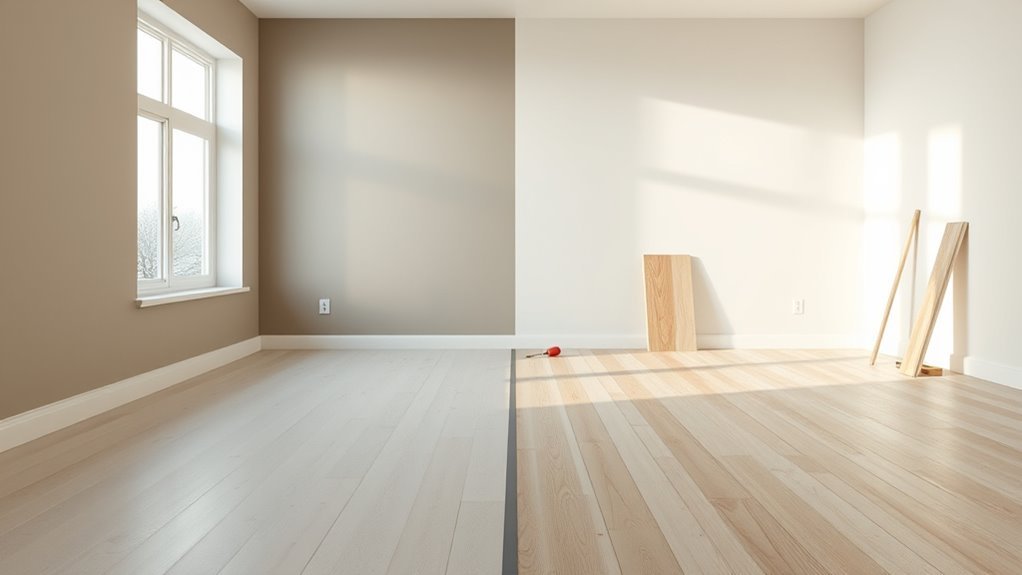
Wondering whether to paint before or after installing new flooring? You’ll weigh paint finish and flooring protection: painting first keeps floors safe if you use drop cloths, but you must manage dust management for a smooth finish.
Start with prep techniques that include masking baseboards and planning trim style so color coordination stays consistent. Coordinate project timeline with contractor collaboration to avoid rework.
Consider material compatibility between paints and flooring adhesives, and set clear workspace organization to prevent damage. Decide in advance who handles touch-ups and sealing so the sequence fits your schedule and protects both surfaces.
Quick Answer and Decision Framework: Paint Before or After?
If you want a fast rule: paint walls before laying new flooring when you can protect the floor, and paint after if you need a pristine baseboard-to-floor trim or the floor requires heavy installation work.
Decide by weighing paint benefits against flooring drawbacks. If you want speed, fewer touchups, and less masking, paint first. If your flooring work risks scuffs, stains, or needs sanding that could ruin fresh paint, install then paint.
For rentals or staged homes, paint first to show cleaner walls. For final-fit carpentry or delicate trim, paint after to guarantee perfect seams and minimal rework.
Core Decision Criteria: Flooring Type, Trim, and Occupancy
When deciding whether to paint before or after new flooring, focus on three practical factors: the type of flooring you’re installing, the extent and finish of your trim work, and who’ll occupy the space during and after the project.
Consider flooring aesthetics: if the new surface defines the room’s look, paint choices should harmonize, but you can wait to finalize hues until after installation.
Trim scope matters—fully replacing or staining baseboards favors painting after; simple repainting favors before.
Occupancy affects timing: families with kids or pets may prefer paint-first to avoid fumes, but short-term rentals often demand the opposite for speed and paint longevity.
How Flooring Type Changes the Paint-First Decision
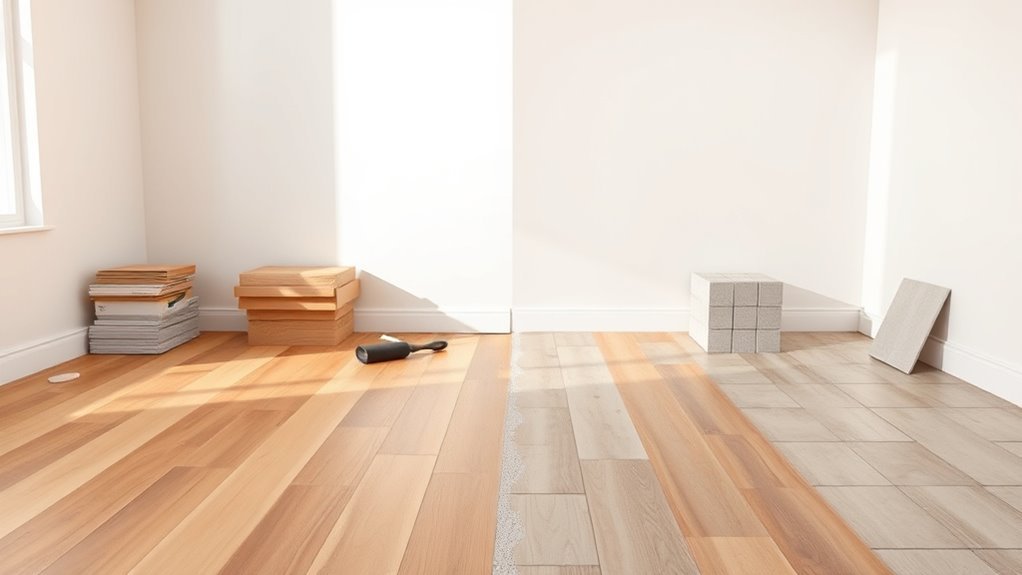
Beyond trim, the type of flooring you choose changes whether you should paint first or wait.
If you’re installing hardwood or tile, you can often paint beforehand since those materials lie flat and won’t abrade fresh walls; just protect baseboards.
For floating floors or laminate, gaps and installation movement can nick walls, so hold off if you want pristine edges.
Thick carpet installation may press against walls, risking scuffs, but carpet can also hide minor flaws, letting you paint earlier.
Consider flooring styles and how installers work, plus paint durability—tougher finishes tolerate more handling and let you paint sooner.
When Fresh Paint Is Vulnerable to Flooring Dust and Scuffs
You’ll want to contemplate paint cure time before starting any floor work, since freshly painted walls can stay soft and tacky for days.
While paint is curing it’s especially prone to attracting dust from sanding or underlayment and to scuffs from moving tools and materials.
Plan protective measures—like low-tack film, drop cloths, and delaying heavy traffic—so your finish stays clean and unmarred.
Paint Cure Time
Although the paint may feel dry to the touch after a few hours, it hasn’t fully cured and can still attract dust, scuff from shoes, or pick up particles from flooring work.
You should allow full cure time—typically 7–30 days depending on formula and humidity—before heavy traffic or installing flooring that kicks up dust. Proper cure boosts paint durability and minimizes tackiness that traps debris.
Keep activity low near walls, control ventilation and humidity, and avoid leaning materials against recently painted surfaces to preserve wall protection.
Check manufacturer cure times; waiting pays off by reducing touch-ups and long-term damage.
Protecting Wet Walls
When paint’s still wet and vulnerable, take steps to shield walls from dust, scuffs, and stray tools before flooring work begins.
You’ll set up temporary barriers—drop cloths taped at the base, cardboard runners along baseboards, and lightweight plastic sheeting hung with painter’s tape—to provide wall protection without trapping moisture.
Keep workers aware of wet areas, restricting heavy traffic until paint drying advances to tack-free.
Use low-adhesive tape to avoid lifting finish when removing protection.
If floors must be worked nearby, position tools and materials away from freshly painted surfaces and check protection regularly, replacing anything torn or saturated.
Living at Home During Work: Noise, Dust, and Sequencing Tradeoffs
If you’re living at home during the work, plan to minimize noise impact by scheduling loud tasks when you can be out or during less sensitive hours.
Seal off work areas and use drop cloths and negative airflow if possible to control dust spread.
Weigh the sequencing tradeoffs—doing messy, noisy jobs together can shorten disruption, but protecting freshly painted walls may mean finishing painting after dusty work.
Minimize Noise Impact
Because renovation noise can easily disrupt daily routines, plan work hours and room sequencing to keep loud tasks—like demolition, sanding, and heavy sawing—limited to times when you can tolerate or leave the house. Use noise reduction measures and basic soundproofing techniques: hang temporary acoustic blankets, request quieter tools, and schedule noisy jobs together to shorten disturbance. Communicate clear windows with contractors and neighbors so you can work or go out during peak noise. Choose quieter finishing tasks while you’re home. Track progress and adjust sequencing to balance living comfort with job efficiency.
| Task | Noise Level | Best Time |
|---|---|---|
| Demolition | High | Away |
| Sanding | High | Away |
| Sawing | High | Away |
| Finishing | Low | Home |
| Touch-ups | Low | Home |
Control Dust Spread
Although you’ll want to keep living spaces functional, controlling dust during flooring work requires proactive containment and cleanup.
So set up sealed work zones with plastic sheeting and zippers for doorways, run a HEPA air scrubber or vacuum, and use walk-off mats to trap debris at entrances.
You should move fragile items out, cover vents, and seal gaps under doors.
Use targeted dust control methods: tack cloths, damp wiping, and vacuum attachments on power tools.
Stick to daily cleanup strategies: HEPA vacuuming, wiping surfaces with microfibers, and replacing filters.
That routine minimizes spread and protects painted walls and furnishings.
Hardwood Floors: Paint Before or After?
When you’re installing or refinishing hardwood, decide on wall painting timing based on protection and finish: you’ll weigh paint durability against potential floor damage and flooring aesthetics.
If you paint first, you protect the floor with drop cloths and avoid tacky trim edges; if you paint after, you get cleaner baseboard lines but risk finish scuffs.
- Paint first: easier cleanup for trims, but require strict floor protection.
- Paint after: perfect edges and touchups, yet increases risk to newly finished wood.
- Tip: schedule hardwood finishing after walls cure to preserve paint durability and look.
Engineered Wood & Floating Floors: Paint Timing
If you’re installing engineered or floating floors, plan paint timing around movement and moisture considerations so you don’t trap gaps or warp boards; you’ll want walls prepped but hold final baseboard painting until after floor acclimation and installation. Paint walls first to protect raw drywall, but leave a gap at edges and wait to caulk and touch up trim until boards settle. That prevents trapped moisture and allows expansion.
| Step | Timing |
|---|---|
| Wall priming | Before flooring |
| Final trim paint | After installation |
| Caulking | After acclimation |
Tile and Grout: Paint Before or After?
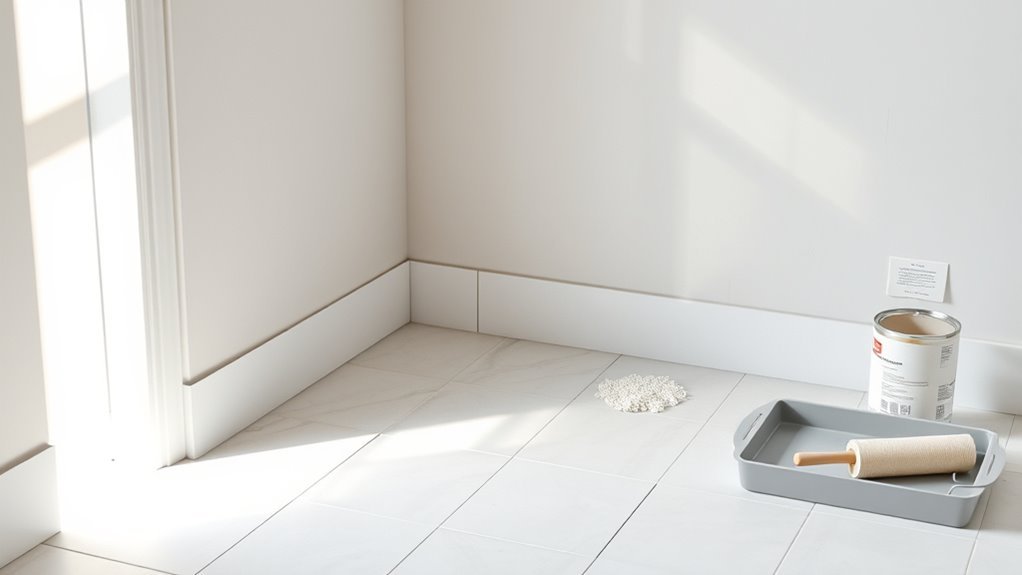
Curious whether you should paint walls before laying tile and grout? You can, but plan around tile preparation and grout selection. Prioritize paint compatibility with sealers and grout, and protect floors during work.
- Use floor protection and dust management to prevent contamination; test paint for surface adhesion near joints.
- Coordinate color coordination between grout and wall finish to avoid mismatched tones and guarantee finish durability.
- Follow drying techniques and moisture control—paint fully cured before grout sealing, or touch up after tiling to avoid damage.
This approach balances efficiency with quality, minimizing rework while preserving final appearance.
Large-Format Tile & Wet-Set Mortar Issues
When you’re installing large-format tile with wet-set mortar, the tile size changes how much mortar and leveling you’ll need.
You’ll have to control mortar thickness carefully to avoid lippage and guarantee full coverage, which can affect how soon you can grout and paint nearby walls.
Plan grout timing so you’re not tracking or splattering fresh paint while the floor finish cures.
Tile Size Impact
Because large-format tiles cover more surface area, they change how you need to set and level flooring—especially with wet-set mortar methods.
You’ll notice tile aesthetics and design consistency shift with fewer grout lines, affecting color coordination and layout impact. Larger pieces bring installation challenges and greater moisture concerns, so assess subfloor preparation carefully.
Consider maintenance tips and grout considerations early; they influence long-term looks and budget implications.
- Plan layout impact to minimize cuts and wasted material.
- Guarantee flatness to prevent lippage and poor adhesion.
- Factor grout width into aesthetics and cleaning routines.
Mortar Thickness Control
Mortar thickness matters more with large-format tiles, since uneven beds will show up as lippage or weak bonds. You’ll need to control bed depth precisely when using wet-set mortar to guarantee full coverage and consistent support.
You’ll set tiles on a flat, properly screeded bed and monitor mortar application to avoid voids. Use straightedges and beating techniques, but rely on calibrated notch trowels and gauged screeds for repeatable results.
Perform thickness measurement at multiple points before laying to confirm uniform depth. If measurements vary, adjust bed or reapply mortar—consistent thickness prevents future movement and bond failure.
Grout And Paint Timing
Controlling bed thickness helps prevent lippage, but you also need to plan grout and paint timing so solvents, moisture, and movement don’t ruin either finish.
You’ll let wet-set mortar cure fully before grouting to avoid shifting; large-format tiles need time to settle. Delay paint near floors until grout application and sealing are complete to protect paint adhesion from grout haze and sealers.
Follow these steps:
- Wait manufacturer cure times for wet-set mortar and grout before walking or sealing.
- Clean grout haze thoroughly before painting base areas.
- Seal grout, dry fully, then paint to guarantee consistent paint adhesion and durability.
Laminate & Vinyl Plank: Best Paint Timing
When you’re installing laminate or vinyl plank flooring, it’s usually best to paint the walls beforehand so you can roll and cut in without worrying about scuffs or adhesive on the new floor; just protect finished areas with a low-tack tape and drop cloths.
You’ll want to finalize color selection before laying planks so paint and flooring coordinate with contemporary flooring trends.
Paint first to avoid trim hassles and to let walls cure while installers work. If installers recommend floating installation after painting, protect wet paint.
For stubborn baseboards you can install them after flooring and touch up any nicks then for a clean finish.
Carpet Installation: Paint First or Last?
If you’re installing carpet, you’ll usually paint the walls and install trim and baseboards before the carpet goes down to protect the new flooring and guarantee clean edges.
Painting first lets you avoid getting primer or paint on the pile and makes caulking and touch-ups easier once trim is in place.
You can then have the carpet fitter trim the carpet to the baseboard for a neat, finished look.
Paint Before Carpet
Because carpet installation can trap paint splatters and complicate touch-ups, most pros recommend painting before you lay carpet; you’ll avoid cutting in edges around fuzzy fibers and keep new flooring pristine.
You’ll pick paint colors and finish walls without worrying about carpet types or masking awkward edges. Paint first, then install carpet, unless heavy furniture or scheduling forces otherwise.
Quick steps to follow:
- Prime and paint walls fully, allowing proper drying time.
- Protect painted trims and vents before carpet installers arrive.
- Inspect and touch up any scuffs after installation, being careful with pile and seams.
Trim And Baseboards
Although you’ll usually paint walls before carpet, you’ll want to think carefully about trim and baseboards since they affect both appearance and installation. Many pros recommend painting or priming trim first, then installing carpet, and finally doing a quick touch-up on baseboards to cover any nicks from installers.
You’ll choose trim styles that complement room scale and carpet height, and pick baseboard materials that resist scuffs and moisture. Painted trim can mask gaps but may need caulking after flooring settles.
If you wait to finish baseboards, protect fresh paint during installation and plan a small final sanding and touch-up.
How Baseboards and Trim Affect Sequencing
When you plan the sequence of painting and flooring, baseboards and trim are the pivot point that determine the order—whether you paint walls first, install floors first, or do both together.
You’ll weigh baseboard installation timing, trim choices, paint adhesion, and wall protection to avoid touch-ups and damage. Consider practical impacts:
- Install trim after flooring to hide gaps and protect walls from installation scuffs.
- Paint walls first if you want cleaner edges and stronger paint adhesion under trim.
- Do trim later when you want flexible trim choices and minimal floor masking.
Decide based on workflow, budget, and finish quality.
Painting Before Trim Installation: Pros and Cons
If you paint the walls before installing trim, you’ll get seamless color coverage and avoid the tight-edge cutting that trim often requires, which saves time and reduces the risk of missed spots. You’ll enjoy easier paint spill prevention with drop cloths rather than delicate trim masking. Painting first also lets you tweak trim color coordination later, matching stain or paint to the finished wall hue. Downsides: you must protect fresh walls during trim work and touch up scuffs afterward. Decide based on your tolerance for touch-ups and whether contractors will respect freshly painted surfaces.
| Emotion | Reaction |
|---|---|
| Relief | Satisfaction |
| Anxiety | Caution |
Painting After Trim Installation: When It Makes Sense
Because you’ll already have the trim in place, painting afterward makes sense when you want crisp, factory-finish edges and to minimize cutting-in around complex profiles.
You’ll base your choice on timing, traffic, and desired edge sharpness. After trim installation, you can mask precisely and control paint application to avoid bleed or drips on new baseboards.
- Prep: sand and clean trim, gap-fill, and tape edges for clean lines.
- Sequence: paint trim first if satin sheen is desired, then wall coats for overlap control.
- Protection: remove tape carefully after tack stage to prevent peeling.
This approach suits detail-oriented projects.
Protecting Freshly Painted Walls During Floor Work
Although your paint has dried, you’ll still need to shield walls from scuffs, splatters, and dust while flooring crews work.
Use protective barriers like rosin paper, foam sheets, or temporary plastic to implement wall protection methods and wall covering options. Set up drop cloths and low-profile guards for scuff resistance strategies, and label zones to aid work area organization.
Employ dust control techniques—seal vents, run HEPA vacuums, and mist lightly—to limit airborne grit and support paint smudge prevention.
Plan project sequencing considerations so touch-ups are minimal; keep a small touch-up kit for post installation touch ups and follow wall finishing tips.
Protecting Newly Installed Floors While Painting
1 smart layer of protection can save you hours of cleanup and preserve your new floors’ finish while you paint; treat the space seriously.
Lay down proper floor protection—roto-molded panels or adhesive paper—so spills and grit don’t mar the surface. Choose paint methods that minimize splatter: rollers with shields, angled brushes, or low-pressure sprayers.
Follow a short checklist:
- Cover seams with non-residue tape and overlap protective sheets.
- Keep a damp rag and disposable cloths handy for immediate spot cleanup.
- Work from farthest wall toward the exit to avoid stepping on protected areas.
Masking, Taping, and Edge Strategies to Reduce Rework
When you paint with new floors or fresh trim in place, masking and taping become your best defense against drips and scuffs.
Use low-tack painter’s tape and thin, precise masking along baseboards and trim to keep seams crisp without lifting finishes.
Taking a few extra minutes to seal edges properly will save you from costly touch-ups later.
Protecting Baseboards And Trim
To avoid messy touch-ups later, protect baseboards and trim with careful masking, clean taping lines, and smart edge techniques before you lay flooring. You’ll guarantee baseboard protection and trim safety by preparing surfaces, choosing the right tape, and keeping paint off new floors.
Follow these practical steps:
- Clean and prime trim, then apply low-tack painter’s tape along edges to prevent bleed.
- Use drop cloths and thin painter’s film to shield flooring while you cut in, keeping debris contained.
- Remove tape at a 45° angle while paint’s tacky for crisp lines and minimal rework.
Precision Masking For Seams
Protecting baseboards sets the stage for clean seams between wall paint and new flooring, but precise masking at those junctions takes that protection a step further.
You’ll want high-quality painter’s tape, low-tack where trim meets flooring, and a thin foam backing to prevent paint bleed under the tape. Run tape straight, press edges firmly, and remove it while paint is tacky to avoid lifting.
For uneven gaps, use caulk first, then tape for true seam protection. When finishing, score the tape edge before pulling to guarantee a razor-sharp line.
These masking techniques cut rework and preserve installation timelines.
Primer Choices When Painting Before Flooring
Picking the right primer can make or break your paint job before installing flooring, so you’ll want to match primer type to wall material and finish goals.
Choose solvent- or water-based primers based on drywall, plaster, or previously painted surfaces, and consider stain-blocking primers for marks. Pay attention to adhesion for glossy or problematic substrates.
Match primer type to surface—water or solvent for drywall/plaster, stain-blockers for marks, and high-adhesion for glossy/problematic substrates.
Use proper application techniques—brush for corners, roller for flats, and a thin nap for smooth walls—to minimize drips. Consider fast-dry primers if flooring work follows quickly.
- Select primer types by substrate.
- Prep and repair before priming.
- Follow recommended application techniques.
Paint Finishes That Resist Scuffs and Marks
You’ll want finishes that stand up to daily wear, like durable eggshell or satin, which hide imperfections while resisting scuffs.
For high-traffic rooms, choose a high-performance washable paint so marks wipe away without damaging the finish.
These options keep walls looking fresh even after you install new flooring.
Durable Eggshell And Satin
You’ll choose eggshell durability for living areas where subtle texture hides flaws, or a satin finish in high-traffic spots that need easier wiping.
Consider these practical points:
- Durability vs. sheen: eggshell durability masks imperfections while tolerating gentle cleaning.
- Cleanability: satin finish accepts more aggressive wiping without dulling.
- Touch-ups: both allow spot repairs that blend well, keeping walls neat.
High-Performance Washable Paint
Anyone wanting walls that shrug off daily wear should consider high-performance washable paints, which combine tough resins and stain-resistant binders to make surfaces easy to clean without fading or dulling. You’ll get high performance durability and a washable surface that stands up to kids, pets, and frequent scrubbing. Apply after drywall is finished but before trim and flooring to catch drips. Choose satin or semi-gloss for even more abrasion resistance. Test-clean a patch to confirm stain release. Compare qualities below to match performance to room use and cleaning habits.
| Feature | Benefit |
|---|---|
| Resin type | Longevity |
| Sheen | Scrubability |
| VOCs | Indoor air quality |
| Cost | Value |
Dry Time and Curing: How Long Before Trades Work
Before bringing other trades back into the room, let the paint dry and cure properly so their work isn’t compromised. You’ll monitor drying conditions—temperature, humidity, and airflow—because they control both dry time and final paint adhesion.
Don’t rush trades like trim carpenters, electricians, or installers; premature contact can scuff or weaken the finish. Aim for tack-free, then fully cured per manufacturer guidance.
Don’t rush other trades—wait for tack-free, then fully cured paint to avoid scuffs and compromised finishes.
- Check product label for cure hours.
- Verify room conditions meet recommended ranges.
- Perform a gentle adhesion test before resuming work.
When in doubt, add 24–48 hours to manufacturer times to protect your finish.
Jobsite Cleanliness: Dust Control for Floor Installs
While you’re prepping for floor installation, control dust at every stage so adhesive, finishes, and mechanical components aren’t contaminated.
You’ll seal vents and doorways with plastic and use negative-air machines to limit airborne particles. Adopt dust containment strategies like isolating work zones and running HEPA vacuums during demolition and sanding.
Lay protective coverings over nearby surfaces and newly painted walls to stop settled grit. Clean subfloors with tack cloths and wipe down frames before laying materials.
Schedule high-dust tasks before sensitive trades arrive, and inspect filters and barriers regularly to keep the site safe and install-ready.
Common Paint Touch-Ups After Flooring Installation
Small scuffs, baseboard smudges, and tiny nail pops are the most common paint touch-ups you’ll face after new flooring goes in. Handling them promptly keeps the space looking finished and prevents bigger repairs later.
You’ll evaluate damage, choose matching paint, and use precise paint techniques to blend repairs. Prioritize wall protection next time to reduce recurrence.
Typical fixes include:
- Spot-sanding and feathered touch-up for scuffs.
- Small filler and matched paint for nail pops.
- Clean wipe and trim repaint for baseboard smudges.
Work methodically, dry between coats, and check color in natural light.
Cost Comparison: Paint-First vs. Floor-First Workflows
If you want to minimize costs and surprises, compare the true line-item expenses of painting before versus after flooring: painting first often saves on protective materials and labor for trimming and touch-ups, while flooring-first can cut repeat masking and reduce the chance of scuffs that trigger costly repairs.
So tally materials, labor hours, and probable touch-up costs for your specific job to see which workflow is cheaper for you.
Do a cost analysis that lists paint, primer, masking, drop cloths, contractor time, and floor protection.
Factor in workflow efficiency, risk of damage, and potential rework to choose the least expensive option.
Single-Room Timeline Example: Paint and Floor Order
When you plan a single-room project, a clear timeline helps you avoid rework and unexpected delays; map tasks for room aesthetics and project efficiency.
Start by prepping: patch walls, protect trim, and move furniture.
Then follow this sequence:
- Paint ceilings and trim first to prevent drips on new flooring.
- Paint walls next, allowing full cure time to reduce adhesion issues.
- Install flooring last, touch up baseboards and scuffs after installation.
You’ll minimize masking, shorten downtime, and keep finishes cleaner.
This order balances visual outcome and workflow speed so you finish confidently and efficiently.
Whole-Home Timeline Example: Sequencing and Phases
When you’re tackling a whole-home project, start with prep and demolition so surfaces are ready for painting and new floors.
You’ll usually paint walls and trim next to avoid tracking dust and touch-ups after floor work.
Finish with the flooring installation phase so you protect fresh paint and complete trim and connections last.
Prep And Demolition
Start by stripping the house down to a clean, safe shell: remove old flooring, trim, fixtures, and any deteriorated drywall in the order that protects finished areas and structural elements.
You’ll use proven prep techniques and demolition tips to limit dust, protect systems, and speed work.
Prioritize structural checks, then staging zones for debris and materials.
Follow this phased list:
- Secure utilities, protect stairways and remaining finishes.
- Remove finishes, salvage usable trim, inspect subfloors.
- Clear debris, make repairs, and set containment for painting and flooring crews.
Keep communication tight so sequencing stays efficient.
Painting Before Flooring
Although sequencing depends on your home’s condition and contractor availability, painting before flooring often saves time and reduces touch-ups by keeping walls protected during messy installs.
You’ll plan paint techniques and wall preparation first: repair drywall, sand textures, and apply surface priming suited to wall textures and paint brands you trust.
Choose color selection and paint finishes that match lighting and trim styles. Use proper paint tools for cutting in and rolling, monitor drying conditions to avoid tacky coats, and coordinate timing with other trades.
This approach minimizes scuffs on new floors and simplifies final trim and touch-up work.
Flooring Installation Phase
If you’re coordinating a whole-home remodel, plan the flooring installation phase as a clear sequence of prep, delivery, install, and cleanup so trades don’t overlap and delays are easier to manage.
You’ll choose flooring types based on room usage and project budget, considering installation methods and contractor roles.
Coordinate paint finishes and wall textures timing so edges meet cleanly; use color psychology when finalizing palettes.
Prioritize time management and safety precautions during delivery and cutting.
Use this three-step checklist:
- Prep subfloors, protect painted walls.
- Schedule deliveries and installers.
- Clean, inspect, and touch up paint.
DIY vs. Pro Sequencing: What Painters and Flooring Pros Recommend
Whether you’re tackling the job yourself or hiring pros, sequencing paint and flooring matters because each trade prefers a different order to minimize damage and rework.
If you DIY, you’ll likely paint first to protect new flooring with drop cloths and focus on paint durability—just tape carefully and watch for drips.
Professional painters often prefer walls before flooring too, but flooring installers favor finishing floors first to guarantee flooring compatibility with baseboards and changes.
Pros often argue: painters like walls first, while flooring crews prefer completing floors to ensure proper baseboard and transition fits
Talk timing: allow full curing for paint or adhesive, stagger crews to avoid traffic, and pick methods that limit touch-ups and costly rework.
Contractor Communication Checklist Before Work Starts
Before any hammer swings or paint goes on, get clear agreements in writing so you and your contractors share the same expectations on scope, schedule, materials, access, payment, and cleanup.
Use a checklist to confirm contractor expectations and the project timeline, then review and sign the work order. Include:
- Detailed scope and materials, brands, colors, and quantities.
- Firm start/completion dates, daily access windows, and milestone inspections.
- Payment schedule, change-order process, and cleanup/repair responsibilities.
Walk the site together, photograph problem areas, and keep all communications written. That prevents disputes and keeps the job on track.
Specify Paint/Floor Sequencing in Your Work Order
Specify in the work order exactly when walls will be painted relative to flooring installation so everyone knows sequencing, protection measures, and responsibility for touch-ups.
You should state whether painting precedes flooring, follows it, or happens in phases, and list who provides paint protection for baseboards and floors.
Include deadlines, inspection points, and acceptance criteria tied to wall durability expectations so contractors know when minor repairs or retouches are required.
Specify protective materials, who removes them, and who covers damage from foot traffic or paint splatter.
Clear liabilities and touch-up responsibilities reduce disputes and keep the project on schedule.
Tools and Materials That Make Either Order Safer
Whether you paint before or after flooring, you’ll want sturdy protective floor coverings to catch drips and prevent scratches.
Use paint shields and edgers to keep lines clean and reduce touch-ups on finished floors.
Don’t forget proper PPE—gloves, masks, and eye protection—to keep you safe while you work.
Protective Floor Coverings
Covering your floors protects your investment and makes either painting-first or flooring-first workflows less risky.
You’ll want reliable floor protection and active dust management to keep surfaces pristine and reduce cleanup. Lay down materials that suit the job and traffic.
- Ramboard or rosin paper — durable, taped seams for heavy foot traffic.
- Drop cloths (canvas or reusable) — good for paint splatters, movable work areas.
- Plastic sheeting with low-tack tape — quick barrier for dust during sanding or demo.
Combine layers when needed, secure edges, and replace soaked coverings promptly to prevent slips and trapped debris.
Paint Shields And Edgers
If you want crisp lines and less cleanup whether you paint before or after installing floors, paint shields and edgers give you control where walls meet baseboards, trim, and flooring.
You’ll use a paint shield effectiveness mindset to block drips along edges and protect new flooring from splatter. Handheld shields work for straight runs; flexible models follow contours.
Edger techniques help you cut in quickly without tape—angle the edger, maintain steady pressure, and feather strokes to avoid ridges.
Combine a shield with an edger for tight corners and junctions, and you’ll reduce touchups and speed the job.
Proper PPE Essentials
Because paint and dust can affect your eyes, lungs, and skin, you should gear up before you start—gloves, safety glasses or goggles, a respirator or dust mask rated for paint fumes and particulates, and knee pads for floor work are musts.
You’ll follow safety guidelines and a PPE checklist to protect personal safety on the job site. Prioritize proper ventilation and hazard awareness, adapting to working conditions.
Maintain protective gear with regular equipment maintenance. Consider essential equipment choices:
- Respirator, goggles, gloves
- Knee pads, coveralls, shoe covers
- Vent fans, HEPA vac, first-aid kit
When to Delay Painting Until After Appliance Installs
When major appliances like stoves, refrigerators, or built‑in dishwashers still need installing, you should usually wait to paint the surrounding walls so you don’t trap dust, scuffs, or uneven finishes behind or beneath them.
Decide appliance placement first; installers may shift cabinets or vents, creating gaps or marks that ruin a fresh coat.
Decide appliance placement first — installers can shift cabinets or vents, creating gaps or marks that ruin a fresh paint job.
As a painting strategy, paint adjacent walls and ceilings but hold off on areas directly behind or under appliances. That lets you avoid touch‑ups and wasted paint.
After installers finish, clean surfaces, fill any blemishes, then apply finish coats for a cleaner, more durable result.
How Humidity and Season Affect Paint and Flooring Timing
You’ll want to contemplate seasonal humidity because high moisture slows paint drying and can extend cure times.
That same humidity and temperature swings can cause wood and laminate flooring to expand or contract, affecting installation gaps and seams.
Plan painting and flooring work around drier, stable conditions to minimize drying delays and expansion risks.
Seasonal Humidity Effects
If seasonal humidity climbs, plan paint and flooring work around how much moisture the air and materials will hold—high humidity slows paint drying and can trap moisture in new flooring, while dry seasons speed drying but can shrink wood or widen gaps.
You’ll watch seasonal fluctuations and humidity impact to decide sequencing and storage. Consider these actions:
- Hold off installing moisture-sensitive flooring after wet weather until subfloor and paint stabilize.
- Acclimate flooring indoors across several days to match room humidity before installation.
- Use dehumidifiers or humidifiers to maintain manufacturer-recommended relative humidity during and after work.
Paint Drying Times
Seasonal humidity affects more than material dimensions—it also controls how fast paint dries, which in turn alters when you can safely install flooring.
You’ll choose paint types suited to your climate; latex often dries faster than oil, but drying conditions still vary.
Maintain proper wall preparation and surface cleaning so coatings adhere and cure predictably.
Use painting tools that produce even films to avoid thin spots that dry too quickly.
Monitor humidity effects and provide ventilation needs plus temperature control to speed or slow curing as required.
Track tack-free and full-cure times before proceeding to avoid premature traffic on fresh finishes.
Flooring Expansion Risks
Because wood, laminate, and some engineered floors absorb moisture and swell, humidity swings during different seasons can change how much you need to space, acclimate, and time installation relative to painting.
You should plan so paint curing and floor acclimation don’t conflict: excess moisture can expand planks after painting, compromising trim and finishes.
Consider:
- Acclimation: bring flooring indoors for recommended days in the season’s typical humidity to protect flooring durability.
- Expansion gaps: leave manufacturer-specified gaps, especially before painting baseboards.
- Scheduling: paint after floors settle or use flexible caulk at trim to allow seasonal movement.
This minimizes gaps, damage, and callbacks.
Common Mistakes That Force Repainting After Flooring
When you rush through prep or skip protective steps, the chances increase that flooring work will mar fresh paint and force a repaint. You’ll avoid common mistakes by focusing on surface preparation, paint adhesion, and proper wall protection. Control dust management during sanding, maintain moisture control when installing damp materials, and secure edge finishing so trims don’t scuff. Use temporary floor protection and avoid premature cleanup that spreads debris. Consider color selection early enough to spot touchups, but don’t finalize it here. Review the checklist below.
| Issue | Cause | Fix |
|---|---|---|
| Scuffs | No floor protection | Use rosin paper |
| Dust | Poor containment | Vacuum/HEPA |
| Peeling | Bad adhesion | Prime well |
| Moisture | Wet subfloor | Dry thoroughly |
Picking Wall Color Before Choosing Flooring
You might pick a wall color first to set the room’s mood and then find flooring that complements it.
Remember that flooring tones and textures can change how a paint looks in the space, so test samples together.
If the floor strongly influences the paint, you may need to tweak your original choice.
Color First, Flooring Later
If you pick your paint first, you’ll set the room’s mood and make choosing flooring that supports—rather than competes with—that palette much easier.
You’ll rely on color psychology to guide hue, saturation, and warmth, then plan wall preparation so paint adheres and looks true.
Pick finishes that reflect light as you want, then evaluate flooring options against that established backdrop.
- Test swatches in different light.
- Note undertones to avoid clashes.
- Choose textures that complement, not overpower.
Flooring Influences Paint Choice
Although you’ve picked a paint color first, your flooring choices will still shape how that color reads in the room. Different materials, tones, and sheens can warm, cool, mute, or energize the paint, so you should evaluate samples together before committing.
You’ll want to test swatches against hardwood, tile, laminate, or carpet under real light. Consider color psychology: warm floors amplify cozy hues, cool floors make neutrals feel crisp.
Aim for aesthetic harmony by matching undertones rather than exact shades. Bring large samples, view them at different times, and adjust paint or floor choices until the room feels balanced.
Matching Trim Color to Floor Tones for Cohesion
When trim echoes the undertones of your flooring, it ties the room together and makes shifts feel intentional rather than accidental.
You’ll achieve trim harmony and color balance by choosing complementary tones that reinforce design cohesion. Focus on visual continuity: pick trim selection that supports aesthetic flow and style synergy without competing with wall color.
Consider these practical steps:
- Match undertones (warm or cool) first to avoid clashes.
- Test samples in different light to confirm color balance.
- Use subtle contrast for definition while maintaining visual continuity across baseboards, doors, and casings.
Small-Room Trick: Paint Ceilings and Closets First
Echoing floor undertones on your trim helps the room feel cohesive, but for small spaces you’ll get the biggest visual payoff by painting ceilings and closets first.
You’ll make the room feel taller by choosing lighter ceiling colors than the walls; even a soft tint tied to your floor warms the space.
Painting closets before flooring prevents awkward touch-ups later and lets you coordinate closet organization color cues—shelves, rods, or back panels—without covering new floors.
Work ceiling to trim to closet, protecting floors as you go. That sequence saves time and keeps edges clean for flooring installation.
When to Hire a Pro Painter or Flooring Specialist
If you’re juggling a complex layout, high ceilings, or sensitive materials, call in a pro painter or flooring specialist—it’s worth the cost for speed, guarantees, and fewer mistakes.
You’ll save time and avoid DIY pitfalls when you need specialty prep, precise cutting, or warranty-backed finishes.
Know when to hire: pro painter benefits include efficient masking, uniform coverage, and cleanup; flooring specialist roles cover subfloor prep, moisture testing, and precise fitting.
- Hire a pro painter for tricky surfaces or vertical height.
- Get a flooring specialist for structural or moisture issues.
- Combine both for tight timelines or warranty needs.
Decision Checklist: 10 Questions to Choose Your Order
Wondering whether to paint before or after installing flooring? Use this checklist to decide quickly, balancing paint durability and flooring aesthetics. Answer yes/no to prioritize protection, speed, and finish.
| Question | Paint-first advantage | Floor-first advantage |
|---|---|---|
| Can you protect floors easily? | Yes | No |
| Will trim be replaced after flooring? | Maybe | Yes |
| Is paint job messy (spray)? | No | Yes |
| Do you need color samples on floor? | No | Yes |
| Is paint durability a major concern? | Yes | No |
Tally answers: more left = paint first; more right = floor first.
Final Recommendation: Safest Sequencing for Most Projects
Because most DIY and contractor projects prioritize protecting finishes and minimizing rework, the safest sequencing for the majority of jobs is to paint walls and ceilings first, then install flooring, and finally fit or touch up trim and baseboards.
You’ll reduce scuffs and avoid redoing edges if you follow clear painting techniques, let coats cure, and use proper masking. Protect finished floors during remaining work with drop cloths and temporary coverings for flooring protection.
Consider this concise checklist:
- Paint walls/ceilings, allow full cure.
- Install flooring with clean conditions.
- Fit trim and touch up paint where needed.
Frequently Asked Questions
Can I Paint Cabinets or Built-Ins Before Flooring Is Installed?
Yes — you can paint cabinets and built-ins before flooring; you’ll handle cabinet preparation thoroughly, mask built in protection areas, avoid drips, and plan sequencing so you won’t damage new floors when reinstalling hardware and trim afterward.
Should I Paint Closets and Pantries First or Wait Until Flooring Is Done?
About 78% of DIYers finish painting before flooring to avoid drips and trim issues; you should paint closets and pantries first, choose durable paint types, then add closet organization after flooring’s installed.
Does Painting Base Cabinets Affect Subsequent Floor Transitions and Thresholds?
Yes — painting base cabinets can affect floor changes and thresholds; choose cabinet color for flooring compatibility, guarantee paint durability, and time installation so cabinets dry before thresholds fit, avoiding scuffs and alignment issues during installation timing.
Will Underfloor Heating Installation Change My Paint-Before/After Decision?
Yes — underfloor heating benefits don’t force a change; you’ll plan installation timing so floors go in after painting or protect fresh paint. You’ll coordinate installers, curing times, and thresholds to avoid damage and delays.
How Does Painting Affect Warranty Requirements for Newly Installed Floors?
Think of warranties like guardrails: you’ll want to check warranty implications before painting, since manufacturers may require specific floor protection during painting, and failing that could void coverage for new flooring or underfloor heating.
Conclusion
Decide based on risk and finish: paint before flooring when you’re installing hard surfaces like hardwood or LVP, but paint after for carpet or if trim’s already fitted. Curiously, pros report painting first in about 70% of renovation jobs because it protects baseboards and saves time—yet that flips when delicate surfaces or heavy traffic are expected. If unsure, paint ceilings and closets first, protect new floors well, or hire a pro to avoid costly touch-ups later.
