
How to Remove Dried Acrylic Paint From Carpet Easily
If the acrylic paint’s still tacky, blot excess then dab with warm soapy water; for dried paint, gently scrape with a blunt tool, test rubbing alcohol or mild acetone on a hidden spot, then apply sparingly and blot from edges to center to lift residue without spreading. Use a soft brush for delicate fibers, rinse small areas and pat dry, and stop if color bleeds. Keep tools and gloves handy, and keep going to learn safer, step-by-step methods.
Immediate Fixes: Remove Fresh or Tacky Acrylic Now
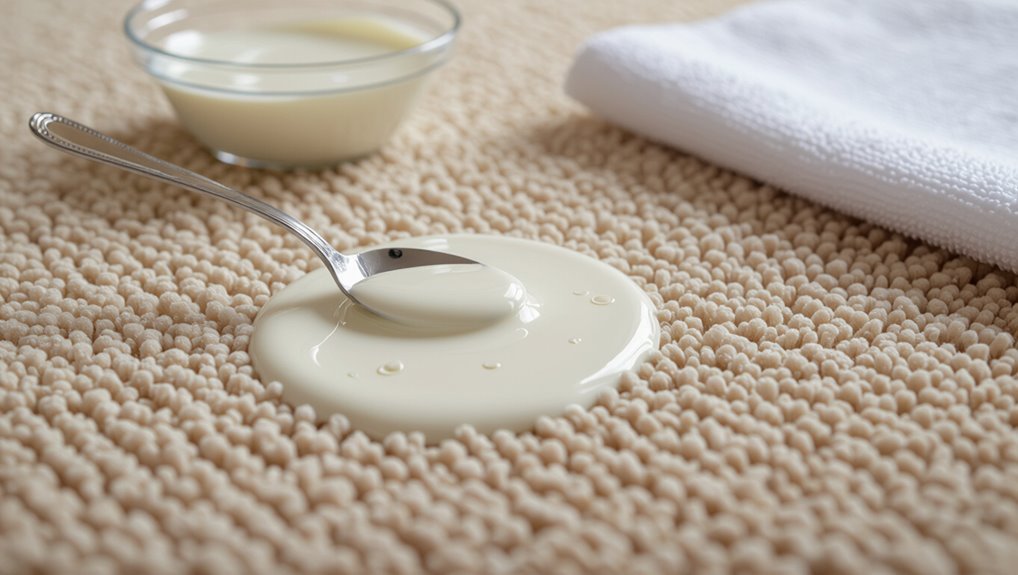
Act fast: if the acrylic is still fresh or tacky, blot up as much as you can with a clean cloth or paper towel without rubbing.
Then dampen a cloth with warm water and mild dish soap to lift the remaining paint—work from the edges toward the center to avoid spreading it.
You’ll need quick action: continue blotting, rinse, and repeat until the fresh paint lifts, then air dry.
How to Tell If the Paint Is Acrylic or Mixed
If the paint has already dried, your next step is to confirm what you’re dealing with—pure acrylic behaves differently than acrylic mixed with oils, latex, or additives, and that affects how you should treat it.
- Check sheen and flexibility: acrylic paint characteristics show a plastic-like film.
- Smell test: oils stay greasy; acrylics don’t.
- Water test: mixed paint identification—if it softens with water, it’s likely acrylic-based.
Is DIY Safe? Check Fiber, Dyefastness, and Paint Type
Before you start, check what your carpet is made of—natural fibers like wool react differently than synthetics.
Test dyefastness with a hidden spot and water to see if color bleeds, and confirm the paint is actually acrylic rather than oil- or latex-based.
These checks help you decide if a DIY fix is safe or if you should call a pro.
Carpet Fiber Type
- Nylon: high carpet durability, forgiving with solvents.
- Polyester/olefin: stain-resistant but sensitive to heat; gentle cleaning.
- Wool/natural: delicate fiber maintenance; consider pro help.
Dyefastness Check
Since the safety and success of a DIY paint-removal depend on the carpet’s dyefastness and the paint type, you’ll want to test both before you start scrubbing.
Dab a hidden spot with water and a mild solvent, blot, and inspect for dye bleed. Colorfast testing reveals dye stability; if colors run or fade, stop and consult a pro to avoid permanent damage.
Paint Composition Matter
Paint composition matters because what’s safe to remove at home depends on both the carpet fiber and the paint type. You’ll assess acrylic properties and paint adhesion to decide if DIY solvents or professional help’s needed.
Check fiber sensitivity, dyefastness, and whether paint’s water- or oil-based. Consider these steps:
- Test small inconspicuous area.
- Use mild solvent first.
- Call pros if uncertain.
Tools and Household Supplies You’ll Need
Before you start, gather a handful of essential cleaning tools like a stiff brush, plastic scraper, and clean white cloths.
Have common household solvents on hand—rubbing alcohol, dish soap, and a mild acetone-based nail polish remover can be useful depending on the paint and carpet.
Don’t forget protective gear and accessories: gloves, eye protection, and a small bowl or spray bottle to control application.
Essential Cleaning Tools
When you tackle dried acrylic on carpet, having the right tools makes the job faster and prevents damage; gather sturdy scrapers, soft-bristle brushes, clean white cloths or paper towels, a spray bottle, mild dish soap, rubbing alcohol or isopropyl alcohol, a vacuum, and disposable gloves.
You’ll want reliable cleaning solutions for quick spot work and overall carpet maintenance.
- Scraper and brush
- Cloths and spray bottle
- Vacuum and gloves
Common Household Solvents
1. You’ll want common solvent types like rubbing alcohol, acetone (nail polish remover), and mineral spirits for spot testing.
Choose based on fabric and cleaning effectiveness; stronger solvents remove paint faster but risk dye loss.
Test an inconspicuous area, apply sparingly with a cloth, blot—don’t rub—and ventilate.
Keep supplies ready: clean cloths, small spray bottle, and a plastic container for testing.
Protective Gear And Accessories
You’ll want a small kit of protective gear and handy accessories before you tackle dried acrylic on carpet.
Gather items that protect you and the area, and prep a clean work surface with a carpet protector under the spot.
Wear protective gloves, safety goggles, and a dust mask when scraping or using solvents.
- Scraper, soft brush
- Clean cloths, paper towels
- Small vacuum, spray bottle
Test Cleaners on a Hidden Spot (Do This Before Solvents)
Before you apply any cleaner or solvent, test it on an inconspicuous patch of carpet—like under a piece of furniture or along the baseboard—so you can check for colorfastness, fiber damage, or shrinkage.
Try each cleaning solution on multiple test areas, wait the recommended time, blot gently, and compare results. If discoloration or texture change appears, choose a gentler product.
Soften Dried Acrylic on Carpet With Heat and Moisture
Heat and moisture can loosen dried acrylic so you can lift it without grinding pigment deeper into fibers.
Heat plus moisture can loosen dried acrylic, letting you lift it without pushing pigment deeper.
You’ll use gentle heat application plus moisture absorption to soften the paint before blotting.
Follow these quick steps:
- Warm the spot with a hair dryer on low for 20–30 seconds.
- Place a damp cloth to allow moisture absorption for a minute.
- Blot softened paint with a clean towel.
Use Isopropyl vs. Acetone : When to Choose Each
Once the paint’s softened and you’ve blotted away excess moisture, it’s time to choose a solvent.
You’ll prefer isopropyl for delicate fibers—its isopropyl advantages include gentler action and lower odor.
Use acetone only for stubborn spots on synthetic, colorfast carpet because acetone risks include fiber damage and strong fumes.
Always test hidden area first and ventilate well.
Step-by-Step: Scrape and Lift Dried Acrylic
First check how thick the paint is so you know whether you’ll scrape or need more aggressive treatment.
Use a blunt knife or putty scraper at a low angle to gently lift flaky areas without cutting fibers.
If stubborn patches remain, apply a small amount of solvent and work from the edges toward the center to lift the paint.
Assess Paint Thickness
Before you grab solvents, take a close look at the paint to determine how thickly it’s built up—this tells you whether you’ll be scraping, lifting, or doing both.
Check paint absorption and carpet texture to decide approach.
- Thin film: fibers soaked, plan for blotting and lift.
- Medium build: partial scraping then lift.
- Thick crust: likely full lift and targeted cleaning.
Gentle Scraping Technique
Start by gently loosening the dried acrylic with a blunt tool—like a plastic scraper, old credit card, or the edge of a spoon—working at a shallow angle so you don’t tug carpet fibers. Use gentle tools and patient scraping techniques, lifting flakes gradually. Test a small area, then continue.
| Tool | Purpose |
|---|---|
| Plastic scraper | Initial loosening |
| Credit card | Edge scraping |
| Spoon | Gentle prying |
| Brush | Remove crumbs |
| Vacuum | Collect debris |
Lift With Solvent
Once you’ve loosened as much paint as possible, apply a suitable solvent to lift the remaining dried acrylic—work in small sections. Dampen a clean white cloth or cotton pad with isopropyl alcohol (90% if available) or an acrylic-specific remover, and blot the paint to soften it rather than rubbing, which can spread pigment and damage fibers.
- Choose solvent types carefully.
- Test in an inconspicuous spot.
- Use gentle application techniques and repeat as needed.
Blot, Dab, and Rinse Without Spreading the Stain
Work carefully to lift the paint without pushing it deeper into the fibers: blot gently with a clean white cloth or paper towel, dab from the edges toward the center, and rinse sparingly so you don’t spread the stain.
Use proven blot techniques and dab methods to absorb loosened paint, pat—don’t rub—and change cloths as they fill.
Rinse small, controlled areas and air dry.
Handle Dyed, Delicate, or Specialty Carpet Fibers
After you’ve lifted as much paint as possible, shift your focus to dyed, delicate, or specialty fibers, since they can react differently to cleaning agents and agitation.
- Test a hidden area to protect delicate fibers before any solvent.
- Use gentle blotting and a soft-bristle brush on specialty carpets, avoiding scrubbing.
- Rinse sparingly, pat dry, and repeat tests rather than escalating to stronger chemicals.
When to Stop and Call a Professional Carpet Cleaner
If the paint won’t lift after repeated gentle treatments or your tests show color loss, stop and call a professional carpet cleaner — they’ll have stronger, fiber-safe solvents and tools to prevent permanent damage.
You should seek professional help when stains are large, old, or on specialty fibers.
Schedule a carpet assessment to evaluate damage, costs, and safe restoration options before attempting more treatments yourself.
Prevent Future Paint Spills and Quick-Response Tips
Because quick action makes the difference between a spot you can clean yourself and one that needs professional help, set up simple prevention and response habits now:
- Use drop cloths and taped edges as preventative measures to protect carpet.
- Keep damp cloths, scraper, and mild detergent nearby for quick cleanup after drips.
- Clean spills immediately, blotting gently, and rotate tools so you’re always ready.
Frequently Asked Questions
Can Dried Acrylic Paint Damage Carpet Padding Beneath the Fibers?
Yes — dried acrylic paint can damage carpet padding beneath fibers. You’ll see paint adhesion reduce padding flexibility and stain fibers; prompt carpet maintenance prevents deep bonding, preserves cushioning, and avoids costly padding replacement.
Will Pet-Safe Cleaners Remove Dried Acrylic Without Harm?
About 78% of pet owners prefer pet safe products; yes, you’ll find pet friendly options that remove dried acrylic with reasonable cleaning effectiveness, but you’ll need scrubbing, testing on a hidden patch, and patience to avoid damage.
Can Steam Cleaning Permanently Set Acrylic Paint Stains?
No, steam cleaning won’t permanently set acrylic stains if you act promptly; you’ll risk setting them only after heat drives pigments deeper. Combine paint removal techniques with gentle carpet cleaning methods and test a hidden spot first.
How Long Until Paint Fumes From Solvents Are Hazardous Indoors?
You’ll start feeling fume effects within minutes to hours; solvents become hazardous over hours to days depending on concentration. Use ventilation methods like open windows, fans, and air purifiers to dilute vapors and reduce exposure quickly.
Are There Eco-Friendly Alternatives to Acetone and Isopropyl for Carpets?
I once used a lemon-scented cleaner like a gentle rain; yes, you can—natural solvents and a vinegar solution work well on carpets, but they’re milder than acetone or isopropyl, so you’ll need patience and testing.
Conclusion
You’ve learned quick fixes, tests, and when to quit and call a pro — and if you’ve ever spilled paint while rushing a DIY project, you know how fast a small drip can turn into a disaster. Coincidentally, that’s how most breakthroughs happen: a mess forces you to learn. Stay calm, test hidden spots, blot don’t scrub, and keep the right tools handy — you’ll save your carpet and your project, often in time.
