
How to Paint Latex Rubber: Step-By-Step Guide
You’ll start by cleaning and degreasing the latex thoroughly, then dry and condition it to avoid trapped moisture. Lightly sand or scuff glossy areas, test a primer and use a rubber-compatible adhesion promoter, then apply thin, even primer coats. Use flexible acrylic or latex-specific paints thinned for smooth atomization, build color with multiple light layers, and finish with a flexible sealer while controlling temperature and humidity. Keep PPE on—more tips and troubleshooting follow to help you succeed.
Quick Start: Paint Latex in 6 Steps
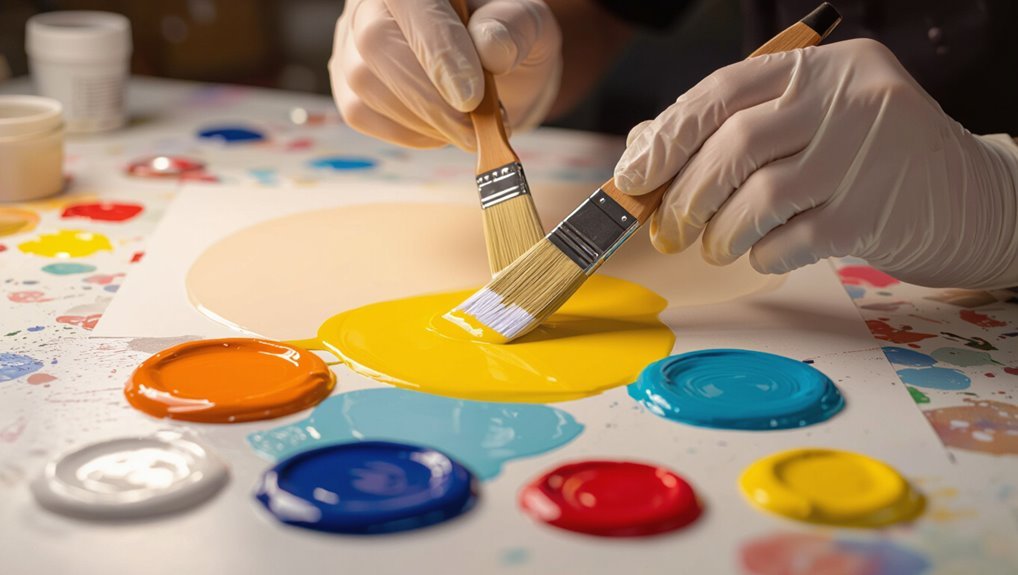
Get ready to paint latex rubber in just six clear steps.
Get ready to paint latex rubber in six simple steps for flexible, durable, and detailed color finishes.
You’ll prep the surface, choose flexible primers, and select compatible paints.
Follow latex paint techniques for adhesion and curing, apply thin even coats, and use heat between layers.
Finish with sealers for durability.
These creative color applications let you blend, shade, and highlight details while keeping flexibility and longevity.
Who Paints Latex: Costumes, Props, Crafts
Whether you’re a cosplayer aiming for screen-accurate armor, a prop maker crafting creature parts, or a DIYer turning old gloves into art, people paint latex to add color, texture, and realism while keeping the material flexible.
You use costume design and prop creation skills, apply crafting techniques, consider material selection and color theory, practice texture manipulation and artistic expression, and finalize with careful finishing touches.
How Latex Painting Differs From Rigid Surfaces
Because latex flexes, stretches, and breathes differently than wood, metal, or plastic, you’ll need to choose paints and methods that move with the material rather than form a brittle skin.
You must focus on latex surface preparation—cleaning, decontaminating, and lightly abrading—then use flexible paint application techniques, thin coats, and proper curing to maintain elasticity and prevent cracking or peeling during repeated movement.
Best Paints for Latex: Overview
Now that you’ve prepped and chosen flexible methods for latex, picking paints that move with the material becomes the next priority.
You’ll look for reputable latex paint brands offering elasticity, adhesion, and low VOCs.
Consider primers and flexible topcoats paired with thoughtful color selection to avoid frequent repainting.
Test small areas for compatibility, durability, and finish before committing to a full application.
Latex-Specific vs. Flexible Acrylic Paints: When to Use Each
When you need maximum stretch and adhesion for costumes, props, or surfaces that bend a lot, pick a latex-specific paint designed to flex with the material and resist cracking; for projects on rigid substrates or where you want easier application and faster curing, a flexible acrylic offers good elasticity with simpler cleanup and broader color options.
| Use case | Advantage |
|---|---|
| Stretchy surfaces | latex paint properties |
| Rigid/easy use | flexible paint benefits |
Choosing a Primer for Latex
When choosing a primer for latex rubber, you’ll want one formulated for flexible, nonporous surfaces so it bonds without cracking.
Look for adhesion promoters or primers labeled for rubber or vinyl to guarantee the paint sticks.
Also check the primer’s drying and curing times so you can topcoat at the right moment for a durable finish.
Surface Compatibility
Choosing the right primer is the single most important step to secure latex paint adheres to and survives on nonporous or tricky surfaces.
You’ll assess surface preparation: clean, degrease, and sand as needed.
Check material compatibility for rubber, vinyl, or coated metals.
Match primer to texture variation to guarantee uniform paint adhesion.
Test a small area before full application.
Adhesion Promoters
After you’ve cleaned and tested the surface, pick an adhesion promoter that matches both the rubber type and your latex paint.
You’ll reduce adhesion challenges by choosing primers labeled for flexible substrates. Apply according to manufacturer instructions, considering recommended surface treatments like light abrasion or solvent wipe.
Test a small area first; if the primer bonds and remains flexible, proceed with your paint system confident it’ll adhere.
Drying And Curing
Because latex relies on water evaporation and coalescence to form a durable film, pick a primer that supports both fast surface drying and full film curing without becoming brittle.
You’ll choose primers labeled for flexible substrates, follow manufacturer drying techniques like thin coats and controlled humidity, and respect curing times before flexing or topcoating.
Testing adhesion and flexibility on a scrap piece first helps.
Gather Tools & Supplies for Painting Latex
Before you start painting, gather the right tools and supplies so the job goes smoothly and safely.
You’ll need essential safety gear (gloves, respirator, eye protection), the suitable paint types for latex rubber, and any prep and mixing materials like cleaners, primers, thinners, and stir sticks.
Having everything on hand prevents mistakes and speeds up the process.
Essential Safety Gear
Safety gear isn’t optional when you’re painting latex rubber—you’ll want a respirator with organic vapor cartridges, nitrile gloves, eye protection, and disposable coveralls to protect skin and lungs from fumes and solvent splashes.
Wear safety goggles over the respirator mask, change protective gloves frequently, and use a work apron to shield clothing.
Keep a well-ventilated workspace and a spill kit within reach.
Suitable Paint Types
Now that you’re protected and set up, pick paints formulated to flex with latex rubber so your work won’t crack or peel.
Choose flexible acrylics or specialized rubber paints and verify latex paint compatibility on labels.
Consider paint finish options—matte hides imperfections, satin balances sheen and durability, gloss boosts vibrancy but shows flaws.
Buy small test quantities to guarantee adhesion and color match before committing.
Prep And Mixing Materials
Once you’ve chosen compatible paints, gather the right tools and prepping materials so the job goes smoothly: clean rags, isopropyl alcohol or mild detergent for degreasing, fine-grit sandpaper or a scuff pad, tack cloths, appropriate primers (flexible bonding primer or rubber-specific primer), disposable mixing cups and stir sticks, a scale or measuring spoons for precise thinning, flexible-compatible thinner or water per the paint instructions, and brushes or foam applicators rated for flexible paints.
Prepare the latex surface preparation carefully, follow manufacturer mixing ratios, measure accurately, and keep everything clean to guarantee adhesion and flexibility.
Inspect Latex for Damage Before Painting
Before you pick up a brush, give the latex a close inspection for tears, pinholes, or areas where the surface has become brittle or tacky.
You’ll use simple latex inspection techniques: stretch gently, feel for stickiness, and hold it to light to spot thin spots.
Identify common latex damages early so you can repair or replace affected pieces before painting.
Clean Latex Safely: Detergents and Methods
After you’ve checked for tears or thin spots, clean latex gently so you don’t worsen any damage.
Use mild detergent types like dish soap or specialized latex cleaner diluted in lukewarm water. Test a small area first.
Use soft cleaning tools—microfiber cloths or soft sponges—and blot rather than scrub.
Rinse thoroughly and air dry away from direct heat or sunlight before painting.
Remove Oils, Mold-Release, and Silicone Residue
Before you paint, identify any surface contaminants like oils, mold-release agents, or silicone residue by looking for shiny spots, slick areas, or water beading.
Use targeted cleaners — citrus-based degreasers, isopropyl alcohol, or a proprietary silicone remover — and test a small patch first.
Rinse thoroughly and let the latex dry completely so the paint will adhere properly.
Surface Contaminant Identification
When you’re getting ready to paint latex rubber, the first step is confirming and removing surface contaminants like oils, mold-release agents, and silicone residue, since they’ll prevent paint from adhering.
You’ll perform a quick surface assessment to identify contaminant types and affected areas before cleaning.
- Inspect visually and by touch
- Smell for residues
- Test small area for slickness
- Note porous vs. smooth zones
Effective Cleaning Methods
Because oils, mold-release agents, and silicone leave invisible films that repel paint, you’ll need targeted cleaners and scrubbing to restore adhesion. Use solvent wipes, citrus degreasers, and isopropyl, then rinse and dry. Test for latex residues before priming. Follow this quick reference:
| Step | Action |
|---|---|
| 1 | Isopropyl wipe |
| 2 | Citrus degreaser |
| 3 | Scrub nylon |
| 4 | Rinse |
| 5 | Dry/test |
Dry and Condition Latex After Cleaning
After rinsing, pat the latex gently with a soft towel and let it air-dry completely on a flat, ventilated surface—avoid direct heat or sunlight, which can warp or degrade the material.
Use proper drying techniques and follow conditioning methods to maintain flexibility and sheen.
- Inspect seams and folds for trapped moisture
- Use a lint-free cloth for final touch
- Apply a thin latex-safe conditioner
- Store flat or on a padded form
Repair Holes, Tears, and Seam Separation
Now that your latex is dry and conditioned, you can address any damage before painting: small holes, tears, and seam separation are fixable with the right materials and steady hands.
For hole repair, clean edges, apply adhesive and a thin latex patch.
For tear reinforcement, overlap and bond from beneath.
Finish with seam sealing and light sanding so paint adheres evenly.
Replace vs. Repair: Decision Guide
Start by inspecting how bad the damage is to see if it’s superficial or affects structural seams.
Estimate repair cost versus replacement cost so you’re not sinking money into a lost cause.
Finally, consider how long you’ll keep and use the piece—frequent wear often justifies replacement.
Inspect Damage Extent
You’ll first assess the damage to decide whether to repair or replace the latex rubber; small tears, surface cracks, or peeled paint often call for repair, while deep gouges, extensive brittleness, or structural failure usually mean replacement.
Perform a damage assessment, then choose suitable repair techniques.
- Check tear depth and length
- Test flexibility and brittleness
- Inspect bonding surface
- Note contamination and stains
Estimate Repair Cost
Deciding whether to repair or replace your latex rubber comes down to a cost-benefit estimate that balances material and labor costs, expected lifespan after repair, and the risks of failure.
You should tally parts, adhesives, prepping time, and any specialist labor, then compare that total to the price of a new piece plus installation.
List repair material options, get local labor cost estimates, and decide.
Consider Long-Term Use
When weighing repair against replacement, think about how long you’ll need the latex rubber to perform and what risks you’re willing to accept; a quick patch might save money now but could force more frequent fixes or sudden failure later.
Decide based on long term durability, cost, and safety, and follow maintenance tips to extend life:
- Assess remaining service life
- Compare repair vs replacement cost
- Consider failure consequences
- Schedule routine inspections
Test Paint Compatibility on a Scrap Swatch
Before painting the main piece, test your chosen paint on a scrap swatch of the same latex rubber to confirm adhesion, flexibility, and color match.
For swatch preparation, clean and lightly sand the scrap, then apply primer if used.
Do small compatibility testing passes, cure fully, stretch and inspect for cracking, peeling, or color shift before proceeding to the main project.
Set Up a Dust-Free Latex Painting Workspace
Choose a well-ventilated, low-traffic room with smooth surfaces and minimal textiles so particles won’t cling to your latex.
You’ll control dust by wiping down surfaces, using a tack cloth, and running a HEPA-filter air purifier or box fan with a furnace filter.
Set up a simple workflow—clean entry, dedicated paint table, and covered drying area—to keep contaminants out while you work.
Room Selection Criteria
Where will you work so dust doesn’t ruin your finish? Choose a clean, enclosed room with good lighting considerations and minimal foot traffic.
Check surface texture visibility and airflow paths before starting. Pick a temperature-stable area away from vents and open doors.
- Enclosed room with controlled entry
- Even, adjustable lighting
- Smooth, clean floor and work surfaces
- Stable temperature and humidity
Dust Control Techniques
Anyone can keep dust from settling on fresh latex by sealing the work area and controlling air movement: tape plastic sheeting over doorways and vents, lay down a clean drop cloth, and set up a low-speed HEPA air scrubber or fan with a fine filter to draw particles away from the surface.
You’ll use dust collection, air filtration, protective barriers, workspace organization, and strict surface preparation to maintain a clean environment.
Stretch and Mount Latex for Even Coats
Start by firmly stretching and mounting your latex on a stable frame or board so the surface stays smooth while you work.
Use proper latex stretching techniques and mounting methods to prevent wrinkles and uneven paint. Check tension, secure edges, and keep ambient humidity steady.
Use correct latex-stretching and mounting methods to avoid wrinkles—maintain tension, secure edges, and stabilize humidity.
- Clamp evenly around the perimeter
- Use a breathable backing
- Re-tension after adjustments
- Inspect for pinholes
Apply Primer: Step-by-Step and Dry Times
With your latex stretched and secured, prep the surface for primer by wiping it down with a lint-free cloth dampened with isopropyl alcohol to remove oils and dust. Choose appropriate Primer Types, apply thin even coats, and follow recommended dry times. Use proper Priming Techniques to avoid buildup; sand lightly between coats if needed.
| Step | Time |
|---|---|
| Coat 1 | 30m |
| Coat 2 | 45m |
| Touch | 15m |
| Cure | 24h |
Thin and Mix Flexible Acrylics for Latex
Thinning flexible acrylics for latex requires choosing the right reducer and mixing ratio so the paint flows smoothly without losing elasticity; test small batches and adjust gradually until you get a creamy, brushable consistency that levels well on stretched latex.
You’ll use tested mixing techniques for flexible applications and keep pigment load low to retain stretch.
- Start with manufacturer reducer
- Measure ratios
- Mix slowly
- Test cure/stretch
Brush Techniques for Smooth Latex Coverage
Begin by choosing the right brush and holding it like you mean to control every stroke: a high-quality, soft synthetic brush (sable or nylon blend) gives you smooth laydown without shedding or creating drag on the latex.
Work in thin, even coats, control brush pressure to avoid ridges, and maintain consistent stroke speed.
Finish with light feathering for seamless edges.
Airbrushing Latex: Setup and Tips
When you set up your airbrush for latex, check nozzle size, pressure, and keep a clean cup to prevent clogs.
Thin your latex to the manufacturer’s recommended ratio so it sprays smoothly without runs.
Use simple masking and build thin layered passes for even coverage and flexible results.
Airbrush Setup Basics
Although airbrushing latex can feel technical at first, a proper setup makes the process predictable and much easier to control. You’ll pick airbrush types suited to detail or coverage, check compressor pressure, secure hoses and fittings, and position lighting and ventilation.
Practice spray techniques on scrap latex before starting.
- Choose the right nozzle size
- Set consistent PSI
- Use stable mounting
- Test on scrap
Paint Thinning Ratios
If you want smooth, even coats on latex, thinning your paint to the right viscosity is essential.
Test a 1:1 to 2:1 paint-to-thinner ratio for acrylic latex, adjusting for humidity and spray pressure.
Use recommended paint additives sparingly to control flow and drying.
Stir thoroughly, strain before loading the airbrush, and re-test on scrap latex until atomization is consistent.
Masking And Layering
Now that you’ve got your thinning and atomization dialed in, plan your masking and layering to protect edges and build depth without overworking the latex.
Use precise masking techniques and controlled layering effects to avoid bleed and texture buildup.
- Test masks on scrap latex
- Work thin, incremental layers
- Feather edges with soft air pressure
- Remove masks slowly for clean lines
Build Color: Layering Without Cracking
When you build color on latex rubber, work in thin, even layers so each coat bonds and flexes without stressing the previous one.
Use proper layering techniques: let each coat dry fully, sand very lightly if needed, and apply flexible paint or extender.
Test bend areas frequently.
These steps guarantee cracking prevention and durable, flexible color without compromising latex elasticity or finish.
Create Gradients, Washes, and Weathering
Now you’ll use layered color glazes to soften shifts and build subtle gradients on the latex.
Use controlled paint washes to settle into creases without pooling, then lift or blot where needed.
Finish with targeted dirt and wear streaks to sell age and realism.
Layered Color Glazes
Layered color glazes let you build subtle depth, smooth gradients, and realistic weathering on latex rubber by applying multiple thin, translucent washes rather than opaque coats; you’ll use layered techniques and glazing effects to control tone and sheen while preserving texture.
- Thin translucent layers
- Feathered edge blending
- Color shifts and depth
- Gentle scumbling for wear
Controlled Paint Washes
If you want smooth gradients, subtle weathering, and natural-looking shadows on latex rubber, controlled paint washes are your go-to technique.
You dilute acrylics or specialized paints, then use controlled paint techniques to pull pigments into recesses and fade edges.
Practice wash application methods like layering thin passes, blotting excess, and working damp-to-dry to achieve seamless shifts and restrained, realistic depth.
Dirt And Wear Streaks
Wondering how to turn subtle shading into believable grime and wear on latex rubber? Use thin washes and drybrushing to create streaks, then fix with sealant.
Balance weathering with dirt removal techniques and wear prevention strategies so stains look intentional, not accidental.
- Apply diluted paint downward for gravity streaks
- Soften edges with a damp brush
- Layer colors subtly
- Seal lightly to protect results
Paint Fine Details: Stencils and Masking Tips
Want crisp edges and tiny accents that read from a distance? Use stencil techniques and proper masking materials: secure stencils, dab thin layers, and peel while tack is low. Work from thin to thicker coats, test on scrap, and clean edges with a fine brush.
| Tool | Purpose | Tip |
|---|---|---|
| Stencil | Pattern | Tape edges |
| Tape | Mask | Low-tack |
| Brush | Touch-up | Thin coats |
| Spray | Base | Light passes |
Painting Inside Molds, Seams, and Crevices
When you tackle molds, seams, and crevices, plan for access and control: use slim brushes, angled applicators, and thinned paint to reach tight spots without flooding surrounding areas.
You’ll prep surfaces with mold preparation techniques, mask adjacent zones, and select precise paint application tools to minimize runs.
Prep surfaces with mold-specific methods, mask nearby areas, and choose precise applicators to prevent runs.
- Use micro brushes for seams
- Thin coats build evenly
- Mask with low-tack tape
- Inspect under light
Drying and Curing Painted Latex: Timing & Conditions
Drying and curing painted latex depend on two main factors: temperature and humidity, so you’ll want to control both to get predictable results. You’ll monitor drying times and curing conditions, adjust for environmental factors, and note humidity effects and temperature influences. Improve air circulation without direct heat to avoid skinning or tackiness.
| Factor | Effect |
|---|---|
| Humidity | Slows drying |
| Temperature | Speeds curing |
Sealers That Preserve Flexibility
Once your painted latex has set under the right temperature and humidity, you’ll want a sealer that protects without making the rubber stiff.
Choose flexible coatings or thin protective films that move with the latex. Test adhesion and flexibility on a scrap.
Pick flexible sealers or thin films that move with the latex; always test adhesion and flexibility on a scrap.
Consider:
- Silicone-based flexible coatings
- Acrylic elastomeric sealers
- Thin polyurethane protective films
- Waterbased flexible clear coats
Apply Sealer Without Stickiness or Bloom
Before you seal latex rubber, make sure the surface is clean, dry, and free of oils or dust so the sealer adheres evenly.
Pick a sealer formulated for flexible latex and test it on a small patch to confirm it dries non-tacky and resists bloom.
Apply thin, even coats and allow full curing between layers to prevent stickiness and surface haze.
Proper Surface Preparation
When you’re sealing latex rubber, prep the surface so the sealer bonds evenly and won’t stay tacky or develop a white bloom; that means cleaning off all oils, dust, and mold-release agents, lightly scuffing glossy areas for mechanical grip, and using a compatible primer or bonding agent recommended by the sealer manufacturer.
Follow these steps:
- Perform thorough surface cleaning with mild solvent.
- Use gentle scuffing for grip.
- Apply latex conditioning product if specified.
- Remove dust before sealer application.
Choose The Right Sealer
If you want your latex rubber to finish without tackiness or a white bloom, pick a sealer formulated specifically for flexible, nonporous elastomers and follow the manufacturer’s instructions for dilution and recoat windows. Choose sealer types that preserve paint durability, apply thin even coats, and test compatibility.
| Sealer Type | Best Use |
|---|---|
| Acrylic | Quick cure, flexible |
| Silicone | High flexibility, long-term durability |
Make Painted Latex Water- and Sweat-Resistant
Since latex paints can break down from moisture and body oils, sealing your work is essential to keep colors and details intact during wear.
Use waterproof coatings sparingly and choose breathable finishes so trapped moisture doesn’t ruin paint. Test on scrap, apply thin even layers, and let cure fully.
Use waterproof coatings sparingly; prefer breathable finishes, test on scrap, apply thin even layers, and fully cure.
- Clean surface first
- Thin sealer if needed
- Apply multiple light coats
- Cure 24–48 hours
Prevent Cracking and Flaking on Flexible Areas
Because flexible areas take the most stress, you need to prepare and paint them differently to stop cracking and flaking: choose flexible, compatible paints and thinners, stretch the latex gently while applying thin, elastic layers, and avoid heavy build-ups that can’t move with the material.
Use flexibility techniques like cross-directional thin coats, light tack sanding between layers, and flexible sealers for effective crack prevention.
How Temperature and Humidity Affect Latex Paint
When you’re painting latex, temperature and humidity directly change how the coating flows, dries, and ultimately performs. High heat can speed drying too fast and trap solvents, while cold or damp conditions slow curing and can lead to poor adhesion, blistering, or prolonged tackiness.
You should monitor Temperature effects and Humidity impacts, apply Environmental considerations, and make Seasonal adjustments:
- Paint within recommended temp range
- Avoid high humidity days
- Use heaters or dehumidifiers
- Allow extra cure time in cool weather
Touch-Up Techniques for Chips and Scuffs
Patch chips and buff out scuffs promptly to keep latex rubber looking uniform and to prevent further peeling.
For chip repair, remove loose paint, clean the area, and apply thin layers of matching latex, letting each dry.
For scuff touch up, lightly sand glossy marks, clean, then dab paint with a soft brush.
Finish with gentle feathering to blend edges for a seamless result.
Store Painted Latex to Avoid Damage
After touching up chips and scuffs, store your painted latex items in a cool, dry place away from direct sunlight to prevent fading and breakdown of the finish.
Use proper latex storage solutions and simple damage prevention techniques to keep paint intact and flexible. Follow these tips:
- Hang items on padded hangers
- Keep pieces separated with acid-free paper
- Avoid heat sources
- Store in breathable garment bags
Clean and Maintain Painted Latex Garments
After painting latex, you’ll want to clean it gently to protect the finish—use mild soap, lukewarm water, and soft cloths rather than abrasive scrubs.
Let garments air dry flat away from direct heat or sunlight to prevent warping or color loss.
For storage, keep pieces flat or lightly rolled in tissue paper inside a cool, dark place to avoid creases and sticking.
Gentle Washing Techniques
While latex’s smooth surface looks delicate, you can clean painted garments safely with gentle, deliberate care that preserves both the paint and the rubber.
Use mild soap and lukewarm water, focus on latex surface preparation, and employ gentle scrubbing techniques with a soft cloth.
Avoid solvents, dry thoroughly with a soft towel, and air-dry flat.
- Soft cloths only
- Mild soap
- Gentle motions
- Air-dry flat
Proper Storage Methods
If you want your painted latex garments to last, store them clean, dry, and away from direct light and heat—these steps prevent paint cracking, rubber degradation, and color fading.
Hang or lay flat in breathable garment bags, keep temperature control consistent (cool, dark), avoid plastic contact, and use silica packets for moisture prevention.
Check periodically and recondition lightly before wearing.
Common Mistakes When Painting Latex (And How to Avoid Them)
Painting latex successfully means knowing the pitfalls that usually trip people up and how to fix them. You’ll prevent errors through careful mistake identification and controlled paint application.
Watch for surface dirt, wrong primer, thick coats, and rushed curing.
- Skip cleaning first
- Use incompatible primer
- Apply overly thick coats
- Rush drying times
Troubleshoot Color Bleed, Tackiness, and Adhesion
If you’re seeing color bleed or a tacky surface, you’ll want to act quickly to stop stains and finish the cure.
Start by isolating the cause—sealers or pigment-heavy paints can cause bleed, while inadequate cleaning or incompatible primers cause poor adhesion.
I’ll show you how to prevent bleeding and fix adhesion so your latex stays flexible and durable.
Preventing Color Bleed
When you want crisp, lasting colors on latex rubber, stop color bleed before it starts by addressing surface tackiness, incompatible paints, and poor adhesion; these three issues are the usual culprits and correcting them early saves time and frustration.
Use color separation techniques and control paint layer interactions to prevent migration.
- Dust, clean, degrease
- Use barrier coats
- Thin, even layers
- Test compatibility
Fixing Poor Adhesion
Because adhesion problems usually stem from surface contamination, incompatible coatings, or lingering tack, you’ll want to diagnose and address each cause before repainting. You’ll perform Surface preparation, run Compatibility tests, adjust Paint application, and control Environmental factors. Use Repair techniques like sanding, solvent cleaning, primer, or recoating to resolve Adhesion issues.
| Cause | Test | Fix |
|---|---|---|
| Contamination | Swipe test | Solvent clean |
| Incompatibility | Patch | Primer |
| Tackiness | Touch | Dry/neutralize |
| Humidity | Hygrometer | Wait/vent |
Stay Safe: Ventilation, PPE, and Skin Contact
Although latex rubber paint is low in VOCs compared with some solvents, you still need good ventilation to avoid breathing fumes and aerosolized particles.
Latex rubber paint has lower VOCs, but ensure good ventilation to avoid fumes and airborne particles.
Open windows, run fans to push air out, and work outdoors when possible.
Follow ventilation importance, PPE types, skin protection, and safety protocols:
- Wear respirator and gloves
- Use eye protection
- Cover exposed skin
- Have cleanup supplies ready
Cost & Time Estimates for Typical Latex Jobs
After you’ve handled ventilation and protective gear, you’ll want a realistic sense of how much time and money a typical latex rubber job will take so you can plan accordingly.
Expect a clear cost breakdown: primer, latex paint, brushes, PPE, and cleanup materials.
Time allocation varies by prep, drying between thin coats (2–24 hours), and curing—plan 1–3 days total for small projects, longer for complex pieces.
Advanced Finishes and Creative Variations
When you want more than a flat, uniform finish, explore advanced techniques that let you tailor texture, sheen, and visual depth on latex rubber.
You’ll mix paints, glazes, and sealers, layer thin coats, and use tools to create creative textures that hold up. Test samples, cure fully, and finish with protective topcoats for durability.
- Sponging for mottled effects
- Dry-brushing highlights
- Metallic glazes
- Matte/gloss layering
Frequently Asked Questions
Can Painted Latex Be Heat-Formed or Reshaped Safely?
You can sometimes heat-form painted latex carefully, but you shouldn’t expect high heat resistance; you’ll risk blistering or cracking and reducing surface durability. Test a scrap, use low heat, and monitor changes slowly to avoid damage.
Will Painted Latex Release Toxic Fumes When Worn in Hot Conditions?
Yes — painted latex can emit odors; think of it like sultry summer air warning you. You’ll want fume safety precautions in hot conditions, monitor health risks, and guarantee ventilation needs are met to avoid problems.
Can I Dye Latex Instead of Painting for Full-Color Change?
Yes — you can dye latex for full-color change; you’ll use dye techniques like pigment rubbing, solvent-based dyes, or airbrushing, and you’ll test color permanence, seal carefully, and expect gradual fading with heat and friction.
How Do Painted Latex Pieces Fare When Exposed to Sunlight/Uv Long-Term?
Painted latex fares poorly long-term: it suffers UV resistance loss, shows color fading, and peels unless you do thorough surface preparation and guarantee paint adhesion. You’ll need UV topcoats, regular checks, and prompt repairs.
Are There Special Adhesives for Bonding Painted Latex to Other Materials?
Yes — you can use specialty contact adhesives and flexible cyanoacrylates formulated for latex bonding techniques; you’ll test adhesive compatibility on painted samples, use primers where recommended, and clamp gently until full cure to avoid tearing.
Conclusion
You’re all set to transform latex into anything from costume skin to bold props—follow prep, flexible paints, and sealing for best results. Fun fact: over 60% of cosplay makers report using latex for realistic wearable pieces because of its stretch and finish, so you’re joining a huge DIY crowd. Keep ventilation and gloves mandatory, test colors on scraps, and expect drying and cure times; with patience, your latex paint job will stay flexible and vivid.
