
40 Backyard Raised Garden Ideas for Better Soil, Accessibility, and Yield
To enhance your backyard raised gardens, focus on location and accessibility. Choose a sunny spot with good drainage and easy access pathways. Use durable and eco-friendly materials like recycled pallets, and consider vertical or tiered designs for maximizing space and yield. Incorporating technology can streamline your garden management, while seasonal layouts keep it productive. If you explore various designs and techniques, you’ll discover even more innovative ideas to elevate your gardening experience.
Choosing the Right Location for Your Raised Garden
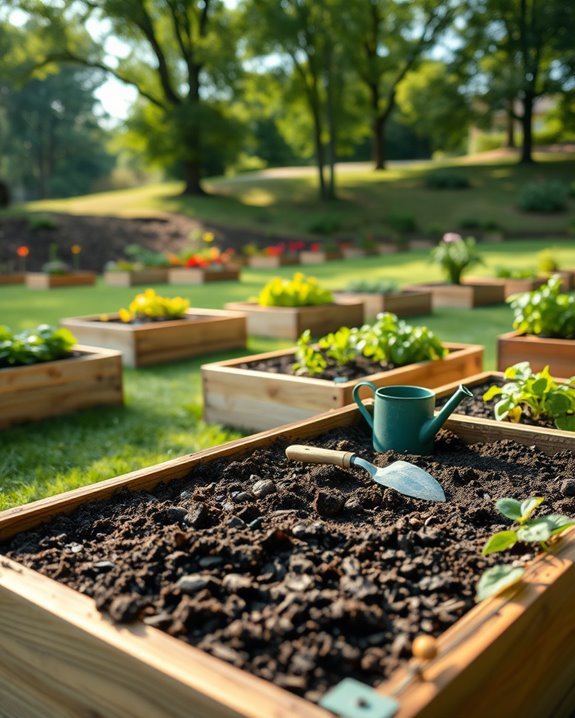
When you choose the right location for your raised garden, you’re setting the stage for a successful growing season.
Consider sunlight exposure and wind protection to maximize growth. Confirm good soil drainage and proximity to water for healthy plants.
Think about visibility factors and slope considerations, while minimizing foot traffic near the garden.
Don’t forget to account for neighbor fences and overall garden aesthetics.
Selecting Materials for Your Raised Garden Bed

After you’ve found the perfect spot for your raised garden, the next step is selecting materials for your garden bed.
Consider wood types that suit your climate and budget planning. Choose bed dimensions that allow for good drainage solutions and easy access.
Incorporate soil amendments for healthy growth while keeping garden aesthetics and color schemes in mind to enhance visual appeal and pest control.
Building a Raised Garden Bed With Pallets

If you’re looking for an affordable and eco-friendly option for your raised garden bed, building one with pallets is a fantastic choice.
Start with pallet preparation by ensuring they’re clean and free from chemicals.
Next, focus on pallet arrangement to create a sturdy structure. Stack them for height or lay them flat for a traditional bed, depending on your garden’s needs.
Incorporating Vertical Gardening Techniques

While you may have limited space in your backyard, incorporating vertical gardening techniques can transform even the smallest areas into lush, productive gardens.
By utilizing vertical gardening structures like trellises, wall planters, or hanging pots, you’ll maximize your growing area.
The vertical gardening benefits include improved air circulation, easier maintenance, and increased yields, making it an ideal solution for small-space gardening.
Utilizing Tiered Raised Garden Beds
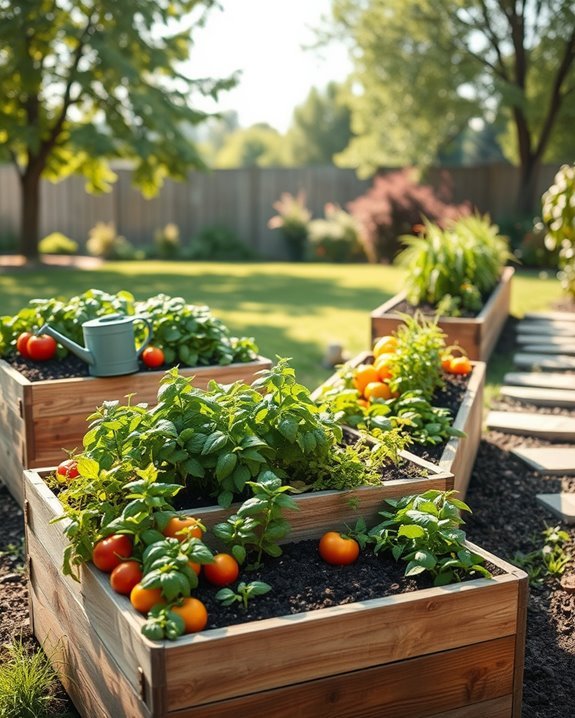
Tiered raised garden beds can be a game-changer for maximizing your gardening space, especially when you’re working with limited room.
By utilizing tiered plantings, you can create diverse soil layers that promote healthy root systems and improve drainage.
This design not only enhances aesthetics but also boosts your yield, allowing you to grow more vegetables or flowers in a compact area.
Creating a Raised Garden for Accessibility

Maximizing your gardening space doesn’t just mean stacking beds; it also involves designing gardens that everyone can enjoy.
Consider raised bed height to guarantee accessible gardening for all abilities. Build beds at a height that allows easy reach while seated or standing.
Incorporate pathways wide enough for wheelchairs or walkers, making your garden a welcoming space for everyone to participate and enjoy.
Using Recycled Materials for Raised Garden Beds
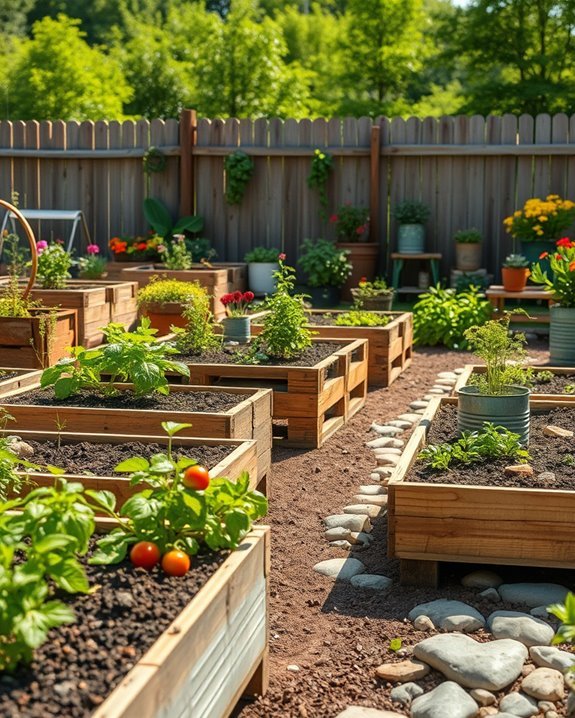
If you’re looking to create a raised garden bed that’s both functional and eco-friendly, using recycled materials is a fantastic option.
Consider repurposing wooden pallets, old bricks, or even discarded tires for creative upcycling. These materials not only save money but also reduce waste.
Plus, they can add unique character to your garden while providing a sturdy structure for your plants.
Designing a Herb Spiral in Your Raised Garden

After exploring ways to use recycled materials for your raised garden beds, consider adding a herb spiral to your garden design.
This unique structure maximizes space and offers diverse herb selection, allowing you to grow a variety of herbs in different microclimates.
The spiral benefits include improved drainage and easy access, making it a functional and visually appealing feature for any gardener.
Planting Companion Plants in Raised Beds
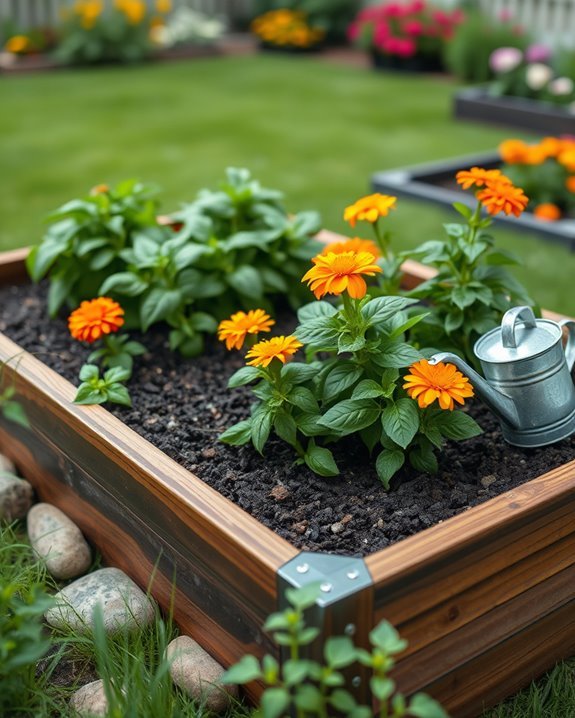
When you plant companion plants in your raised beds, you can create a thriving ecosystem that boosts your garden’s productivity.
Companion planting enhances pest management and soil health while promoting nutrient balance. By incorporating plant diversity and seasonal planting, you improve garden aesthetics and attract beneficial insects.
Remember proper plant spacing and crop rotation to maximize your raised garden’s yield and overall success.
Creating a Pollinator-Friendly Raised Garden

Incorporating companion plants not only benefits your raised garden’s productivity but also attracts essential pollinators, making it even more vibrant.
Choose native plants to create a welcoming habitat for bees and butterflies. These plants enhance your garden aesthetics while supporting local ecosystems.
Adding a Drip Irrigation System to Raised Beds

While you might enjoy tending to your raised garden, adding a drip irrigation system can simplify your watering routine and guarantee your plants receive the moisture they need.
This efficient method delivers water directly to the roots, promoting healthier growth while minimizing waste. Not only does drip irrigation enhance water conservation, but it also saves you time, letting you focus on other gardening tasks.
Incorporating Edible Flowers in Your Garden
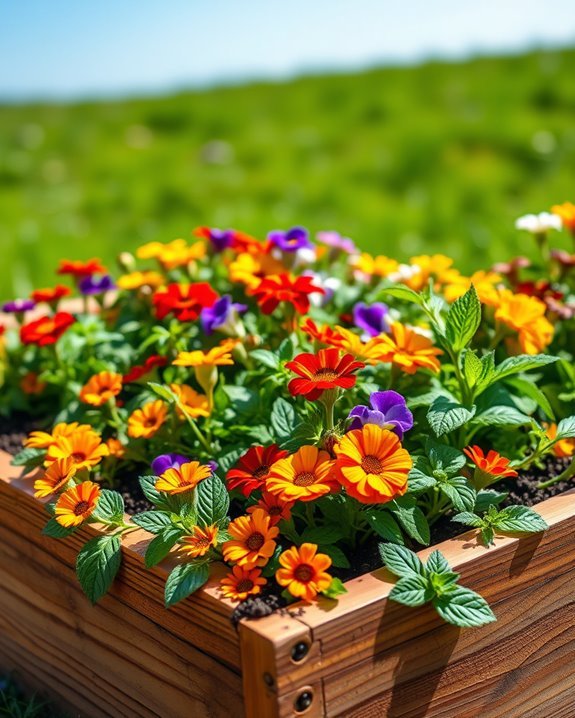
Have you ever thought about how edible flowers can elevate both the beauty and flavor of your garden?
Adding edible flower varieties like nasturtiums and pansies not only brightens your space but also offers health benefits, including antioxidants and vitamins.
You can sprinkle them in salads or use them as garnishes, enhancing both taste and visual appeal while enjoying their nutritional perks.
Building a Raised Garden Bed With Built-In Seating

Creating a raised garden bed with built-in seating not only maximizes your gardening space but also offers a cozy spot to relax and enjoy your hard work.
Using Fabric Raised Garden Beds
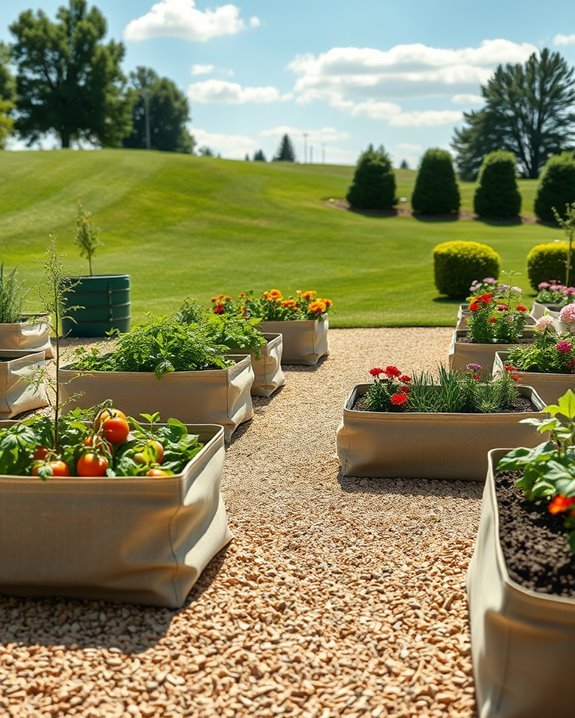
Fabric raised garden beds are an innovative solution for gardening enthusiasts looking for flexibility and convenience.
These lightweight materials enhance soil health while providing excellent drainage solutions. With great moisture retention and pest management, you’ll enjoy robust plant growth.
Plus, their aesthetic appeal adds charm to your garden. Fabric beds guarantee bed longevity and effective weed prevention, making gardening simpler and more enjoyable.
Establishing a Rain Garden With Raised Beds

While you may think of raised beds solely for traditional gardening, establishing a rain garden with them can be a transformative way to manage stormwater.
Rotating Crops in Your Raised Garden
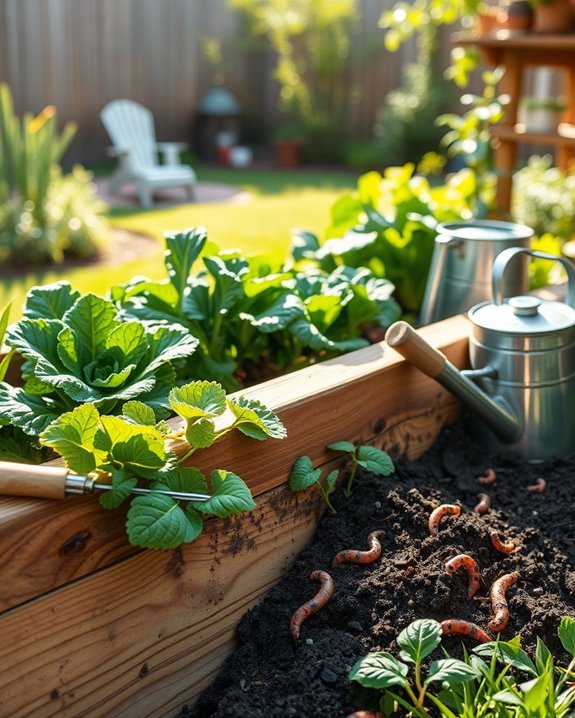
To maximize the productivity of your raised garden, rotating crops is essential.
Crop rotation helps prevent soil depletion and reduces pest and disease buildup. By changing the location of your plants each season, you promote better soil health and improve nutrient availability.
Consider grouping plants by family, as this strategy enhances biodiversity and supports a thriving garden ecosystem.
Creating a Shade Garden With Raised Beds
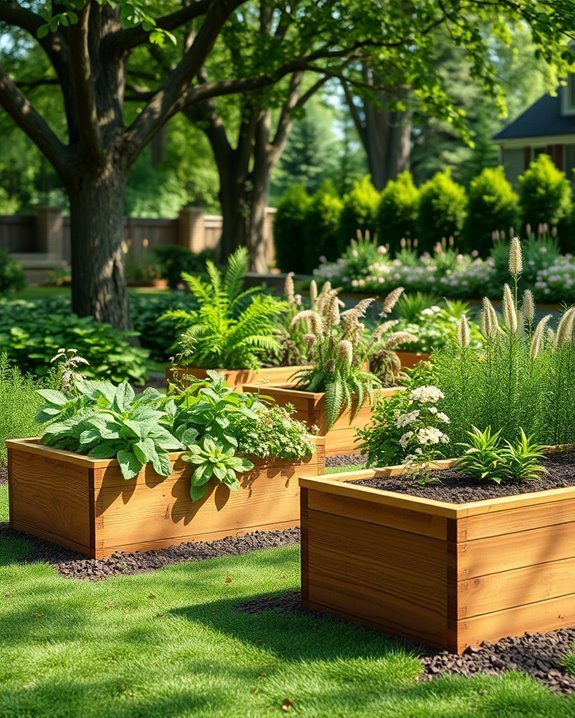
Creating a shade garden with raised beds can transform a dimly lit area into a lush, vibrant space.
By selecting shade plants like ferns, hostas, and astilbes, you’ll enhance your garden’s beauty.
Use light filtering techniques, such as positioning your beds strategically, to optimize the available sunlight.
This thoughtful design not only improves aesthetics but also supports healthy plant growth in challenging light conditions.
Building a Raised Garden Bed With Wheels

If you want to add versatility to your gardening experience, building a raised garden bed with wheels is a fantastic option.
These wheeled beds enhance garden mobility, making portable gardening a breeze. You can easily transport your mobile garden to optimize sunlight exposure or improve garden accessibility.
With raised mobility, you enjoy flexible planting and can adapt to your gardening needs effortlessly.
Incorporating a Compost Bin in Your Garden Design

While you’re designing your backyard garden, incorporating a compost bin can greatly enhance the health of your plants.
The compost bin benefits include providing nutrient-rich soil, promoting healthier growth, and reducing waste.
Use simple composting techniques, like layering greens and browns, to create your ideal compost.
This sustainable practice not only improves soil quality but also supports a thriving garden ecosystem.
Using Raised Beds for Succession Planting
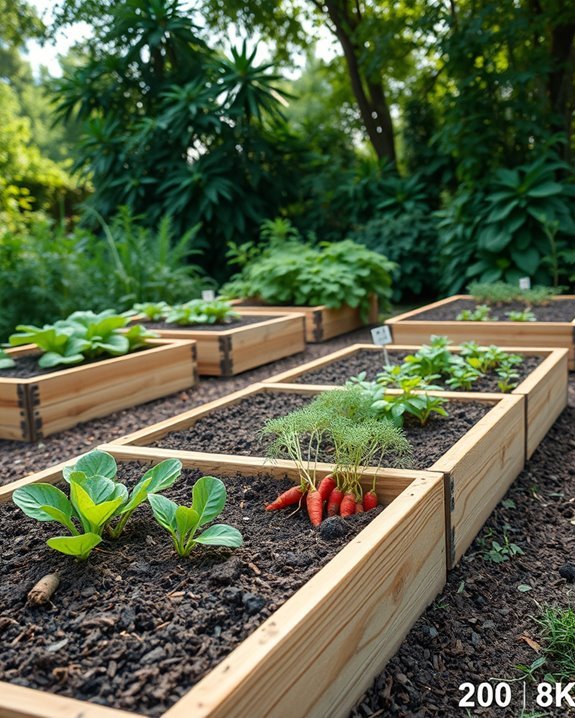
Using raised beds for succession planting can maximize your garden’s productivity throughout the growing season.
By planting different crops in the same space at various times, you guarantee continual harvests.
Combine this with crop rotation to maintain soil health and reduce pests.
This method not only keeps your garden vibrant but also allows you to enjoy fresh produce longer.
Designing a Children’s Garden With Raised Beds
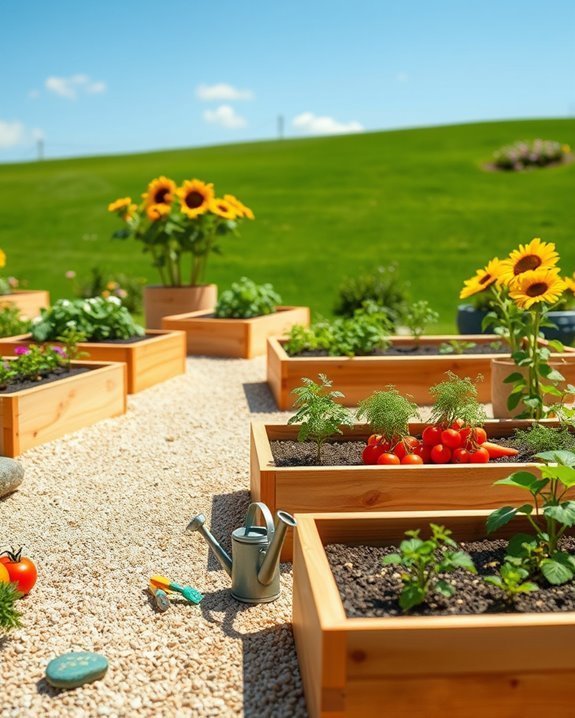
Creating a children’s garden with raised beds can be a fun and educational experience that encourages little ones to connect with nature.
Incorporate engaging activities like sensory exploration and garden storytelling, using colorful plants to spark their imagination.
Equip them with kid-friendly tools to foster independence and promote wildlife awareness, making children’s gardening a delightful adventure filled with educational themes and hands-on learning.
Creating a Pollinator Garden Using Raised Beds
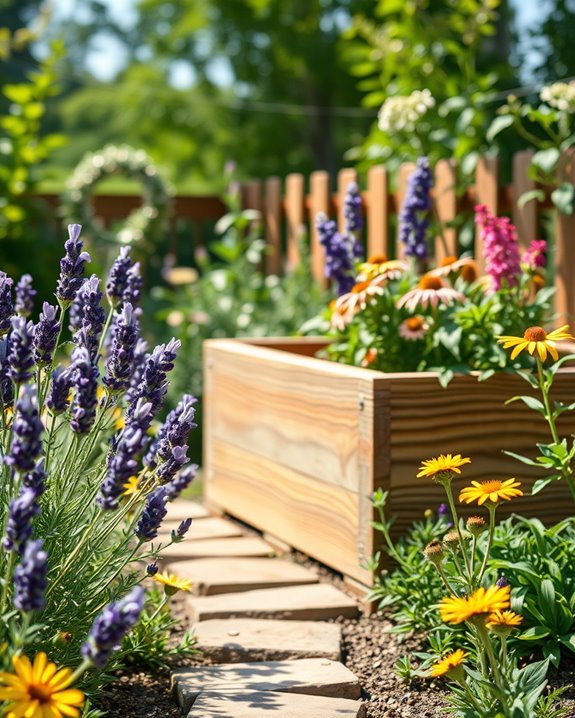
If you want to attract a variety of pollinators to your garden, raised beds can provide an ideal setting for a vibrant pollinator garden.
Focus on garden design that incorporates native flowers and seasonal blooms.
Plant pollinator plants rich in nectar sources, ensuring a habitat creation that invites butterfly species and attracts bees.
This strategy enhances biodiversity while creating a beautiful, buzzing space.
Planting a Salsa Garden in Raised Beds

A salsa garden in raised beds can be a rewarding way to grow fresh ingredients right in your backyard.
Start by planting tomatoes, peppers, onions, and cilantro, which are essential salsa ingredients. You can experiment with different salsa varieties by trying heirloom tomatoes or spicy peppers.
With proper care, you’ll enjoy vibrant flavors and an abundant harvest perfect for your next gathering!
Building a Raised Garden Bed With a Trellis
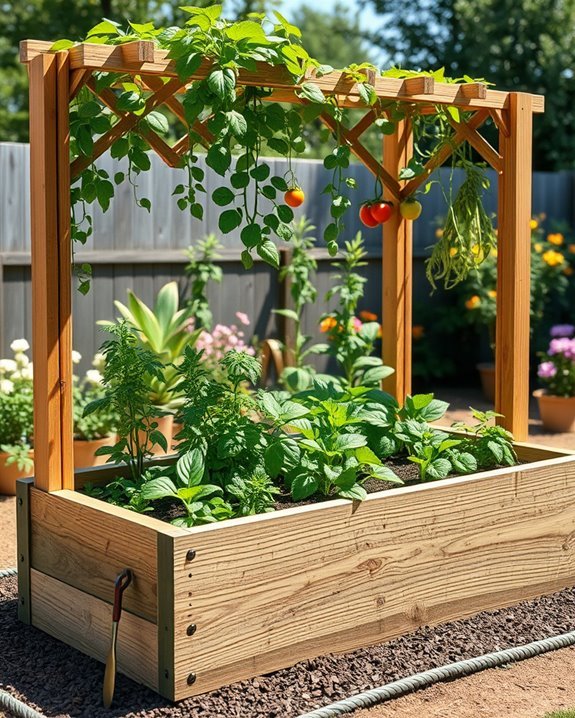
For those looking to expand their gardening space and add vertical interest, building a raised garden bed with a trellis is a fantastic option.
You can choose from various trellis materials like wood, metal, or vinyl, depending on your style.
Consider different trellis designs, such as A-frame or horizontal grids, to support climbing plants while maximizing your growing area.
Happy gardening!
Using Glass or Plastic for Raised Garden Sides
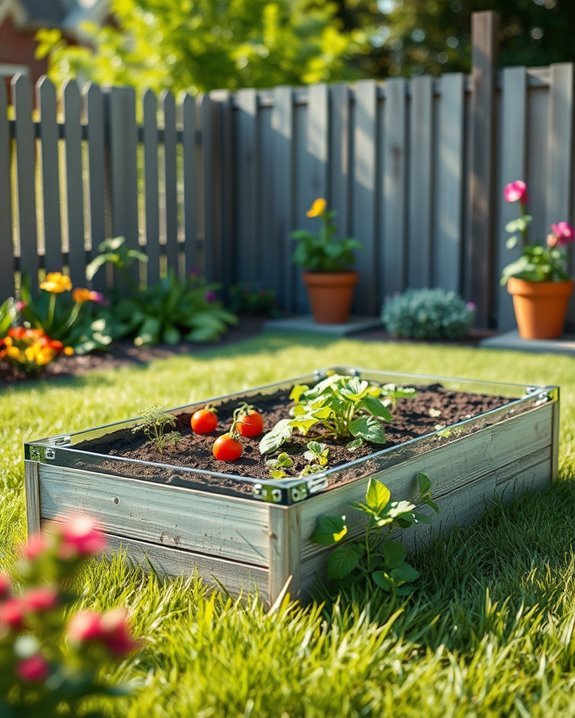
Using glass or plastic for raised garden sides can create a modern and stylish look while enhancing your gardening experience.
Glass sides offer aesthetic appeal and garden visibility, while plastic sides provide UV protection and moisture retention.
Consider durability and insulation benefits when choosing materials.
For cost effectiveness, weigh maintenance tips against your desired design to guarantee a thriving garden environment.
Incorporating a Water Feature in Your Raised Garden

Incorporating a water feature into your raised garden not only adds visual interest but also creates a soothing atmosphere that enhances your outdoor space.
Consider simple water feature ideas like a small fountain or a birdbath to improve your garden aesthetic.
These features attract wildlife, promote biodiversity, and provide a serene backdrop as you enjoy your gardening experience.
Designing a Flower and Vegetable Combination Bed
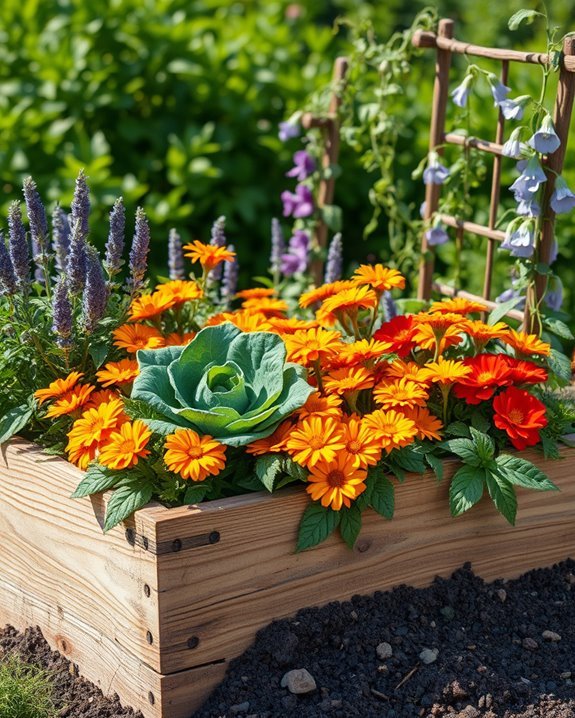
While it might seem challenging to blend flowers and vegetables in a single raised bed, doing so can create a vibrant and productive garden space.
Focus on flower selection that enhances vegetable synergy through companion planting. Consider seasonal blooms, color combinations, and plant heights for better garden aesthetics.
This approach boosts pollinator attraction and guarantees soil compatibility, making maintenance easier and more rewarding.
Using Straw Bales as Raised Garden Beds

If you’re looking for an innovative way to create raised garden beds, straw bales can be a fantastic option.
Straw bale gardening not only elevates your plants but also helps maintain ideal soil temperature. As the bales decompose, they provide nutrients and moisture, creating a fertile environment for your crops.
Plus, they’re lightweight and accessible, making gardening easier for everyone.
Creating a Wildlife Habitat With Raised Beds
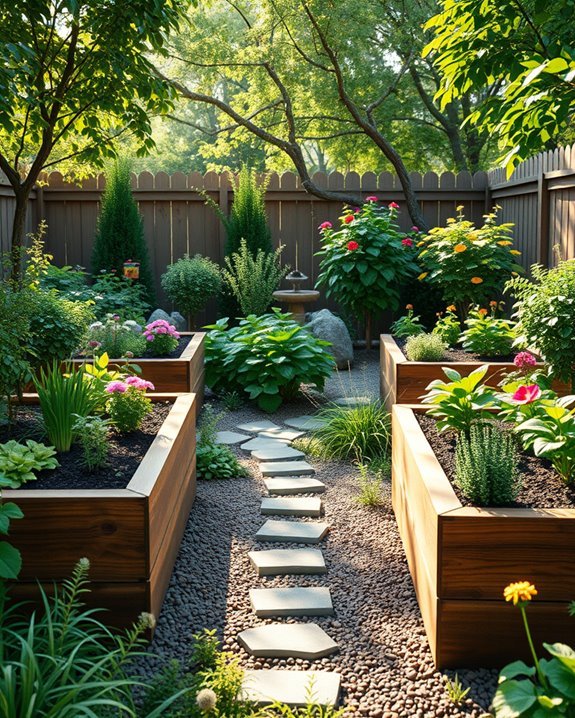
Creating a wildlife habitat with raised beds not only enhances your garden’s beauty but also supports local ecosystems.
By incorporating wildlife friendly plants, you’ll attract beneficial insects and pollinators.
Add bird friendly features like feeders, baths, and nesting boxes to invite feathered friends.
Together, these elements create a thriving environment that nurtures nature while providing you with a vibrant, dynamic garden space.
Incorporating Draining Solutions in Raised Beds

To maintain a thriving wildlife habitat in your raised beds, proper drainage is key.
You can achieve this by incorporating effective drainage solutions like gravel or perforated pipes at the base.
Additionally, mix soil amendments such as compost and peat moss to enhance water retention without causing sogginess.
This balance guarantees that your plants thrive while supporting beneficial wildlife in your garden.
Using Raised Beds for Container Gardening
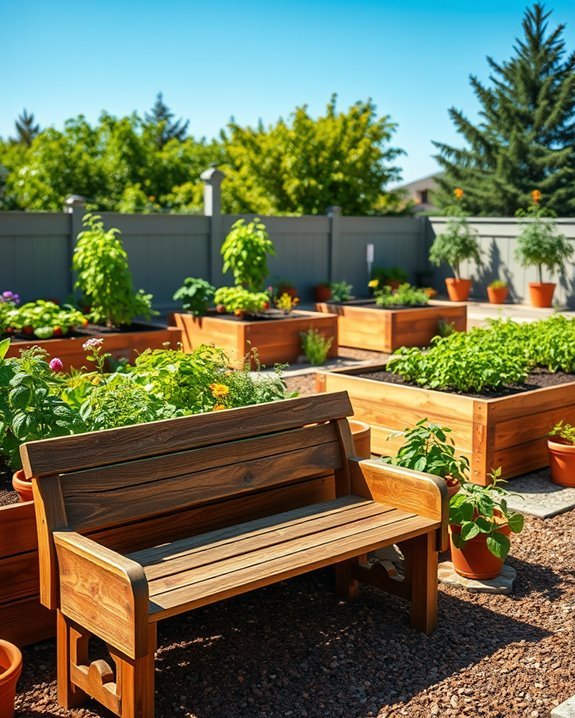
While raised beds are often associated with traditional in-ground gardening, they can also serve as a fantastic foundation for container gardening.
You can enjoy the raised bed benefits, such as improved drainage and easier access, while choosing your container plant selection.
This combination allows you to create a versatile gardening space, perfect for growing vibrant flowers or fresh vegetables with minimal effort.
Building a Raised Garden Bed With a Cold Frame
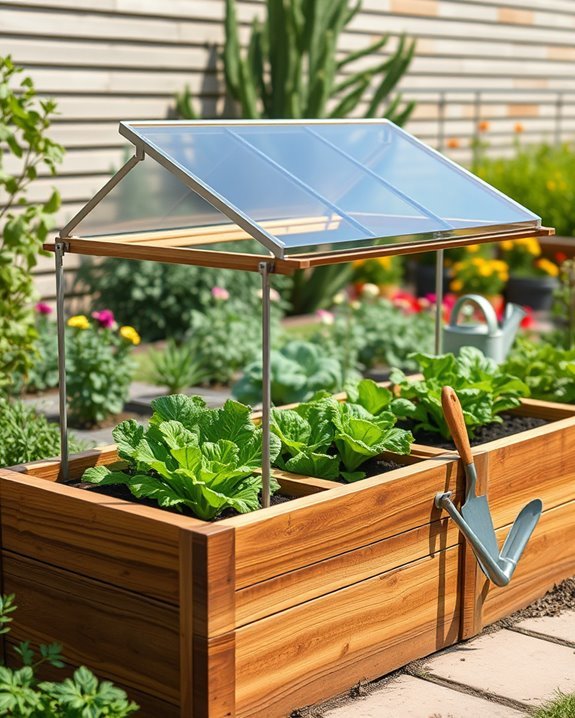
If you want to extend your growing season and protect your plants from harsh weather, building a raised garden bed with a cold frame is an excellent choice.
The cold frame benefits include warmer soil and reduced frost exposure. Use materials like wood or recycled windows for your frame.
This setup allows you to start planting earlier and harvest later, maximizing your garden’s yield.
Designing a Rustic Raised Garden With Logs
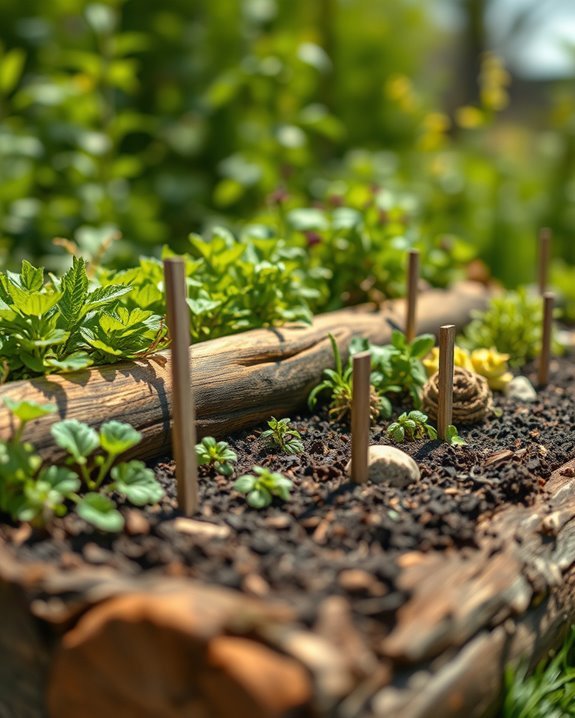
Have you ever considered using logs to create a rustic raised garden bed?
This design not only adds charming rustic aesthetics to your backyard, but it also benefits from log durability, ensuring your garden stands the test of time.
Stack the logs in a desired shape, leaving space for soil and plants.
You’ll enjoy a unique garden that’s functional and visually appealing.
Integrating a Pathway Around Your Raised Garden

Creating a rustic raised garden with logs sets a beautiful backdrop for your plants, but incorporating a pathway around it enhances both functionality and accessibility.
Choose pathway materials like gravel, wood chips, or flagstones to create a durable surface. A well-planned pathway design not only allows easy access to your garden beds but also adds charm to your outdoor space.
Using a Lasagna Gardening Method in Raised Beds
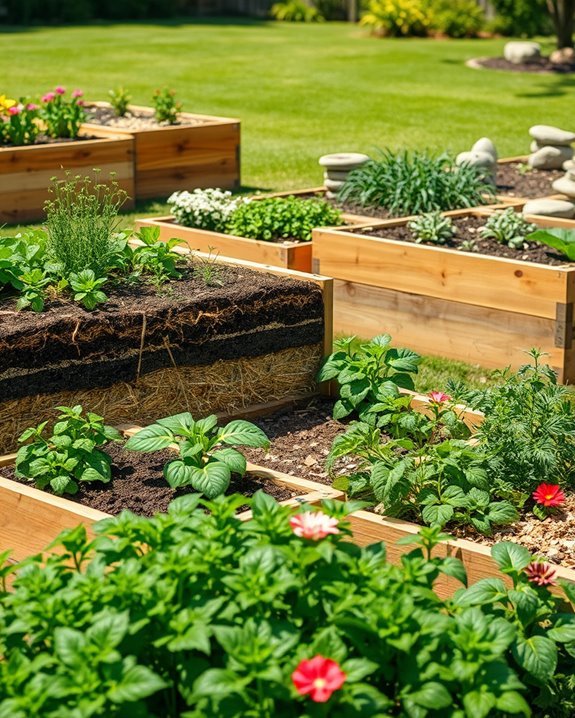
Lasagna gardening is a fantastic method for enhancing your raised beds, allowing you to build rich, nutrient-dense soil without the back-breaking labor of traditional digging.
By layering organic materials like cardboard, kitchen scraps, and dried leaves, you create lasagna layers that decompose over time, enriching the soil.
This technique boosts soil nutrients, promoting healthy plant growth and maximizing your garden’s yield.
Incorporating a Greenhouse With Raised Beds
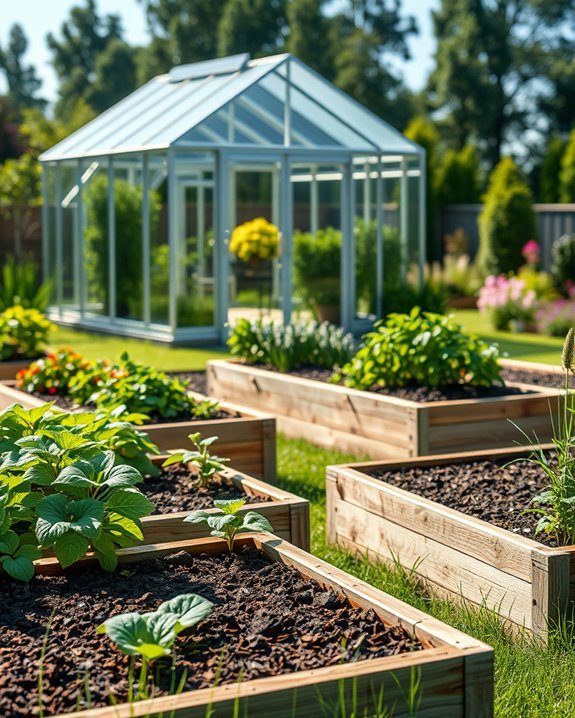
While many gardeners dream of year-round growing conditions, incorporating a greenhouse with your raised beds can turn that dream into a reality.
Greenhouses provide essential climate control, allowing you to extend your growing season and protect plants from harsh weather.
With greenhouse benefits like improved pest management and a stable environment, your raised beds can yield a healthier, more productive garden year-round.
Designing a Mediterranean Garden With Raised Beds
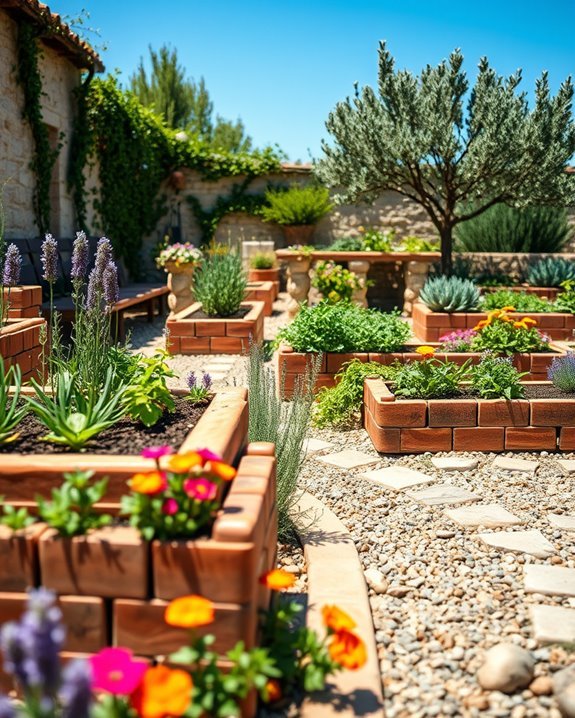
If you’re looking to bring a touch of the Mediterranean to your backyard, raised beds provide the perfect framework for this vibrant garden style.
Plant Mediterranean herbs like basil, oregano, and rosemary alongside colorful Mediterranean vegetables such as tomatoes and eggplants.
This combination not only enhances your garden’s aesthetic but also offers a rich variety of flavors for your culinary adventures.
Building a Raised Garden Bed for Root Vegetables
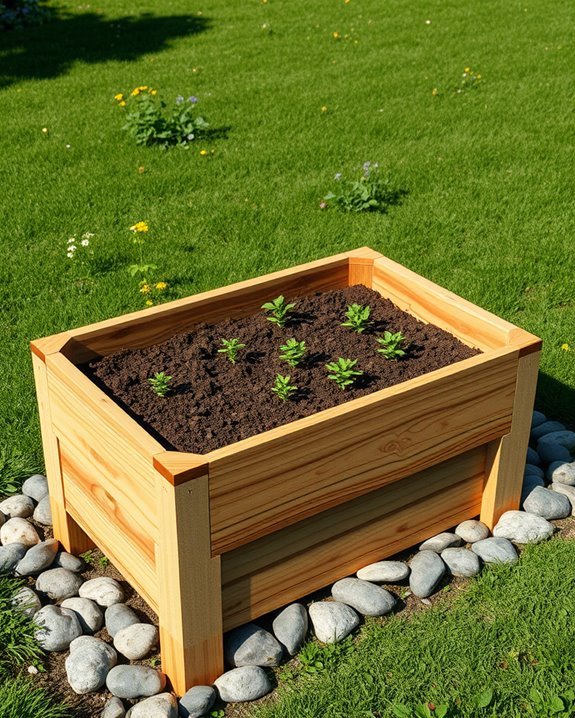
To successfully grow root vegetables like carrots, beets, and potatoes, building a raised garden bed is essential.
Choose a depth of at least 12-18 inches to accommodate various root vegetable varieties. This depth allows for better drainage and soil aeration, promoting healthy growth.
Additionally, using quality soil will guarantee your plants thrive and yield abundant harvests.
Happy gardening!
Incorporating an App for Garden Management

Growing root vegetables in your raised garden bed is just the beginning of a successful gardening journey.
Incorporate an app for garden management to enhance your experience. Use it for garden tracking, plant reminders, soil analysis, and pest management.
With features like crop rotation, growth monitoring, weather updates, harvest scheduling, and garden journaling, you’ll optimize nutrient management for a thriving garden.
Creating a Seasonal Raised Garden Layout
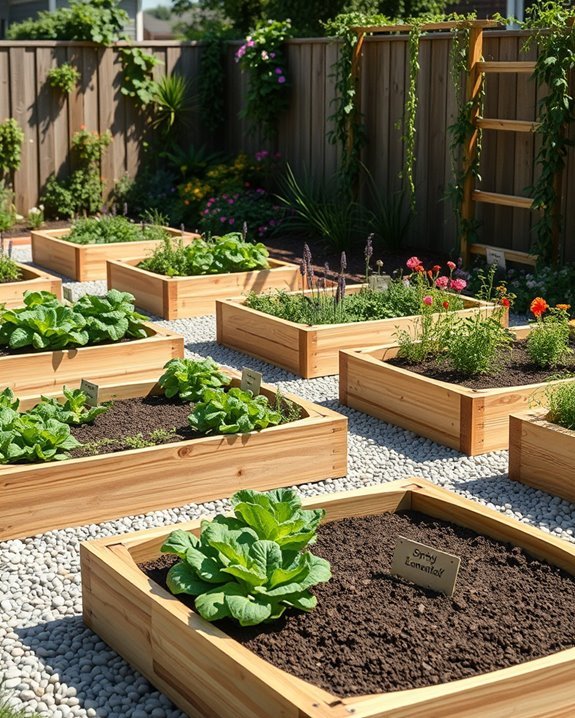
While planning your seasonal raised garden layout, you’ll want to contemplate the timing of planting various crops to maximize yield.
Create a seasonal planting schedule that includes a mix of fast-growing plants and those needing more time.
Implement seasonal crop rotation to maintain soil health and prevent pests.
Conclusion
By exploring these 40 backyard raised garden ideas, you can transform your outdoor space into a thriving oasis. Whether you’re choosing the right location, selecting materials, or incorporating innovative techniques, each step helps improve soil quality, accessibility, and yield. Don’t forget to utilize garden management apps and seasonal layouts for best results. With a little creativity and effort, your raised garden can flourish, offering you fresh produce and a beautiful landscape to enjoy. Happy gardening!
