
What Is the Best Paint for Basement Cinder Block Walls
You should use a breathable masonry primer followed by a high-quality latex masonry paint so vapor can escape while the finish resists mildew, efflorescence, and peeling. If you have active leaks or hairline cracks, choose an elastomeric coating to bridge movement and block surface water. Clean, repair, and neutralize salts before priming, keep humidity low while curing, and test a small area first — keep going to learn step-by-step prep, product choices, and application tips.
Quick Guide: Which Paint to Use on Cinder Block
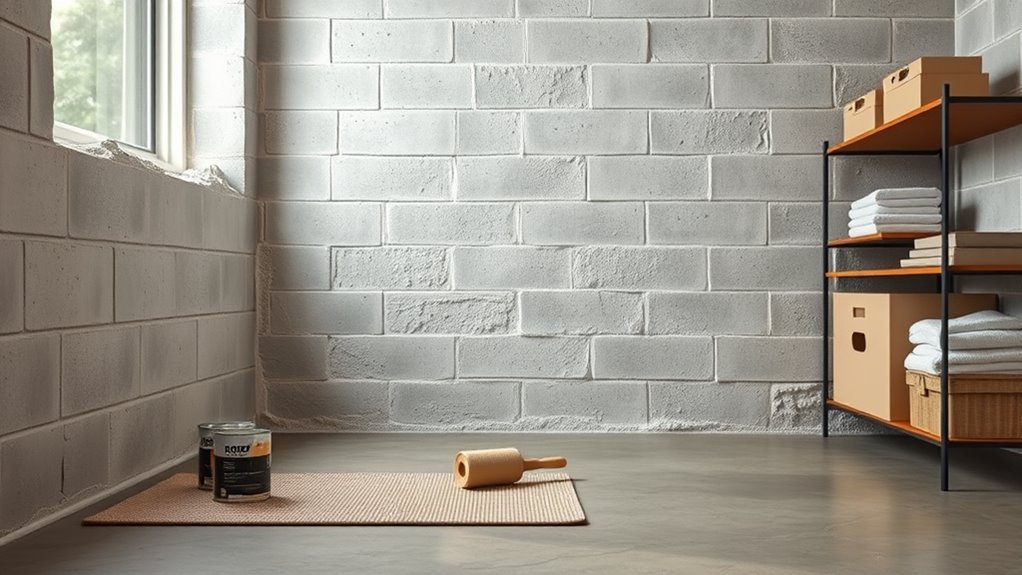
If you want paint that lasts on cinder block, choose products designed for masonry and high-moisture environments: latex masonry paints, elastomeric coatings, or specially formulated concrete stains and sealers.
You’ll pick latex for breathability and easy cleanup, elastomeric for crack bridging and strong moisture resistance, and stains/sealers when you want texture or to highlight block.
Choose latex for breathable, easy-clean finishes; elastomeric to bridge cracks and resist moisture; use stains/sealers to texture or highlight block.
Consider Color options early—lighter tones open basements, while darker hues hide imperfections.
Look for Eco friendly formulations to reduce VOCs and mildew inhibitors for damp spaces.
Test samples on a small area, follow manufacturer prep, and apply per instructions for best results.
When to Paint Basement Cinder Block Walls
When your basement walls are clean, dry, and free of active leaks or efflorescence, it’s the right time to paint cinder block. You’ll want to wait until humidity is low and any foundation repairs are finished.
Prep matters: patch cracks, remove dust, and apply a masonry primer so paint adheres and resists moisture.
Pick paint after testing for possible future damp spots.
- Choose breathable masonry or waterproof paint depending on moisture risk.
- Schedule painting in moderate temperatures for proper curing.
- Select Color options that brighten and suit the space.
- Consider texture techniques to hide imperfections.
How Cinder Block Differs From Drywall and Wood for Painting
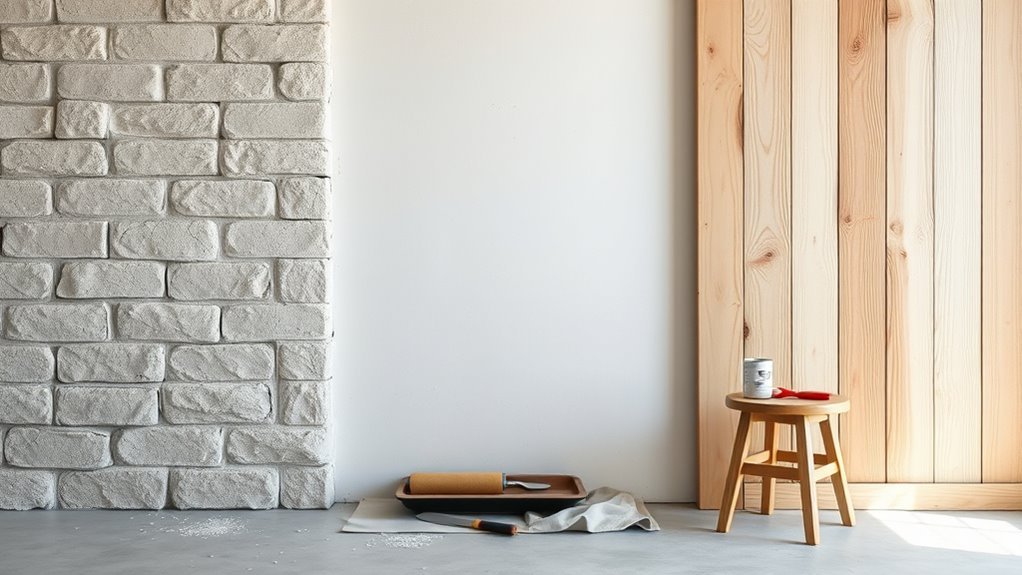
When you paint cinder block, you’ll notice it’s far more porous than drywall or wood, so it soaks up primers and paints differently.
Its rough, uneven texture affects adhesion and often needs masonry-specific primers or patching to get a smooth finish.
You also have to manage moisture and vapor — basement blocks can transmit dampness that requires breathable, mildew-resistant coatings.
Porous Surface Differences
Because cinder block soaks up paint differently than drywall or wood, you’ll need to treat it more like a masonry surface than a typical interior wall. You’ll notice greater porosity, uneven absorption, and rough faces that affect finish. That changes how colors read and how texture variations show. Expect deeper penetration, more coats, and muted hues unless you prime.
Consider these practical differences:
- Absorption: blocks drink primer and paint faster than drywall.
- Coverage: you’ll need more paint to achieve uniform color options.
- Dry time: porous masonry dries unevenly.
- Sealing: priming evens out appearance and prevents waste.
Texture And Adhesion
Although cinder block looks similar to a painted wall at a glance, its coarse texture and porous matrix demand different prep and paint choices than drywall or wood. You’ll scrub, patch mortar voids, and use a masonry primer to guarantee adhesion since smooth surfaces like drywall don’t need such aggressive prep.
Rolling with a thick-nap roller or using a masonry brush helps reach pits and pores. Pick a paint with high adhesion formulated for masonry rather than latex formulated for wood.
Consider color selection carefully—texture affects perceived hue—and choose finish options that hide imperfections, like matte or low-sheen, not high-gloss.
Moisture And Vapor Issues
Texture and adhesion matter, but moisture and vapor issues will often dictate whether your paint job lasts. You’ll treat cinder block differently than drywall or wood because it’s porous, holds water, and breathes vapor; primers and breathable masonry paints are essential. You’ll also balance Color coordination and Texture enhancement while managing dampness.
- Test for moisture with a hygrometer or tape test.
- Fix leaks, improve drainage, and use vapor barriers where appropriate.
- Choose vapor-permeable masonry paint and masonry primer.
- Avoid non-breathable oil-based paints that trap moisture and cause peeling.
Signs of Moisture and Water Problems to Check First
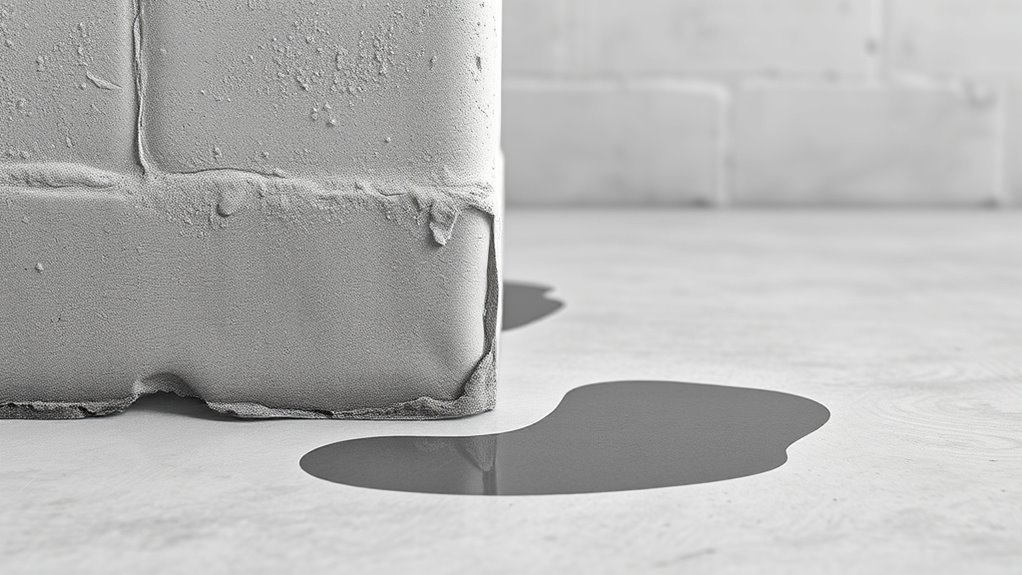
Before you paint, check the cinder block for visible efflorescence stains that look like white, powdery streaks—those mean moisture is moving through the wall.
If you smell a persistent musty odor, that’s another red flag for dampness or mold.
You’ll want to address these issues first or the paint won’t stick and problems will return.
Visible Efflorescence Stains
When you spot white, powdery streaks or crusts on cinder block walls, you’re likely looking at efflorescence—the mineral deposits left when water evaporates and carries dissolved salts to the surface. You should treat this as a sign of moisture; efflorescence formation indicates water is moving through the block and leaving salt deposits.
Clean loose powder with a brush and mild vinegar solution, then trace the moisture source before repainting. Consider waterproofing or improving drainage if recurring. Prioritize fixes over cosmetic paint.
Key checks:
- Exterior grading and gutters
- Cracks and mortar joints
- Interior seepage points
- Basement ventilation
Musty Odors Present
If you notice a persistent musty smell in your basement, it’s a strong sign that moisture and possibly mold are present somewhere in or behind the cinder block walls. Check for damp spots, peeling paint, or discoloration.
Use a moisture meter and inspect exterior grading, gutters, and downspouts to stop water intrusion.
Improve air circulation with vents, fans, or a dehumidifier to lower humidity and discourage mold growth.
Clean visible mold with appropriate cleaners and wear protection. Don’t paint over active mold or wet blocks—fix the source first, then choose mold-resistant primer and paint designed for masonry.
How Efflorescence and Salt Deposits Affect Paint Adhesion
Although it may not be obvious at first, efflorescence and other salt deposits can seriously undermine paint adhesion on cinder block walls by creating a powdery, crystalline layer that prevents paint from bonding to the masonry. You’ll notice flaking, peeling, or blistering where salts migrate to the surface with moisture.
Efflorescence — salt deposits that create a powdery barrier — can cause paint to peel, flake, or blister on cinder block.
Before painting, you must remove deposits and address moisture sources; otherwise paint won’t last. Follow these steps to limit failure:
- Brush and vacuum loose salt deposits thoroughly.
- Clean remaining residue with a stiff brush and mild acid wash if needed.
- Dry blocks completely.
- Repair leaks and improve drainage.
Why Masonry Paint Is Best for Cinder Block
You’ll want masonry paint because it forms a durable moisture barrier that stands up to damp basement conditions.
It also lets vapor pass through the block, preventing trapped moisture that causes peeling and efflorescence.
Choosing the right masonry formula gives you long-lasting protection without sealing the wall too tightly.
Durable Moisture Barrier
Why choose masonry paint for cinder block basement walls? You get a durable moisture barrier that seals pores, resists water intrusion, and stands up to damp conditions while offering color options and decorative finishes to suit your space. Masonry formulas bond to rough surfaces and flex with slight movement.
- Blocks capillary action, reducing seepage.
- Film resists peeling and blistering in humid basements.
- Compatible with primers and patching compounds for stronger adhesion.
- Allows repainting without extensive substrate prep.
Choose masonry paint when you want functional waterproofing plus aesthetic versatility in a single product.
Breathable Vapor Control
Because cinder block walls keep bringing moisture through their pores, you want a paint that stops liquid water but still lets vapor pass—masonry paint does just that.
You’ll prevent trapped moisture that causes peeling, efflorescence, and mold by using breathable formulations that channel vapor outward. Apply a proper masonry primer, then a breathable topcoat designed for concrete; these work with the wall’s natural drying cycle.
You can still pick a Color choice that boosts light and aesthetic appeal without sacrificing performance. In short, breathable masonry paint protects structural integrity while letting your basement look finished and inviting.
How Elastomeric Coatings Bridge Hairline Cracks on Cinder Block
When small hairline cracks show up in your cinder block walls, elastomeric coatings stretch and seal them rather than just covering them, forming a flexible membrane that moves with temperature and settling shifts. You get Elastomeric flexibility that preserves finish and blocks water intrusion at the surface while allowing masonry to breathe.
Crack bridging happens as the coating spans gaps, preventing dirt and moisture entry.
Prepare surfaces, remove loose mortar, and apply per manufacturer instructions to guarantee adhesion and performance.
- Clean and dry substrate
- Prime porous blocks
- Apply in even coats
- Inspect and touch up
When to Use Waterproofing Sealers Instead of Paint
If you’re seeing water seeping through the blocks, opt for a waterproofing sealer instead of regular paint to stop active penetration.
Choose sealers when efflorescence keeps returning, since salts mean moisture is cycling through the wall.
Also use sealers when structural cracks are present, because they’re designed to block water where paint won’t.
Visible Water Penetration
Noticing damp spots, efflorescence, or active dripping on cinder block walls means you need more than paint—you should use a waterproofing sealer designed for active water penetration. You’ll apply breathable, hydraulic cement-based or crystalline sealers that stop water ingress before choosing color options or texture variations with topcoats.
Use paint only after leaks are fixed and the sealer has cured.
- Identify active leaks and water paths.
- Choose a sealer rated for hydrostatic pressure.
- Follow manufacturer prep and application steps.
- Reinspect after curing; then select finish paint if dry.
Chronic Efflorescence Issues
Active leaks demand hydraulic sealers, but chronic efflorescence—white, powdery salt deposits that keep reappearing—means moisture is repeatedly migrating through the block rather than a one-time seep.
If you see persistent salts after cleaning, skip ordinary paint and apply a breathable waterproofing sealer designed to block salts and vapor. Once the sealer cures and moisture’s controlled, you can pick paint, consider color choices, and add decorative finishes.
Don’t paint over active efflorescence; trapped salts ruin coatings. Test small areas, follow manufacturer directions, and address exterior drainage to reduce recurrence before committing to decorative finishes or final color choices.
Structural Cracks Present
When you see cracks wider than hairline or any that run through mortar joints or block cores, don’t reach for regular paint—those gaps let water and pressure move through the wall and will quickly defeat surface coatings.
You should assess for structural issues and stop leaks before painting. Use waterproofing sealers, proper patching, and consider wall reinforcement if movement’s ongoing. Prioritize repair to prevent mold and interior damage.
- Identify crack type and monitor movement.
- Use hydraulic cement or epoxy injection for active leaks.
- Apply breathable masonry waterproofing sealer after repairs.
- Consult a structural pro for wall reinforcement options.
Moisture-Resistant Primers for Basements
Because basements face higher humidity and occasional seepage, using a moisture-resistant primer is essential before painting cinder block walls. You’ll want a primer that seals pores, blocks efflorescence, and adheres to rough masonry.
Look for products labeled masonry or waterproofing primer and check VOC levels for indoor use. Priming improves how topcoats perform and opens more color options by preventing blotchy absorption.
It also influences how different finish types sit on the surface, so choose compatibility with your chosen paint. Apply with a brush and roller designed for textured blocks, follow drying times, and address any ongoing moisture issues first.
Best Finishes for Cinder Block Walls
Having sealed the blocks with a moisture-resistant primer, you’re ready to pick a finish that matches the room’s use and look. Choose based on durability, maintenance, and style.
For basements, you’ll often prefer finishes that resist scuffs and hide imperfections. Consider color selection to brighten low-light spaces or create a cozy feel.
Think about texture options—smooth for modern, satin for easy cleaning, or textured for hiding irregularities.
Match sheen to traffic: higher sheen cleans easier but highlights flaws. Balance aesthetics and function when selecting a finish for cinder block walls.
- Smooth latex
- Satin enamel
- Eggshell masonry
- Textured acrylic
Paint Formulations: Durable, Mold-Resistant Options Explained
When you choose a high-performance masonry paint, you’re getting a formula designed to bond to porous cinder block and resist chalking, cracking, and moisture.
Pairing that with an antimicrobial interior coating adds built-in protection against mold and mildew on the painted surface.
Together they give you a durable, low-maintenance finish that’s tailored for damp basement conditions.
High-Performance Masonry Paint
Looking for a paint that stands up to moisture, abrasion, and mold in a basement? You’ll want high-performance masonry paint formulated for cinder block: it seals pores, resists efflorescence, and tolerates humidity while offering varied color options and a durable paint sheen. Apply over clean, primed block and you’ll cut maintenance and staining.
- Breathable formulas prevent trapped moisture.
- Mildew-resistant binders reduce growth risk.
- High-hide pigments improve coverage on rough block.
- Tough film resists scuffs and peeling.
Choose latex or acrylic masonry paints rated for basements and follow surface prep instructions exactly.
Antimicrobial Interior Coatings
If you want extra protection beyond moisture-resistant masonry paint, antimicrobial interior coatings add a chemical barrier that helps inhibit mold, mildew, and bacterial growth on painted surfaces in basements.
You’ll choose formulations labeled mold- or mildew-resistant, often water-based for low odor and easy cleanup. Apply to clean, dry cinder block after sealing cracks and efflorescence; follow manufacturer coverage and recoat intervals.
These coatings won’t replace ventilation or dehumidification but guarantee surface contamination. You can still use color contrast and decorative patterns to brighten the space—pick pigments compatible with the antimicrobial additive to ensure lasting performance and appearance.
Top Product Features Worth Paying Extra For
Because basement cinder block walls face moisture, efflorescence, and temperature swings, it’s worth spending more on paints and coatings that specifically address those challenges. You’ll want features that protect and beautify: vapor-permeable masonry formulas, mildew-resistant binders, and flexible elastomeric layers that bridge hairline cracks.
Prioritize abrasion resistance if the space sees traffic, and consider Color selection and Decorative finishes to make the area inviting. Pay for low-VOC, durable pigments and primer-bonder compatibility.
Evaluate warranty and technical support before buying.
- Vapor-permeable masonry coatings
- Mildew- and efflorescence-resistant chemistry
- Elastomeric flexibility
- Low-VOC, fade-resistant pigments
Paint Brands and Products to Consider (Examples)
When you’re choosing paint for cinder block basements, focus on brands that offer masonry-specific formulas—these deliver vapor permeability, mildew resistance, and the elastic film needed to handle temperature shifts and hairline cracks. You’ll want trusted names like Masonry Defender, BreathEasy, and BlockShield for durability, varied color options, and sensible finish types. Pick products that state moisture handling and mildew warranties. Match primer and topcoat recommendations, and choose finishes (matte for concealment, satin for washability). Below’s a simple emotional prompt to help you visualize comfort and confidence.
| Hope | Protection |
|---|---|
| Calm | Durable |
| Warm | Breathable |
| Clean | Reassuring |
| Bright | Secure |
How to Test a Small Area Before Committing to a Full Job
Pick an inconspicuous spot on the wall—near a corner or behind a shelf—so you can evaluate results without it being obvious.
Prepare and prime that area, then apply the same paint and finish techniques you’d use for the whole job so the test reflects real performance.
After it dries, inspect for adhesion, coverage, and moisture issues before committing to the full project.
Choose Test Spot
Wondering how the paint will actually look and hold up on your cinder block? Pick a discreet, representative area—near a corner or behind shelving—so you can evaluate Color options and Finish sheen without impacting the room. Clean and dry the spot, then apply primer if your plan includes it. Label samples and note application method and drying time. Check for adhesion, color accuracy, and moisture reactions over several days.
- Choose a visible-but-hidden spot.
- Test both color options and sheen levels.
- Record product, coat count, and cure time.
- Inspect for peeling, efflorescence, or discoloration.
Apply Full-Process Patch
After you’ve evaluated color, sheen, and adhesion on a small test spot, move on to applying a full-process patch so you can see how the complete system—cleaning, patching, priming, and painting—performs over time.
Choose a discreet area and clean thoroughly, then repair cracks and fill mortar gaps to match texture. Apply a quality masonry primer, then your chosen paint and any decorative finishes you’re considering.
Track drying, adhesion, and mildew resistance for several weeks. Note how color psychology plays out under basement lighting; what looked bright may feel cool or cramped.
Use findings to adjust product choice or technique before committing.
Tools and Materials You’ll Need for Block Wall Painting
Before you roll, gather the right tools and materials so the job goes smoothly and the finish lasts. You’ll need masonry primer and a durable latex or epoxy paint suited for concrete block. Pick paint that supports your color schemes and any decorative finishes you plan.
Also get quality rollers, brushes, and an adjustable extension pole for textured surfaces. Consider sealant for moisture-prone basements.
- Masonry primer and paint
- Rollers (3/4″ nap) and brushes
- Patch compound, trowel, and caulk
- Drop cloths, masking tape, respirator
Measure coverage to buy enough paint.
Prep Steps: Clean, Degrease, and Scrub the Block
Start by knocking loose debris and dust off the cinder block with a stiff brush or shop vacuum so paint will stick evenly.
Mix a trisodium phosphate (TSP) cleaner or a TSP substitute according to the label and use it to degrease stains and grime.
Rinse thoroughly and let the wall dry before you move on to repairs or priming.
Remove Loose Debris
Want your paint to stick and look good? Start by removing loose debris so color matching and texture enhancement aren’t ruined by dust or crumbling bits. Use a stiff brush or broom and work top to bottom, collecting debris as you go. Vacuum with a shop-vac for stubborn dust, then sweep remaining particles away.
Check for flaking mortar or paint and chip those loose spots until the surface feels solid. After debris removal, wipe with a damp cloth and let dry before priming.
Follow this quick checklist:
- Brush loose particles downward.
- Vacuum corners and pores.
- Chip flaky mortar/paint.
- Wipe and dry.
Degrease With Tris
Since greasy residue and mineral deposits can prevent primers and paint from bonding, degreasing with a tris-based cleaner is an essential next step. Mix according to label, wear gloves and eye protection, and work in sections.
Apply with a stiff brush or pump sprayer, agitate stubborn spots, then rinse thoroughly and let the block dry. This removes oils, efflorescence, and mildew traces so your primer bonds properly.
Proper degreasing affects primer selection and final adhesion, which in turn impacts how evenly your chosen color schemes appear. Don’t skip this: prep here makes the painting stage far more reliable.
How to Treat Efflorescence, Stains, and Mildew
When you see white, powdery efflorescence, dark stains, or mildew on cinder block walls, don’t paint over them—clean and treat the problem first to guarantee the coating sticks and lasts.
Start by dry-brushing efflorescence and vacuuming residue.
Wash stains with a masonry cleaner or diluted muriatic solution, rinse thoroughly, and allow to dry.
Treat mildew with a bleach solution (1:3 bleach to water), scrub, then rinse.
After surfaces are clean and dry, consider how Color options and Finish textures will appear on treated blocks; sealed blocks accept paint more uniformly.
- Brush/vacuum
- Masonry cleaner
- Bleach for mildew
- Rinse/dry before painting
Repairing Hairline Cracks and Mortar Joints Before Painting
Before you paint, repair hairline cracks and tuckpoint any damaged mortar so the finish won’t crack or peel later. You’ll widen tiny cracks with a chisel or grinder, clean dust, then fill with a polymer-modified mortar or concrete patch, tooling joints to match surrounding texture.
For color matching, mix pigments or choose a mortar tint that blends once dry—test a small area. After repairs cure, remove loose debris and dust.
Consider primer selection based on patched versus original block: use a masonry primer that bonds both surfaces. Proper prep guarantees long-lasting paint adhesion.
How to Apply Primer Correctly to Porous Block
Although porous cinder block soaks up primer like a sponge, you can guarantee even coverage by working methodically and using the right products. Start by removing dust and efflorescence, then choose a high-penetration masonry primer or a diluted acrylic primer to seal the surface.
You should test a small area, let the primer fully cure, and inspect for blotches. Pick a primer that supports your desired color options and finish sheen so topcoat performance is predictable. Follow these steps:
- Clean and neutralize efflorescence.
- Patch and sand repairs.
- Apply two thin coats of primer.
- Allow full dry time before painting.
Application Methods: Brush, Roller, or Sprayer Pros and Cons
If you want even coverage on porous cinder block without wasting time or product, pick the right application method for the job—brushes give precision for edges and repairs, rollers speed coverage on flat faces, and sprayers deliver the fastest, most uniform finish but need masking and ventilation.
You’ll use a brush for tight joints and patch touch-ups; choose a dense nap roller for texture to push paint into pores.
Sprayers suit large basements but require practice to avoid overspray.
Consider color psychology when testing samples under basement light, and favor eco friendly paints to reduce fumes during application.
How Many Coats and Drying Times
After you pick an application method, you’ll want a clear plan for coats and curing so the finish holds up on porous cinder block.
Start with a masonry primer; one coat seals pores and evens absorption so color options look consistent.
Begin with a masonry primer to seal pores and even absorption for consistent color.
Apply two coats of quality latex or masonry paint for uniform coverage; textured blocks may need a third.
Allow manufacturer-recommended dry times between coats; tack-free is different from fully cured.
Test a small patch to confirm adhesion and desired finish textures before finishing the whole wall.
- Prime first
- Two coats standard
- Add third for texture
- Respect dry times
Ventilation, Temperature, and Humidity Tips for Best Curing
When you control ventilation, temperature, and humidity, paint cures faster and adheres better on porous cinder block; aim for steady airflow, moderate warmth, and low-to-moderate humidity so solvents evaporate evenly and no moisture gets trapped in the pores. Use ventilation strategies like window fans or an inline exhaust to keep air moving. Practice Temperature regulation by maintaining 50–75°F during and after application. Monitor humidity with a hygrometer and pause if over 60%. Allow full cure before sealing or heavy use.
| Element | Ideal Range | Action |
|---|---|---|
| Airflow | Continuous | Fans |
| Temp | 50–75°F | Heater/cooler |
| Humidity | <60% | Dehumidifier |
Preventing Peeling, Blistering, and Flaking Over Time
Good ventilation, steady temperature, and controlled humidity go a long way toward preventing paint failures, but long-term resistance to peeling, blistering, and flaking also depends on proper surface prep, product choice, and application technique.
You should clean, repair cracks, and etch or prime block to promote adhesion. Choose high-quality masonry or elastomeric paints suited for basements, and avoid low-VOC that can underperform in damp conditions.
Apply thin, even coats and allow full cure between coats.
Consider how Color options or even historical styles affect finish durability and maintenance—matte hides flaws, satin cleans easier.
- Clean and repair
- Prime correctly
- Pick masonry-rated paint
- Follow curing times
Exterior vs. Interior Block: Key Differences
Although both are made from concrete masonry units, exterior and interior cinder block differ in exposure and treatment. Exterior block faces weather, freeze-thaw cycles, and moisture driving through walls, while interior block sits in a controlled environment with occasional dampness.
You’ll choose paint and prep differently: exterior surfaces need breathable, weather-resistant coatings and more intensive repairs to prevent moisture intrusion, while interior walls can use lower-permeability finishes and focus on mold resistance.
Color options for exterior and interior can vary—pick UV-stable pigments outside and washable, lighter shades inside.
Texture enhancement techniques work for both, but you’ll tailor products to each exposure.
Cost and Expected Lifespan: Masonry vs. Elastomeric vs. Sealer
Because your choice affects both upfront cost and long-term maintenance, you’ll want to weigh masonry paint, elastomeric coatings, and breathable sealers by price and expected lifespan as you plan a basement project.
Masonry paint is economical, lasts 5–10 years, and supports Color selection and simple artistic finishes.
Elastomeric costs more, often 2–3×, but can last 10–20 years and bridges hairline cracks.
Breathable sealers are cheapest, protect against moisture without trapping it, and typically need reapplication every 3–7 years.
Consider durability versus budget, designed look, and how often you’ll want to refresh the finish.
- Cost vs. lifespan
- Crack resistance
- Breathability
- Aesthetic flexibility
Maintenance Tips to Keep Painted Cinder Block Walls Looking Good
Having picked a coating that balances cost, crack resistance, and breathability, you’ll want a simple maintenance routine to keep the finish looking sharp and performing well.
Inspect annually for cracks, efflorescence, or peeling; patch with compatible filler and touch up using leftover paint.
Clean gently with a soft brush and mild detergent to remove dust and mildew—avoid high-pressure washing that forces water into blocks.
Repaint every 7–10 years or sooner if color fades; follow current color trends if you’re updating.
Choose eco-friendly options for touch-ups to reduce fumes and environmental impact while maintaining durability.
Frequently Asked Questions
Can I Paint Over Previously Painted Cinder Block Without Stripping Old Paint?
Yes—you can, but don’t fool yourself: like sanding a rough sea, surface preparation matters; you’ll clean, scuff, and prime for proper paint adhesion, ensuring new paint bonds well to previously painted cinder block.
Will Painted Cinder Block Walls Reduce Radon Entry or Require Radon-Specific Treatment?
No, painted cinder block won’t reliably reduce radon entry; you’ll still need radon mitigation like sealing cracks and installing a fan. Paint adhesion matters for durability, but use radon-specific treatment for safety.
How Do I Match Paint Color to Concrete’s Natural Texture and Lighting?
Like a chameleon, you’ll use color matching and lighting considerations to pick hues that blend with concrete’s texture; test samples under real light, observe at different times, and choose finishes that read true and hide imperfections.
Are There Eco-Friendly, Low-Voc Masonry Paints With Comparable Durability?
Yes — you can choose eco friendly options that perform well; low VOC formulations from reputable brands resist moisture and mildew, toughening masonry surfaces while reducing fumes, so you’ll get durability without compromising indoor air quality or values.
Can I Hang Heavy Items or Shelves on Painted Cinder Block Walls?
Absolutely — you can hang heavy items and do shelf installation, but you’ll want anchor systems rated for masonry. Use masonry anchors, sleeve or wedge bolts, and consider hitting mortar joints or using through-bolts for maximum strength.
Conclusion
You’ve got solid options: masonry paint, elastomeric coatings, or a penetrating sealer — but pick based on moisture risk and whether the block’s exterior or interior. Check for efflorescence, repair cracks, and fix leaks first; otherwise paint will peel like a bad 1600s fresco. Expect higher upfront cost for elastomeric with longer life. Maintain by cleaning yearly and touching up chips promptly, and your basement walls will stay protected and looking good for years.
