
Can Latex Paint Be Used on Wood
Yes — you can use latex paint on most interior wood like trim, furniture, and millwork if you prep properly. Sand smooth, clean off dust and grease, fill holes, seal end grain, and prime porous or tannin-rich areas to avoid blotches and stains. Use a high-quality acrylic-latex for durability and choose sheen for wear. Avoid latex on oily or high-wear exterior decking unless sealed and primed. Keep going to learn the right tests, primers, and tips.
Quick Answer: When to Use Latex Paint on Wood
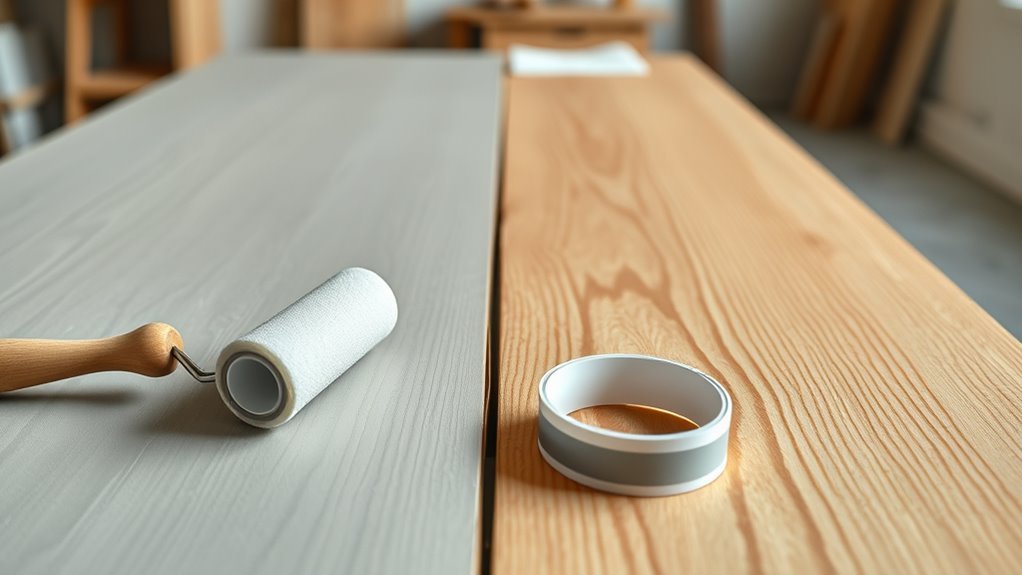
If you need a durable, easy-to-clean finish for interior trim, furniture, or painted millwork, latex paint is a solid choice because it adheres well, dries quickly, and resists yellowing. You’ll reach for it when surfaces get light wear, won’t face heavy moisture, and you want fast recoats.
Prep wood by sanding and priming porous areas; less prep’s needed on smooth, sealed pieces. Keep color mixing minimal—test small swatches before committing—and label custom blends.
For longevity, follow proper paint storage: airtight lids, cool temperatures, and dates on cans so you’ll avoid wasted product and inconsistent results.
How Wood Type Affects Latex Paint Adhesion
Because different woods vary in porosity, grain, and oil content, they take latex paint differently and demand different prep, priming, and finish choices.
Different woods absorb and accept latex paint differently, so tailor your prep, primer, and finish for each species.
You’ll find softwoods like pine absorb more, so you should seal and prime to avoid blotchy color and uneven paint sheen.
Hardwoods such as oak have pronounced wood grain that can telegraph through thin coatings, so fill or use a pigmented primer for uniform coverage.
Oily species like teak resist adhesion and need a solvent wipe and bonding primer.
Plywood and MDF vary by face veneer and density, so choose compatible primers and test adhesion before full application.
How to Test Wood for Painting : and What to Do If It Fails
Start by doing a simple surface preparation test: sand a small area, wipe away the dust, and apply a bit of latex primer to see if it sticks and dries evenly.
If the paint flakes, bubbles, or soaks in, the wood has failed the test and needs repair or sealing before repainting.
You can fix failed wood by filling cracks, replacing rotten sections, applying a penetrating wood sealer or shellac, and then re-testing before finishing.
Surface Preparation Test
Before you bring out the brushes and rollers, test the wood to make sure paint will adhere and look right. Inspect woodgrain patterns and feel for roughness; run your hand along the surface.
Press a piece of clear tape onto several spots, then pull it off sharply—if paint peeling or loose fibers come away, the surface needs work.
Try a small primer-and-latex patch in an inconspicuous area to confirm adhesion and finish.
Check for old glossy coatings by scratching gently; dull sanding marks should appear.
Record results and prioritize areas that failed so you can address them before full painting.
Failed Wood Remedies
If your tape pull and primer patch revealed problems, don’t panic—most failures have straightforward fixes. First, remove loose paint with a scraper and sandpaper, working with the wood grain to avoid gouges.
If paint peeling returns, strip remaining coating to bare wood and clean with a degreaser. Repair gouges or rot with wood filler or epoxy, then sand smooth.
Prime with a bonding primer suited to latex and allow proper cure time. For tight adhesion, lightly scuff glossy surfaces and ensure moisture content is low.
Repaint with high-quality latex, applying recommended coats for lasting results.
Step-by-Step Prep for Wood Before Painting
Although prepping wood might feel tedious, you’ll get a smoother, longer-lasting finish if you follow a clear sequence: clean, repair, sand, and prime.
Start by cleaning dirt, grease, and old flaking paint with a mild detergent and a stiff brush so the wood grain shows clearly.
Fill holes and cracks with wood filler, then let it cure fully.
Sand from coarse to fine grit, working with the grain to avoid scratches that show under paint sheen.
Remove dust with a tack cloth or vacuum.
Mask surrounding areas and make certain the surface is dry before applying primer.
Which Primer Should You Use on Wood?
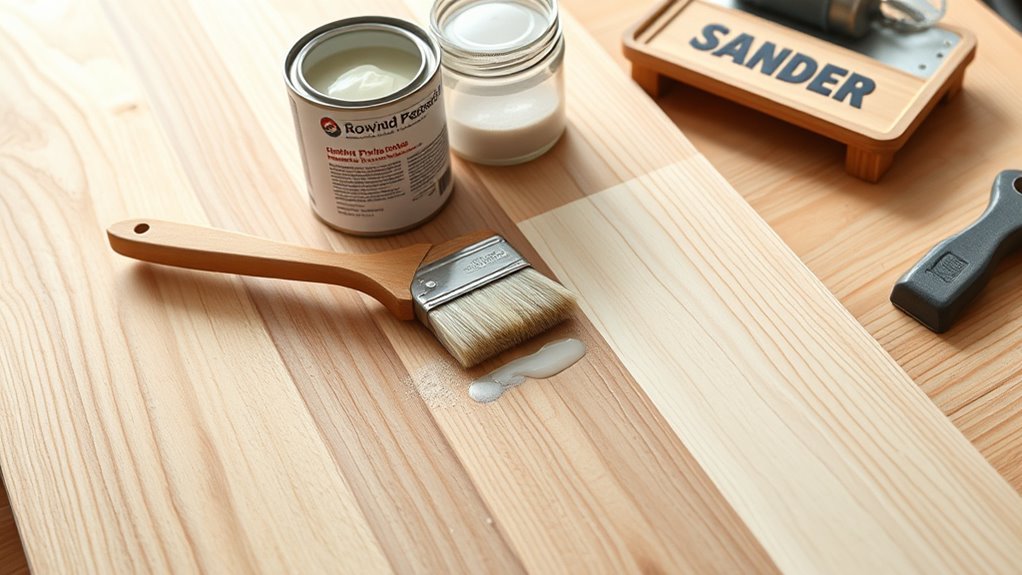
Which primer should you pick for wood depends on the job: interior or exterior, bare or previously painted, and the type of topcoat you’ll use.
Choose an oil- or shellac-based primer for tannin-rich woods or severe stains; they block bleed-through and improve paint durability.
Use high-quality latex primers for interior, previously painted surfaces to promote adhesion and easier cleanup.
For knotty or resinous areas, spot-prime with stain-blocking formulas.
If you’ll color match a hue or cover dark tones, pick a primer with tinting ability so the topcoat needs fewer coats.
Always follow manufacturer instructions for surface prep and drying times.
Best Latex Paint Finishes for Wood
Wondering which latex finish will give your wood the look and durability you want? You’ll choose based on sheen, traffic, and exposure.
Satin balances hide and cleanability; semi-gloss resists scuffs and improves latex adhesion; gloss highlights grain and cleans easily but shows flaws. Flat hides imperfections but may suffer paint peeling in high-contact spots; eggshell offers low sheen with better durability than flat.
Consider exterior-grade formulations for outdoor wood to prevent weather-related peeling and primers that boost adhesion. Match finish to use: cabinets, trim, furniture, or siding—each benefits from a specific sheen and durability level.
- Satin
- Semi-gloss
- Gloss
- Flat
- Eggshell
Brush, Roller, or Sprayer: How to Apply Latex on Wood
Curious which tool will give you the smoothest, most durable latex finish on wood? Choose a brush for trim and detail; angled synthetic brushes give control and reduce visible strokes, helping paint durability on edges.
Use a roller for flat panels and doors to speed coverage; pick a short-nap cover for fine-grain woods to minimize texture.
Opt for a sprayer when you need uniform, factory-like results on large pieces; practice to avoid runs.
For any method, prep and consistent technique aid color matching across sections. Clean tools promptly to maintain performance and avoid cross-contamination between shades.
Drying, Sanding, and Recoating Times for Latex Paint
Because latex dries by water evaporation and film formation, you’ll usually get a surface that’s dry to the touch within 30 minutes to an hour. However, it still needs longer before sanding or recoating—plan on 2–4 hours for light sanding and 4–6 hours (or as the paint can specifies) between coats under normal conditions.
You should monitor humidity and temperature, abrade lightly with fine grit, and remove dust before recoating. Use gentle brush techniques to avoid lifting the film, and allow full cure (up to 7 days) before heavy use. Consider color mixing impacts on opacity and drying rate.
- Check label for exact recoat time
- Sand with 220 grit
- Wipe dust with tack cloth
- Use steady brush strokes
- Avoid painting in high humidity
How Durable Is Latex Paint on Wood?
How well will latex paint hold up on wood? You’ll find latex offers good durability for interior woodwork when you prepare surfaces, use primer, and pick quality paint brands.
It resists scuffs and yellowing better than some oils, and flexible binders accommodate mild movement in wood. Expect wear over time on high-traffic pieces; maintenance coatings or touch-ups extend life.
Color options don’t affect durability much, though darker pigments can show fading sooner. For best results, choose reputable brands and follow application instructions—proper adhesion and multiple thin coats will give you a longer-lasting finish on most indoor wood surfaces.
Moisture and Outdoor Use: Protecting Wood Painted With Latex
When you paint exterior wood with latex, moisture management becomes the deciding factor in how long the finish — and the wood beneath it — will last. You’ll start by sealing end grain and filling cracks so water won’t track into the wood grain, which swells and shrinks with humidity. Proper priming improves paint adhesion and resists blisters.
When painting exterior wood with latex, manage moisture: seal end grain, fill cracks, and prime to prevent blisters.
Install flashing, keep trim sloped away from walls, and guarantee good ventilation to let trapped moisture escape. Inspect after heavy weather and address failed seals quickly.
- Seal end grain
- Use quality primer
- Slope and flash trim
- Ventilate cavities
- Inspect after storms
Touch-Ups and Long-Term Care for Latex-Painted Wood
If you want your latex-painted wood to look good for years, plan for regular touch-ups and simple upkeep rather than waiting for obvious failure. Inspect annually, clean with mild soap, sand nicks, and use matching latex for repairs. Keep a small labeled jar of mixed paint for quick color matching; note color mixing ratios. Store leftover paint sealed, upright, in a cool place to extend life. Recoat scuffed areas, feather edges, and avoid thick layers. Maintain hardware to prevent scratches and moisture ingress. Track touch-up dates and notes so future repairs match sheen and tone.
| Task | Frequency |
|---|---|
| Inspect | Annually |
| Clean | As needed |
| Touch-up | When scuffs appear |
| Recoat | Every few years |
| Paint storage | After project |
When Latex Paint Is a Good Choice for Interior Woodwork
If you’re painting smooth trim and molding, latex gives a clean, even finish that levels nicely. It’s a smart pick for light-to-moderate traffic areas like bedrooms and dining rooms because it resists yellowing and cleans up easily.
Just make sure raw wood is properly primed so adhesion and durability aren’t compromised.
Smooth Trim And Molding
Because smooth trim and molding have minimal texture and crisp edges, latex paint often gives the clean, even finish you want for interior woodwork. You’ll hide minor flaws in wood grain with a bonding primer, then apply latex to achieve consistent paint color and sharp lines. It dries fast, sands smoothly between coats, and resists yellowing.
- Use a high-quality acrylic-latex for durability.
- Prime to prevent tannin bleed-through.
- Sand lightly for better adhesion.
- Choose gloss or semi-gloss for easy cleaning.
- Cut in with a fine brush for crisp corners.
Light-To-Moderate Traffic Areas
When you’re painting wood in rooms that see light-to-moderate use—like bedrooms, dining rooms, or home offices—latex paint offers a great balance of durability and ease of maintenance.
You’ll get good paint adhesion on finished surfaces and previously painted trim, reducing touch-ups. Use a quality latex formulated for trim to highlight wood grain subtly without obscuring texture.
For doors and furniture that aren’t slammed or heavily handled, latex resists scuffs and cleans with a damp cloth. Choose a satin or semi-gloss for easier cleaning; flat sheens hide imperfections but wear faster in moderately used spots.
Properly Primed Raw Wood
Although raw wood soaks up paint unevenly, you’ll get an even, durable finish on interior woodwork by sealing it with the right primer first. You should sand to smooth wood grain, remove dust, and apply a quality latex-friendly primer to block tannins and create a uniform absorbency.
After priming, use latex paint suited for trim; choose paint sheen based on durability and appearance. Keep coats thin and allow full drying between layers.
- Sand toward the grain
- Wipe surface clean
- Use stain-blocking primer
- Apply two thin topcoats
- Select appropriate paint sheen
When Latex Paint Is Not Ideal for Wood Surfaces
Ever wondered why latex paint sometimes fails on certain wood projects? You’ll see problems when wood grain is highly open, oily, or previously coated with incompatible finishes. Latex needs stable, clean surfaces for reliable paint adhesion; it won’t bond well to slick varnish, dense tropical species, or resinous knots without proper prep.
Exterior decking, floors exposed to heavy wear, and pieces requiring frequent cleaning may demand tougher, more durable coatings. Also avoid latex on surfaces with ongoing moisture issues or severe sun exposure that cause peeling or blistering.
Prep, sealing, or choosing a different finish fixes most of these limitations.
Comparing Latex Paint vs Oil-Based Paint for Wood
When choosing between latex and oil-based paint for wood, you’ll want to compare durability and how each holds up to wear.
Consider drying time differences, since latex dries fast while oils take longer to cure.
Also think about finish appearance options—latex gives flexible, matte-to-semi-gloss results, whereas oil-based paints tend toward a harder, glossier finish.
Durability And Wear
Because both latex and oil-based paints form protective films on wood, you’ll want to weigh how each handles impact, abrasion, and long-term exposure, especially in high-traffic or outdoor settings.
You’ll notice oil-based coats resist chipping and scuffing better, while modern latex offers flexible toughness and UV stability.
For decorative work, color mixing and texture techniques behave differently: oil levels remain smoother, latex accepts elastic textures.
- Oil-based: harder surface, strong abrasion resistance
- Latex: more flexible, resists cracking
- Scratch recovery: better with latex
- Recoating: easier with latex
- Weathering: oil may yellow over time
Drying Time Differences
Although both latex and oil-based paints form protective films, they dry on very different schedules. You’ll notice latex dries faster to the touch—often within an hour—letting you recoat sooner and reducing dust contamination in the wood grain.
Oil-based paint stays tacky longer, sometimes 6–24 hours, which can improve paint adhesion to bare or oily woods but slows project progress. Temperature and humidity affect both: high humidity prolongs drying, while warmth speeds it.
Plan longer cure times for oil-based finishes before heavy use, and sand between coats when needed to maintain consistent adhesion and a durable surface.
Finish Appearance Options
Drying behavior affects more than timing—it also influences the final look you’ll get from latex versus oil-based paints. You’ll notice latex gives a flatter, more uniform finish and holds Color options true under UV.
While oil-based yields a harder, glossier surface that deepens tones. Consider VOC levels: latex typically has lower VOCs and a cleaner scent, whereas oil-based paints can amber and yellow over time.
Choose based on appearance and maintenance needs.
- Latex: matte to satin, even coverage
- Oil-based: high gloss, rich depth
- Touch-ups: easier with latex
- Durability: oil-based resists wear
- Environmental: compare VOC levels
When to Pick Stain or Specialty Wood Paint Over Latex
When you want to show off the wood’s natural grain, protect exterior surfaces in harsh conditions, or need a finish formulated for high-traffic floors and furniture, choose a stain or specialty wood paint instead of standard latex. These products penetrate, seal, or harden in ways latex often can’t, delivering better durability, adhesion, and aesthetic control on raw or weathered wood.
You’ll pick stain to enhance grain and get precise color matching, or choose oil- or urethane-based coatings for superior paint durability and abrasion resistance. Use specialty products on bare, patched, or weathered wood and where long-term protection matters most.
Cost, Environmental Impact, and Cleanup for Latex Paint
Think about how much you’ll spend on paint, primer, and tools up front, since latex is usually cheaper than oil-based options.
Consider the environmental footprint too — latex has lower VOCs but still needs proper disposal to avoid water contamination.
Finally, know that cleanup is easy with soap and water, but you should dry out or recycle leftover paint according to local guidelines.
Upfront Material Costs
A gallon of latex paint usually costs less than oil-based alternatives, so you can expect lower upfront material expenses for most wood projects. You’ll pay less per gallon, and tools and cleanup supplies stay affordable.
But factor in primer and extra coats for porous wood. Think about color mixing and proper paint storage to avoid waste and repeated purchases.
- Compare brand prices and coverage to save money
- Buy sample sizes to test colors before committing
- Use quality brushes or rollers to reduce wasted paint
- Store leftover latex correctly to extend usability
- Reuse or recycle containers when possible
Environmental Footprint
Because latex paint is water-based, you’ll usually spend less on solvents and disposal than with oil-based options. However, total environmental and cleanup costs depend on how you use and manage it.
You should factor in the product lifecycle: manufacturing energy, packaging, transport, and how long coatings last before recoating.
Choose low-VOC or zero-VOC formulations to reduce VOC emissions indoors and lower health risks.
Consider eco-friendly alternatives like natural paints or recycled-content options when suitability and durability match your project.
Proper application and maintenance extend lifespan, cutting replacement frequency and overall environmental impact. So, plan coats and surface prep carefully.
Cleanup And Disposal
After considering lifecycle and VOCs, you should also plan for cleanup and disposal, since those steps affect both cost and environmental impact. You’ll save money by minimizing waste, rinsing tools promptly, and storing leftover latex properly for future touch-ups where color matching and paint sheen matter.
Follow local hazardous-waste rules; wet latex generally isn’t hazardous, but large quantities need special handling.
- Rinse brushes with soap and water immediately.
- Let small leftover paint dry, then discard per municipal rules.
- Donate usable leftovers for color matching needs.
- Use absorbents for spills, then dispose as solids.
- Recycle empty cans where accepted.
Frequently Asked Questions
Can Latex Paint Be Used Over Previously Painted Enamel Without Sanding?
Yes—you can, but you should clean and scuff first so latex adheres; you’ll use brush application for edges, expect longer paint drying time on glossy enamel, and consider a bonding primer for best durability.
Will Latex Paint Block Wood Tannin Bleed-Through Long-Term?
No, latex paint alone won’t reliably stop tannin bleed through long term; you should use a dedicated tannin-blocking primer for long term sealing, then topcoat with latex to prevent recurring stains and discoloration.
Can Latex Paint Be Tinted to Closely Match Custom Wood Stain Tones?
Yes — you can; like a painter chasing dusk, you’ll achieve close color matching by using tint customization and careful Color matching techniques, testing samples and adjusting pigments until the latex hue echoes your custom wood stain.
Is Latex Paint Safe on Children’s Wooden Toys and Cribs?
Yes — you can use latex paint on children’s wooden toys and cribs if you choose certified non-toxic finishes and follow child safety guidelines: let coats fully cure, avoid chipping, and pick low-VOC, lead-free, washable products for durability.
How Does Latex Paint Affect Wood Acoustics on Musical Instruments?
You’ll feel like the instrument’s voice is muffled under a blanket: latex paint can damp acoustic resonance and alter sound transmission, so you’ll lose brightness and sustain if you apply thick coats instead of thin, light finishes.
Conclusion
You can often use latex paint on wood, but treat it like a guest — don’t seat it at the table until you’ve prepped the surface. Sand, clean, and prime so the finish will stick and breathe; otherwise the paint can peel like old wallpaper. For raw, oily, or high-traffic wood, consider oil-based options, stains, or specialty coatings. With proper prep, latex gives durable, easy-clean color that’s kinder to the planet and your cleanup brush.
