
Can You Use Interior Latex Paint Outside
You can use interior latex paint outside only for short-term, sheltered jobs like under-eave trim or a covered porch; it’ll stick if you prep, prime, and keep it out of direct sun, heavy moisture, and freeze–thaw cycles. Interior formulas lack UV stabilizers, mildewcides, and flexible binders, so they’ll chalk, crack, or mildew faster than exterior paint. For anything exposed or long-term, pick an exterior product; keep going and you’ll find tips on prep, timing, and fixes.
Verdict: When Interior Latex Can (and Can’t) Be Used Outdoors

While interior latex paint isn’t formulated for weather, you can sometimes use it outside if the surface is sheltered, primed, and repainted with an exterior-grade clear coat. Otherwise it will peel, fade, and fail quickly.
You’ll choose this route only for protected areas like covered porches or interior-facing trim where moisture and UV exposure are limited. Prep, adhesion, and topcoat matter more than convenience.
Consider color coordination with surroundings and test paint texture for durability. If you can’t guarantee shelter or routine maintenance, don’t risk it—opt for true exterior products to avoid premature deterioration and extra rework.
Interior vs. Exterior Paint: Key Formulation Differences
You’ll notice interior and exterior paints start with different binders and resins that affect adhesion and flexibility.
Exterior formulas also include UV stabilizers, mildewcides, and other additives to resist weathering and moisture.
Understanding those ingredient differences helps you pick a product that lasts where you’re planning to use it.
Binder And Resin Differences
Because binders and resins form the paint film that holds pigment and adheres to surfaces, they’re where interior and exterior formulations diverge most sharply. You’ll notice binder chemistry differs: exterior binders use tougher, more flexible polymers to resist UV, moisture, and temperature swings, while interior binders prioritize low odor and faster cure.
Resin properties also vary: exterior resins enhance adhesion, elasticity, and durability; interior resins focus on scrub resistance and appearance. If you swap interior paint outside, the weaker binder chemistry and resin properties make the film prone to chalking, cracking, and poor weather performance over time.
Additives And Weather Resistance
When paint needs to shrug off sun, rain, and freezing nights, manufacturers boost exterior formulas with specific additives that you won’t usually find in interior paints. You’ll notice UV stabilizers, mildewcides, flexibilizers, and coalescing agents all improve paint durability and long-term color matching under harsh conditions.
Interior latex lacks many of these, so using it outside speeds fading, cracking, and mildew. Choose exterior-grade products when exposure matters, or accept frequent touch-ups.
Consider formulation if you must adapt interior paint: primers and sealers can help, but they won’t fully substitute for weather-ready additives.
- UV stabilizers
- Mildewcides
- Flexibilizers
- Coalescing agents
Quick Alternative: When to Buy Exterior Paint Instead
If your project faces weather exposure, heavy wear, or color-matching limits with interior latex, choose exterior paint instead. You’ll get UV stabilizers, mildewcides, and tougher binders meant for siding, trim, and doors.
Buy exterior when longevity matters or warranties require it. Check labels for fade resistance and surface compatibility. Ask about color mixing for outdoor-grade pigments to guarantee accurate shades; exterior colorants differ from interior ones.
Store leftover exterior paint properly—cool, dry, sealed—to preserve performance; follow paint storage guidelines on the can. In short, pick exterior paint when durability, protection, and long-term appearance are priorities.
When Using Interior Latex Outdoors Might Work (Short-Term)
You can get away with using interior latex outside for short-term protection on sheltered spots like under-eave trim or a covered porch where moisture and sun exposure are minimal. It’ll help prevent bare wood from deteriorating until you can apply proper exterior paint.
Just know it’s a temporary fix—not a long-term solution for exposed siding or trim.
Short-Term Protection
Ever wondered whether interior latex can stand up to outdoor conditions for a little while? You can use it for short-term protection if you accept limits: avoid prolonged moisture, prime surfaces well, and expect faster wear. Color matching may help you blend temporary touch-ups, and selecting an appropriate paint sheen can reduce dirt visibility. Use it only on sheltered areas or for seasonal projects.
- Prep thoroughly: clean, sand, and prime.
- Apply thin, even coats for quicker drying.
- Monitor exposure after storms or heavy dew.
- Replace with exterior-grade paint when longevity matters.
Mild Exposure Areas
Short-term use on sheltered spots isn’t the only scenario where interior latex can work outdoors. Mild exposure areas—like covered porches, eaves, or soffits that get limited sun and rain—can hold up for a season or two if you prep and maintain them properly.
You should clean, sand, and prime surfaces to improve adhesion and resistance. Choose high-quality interior latex with suitable color options to match trim or accents, but expect limited weather durability.
Apply thin coats, respect recommended drying times, and inspect annually. Touch up chips quickly and plan to repaint with exterior-grade products for long-term protection.
Climate Risks That Cause Outdoor Paint Failure
How can weather and climate undermine your exterior paint job? You’ll face fading, peeling, and mold when you ignore local conditions and don’t check color matching or paint compatibility. Sun, moisture, and temperature swings attack binder and pigments, and improper adhesion speeds failure.
- Intense UV: breaks down pigments, causing rapid fading.
- Freeze–thaw cycles: force cracking and flaking as trapped water expands.
- Prolonged humidity: promotes mildew and softening of the film.
- Salt and pollution: chemically degrade finishes and corrode substrates.
Plan for climate-resistant products and surface prep to extend any paint’s outdoor life.
Best Outdoor Surfaces for Leftover Interior Paint
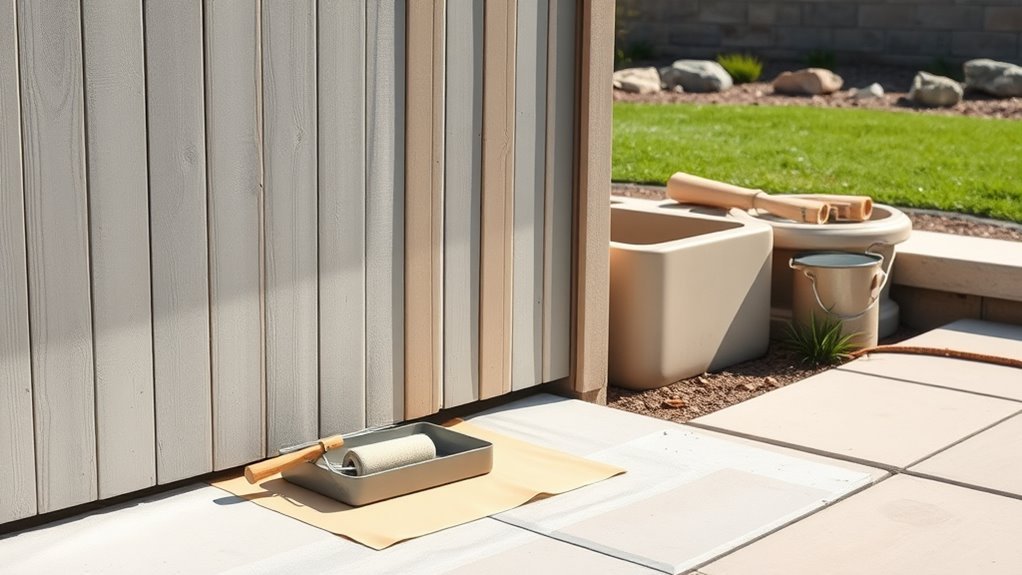
If you’ve got a few cans of leftover interior latex, you can still put them to good use outdoors on the right surfaces: cured concrete, masonry, and well-primed wood take latex reasonably well, as do metal fixtures that’ve been cleaned and primed. You’ll want to think about color matching and paint durability when choosing spots. Use small projects where exposure is limited: planters, sheltered porch ceilings, fence posts under eaves. Test a small area first to check adhesion and appearance. Keep expectations realistic—interior latex isn’t as hardy as exterior formulations, but it’s serviceable for low-stress uses.
| Surface | Best Use |
|---|---|
| Concrete | Walkways, planters |
| Masonry | Brick accents, chimneys |
| Wood/Metal | Sheltered trim, fixtures |
Prep Checklist: Cleaning, Sanding, and Repair
Before you crack open a can, prepare the surface: clean away dirt, mildew, and chalking paint, sand rough spots or glossy finishes for better adhesion, and repair cracks or loose material so the latex can bond evenly. You’ll want consistent texture and a surface that accepts the paint sheen you expect. Check old layers for flaking, remove salts from masonry, and verify wood is dry. Consider color matching for touch-ups so repairs blend.
Follow this checklist:
- Remove loose paint and mildew with a stiff brush.
- Sand glossy areas smooth.
- Fill gaps and caulk seams.
- Rinse and let dry thoroughly before painting.
Primers That Boost Adhesion and Moisture Resistance
When you need paint to stick and resist moisture, choose a primer formulated for adhesion and water-shedding—these products bond to challenging surfaces, seal porous substrates, and create a uniform base that helps exterior latex perform as designed.
You’ll pick oil-based, bonding, or high-quality acrylic primers depending on substrate; they prevent peeling and block stains. Match primer tint for easier color matching and truer paint finishes, especially when covering dark or repaired areas.
Apply per label, allow full curing, and inspect for uniformity before topcoating. A proper primer reduces moisture intrusion and gives your exterior latex its best chance to last.
Application Tips to Maximize Outdoor Durability
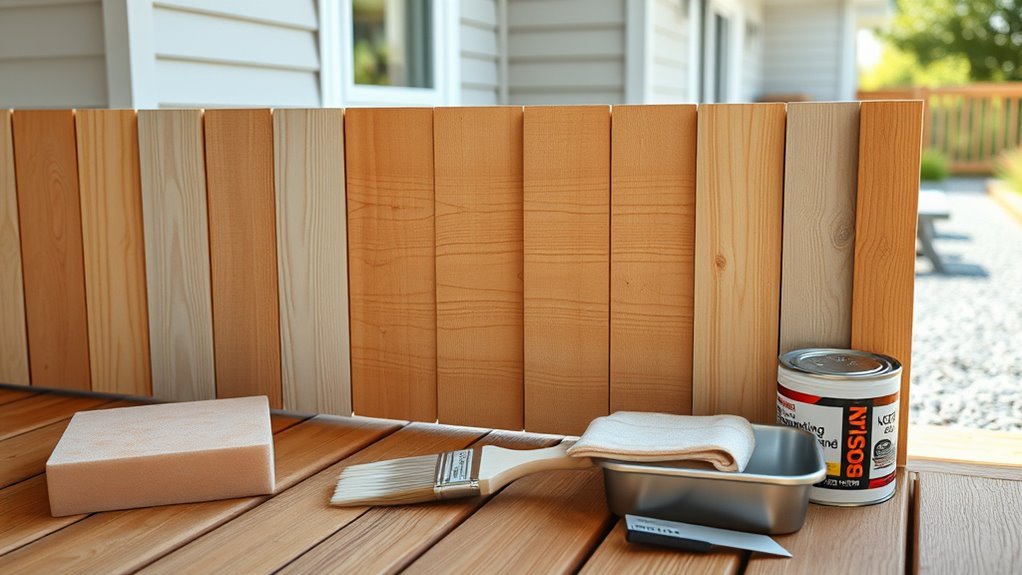
Before you start painting outdoors, make sure the surface is clean, dry, and free of loose material so the latex can bond properly.
Time your work for mild, dry weather and follow manufacturer temperature and humidity recommendations to avoid film defects.
Finish with a compatible protective topcoat to boost UV and moisture resistance for longer-lasting results.
Surface Preparation Essentials
Wondering how to make interior latex survive outdoors? You’ll need meticulous surface preparation.
Clean thoroughly, sand glossy spots, and repair damaged areas so color matching works right and the paint sheen stays consistent. Prime where needed to improve adhesion and seal porous surfaces.
- Scrub with a mild detergent, rinse, and let dry completely.
- Sand rough or glossy surfaces to a dull finish for better grip.
- Fill cracks and gouges; smooth with sandpaper before priming.
- Apply a compatible exterior primer, matching porosity and expected paint sheen.
Do these steps and your interior latex will adhere and look more uniform outside.
Weather And Timing
Pick a day with steady, mild conditions—ideally 50–85°F (10–30°C) and low humidity—so the paint cures evenly and resists moisture issues. Plan morning starts to avoid dew and finish coats with several dry hours left. Avoid windy, dusty spells that ruin finish. Check forecasts for rain for 48 hours. Mind temperature swings overnight.
| When to paint | Why it matters |
|---|---|
| Morning | Less wind, no dew |
| Midday | Faster curing |
| Evening | Cooler temps risk moisture |
Keep in mind color mixing and proper paint storage to maintain consistency and longevity.
Protective Topcoats
If you want your exterior latex to withstand sun, rain, and wear, add a compatible protective topcoat that matches the paint’s sheen and base. This seals the film, reduces chalking, and boosts abrasion resistance.
You’ll choose a water-based or oil-based sealer based on the paint’s base, confirm color matching to avoid sheen shifts, and apply thin even coats. Let each coat cure fully and sand lightly between layers. Follow manufacturer’s recoat window and temperature guidelines.
- Test a small area for color matching and adhesion
- Match paint sheen for uniform appearance
- Use long-fiber rollers for even film
- Clean and degrease surfaces before coating
Expected Lifespan: How Long Results Usually Last
Because interior latex wasn’t designed for exterior conditions, its lifespan outdoors is shorter and more variable than exterior-grade paint. You can expect usable results from months to a few years depending on exposure, surface prep, and climate.
South- or west-facing walls and fluctuating temperatures shorten longevity, while sheltered areas last longer.
Color matching or paint texture choices don’t affect durability much, though darker pigments can fade faster.
Regular inspections help you spot when a refresh is due.
If you want predictable, multi-year performance, plan on repainting sooner than with exterior formulations or use protective topcoats.
Troubleshooting: Peeling, Yellowing, and Mildew Fixes
When interior latex is used outside, you’ll often run into three common problems: peeling, yellowing, and mildew.
You can fix peeling by removing loose paint, sanding, priming with a suitable exterior primer, and recoating.
Yellowing often stems from sunlight and improper paint storage; strip, clean, and select UV-resistant exterior paint or refresh with proper color matching.
For mildew, scrub with a mild bleach solution, rinse, dry, and guarantee good ventilation.
Prevent recurrence by addressing surface moisture and using appropriate exterior products.
- Inspect surfaces before repair
- Test small areas first
- Keep paint storage cool and dry
- Document color matching choices
Safety: VOCs, Disposal, and Outdoor-Use Precautions
When you use interior latex paint outside, be aware that some formulations still emit volatile organic compounds (VOCs). So choose low-VOC or labeled “zero-VOC” options.
Dispose of leftover paint and contaminated rags at local hazardous-waste facilities or follow label instructions to dry and recycle responsibly.
Also, only paint in dry, mild weather and work with good airflow to limit fumes and guarantee proper drying.
Volatile Organic Compounds
Although interior latex paints are marketed as low-VOC, they still emit volatile organic compounds that can affect your health and the environment, especially if you apply them outdoors where vapors disperse differently. You should weigh VOC levels, choose brands emphasizing eco friendly pigments, and limit exposure by working upwind and using masks.
Keep paint sealed in proper paint storage to minimize off-gassing when not in use. Watch weather: heat raises VOC release. Consider alternatives if sensitivity is an issue.
- Check product VOC ratings before buying
- Work in ventilation and avoid stagnant air
- Use protective gear and respirators
- Store cans tightly and upright
Proper Paint Disposal
Handling leftover paint properly is as important as choosing low-VOC products, since improper disposal can release VOCs and contaminants into soil and water.
You should store usable interior latex in tightly sealed cans, label with color matching notes and paint branding, and keep them in a cool, dry place for future touch-ups.
For unusable or large quantities, contact your local hazardous waste facility for drop-off guidelines.
Don’t pour paint down drains, on ground, or into trash where pickup forbids it.
Use absorbents to solidify small amounts, then dispose per municipal rules.
Follow local laws to protect waterways and health.
Weather And Ventilation
How should you plan paint jobs around weather and airflow to keep VOC exposure low and avoid surface problems? You’ll watch forecasts, choose low-VOC interior latex if forced outdoors, and schedule when humidity is under 60% and temperatures are stable. Work with cross-ventilation and a fan to disperse fumes. Consider color coordination and paint sheen because darker hues and glossy sheens absorb heat and affect drying.
- Paint when wind is light to prevent overspray and dust
- Use respirators and keep bystanders upwind
- Never pour leftovers outside; follow disposal rules
- Test a small area for adhesion before full application
Cost: Touch-Up With Interior Paint vs. Buying Exterior Paint
When you weigh the costs of touching up exterior surfaces with leftover interior latex versus buying proper exterior paint, you’ll find the decision comes down to immediate savings versus long-term value.
If you use interior paint, you might save money up front, but color matching can be tricky outdoors as fading differs. Interior formulas also lack additives that boost paint durability against sun, moisture, and temperature swings, so touch-ups may need repeating.
Buying exterior paint costs more now, but it resists wear, keeps color longer, and reduces labor and material replacements.
Consider the frequency of maintenance and total lifecycle cost before choosing.
Best Exterior Paint Alternatives for Lasting Results
If you need a durable alternative to standard interior latex for outdoor touch-ups or full repaints, consider options that combine weather resistance, adhesion, and UV protection—like exterior-grade acrylic latex, elastomeric coatings, or oil-based alkyds for high-traffic areas.
You’ll want products that resist chalking and hold color matching when blending with trim or interior accents. Prepare surfaces, prime where needed, and follow manufacturer drying times to guarantee longevity.
Choose finishes (flat to semi-gloss) based on maintenance needs. Consider these practical choices:
- Exterior acrylic latex for balanced durability and ease
- Elastomeric for masonry and flexible crack-bridging
- Oil-based alkyd for trim durability
- Specialty UV-resistant clear coats
Frequently Asked Questions
Can Interior Latex Paint Be Used on Outdoor Metal Fixtures?
You can, but you shouldn’t for long-term results: interior latex on outdoor metal risks poor surface adhesion and faster color fading. If you must, prep thoroughly, use primer, and topcoat with exterior-grade sealer for durability.
Will Interior Latex Paint Withstand UV Fading on Sunny Decks?
No — interior latex won’t reliably resist color fading or maintain paint adhesion on sunny decks; you’ll get faster fading, chalking, and peeling. Use exterior-grade paint with UV blockers and proper surface prep for lasting results.
Can I Use Interior Latex on Outdoor Furniture That Gets Rained On?
Like a raincoat that breathes, you can’t rely on interior latex for wet outdoor furniture; it needs sealers and topcoats. Prioritize surface preparation and color matching, then add proper exterior primer and waterproof topcoat for durability.
How Does Interior Latex Perform on Exterior Stucco or Masonry?
It won’t hold up well on exterior stucco or masonry long-term; you’ll get poor color retention and peeling unless you do thorough surface preparation, use proper primers, and topcoat with exterior-grade paint for durability.
Can I Mix Interior Latex With Exterior Paint to Improve Durability?
You can, but it’s like stitching silk to armor — it’s risky. If you mix interior latex with exterior paint, you might mask color matching issues yet invite paint peeling and reduced weather resistance, so proceed cautiously.
Conclusion
So yes, you can slap interior latex outside — for about as long as a celebrity marriage. It’ll look fine until sun, rain, or frost remind it whose turf it is. If you crave short-term miracles or hate spending money, go ahead; otherwise buy exterior paint and save future you the grief. Pro tip: if you want your siding to survive more than a season, stop treating weather like bad mood lighting.
