
Do I Need to Prime a White Wall
You usually don’t have to prime a white wall if it’s clean, previously painted with the same white and sheen, and shows no stains, repairs, or gloss—self-priming paint can often do the job. Skip primer when the surface is smooth, adhesion is good, and you’re not changing sheen or going from dark to light. Use primer for bare drywall, patched areas, stains, or glossy finishes. Keep going to see a simple checklist and fixes.
Quick Answer: When You Can Skip Primer on White Walls
Wondering if you can skip primer on a white wall? You can when the surface is clean, previously painted with similar latex white, and the wall texture is smooth without stains or repairs.
If you’re keeping the same sheen and color, primer often adds little. Consider color psychology: bright whites preserve light and openness without needing tinting, so primer isn’t required for coverage.
Skip primer also when paint promises one-coat coverage and you’re painting over intact, well-adhered paint.
Don’t skip if there’s patching, heavy stains, drastic sheen changes, or if you plan a different white hue for guaranteed uniformity.
Short Decision Checklist: Prime or Not (5 Questions)
If you’ve decided whether primer is usually unnecessary for a clean, same-color white wall, use this five-question checklist to make a final call.
1) Is the new paint exactly the same white?
2) Will you shift finish (matte to gloss)?
3) Do you expect strong stains or tannin bleed?
4) Are you sensitive to subtle shifts in mood from color psychology—want a crisp, uniform white?
5) Do varied wall textures absorb differently or show patchiness?
If you answer yes to 2, 3, 4, or 5, lean toward priming.
If all answers are no, you can likely skip primer.
Surface Condition: When Primer Is Required
If your wall is bare plaster or fresh drywall, you’ll need primer to seal the surface before painting.
You should also prime over stained or discolored areas to block bleed-through and restore uniformity.
And when you’re covering glossy or previously painted surfaces, primer helps new paint adhere and hides sheen differences.
Bare Plaster Or Drywall
When you’re working with bare plaster or fresh drywall, you’ll almost always need a primer to seal the surface and guarantee even paint adhesion. You’ll want a product formulated for porous substrates—these block and equalize suction so topcoats don’t look patchy.
Consider primer types: acrylic, PVA, or specialty plaster primers depending on moisture and texture. If you’re changing color dramatically, use a tintable sealer for better color matching and fewer topcoats.
Apply one even coat, sand light imperfections, then reassess. Skipping primer risks uneven sheen, poor coverage, and more coats of finish paint.
Stained Or Discolored Areas
After sealing bare plaster or drywall, you’ll often face spots that need more than just a topcoat: stains from water, smoke, grease, or marker will bleed through ordinary paint. You should block stains with a stain-blocking primer designed for tannins, smoke, or water marks so they don’t reappear on white walls.
Test for bleeding before painting; mold or rust may need specific treatment. If you’re worried about color matching, use a primer-tinted base to ease coverage.
Primer alternatives like shellac or oil-based sealers work for stubborn stains, but choose products compatible with your finish.
Glossy Or Previously Painted Surfaces
Too-smooth or glossy finishes and heavily coated walls often repel new paint, so you’ll need a primer to guarantee adhesion and even coverage. If you’re repainting a glossy surface, sand lightly, clean thoroughly, and choose a bonding primer.
Consider how color theory affects final appearance—primers can neutralize undertones so your white reads true. Pay attention to wall texture: smooth surfaces hide brush marks less, while textured walls may need thicker primer coats.
- Sand and degloss before priming
- Use a high-adhesion or shellac primer
- Spot-prime patched areas
- Test a small section first for color accuracy
Old Drywall vs. New: Priming Needs
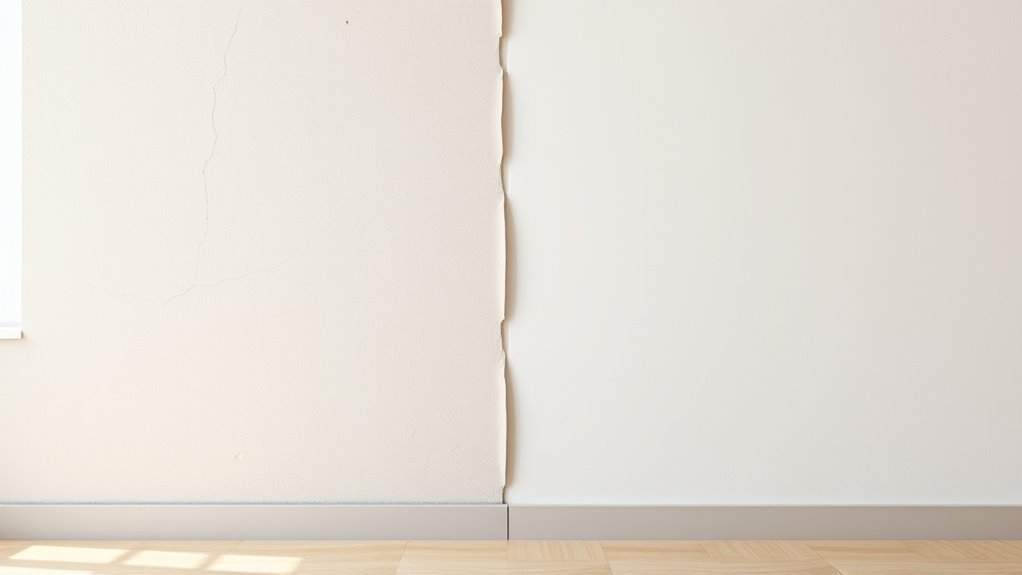
If your drywall is new, you should always prime it to seal the paper and joint compound so paint goes on evenly.
For older drywall, inspect for stains, repairs, or chalky patches that could mean primer is needed.
I’ll walk you through what to look for and when you can skip priming.
New Drywall Needs Primer
When you hang new drywall, you’ll almost always want to prime it before painting because the bare paper and joint compound absorb paint unevenly and can leave a blotchy finish. You’ll apply a drywall primer-sealer to create a uniform surface, help with color mixing by preventing the primer from sucking pigments out of your topcoat, and improve paint durability so finishes wear evenly.
Skip primer only if using a specialized tinted drywall primer as directed. Follow manufacturer’s drying times and use proper ventilation.
- Seal joints and fasteners
- Block drywall dust
- Guarantee true color payoff
- Extend finish lifespan
Old Drywall Assessment
Although older drywall often looks fine, you should inspect it closely to decide whether to prime. Check for stains, repairs, sanding dust, and uneven joint compound that can absorb paint differently.
If repairs or patchy areas exist, use a primer to prevent color mixing from old spots bleeding through and to create uniform porosity.
Also consider previous paint type and gloss: high paint sheen repels new paint and can cause adhesion problems, so scuff or prime accordingly.
When in doubt, a thin coat of high-quality primer evens texture, improves adhesion, and guarantees your white finish looks consistent.
Will the Old Paint Color Force You to Prime?
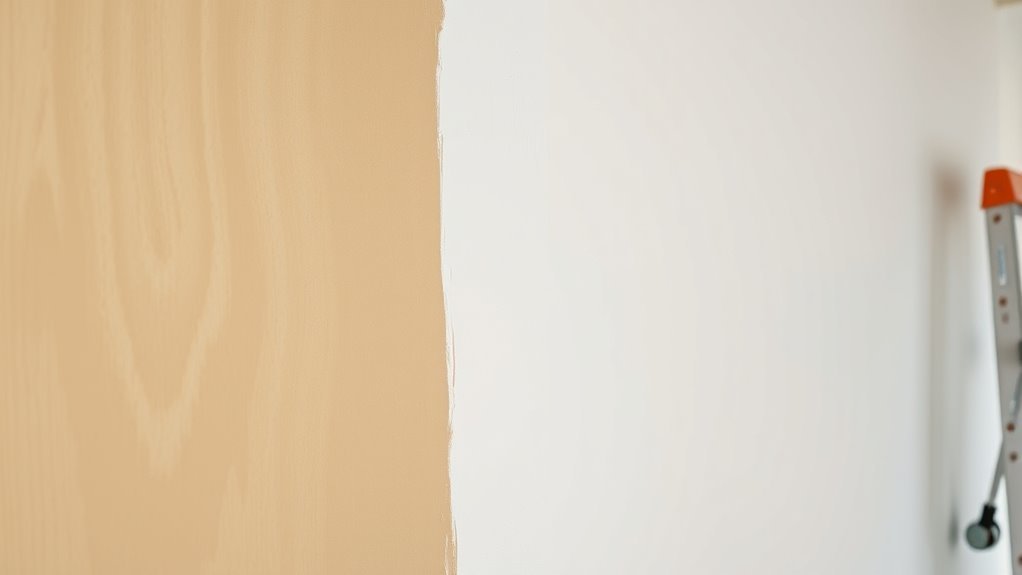
How much the old paint color matters depends on how different the new white will be—you’ll usually need to prime when you’re covering a dark, saturated, or strongly pigmented color with a bright white.
You should assess the hue, intensity, and finish; glossy or deep tones show through more. Consider color matching if you want fewer coats, but true white often still needs a barrier.
Primer alternatives like high-hide self-priming paints can help, though they may require multiple coats.
- Test a small patch first.
- Compare sheen levels.
- Use a gray or tinted primer for deep colors.
- Count coats needed before deciding.
Stains, Smoke, and Marks: When to Use Stain-Blocking Primer
If you’re covering up dark paint, you also need to think about stains, smoke, and other marks that can bleed through fresh white. Primer made for stain-blocking stops tannins, nicotine, water rings, and marker from ruining your new coat.
You should inspect stains first — old water damage or smoke often needs a specific product. Choose primer formulas labeled “stain-blocking” or “shellac-based” for stubborn tannins and nicotine. Water-based options work for lighter marks.
Consider color matching only for severe discoloration to reduce coats. Apply per instructions, let primer cure, then paint white for reliable coverage and longevity.
Which Paint Types Self-Prime (And When to Trust Them)
Some paints are formulated to self-prime, and you can trust them on light, previously painted walls or when switching between similar colors. They save time and coat well on smooth, clean surfaces.
However, they won’t hide heavy stains, drastic color changes, or raw drywall. When you’re facing repairs, smoke damage, or a dark-to-white transformation, use a dedicated primer instead.
When Self-Priming Works
When a paint claims to be self-priming, it means the formulation combines primer and paint so you can often skip a separate primer coat—but whether you should trust that claim depends on the paint type and the surface condition.
You’ll find self-priming works best on previously painted, light-colored walls with sound surfaces. It helps when you need consistent color matching and even paint texture without extra steps.
Choose high-quality latex or acrylic blends labeled “self-priming” and follow manufacturer prep instructions.
Consider sheen and porosity before trusting the claim.
- Previously painted, intact drywall
- Light to moderate color changes
- Smooth, low-porosity surfaces
- High-quality latex or acrylic blends
Limitations Of Self-Primers
Although self-priming paints can save time, they don’t work equally well on every surface or for every job. You shouldn’t rely on them over glossy finishes, bare wood, stained areas, or where previous wallpaper removal left adhesive or damage.
Tinted self-primers help with minor color mixing, but they won’t hide deep stains, heavy tannin bleed, or drastic color changes.
For high-traffic areas, bathrooms, or textured walls, a dedicated primer still offers better adhesion and mildew resistance.
When in doubt, spot-prime problematic zones or use a true primer to guarantee uniform coverage and lasting results.
Glossy Finishes: Must You Sand or Prime First?
Wondering whether to sand or prime a glossy wall first? You’ll usually need to scuff-sand glossy finishes to guarantee adhesion, especially if you’re switching to matte finishes or repainting over slick trim.
After sanding, wipe dust, then decide on primer: bonding primers work best on slick gloss, while stain-blocking primer helps problem spots.
If the wall has textured surfaces, sand selectively and use a roller suited for texture.
Don’t skip testing a small patch.
- Scuff-sand with fine-grit paper
- Clean thoroughly before priming
- Use a bonding primer for high gloss
- Match primer choice to surface type
Coverage Without Primer: Expected Coats and Results
If you skip primer, plan on applying more paint and managing uneven coverage—especially over repaired spots, darker colors, or porous surfaces. You’ll likely need two to four coats to reach uniform opacity; dark-to-white gradation demand extra layers.
Expect patchy sheen and visible tape lines until buildup evens out. Watch drying times to avoid streaks when doing additional coats. Keep color mixing consistent—shake cans and blend batches to prevent subtle shifts mid-wall.
Move furniture placement only after paint cures to avoid scuffs. For best results without primer, budget time, paint, and patience to correct inevitable touch-ups.
Primer’s Benefits: Adhesion, Coverage, and Lifespan
When you prime a white wall, you’re creating a uniform base that helps paint stick better, covers stains and repairs, and reduces the number of topcoats you’ll need. You’ll notice improved adhesion, truer color matching, and longer-lasting finish.
Primer seals porous surfaces and prevents bleed-through from patching compounds. Skip primer only if you accept uneven wear or extra coats.
Consider primer alternatives like bonding primers or tinted primers when matching a new hue, but know they’re still primers in function. A proper primer extends lifespan, evens coverage, and saves effort over time.
- Better adhesion
- True color matching
- Stain blocking
- Extended lifespan
Primer vs. Extra Paint Coats: Cost and Time Comparison
You’ll want to compare primer versus simply adding extra paint coats by looking at cost per square foot and the total time to finish.
Primer usually costs more up front but can cut down on the number of paint layers and dry times you’d otherwise need.
Worst-case, skipping primer can mean more paint, more labor, and a longer project overall.
Primer Versus Paint
Wondering whether to slap on extra coats of paint instead of priming? You’ll save short-term time by skipping primer, but you risk uneven coverage, longer drying cycles, and higher long-term material use.
Consider color psychology when choosing strong hues—they often need primer for accurate depth. Also weigh environmental impact: more paint means more VOCs and waste.
- Primer seals porous surfaces for fewer topcoats.
- Extra paint coats can hide minor flaws but aren’t a sealant.
- Primer often shortens total project time by improving coverage.
- For dramatic color shifts, primer prevents undertone bleed.
Cost Per Square
Curious how costs stack up per square foot if you use primer versus piling on extra paint coats? You’ll usually pay more per square by buying extra gallons of finish paint than a quality primer.
Primer types vary—stain-blocking, bonding, and shellac—so pick one matched to your surface and any color matching needs. A single coat of primer often evens porosity and hides previous hues, reducing required finish coats.
If you skip primer, you may need two or three finish coats, raising material cost and waste. Do the math: primer plus one finish coat often beats multiple finish coats for cost.
Time To Finish
How long will your project actually take if you prime versus just adding extra paint coats? You’ll save repainting time with a primer when you need reliable color blending or cover stains; primer dries faster than multiple topcoats and reduces total coats.
Skipping primer often means extra paint layers and possible primer removal later if adhesion fails. Factor drying, sanding, and cleanup into your schedule.
- Primer: one coat, faster drying, better adhesion
- Extra paint coats: multiple applications, longer wait times
- Color blending needs: primer evens undertones quickly
- Unexpected primer removal adds significant delay
Best Primers for White Walls by Situation
When your white wall has specific challenges—like stains, uneven sheen, or drastic color changes—you’ll want a primer chosen for that situation rather than a one-size-fits-all product. Consider color psychology and furniture placement when picking primers to control undertones and reflectance; low-odor, bonding, or high-hide primers each serve different needs.
| Situation | Primer Type | Why it helps |
|---|---|---|
| Fresh drywall | Alkyd or latex primer | Seals and evens porosity |
| Dark-to-white repaint | High-hide primer | Blocks previous pigment |
| Glossy surface | Bonding primer | Promotes adhesion |
| Patch repairs | Spot primer | Prevents flashiness |
| New plaster | Primer-sealer | Controls absorption |
Odor- and Stain-Blocking Primers: When to Use Them
If you’ve got persistent stains—like nicotine, water marks, or greasy kitchen splatters—or lingering odors from smoke or pets, use an odor- and stain-absorbing primer before painting. These specialized primers chemically seal contaminants and stop them from bleeding through your new white finish.
You’ll choose a product rated for stain/odor control and check primer compatibility with your topcoat. Match solvent type (oil vs. water) to avoid adhesion issues, and consider how the primer affects paint sheen—some dull or flatten slightly. Use them selectively where odors or tannins persist.
- Seal smoke and nicotine stains
- Block water stains
- Neutralize pet odors
- Ensure primer compatibility
Simple Priming Steps for DIY Painters
Before you start, you’ll want to know when to prime — like on fresh drywall, stained spots, or big color changes.
I’ll walk you through how to prime properly, from surface prep to rolling and cutting in.
Plus, I’ll share quick-drying tips so you can finish faster without compromising coverage.
When To Prime
Wondering whether you need to prime a white wall? You should prime when surfaces are stained, patched, dramatically different in color, or when paint sheen changes. Priming guarantees better color matching and prevents shine irregularities when switching paint sheen.
- New drywall or fresh joint compound
- Dark-to-light color transitions
- Water stains, smoke, or heavy marks
- High-traffic or repaired areas
Assess the wall: if stains bleed through or the finish varies, prime first. Skip priming only for clean, uniformly white walls using the same sheen and quality paint.
Priming saves time and improves final coverage.
How To Prime
Because proper priming makes paint adhere and cover consistently, you’ll start by preparing the surface, gathering tools, and choosing the right primer for the job.
Clean walls, fill holes, sand glossy spots, and wipe dust away. Tape trim and protect floors.
Stir primer, pour into a tray, and cut edges with a brush before rolling in W strokes for even coverage.
Allow recommended dry time, inspect for missed areas, and apply a second coat if needed.
Consider color psychology when selecting primer tint and how final color interacts with furniture placement to guarantee the room reads cohesive.
Quick Drying Tips
If you want to speed up primer drying without sacrificing adhesion, control temperature, humidity, and airflow. You’ll prep surfaces, use thin coats, and pick fast-drying formulas to preserve primer durability and help color matching later.
Work systematically so each coat dries evenly; don’t overload the brush or roller. Use a dehumidifier or fan, and raise room temperature slightly if safe.
- Apply thin, even coats for faster cure.
- Improve airflow with fans or open windows.
- Use quick-dry primer labeled for your surface.
- Stabilize temperature and lower humidity for consistent results.
Common Priming Mistakes to Avoid
When you skip or rush priming, you’ll likely face uneven coverage, peeling, or color show-through that wastes time and money. Don’t apply primer over damp surfaces or ignore manufacturer’s dry times — moisture traps cause adhesion failures.
Avoid over-thinning; improper color mixing or using the wrong primer types reduces hiding power. Don’t layer incompatible coatings; oil over latex (or vice versa) can cause delamination.
Skip skimping on surface prep: fill holes, sand glossy spots, and remove grease. Use proper nap roller or brush for texture.
Take your time and match products to substrate for durable, even results.
Signs You Skipped Priming (And How to Fix It)
Although skipping primer mightn’t show up immediately, you’ll spot clear signs once topcoat issues appear — blotchy color, uneven sheen, visible stains, or paint that flakes and peels. You can fix this without redoing everything.
Assess damage, choose appropriate primer types (stain-blocking or bonding), and address color matching before repainting. Sand loose paint, clean surfaces, and spot-prime problem areas.
For stubborn stains, use a stain-blocking primer; for glossy surfaces, pick a bonding primer.
- Inspect for peeling, stains, or patchy color
- Sand and clean affected spots
- Spot-prime with correct primer types
- Repaint after testing color matching
When to Hire a Pro for Priming and Repainting
Because priming and repainting can hide problems but also mask mistakes, call a pro when the job risks costly or visible failure. You should hire someone if you face severe stains, uneven texture, major color contrast challenges, or uncertain primer compatibility with existing coatings.
Pros spot substrate issues, match primers to finishes, and avoid banding or bleed-through. If you lack time, tools, or steady technique, a contractor saves rework and guarantees uniform results.
Consider expert help for high-visibility rooms or complex surfaces.
Final Quick Checklist and Recommended Next Steps
Before you start painting, run through a tight checklist so you don’t waste time or miss a fix. You’ll confirm surface prep, decide if priming improves color matching and paint durability, and plan tools and drying times.
Tackle repairs first, then test a small swatch to verify finish and hue. Schedule work on low-humidity days and keep ventilation in mind.
- Patch holes and sand smooth
- Clean and degrease surfaces
- Apply primer if swatch shows poor coverage or color shift
- Use recommended topcoat for maximum paint durability
Next, buy supplies and set realistic painting sessions.
Frequently Asked Questions
Can Primer Affect Indoor Air Quality or VOC Exposure?
Yes — primer can affect indoor air quality and VOC exposure. You should pick low-VOC or zero-VOC primers, ventilate well during and after application, and avoid prolonged occupancy until odors dissipate to reduce health risks.
Can You Prime Over Wallpaper Without Removing It?
A homeowner smartly skim-coated damaged seams before priming; yes, you can prime over wallpaper without removing it if the paper’s sound and sealed, but consider wallpaper removal for better primer adhesion and to prevent future peeling.
Will Primer Prevent Mold in High-Humidity Rooms?
Primer helps a bit, but it won’t guarantee mold prevention in high-humidity rooms; you’ll need proper humidity control, ventilation, and mold-resistant products to effectively support mold prevention alongside primer.
Can Primers Be Tinted Darker Than White for Coverage?
Yes — you can tint primers darker to boost coverage. Tinted primers improve contrast, hide stains, and speed coverage enhancement when painting over bold colors, so you’ll need fewer finish coats and get truer final color.
Are There Eco-Friendly or No-Voc Primer Alternatives?
About 60% of consumers seek greener paints, so you’ll find eco friendly formulations and VOC free options readily available; you’ll reduce odors and toxins, choose water-based primers, recycled-resin products, and certified low-emission brands.
Conclusion
If your white wall already looks clean, smooth, and is true white, you can probably skip primer—yet coincidence often plays a part: the one time you rush and don’t prime, you’ll get that stubborn patch showing through at guests’ arrival. Trust your eyes and the checklist: if stains, repairs, or strong underlying colors are present, prime. Otherwise, paint away—but keep a can of primer handy, just in case that one patch appears.
