
How Cold to Paint Exterior
You should only paint outside when both air and surface temps meet the paint maker’s minimums—usually about 50°F (10°C) for most latex/acrylics and around 40°F (4–5°C) for many oils—and when surfaces are dry and above the dew point. Avoid high humidity, wind, frost, or rapid cooling. Measure surface temps with an infrared or contact probe and pick low‑temp primers or slow‑dry formulas. Keep protection and steady heat for curing, and the next tips cover tools, prep, and fixes.
Can I Paint Outside Today? Quick Rules
If the temperature’s within the paint manufacturer’s recommended range and the surface is dry, you can usually paint outside today. Check local weather forecasting for temperature swings, humidity, and precipitation that could ruin a job.
If the temp falls within the paint maker’s recommended range and the surface is dry, it’s usually fine to paint.
Plan to start when conditions stabilize and allow full drying time before a cold front hits.
Use proper painting safety: wear gloves, eye protection, and a respirator if needed; secure ladders and work on stable surfaces.
Avoid painting during wind gusts or when dew forms. If forecasts predict rapid cooling or rain, postpone to safeguard finish and guarantee safe working conditions.
Minimum Temps: Latex, Acrylic, Oil Paints
You’ve checked the forecast and surface dryness; now look at the paint type—each has a different minimum temperature for proper application and curing.
You’ll find latex and acrylic (waterborne) typically need 50°F (10°C) or warmer, because their paint chemical composition relies on water evaporation and polymer coalescence. Some modern acrylics can go lower—check labels.
Oil-based paints cure via oxidation and handle cooler temps, often down to 40°F (4–5°C), but dry slower.
Painting below recommended minima risks poor adhesion, wrinkling, or extended tack time, increasing environmental impact from wasted coats and solvent emissions.
Dew Point and Humidity: Why They Matter
Because paint doesn’t dry in a vacuum, you need to take into account dew point and humidity before you start. You’ll check dew point to avoid condensation on wet paint; if the surface is at or below dew point, moisture will form and ruin adhesion. Watch humidity levels: high humidity slows curing and can cause blistering or extended tackiness. Choose days with moderate humidity and a safe margin above dew point. Use ventilation and warm, dry conditions when possible. Quick reference:
| Condition | Action |
|---|---|
| Low humidity | Proceed, watch for quick dry |
| Moderate | Ideal |
| High | Delay or use dehumidifier |
| Near dew point | Don’t paint |
Surface Temp vs. Air Temp: What to Measure
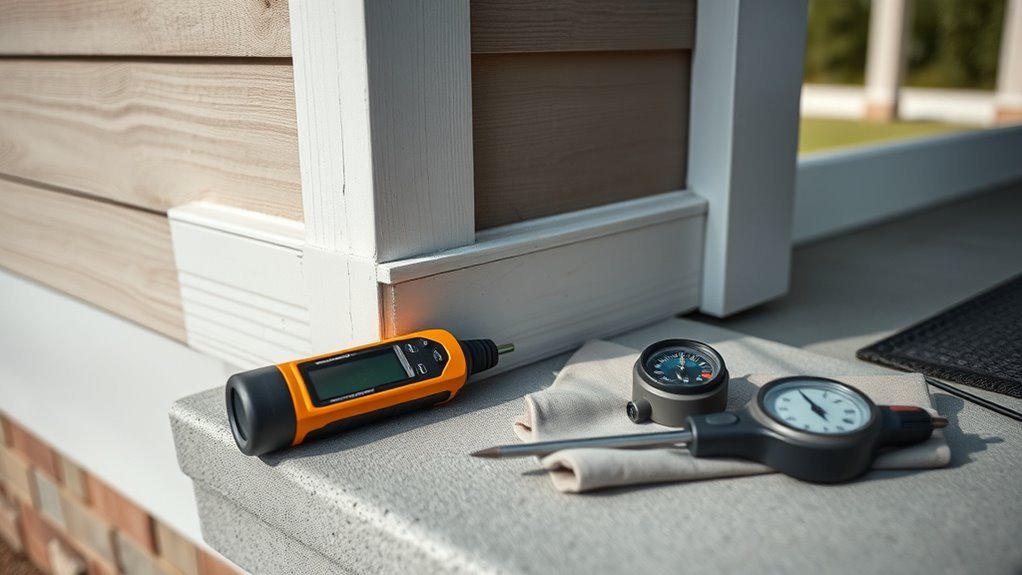
Don’t just check the air temperature—you need to measure the surface temperature where you’ll be painting. Use an infrared thermometer to get a quick, accurate reading, since surfaces can be much warmer or cooler than the air.
Also remember that sun-exposed walls may be heated by solar radiation, so a shaded surface reading gives a better baseline for paint performance.
Measure Surface Temperature
When deciding whether it’s safe to paint, measure the surface temperature rather than relying on the air temperature. You should check the actual substrate because painted adhesion, color fading, and paint durability depend on how warm the material is, not just the thermometer reading.
Pick several spots—sunlit, shaded, and high up—so you catch variations. Measure before you start and periodically during the job if conditions change.
If the surface is within the paint manufacturer’s recommended range, proceed; if not, wait. This approach prevents premature application that can cause poor bonding, uneven finish, and accelerated color fading.
Use Infrared Thermometer
If you want reliable readings, point an infrared thermometer at the actual surface rather than relying on the air temperature—surface temps control paint adhesion, curing, and finish.
Use a quality IR tool to scan panels, trim, and siding where paint will touch; don’t assume ambient air tells the story.
Check infrared thermometer calibration periodically and follow manufacturer directions for emissivity settings.
Log readings before, during, and after painting; temperature data logging helps you spot trends and confirm conditions met manufacturer specs.
Record time, location, and surface temp so you can defend results and avoid painting when surfaces are too cold.
Consider Solar Heating
You’ve already learned to measure the actual surface with an infrared thermometer, but sunlight can raise or lower that surface reading dramatically compared with the shaded air nearby.
You should prioritize surface temperature over air temperature because solar heating can create misleading readings; dark siding warms quickly, and exterior insulation alters how fast surfaces cool.
Check surfaces in sun and shade, and plan painting when the surface stays within the paint manufacturer’s temperature range for several hours.
- Measure sun-exposed and shaded spots
- Account for thermal mass and siding color
- Consider exterior insulation effects
- Avoid painting mid-afternoon glare
How to Check Conditions: Tests and Tools
Before you paint, check the surface temperature with an infrared thermometer to make sure it’s within the paint’s recommended range.
You’ll also measure the dew point so you don’t trap moisture, and record wind speed and humidity to predict drying time.
Use simple tools—IR gun, hygrometer/dew point calculator, and an anemometer—for quick, reliable readings.
Surface Temperature Check
How cold is too cold to paint outside? You’ll check surface temperature, not just air temperature, to guarantee paint adheres and cures. Use an infrared thermometer or contact probe, and test multiple spots—shaded, sunlit, and near corners.
Remember that color selection and texture matching can affect drying, so test the chosen paint on the actual surface.
- Aim for surface temps within the paint’s recommended range.
- Measure early morning and mid-afternoon for variation.
- Log readings and locations for consistency.
- Use temporary test patches to confirm adhesion before full application.
Dew Point Measurement
When you check dew point, focus on both temperature and humidity because condensation will prevent paint from drying and bonding properly. Use a handheld dew point meter or a reliable hygrometer/thermometer combo to measure air temp and relative humidity.
Compare readings to paint manufacturer limits and wait if dew point approaches surface temperature. You’ll note surfaces with poor thermal insulation cool faster and reach dew earlier, so schedule work after warming periods.
Record readings periodically during application. These tests complement weatherproofing techniques but don’t replace judgment—avoid painting if any device indicates potential condensation during the film-formation window.
Wind And Humidity
Wondering if the breeze or humidity will wreck your finish? You should check wind effects and humidity levels before painting. Use simple tests and tools so you’ll pick the right day and avoid problems like blistering, dust adhesion, or slow cure.
- Hold a ribbon or plastic bag to gauge local wind strength and direction.
- Use a reliable hygrometer to read humidity levels at surface height.
- Check a handheld anemometer for gusts that could spray debris onto wet paint.
- Compare outdoor readings to the paint’s recommended limits on the can and delay if conditions fall outside them.
Best Times to Paint in Cool Weather
If you plan to paint in cool weather, choose days that offer a warm, dry window in the middle of the day and overnight lows above the paint’s minimum temperature rating. You’ll want to monitor paint temperature recommendations and local forecasts so coatings cure properly.
Aim for a stretch of several consecutive days with low humidity and light wind to avoid trapped moisture and debris. Start work midmorning when surfaces have warmed, finish before temperatures drop at night, and schedule tasks so primer and topcoat each get adequate drying time.
Good timing reduces failure risk and keeps your project on track.
Prep Exterior Surfaces for Cold Painting
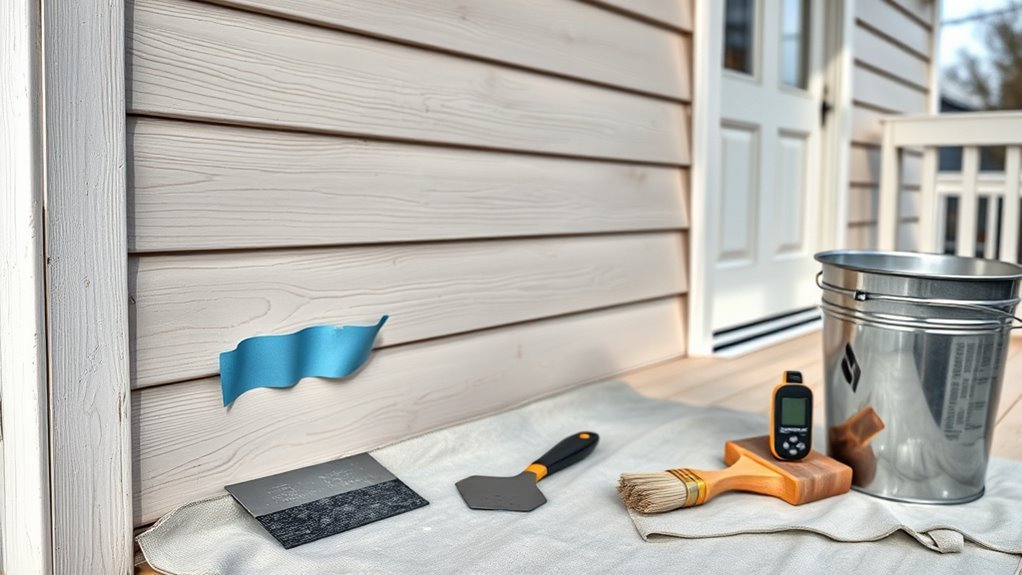
Before you paint in cold weather, check the actual surface temperature with a thermometer so the coating can bond properly.
Make sure you remove any frost or ice and let the surface dry fully before priming.
Then pick a primer rated for low temperatures to promote adhesion and faster curing.
Check Surface Temperature
Because the surface holds and releases heat differently than the air, you need to check its temperature directly before you paint; a cold substrate can prevent proper adhesion and slow curing, even when the air feels warm enough.
You’ll use an infrared thermometer or contact probe to read siding, trim, and deck surfaces. Note how color options and texture considerations affect heat retention—dark, rough surfaces run warmer.
Aim for manufacturer-recommended substrate temps. If temps are marginal, delay painting until they rise or use temporary heating.
Record readings across elevations and aspects to guarantee consistent results.
- Measure multiple spots
- Use proper calibration
- Avoid shaded areas only
- Log times and temps
Remove Frost And Ice
Wondering how to handle a frost-covered surface so your paint will stick? You’ll need to clear frost and ice before painting: scrape gently with a plastic or wooden tool, brush with a stiff broom, then wipe damp areas with a clean cloth.
Warm, dry the surface thoroughly—use a heater or let sun and airflow evaporate lingering moisture.
Check joints and crevices for trapped frost and pry it out carefully.
For ongoing ice prevention, address drainage, trim vegetation, and avoid painting during freeze-thaw cycles so surfaces don’t refreeze.
Only paint when the substrate is bone-dry and surface temperature stays above the product’s minimum.
Use Proper Primers
When temperatures drop, choose primers formulated for cold conditions so adhesion and curing stay reliable. You’ll prep surfaces with proper priming techniques, selecting primer types rated for low temps to prevent peeling and extended tack time.
Apply thin, even coats, allowing manufacturer-recommended flash times despite chill. Seal bare wood, metal, and patched areas first to guarantee uniform absorption and finish.
Use a heater or warm containers to keep product workable without exceeding VOC limits.
- Check temperature rating on the label
- Stir and warm primer gently before use
- Apply during the day’s warmest period
- Follow manufacturer cure times precisely
Thinning, Mixing, and Heating Paint Safely
If your paint’s too thick for smooth application or the temperature’s affecting flow, thin and mix carefully to maintain performance and safety intact.
You’ll preserve paint durability by following manufacturer thinning ratios and avoiding over-thinning that weakens film and adhesion. Mix thoroughly to guarantee uniform color selection and consistency; use a drill mixer at low speed to prevent aeration.
Never heat cans directly—use warm water baths or controlled paint heaters designed for coatings, keeping temps below manufacturer limits.
Work in a well-ventilated area, wear appropriate PPE, and store mixed paint away from freezing to sustain performance and safety.
Pick Paints and Additives for Cold Weather
Because cold weather changes how coatings cure and adhere, you should choose products formulated for low temperatures and compatible additives that won’t compromise film integrity. You’ll preserve paint durability by picking cold-weather enamels or acrylics labeled for low-temp application. Check manufacturer limits and test a small area.
- Choose low-temp rated base paint for reliable drying
- Use antifreeze or flow additives approved by the paint maker
- Avoid universal thinners that alter film properties
- Confirm VOC and compatibility to protect adhesion and gloss
Thoughtful additive selection plus proper product labels keeps coatings tough and prevents failures in chilly conditions.
Protect Drying and Curing After Painting
Although the paint feels dry to the touch, you’ll need to shield newly painted surfaces from cold, moisture, and wind until the coating fully cures.
Although paint may feel dry, protect fresh surfaces from cold, moisture, and wind until the coating fully cures.
You’ll set up temporary barriers like tarps, windbreaks, or plastic sheeting, guaranteeing air still circulates to avoid trapping condensation.
Use heat lamps or portable heaters cautiously to maintain a steady curing temperature without overheating.
Monitor humidity and temperature with a gauge, and avoid washing or touching the surface for the manufacturer’s recommended cure time.
Protect consistent paint color by keeping dust and moisture off; this preserves your exterior design and ensures a durable finish.
Fix Common Cold‑Weather Paint Problems
When cold-weather paint shows problems—like blistering, poor adhesion, or milky, chalky finishes—you’ll need targeted fixes rather than general touch-ups. Assess substrate temperature, remove failed paint, sand glossy edges, and prime with a cold-weather primer to restore paint durability.
Choose Color options carefully; lighter tints often hide imperfections but test samples first. Follow manufacturer low-temp application guidelines and use fast-curing formulations when possible.
- Scrape and sand to sound substrate, then spot-prime.
- Thin thick paint per guidelines to avoid crawling.
- Use heat lamps or tents cautiously to raise cure rates.
- Recoat only after surface meets specified dry times.
When to Delay Painting and Alternatives
If temperatures, humidity, or surface conditions won’t let paint cure properly, hold off and choose an alternative approach—painting under the wrong conditions wastes time and leads to failures like poor adhesion, blistering, or long tack times. You should monitor forecasts and apply seasonal considerations: wait for sustained suitable days rather than a brief warm spike.
Meanwhile, do prep work—cleaning, sanding, and replacing rotted trim—and arrange paint storage so cans stay at stable temperatures. Consider temporary fixes like touch-up caulk, moisture barriers, or removable trim covers.
When favorable conditions return, confirm substrates are dry and stored materials are conditioned before you start.
Frequently Asked Questions
Can Cold Affect Paint Color or Sheen After Drying?
Yes — cold can alter dried paint’s color and sheen. You’ll see reduced paint adhesion and possible gloss loss; slower curing harms color longevity, so you should avoid painting when temperatures risk freezing or staying near cold levels.
Will Existing Lead Paint Be More Hazardous When Painting in Cold Weather?
Yes — cold can complicate lead paint hazards: chilly conditions can increase chipping, create brittle flakes, and raise cold weather risks for airborne particles, so you should restrict disturbance, seal surfaces, and use proper PPE and containment.
Do Warranties Cover Failures When Painting Below Recommended Temperatures?
Usually not — you’ll void warranties if you ignore temperature sensitivity and improper paint application guidelines. Manufacturers expect correct conditions; documenting temps and following instructions helps, but painting below recommended temps often removes warranty coverage.
Can Insects or Pests Interfere With Exterior Painting in Cold Months?
Ironically, yes—you’ll sometimes welcome uninvited help: insect activity and pest interference can mar wet paint, crawl into tacky finishes, or leave droppings. You’ll need screens, timing, and deterrents to keep surfaces protected.
Is It Safe to Pressure-Wash Siding When Temperatures Are Near Freezing?
Yes — you can pressure-wash near freezing, but you’ll risk ice, faster temperature fluctuations, and reduced paint adhesion if surfaces stay cold or wet; you’ll need quick drying, warm temperatures before painting and cautious, controlled washing.
Conclusion
You can paint outside in chilly weather if you follow the rules: check air and surface temps, avoid painting near the dew point, pick the right latex, acrylic, or oil, and use cold‑weather additives and protection. Treat drying like tending a campfire—give it steady warmth and shelter or it’ll smother. If conditions aren’t right, delay or use temporary fixes. With care, patience, and the right tools, you’ll get a durable finish even when it’s cold.
