
How Long Does Concrete Take to Dry Before Painting
You should normally wait about 28 days for a standard 4–6″ slab to cure and for most surface moisture to leave, but don’t guess—test. Use a moisture meter or relative humidity probe and follow your paint or sealer’s specs; acceptable limits are often 4–12% depending on the method and product. Thin pours or warm, dry conditions can shorten times; cold or humid conditions extend them. Keep testing and prepping; more guidance on timing, primers, and fixes is below.
Short Answer: Moisture Thresholds for Painting Concrete
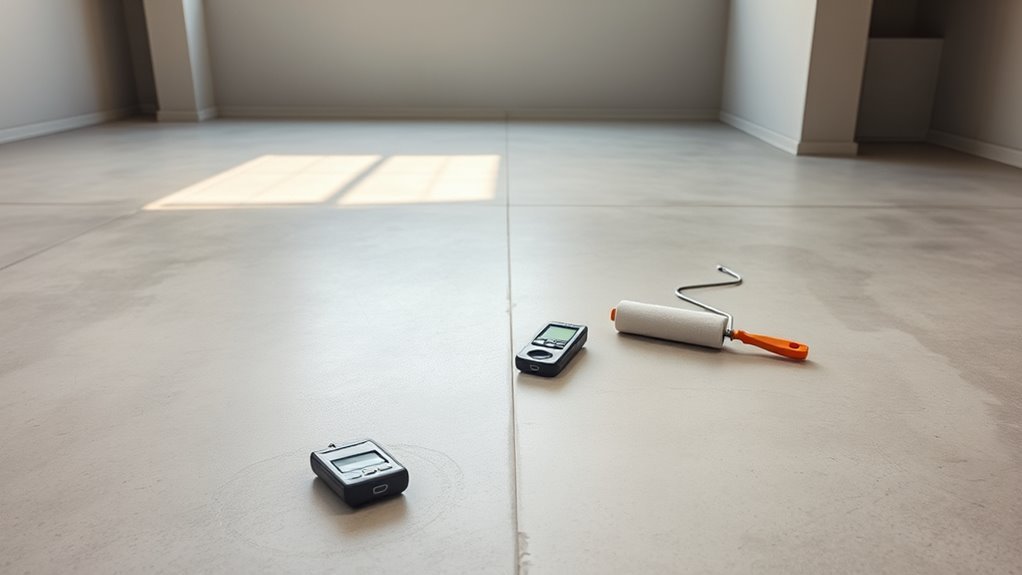
If you want paint to stick and last, wait until the concrete’s moisture level falls below the paint manufacturer’s recommended threshold—usually 4% to 12% depending on the test method and product. You’ll check with a moisture meter and follow product guidelines; don’t guess.
Environmental factors like humidity, temperature, and ventilation affect how quickly levels drop. You’ll also note surface texture: rough or porous concrete holds moisture longer and may need additional drying or priming.
Test multiple spots, especially near walls or downspouts. Only proceed when readings meet specs to avoid peeling, blistering, or adhesion failures.
Curing vs. Drying : What’s the Difference?
You need to know that curing and drying are different processes: curing is the chemical hardening of concrete, while drying is the loss of excess moisture.
Both affect when you can paint, because trapped moisture can ruin coatings even after the surface feels dry.
Curing Vs. Drying
Although they’re often used interchangeably, curing and drying describe two different processes in concrete: curing is the chemical hardening that strengthens the material, while drying is the physical loss of moisture from the slab.
You’ll manage curing by keeping concrete moist and at proper temperature so hydration proceeds; historically, methods ranged from wet burlap to ponding—Historical techniques that assured strength.
Drying happens afterward as remaining water evaporates; it affects when you can paint but isn’t the strength gain.
You can use modern curing compounds or Eco friendly additives to aid curing without harming subsequent drying or coating adhesion.
Moisture’s Role
Having kept the slab moist to promote hydration, it helps to separate how moisture functions during curing from how its later evaporation affects painting. You need curing moisture for strength and proper Concrete coloring, but you must wait until excess moisture leaves before Surface finishing or paint. Curing bonds cement; drying removes capillary water that would blister coatings.
| Phase | Effect |
|---|---|
| Curing | Hydration, strength gain |
| Early drying | Surface evaporation |
| Late drying | Internal moisture moves out |
| Testing | Use moisture meter |
| Painting | Only when safe RH/MC |
Check manufacturer specs and test before you paint.
How Temperature and Humidity Affect Drying Time
When temperature rises and humidity drops, concrete sheds moisture faster and becomes ready for painting sooner. Conversely, cold or humid conditions slow evaporation and can extend drying times by days or even weeks.
You’ll want to monitor conditions because warm, dry air accelerates curing while cool, damp air traps moisture. That affects not only adhesion but how vibrant Concrete color options appear and how long Decorative finishes take to set.
Use heaters, dehumidifiers, or ventilation to control the environment when possible, and always test a small area.
Measure moisture with a meter before painting to avoid failures and rework.
Drying Timelines: New Pours, Slabs, and Thickness Guide
Because concrete drying depends heavily on pour type and thickness, you should expect very different timelines for new pours, standard slabs, and thick sections like footings or walls. You’ll plan by thickness and usage: thin overlays cure faster, thick mass pours take months. Consider historical concrete—older mixes may need extra time before applying decorative finishes or coatings.
Because drying varies with pour type and thickness, expect different timelines—from quick thin overlays to months for thick pours.
- Thin slabs (1–3 inches): often ready for light coatings in days to weeks.
- Standard slabs (4–6 inches): commonly need 28 days to reach practical dryness.
- Thick sections (footings, walls): can require several months before safe surface work.
Moisture Thresholds: What Readings Mean (When It’s Safe)
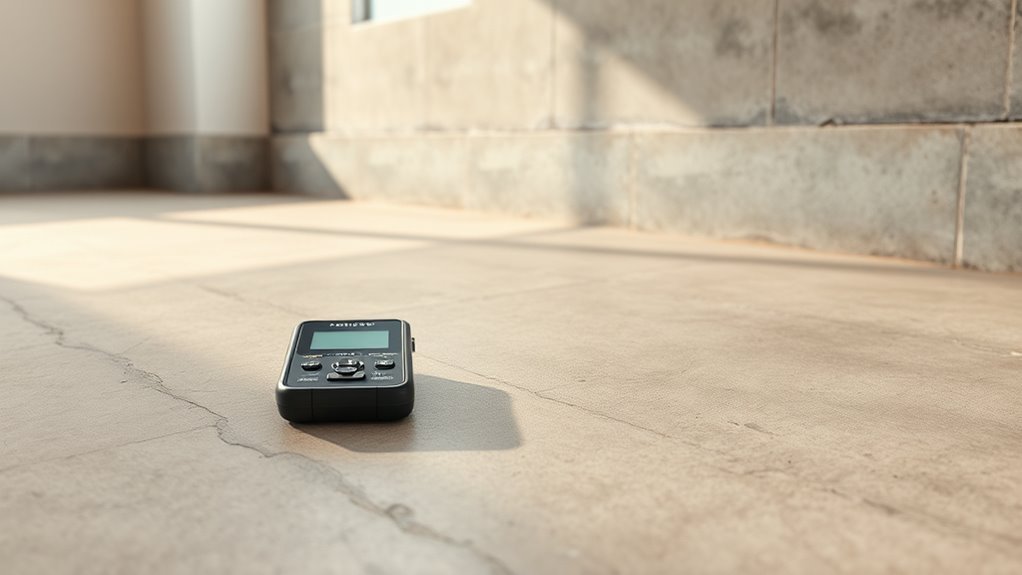
Before you paint, you’ll want to confirm concrete moisture levels meet the coating’s tolerance so your paint or sealer can bond and cure properly.
You’ll interpret readings as pass/fail against manufacturer limits—often expressed as percentage or relative humidity. Lower percentages and RH under specified thresholds mean it’s safe; higher values signal trapped moisture that can blister coatings or alter concrete color.
Consider recent weather, underneath structural support, and any vapor barriers when evaluating risk.
If readings exceed limits, delay coating until levels drop or choose a moisture-tolerant system.
Always follow product specs; they define the safe moisture threshold for reliable results.
How to Test Concrete Moisture Before Painting (Step-by-Step)
Before you paint, you’ll want to check moisture using two simple methods: a moisture meter for quick readings and the plastic sheet test for longer-term vapor checks.
Use the meter on multiple spots to confirm consistent low readings.
For the plastic test, tape a sheet down for 24–48 hours and look for condensation or darkening under the film.
Moisture Meter Method
When you need a quick, reliable check of concrete moisture before painting, a moisture meter gives immediate readings you can act on. You’ll choose a pin or non‑invasive meter, calibrate per instructions, and test multiple spots to profile the slab. Readings help prevent failed coatings, protect concrete coloring and decorative finishes, and tell you if drying must continue.
- Surface: swipe across seams and corners for hotspots.
- Depth: use pins or deep probe settings for sub-surface moisture.
- Compare: average readings against manufacturer limits before priming or painting.
Plastic Sheet Test
If you need a simple, inexpensive way to check concrete moisture, the plastic sheet test lets you see if water’s evaporating from the slab before you paint. Tape a 2×2 foot plastic sheet to the concrete, sealing edges with waterproof tape. Mark the date and leave it 24–48 hours.
When you remove the sheet, inspect the underside for droplets, darkened concrete color, or damp patches; these show moisture movement. Also check surface texture for efflorescence or soft spots.
If you see moisture or color change, wait and retest later. If the underside stays dry, the slab’s likely ready for priming and painting.
Choose a Moisture Test: Meter vs. Plastic-Sheet Method
You’ll want to pick the right moisture test before you commit to painting. Decide between a meter and the plastic-sheet method based on accuracy, cost, and your concrete’s history.
Historical concrete may hide moisture issues; meters reveal internal readings, while plastic sheets show surface vapor. Eco-friendly additives don’t change the need to test.
- Use a moisture meter for quick, quantitative internal readings across the slab.
- Use the plastic-sheet (or tape) test for low-cost surface vapor checks over 24–72 hours.
- Combine both when in doubt, and recheck after remediation or weather changes.
Surface-Prep Checklist to Ensure Paint Adhesion
Before you paint, make sure the concrete is clean and free of grease or dirt so the coating can bond.
Patch any cracks or chips and let repairs cure fully to prevent future peeling.
Finally, etch or mechanically profile the surface so the paint has something to grab onto.
Clean And Degrease
Once the concrete’s cured enough to walk on, clean and degrease thoroughly so paint will bond properly. You’ll remove dust, oil, and curing agents that block adhesion and affect decorative finishes and environmental impacts. Use a stiff broom, mild detergent or alkaline cleaner, and a degreaser suited for concrete. Rinse well and let surface dry fully before painting.
- Sweep and pressure-rinse to remove loose debris and surface laitance.
- Apply concrete degreaser to oil spots; agitate with a brush, then rinse.
- Neutralize cleaners if needed and confirm the slab is dry and residue-free.
Repair Cracks And Chips
While small cracks and chips might seem cosmetic, they’ll undermine paint adhesion and shorten the finish’s lifespan if you don’t repair them properly. You should remove loose material, clean the area, and use a concrete patch or epoxy filler suited to the crack width.
Work the filler flush with the surface, then smooth with a trowel or putty knife. Match concrete color where visible, blending edges so repairs don’t telegraph through paint.
Allow full cure per product instructions, then sand or feather edges for a uniform substrate. Proper repair prevents moisture intrusion and guarantees even adhesion for your paint.
Etch Or Profile Surface
After repairing cracks and chips, you’ll need to etch or mechanically profile the concrete so the paint can bond. You’ll create consistent surface textures that promote adhesion and control how primers interact via chemical reactions. Choose etching for light contamination and profiling for smooth slabs; both expose paste and open pores.
Follow these steps to prepare correctly:
- Clean thoroughly, then apply acid etch or use a diamond grinder for a uniform profile.
- Neutralize and rinse after chemical etching, or vacuum and wipe after grinding.
- Allow full drying and check for even texture before priming and painting.
Best Primers and Paints for Recently Dried Concrete
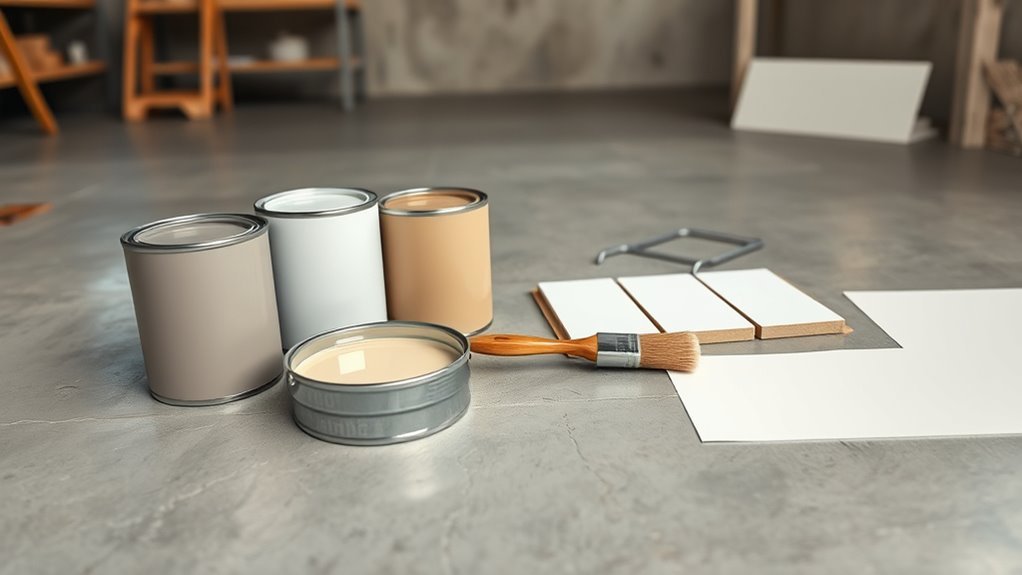
Because freshly dried concrete can still release moisture and alkalinity, you’ll want primers and paints formulated to handle those conditions rather than ordinary interior formulas. Pick a breathable, alkali-resistant primer and a masonry or concrete paint rated for exterior or high-moisture use. Use products compatible with concrete staining and decorative finishes if you plan overlays. Clean, etch, and allow proper cure before priming.
| Product type | Recommendation |
|---|---|
| Primer | Silane/siloxane or masonry primer |
| Paint | Elastomeric or acrylic masonry paint |
| Sealers | Breathable penetrating sealer |
| Special | Epoxy for high-traffic areas |
How Long to Wait After Patching, Sealing, or Staining
Patching, sealing, or staining changes how long concrete needs to cure before you paint, so plan your schedule around each product’s specified cure time rather than a single rule of thumb. You’ll follow manufacturer cure times: patch compounds often need 24–72 hours, sealers can take 24–48 hours to surface-dry and up to 7 days to fully cure, and stains or concrete coloring may require 24–72 hours depending on type.
Test a small area. Match paint compatibility to the sealer or stain to protect decorative finishes and guarantee adhesion. Consider humidity and temperature for every step.
- Patch: fast-setting vs. standard
- Sealer: breathable vs. film-forming
- Stain: solvent vs. water-based
Troubleshooting: Bubbles, Peeling, Flaking, and Fixes
If you see bubbles, peeling, or flaking after painting concrete, don’t panic — these problems usually point to specific surface or application issues you can fix.
First, test adhesion: scrape a small area to reveal if paint bonds to the substrate.
Bubbles often mean trapped moisture or poor prep; remove loose paint, let concrete dry fully, and improve concrete texture by etching or sanding.
Peeling/flaking usually follow inadequate priming or painting over contaminants; clean thoroughly and use a compatible primer.
Repaint when dry, check color consistency with small test patches, and allow proper cure times to prevent recurrence.
Frequently Asked Questions
Can I Paint Concrete Over Existing Paint Without Stripping It First?
You can, but you’ll need thorough surface preparation to guarantee paint adhesion: clean, degloss, sand loose areas, and apply a compatible primer. Otherwise new paint may peel, so don’t skip these essential prep steps.
Will Moisture Barriers Under Concrete Affect Paint Drying Times?
Yes — moisture barriers reduce moisture vapor transmission, so you’ll usually see faster surface drying, but curing stages still matter; you’ll need to confirm slab cure and moisture readings before painting to avoid adhesion or finish problems.
Can Interior Concrete Floors Be Painted in Winter With Space Heaters?
Yes, you can paint interior concrete floors in winter with space heaters, but you’ll guarantee winter painting follows manufacturer temperature/humidity specs; practice space heater safety, ventilate, monitor moisture, and avoid direct heater contact with curing paint or substrates.
Are Epoxy Coatings Better Than Latex for High-Moisture Basements?
Yes — you’ll want epoxy’s durability in a damp basement; it’s a fortress against moisture while latex flexibility acts like a soft sweater, offering easier touch-ups but less long-term water resistance for high-moisture conditions.
Does Concrete Sealer Change Required Waiting Time Before Painting?
Yes — sealer application can change waiting time before painting; you’ll need proper surface preparation, let the sealer cure per instructions, and guarantee moisture’s low, otherwise you’ll delay painting to avoid adhesion and finish problems.
Conclusion
Before you paint, remember that moisture matters: freshly poured concrete can take up to 28 days to cure, and moisture levels above 4% (by calcium chloride test) often cause paint failure. Let it fully dry to the recommended threshold, prep the surface, and use a compatible primer to avoid peeling or bubbles. Waiting that month might seem long, but it cuts repainting and repairs—saving you time and money in the long run.
