
How Long Does Tile Paint Take to Dry
You’ll usually find tile paint feels dry to the touch in 1–24 hours depending on whether it’s water- or oil-based, but full curing for durable use takes about 7–30 days; light foot traffic may be okay after 1–2 days with fast-curing products, while heavy use and cleaning should wait for full cure. Proper cleaning, primer choice, thin coats, warmth and ventilation speed drying. Keep going to learn practical prep, timing and fixes.
Quick Answer: Typical Tile Paint Drying vs. Curing Times
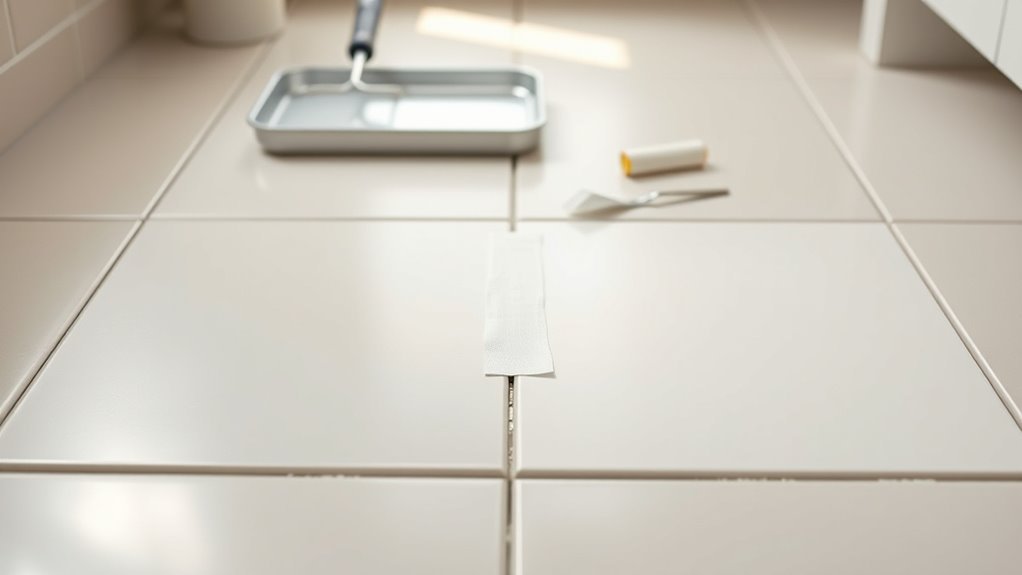
Although paint may feel dry to the touch within a few hours, it usually takes much longer to fully cure. You’ll notice surface dryness in 1–4 hours for water-based tile paints and 6–24 hours for oils.
However, curing often spans 7–30 days depending on formula and humidity. Light foot traffic’s fine after a day or two with fast-curing products, yet heavy use should wait until full cure.
When choosing supplies, consider Color options that suit your space and Tool selection—rollers for flat tiles, brushes for grout lines—to guarantee even coverage and ideal drying and curing performance.
Tile Paint: Drying vs. Curing – What’s the Difference?
Because drying and curing refer to different processes, it’s important you treat them differently when working with tile paint. Drying means surface moisture evaporates so you can touch and layer; curing is the chemical hardening that gives durability. You’ll choose color options and texture techniques knowing drying times let you recoat, while curing dictates when grout or heavy use is safe. Humidity and temperature speed or slow both. Use the table to compare:
| Stage | What it means |
|---|---|
| Drying | Surface feels dry; recoats possible |
| Curing | Full hardness; resists wear |
| Timing | Hours to weeks depending on conditions |
Surface Prep & Primer: How They Change Drying and Final Cure
Before you paint, clean the tiles thoroughly—grease or soap residue will slow drying and weaken the final cure.
Choose your primer carefully, since water- and oil-based primers change both how fast the surface dries and how well the paint bonds long-term.
Knowing the cleaning steps and primer type lets you predict drying times and get a durable finish.
Surface Cleaning Impact
How clean is your tile before you start painting? You’ll find that thorough surface cleaning removes oils, soap scum, and dust that hinder adhesion and slow drying. When you eliminate residues, paint binds evenly, promoting better color blending and avoiding blotches.
Cleaning also exposes true texture, so your texture enhancement techniques—light sanding or degreasing—work predictably and dry times stay consistent. Use a pH-balanced cleaner, rinse thoroughly, and let tiles fully air-dry before priming.
Skipping cleaning can trap moisture and contaminants, extending tack time and risking poor final cure, so invest minutes now to save hours later.
Primer Type Effects
When you pick the right primer for your tiles, it sets the stage for faster drying and a stronger final cure by sealing porous surfaces, improving adhesion, and creating a consistent base for paint to dry evenly.
You’ll choose primers formulated for ceramic, porcelain, or glossy surfaces; each influences drying time and final hardness. Oil-based primers slow initial dry but boost durability, while water-based primers dry quicker and reduce odor.
Specialty primers can alter color options and enhance texture effects when paired with paints or additives.
Test a small area to confirm adhesion, drying schedule, and the look before covering whole surfaces.
Drying Times by Paint Type (Epoxy, Latex/Alkyd, Enamel, Spray)
Because different tile paints cure by different chemical processes, their drying schedules vary a lot — and knowing which type you’re using helps set realistic expectations.
Epoxy dries hard in 24–72 hours to touch and fully cures in 7 days; it resists color fading and holds texture consistency well.
Latex/alkyd feels dry in 1–2 hours, recoatable in 4–6, and cures over several days; it’s forgiving but can show slight sheen shifts.
Enamel takes longer to harden—often 8–24 hours to touch—and reaches full strength in days.
Spray paints dry fastest to the touch (minutes) but still need 24–48 hours to cure.
Coats, Recoat Windows, and How Coat Thickness Affects Timing
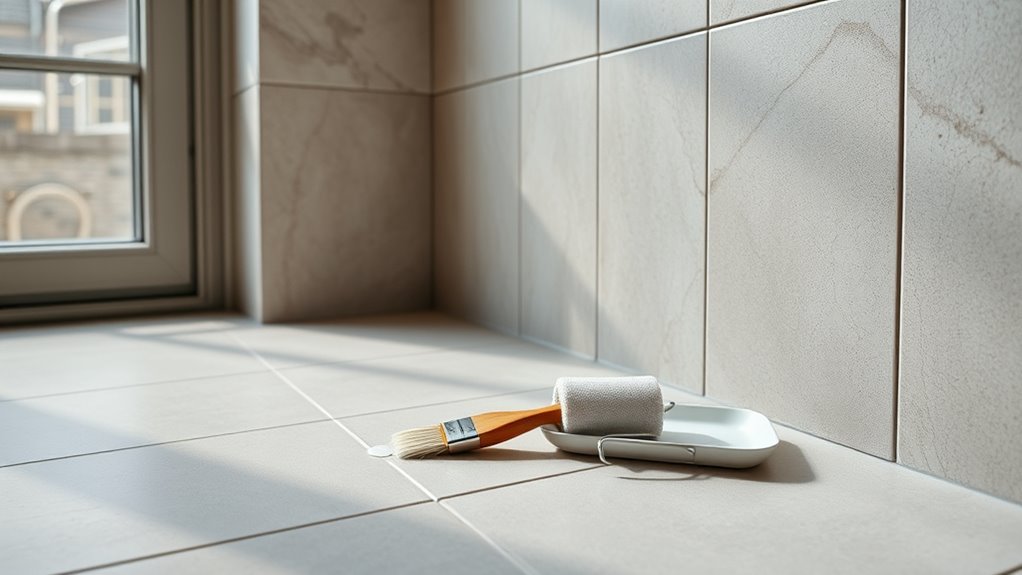
How many coats you apply and how thick each one is will change drying and recoat times.
You’ll usually need two thin coats for even coverage rather than one heavy coat, since thicker layers take much longer to dry and can tack up or sag.
Check the paint’s recoat window and only add another layer once the manufacturer’s recommended surface-dry time has passed.
Number Of Coats
If you apply multiple coats, each layer changes the drying timeline and the time you’ll wait before recoating. You’ll usually need two thin coats for even coverage; more coats reduce color fading and help with pattern matching across tiles.
Check the paint’s recoat window—often 1–4 hours for water-based, longer for oils—and never exceed the maximum recommended wait or you’ll risk adhesion problems.
Light sanding between coats can improve grip and smoothness.
Plan for full curing after the final coat per manufacturer guidelines before heavy use.
Keep coats thin and consistent for predictable drying and durability.
Coat Thickness Impact
When you apply thicker coats, they’ll take noticeably longer to dry and can push your recoat window well beyond the paint’s stated minimums, so stick to thin, even layers for predictable timing.
You’ll find that thin coats dry faster, reduce tackiness, and let you recoat sooner without risking runs or bubbles.
Adjust layer thickness when you change color options or use texture variations—matte or textured paints may need slightly thicker films but you should still aim for multiple thin passes.
Monitor dryness by touch and follow manufacturer recoat times, adding extra curing time in cool or humid conditions.
Temperature, Humidity & Ventilation: Real Effects on Drying Time
Because paint chemistry and air movement interact, the temperature, humidity, and ventilation in your space will directly control how fast tile paint dries.
You should understand environmental factors like warmth accelerating solvent evaporation while high humidity slows it.
Your paint formulation matters: water-based paints need lower humidity than solvent-based options to cure quickly.
Increase airflow with fans or open windows to move moisture away, and keep room temperature within the manufacturer’s recommended range.
Avoid extreme heat that can skin over paint and trap solvents.
Monitor conditions and adjust ventilation and heating to get predictable drying times and a durable finish.
When Painted Tiles Are Safe to Use : Foot Traffic, Water, Heavy Wear
Although paint may feel dry to the touch within hours, you shouldn’t subject painted tiles to foot traffic, water, or heavy wear until the coating has fully cured; follow the manufacturer’s cure time and test a small area first to confirm durability.
You’ll want to think about tile design and grout compatibility when planning use: textured tiles and porous grout need longer cure and sealing.
Follow these steps before normal use:
- Wait full cure time stated by the paint maker.
- Perform a small scuff and water test.
- Seal grout if recommended for moisture resistance.
- Limit heavy loads for several days.
Troubleshooting: Tacky Paint, Peeling, and How to Fix Slow Drying
If your tile paint stays tacky, flakes, or seems to be drying too slowly, you can usually fix it with a few targeted steps that address surface prep, humidity, and product compatibility.
First, remove loose flakes, sand glossy tiles, and clean with a degreaser so paint bonds.
Improve airflow and lower humidity with fans or a dehumidifier; heat speeds curing but avoid direct high heat.
Check that primer and tile paint are compatible—wrong combos cause tackiness and peeling.
Recoat only after full cure.
Consider different color options or texture finishes if adhesion issues persist; test on a spare tile first.
Frequently Asked Questions
Can Tile Paint Be Applied Over Existing Sealers or Waxed Tiles?
You can, but you’ll need to test sealer compatibility first; improperly prepped surfaces reduce adhesion. For waxed surface adhesion, strip wax thoroughly, sand or degloss, then use a primer formulated for slick or previously sealed tiles.
Will Tile Paint Yellow Over Time or With Sun Exposure?
Like an old photograph, yes — tile paint can yellow over time; you’ll see tile discoloration and sun fading if low-quality paints or no UV sealer are used, so pick UV-resistant products and maintain protective coatings.
Can Heated Floor Systems Affect Tile Paint Curing?
Yes—heated floors can affect tile paint curing and paint adhesion; you should avoid running them during initial drying, gradually increase temperature afterward, and use heat-tolerant coatings to prevent blistering, peeling, or weakened bond over time.
Are There Eco-Friendly or Low-Voc Tile Paints for Bathrooms?
Imagine breathing easier: you’ll find eco friendly options and low VOC formulations for bathroom tile paint that perform well, resist moisture, and minimize fumes. You’ll want water-based enamel or acrylics labeled low-VOC for best results.
How Long Before Grouting or Caulking Near Freshly Painted Tiles?
You should wait at least 24–48 hours before grouting or caulking near freshly painted tiles; make certain proper tile prep and full paint adhesion, and follow manufacturer cure times—longer if humidity’s high or ventilation’s poor to avoid failures.
Conclusion
In short, you’ll want to be patient — paint needs its beauty sleep. Drying and curing aren’t the same; thin, primed coats dry faster, while epoxy and enamel take longer to fully toughen. Keep temperatures moderate, humidity low, and ventilation steady to avoid grumpy, tacky finishes. Wait the full cure for heavy use or water exposure, and touch up any nicks promptly. Treat your tiles kindly and they’ll return the favor.
