
How Long It Take for Paint to Dry
How long paint takes to dry depends on type, temperature, humidity, and coat thickness, but you’ll usually feel dryness within 1–24 hours and full curing in days to up to 30 days; latex often recoatable in 2–4 hours and cures in a few days, oil-based can need 24 hours to recoat and weeks to fully harden, and specialty coatings vary widely. Stick to label times, thin even coats, and keep airflow—keep going and you’ll learn useful tips for faster, safer results.
Quick Answer: Typical Paint Dry and Cure Times
If you’re short on time, here’s the quick answer: most latex (water-based) paints feel dry to the touch within 1 hour and can be recoated after 2–4 hours.
While oil-based paints usually take 6–8 hours to dry to the touch and need 24 hours or more before recoating.
Full curing, when the paint reaches maximum hardness and chemical resistance, can take anywhere from a few days for latex to up to 30 days for some oil-based or specialty coatings.
You’ll want to check label guidance and test a small area.
Drying affects paint texture and color fastness, so allow recommended times for best results.
Drying vs Curing: What’s the Difference?
When you touch paint and it feels dry, that’s just surface drying. Curing is the chemical process that makes the film fully hard.
Drying can take hours, but curing often needs days to weeks depending on the formula and conditions.
Understanding the difference helps you know when the paint will reach full performance and durability.
Drying Vs Curing Basics
Although paint may feel dry to the touch within hours, curing is a deeper chemical process that can take days or weeks to complete. You’ll notice drying removes surface tackiness, while curing builds long-term hardness and adhesion.
Don’t confuse a dry feel with full durability; handling too soon risks smudges or uneven sheen. Color consistency can shift during curing, so you’ll want to wait before evaluating final tone.
Follow paint branding instructions for recommended wait times and conditions. Control temperature, humidity, and ventilation to support proper curing.
Patience guarantees a finished surface that resists scratches, stains, and peeling.
Timeframe Differences Explained
Because drying and curing happen by different processes, they follow different timelines you should respect: drying removes solvent or water so the surface feels dry within minutes to hours, while curing completes chemical cross-linking that can take days to weeks for full hardness and durability. You’ll notice paint color can affect perceived dryness, but actual curing depends on chemistry and drying temperature. Plan projects accordingly: tack-free doesn’t mean fully cured. Use the table below to compare signs and timing.
| Stage | Typical timeframe |
|---|---|
| Dry to touch | Minutes–hours |
| Recoat window | Hours–days |
| Full cure | Days–weeks |
Performance And Durability
If you want paint to withstand wear and weather, focus on curing rather than just drying. You’ll notice drying feels complete quickly, but curing builds hardness, adhesion, and resistance over days or weeks. Curing affects performance, durability, and how Color psychology holds up—faded hues mean weaker protection.
Pick Eco friendly formulations that still cure fully; they’re engineered for longevity without harsh chemicals. Consider these factors when choosing paint:
- Cure time vs. dry time
- Surface prep and adhesion
- UV and moisture resistance
- Maintenance and recoating intervals
You’ll get lasting finish and color that’s both attractive and resilient.
How Paint Chemistry Changes Drying: Latex Vs Oil Vs Enamel
When you compare latex, oil, and enamel paints, their different chemistries drive how and how fast they dry: latex cures by water evaporation and polymer coalescence, oil oxidizes and cross-links, and enamel (often oil-based or alkyd) forms a hard film through a slower chemical reaction.
So you’ll notice distinct drying times, tackiness, and durability characteristics with each. You’ll find latex dries fastest to the touch in warm, low-humidity drying environments, while oil paints feel tacky longer as they chemically cure.
Enamel yields the hardest finish but needs more time. Paint color can slightly alter heat absorption and perceived drying speed.
How Coat Thickness Affects Dry and Cure Time
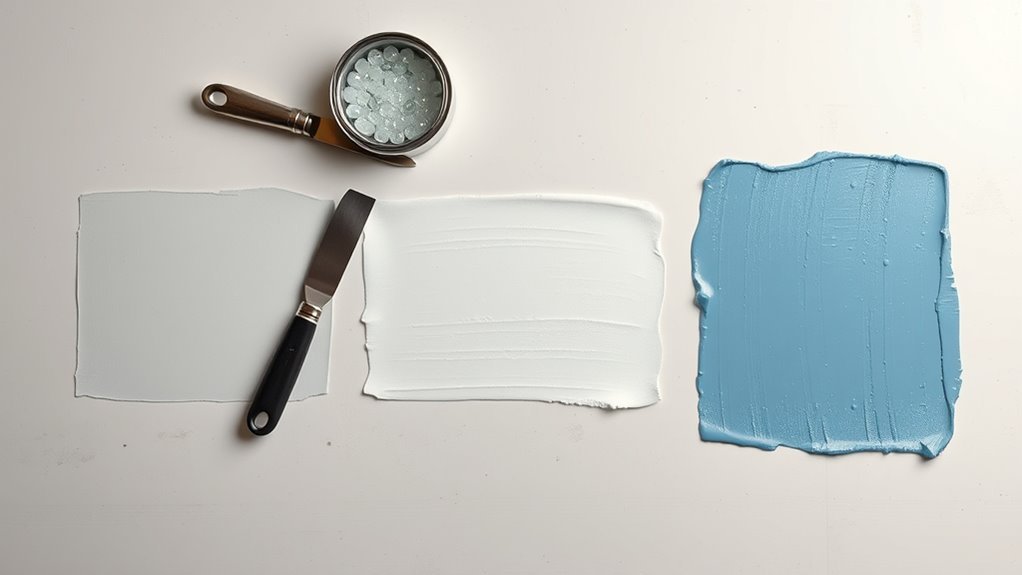
Thicker paint films take longer to dry and fully cure because solvents and moisture have farther to travel before they evaporate or react.
When you apply multiple coats quickly, you can trap solvents between layers and extend overall cure time.
Applying thinner, even coats speeds drying and helps each layer bond properly.
Film Thickness Impact
Because each additional mil of paint adds material that solvents must evaporate and film-formers must rearrange, coat thickness has a direct, often nonlinear effect on both dry and cure times. You’ll notice thicker films retain solvents longer, slow chemical crosslinking, and raise tack time.
Consider these practical impacts:
- Increased sagging risk with heavy films
- Longer recoat windows and extended cure periods
- Variations in gloss and sheen as film builds
- Potential problems with paint pigment and color matching in deep films
You should measure wet mils, follow manufacturer limits, and allow extra time for full mechanical strength.
Multiple Coats Effect
Building up multiple coats compounds the same effects you saw with film thickness: each new layer adds solvent and mass that slow evaporation and prolong tack and cure times, so you’ll need to plan recoat intervals and overall cure schedules accordingly.
You should apply thinner, even coats and follow the paint branding’s recommended flash times to avoid trapping solvents.
Dark paint color can absorb heat and speed surface drying but won’t fully cure thicker films faster.
If you rush recoats you’ll trap solvents, cause blistering or extended tackiness, and invalidate warranties.
Test a small area to confirm actual recoat and full cure times.
Touch-Dry, Recoat, and Full Cure Defined
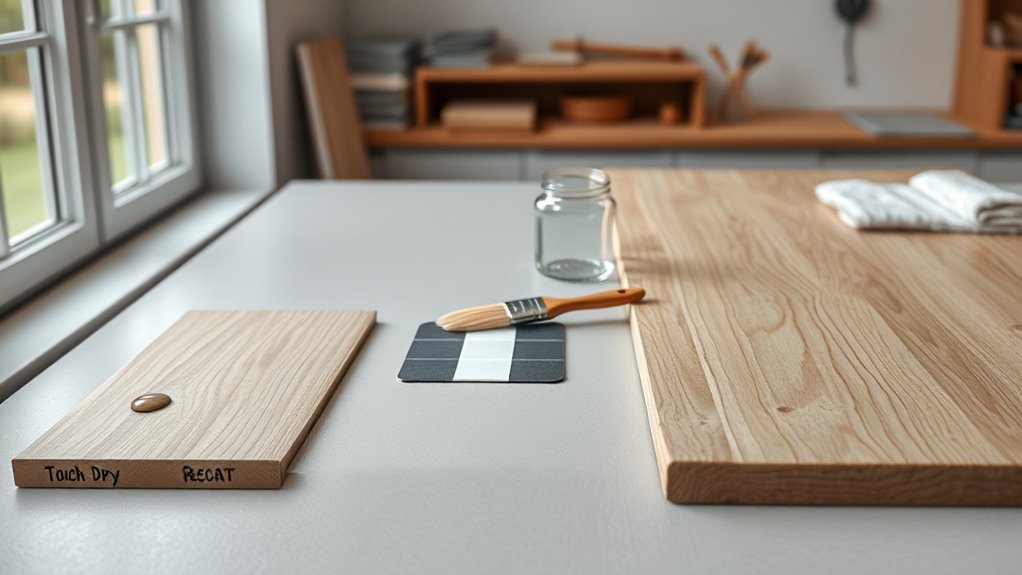
When paint feels dry to the touch, that’s just the first stage—you can gently handle the surface, but it’s not ready for heavy use or another coat. You’ll notice color blending appears acceptable and gloss levels start to settle, yet solvents remain below the surface.
Know three practical stages: touch-dry, recoat window, and full cure. Follow this quick guide:
- Touch-dry: surface skins over; light contact ok.
- Recoat: safe to apply another coat without lifting previous layer.
- Full cure: chemical hardening complete; durable and washable.
- Testing: press discreet spot to confirm readiness before heavy use.
How Temperature Affects Paint Drying
If you want paint to dry predictably, control the temperature. You’ll speed or slow chemical reactions: warmer temps make solvents evaporate faster and resins set sooner, while cold stalls curing.
Adjusting temperature helps you manage color blending—warmer conditions can promote smoother wet edges, cooler ones may preserve workability longer.
Be aware extreme heat risks skinning or uneven gloss; extreme cold causes incomplete film formation and tacky spots.
For consistent texture variation, keep a steady, recommended range for your paint type; that way you’ll avoid surprises and get the finish and durability you planned without relying on airflow or humidity tricks.
How Humidity and Airflow Change Drying Speed
High humidity slows paint drying because moist air reduces evaporation.
You can speed drying by increasing airflow—fans or open windows move moisture away and raise evaporation rates.
We’ll also cover practical ventilation tips so you can manage drying time effectively.
Humidity’s Effect On Drying
Because moisture in the air slows evaporation, you’ll notice paint takes longer to dry on humid days.
Good airflow speeds moisture away and shortens drying time.
You’ll want to plan projects around weather and indoor humidity levels to avoid tacky finishes, longer recoat times, or trapped solvents.
Consider these quick tips:
- Check humidity with a hygrometer before you start.
- Use dehumidifiers or run A/C to lower indoor moisture.
- Allow extra curing time in damp conditions to prevent adhesion issues.
- Store leftover cans properly for paint recycling and note color psychology when postponing color choices.
Airflow And Evaporation Rates
When you boost airflow around a fresh coat, evaporation speeds up as moving air carries moisture away from the surface, letting solvents and water vapor leave the film faster.
You’ll notice thin coats dry quicker than thick ones because airflow removes solvent from the top layers, reducing tackiness. High humidity counters that effect, so airflow matters more in damp conditions.
Choose eco-friendly formulations with faster water release if you want quicker drying and lower VOCs.
Also remember that color psychology can affect perceived drying—darker hues look dry sooner visually even if curing continues—so test before finishing.
Managing Ventilation For Faster Drying
Although humidity and airflow each play different roles, you can speed drying noticeably by managing both: increase ventilation to carry away solvents and moisture, and reduce ambient humidity so evaporation isn’t slowed at the surface.
You’ll want to control conditions to avoid problems like color fading or altered chemical reactions in the finish. Aim for steady airflow and moderate temperature, not blasting heat.
Practical steps:
- Open windows and doors to create cross-ventilation.
- Use fans to move air across wet surfaces.
- Run a dehumidifier in humid spaces.
- Avoid high heat that risks blistering or uneven curing.
These steps cut drying time and improve outcome.
Surface Types: Wood, Metal, Drywall, Plastic
Different surfaces—wood, metal, drywall, and plastic—affect how fast paint dries because of their porosity, thermal conductivity, and surface energy. So you’ll want to choose the right paint and prep method for each to get consistent drying times and a durable finish.
On wood, porous grain soaks thinner coats faster; expect longer cure and watch color stability with stains.
Metal conducts heat and may feel cool, slowing surface drying and risking condensation and chemical reactions with certain coatings.
Drywall absorbs quickly; thin coats can dry fast but may need recoat.
Plastic repels paint—use compatible formulations and allow extended drying.
Primer’s Role and When to Use It
Because primer evens out surface porosity and improves adhesion, you’ll get more uniform drying and a stronger finish when you use it on raw or problematic substrates. Use primer when you need to block stains, seal new drywall, or prepare bare wood and metal so topcoats cure predictably.
It also helps with color matching by neutralizing base hues before your paint goes on. Choose the right primer type and follow drying times. Don’t forget brush maintenance—clean brushes promptly to preserve bristles.
Consider these quick reminders:
- Seal porous surfaces
- Block stains and tannins
- Improve adhesion
- Aid color matching
Interior Latex Paint: Realistic Dry Times
When you’re painting indoors with latex, expect the surface to feel dry to the touch in about 30 minutes to an hour. You can recoat in 2–4 hours depending on humidity, temperature, and ventilation. For best results, monitor color consistency between coats and stick with the same paint branding to avoid sheen or tint shifts. Light sanding between coats helps adhesion. Use a fan or dehumidifier to speed drying safely.
| Condition | Typical Touch Dry | Recoat Window |
|---|---|---|
| Warm, dry room | 30–60 min | 2–3 hrs |
| Cool, humid room | 1–2 hrs | 4–6 hrs |
Exterior Latex Paint: Realistic Dry Times
Shifting from indoor work, exterior latex behaves differently because it’s exposed to sun, wind, and moisture, so drying times vary more widely. You’ll usually see surface dry in 30 minutes to 2 hours and recoat in 4–8 hours, but humidity, temperature, and wind change that.
Proper Color mixing and Paint storage affect consistency and performance; don’t paint right after mixing in cold, damp conditions. Watch dew forecasts and avoid direct midday sun on hot siding.
- Ideal temps: 50–85°F (10–29°C)
- High humidity slows drying
- Strong wind speeds speed surface dry
- Thick coats need longer cure
Oil-Based Paint: Realistic Dry and Cure Times
If you’re switching to oil-based paint, expect slower drying but harder, more durable cures compared with latex. You’ll notice tack-free times often take 6–8 hours, recoat windows around 24 hours, and full cure can need several days to weeks depending on temperature and ventilation.
Work in 50–70°F with low humidity to speed curing. Oil formulas resist wear and show color psychology effects strongly—rich pigments deepen and reflect warmth differently than latex.
Choose low-VOC, eco-friendly formulas if indoor air quality matters. Clean brushes with mineral spirits and allow ample cure before heavy use.
Enamel and Alkyd Paints: Timelines
While oil-based paints need patience for full cure, enamel and alkyd formulations give you a different balance of speed and hardness you should know. You’ll notice enamel feels tougher sooner; alkyd dries faster than traditional oils but still needs hours to tack and days to handle.
Dry time shifts with temperature, humidity, paint color, and coat thickness. Use proper brush techniques to avoid visible marks and speed leveling.
Typical expectations:
- Touch dry: 6–12 hours
- Recoat: 12–24 hours
- Light use: 24–48 hours
- Full hardness: 7–14 days
Adjust timing for conditions and product specs.
Spray Paint & Auto Finish Timelines
When you prep a car or project for spray paint, the surface prep can take as long as the actual spraying because it determines adhesion and finish.
You’ll need to tell drying (tack-free and handle) from full curing, since cure time affects durability and when you can recoat or use the item.
Also remember temperature, humidity, and airflow can speed or slow both drying and curing by hours to days.
Surface Preparation Time
Although prepping a surface might seem like extra work, it directly determines how long spray paint or automotive finishes will properly cure and adhere. You’ll speed up good results by removing contaminants, smoothing rough spots, and choosing the right primer.
Poor prep causes color fading and visible texture changes later.
- Clean degreasing to remove oils and dirt
- Sanding to feather edges and eliminate rust
- Primer selection matched to substrate
- Tack-cloth and final inspection before spraying
Do each step deliberately; that consistency prevents rework, extends finish life, and helps coatings bond uniformly.
Drying Versus Curing
Because drying simply removes solvents and curing builds chemical strength, you’ll need to treat paint drying times and curing times as separate milestones.
Drying feels finished—touch-dry, tack-free—but curing continues as polymers crosslink, affecting hardness and durability.
With spray paint and auto finishes, you’ll follow manufacturer cure schedules, allowing full handling and buffing only after cure.
Temperature, humidity, and layer thickness speed or slow both phases.
Remember color psychology when timing exposure: hues look different before full cure.
Choose eco-friendly paints when possible; they often cure differently, so verify specs to avoid premature use or damage.
Environmental Impact Timeline
Knowing how drying and curing unfold helps you plan paint work, but the environmental effects of spray paint and automotive finishes follow their own timeline and priorities. You’ll want to track VOC release, runoff risk, and residue persistence after application. Choose low-VOC products and proper disposal methods to reduce impact.
Consider how paint colors and brush types relate to waste: specialty pigments and synthetic brushes may complicate recycling.
- Immediate: airborne solvents and odors peak.
- Short-term: surface run-off and soil contamination risk.
- Mid-term: residual solvents off-gas during curing.
- Long-term: pigment persistence and waste disposal consequences.
Specialty Coatings: Epoxy, Lacquer, Polyurethane Timings
When you’re working with specialty coatings like epoxy, lacquer, or polyurethane, drying and curing times vary widely based on chemistry, temperature, and film thickness.
You’ll notice epoxy often skins in hours but needs days to fully cure; it’s sensitive to humidity and thickness.
Lacquer dries very fast to touch, letting you recoat quickly, yet solvent flashes can continue for hours.
Polyurethane may feel dry in a day but can take weeks to harden fully, especially oil-based formulations.
Plan applications, allow proper ventilation, and factor in color blending and texture variation when scheduling recoats and use.
How Color and Pigment Load Alters Drying
How color and pigment load can change drying times is worth considering when you plan a project. Higher pigment concentrations often thicken the film and slow solvent release, so you’ll usually wait longer for those deep, saturated hues.
Also note that warm or cool colorants can subtly alter heat absorption and cure rate, making some shades dry a bit faster than others.
Pigment Concentration Effects
Curious whether color really changes drying time? You’ll notice pigment concentration affects how fast solvents escape. Heavy pigments slow drying; lighter loads dry quicker.
High pigment can also cause color fading over time if binders don’t fully cure, and it creates a texture difference you can feel.
- Dense pigment mixes hold solvent longer, extending tack time.
- Transparent tints dry faster due to lower solid content.
- Metallic or inorganic pigments conduct heat differently, altering cure rates.
- Adjusting binder ratio compensates for heavy loads to promote even drying.
Watch pigment load when planning coats and drying schedules.
Color Temperature Influence
Although you mightn’t think color affects drying, the temperature a pigment imparts can change solvent evaporation and binder cure, so you should consider both hue and pigment load when scheduling coats.
You’ll notice warm hues absorb more radiant heat, slightly boosting surface temperature and speeding solvent evaporation, while cool tones reflect heat and can slow drying.
High pigment load alters viscosity and can trap solvent, affecting pigment stability and cure time.
Consider color perception too: darker colors often hide tackiness less, so you’ll check finish before recoating.
Adjust dry times, thinning, and ventilation based on hue and pigment concentration.
Tools and Safe Techniques to Speed Drying
When you need paint to dry faster, using the right tools and safe techniques makes a big difference: fans and dehumidifiers speed evaporation, heat lamps and space heaters raise temperature, and proper ventilation prevents solvent buildup.
You’ll also manage finish by controlling Color blending and using consistent Brush techniques so layers cure evenly. Use devices and methods safely to avoid overheating, fires, or fume hazards.
- Point a fan for cross-ventilation
- Run a dehumidifier for humid rooms
- Use low-wattage heat sources at safe distance
- Wear respirator and keep windows open
Follow manufacturer drying times and safety instructions.
How to Slow Drying for Longer Open Time
If you need more working time, you can add a retarder additive to slow the chemical cure and keep paint workable longer.
You can also adjust paint ratios—thinning slightly or mixing with slower-drying mediums—to extend open time without ruining finish quality.
Finally, control temperature, humidity, and airflow to slow evaporation and give yourself the extra time you need.
Use Retarder Additives
Because paint can skin or tack up before you finish blending or glazing, you can add a retarder to extend its open time and keep it workable longer. You’ll mix sparingly—small amounts change drying without harming film formation.
Retarders help avoid streaks that lead to color fading or uneven gloss, and they reduce rushed brushwork that can cause paint peeling later. Use compatible additives per manufacturer instructions, test on scraps, and work in controlled humidity.
Consider these tips:
- Start with the lowest recommended dose
- Stir thoroughly, then test
- Avoid overuse; film strength can weaken
- Store mixed paint properly between sessions
Adjust Paint Ratios
Although altering pigment-to-binder ratios sounds technical, you can slow drying simply by increasing the binder or extender proportion and cutting back solvent or water slightly. You’ll improve open time for color blending and keep texture consistency without changing tools or heat.
Test small batches to maintain sheen and adhesion; too much binder can sag or delay cure. Stir thoroughly and note batch ratios so you replicate results.
For acrylics, add a clear acrylic extender; for oils, raise oil content modestly. Always follow manufacturer limits and cure recommendations to avoid compromised durability while gaining longer working time.
Control Environmental Conditions
You can also lengthen open time by controlling the workspace rather than changing the paint itself. You’ll slow evaporation and keep paint workable by adjusting temperature, humidity, and airflow, preserving color consistency and allowing smoother Brush techniques. Simple steps give big gains:
- Raise humidity with a humidifier or damp towels.
- Lower room temperature a few degrees.
- Reduce direct airflow from fans or vents.
- Work in smaller sections or use a slow-drying additive if needed.
Monitor conditions with a hygrometer and thermostat. You’ll get more blending time, fewer brush marks, and consistent color without altering your base paint.
Best Practices for Recoating Without Defects
When planning a repaint, follow the manufacturer’s recoat window and check the surface for tackiness so you won’t trap solvents or cause fish-eyes.
You should clean, degrease, and remove dust before recoating, and use proper tack cloths.
Match primer type to topcoat and thin coats for even drying; this preserves color psychology choices and prevents streaks.
Maintain recommended temperature and humidity to avoid blushing.
Stir eco-friendly pigments gently to prevent aeration.
Test a small area first, allow full flash time between coats, and use consistent application technique so your finish stays smooth and defect-free.
When to Sand, Handle, or Move Painted Pieces
Before you move, sand, or handle a freshly painted piece, confirm the coat has passed its tack test and reached the manufacturer’s recommended handling time so you don’t mar the finish or trap solvents.
You should wait until edges feel firm but not fully cured; schedule sanding and handling during recommended windows. Keep notes on paint storage and batch details for future color matching.
Use gentle pressure and soft pads to avoid burnishing. Consider these quick checks:
- Tack test with clean finger
- Inspect for dust nibs under good light
- Confirm recommended handling time
- Document batch and storage conditions for color matching
Common Drying Problems and Why Paint Stays Tacky
Although paint can seem dry to the touch, it often stays tacky because solvents or moisture are trapped beneath a forming skin. You’ll need to identify whether the issue is environmental, formulation-related, or application-based to fix it.
You should check drying temperature first—too cold or humid, and solvents won’t evaporate properly. Consider paint color: darker tones absorb heat and may dry unevenly, lighter ones reflect it, affecting cure.
Overapplication, inadequate flash times between coats, or contaminated surfaces also cause tackiness. Read product instructions, measure ambient conditions, and test small areas so you can pinpoint the root cause quickly.
Fixes for Runs, Orange Peel, Blistering, Solvent Pop
If you spot runs, orange peel, blisters, or solvent pop, act quickly to assess severity and choose the right repair—small runs can be sanded and feathered, while extensive blistering often means removing and re-prepping the area.
Spot defects early—assess severity and repair appropriately: sand small runs, re-prep for extensive blisters.
You’ll strip glossy edges, sand smooth, and clean before recoat. Match finish and color with careful color mixing; test on a scrap. Use proper brush techniques or a sprayer to avoid repeat texture issues.
Quick fixes include:
- Sand and feather small runs, then spot-prime and repaint
- Block-sand orange peel, polish, or respray
- Remove blisters, dry, prime, repaint
- Address solvent pop by slow recoating and warming area
Environmental and Health Risks When Accelerating Drying
If you try to speed paint drying with heat, fans, or solvents, you’ll raise chemical emissions that can irritate your eyes, throat, and lungs.
Those increased VOCs and particulates can quickly worsen indoor air quality, especially in poorly ventilated spaces.
Take precautions like airing the area out and using respirators if you must accelerate drying.
Chemical Emissions Increase
When you speed up paint drying with heat, fans, or solvents, you also speed up the release of volatile organic compounds (VOCs) and other airborne chemicals into the room, raising both environmental and health risks. You’ll boost VOC emissions, potentially breaching Environmental regulations and increasing short- and long-term exposure.
Consider how choices affect emissions:
- Using heat or blowers elevates off-gassing rates.
- Solvent-based accelerants spike chemical concentrations.
- Higher temperatures can transform compounds into more reactive forms.
- Faster drying reduces the time for natural dissipation, concentrating pollutants.
You should weigh speed against compliance and health, choosing safer methods when possible.
Indoor Air Quality
Because speeding up paint drying often boosts the release of volatile organic compounds and fine particulates, you’ll see indoor air quality decline quickly in enclosed spaces.
You should avoid running heaters or blowers without ventilation, since higher temperatures push more fumes into your breathing zone.
Open windows, use fans to exhaust air, and consider low-VOC or water-based options even if they stretch your painting budget.
Portable air purifiers and keeping indoor plants won’t remove everything but can help reduce some particulates.
If occupants have asthma or sensitivities, vacate until levels drop.
Monitor odors and symptoms; prioritize safety over speed.
Scheduling a Painting Project: Room and Furniture Timelines
Although paint dry times vary by product and conditions, you can create a realistic schedule by breaking the job into room-sized blocks and factoring in prep, coats, and cure times. You’ll plan around furniture moves, ventilation, and finish goals—consider Color psychology when picking rooms for bold shades, and Eco friendly paints to minimize odors.
Break rooms into blocks, account for prep, coats, and cure times—plan ventilation, furniture moves, and eco-friendly, mood-appropriate colors.
Typical flow:
- Prep (patching, sanding, masking)
- Prime and first coat (allow recommended recoat time)
- Second coat and touch-ups
- Furniture return after sufficient cure (usually 24–72 hours for light use)
Stagger rooms so you’re never waiting on the whole house.
Reading Paint Labels & TDS: Find Touch, Recoat, Cure Times
If you want reliable timelines, start by reading the paint label and the technical data sheet (TDS) — they tell you touch, recoat, and full cure times, plus the testing conditions those times assume.
You’ll note temperature, humidity, and film thickness used in tests; your conditions change drying. Follow recoat windows to avoid adhesion problems.
Use TDS guidance for curing before light use or heavy cleaning. Check label notes on color matching and batch numbers to avoid finish inconsistencies.
Also read paint storage recommendations—proper storage preserves performance so touch and cure times remain accurate when you reopen a can.
When to Call a Pro for Complex Finishes
When you’re planning complex finishes—metallics, Venetian plaster, multi-layer glazing, or faux effects—call a pro if your project demands flawless texture, seamless color shift, or specialized tools and materials you don’t have.
Pros bring experience with substrate prep, custom mixes, and application sequences that prevent costly mistakes and rework. You should hire help when deadlines, heritage surfaces, or mixed media elevate risk.
Pros also respect Historical techniques and Cultural influences in restoration or themed designs. Consider these triggers:
- Intricate texture layering or concealed substrates
- Matching period colors or artisan methods
- Large-scale or public-space projects
- Need for custom metallic or glaze systems
Quick Troubleshooting Checklist for Slow-Drying Paint
Because slow-drying paint usually signals a fixable issue, start by checking a few key factors. Feel the surface—cold or damp surfaces delay drying. Verify temperature and humidity; raise heat or use dehumidifiers if needed.
Slow-drying paint often has an easy fix: check surface temperature and moisture, and adjust heat or dehumidification.
Check your paint label for recoat times and thinner use; over-thinning or wrong solvent slows cure. Review color mixing: added pigments or tints can extend drying.
Inspect application: thick layers and poor brush techniques trap solvent—apply thinner coats and use proper brushes or rollers. Confirm adequate airflow without blowing dust.
If problems persist after adjustments, consider testing a small patch with different product settings.
Appendix: Quick Reference Chart of Typical Dry/Cure Times
Although drying times can vary with conditions, this quick reference chart gives you typical touch-dry, recoat, and full-cure ranges for common paint types so you can plan jobs and avoid premature recoating. Use it as a starting point; remember paint color and drying environment can shift times.
- Latex: touch 30–60 min, recoat 2–4 hrs, cure 7–14 days.
- Acrylic: touch 15–30 min, recoat 1–2 hrs, cure 3–7 days.
- Oil/alkyd: touch 6–8 hrs, recoat 24–48 hrs, cure 7–30 days.
- Enamel/epoxy: touch 1–3 hrs, recoat 6–12 hrs, cure 3–7 days.
Frequently Asked Questions
Can Paint Emit Odors After It’s Fully Cured?
Yes — you can notice paint odor after curing process finishes, though it’s usually faint; you’ll detect lingering VOCs from low-level off-gassing or additives, so ventilate and use low-VOC products to minimize persistent smells.
How Does Paint Drying Affect Indoor Allergen Levels?
Paint drying can lower airborne VOCs but may release short-term emissions; you’ll notice Paint chemical interactions affect Indoor air quality, potentially irritating allergies until curing completes, after which allergen triggers typically decline.
Will Cured Paint Conduct Electricity or Interfere With Sensors?
Cured paint generally won’t conduct electricity and usually won’t interfere with sensors; you should consider paint chemical composition and curing process though, since conductive additives or incomplete cure can create conductivity or sensor interference in specific applications.
Can Marine or Saltwater Environments Reverse Paint Curing?
A leaking hull case showed paint rarely reverses curing; you’d need extreme abrasion or chemical attack. You’ll find marine environment and saltwater effects accelerate corrosion or delamination, but they don’t chemically un-cure properly cured coatings.
Do Paint Additives Void Manufacturer Warranties?
Yes — you can void warranties by adding unauthorized additives; manufacturers expect specific paint formulation and approved solvents, and altering ingredients can change drying time and performance, so always check approval before modifying products.
Conclusion
Know the difference between drying and curing so you don’t rush a project and ruin the finish. Check labels and TDS sheets for touch, recoat, and full-cure times, and factor in paint type, coat thickness, temperature, and humidity. If things lag, follow the troubleshooting checklist or call a pro for complex finishes. With patience and the right conditions, your paint will go from tacky to tough — like a sunrise slowly bleaching night into day.
