
How Long Oil Based Paint Dry
Oil-based paint will usually feel dry to the touch in about 6–8 hours, but it won’t be safe for handling until roughly 24–48 hours, and it often needs about seven days to fully cure for heavy use. Drying times vary with temperature, humidity, and coat thickness, and you’ll speed things with thin coats and proper ventilation. Take care before sanding or stressing the surface, and keep going to learn practical tips and timing specifics for your project.
How Long Does Oil-Based Paint Take to Dry?
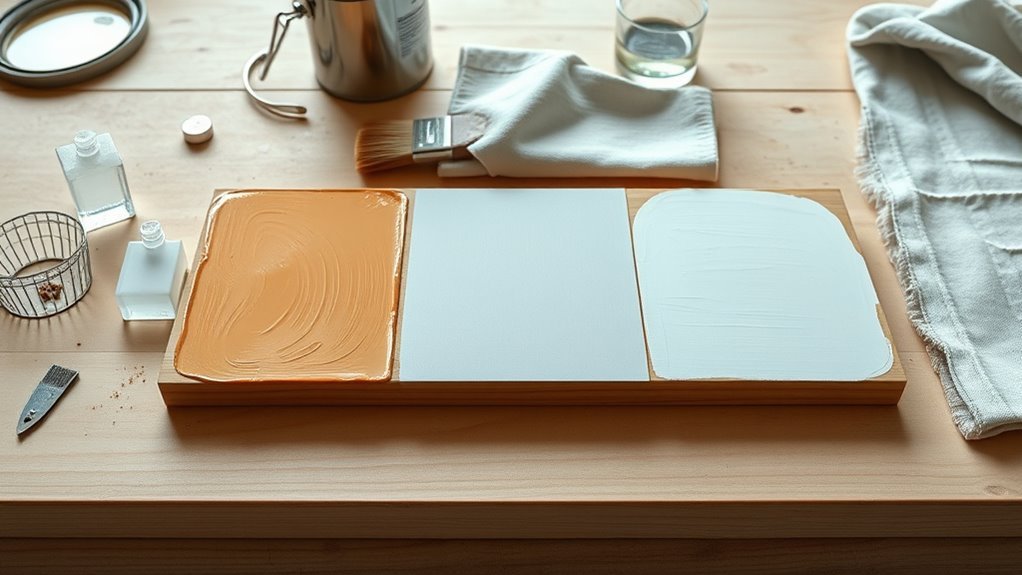
Although oil-based paint generally feels dry to the touch within 6 to 8 hours, it can take 24 to 48 hours to be dry enough for light handling and up to 7 days (or longer in cool, humid conditions) to fully cure.
You’ll notice variations based on temperature, humidity, and coat thickness; thin coats dry faster. If you add oil additives or drying accelerators, follow manufacturer directions—these speed skin formation but can affect long-term hardness.
Plan for full cure before heavy use or sanding. Test a small area if you’re unsure, and allow extra time in cool or damp environments.
Drying vs. Curing: What’s the Difference for Oil Paint?
Because “dry” and “cure” describe different stages, it’s important you know which one you’re dealing with when working with oil paint.
Drying means the surface feels set as solvents evaporate. Curing is a slower chemical hardening as Oil paint chemistry forms cross-links.
Drying sets the surface as solvents evaporate; curing is the slower chemical hardening as oil paints form cross-links.
You’ll want to avoid premature handling to prevent impressions and Color fading from UV exposure during cure.
- Surface dry: touch-safe but soft underneath.
- Through cure: full chemical hardening over weeks or months.
- Protection: varnish after cure to reduce Color fading and preserve finish.
Typical Tack-Free Times for Oil-Based Paint
When you apply oil-based paint, the surface usually becomes tack-free within 6 to 24 hours under normal indoor conditions. You’ll notice tack-free timing varies with temperature, humidity, ventilation, and paint formulation.
Lower temps and high humidity slow skin formation, so touch gently to test rather than assuming dryness. Thin films and well-ventilated rooms reach tack-free end faster.
Pay attention to color contrast on adjacent panels—darker hues can feel tackier longer. Also watch brush strokes: if strokes smooth out without lifting, the surface is likely tack-free.
Avoid heavy handling until tack-freeness is confirmed to prevent marks.
Typical Recoat Times for Oil-Based Paint
If you want clean, durable results, wait until the oil-based paint has fully cured to its recommended recoat time—typically between 16 and 48 hours for most formulations under normal indoor conditions. You’ll check manufacturer instructions, surface temperature, and humidity.
Recoating too soon traps solvents; too late can affect adhesion if dust builds.
- Inspect tackiness and color uniformity to assess oil pigmentation and guarantee even layering.
- Verify solvent compatibility between coats to avoid wrinkling or poor bonding.
- Lightly sand glossy areas and remove dust before applying the next coat for best adhesion.
Typical Full Cure Times for Oil-Based Paint
Remember that drying and curing aren’t the same: paint may feel dry to the touch long before it reaches full strength.
You’ll typically see surface dry times in hours but full cure can take days to weeks depending on temperature, humidity, and coat thickness.
Keep conditions warm and dry and plan for at least 7–30 days for most oil-based finishes to reach full cure.
Typical Drying vs. Curing
Although oil-based paint can feel dry to the touch within 6 to 8 hours, its full cure usually takes much longer—typically 7 to 30 days depending on temperature, humidity, ventilation, and coat thickness.
You’ll notice drying is surface-level as solvents evaporate; curing is a chemical hardening driven by oil pigmentation and drying pigments reacting with oxygen. Treat tacky but firm surfaces as still curing.
- Surface drying: safe to handle gently after hours.
- Through cure: hardness develops over days to weeks.
- Final durability: wait full cure before heavy use or topcoats.
Timeframes By Conditions
When you’re planning a project, expect full cure times for oil‑based paints to vary widely based on temperature, humidity, ventilation, and coat thickness—typical ranges run from about 7 days in ideal warm, dry, well‑ventilated conditions to 30 days (or more) in cool, damp, poorly ventilated environments.
You’ll see faster curing with thin coats, good airflow, temperatures between 65–80°F, and low humidity. Thicker layers, cold or humid rooms, and limited ventilation prolong cure.
Using modern oil paint formulated with faster drying agents helps speed surface and full cure, but you should still allow manufacturer‑recommended time before heavy use or refinishing.
How Temperature Affects Oil Paint Drying
Temperature has a big say in how quickly oil paint dries, so you’ll want to monitor it when planning a project.
In cold weather, the drying process slows dramatically and can leave the film tacky for days or even weeks.
Higher temperatures speed oxidation and film formation, but extreme heat can cause skinning or cracking if the paint dries too fast.
Temperature And Drying Time
Because oil paint cures through chemical reactions, the air temperature you work in has a direct effect on how quickly the paint skins over and hardens. Warmer conditions speed up the oxidative drying process while cooler ones slow it down.
You’ll notice oil consistency changes with heat: thinner oils flow more and dry faster, thicker mediums retain tackiness. Color impact matters too—darker pigments can absorb heat and dry slightly quicker than pale ones.
Manage temperature to control working time, tack-free period, and recoat intervals.
- Aim for stable, moderate warmth.
- Avoid rapid temperature swings.
- Monitor humidity alongside temperature.
Cold Weather Effects
If your studio dips into cold, expect oil paints to slow dramatically and stay tacky much longer than in warmth. You’ll notice slower oxidation and polymerization, so layers take days to weeks to cure.
Adjust color mixing by using leaner ratios and medium with faster-drying alkyds; avoid adding too much oil that prolongs tackiness. Work with thinner layers and allow extended drying between passes.
Cold stiffens bristles and affects brush techniques—use softer brushes, warm them briefly, and keep strokes fluid to avoid dragging.
Store prepared palettes and works-in-progress in slightly warmer, stable conditions to reduce unpredictable drying.
Heat And Film Formation
When you raise the heat in your studio, oil paint speeds through oxidation and film formation, so layers set firmer and sooner than in cool conditions. You’ll notice faster skinning on palettes and shorter open time, so adjust color mixing and wet-on-wet brush techniques to avoid muddying.
Higher temperatures encourage thinner, harder films but can trap solvents, risking wrinkling.
- Increase airflow slightly to aid solvent release and prevent skinning.
- Thin sparingly; heat accelerates curing—use slower oils if needed.
- Test small studies to adapt color mixing, glazing, and brush techniques to warmer drying rates.
How Humidity Slows Oil Paint Drying
Though it might seem subtle, humidity plays a major role in how oil paint cures: moisture in the air slows the oxidation and polymerization processes that harden the paint, so you’ll notice longer tacky times and delayed surface skinning in humid conditions.
You’ll see that high humidity levels reduce solvent evaporation and interfere with molecular crosslinking, so layers stay soft longer. Substrates absorb more moisture, altering paint absorption and bonding; that can cause longer overall cure times and potential adhesion problems.
You should plan longer drying schedules, avoid heavy builds in damp weather, and store painted items where humidity is controlled.
How Air Circulation Speeds Oil Paint Drying
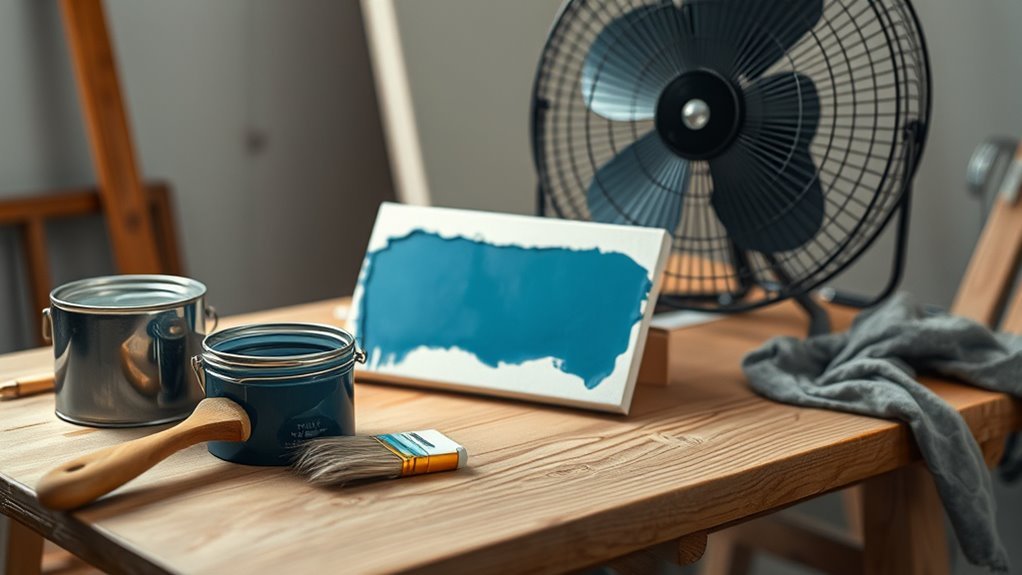
Because moving air strips away solvent-laden fumes and replaces humid boundary layers at the paint surface, good circulation noticeably speeds the initial tack-free stage and helps layers harden more uniformly. You can control airflow with fans, open windows, or exhaust systems to reduce drying time and lower trapped vapors.
Consider environmental impact when ventilating—filtering or routing fumes outdoors reduces indoor exposure. Traditional painters used natural drafts; historical techniques favored wind and sun.
Balance airflow to avoid dust settling on tacky paint. Practical steps you can take include:
- Place low-speed fans for gentle cross-ventilation.
- Use exhaust to remove solvents.
- Monitor airflow and dust.
How Coat Thickness Changes Drying and Curing Times
Thicker paint films slow both surface drying and full curing because solvent has farther to travel and oxygen-driven oxidation happens more slowly.
You’ll notice solvent evaporation rates drop as thickness rises, which can trap solvents and extend tackiness.
When you apply multiple coats, each layer interacts with the one beneath—thin coats dry faster and promote stronger curing, while heavy builds can cause wrinkling or incomplete curing.
Film Thickness Effects
When you lay on a heavier coat of oil-based paint, the drying and curing timeline shifts noticeably. You’ll notice slower surface skinning and much longer through-dry times as film thickness increases.
Color mixing can demand thinner layers to maintain hue consistency, and Budget considerations might push you to apply thicker coats to save labor but cost more time. Thicker films also trap solvents and slow oxidation.
Control layer thickness for predictable results:
- Thin coats speed surface dry and reduce tack.
- Moderate coats balance coverage and curing.
- Very thick coats risk wrinkling, extended cure, and defects.
Solvent Evaporation Rate
Although solvents start evaporating as soon as you apply a coat, the rate slows markedly as film thickness increases. That change directly affects both surface skin formation and through-dry time.
You’ll notice thicker films trap solvents longer, so the surface may feel dry while underlying layers remain soft, delaying full cure. That retained solvent can soften binder, increase risk of color fading under heat or UV, and alter paint sheen until solvents escape.
To manage drying, control film thickness, guarantee ventilation, and allow extended drying times for heavy coats so adhesion and long-term appearance aren’t compromised.
Multiple Coat Interactions
If you apply multiple coats too quickly, trapped solvents and increased film thickness will slow both surface drying and through-cure. So you’ll often get a dry-to-touch surface while lower layers stay soft. You should wait the recommended recoat times; thicker films cure slower, can yellow or cause color fading over time, and may show uneven sheen consistency. Poorly timed coats raise blister and adhesion risk. Monitor tack and solvent smell before recoating.
- Thin, even coats reduce drying time and maintain sheen consistency.
- Allow full solvent release to avoid color fading and softness.
- Sand lightly between coats for adhesion and uniform cure.
Which Paint Formulations Dry Fastest: Oil, Alkyd, Enamel?
Curious which paint dries fastest? You’ll find alkyds often lead for quicker surface dry, helping with color blending and texture enhancement as you work. Oils take longest, curing slowly; enamels vary by formula and solvent.
| Type | Typical Surface Dry | Notes |
|---|---|---|
| Oil | 24–72+ hours | Deep cure slow |
| Alkyd | 6–24 hours | Faster, good for layers |
| Enamel | 8–48 hours | Depends on solvent |
You’ll choose alkyd when speed matters, oil when open blending or durability matters, and enamel when you need a tough, sometimes faster finish.
Comparing Traditional Oils and Alkyd Enamels
When you’re deciding between traditional oil paints and alkyd enamels, weigh drying behavior and working properties. You’ll notice traditional oils give longer open time for blending, richer gloss that can shift with age, and a slow cure that can resist quick abrasion.
Alkyd enamels dry faster, level nicely, and suit quicker recoats, though they can yellow slightly and show less depth over years. Consider color fading and sheen variation when choosing for longevity versus speed.
- Traditional oils: longer open time, deeper surface.
- Alkyd enamels: faster dry, quicker recoat.
- Maintenance: monitor sheen variation and color fading.
How Pigment and Color Affect Oil Paint Dry Time
Although paint films all rely on oil oxidation, the pigments and their colors change how fast that chemistry happens, so you should expect some hues to skin over or dry faster than others.
You’ll notice earth pigments with high pigment stability, like ochres and umbers, often dry predictably because they don’t interfere with oil crosslinking.
Bright, highly intense pigments—especially some cadmiums and modern organic reds—can slow drying or create tacky skins due to additives or molecular structures.
When you choose colors, consider both pigment stability and color intensity: they’ll influence drying rate, layer compatibility, and final film hardness.
How Surface Type Affects Oil Paint Drying Speed
Pigments and color choices change how quickly your oil paint skin forms, but the surface you paint on often has an even bigger effect on drying speed. You’ll notice porous wood soaks oil, speeding surface dry but risking uneven finish, while slick metal delays drying because oil pools.
Surface texture dictates how paint spreads and breathes, and primer adhesion matters for consistent cure and durability. Consider these guidelines:
- Porous (raw wood/brick): faster initial dry, blotchy absorption.
- Smooth (metal/glazed): slower dry, pooling risk without tooth.
- Textured (stucco/canvas): balanced drying if primer adhesion is good.
How Existing Stains or Primers Change Drying
If you’ve got a stained surface or an old primer down, expect it to change how your oil paint dries. Stains can seal or repel oil, slowing tack time or causing uneven sheen; old primers might absorb oil faster, speeding surface cure while trapping solvents.
You’ll assess adhesion and test small areas before committing. For color matching, remember underlying tones shift final hue as layers thin—adjust mix or varnish timing.
Use careful brush techniques to avoid disturbing weak layers: light, even strokes and minimal reworking. Allow extended drying between coats when substrate history is uncertain.
Best Primers to Speed Oil Paint Adhesion and Drying
To speed oil paint adhesion and drying, pick an oil-based primer that offers strong stain-blocking and uniform sealing so your topcoat bonds quickly.
You’ll notice primers formulated for fast-adhesion cut tack time and reduce the need for multiple coats. Using the right primer lets you move to finishing steps sooner and improves long-term durability.
Oil-Based Primer Benefits
When you prime with a quality oil-based sealer, you’ll speed adhesion and create a uniform surface that helps oil paints cure more evenly and predictably.
You’ll notice improved oil color clarity and reduced blotching, since primer adhesion prevents uneven absorption. The sealer also blocks tannins and stains, so your finish stays true.
Choose a fast-drying oil primer for reduced wait times, or a high-build formula to fill minor imperfections without extra sanding.
Proper application guarantees consistent drying across surfaces and better long-term durability.
- Enhance oil color consistency
- Improve primer adhesion reliability
- Reduce staining and uneven cure
Fast-Adhesion Bonding
Because a primer’s initial grip determines how quickly your oil paint can set and stay put, choosing a fast-adhesion sealer is essential for speeding both adhesion and drying. You’ll pick primers labeled fast-bond or adhesion-promoting to lock paint to slick or porous substrates.
Apply thin, even coats so the primer cures uniformly, preserving oil sheen and preventing patchy gloss. Match primer chemistry to your topcoat to avoid incompatibility that ruins paint texture.
Sand lightly between primer and paint for mechanical tooth when needed. With the right product and technique, your oil paint adheres sooner and reaches handling dry faster.
How Solvent Choice Changes Oil Paint Working Time
Although the oil itself dictates much of the drying chemistry, the solvent you pick will noticeably change how long your paint stays workable and how it levels on the surface.
You’ll find thinner solvents speed open time and promote a smoother oil sheen, while heavier ones slow flow and preserve brush marks, altering paint texture.
Match solvent volatility to your technique and ambient conditions so you control leveling and blending without overworking.
- Fast solvents: quick drying, less leveling.
- Slow solvents: extended open time, smoother finish.
- Blends: balance working time and sheen.
Additives and Dryers (Siccatives): What They Do
If you want paint to dry faster, additives and dryers (siccatives) are the tools that make it happen: they speed the chemical oxidation and cross-linking of oils so films harden sooner and more evenly. You’ll add small amounts to accelerate curing, targeting slow spots in thick layers or cold conditions.
Choose types compatible with your oil and follow manufacturer dosages to avoid skinning or discoloration. They can alter drying across blended colors, so test color blending effects first.
Proper surface preparation remains essential: a clean, absorbent substrate ensures siccatives work predictably and prevents adhesion or blistering issues.
How to Thin Oil Paint for Faster Drying
When you thin oil paint, you reduce film thickness and improve solvent evaporation and oxygen access, so layers dry faster and more evenly; you’ll control flow and avoid skinning. Use small amounts of solvent or medium, testing each pigment because oil pigments vary in absorption and response. Aim for leaner first layers, then build.
- Use mineral spirits or turpentine sparingly to thin for faster solvent release.
- Mix a moderate oil-and-solvent medium (linseed or walnut drying oils diluted) to balance flexibility and cure.
- Test on scrap to confirm drying and appearance before committing.
Preparing Surfaces for Even Oil Paint Drying
To get even, reliable drying, start by making sure your support and ground are clean, stable, and appropriately absorbent so the paint can form a consistent film.
Ensure supports and grounds are clean, stable, and properly absorbent so paint can form a consistent film.
Sand smooth or lightly tooth textured grounds to suit your desired finish; too slick stops adhesion, too porous soaks oils unevenly.
Remove dust, grease, and old loose layers; use pH-neutral cleaners and allow full drying.
Prime with a compatible ground to balance absorbency and support color blending without bleeding.
Patch cracks and guarantee supports won’t flex.
Controlled humidity and temperature, plus consistent surface prep, reduce tackiness and promote uniform curing.
Apply Thin, Even Coats Every Time
Although thin layers may feel counterintuitive, you’ll get faster, more even drying and fewer surface defects by applying several translucent coats rather than one thick one. You’ll work wet-on-dry to control Color blending, letting each coat cure before adding depth.
Thin coats reduce sagging, drying rings, and long tack times, so you’ll finish faster overall. Use light, even strokes and wipe excess from edges to avoid laps. Thin layers also aid Texture enhancement without building ridges.
- Thin, uniform strokes for consistent coverage
- Wait between coats to control gloss and depth
- Sand lightly for smoother transitions
Brush, Roller, or Spray: Drying Differences
When you brush oil-based paint, expect longer tack times because the thicker strokes hold more solvent.
Using a roller can speed up surface drying on flat areas but may leave a slightly different texture that affects recoat timing.
Spraying dries fastest on the surface due to fine atomization, though full cure still follows the same overall schedule.
Brush Application Timing
If you’re brushing oil-based paint, expect thicker, slower-drying coats than with a roller or spray, because the brush lays down more material and can work it into the surface. You’ll control color blending directly and use specific brush techniques to minimize lap marks and puddling. Work in manageable sections, keep a wet edge, and avoid overworking the paint.
- Time between coats: wait 16–24 hours for tack-free, longer if humid.
- Thin coats: thin slightly to improve flow without losing opacity.
- Cleanup pacing: allow full cure before sanding or recoating for best adhesion.
Roller Surface Impact
Moving from brush technique to rolling, you’ll notice rollers lay down thinner, more even films that usually dry faster than brushed coats because they deposit less paint and level out surface texture.
When you roll, surface porosity and nap type influence drying: short naps suit smooth panels, long naps for rougher surfaces, but both affect oil sheen perception.
Rollers tend to mask pigment variation better than brushes, blending subtle color shifts and reducing streaks.
You’ll still control coat thickness and ventilation to speed curing.
Avoid overloading the roller; multiple thin passes outperform one heavy pass for consistent drying and finish.
Spray Drying Speed
Although spraying can coat surfaces faster than brushing or rolling, it changes drying behavior because it lays ultra-thin, finely atomized films that flash off solvents quickly but still rely on the same oil cure chemistry. You’ll notice faster surface tack-free time, but full cure still depends on oxidation and can take days to weeks.
Control humidity, temperature, and film thickness to manage oil sheen and avoid orange peel. Use proper drying techniques: good ventilation, moderate heat, and light passes to prevent too-thin films that skimp on durability.
- Thin films = quicker solvent evaporation
- Ventilation speeds surface drying
- Avoid over-thinning paint
Control Room Climate for Faster Oil Paint Drying
When you control the room’s temperature, humidity, and airflow, oil-based paint dries more predictably and faster. You’ll keep temperature around 65–75°F and relative humidity below 60% to speed drying without causing surface defects.
Monitor conditions with a hygrometer and thermostat, and adjust HVAC or dehumidifiers as needed.
Minimize sources of environmental toxins like tobacco smoke or strong solvents that can interfere with curing and introduce odors.
Keep paint storage sealed and at stable temperature to preserve binders and solvents.
Use Fans and Ventilation Safely With Oil Paint
Because air movement helps solvents evaporate and brings fresh oxygen to the surface, you should use fans and ventilation to speed oil paint drying—but do it safely to avoid defects and health risks.
Position fans to move fumes out, not blast the wet film, and open windows to provide steady airflow. Use exhaust fans if available and run them with care to limit dust settling.
- Direct airflow gently to prevent tackiness and uneven curing.
- Wear respirators and keep doors closed to reduce environmental pollution.
- Collect leftover solvent and cans for proper paint recycling; never pour down drains.
Use Heat to Speed Drying: Safely
Want faster drying without wrecking the finish? You can use gentle, controlled heat to speed cure times, but you’ll need to be careful. Keep temperatures moderate—around 70–85°F (21–29°C)—and raise them gradually.
Use indirect sources: space heaters or heated rooms with good ventilation, not direct heat like hair dryers close to wet paint. Monitor humidity; lower humidity helps, but don’t let paint skin over too quickly.
Test a small area to check oil sheen and paint gloss changes before treating the whole project. Stop heating if you see blistering, uneven sheen, or odor intensifying—cool down and ventilate.
When and Why to Slow Down Oil Paint Drying
Heating can speed curing, but you may actually want to slow oil paint drying in several situations. You’ll control tack, blending time, and finish by adjusting environment and materials.
Slower drying helps when you’re working wet-on-wet or when delicate glazing requires longer open time. Use proper oil mixing—add slow-drying mediums or reduce siccatives—and choose pigments with longer drying rates to match your technique.
Avoid high heat or strong dryers that force uneven curing. Monitor humidity and temperature; a slightly cooler, stable room preserves workable paint without risking skinning.
Plan layers so slower drying supports rather than hinders your process.
- Extend blending time
- Better glazing control
- Prevent surface skinning
How to Test If Oil Paint Is Tack-Free
To check if your oil paint is tack-free, start with a light surface touch test—rest your fingertip gently to see if it feels dry.
If it seems dry, press a fingernail lightly to confirm the paint resists indentation without leaving a mark.
Finish with a quick tack cloth swipe to guarantee no sticky residue lifts off.
Surface Touch Test
Curious whether your oil paint is tack-free? You can perform a gentle surface touch test to check color blending and texture consistency without risking damage. Dab lightly with a clean cotton swab or soft cloth; lift—don’t rub—to sense tack.
- Choose a hidden spot near an edge to avoid visible marks.
- Lightly touch with a dry fingertip covered by tissue; wait a few seconds to feel any stickiness.
- If no residue or indentation appears, the surface is likely tack-free; if it feels sticky, allow more drying time and retest.
Record results and environmental conditions for future reference.
Fingernail Pressure Check
While you’re checking tack, try the fingernail pressure check as a quick way to gauge cure depth. Gently press a clean fingernail at the paint’s surface—don’t scratch—using light hand pressure. If a slight indentation or smudge appears, it’s still tacky. If the surface resists and the nail polish on your nail stays clean, it’s tack-free at that depth. Repeat in inconspicuous spots and along edges. Avoid pressing hard to prevent damage. Use this alongside other tests to confirm cure without tools.
| Spot | Result | Action |
|---|---|---|
| Center | No mark | Move on |
| Edge | Smudge | Wait |
| Corner | Slight dent | Monitor |
| High spot | No change | Check again |
| Low spot | Mark | Reassess |
Tack Cloth Swipe
If your paint feels dry to the touch but you’re not sure it’s fully tack-free, try a tack cloth swipe: gently drag a clean, slightly damp tack cloth across an inconspicuous area using light pressure to see if any residue or lint lifts off—if the cloth picks up sticky particles or leaves smudges, the paint still needs more time to cure.
You’ll notice whether brush strokes flatten or attract the cloth. Consider how color mixing affected drying speed in that area; thicker pigment layers stay tackier. Repeat tests until no residue appears.
- Test edge areas.
- Inspect brush strokes.
- Note color mixing effects.
How to Test If Oil Paint Is Ready for Recoat
Before you apply another coat, make sure the surface feels dry to the touch, shows no tackiness, and has cured enough to accept paint without lifting the underlying layer.
Test a small corner: press lightly with a clean fingertip, then a piece of low-tack tape; neither should pull paint.
Observe finish uniformity—uneven sheen might mean solvent still evaporating.
Use a clean brush and apply a thin trial stroke with your usual brush techniques to see if the new layer blends without dragging.
Consider how previous color mixing affected film thickness; heavier pigments often slow drying.
If tests pass, proceed with confidence.
How to Know When Oil Paint Is Fully Cured
When you want to be sure your oil paint is fully cured, look for a hard, even surface that no longer smells strongly of solvents and resists slight pressure without imprinting. Cured oil paint will feel dry through, not just tack-free on the surface.
Check color mixing stability—hues shouldn’t shift or look clouded. Inspect texture techniques for uniform matting and no soft spots.
Use gentle fingertip pressure, a cotton swab to detect stickiness, and time—cures can take weeks to months depending on pigment and film thickness.
- Visual inspection
- Touch tests
- Allow sufficient time
Sanding Between Coats Without Damaging the Finish
Although you want a smooth, even surface, sanding between oil paint coats calls for a light, controlled touch to avoid cutting through the finish. Work only when the coat feels dry to the touch and tack-free.
Use fine grit (320–400) sandpaper or a fine sanding pad, wrap it around a block, and sand with gentle, even strokes. Wipe dust with a soft tack cloth before the next coat so you don’t trap particles.
Sanding refines brush marks, aids subtle color mixing across layers, and supports texture enhancement without damaging underlying paint. Test on an inconspicuous area first.
Common Mistakes That Extend Oil Paint Drying Time
If you rush coats, use too much oil, or apply paint over cold, humid surfaces, you’ll dramatically slow drying and invite problems like tackiness, wrinkling, or uneven curing.
Rushing coats, heavy oil, or painting on cold, humid surfaces slows drying and invites tackiness or wrinkling.
You should control film thickness, wait proper flash times, and avoid solvent-heavy mixes.
Poor ventilation and low temperatures trap solvents; too much oil or retarder keeps the surface soft.
Overworking wet layers for color blending or aggressive texture techniques buries drying surfaces and extends cure.
Also don’t paint over contaminated or glossy surfaces without proper prep.
- Excess film thickness
- Wrong additives or overworking
- Poor surface prep and environment
When to Install Hardware on a Painted Surface
You’ll want to follow dry time guidelines on the paint can and wait longer in cool or humid conditions before mounting hardware.
Test paint hardness by pressing a fingernail or a small tool lightly to make sure it doesn’t dent or stick.
Install heavy or driven fasteners only after the paint has fully cured, while light touch-ups or screws into pre-drilled holes can often happen once the surface feels firm.
Dry Time Guidelines
When installing hardware on freshly painted surfaces, wait until the finish has enough cure to resist scratches, denting, or adhesive solvents—typically longer than the paint feels dry to the touch. You’ll monitor oil bloom and pigment settling; avoid disturbing the film while those processes complete. Temperature, humidity, and paint thickness affect cure, so plan longer than label times.
- Wait at least 24–72 hours for handling; 7–30 days for full cure depending on conditions.
- Use low-tack tape or soft pads for temporary placement to prevent marks.
- Tighten screws gradually to avoid compressing the surface.
Testing Paint Hardness
After waiting the recommended cure time, you’ll want to test the paint’s hardness before mounting hardware so you don’t dent or mar the finish. Check small spots to confirm oil composition and pigment properties haven’t left a soft layer. Use gentle pressure, a fingernail, and a soft cloth rub; note resistance and tack.
| Test | Method | Result |
|---|---|---|
| Fingernail | Light scratch | No mark = ready |
| Cloth rub | Friction | No tack = cured |
| Spot cure | Time check | Soft = wait |
If tests pass, proceed carefully; if not, extend cure and retest.
Tool And Hardware Timing
Once the paint feels fully cured to the touch, wait before mounting hardware so you don’t compress or mark the finish. You’ll avoid dents and smudges by confirming dryness across the surface, considering paint color variations and different brush types that affect dry time.
Test small, inconspicuous spots and use gentle pressure to assess hardness. When ready, install carefully with padding under tools and slow, steady screw turns to prevent chatter.
Follow this checklist:
- Verify uniform cure across light and dark paint color areas.
- Use soft-faced tools when tightening near edges.
- Pre-drill and hand-start screws to protect the finish.
When to Move Painted Furniture After Oil Paint
How long should you wait before moving furniture painted with oil-based paint? You’ll usually wait 24–48 hours before light handling, but full cure can take weeks.
Use eco friendly pigments and learn from historical paint techniques: layered thin coats dry faster and bond better.
Keep the piece in a dust-free, ventilated area and avoid stacking or dragging to prevent tack marks.
Test a hidden spot for dryness by pressing with a fingernail; if it resists indentation and no tack remains, it’s safer to move.
For heavy handling or upholstery attachment, wait at least 7–14 days to reduce damage risk.
How Long Floors and Trim Need Before Traffic
You’ll usually feel the paint is dry-to-touch on floors and trim within 6–8 hours, but that doesn’t mean it’s ready for regular use.
You can allow light foot traffic or careful handling after 24–48 hours, using soft-soled shoes or pads to avoid marks.
Wait the full cure—often 7–30 days depending on product and conditions—before heavy use or moving furniture back.
Dry-To-Touch Time
Before you walk on newly painted floors or touch fresh trim, know that “dry to the touch” means the surface won’t feel tacky but the paint isn’t fully cured—so light foot traffic and gentle handling are usually safe after this stage.
You should still be cautious: oil sheen may look set while solvents remain beneath, and pigment stability continues improving as solvents evaporate. Typical oil-based paints reach this stage in 6–24 hours depending on temp and ventilation.
Monitor finish and avoid heavy use. Consider these quick checks:
- Press gently with a clean fingertip.
- Smell for strong solvent odor.
- Check for transfer on a cloth.
Light Foot Traffic
When you plan light foot traffic on newly painted floors or trim, wait until the paint is dry to the touch and has had additional cure time—typically 24–48 hours for oil-based paints—so light, careful use won’t mar the finish.
You should glide in with soft-soled shoes and avoid dragging furniture; this minimizes pressure while oil absorption continues and pigment stability improves near the surface.
Keep humidity moderate and temperatures steady to reduce tackiness.
Test a discreet spot before broader use. If you see scuffing or tackiness, extend the waiting period; patience here prevents premature damage and preserves sheen.
Full Cure Timing
Although the surface may feel dry within a day or two, oil-based paints need much longer to reach full cure—typically 7 to 30 days for trim and up to 30 days (sometimes longer in cool or humid conditions) for floors—before you subject them to regular or heavy traffic.
You should wait for maximum paint adhesion and stable oil sheen; rushing causes scuffs, indentations, or finish failure.
Monitor conditions: temperature, humidity, and ventilation affect curing. Follow manufacturer cure times.
- Light use: 7–14 days for trim with low traffic.
- Normal use: 14–21 days for most floors.
- Heavy use: 30+ days or longer.
How Outdoor Conditions Change Oil Paint Drying
Because oil paint cures through oxidation rather than evaporation, the outdoor environment plays a huge role in how fast and evenly your finish dries. You’ll notice temperature, humidity, and airflow change drying rates: warm, moderately dry air speeds oxidation; high humidity slows it and can cause tacky spots.
Direct sunlight heats the film, altering color mixing perception and potentially accelerating surface skin formation while leaving underlying layers softer. Wind improves solvent dispersal but can create uneven texture enhancement or dust issues.
Plan application timing for stable conditions, thin coats, and consistent exposure to prevent blotchy cures and uneven sheen.
Protect Fresh Oil Paint From Dust and Debris
Outdoors can speed or slow oil paint drying, but they also raise the chance that dust, pollen, and airborne debris will settle into a soft film, so you’ll want to protect fresh work right after you finish a coat.
Cover with breathable sheeting—latex or paper—so moisture escapes without trapping particles; avoid cling plastic that mars oil sheen.
Work in a sheltered area or erect a temporary tent to reduce airborne grit.
Keep pets and tools away until the surface skins.
Lightly misting is risky; instead, monitor temperature and humidity to preserve paint texture.
- Use breathable covers
- Create a shelter
- Restrict access
Storing Leftover Oil Paint and Safe Disposal
Wondering how to keep leftover oil paint usable and dispose of what you don’t need safely? Store sealed cans upright in a cool, dry place away from sunlight to protect oil sheen and prevent skinning.
Label containers with date and color, and transfer small amounts into airtight jars to reduce air exposure that harms paint adhesion.
For disposal, let unusable paint harden by mixing with commercial hardeners or kitty litter, then dispose per local hazardous-waste rules—don’t pour down drains.
Recycle metal or plastic containers after drying residue. Check local guidelines for collection events and approved drop-off sites.
How to Clean Brushes and Tools After Oil Painting
After you finish a session, clean your brushes and tools promptly to prevent oil and pigment from hardening and shortening their life. Use a rag to wipe excess paint, then solvent (turpentine or mineral spirits) to remove remaining oil, followed by mild soap and warm water to restore bristles.
Rinse thoroughly and reshape brushes before drying flat or bristle-down.
- Use solvents for initial cleaning, then soap to remove residue and protect brush techniques.
- For palette knives and metal tools, scrape, solvent-wipe, then dry to avoid rust.
- Store cleaned tools dry; label containers used for color mixing.
VOCs, Ventilation, and Drying Trade-Offs
Because oil-based paints release volatile organic compounds as they cure, you’ll need to balance drying speed with air quality by managing ventilation and product choice. Open windows, run fans, and use an exhaust to move fumes away so faster-drying additives don’t compromise indoor air.
Choose formulations with eco-friendly solvents or low-VOC labels when possible; they’ll slow drying slightly but protect health. Remember that faster cure agents can affect colorfast pigmentation and long-term finish, so test swatches under your ventilation conditions.
Wear a respirator for confined spaces and allow adequate airing time before occupying the room or applying additional coats.
How to Read Manufacturer Drying and Recoat Labels
When you check a paint can, focus on two main numbers—”dry to touch” and “recoat time”—and the conditions they’re based on, since those times assume a specific temperature and humidity. Read the fine print for surface type and film thickness. You’ll interpret labels to plan Color blending or Texture enhancement without guessing.
Check the can for “dry to touch” and “recoat” times—note temp, humidity, surface, and film thickness.
- Note temperature/humidity baseline — times change with colder or damper air.
- Check surface instructions — bare wood, metal, or previously painted surfaces differ.
- Observe film thickness and sanding recommendations — thicker coats need longer curing before sanding or recoat.
Follow label limits and adjust for your jobsite conditions.
Compare Brands by Drying Performance
Now that you can read drying and recoat labels, compare brands by how their stated dry times hold up under real conditions. You’ll test samples on similar substrates, note tack-free and recoat moments, and record temperature and humidity.
Watch how oil sheen changes as it cures; some brands keep a glossier look longer, affecting perceived dryness. Don’t rely solely on marketing—paint branding can suggest performance but won’t replace your own timed trials.
Track multiple batches, then pick the brand whose dry times match your schedule and desired sheen. That practical comparison beats trusting label claims alone.
Plan a Painting Schedule Around Oil Paint Timings
If your project has deadlines or multiple coats, map out a schedule that matches each oil paint’s tack-free and recoat windows to realistic workdays and ambient conditions. You’ll plan around humidity, temperature, and manufacturer times, leaving buffer days for slower cures.
Factor in color mixing sessions and drying tests before committing large areas. Practice your brush technique on scraps so coats go on evenly and reduce the need for sanding or touchups.
- Group tasks: prep, first coat, light sand, final coat.
- Reserve days for color mixing trials and test panels.
- Allow extra cure time for cool, humid weather.
Estimate Total Project Time With Oil-Based Paint
Because oil paints take longer to dry and often need more than one coat, you should build your project timeline around realistic dry, recoat, and cure windows rather than ideal lab times.
Start by listing surfaces, square footage, and number of coats; factor in stall-dry periods for thick oil blend layers and variations from pigment opacity—darker, denser pigments can extend tack time.
Allow 24–48 hours between thin coats, 48–72 for heavier layers, and several days to weeks for full cure depending on ventilation and temperature.
Add contingency for sanding, touch-ups, and equipment cleanup to avoid schedule overruns.
Troubleshoot Slow-Drying Oil Paint Problems
When oil paint keeps feeling tacky long after you expect it to dry, start by checking the basics: ventilation, temperature, humidity, and layer thickness. You should inspect the workspace for poor airflow or high humidity.
Remove thick glazes, and confirm coats aren’t overly heavy from paint mixing mistakes. Check for contamination like an oil spill or solvent residue that can inhibit curing. Verify you used the correct medium and not too much retarder.
If issues persist, test a small scrap panel with adjusted conditions before treating the whole piece.
- Improve airflow and lower humidity
- Thin overly thick layers properly
- Clean contaminants carefully
Fix Tacky or Uncured Oil Paint
Although tacky oil paint can feel discouraging, you can usually fix it without scrapping the work. First, improve ventilation and raise temperature slightly to speed curing; avoid direct heat.
Gently blot surface with a soft cloth if tackiness comes from excess solvent or medium. If a sticky skin persists, apply a thin coat of a compatible alkyd varnish or a fast-drying glazing medium to lock oil sheen and encourage surface crosslinking, testing a small area first.
Maintain moderate humidity and avoid heavy handling while layers harden. These steps help preserve color retention and restore workable, non-tacky paint.
Safely Remove Poorly Cured Oil Paint
If you need to remove poorly cured oil paint, start by evaluating the surface and surrounding materials so you choose a safe method that won’t damage the substrate. You’ll test a small area, note color blending risks, and consider texture enhancement goals before proceeding.
Work in a ventilated area, wear gloves and a mask, and avoid open flames.
- Use gentle solvents (mineral spirits) on a rag, blotting to lift uncured layers.
- For thicker tacky spots, carefully scrape with a plastic scraper, then re-clean.
- Sand lightly only after full solvent removal, then prime before repainting.
Choose Oil-Based or Water-Based Under Time Limits
If you need paint to set quickly, compare drying times: oil-based can take 6–8 hours to become touch-dry and days to fully cure.
Water-based often dries in 1–2 hours.
Consider your work window—how much time you have for recoats, sanding, and handling before parts must be used.
Choose the formula that fits your schedule to avoid rushed or failed finishes.
Drying Time Comparison
When you’re working against a deadline, drying time often decides whether you pick oil-based or water-based paint. You’ll weigh speed against finish: oil-based takes longer to dry but gives superior color blending and texture enhancement.
Water-based dries fast, so you can recoat quickly and finish sooner. Consider environmental conditions and project size, but focus on the required turnaround.
- Oil-based: slow drying, richer blending, smoother texture enhancement.
- Water-based: fast drying, quicker recoats, easier cleanup.
- Hybrid/alkyd waterborne: middle ground—better drying than traditional oil, improved finish.
Work Window Considerations
Speed and finish will determine which paint fits your schedule, so think about how long you can wait between coats and before the project must be ready for use.
If you need quick turnarounds, you’ll choose water-based for faster dry and recoat times; oil-based works if you can pause longer for a smoother, durable finish.
Account for color mixing time and any adjustments after test swatches. Plan surface prep so you won’t have to rush curing.
Temperature and ventilation affect the work window, so schedule realistic gaps between coats and allow full cure before heavy use to avoid tackiness or damage.
Cost vs. Durability: Trade-Offs Tied to Drying Time
Although slower to dry, oil-based paints often deliver tougher, longer-lasting finishes that can cut maintenance and repainting costs over time, so you’ll want to weigh that upfront expense against future savings.
You’ll consider durability versus time: harder films resist wear, meaning fewer touch-ups, but longer cure times can tie up surfaces and labor.
Also factor environmental impact and historical techniques that favored oil binders for longevity; modern formulations balance VOCs and performance.
Choose based on usage, budget, and schedule. Consider these trade-offs:
- Higher material cost vs. fewer repaints.
- Longer labor time vs. extended lifespan.
- Regulatory/VOC limits vs. durability.
Balance Finish Quality With Faster Drying Methods
You can speed up oil-based paint by thinning cautiously, but know thinner changes leveling and gloss. Keep temperature and airflow steady to shorten dry time without causing blushing or cracking.
Apply thinner, temperature control, and well-planned thin layers to preserve a smooth, durable finish.
Thinner Use And Effects
When trying to speed up drying without wrecking your finish, choose and use thinners carefully: they dilute oil-based paint to improve flow and thinning but can also lengthen or shorten drying time depending on type and amount. You’ll use an oil thinner to adjust viscosity, control leveling, and influence drying effects; small additions speed surface skinning, excessive thinning slows cure and weakens film. Follow manufacturer ratios and test on scrap.
- Use minimal oil thinner to maintain hardness and avoid prolonged tack.
- Choose fast-evaporating solvents for quicker surface dry.
- Test mixes to balance flow, gloss, and cure time.
Controlled Temperature Tips
If you want faster drying without sacrificing finish quality, keep temperature steady and moderate—typically between 65–75°F (18–24°C)—so the solvent evaporates evenly and the oil binder cures properly.
You should avoid rapid heating or cold swings that trap solvents or cause surface skinning. Use gentle, consistent heat sources and monitor humidity; lower humidity speeds curing but too low can cause cracking.
If you consider drying accelerators, test small areas first and watch for altered sheen or stronger oil odors.
Ventilate well to disperse fumes. Controlled temperature and ventilation let you balance cure time with a durable, even finish.
Layering Without Compromise
Although quicker drying can be tempting, you can layer oil-based paints without sacrificing finish quality by planning each coat for compatibility and cure times; you’ll control tack, avoid wrinkling, and preserve Color blending and Texture enhancement.
Use faster-drying alkyds as thin interlayers, but always test adhesion. Sand between coats lightly when fully cure-safe, and avoid solvent-heavy lifts. Keep humidity and temperature steady so solvents evaporate predictably. Follow manufacturer’s flash times, and don’t rush topcoats.
Consider small trial panels to confirm appearance and durability before full application.
- Choose compatible binders and thin layers
- Sand and clean between coats
- Test panels for final look
Record Drying Conditions for Future Projects
Because drying time can vary widely with temperature, humidity, ventilation, and paint thickness, you should record those conditions every time you work with oil-based paint so you can reproduce successful results or troubleshoot problems later. Note ambient temp, percent humidity, airflow, coat thickness, and drying intervals.
Log pigment and medium to track color consistency and note any shifts. Record brush type, stroke pattern, and brush techniques used, since they affect film and texture.
Photograph stages and label samples with date and location. Review entries before starting new projects to replicate favorable outcomes or adjust protocols to avoid prior issues.
Frequently Asked Questions
Can Oil Paint Cause Allergic Reactions During Drying?
Yes — you can develop allergic symptoms during the drying process of oil paint; you’ll notice respiratory irritation, skin rash, or headaches, so you should ventilate, use gloves and masks, and stop exposure if reactions worsen.
How Does Paint Age Affect Long-Term Odor After Curing?
Aging effects reduce paint odor as volatile compounds dissipate, but you’ll still notice faint smells from slow-release components and degraded binders over years; proper ventilation and low-VOC formulations’ll minimize long-term odor.
Are There Insurance or Warranty Issues With Slow-Drying Oil Paint?
A contractor once denied a claim after improper paint storage extended drying time; you should document storage conditions and drying time, because insurers or manufacturers may void warranties or refuse claims if slow-drying results from misuse.
Can Wildlife or Pets Be Harmed by Fresh Oil-Painted Surfaces?
Yes — wildlife safety and pet exposure are real concerns: you should keep animals away until paint fully cures, ventilate areas, and store solvents securely so curious pets or wildlife don’t ingest fumes, wet paint, or containers.
Do VOC Regulations Limit Where Oil Paint Can Be Used?
Yes — VOC regulations can restrict where you use oil-based paint; they limit paint application in sensitive areas, commercial projects, and certain states, so you’ll need compliant products or permits to meet local VOC standards.
Conclusion
You’ll wait for tack-free minutes, recoat hours, and full cure weeks, but you’ll gain durability, smoothness, and longevity; you’ll choose oil when time allows, water-based when deadlines loom; you’ll control temperature, humidity, and ventilation, and you’ll record conditions for the next job. Balance cost with finish, prioritize prep over shortcuts, and use faster-drying products when needed—then enjoy a professional result that lasts, looks great, and meets your schedule.
