
How Long Should Paint Dry Before Sleeping in Room
You should usually wait until the paint feels dry to the touch and the smell is low before sleeping in the room. For latex, that’s often 2–4 hours for touch-dry and longer for odors to fade; oil‑based paints can take 6–12 hours to feel dry and days to cure fully. Keep windows or fans on, check tackiness at edges, and avoid heavy use or bedding until smells subside—keep going for tips on ventilation, sensitive people, and cure times.
How Long Before You Can Sleep in a Freshly Painted Room?
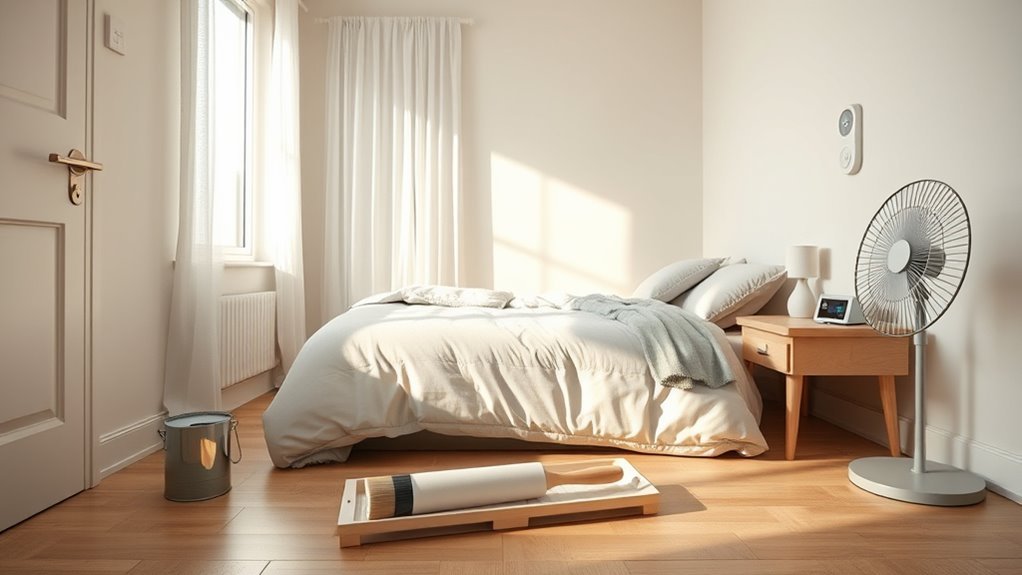
If you’ve just painted a bedroom, wait until the paint is dry to the touch and the room smells faint before sleeping there—typically 2–4 hours for latex paint and 6–12 hours for oil-based.
But full off-gassing and cure can take days to weeks. You should plan around ventilation, humidity, and the paint color—darker shades can feel warmer and may influence drying perception.
Check edges and areas with heavy brush techniques for tackiness. Test a small spot before turning in.
If surfaces feel dry, vents run, and odor is low, you can sleep there cautiously; otherwise, give it more time.
Drying vs Curing: What Each Means for Safety
While paint may feel dry to the touch within hours, curing is a longer chemical process that fully hardens the coating and reduces off-gassing. You’ll notice drying when the surface no longer feels tacky; that’s safe to lightly touch but not to sleep beside for extended time if ventilation’s poor.
Curing completes over days to weeks, affecting durability, paint texture, and how pigments settle—relevant if you considered color theory when selecting shade and finish.
To minimize fumes, ventilate, use low-VOC products, and avoid heavy use until curing’s advanced. That way you protect air quality and the longevity of your job.
How Long Does Latex Paint Take to Dry?
Latex paint usually feels dry to the touch within 1 hour and can be recoated in 4 hours.
But full hardness takes days to weeks depending on conditions.
You’ll notice temperature, humidity, ventilation, and coat thickness all change those times.
Keep those factors in mind when deciding if a room is safe to sleep in.
Drying Time Basics
When you paint a room with latex paint, the surface will usually feel dry to the touch within 1 hour.
You can typically recoat after 2–4 hours, though full curing takes up to 30 days for maximum hardness.
Quick-dry formulas speed things up, and light sanding between coats helps adhesion.
Be mindful that color mixing and paint sheen influence appearance as layers build, but they don’t hugely change basic dry times.
You’ll want to wait before bringing bedding back in to avoid impressions or tackiness.
Plan for practical intervals: touch-dry, recoat, then full cure for heavy use.
Factors Affecting Drying
Because drying depends on several interacting factors, you’ll see wide variation in how quickly latex paint goes from tacky to fully cured. Temperature, humidity, and airflow matter most: higher temps and good ventilation speed evaporation, while humidity slows it.
Coat thickness and number of layers affect drying and curing; thin coats dry faster.
Surface porosity changes absorption, so primed drywall dries differently than wood.
Paint texture and finish influence perceived dryness—glossier sheens feel less tacky sooner.
Even color psychology plays a role in your timing decisions: darker colors absorb heat and may dry faster, affecting when you can safely sleep in the room.
How Long Do Oil-Based and Alkyd Paints Take?
If you’re using oil-based or alkyd paints, expect longer drying times than with water-based formulas. These coatings cure by oxidation and solvent evaporation, so they can feel dry to the touch in 6–8 hours but usually need 24–48 hours before you can handle light use and up to a week or more for a full hard cure.
You’ll want to factor in room temperature, humidity, and ventilation because they directly affect cure speed.
Thicker coats and richer pigments slow drying, so apply thin layers.
Consider color psychology when choosing deep hues, and note that paint texture can alter apparent dryness and durability.
How VOCs and Off‑Gassing Affect Sleep and Health
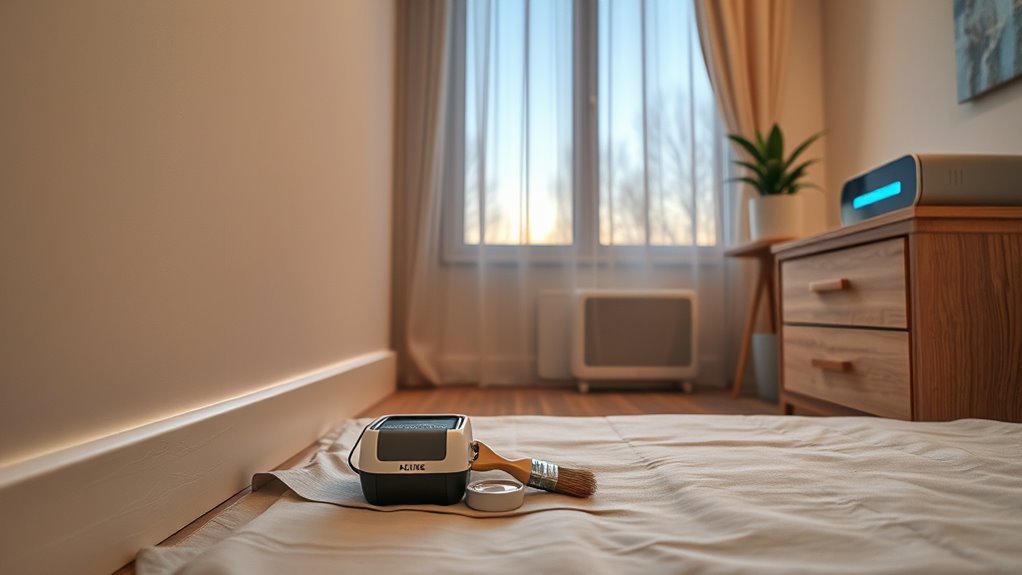
Oil-based and alkyd paints may feel dry on the surface within hours, but they keep releasing volatile organic compounds (VOCs) as they cure, and those emissions can affect your sleep and health. You’ll notice headaches, irritation, or poor sleep if ventilation’s poor. Reduce exposure by airing the room, using air purifiers, and avoiding overnight stays until levels drop. Monitor symptoms and consider low-VOC options next time.
| Symptom | Cause | Action |
|---|---|---|
| Headache | VOC emissions | Ventilate |
| Sleep disruption | off gassing effects | Air purify |
| Irritation | Chemical exposure | Avoid sleeping |
Safe Minimum Wait Times by Paint Type and Finish
When planning sleep after painting, know the minimum wait times for each paint type and finish so you can minimize fumes and sleep safely.
Water‑based latex usually needs 2–4 hours to be surface‑dry and 24–48 hours before sleeping nearby; low‑VOC formulas shorten this.
Oil‑based paints often feel dry in 6–8 hours but can off‑gas for 72 hours or more; wait at least 48–72 hours.
High‑gloss and enamel cures slower than flat or eggshell finishes, so add 24 hours.
Keep good ventilation, remove wet rags to proper paint storage, and remember color theory won’t change drying, only perception of fumes.
How to Tell If Paint Is Dry Enough to Sleep Near
Now that you know the safe minimum wait times by paint type and finish, you’ll want a quick, practical way to check whether the room is ready for sleeping. Use sight, touch, and smell: look for uniform color matching and consistent paint textures, touch a hidden corner for dryness, and sniff for lingering odor. If it’s cool or humid, wait longer.
| Test | What to do | Result |
|---|---|---|
| Visual | Inspect sheen/color matching | Even, no wet spots |
| Touch | Lightly press edge | No tackiness |
| Smell | Breathe near door | Minimal odor |
Quick Checklist to Use the Night Before Sleeping
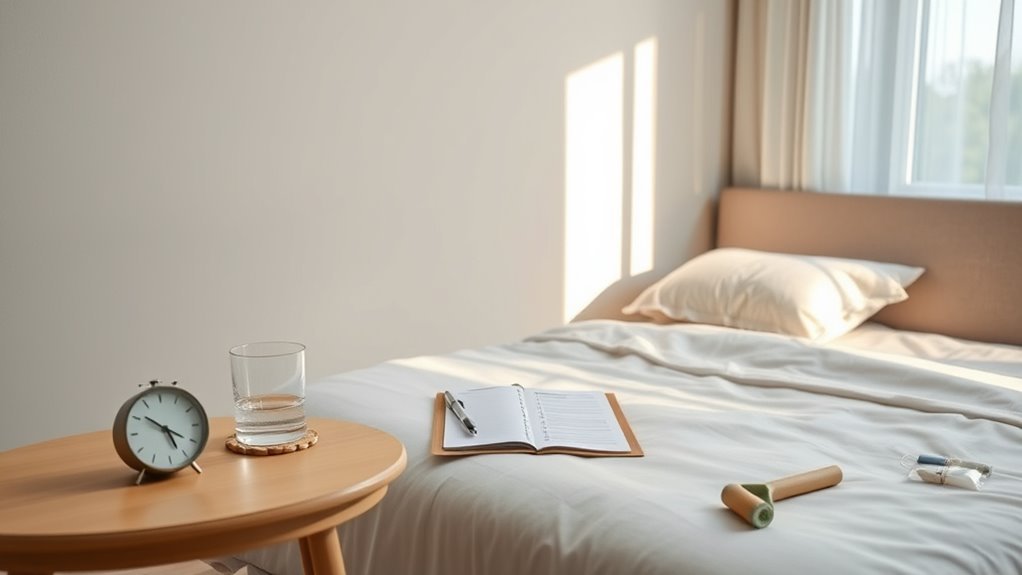
The night before you plan to sleep in the room, run through a quick checklist to be sure it’s safe and comfortable. Open windows or run a fan to ventilate the room.
Confirm the paint type and its recommended dry time, and do a brief smell and touch test for tackiness or strong odor.
If the paint still feels tacky or smells strong, give it more time and keep the room ventilated.
Ventilate Room Well
Because paint fumes can build up overnight, ventilate the room thoroughly the evening before you plan to sleep. Open windows and exterior doors to create cross-ventilation, and run a fan toward an open window to push fumes out.
If weather or security prevents that, use a window fan or exhaust fan in a bathroom or kitchen to keep air moving. Keep vents unobstructed and move air-purifying plants or a HEPA filter into the space.
While airing the room, check that paint color matching looks right in natural light and that paint texture has settled evenly before closing windows for the night.
Check Paint Type
After you’ve aired the room, check what kind of paint you used so you know how long fumes and tackiness might linger. Identify whether it’s water-based (latex) or oil-based; water-based dries faster and usually has milder odor, while oil-based cures longer and can smell for days.
Note if you applied specialty finishes—eggshell, satin, or high-gloss—since sheen and additives affect drying.
Also recall the paint color; darker pigments sometimes retain heat and slow curing slightly.
Finally, consider application: different brush types and rollers leave varied film thicknesses, which changes dry time and final cure expectations.
Smell And Touch Test
If you’re planning to sleep in the room, do a quick smell and touch test the night before to confirm paint is no longer tacky and fumes have dissipated. Walk the room with windows open, sniff near painted walls and corners; lingering solvent odor means wait longer.
Lightly touch an inconspicuous patch—don’t press hard—to check for any tackiness. If the surface feels dry and smell is minimal, you’re likely safe.
Consider how recent painting techniques, ventilation, and your color selection affect drying and off-gassing. When in doubt, extend drying time or use an air purifier overnight to reduce residual fumes.
Ventilate to Reduce Paint Smell Before Bedtime
While paint dries, open windows and run fans so fresh air flushes fumes out of the room before bedtime. You’ll speed odor removal by creating cross-ventilation and avoiding closed doors. Consider Painting techniques and Color selection that reduce coats and drying time to limit smell. Close vents to other rooms to confine airflow, and check labels for low-VOC products.
| Action | Timing |
|---|---|
| Open windows opposite each other | Immediately |
| Run window or box fan toward outdoors | While awake |
| Keep door closed to rest of house | Overnight |
Monitor smell; if it lingers, delay sleeping in the room.
Use Fans, Dehumidifiers, and Heat : Best Practices
Because drying speed and fume elimination depend on airflow and humidity, use fans, dehumidifiers, and controlled heat together to cut drying time and reduce odors safely.
Position fans to move fresh air across painted surfaces without blasting wet paint and causing texture changes; low, steady circulation helps even paint texture.
Run a dehumidifier to pull moisture, which speeds curing and lessens lingering smells, but empty it regularly.
Use gentle, consistent heat sources—avoid open flames and high temperatures—to aid drying without trapping solvents.
Consider color selection only for aesthetics; darker hues may feel warmer but won’t change drying mechanics.
Room Conditions That Speed Paint Drying (Temp, Humidity, Airflow)
Now that you’ve set up fans, a dehumidifier, and gentle heat, pay attention to the specific room conditions that actually speed paint drying: temperature, humidity, and airflow. You want 60–75°F for latex and slightly warmer for oil-based; keep relative humidity 30–50% to speed curing. Position fans for cross-ventilation without blasting paint. Note color psychology affects perceived dryness—darker hues can look wetter longer. Test small areas and compare brands; a paint brand comparison helps pick fast-drying formulas. Use the table to track settings and results.
| Condition | Target |
|---|---|
| Temp | 60–75°F |
| Humidity | 30–50% |
Factors That Slow Drying and Prolong Odors
If you’re trying to sleep in a freshly painted room, high humidity will slow the cure and keep odors hanging around.
Poor ventilation traps fumes, so you won’t get rid of the smell quickly.
Applying thick or multiple coats also extends drying time and increases how long solvents off‑gas.
High Humidity Levels
When humidity’s high, paint takes longer to cure and solvents hang in the air, so you’ll smell odors for a longer stretch and shouldn’t plan to sleep in the room as soon as the surface feels dry.
You’ll notice paint texture stays tacky and brush marks can reappear as water slows solvent evaporation. That affects finish consistency and may complicate color matching if you recoat too soon or try touch-ups in muggy conditions.
To protect your sleep plans, wait longer than the label suggests, monitor tackiness and odor, and use a dehumidifier to speed curing without relying solely on surface dryness.
Poor Room Ventilation
Because stagnant air traps solvents and moisture, poor ventilation can dramatically slow paint drying and keep odors lingering long after the job looks dry. You’ll notice drying time varies with room color and paint sheen; darker hues absorb heat differently, and glossier finishes dry by surface film, both needing airflow to cure fully.
Aim fans toward open windows and doors, run exhaust fans, and avoid sealing the room overnight.
- Use cross-ventilation to remove solvent-laden air.
- Run mechanical ventilation for several hours after painting.
- Monitor odor and tack; extend ventilation until both subside.
Thick Or Multiple Coats
While thicker or multiple coats can speed coverage, they also trap solvents and moisture, slowing surface and through-drying and prolonging odors. If you pile on paint to hide flaws or match a new color scheme, expect longer off-gassing and tacky surfaces.
Build each coat thinly, letting manufacturer-recommended dry times elapse; sanding between coats helps adhesion so you don’t need extra layers.
Choose appropriate paint finishes—matte hides imperfections but may need more pigment, while satin or semi-gloss often require fewer coats.
Good ventilation, low-VOC products, and patience reduce lingering smells and let you sleep safely in the room.
Quick Fixes for Tacky or Patchy Spots
If some spots feel tacky or look patchy after painting, you can usually fix them without redoing the whole wall; start by identifying whether the issue is surface tackiness, thin coverage, or uneven sheen.
Check that the Paint color and Finish sheen match surrounding areas. For tacky areas, increase ventilation and gentle heat; wait before touching.
Confirm paint color and sheen match nearby. For tacky spots, boost ventilation, gentle warmth, and wait before touching.
For thin coverage, apply a light additional coat only where needed.
For uneven sheen, lightly scuff with fine sandpaper and recoat a small section.
- Ventilate and wait.
- Spot-prime and touch up.
- Scuff, clean, and refinish.
Odor Absorbers: Charcoal, Baking Soda, and Ozone-Do They Help?
You can use activated charcoal to absorb some paint odors, and it’s low-risk and easy to place around the room.
Baking soda will help minor smells but won’t neutralize strong solvent fumes from fresh paint.
Avoid ozone generators—they can worsen air quality and pose health risks even if they reduce odors.
Charcoal For Odor Control
Because charcoal adsorbs many odor molecules, it’s a popular, low-tech option for freshening painted rooms. You can use activated charcoal pouches or DIY charcoal bins to reduce smells without chemicals.
You’ll place them near vents or windows to capture volatile organic compounds and improve Charcoal odor removal while protecting Air quality as paint off-gases.
Change or recharge pouches periodically; effectiveness varies with charcoal grade and room ventilation.
Use them alongside ventilation rather than as a sole fix.
Consider safety—keep bags away from children and pets.
You should expect gradual scent reduction over days to weeks.
- Placement matters
- Maintain/replace
- Combine with ventilation
Baking Soda Effectiveness
While it won’t neutralize every odor, baking soda (sodium bicarbonate) can help reduce many common smells by absorbing acidic and some neutral molecules from the air and surfaces. You can sprinkle baking soda on fabric or place open boxes around the room to boost odor absorption during and after painting.
It’s non-toxic, inexpensive, and quiet—useful if you’re sensitive to fumes. Replace powder or boxes every few days until smells subside. Don’t expect it to remove strong solvent vapors entirely; it complements ventilation and other methods.
For fabrics, vacuuming after treatment helps lift trapped particles and residual powder.
Ozone Generators Risks
If baking soda and charcoal can help tame mild paint smells, ozone generators offer a very different — and riskier — approach to odor removal. You might be tempted by quick deodorizing, but ozone hazards are real: they can irritate lungs and react with paint residues, raising paint toxicity. Don’t run generators while sleeping or occupying the room.
- They break down odors by altering chemicals, sometimes creating more harmful byproducts.
- Short-term exposure causes coughing, chest pain, and worsened asthma.
- Professional remediation uses controlled methods; DIY ozone risks unintended chemical reactions.
Choose ventilation and time over ozone.
What to Do If Someone Is Chemically Sensitive
When someone in your household is chemically sensitive, take extra precautions before painting and while the room dries to avoid triggering reactions.
Choose eco friendly coatings with low or zero VOCs and test small patches to check reactions to paint texture and odor.
Increase ventilation: open windows, use fans to exhaust air outdoors, and run an air purifier with a HEPA plus activated carbon filter.
Keep the sensitive person away from the area until odors are gone and symptoms stop.
Clean brushes and rags outside, store paint cans sealed outdoors, and monitor symptoms; if they persist, consult a physician.
When to Wait Full Cure Before Moving Furniture or Bedding
After you’ve kept chemically sensitive people out of the room and ventilated thoroughly, plan to wait for the paint’s full cure before moving furniture or bringing bedding back in. Full cure reduces off‑gassing, prevents stains from trapped moisture, and protects paint texture and finish against abrasion.
Consider color psychology effects on mood while the room still smells faintly; avoid reintroducing bedding until odors are gone. Typical cure can be days to weeks depending on product and humidity.
Wait times checklist:
- Confirm manufacturer’s full‑cure time.
- Guarantee no lingering odor and hard, dry paint texture.
- Reintroduce items gradually, monitoring comfort.
Choosing Low‑Odor, Low‑VOC Paints to Shorten Wait Time
Because low‑odor, low‑VOC paints release far fewer volatile compounds, you can shorten the time you need to avoid sleeping in the room and reintroduce bedding sooner. Choose certified low‑VOC formulas and water‑based acrylics; they off‑gas less and dry faster than oil‑based options.
Using low‑odor, certified low‑VOC, water‑based acrylics lets you reintroduce bedding sooner with less off‑gassing.
Test a small patch to judge paint texture and tack time.
Pick calming hues informed by color psychology to promote better sleep while you wait the reduced drying period.
Ventilate briefly during and after painting to speed dissipation.
Always follow manufacturer drying recommendations and consider product data sheets for exact reentry and bedding timelines.
When to Call a Pro or Seek Medical Advice for Persistent Fumes
If you or someone in your home starts having worsening respiratory symptoms after painting, don’t ignore it and get medical help right away. Call a professional to assess ventilation and indoor air quality if a strong chemical odor persists despite airing the room.
Seek immediate care for infants, elderly people, pregnant people, or anyone with asthma or other vulnerabilities.
Worsening Respiratory Symptoms
When symptoms like persistent coughing, wheezing, chest tightness, shortness of breath, or lightheadedness don’t ease within a few hours of leaving the painted room and getting fresh air, call your doctor or seek urgent care—especially if you have asthma, COPD, heart disease, a history of severe allergic reactions, or the symptoms worsen rapidly.
You should describe exposure details, product type, and any relevant sensitivities. Note paint palette choices and color psychology only when explaining room selection, not symptoms. Follow medical advice; don’t dismiss gradual worsening.
- Document timing and exposures.
- Avoid reentry until cleared.
- Bring product info to clinicians.
Chemical Odor Persists
Though lingering paint fumes often fade with time and ventilation, persistent chemical odors that don’t dissipate after 48–72 hours merit attention. If you still smell strong solvent, stop using the room, ventilate, and note symptoms. Call a pro if odor source is unclear, especially with off-gassing from certain paint color or unexpected finish sheen. Seek medical advice for dizziness, nausea, or prolonged headaches. Use a professional to test air quality or identify hidden spills, contaminated materials, or improper cure. Quick action prevents longer exposure and finds whether repainting or specialized remediation is needed.
| Sign | Action | Urgency |
|---|---|---|
| Strong odor | Ventilate, isolate room | High |
| No source found | Hire pro tester | Medium |
| Symptoms persist | See doctor | High |
Vulnerable Person Affected
Because some people are more sensitive to paint fumes, take immediate action if a child, pregnant person, elderly adult, or someone with asthma or chemical sensitivities is exposed—move them to fresh air, ventilate the space, and monitor for symptoms like coughing, headaches, dizziness, or difficulty breathing.
If symptoms persist, call a medical professional or poison control.
You should also consider a pro inspection for hidden issues or high VOC levels.
Remember vulnerable populations and paint allergies increase risk.
Steps to take next:
- Seek urgent medical help for severe or worsening breathing problems.
- Get indoor air testing for VOCs.
- Hire a remediation pro.
Frequently Asked Questions
Can I Sleep in a Freshly Painted Room if Windows Are Open All Night?
You shouldn’t; even with windows open all night, paint drying time doesn’t guarantee safe air. You’ll want strong ventilation effectiveness plus low-VOC paint, fans, and an overnight wait to reduce fumes before you sleep in that room.
How Long Before Newborns or Infants Can Sleep in Painted Rooms?
Think of fresh paint as a silent guest: you shouldn’t return newborns for at least 7–14 days. Follow paint drying times and paint safety guidelines, ventilate thoroughly, use low‑VOC paints, and guarantee odors’ve fully vanished.
Are Scented Candles Safe to Mask Paint Smell Before Bedtime?
No — you shouldn’t use scented candles to mask paint smell; candle safety concerns and added fumes can worsen indoor air quality. You’ll want ventilation, low-VOC paint, and air purifiers instead to reduce odors safely.
Will Paint Fumes Set off Smoke or Carbon Monoxide Detectors?
No, paint fumes won’t normally set off smoke or carbon monoxide detectors, but you should prioritize paint safety and respect drying time; strong odors can impair sensors or indicate poor ventilation, so ventilate well and follow label instructions.
Can Pets Sleep in a Room That Was Just Painted?
Absolutely not — unless you want your pet acting like a cartoon with nose hair singed. You should keep them out until paint odor fades and drying time finishes; ventilate well and wait at least 24–48 hours for safety.
Conclusion
You’ll want to treat a freshly painted room like a new recipe—give it time to cool before you taste. Drying might take hours, curing days to weeks, and VOCs can linger, so wait the recommended time for your paint, ventilate well, and pick low‑VOC options when you can. If you’re chemically sensitive or fumes persist, call a pro or a doctor. Trust your nose: don’t sleep there until it feels safe.
