
How Long to Let Bathroom Paint Dry Before Showering
You should wait at least 24–48 hours before taking a shower after painting a bathroom with water‑based (latex) paint, and 48–72 hours for semi‑gloss or oil‑based finishes or in high humidity. Make sure the surface feels dry, not tacky, vents run, and odors have eased. Run the exhaust or a dehumidifier to speed curing, keep showers short and cool at first, and follow paint manufacturer times to avoid damage — more specifics follow below.
What This Guide Covers
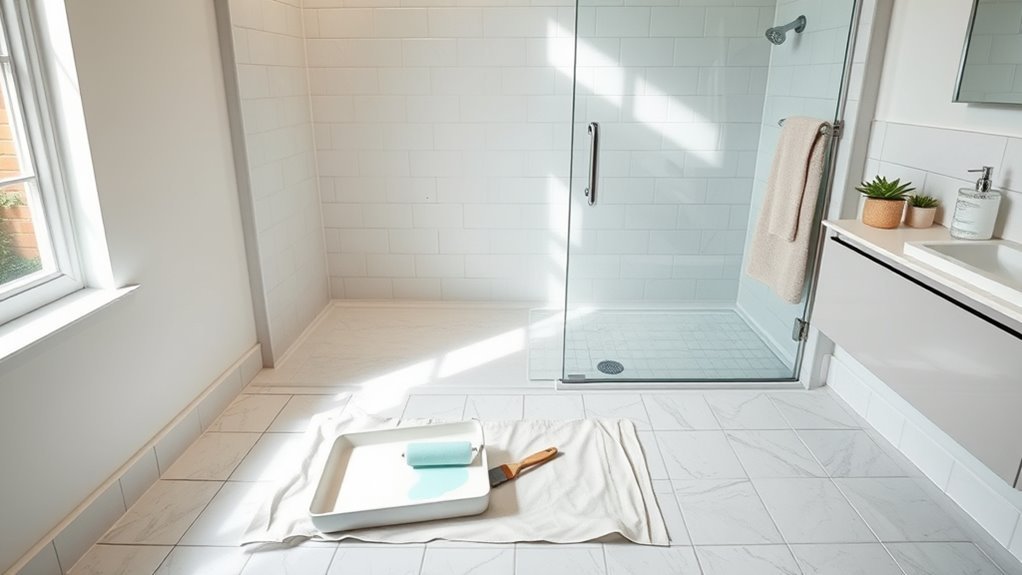
Before you pick up a brush, this guide tells you exactly what to expect while bathroom paint dries — including typical drying and recoat times for different paint types, how humidity and temperature affect drying, tips for speeding cure time, and when it’s safe to use the room again.
You’ll get clear timelines for latex, oil, and specialist bathroom paints, plus simple checks to judge tack-free and cured states. Learn how color matching and paint texture influence appearance and drying perception, what gear to use, and practical steps to reduce moisture and speed drying so you can plan showers confidently.
Short Answer: How Long Before You Can Shower?
Generally, you can shower once the paint feels dry to the touch and has had time to cure—often 24 to 48 hours for most bathroom paints.
How long exactly depends on the paint type, how humid and ventilated the room is, and whether you applied multiple coats or prepped the surface thoroughly.
Consider waiting longer if conditions were damp, you used a high-gloss or oil-based paint, or you laid on extra coats.
Dry Time by Paint Type
If you’re wondering how long to wait before taking a shower after painting your bathroom, the answer depends mainly on the paint type: water-based (latex) paints usually dry to the touch in 1–2 hours and can handle light moisture within 24–48 hours.
While oil-based paints take 6–8 hours to dry to the touch and need up to 72 hours or more before they tolerate regular humidity.
You should pick paint based on durability and sheen; matte feels softer but may show texture, while semi-gloss resists moisture.
Consider color psychology for mood, but prioritize proper cure times before showering to avoid damage.
Humidity And Ventilation
While paint type sets baseline dry and cure times, humidity and ventilation decide when it’s actually safe to shower—higher humidity slows drying and can trap solvents, so wait longer in steamy conditions. You should monitor moisture and air exchange to protect paint durability and aid mold prevention.
Aim for lower humidity and steady airflow before exposing the surface to shower steam.
- Run an exhaust fan for several hours after painting when possible.
- Use a dehumidifier or open windows to drop RH below 50% while paint cures.
- Wait at least 24–48 hours in humid bathrooms; longer if ventilation’s poor.
Surface Prep And Coats
Because prep and the number of coats determine how well paint sticks and how long solvents stay wet, you should factor them into when it’s safe to shower. If you sand, prime, and remove mildew, paint bonds faster and dries more predictably.
One properly prepped coat often allows light use after 24 hours, but two coats generally need 48 hours for water exposure. High-quality primers and topcoats dry quicker; low-VOC formulas help, too.
Paint sheen affects drying and durability—gloss dries faster than flat but shows imperfections. Also consider color selection: darker colors may need extra coats, extending wait time before showering.
Dry to the Touch vs. Fully Cured
When you touch freshly painted bathroom walls, the surface may feel dry within an hour or two, but that doesn’t mean the paint’s finished curing; you need to know the difference to avoid damage and odor.
Dry-to-touch is just the skin; full cure takes days to weeks, depending on humidity and ventilation. Consider how color psychology and historical trends influenced finishes—glosses cure differently than flats.
Watch for tackiness, smell, and hardness.
Quick checklist:
- Wait at least 24–48 hours before light use.
- Test a hidden spot for firmness.
- Avoid heavy cleaning until fully cured.
Which Paints Dry Fastest (Overview)
For a quick bathroom turnaround, you’ll usually reach for water-based latex paints because they dry fast and handle moisture well.
If you need even faster drying, quick-dry alkyd formulas offer rapid skin time with durable results.
Low-VOC fast-dry options give you speed without strong fumes, so you can finish quicker and ventilate less.
Water-Based Latex Paint
If you want a quick-drying option for a bathroom, water-based latex paints are usually the fastest practical choice. You’ll notice fast surface dry times, easy cleanup with water, and minimal odor, making them ideal for tight schedules.
Color mixing stays consistent, and paint texture levels remain smooth when you use quality primers and rollers. Expect to wait a couple of hours before light use and 24–48 hours for full cure depending on humidity.
Tips to speed drying:
- Improve ventilation with a fan or open window.
- Use thin coats rather than one thick layer.
- Control humidity with a dehumidifier.
Quick-Dry Alkyd Formulas
Although alkyd paints usually take longer to harden than water-based formulas, quick-dry alkyds give you a faster turnaround while keeping the durability and smooth finish you expect from oil-based products. You’ll appreciate their shorter tack-free times and robust adhesion in humid bathrooms.
For best results, focus on color matching under bathroom lighting and test swatches to confirm hue when dry. Choose your brush selection carefully: a high-quality natural-bristle brush lays down a smoother coat and reduces lap marks.
Allow manufacturer-recommended flash and curing times before showering, and ventilate the room to speed solvent evaporation without compromising finish quality.
Low-VOC Fast-Dry Options
When you need paint that dries quickly without dumping VOCs into your bathroom, low-VOC fast-dry formulas give you the best balance of speed and indoor-air friendliness. You’ll find waterborne alkyds and advanced acrylics that tack over in 30–60 minutes and cure fast enough for light use within 24 hours.
Pay attention to label specs, ventilation, and thin coats to speed drying. Manage Color mixing carefully to avoid rework, and follow paint storage guidance to preserve performance between coats or touch-ups.
- Choose thin coats for quicker tack time
- Ventilate to reduce humidity-related delays
- Use recommended primer for adhesion
Typical Wait Times: Latex (Water-Based) Paint
Because latex paint dries by evaporation, you’ll usually see a skin form within 30 minutes to an hour under normal indoor conditions, but expect to wait 2–4 hours before it’s dry to the touch and 24 hours for light recoat or moderate use. You should plan showers after full cure for heavy use—usually 7 days. Ventilation, humidity, and temperature speed or slow drying. Consider historical techniques and color psychology when choosing sheen and timing; lighter colors may show imperfections sooner.
| Condition | Typical Wait |
|---|---|
| Touch dry | 2–4 hours |
| Recoat | 24 hours |
| Full cure | 7 days |
| High humidity | Longer |
Typical Wait Times: Oil-Based Paint
If latex dries relatively quickly, oil-based paints behave quite differently and you’ll need to plan accordingly. You’ll wait longer for touch-dry and much longer for full cure; humidity and temperature matter. Expect slower solvent release and stronger odors, so ventilate and avoid showering until cured.
- Plan 24–48 hours before light use; longer for humidity.
- Allow 7–14 days for full cure in bathrooms; check manufacturer notes.
- Consider ventilation, low-VOC or eco friendly formulas, and how color psychology affects room mood while you wait.
This keeps finish integrity and prevents damage from steam or scrubbing too soon.
Finish Types: Gloss, Semi-Gloss, Satin Expectations
Although glossy finishes show imperfections more clearly, they dry harder and resist moisture best, so you’ll often get faster usable times in a bathroom with gloss or semi-gloss than with satin.
You’ll choose gloss for trim and high-moisture zones, semi-gloss for walls needing wipeability, and satin for softer light reflection and subtle texture.
Consider color psychology when selecting sheen—higher gloss amplifies brightness and perceived cleanliness, while satin soothes.
If you prefer eco-friendly finishes, check water-based low-VOC formulas; they often match traditional drying performance across sheens.
Always follow manufacturer recoat and cure times for safe showering.
How Humidity in Bathrooms Affects Drying
When humidity in a bathroom stays high, paint takes much longer to dry and can remain tacky for hours or even days, so you should manage moisture during and after painting.
You’ll notice slowed cure times, lingering paint odor, and higher risk of bathroom mold if condensation builds on walls.
Take simple steps to protect your finish and health:
Take simple steps to protect your finish and your health: manage moisture, ventilate, and keep surfaces dry while paint cures.
- Wipe surfaces after showers and keep doors closed while paint sets.
- Use moisture-absorbing products or a dehumidifier to speed drying.
- Delay showering until paint feels dry to the touch and fumes have mostly dissipated.
These measures help guarantee a durable, mildew-free result.
Temperature, Ventilation, and Cure Time
Because paint chemistry depends on heat and airflow, keeping the bathroom warm and well-ventilated speeds both drying and curing. You’ll want consistent temperatures (65–75°F) and a running fan or open window to reduce moisture; that prevents tackiness and helps color matching remain true while improving paint durability. Expect surface dry in hours but cure over days to weeks depending on conditions.
| Condition | Effect |
|---|---|
| Warm + ventilated | Faster dry, stable color |
| Cold + stagnant | Longer tacky time, faded hue |
| High humidity | Slower cure, reduced durability |
Does Primer Change Bathroom Paint Dry Time?
If you apply a primer before painting, you’ll usually see faster, more consistent topcoat drying and fewer issues with tackiness or uneven sheen. Primer influence matters because it seals porous surfaces, so the topcoat won’t soak in and will dry evenly.
Use proper drying techniques like good airflow and moderate temperature to maximize benefits.
Promote even drying by ensuring steady airflow and maintaining a moderate room temperature.
- Choose a primer matched to your topcoat and surface.
- Allow the primer’s recommended dry time before rolling on paint.
- Use a fan or open window to aid drying techniques.
That primer layer often reduces overall wait time and improves finish reliability.
How Coat Count and Thickness Affect Dry Time
How many coats you apply directly affects drying time—each additional layer adds more wet film that needs to cure.
Thicker layers hold moisture longer, so a heavy single coat can take as long as two thinner ones.
Plan for longer dry times if you’re piling on coats or brushing on thick layers.
Number Of Paint Coats
When you apply multiple coats, each new layer adds to the total dry time because the solvent in the fresh paint has to evaporate through the previous layers. You’ll want to plan for extra cure time as coats increase, especially when aiming for color matching or preserving a specific paint texture.
Consider practical rules:
- Two thin coats usually give even coverage and shorter cumulative dry time.
- Three coats improve durability and color depth but extend waiting periods.
- Spot touch-ups may need longer localized drying to blend.
You’ll check manufacturer recoat times and allow extra hours in humid bathrooms before showering.
Layer Thickness Impact
Because each coat adds material that moisture has to escape through, thicker layers and more coats slow drying and curing, so you should apply paint thinly and evenly to keep wait times reasonable.
You’ll notice thicker paint traps solvent and water longer, extending tack time and full cure. Multiple coats compound this, so plan thinner passes rather than heavy coverage.
Be mindful that color mixing can alter viscosity, so test consistency before rolling.
Also remember finish sheen affects perceived dryness—glossier paints often feel dry sooner but cure just as slowly.
Follow manufacturer recoat intervals and allow extra time in humid bathrooms.
Timing for Painted Surfaces vs. Fixtures
If you painted walls and touched up fixtures the same day, give the flat or satin wall paint at least 24 hours to cure before reinstalling towel bars, mirrors, or switch plates.
Wait 48–72 hours for semi-gloss or gloss trims and fixtures to reach a harder, less-scratchable surface.
Wait 48–72 hours for semi-gloss or gloss trim to harden and resist scratches before reinstalling fixtures.
You’ll also consider bathroom lighting placement and ventilation systems timing when planning reinstallation to avoid moisture or heat affecting cure.
Follow simple steps to protect fresh paint and any hardware:
- Reattach fixtures gently, using padded cloths to avoid scuffs.
- Delay heavy use near high-heat lights.
- Keep ventilation running to speed safe curing.
Visual and Tactile Signs Paint Is Shower‑Ready
Although cure times matter, you’ll know paint’s ready for shower exposure by simple visual and tactile checks. Look for uniform color matching across panels and no glossy wet patches; freshly painted areas should blend with surrounding walls. Run your eye for drips, sagging, or surface sheen inconsistencies that signal softness.
Lightly touch an inconspicuous edge—use a clean finger—checking for tackiness; it should feel dry, not gummy. Avoid pressing hard or using paint brushes to probe. If the finish resists fingerprints and holds its intended texture, you can confidently introduce steam, while still respecting full cure recommendations.
How to Test Paint Readiness Safely
When you’re ready to check whether bathroom paint can handle steam and use, perform a few safe, low-risk tests. Gently confirm surface cure, avoid heavy abrasion, and remember that color matching and paint sheen can shift slightly as paint dries fully.
- Press a corner of clean, dry tissue against a discrete spot; no pigment transfer means surface cure.
- Mist a small area with water from a spray bottle; beads indicate cured sheen, absorption suggests longer wait.
- Compare a hidden touchpoint to a painted sample card for color matching and uniform finish before regular shower use.
If any test fails, wait longer.
Quick Steps to Speed Drying Without Harming Finish
Because humidity and airflow are what slow bathroom paint most, you can speed drying by increasing ventilation, warming the room slightly, and reducing moisture sources while the paint sets.
Open windows briefly if weather’s dry, run a fan for several hours, and keep doors open to help air circulate.
Use low-heat space heaters at a safe distance to avoid bubbling or cracking.
Avoid applying extra coats until the surface’s tackiness is gone to preserve color blending and prevent uneven sheen.
Keep towels and fixtures away from wet walls, and wait the manufacturer’s minimum recoat time before light contact.
Safe Ways to Boost Bathroom Ventilation
Speeding drying by boosting airflow and cutting humidity works best when you focus on safe, steady ventilation methods. You’ll protect the paint finish and preserve bathroom decor while aiding mold prevention. Try simple, low-risk steps that don’t stress freshly painted surfaces.
- Open windows a crack when weather permits to trade humid air for fresh air.
- Use door vents or leave the door ajar to encourage cross-ventilation without blasting the room.
- Add moisture-absorbing products like silica or charcoal packs near damp spots for passive humidity control.
These tactics help drying safely and support long-term mold prevention and room appearance.
Using Fans and Dehumidifiers: Dos and Don’ts
Position your exhaust fan so it pulls moist air away from the freshly painted walls and toward the vent. Keep it running on low to avoid blowing paint fumes back onto damp surfaces.
If humidity stays high despite good fan placement, use a dehumidifier set to a moderate level. This will help speed drying without over-drying the paint.
Don’t point fans directly at wet surfaces or run a dehumidifier on extreme settings, since both can cause uneven drying or surface defects.
Proper Fan Placement
When you’re placing fans and dehumidifiers in a freshly painted bathroom, aim to create clear airflow paths that pull moist, solvent-laden air away from the walls and ceiling.
For effective fan placement and air circulation, position exhaust fans near the shower or paint source and guarantee intake vents or open windows let fresh air enter.
Point portable fans so airflow travels across painted surfaces toward the exhaust. Avoid blowing directly at wet paint.
Check that fans don’t short-circuit airflow by sucking air from the wrong direction.
- Place exhaust high, intake low
- Angle fans for crossflow
- Keep doors slightly open
When To Use Dehumidifiers
Although a dehumidifier won’t speed paint curing on its own, you’ll want to run one whenever humidity stays above about 50% during and after painting—especially in small, poorly ventilated bathrooms—because lower moisture levels let solvents evaporate and paint films set evenly.
You should use it alongside a fan, not instead of one, and position it to draw moist air away from wet walls.
For tight jobs like a kitchen backsplash or when you’re drying trim after outdoor painting, a dehumidifier prevents tackiness and mildew.
Turn it off once humidity stabilizes near 40–50% to avoid over-drying and cracking.
Why You Should Avoid Heat Guns or Hair Dryers
If you’re tempted to speed up drying with a heat gun or hair dryer, don’t—direct heat can soften or blister paint, cause uneven curing, and increase the risk of toxic fumes. You want a durable, even finish that respects color psychology and the benefits of eco friendly paints. Instead, use patience and proper ventilation. Quick fixes can ruin sheen and adhesion.
- Blistering: hot spots lift the film.
- Fumes: warmed solvents off-gas faster, risking health.
- Uneven cure: surface may feel dry while underlying layers stay soft.
Let natural drying do the work for a stable, lasting result.
Protecting New Paint During the First Showers
Because the first few showers can test fresh bathroom paint, take simple precautions to keep the finish intact. You’ll delay heavy steam use for at least 48–72 hours, open windows, and run exhaust fans to reduce moisture exposure.
Gently towel-dry splashes instead of blasting with a showerhead. Use temporary shower curtains and avoid leaning wet towels against painted walls to prevent color blending or texture smoothing issues from trapped moisture.
If you must shower earlier, keep sessions short and cool. Check painted surfaces afterward and blot any damp spots promptly to maintain an even, durable finish.
If Paint Wrinkles, Bubbles, or Peels After Moisture
When moisture causes paint to wrinkle, bubble, or peel, act quickly to limit damage and figure out the cause. You’ll need to assess adhesion, ventilation, and lingering moisture before repairs. Remove loose paint, dry the surface thoroughly, and sand to feather edges.
- Check for ongoing leaks or poor ventilation and fix them first.
- Prep the substrate properly; use primer suited for bathrooms to prevent recurrence.
- Match color carefully and choose the right paint sheen so repaired spots blend and resist moisture.
Test a small patch, let it cure fully, and only then resume normal shower use.
Recoating Schedule: When to Apply a Second Coat
After you’ve repaired and prepped a surface affected by moisture, plan your second coat based on the paint’s instructions, the room’s humidity, and how the first coat looks and feels.
Check tackiness by touch; if it lifts, wait longer. In high humidity, extend recoating times to prevent trapping moisture and encourage proper cure.
Use eco-friendly paints when possible—they often dry similarly but read drying windows.
If the first coat shows uneven sheen or thin spots, recoat sooner within recommended limits.
Monitor for early color fading; premature UV or moisture exposure can force another coat.
Always test a small area before full recoating.
Reading Paint Labels and Technical Data Sheets
When you check paint labels and technical data sheets, focus on the difference between drying time (when the surface is touch-dry) and full cure (when the paint reaches maximum hardness).
Pay attention to common abbreviations like “RT” for room temperature and “RH” for relative humidity, since those conditions affect both drying and curing.
Use the listed temperature and humidity ranges to adjust your schedule—colder or more humid conditions mean you’ll need to wait longer.
Drying Time Versus Cure
Because paint labels mix “dry to the touch” with “fully cured,” you’ll want to read both the can and the technical data sheet to know what each term really means for your bathroom schedule. You’ll learn when showers are safe and when the finish reaches full paint durability.
Consider how color psychology affects perceived dryness—darker hues show sheen sooner.
- “Dry to touch” means surface safe to handle, not moisture-resistant.
- “Recoat” time tells when you can apply another layer.
- “Full cure” indicates maximum hardness and solvent resistance.
Always follow the longest manufacturer timeframe for best results.
Reading Label Abbreviations
Although paint labels can look full of cryptic abbreviations, you can decode them quickly by scanning for a few key codes—RTT (ready to touch), RTC (recoat), and FC (full cure)—and matching those to times listed on the technical data sheet.
When reading TDS, note surface prep, VOCs, and recommended film thickness; those affect RTT/RTC/FC. Pay attention to color mixing notes—pigment load can alter drying cues—and to recommended brush techniques for application, since heavier loading or poor technique changes recoat timing.
Keep the chart handy, follow manufacturer windows, and don’t guess beyond listed FC before heavy use.
Temperature And Humidity Effects
If you check the technical data sheet, you’ll see temperature and humidity ranges that directly control drying stages—ready to touch, recoat, and full cure—and you should match your jobsite conditions to those specs.
You’ll avoid extended tackiness that invites bathroom mold and prevent sheen shifts caused by improper curing. Control temperature and humidity to hit manufacturer recoat windows and final paint sheen.
- Keep room 50–80°F and humidity under 60% when possible.
- Use heaters, dehumidifiers, or fans to stabilize conditions.
- Delay showering until full cure per TDS to protect finish and prevent mold.
Special Cases: Tile, Shower Enclosures, and Ceilings
When you’re painting around tile, shower enclosures, or ceilings, drying times and prep vary more than they do on flat walls, so plan each step accordingly. You’ll clean surfaces, tape edges, and allow extra cure time where water concentrates. For tile maintenance, focus on grout sealing before paint to prevent moisture migration; on enclosures, remove hardware if possible. Ceilings need thin coats to avoid drips and longer tack times.
| Surface | Prep | Drying Tip |
|---|---|---|
| Tile | Clean, grout sealing | 24–48 hrs |
| Glass enclosure | Tape, remove trim | 48 hrs |
| Ceiling | Sand, thin coats | 48–72 hrs |
Health: Fumes, VOCs, and Ventilation Guidance
When you’re painting a bathroom, be aware that fumes and volatile organic compounds (VOCs) can irritate your eyes, nose, and lungs and cause headaches or worse with prolonged exposure.
Choose low-VOC or water-based paints when possible and avoid staying in the room until the strongest odors have faded.
Run exhaust fans, open windows, and use a portable fan to keep airflow moving until the paint is fully cured.
Fume Exposure Risks
Although paint’s fresh smell might seem harmless, fumes and volatile organic compounds (VOCs) can irritate your eyes, nose, and lungs and cause headaches or dizziness at high levels. You should monitor air quality and limit chemical exposure by ventilating and avoiding the painted bathroom until levels drop.
Keep windows open, run fans, and use a mask if you must enter. Watch household members for symptoms and move anyone sensitive out of the area.
- Open windows and run exhaust fans continuously.
- Use low-VOC or water-based paints when possible.
- Avoid overnight sleeping in freshly painted rooms.
Volatile Organic Compounds
Because many common bathroom paints release volatile organic compounds (VOCs) as they cure, you should treat fresh paint like a temporary source of airborne irritants and plan ventilation accordingly. You’ll notice sharper odors with solvent-based paints; low-VOC or zero-VOC formulas cut that risk. Consider Color theory when choosing finishes—lighter shades often mask fumes less, so pick Eco friendly pigments where possible. Protect sensitive people: infants, pregnant people, and those with asthma. Limit time in the room until odors fade and follow manufacturer dry times. Refer to the quick VOC guide below.
| Paint Type | Typical VOC Level |
|---|---|
| Solvent-based | High |
| Standard latex | Moderate |
| Low-VOC latex | Low |
| Zero-VOC | Minimal |
| Natural pigments | Very low |
Ventilation And Airflow
Aim to create steady airflow for at least 48–72 hours after painting to help VOCs and other fumes dissipate. You should ventilate aggressively: open windows, run exhaust fans, and use a box fan to push air out.
Proper airflow also prevents trapped moisture that can affect color blending and texture consistency while paint cures.
- Open windows and doors to create cross-ventilation.
- Run an exhaust fan continuously for the first two to three days.
- Place a fan near a window to direct fumes outside.
After that period, check odor and tackiness before showering.
Pro Timelines vs. DIY Expectations
When you hire pros, they’ll usually schedule drying and recoating with tighter, predictable windows—often 2–4 hours between coats for quick-dry latex and 6–8 hours for standard formulas—while DIY timelines tend to be more conservative to account for ventilation, temperature swings, and inexperience.
Pros often recoat in 2–4 hours (quick-dry) or 6–8 hours (standard); DIYers should allow longer margins.
You’ll notice pros control temperature, humidity, color mixing, and brush techniques to speed cures and deliver uniform finishes.
As a DIYer, plan longer gaps—sometimes 24 hours—before exposing the bathroom to steam. Factor in slower drying near trim, corners, and behind fixtures.
If unsure, wait longer rather than rushing the shower to avoid tacky paint.
Ready-to-Shower Checklist
After waiting the appropriate drying time, run through a quick ready-to-shower checklist to protect your new paint and make sure the bathroom’s environment is safe for steam.
Check edges and touch-ups for proper color blending and confirm texture matching where repairs occurred.
Guarantee windows or vents work to manage humidity and avoid premature blistering.
Confirm the paint manufacturer’s recommended cure time has fully passed.
- Wait the full cure period before hot showers.
- Ventilate during and after showering to protect finish.
- Avoid scrubbing or abrasive contact until paint hardens.
Follow these steps and you’ll preserve finish and appearance.
Frequently Asked Questions
Can Scented Candles Mask Paint Fumes Safely During Initial Showers?
No — you shouldn’t rely on scented candles to mask paint fumes; they’ll only cover odor briefly and can worsen indoor air quality. Open windows, ventilate, and use low-VOC paint or an air purifier for safer initial showers.
Will Steam Discolor Paint Pigments Over Time?
Steam-spoiled shades? No — you won’t typically see dramatic fading; paint pigment stability usually holds up. However, repeated steam exposure effects can dull or promote mildew on finishes, so ventilate well and pick moisture-resistant paint.
Are Low-Voc Paints Completely Odorless Immediately After Painting?
No — low-VOC paints aren’t completely odorless immediately after painting; you’ll still notice paint odor during drying time. You’ll smell faint fumes for hours to days, though they’re much milder than traditional paints.
Can Painted Grout Release VOCS Differently Than Painted Walls?
Yes — painted grout can emit VOCs differently than painted walls. If you investigate surface porosity and paint curing, you’ll find grout often holds more solvent; guarantee grout ventilation and longer paint curing to reduce lingering fumes.
Does Underfloor Heating Affect Bathroom Paint Curing?
Yes — underfloor heating speeds curing but can harm paint adhesion if it’s too hot or dries too fast; you should moderate temperatures because rapid heat changes and reduced moisture impact can cause cracking, peeling, or poor adhesion over time.
Conclusion
So you’ve painted the bathroom and now dream of that first triumphant shower—hold the victory dance. Yes, paint may feel dry in an hour, but it’s still plotting a slow cure; fumes will linger and wet steam will cozy up to tacky paint. Wait the recommended cure time, ventilate like you mean it, and test a hidden corner. Rushing turns your fresh paint into a peeling soap opera—don’t star in that tragedy.
