
How to Dispose of Dried Paint Cans Safely
You can safely toss dried paint cans in your regular trash only after the paint is completely solidified and meets local rules; many municipalities treat fully dried latex as nonhazardous, but oil‑based or contaminated cans often need hazardous‑waste drop‑off. Make sure lids are removed or punctured, label cans “dried paint,” and consider solidifying with kitty litter or a commercial hardener first. Follow local disposal guidance and check take‑back or recycling options for alternatives if you want more details.
Quick Answer: Can You Throw Dried Paint Cans in the Trash?
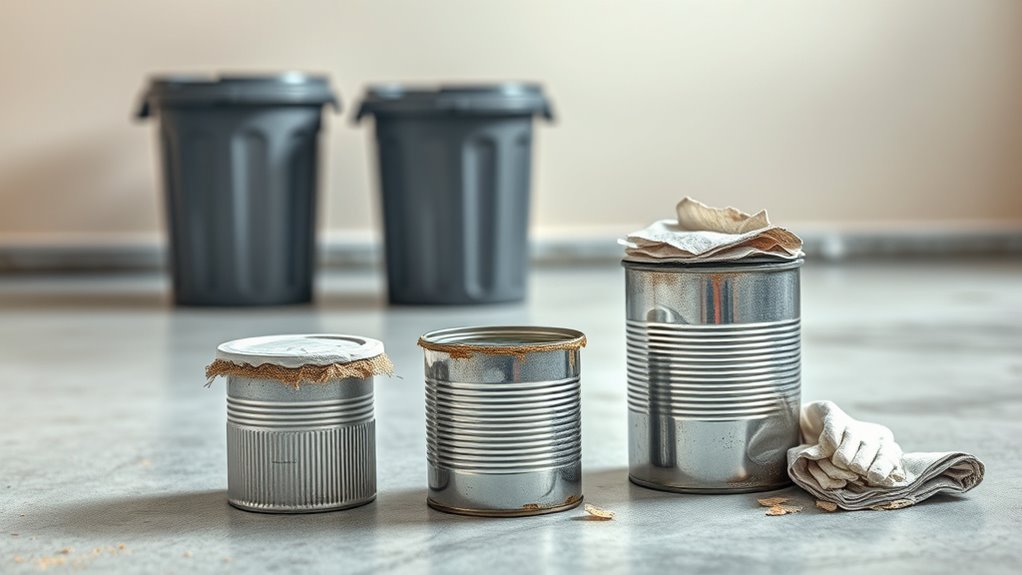
If the paint is completely dry and the can is empty, you can usually toss it in your regular trash—many local waste programs treat dried, solidified paint as nonhazardous.
You should still check local rules because some areas require cans be recycled or taken to a household hazardous waste site.
Remove labels if required and make sure lids are off so collectors know it’s empty.
Consider the environmental impact: recycling metal cans reduces waste, and donating usable leftover paint prevents disposal.
Note paint color only matters for reuse or donation choices, not for whether a dry, empty can can go in trash.
Why Drying Paint Before Disposal Matters for Safety
You should dry leftover paint thoroughly because wet or partly wet cans can cause accidental fires in trash compactors or landfills.
Letting paint dry also cuts down on toxic fumes that can harm you and sanitation workers.
Finally, disposing only fully dried paint helps you meet local waste rules and avoid fines.
Prevents Accidental Fires
When oil- or solvent-based paint isn’t fully dried, its residual vapors and flammable components can ignite from heat, sparks, or even a smoldering cigarette. So drying cans before disposal cuts a clear fire risk.
You protect your home, trash crew, and waste facilities by making sure lids are off and paint is solidified. That simple step reduces the chance of dumpsters or collection trucks catching fire, limits emergency responses, and lowers long-term environmental impact by preventing burned residues.
Follow label guidance, use absorbents for small amounts, and remember chemical safety practices to handle drying and transport responsibly.
Reduces Toxic Fumes
Because wet paint keeps releasing volatile organic compounds (VOCs) and other toxic fumes, drying cans before disposal cuts ongoing emissions that can harm your indoor air and the environment. You should let cans fully harden outdoors or in a ventilated area so fumes dissipate; this lowers the environmental impact and reduces health risks.
Consider these steps:
- Remove lids and air-dry small amounts until solid.
- Add absorbent (kitty litter) for semi-wet paint, stir until firm.
- Label with paint color and drying date before trashing.
Drying protects your household air and nearby community from lingering toxins.
Ensures Legal Compliance
1 simple step—drying paint cans completely—can keep you on the right side of local disposal laws and hazardous-waste rules. You’ll avoid fines and delays by following municipal guidelines that treat liquid paint as hazardous.
When paint’s fully solidified, you can often dispose of cans with regular trash or at designated collection events, depending on safety regulations where you live. Check local recycling centers and curbside rules before tossing cans.
Proper drying also reduces environmental impact by preventing spills and contamination of soil and waterways. By doing this simple step, you’ll protect your community and comply with legal requirements.
How to Confirm Paint Is Fully Dried and Solidified
Before you toss the can, check that the paint surface is rock-hard with no tackiness when you press gently.
Give the can a slight tilt or use a stick to probe; there should be no liquid sloshing or reshaping.
If it resists pressure and stays solid, it’s safe to proceed with disposal steps.
Check For Rock-Hard Surface
When the paint can feels rock-hard across the entire surface, you can be confident it’s fully dried and safe to dispose of. Press your fingertip gently in the center and along the edges to check for any soft spots or tackiness. Different paint color pigments and drying time affect texture, so account for that.
If the surface is firm, follow these checks:
- Tap the lid—solid sound means no liquid movement.
- Scratch lightly with a coin—no smear or gummy residue means cured.
- Smell test—no strong solvent odor suggests full cure.
If any test fails, wait longer before disposing.
Verify No Liquid Reshaping
How can you be sure the paint won’t deform if the can gets jostled? Test multiple spots with a gloved fingertip—press firmly but gently across the surface and edges. If any indentations, tackiness, or glossy seams appear, liquid reshaping is still possible and the can isn’t ready.
Smell for solvents; a lingering odor suggests incomplete cure.
Scrape a small area with a screwdriver to check internal paint texture: it should flake or sound solid, not smear. Allow more drying time if you detect softness.
Only when every layer resists pressure and retains a dry paint texture is disposal safe.
Air‑Dry Open Paint Cans Safely
If you’ve got partially used cans you want to air-dry, do it where they’ll get steady ventilation, low humidity, and no chance of being knocked over by pets or children. Leave lids off to let solvents evaporate, but keep cans shaded and on a stable, nonflammable surface.
Air-dry partially used cans in a shaded, well-ventilated spot on a stable, nonflammable surface—keep lids off.
Note paint branding and any color mixing notes on the can before disposal.
Check cans daily until solid; stir occasionally to expose wet spots. When fully dried, reseal or label as empty per local rules.
- Monitor progress daily.
- Prevent contamination.
- Record brand and color.
Dry Paint With Kitty Litter, Sawdust, or Absorbents

If your paint won’t air-dry, choose an absorbent like kitty litter, sawdust, or a commercial absorbent that’s rated for paints.
Mix enough material into the can until the paint is stiff and no longer sloshes when you tilt it.
Let it cure in a well-ventilated area until fully hardened before sealing the can for disposal.
Choose Absorbent Material
When you’re ready to dry out small amounts of leftover latex paint, choose an absorbent that’s safe, inexpensive, and easy to handle—cat litter, sawdust, or commercial paint solidifiers all work well. Consider the paint color only for aesthetic sorting; darker shades mask stains better during disposal. Choose based on drying time needs and availability.
- Clumping cat litter — cheap, clumps fast, easy to scoop.
- Sawdust or wood shavings — biodegradable, great for larger volumes.
- Commercial paint solidifier — formulated for quicker, reliable drying.
Pick gloves, work outdoors or in a well-ventilated area, and avoid materials that react with paint.
Safe Mixing And Drying
Because you’ll be handling potentially messy materials, start by laying out gloves, a disposable stirring stick, and a flat surface outdoors or in a well-ventilated area.
Then open the can and assess paint consistency so you can add absorbent in small batches.
Stir in kitty litter, sawdust, or a commercial absorbent until the paint loses gloss and thickens; avoid overfilling.
Scrape sides and mix to expose wet spots, noting paint color for disposal records.
Let the mixture cure until it’s dry to the touch — check drying time daily.
Once solidified, seal the can and label before disposal.
Use Paint Hardener or Cement Products to Solidify Paint

Although you might prefer waiting for paint to dry naturally, using a commercial paint hardener or an absorbent cement product lets you solidify leftover paint quickly and safely so you can dispose of the can properly.
If you’d rather not wait, a commercial paint hardener or absorbent cement will solidify leftover paint fast and safely.
Read container labels and follow manufacturer directions for Paint safety. Wear gloves and eye protection, stir in the recommended amount, and allow full cure before disposal.
Consider these steps:
- Check container labels for compatibility and cure time.
- Add specified hardener or cement granules; mix thoroughly.
- Confirm solidification, then tape lid and label contents for pickup or drop-off.
How Long Paint Types Take to Dry: Latex vs. Oil
If you’re deciding whether to toss or keep leftover paint, knowing how long different types take to dry helps you choose the right disposal or storage method.
Latex dries by water evaporation and usually skins over in 1–2 hours, becomes touch-dry in 1–2 hours, and fully cures in 2–4 weeks depending on thickness and paint color additives.
Oil-based paints take longer: they feel dry in 6–8 hours but can take days to harden and weeks to cure because solvents must oxidize.
Temperature, humidity, and ventilation affect drying time, so adjust expectations before labeling cans ready for disposal.
What to Do With Partially Dried or Skin‑Sealed Paint
Knowing how paint dries helps you recognize partially dried or skin-sealed paint and decide what to do next. If a skin formed, don’t stir it in—remove the film and check underneath.
Knowing how paint dries helps you spot skin-sealed paint—remove the film and inspect beneath before using.
Evaluate paint color uniformity and smell; odd changes suggest contamination. Inspect container material for corrosion or swelling.
- Scoop or peel off the skin, then strain before reuse.
- Add appropriate reducer (water for latex, mineral spirits for oil) sparingly and mix to restore consistency.
- If restoration fails or odor persists, dispose of contents per local hazardous-waste rules rather than saving compromised paint.
Remove Paint Residue From Can Rims and Lids
When you’re done using a paint can, clean rims and lids promptly to prevent hardened residue from sealing the container shut or contaminating future batches. Wipe excess paint with a rag, scraping gentle layers to avoid pushing paint back into the can.
Use a putty knife or palette tool to lift paint layering that builds around the rim; work around the circumference for even removal. For lid removal, tap edges lightly with the knife to free stuck spots, then pry straight up to avoid warping.
Dispose of used rags per local rules and store lids clean to keep cans resealable.
How to Read Paint Can Hazard and Disposal Labels
Wondering what those tiny symbols and short phrases mean? Read can labels before tossing a dried can. They tell you hazards (flammable, toxic), recommended drying methods, and disposal hints tied to paint color or formulation.
Look for expiration, VOC level, and recycling icons. Follow this quick checklist:
Look for expiration, VOC levels, and recycling icons—then follow this quick checklist before disposing of paint cans.
- Note hazard pictograms and signal words (Danger/Warning).
- Match disposal instructions to paint color/type (latex vs. oil).
- Check manufacturer notes about recycling or solidification.
If labels are unclear, treat the can as potentially hazardous and contact your local waste authority for guidance rather than guessing.
How Municipal Rules Change Your Disposal Options
Rules for disposing of dried paint cans change from town to town, so you should check your local regulations first.
Some places accept empty or fully dried cans at the curb with regular trash, while others require drop-off at a household hazardous waste facility.
Knowing which option applies where you live will save you time and keep you compliant.
Local Regulations Vary
Because municipal rules differ, your options for disposing of dried paint cans depend on where you live: some cities accept empty or fully dried cans in regular trash, others require drop-off at hazardous waste facilities or special collection events, and a few let you recycle certain metal cans. Check local ordinances and community programs before you act.
Consider these steps:
- Verify whether your municipality treats dried paint as regular trash, recyclable material, or hazardous waste.
- Locate authorized drop-off sites or scheduled collection events.
- Follow labeling and preparation rules to minimize environmental impact and avoid fines.
Curbside Vs. Drop-Off
Once you know how your municipality classifies dried paint, you can decide whether curbside pickup or a drop-off site makes the most sense. Check local rules: some accept dried, empty cans in regular trash; others require placement in recycling bins or special curbside hazardous waste collection.
Drop-off sites often accept larger volumes and offer safer handling, reducing environmental impact. Curbside is convenient but limited by size, drying level, and schedule.
Look for community programs that collect paint for reuse or proper disposal. Follow labeling and preparation instructions to guarantee compliance and protect sanitation workers and the environment.
Where to Find Your City or County Hazardous‑Waste Rules
To find the hazardous‑waste rules that apply to your dried paint cans, check your city or county’s official website first—look for solid‑waste, public works, or environmental services sections where disposal guidelines and drop‑off locations are posted.
Use those pages to confirm acceptable can conditions and limits, because rules vary and protect environmental impacts from improper disposal and discourage unsafe DIY techniques.
If the website is unclear, contact the listed office by phone or email.
Check also community calendars for hazardous‑waste events and recycling partners.
- Search site maps
- Read FAQ and guides
- Call for clarification
Prepare Dried Paint Cans for Curbside Pickup
If your local program accepts dried paint cans at the curb, get them ready by confirming each can is completely dry. Lids should be removed or punctured per local rules, and labels noting “dried paint” should be clearly visible—this helps collectors identify the waste and prevents spills during handling.
Check dryness by stirring: there should be no wet swirls, tackiness, or unsettled paint. Note the paint color on the label so collectors know the contents.
Record the drying time used and method (air, kitty litter, commercial hardener) in case of questions.
Place cans upright on your curb at the scheduled collection time and follow seasonal pickup rules.
Pack Dried Paint for Hazardous‑Waste Drop‑Off
Wondering how to package dried paint for a hazardous‑waste drop‑off? You’ll want secure, labeled containers and clear handling to minimize Environmental impact and enable Creative disposal where possible. Follow these steps:
- Place cans in sturdy boxes with absorbent material (kitty litter) to prevent shifting.
- Seal lids tightly, label each can with color and “dried paint,” and tape the lids.
- Keep oil‑based and water‑based cans separate, and bundle small cans together.
Transport boxes upright in your vehicle, avoid crushing, and bring any product information. Drop‑off staff will advise next steps, so arrive during open hours and follow site instructions.
What HHW (Household Hazardous Waste) Facilities Will Accept
When you bring dried paint to a household hazardous‑waste (HHW) facility, staff will usually accept latex (water‑based) and oil‑based paints, emptied aerosol cans, and paint‑related wastes like solvents, thinners, and contaminated rags—though acceptance can vary by site. You should ask ahead; some facilities limit quantities or charge fees. Bringing properly labeled, dried cans helps staff protect the environment and reduce environmental impact. Community programs often coordinate special collection events. Below’s a simple table that echoes the relief you’ll feel handing off hazards:
| Accepted | Emotions |
|---|---|
| Latex, oil | Relief |
| Solvents | Reassurance |
| Aerosols | Confidence |
Locate Paint Recycling and Reuse Programs Near You
Once you’ve confirmed what your local HHW facility will take, look for paint recycling and reuse options that keep usable product out of the waste stream. Check municipal programs, paint retailers, and non‑profits that accept leftover paint for processing or resale. Bring cans labeled with paint color and finish, and note prior brush cleaning solvents used.
- Search city or county waste pages for paint take‑back events.
- Call paint stores about reconditioning or tint‑back services.
- Contact community groups that collect cans for reuse.
You’ll save resources and avoid landfill disposal by using these local recycling routes.
Donate Leftover Dried Paint or Redistribute Small Amounts
If you have small amounts of dried paint or cans that are nearly empty, consider donating them to local organizations or passing them along to neighbors and community groups—many schools, theater groups, and DIY workshops will gladly accept paint for projects.
You can label colors and condition, note any safety info, and offer brushes or leftover rollers. Creative reuse ideas include craft projects, sample boards, or touch-up work.
Before handing over, make sure lids are secure and cans are fully dry. Promote paint donation via neighborhood apps or bulletin boards so usable paint finds a new home instead of ending up in the trash.
How Paint Exchange Events and Community Reuse Centers Work
After passing along usable paint, you might look for organized ways to share larger quantities—paint exchange events and community reuse centers offer exactly that. You can drop off sealed, labeled cans; staff check for usable condition and guide safe handling. These reuse programs lower waste and promote paint safety by preventing improper disposal.
Expect clear rules, scheduling, and acceptance criteria.
- Drop-off procedures and labeling requirements
- How swaps or pickup logistics work
- Fees, volunteer roles, and remaining-use testing
You’ll leave with usable paint or confidence that leftover materials were managed responsibly.
Recycle Empty vs. Contaminated Dried Paint Cans
Wondering whether that empty can belongs in your curbside bin or needs special handling? You should check local guidelines: some programs accept truly empty, dry cans for can recycling, while contaminated cans with residue, hardened globs, or evidence of paint mixing often need special disposal.
Avoid rinsing liquid paint into drains; let small amounts dry fully or absorb with kitty litter before disposal per rules. Label cans clearly and separate lids.
If uncertain, contact your municipal waste or hazardous waste facility— they’ll tell you whether the can qualifies for regular recycling or requires drop-off as contaminated paint waste.
How Recyclers Define an “Empty” Paint Can
Knowing whether a can is truly empty will determine if it goes to curbside recycling or needs special handling, so recyclers set clear criteria you can follow. You’ll learn the practical tests that separate true empties from hazardous leftovers and avoid paint container myths that cause improper disposal and greater environmental impact.
- No wet paint: scrape or invert—no visible liquid or globs.
- Dry residue: remaining paint is hard, flaky, and won’t pour or smear.
- Clean lid area: lid and rim free of tacky paint so seals can open safely.
Follow local rules if unsure.
Clean Cans for Recycling Without Creating Runoff
When you’ve confirmed a can is dry, clean it for recycling without creating runoff by scraping out flaky paint into a trash bag or compostable liner and wiping the interior with a folded paper towel—don’t rinse the can under running water.
After scraping, deposit towels and flakes in your household trash unless local rules require hazardous disposal. Peel or puncture protective liners and leave lids off so recyclers can inspect cans.
Wear gloves and eye protection to maintain painting safety while you work. Minimizing water use prevents paint entering drains and reduces environmental impact, keeping runoff and contamination out of waterways.
Handle Oil‑Based Paint Cans Differently From Latex Cans
Because oil‑based paints contain solvents and heavier chemicals, you’ll treat their cans differently than latex: don’t assume drying them makes them safe, and never pour leftover oil paint or solvent into drains or onto the ground. You should check label disposal instructions and local hazardous waste rules, note paint color for inventory, and monitor drying time closely.
For safe handling:
- Use absorbents (cat litter) to solidify small amounts, then seal in metal can.
- Store larger leftovers in sealed containers for hazardous waste collection.
- Mark cans “oil‑based,” include paint color and date before drop‑off.
Dispose of Paint With Additives, Lead, or Other Contaminants
Oil‑based and latex disposal rules don’t cover every paint you might have—some cans contain additives, heavy metals like lead, or other contaminants that demand stricter handling.
If you suspect paint additives or lead contaminants, treat cans as hazardous waste. Don’t toss them in regular trash or let residues enter drains or soil.
Contact your local hazardous waste facility for drop‑off instructions and transport guidance. Label cans clearly and keep them sealed and upright.
If testing is uncertain, get a professional analysis rather than guessing. Follow local regulations strictly; improper disposal risks fines and environmental harm.
Safety Gear and Best Practices for Drying and Handling Cans
Before you start drying or moving paint cans, put on proper personal protective equipment—gloves, safety goggles, and a mask—to protect against fumes and accidental spills.
Use well-ventilated areas and follow safe drying procedures, like leaving lids off in a shallow tray and keeping cans away from heat sources.
Handle fully dried, hardened paint only, and label or mark cans so collectors know they’re safe to transport.
Personal Protective Equipment
When you’re handling and drying leftover paint cans, wear proper protective gear to keep dust, chemical residues, and sharp edges from harming you.
For personal safety, choose gloves, eye protection, and a respirator suited to solvents and particulates. Fit gear properly, inspect for damage, and replace worn items. Keep a first-aid kit and emergency wash nearby.
Follow this checklist:
- Nitrile or chemical-resistant gloves — no thin latex.
- Safety goggles or face shield — sealed against splashes.
- NIOSH-approved respirator with appropriate cartridges — fitted and tested.
Dispose of contaminated gear per local rules; don’t reuse disposable items.
Safe Drying Procedures
Because drying leftover paint properly reduces fire and environmental risks, you should follow controlled, well-ventilated procedures and use the right safety gear at every step. Wear gloves, eye protection, and a respirator when working with solvent-based paints; for latex, gloves and a mask usually suffice.
Open lids outdoors or in a ventilated area, stir to assess consistency and note paint color for labeling.
Speed drying with cat litter or sawdust absorbs moisture; spread paint thinly on disposable cardboard to cut drying time.
Keep cans away from heat sources, check cans daily, and seal or dispose once fully solidified.
Documenting Disposal for Landlord, HOA, or Business Records
If you need proof for a landlord, HOA, or business audit, keep a concise disposal record that shows what you threw away, how you prepared it, and when and where the disposal happened. Documenting helps protect property, shows attention to environmental impact, and supports community safety.
- List cans (size, color), drying method used, and photos of fully dried contents.
- Note disposal date, drop-off location or trash pickup details, and attendant or permit numbers if applicable.
- Keep receipts, emailed confirmations, and a signed log entry for at least one year for audits.
Cost Comparison: Free vs. Paid Disposal Options
Although free disposal options can save you money, paid services often add convenience or compliance guarantees you might need. You’ll weigh costs: municipal drop-offs are free but may require appointments, specific labeling of paint color, and proof of residency.
Paid pick-up or hazardous waste services charge per can or by volume, yet they handle transport, documentation, and faster handling. Consider drying time—if cans aren’t fully dry, a paid service may refuse them or charge more.
Factor travel time, required paperwork, and risk of fines for improper disposal. Choose the option that balances price with your time and legal safety.
Reduce Waste: Buy, Store, and Use Only What You Need
When you plan projects with the paint you’ll actually need, you cut costs and reduce leftover cans that end up as waste. Measure surfaces, test samples, and choose multipurpose colors so you buy less. Prefer products with eco friendly packaging and smaller sizes when possible. Share surplus with neighbors or donate via a community collection program instead of letting cans sit.
- Calculate square footage and add 10% for touch-ups.
- Use sample pots to confirm color and finish.
- Buy from retailers offering take-back or recycling incentives.
You’ll save money, lessen disposal hassle, and shrink your environmental footprint.
How to Store Leftover Paint to Keep It Usable Longer
Want to keep leftover paint usable for months or even years? Seal cans tightly, press a layer of plastic wrap over the paint before replacing the lid, and tap the rim with a mallet to prevent air entry.
Store cans upside down to create an airtight seal and slow skinning. Keep them in a cool, dry place away from direct sunlight and temperature extremes, like a climate-controlled closet or basement.
Use clear, sturdy storage containers for partial cans to prevent spills and contamination. Note the paint color on the lid for quick identification, and avoid stacking cans where seals could be compromised.
Label and Organize Stored Cans to Avoid Disposal Issues
Now that you’ve stored cans to keep paint usable, label and organize them so you don’t end up with mystery colors or disposal headaches. Use clear Labeling tips: date, color name, sheen, and project. Keep labels on lids and sides so you can read them whether stacked or shelved.
For efficient Storage organization, group by room, color family, or type (interior/exterior). Use shelving with bins for lids and brushes. Rotate older cans forward so you use them first.
Numeric checklist to follow:
- Date and color on lid.
- Store by category.
- Keep lids accessible for verification before disposal.
Common Mistakes When Disposing of Dried Paint Cans (and Fixes)
Because dried paint cans look harmless, people often toss them with regular trash or leave lids loosely closed, which creates problems for sanitation workers and the environment. You might ignore label info like paint color or assume container material doesn’t matter. Don’t. Seal lids, check local rules, and remove loose lids. If cans still contain residue, treat them as hazardous. If you’re unsure, call your local hazardous waste center. Learn to separate empty, dried cans from contaminated ones to avoid fines, spills, and worker harm.
| Mistake | Feeling |
|---|---|
| Tossing open cans | Worry |
| Ignoring labels | Regret |
| Mixing materials | Frustration |
| Crushing cans | Alarm |
| Delaying disposal | Guilt |
Quick Checklist: Step‑by‑Step Disposal Process for Dried Paint Cans
First, make sure the paint is completely dry by touching or stirring the can—no soft spots.
Then remove and label the lids so collectors know what’s inside.
Finally, follow your local disposal rules to toss or recycle the can appropriately.
Confirm Paint Is Fully Dry
Before you dispose of a paint can, make sure the contents are completely dry so it won’t spill or release fumes; wet or tacky paint still counts as hazardous waste. Check surface dryness and smell to confirm. Note that paint color and drying time vary by type and thickness, so don’t assume.
- Scrape: use a stick to test center and edges.
- Touch: press a clean finger—no tackiness allowed.
- Smell: no solvent odor should remain.
If the can passes all three, it’s ready for disposal steps.
If not, let it dry longer in a ventilated area.
Remove And Label Lids
Once the paint is fully dry, remove the lid and inspect both the can and lid for any loose paint chips or residue. Then securely reseal the can to prevent moisture and pests from getting in.
For lid removal, pry gently with a flat tool to avoid bending the rim. Clean any flakes from the groove so the lid seats tightly. Let both parts dry fully before labeling.
Use a permanent marker or waterproof sticker when labeling lids with color, date, and type (e.g., latex, oil). Clear labels help you or waste handlers identify contents quickly and reduce handling errors.
Dispose According Local Rules
Because local rules vary, check your municipality’s guidelines before you throw out dried paint cans, and follow this quick, step‑by‑step checklist to guarantee proper disposal. You’ll reduce environmental impact and avoid fines by confirming whether your cans go in regular trash, curbside recycling, or a hazardous-waste event. Also look for community programs that accept leftover paint.
- Verify local disposal rules online or call your waste agency.
- Separate labeled, fully dried cans from wet or salvageable paint.
- Use drop-off centers or scheduled collection if required; keep receipts or confirmation.
Follow rules to protect your neighborhood and local environment.
Additional Resources: EPA, HHW Directories, and Recycling Guides
If you’re unsure about local rules or want step-by-step guidance, consult authoritative resources like the EPA’s hazardous waste pages, your municipality’s household hazardous waste (HHW) directory, and regional recycling guides — they’ll tell you what’s accepted, how to prepare dried paint cans, and where to drop them off.
Use EPA materials to learn about environmental impacts and correct labeling. Your HHW directory lists collection events, drop-off sites, and acceptance policies.
Recycling guides explain can preparation, metal recycling options, and alternatives like donation. Check resources before disposal, and consider paint color options for reuse or community paint-exchange programs.
Quick FAQ: Top Questions About Dried Paint Can Disposal
Got questions about dried paint can disposal? You’ll want to confirm the paint is fully dry, check your local disposal rules, and know whether your cans qualify for recycling or need hazmat handling.
Below are quick answers to those top concerns.
Is It Fully Dry?
When you’re checking a paint can, make sure the contents are truly dry and not just skin-deep. Test by stirring—if it clumps or sticks, it needs more drying time regardless of paint color. Check the bottom; wet residue hides there. Use this quick checklist:
- Probe center with a stick—no tackiness.
- Press a fingertip lightly—no mark or transfer.
- Shake can gently—no sloshing or liquid sound.
If all three pass, it’s solid enough to dispose as dried paint. If not, leave the lid off in a ventilated area or add absorbent material and wait longer.
Local Disposal Rules
Now that you’ve confirmed the paint is fully dry, check your city or county rules before tossing the can. Local ordinances vary: some let you place dry, empty cans in regular trash; others require drop-off. Follow guidelines to reduce environmental impact and support paint preservation efforts like community reuse programs. If rules aren’t clear, call your waste agency.
| Rule source | Typical requirement |
|---|---|
| City landfill | Empty, dry cans only |
| County transfer station | May require drop-off |
| Local reuse program | Acceptable for donation |
Keep documentation and follow labeling to avoid fines or contamination.
Recycling And Hazmat
Because dried paint cans can fall into recycling, hazardous-waste, or landfill streams depending on where you live, you should check a few quick facts before deciding what to do with them. You’ll want to limit environmental impact and follow local guidance: some places accept empty, dry cans in curbside recycling; others treat them as household hazardous waste. Contact your municipality or search community programs for drop-off events.
Quick steps:
- Confirm dryness and remove lids.
- Check local recycling or hazmat rules.
- Use community programs or hazardous-waste days if required.
Label cans if returning to a collection site.
Frequently Asked Questions
Can I Dispose of Paint‑Stained Rags With the Dried Paint Can?
No, you shouldn’t toss paint‑stained rags with the dried paint can; for proper paint disposal, you’ll separate rags and cans, safely dry or bag rags to prevent fire hazards, then follow local Rags and cans recycling rules.
What Do I Do With Dried Paint Skins Separated From the Can?
Like flakes of old wallpaper, you should bag dried paint skins and treat them as hazardous waste; check paint recycling programs and local disposal rules, then drop them off or follow curbside guidance so you don’t contaminate recycling.
Are Spray Paint Canisters Handled Differently When Empty but Dented?
Yes — you should treat empty cans differently if dented: check that empty cans are fully depressurized, then handle dented containers cautiously, following local hazardous-waste rules for recycling or special disposal to avoid leaks or punctures.
Can I Mix Different Dried Paints Together Before Disposal?
About 30% of household hazardous waste comes from paints, so don’t mix dried paints—you’ll complicate paint recycling and risk violating disposal regulations. You should keep colors separate, label cans, and follow local drop-off rules.
Will Septic Systems Be Affected by Rinsing Paint Can Residue?
Yes — rinsing paint can residue can harm your septic system impact because paint residue risks include killing beneficial bacteria and clogging pipes, so don’t rinse into drains; dispose of solids with household hazardous waste instead.
Conclusion
You can dispose of dried paint cans safely once the paint’s solid, the lid’s off, and local rules allow it. Let it air‑dry, mix in an absorbent, or follow household hazardous waste guidance; don’t pour, don’t guess, and don’t rush. Protect yourself, protect your neighbors, protect the environment: check labels, confirm dryness, and follow pick‑up or drop‑off rules. Do it right once, do it safely every time, do it for the future.
