
How to Dissolve Dried Paint Quickly and Safely
Match the solvent to the paint and act promptly: water or soapy water for latex/acrylic, denatured alcohol for stubborn water‑based spots, mineral spirits or acetone for oil‑based paint. Work in a ventilated area, wear gloves and eye protection, remove loose flakes first, apply solvent sparingly, wait a short dwell time, then agitate with a soft brush or rag and lift softened paint. Test a hidden spot first, dispose of rags safely, and keep going to learn safer techniques and alternatives.
Fast Fix: Dissolve Dried Paint Safely (Quick Steps)

If you’re dealing with dried paint on a brush, tool, or small surface and need a quick fix, act promptly and choose the right solvent for the paint type—water for water-based paints, mineral spirits or paint thinner for oil-based—while wearing gloves and working in a well-ventilated area.
Start with basic surface preparation: remove loose flakes by gently scraping or brushing.
Apply the appropriate solvent sparingly, let it sit briefly, then agitate with a cloth or soft brush.
Rinse or blot away loosened paint, repeat if needed, and dry thoroughly.
Dispose of solvent-soaked materials safely to finish paint removal.
Identify Dried Paint Type & Surface
Wondering whether that crusty patch is water- or oil-based paint? You’ll test it before choosing paint removal techniques. Rub a hidden edge with rubbing alcohol—if it softens, it’s water-based; if not, try mineral spirits later in the next section.
Inspect the surface: wood, metal, drywall, or masonry each needs different handling. Look for layers, flaking, or previous sealers that affect adhesion.
Note temperature and ventilation; brittle paint often means long cure.
Document findings and gently scrape a small area to reveal substrate condition. These surface preparation tips prevent damage and guide safe, effective removal.
Best Solvents by Paint Type (Latex, Acrylic, Oil)
Now that you’ve identified the paint type and checked the substrate, pick a solvent matched to the coating:
Water-based latex and acrylic respond to denatured alcohol, warm soapy water, or commercial latex removers.
Oil-based paints require mineral spirits, acetone, or paint-compatible strippers.
Test solvents on a hidden area. For latex/acrylic, soak a rag briefly and blot. For stubborn spots, use denatured alcohol or a remover rated for the finish.
For oil-based, apply mineral spirits or acetone sparingly and work gently.
Rinse surfaces and follow up with proper brush cleaning.
Choose gentlest effective paint removal techniques to protect the substrate.
Dissolve Dried Paint: Step‑By‑Step (Tools, Timing, Safety)
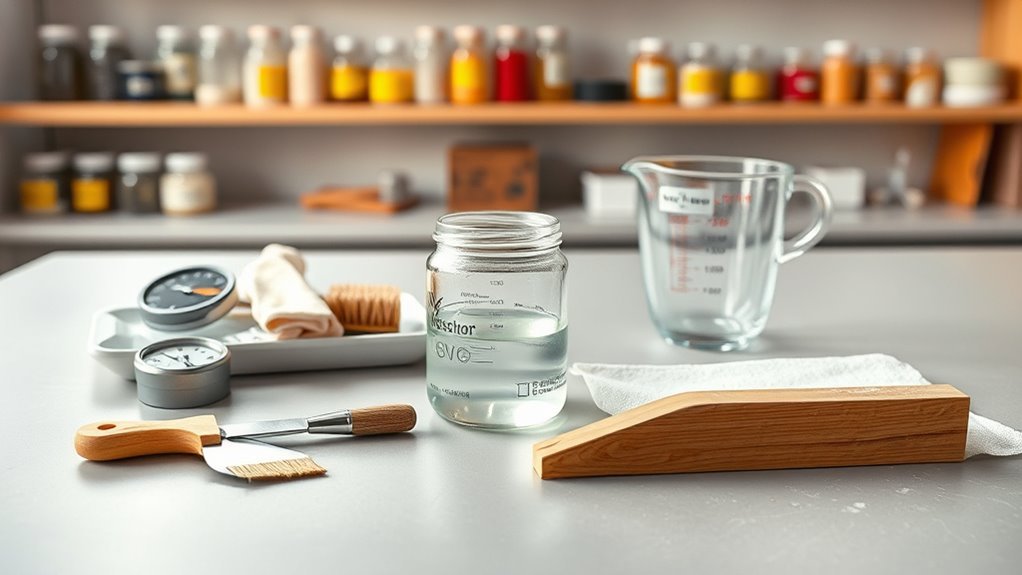
Before you begin dissolving dried paint, gather the right tools, plan the timing, and set up safety gear so the job goes smoothly and without damage. Choose brushes, scrapers, nylon pads, rags, containers, and appropriate gloves and goggles.
Test solvent on a hidden spot; use eco-friendly solvents when possible. Work in a ventilated area, schedule short sessions to avoid fatigue, and keep children and pets away.
Apply solvent conservatively, wait the specified dwell time, then agitate and lift softened paint. For delicate surfaces, consider alternative removal techniques like heat or gentle mechanical abrasion.
Repeat carefully until clean.
Dispose, Clean Up, and When to Call a Pro
When the paint’s gone, don’t rush the cleanup—proper disposal and cleanup guarantee you safety and prevent environmental harm.
You’ll gather used rags, solvent containers, and brushes; seal them in labeled, airtight bags or approved hazardous-waste containers. Follow local rules for paint removal waste and never pour solvents or paint down drains.
Ventilate and wear gloves and eye protection as part of safety precautions while wiping surfaces and neutralizing residues.
If paint covers large areas, contains lead, or resists removal despite safe methods, call a pro—licensed contractors handle hazardous materials, guarantee compliance, and protect your home and health.
Frequently Asked Questions
Can Dissolved Paint Damage Nearby Electronics or Appliances?
Yes — if you’re careless, paint remover fumes or liquid can harm electronics or appliances; you’ll protect surface safety by ventilating, keeping solvents away, powering down devices, covering nearby equipment, and wiping spills immediately to prevent corrosion or shorting.
Can Solvents React Dangerously With Treated Wood Finishes?
Yes — you shouldn’t assume safety; solvents can cause chemical reactions with treated wood finishes and strip or discolor them. You should test a hidden spot first, use compatible cleaners, and prioritize finish preservation and ventilation.
How Do I Handle Dried Paint on Delicate Fabrics or Upholstery?
You should test fabric safety first, blot gently, and use recommended upholstery care products or mild solvent on an inconspicuous spot; avoid rubbing, rinse thoroughly, and consider professional cleaning for fragile or antique textiles.
Are There Eco-Friendly Solvent Alternatives for Indoor Use?
Imagine a green leaf wiping paint away: you can use eco friendly solvents like citrus-based cleaners and soy or vegetable-derived natural paint removers indoors; they’re gentler, low-odor, and biodegradable, so you’ll ventilate and test first.
Can Dissolved Paint Fumes Affect Pets or Indoor Plants?
Yes — paint odor can harm pets and plants; you’ll notice respiratory irritation, lethargy, or leaf damage. Keep animals and greenery away, ventilate thoroughly, use low-VOC products, and monitor pet safety until fumes dissipate.
Conclusion
So you learned how to coax stubborn paint off without torching the house or dunking the cat in solvent — handy, since desperate scrubbing rarely wins. Now you can flirt with acetone, outwit latex with warm soapy tricks, and pretend that every spill was a planned experiment. If things still look like modern art, call a pro before your “quick fix” becomes a renovation. At least you’ll have a story.
