
How to Paint Osb Walls
Inspect walls for soft spots, delamination, and edge swelling, repair or replace compromised sections, sand rough areas, and remove dust. Control moisture—fix leaks and dry the board—then seal OSB with a compatible sealer or bonding primer to prevent swelling and tannin bleed. Use an oil‑based or high‑adhesion latex primer, sand lightly between thin coats, and finish with satin or eggshell topcoat applied evenly. Follow cure times, and continue for tips on getting a smoother, longer‑lasting finish.
Inspect and Repair OSB Walls Before You Paint
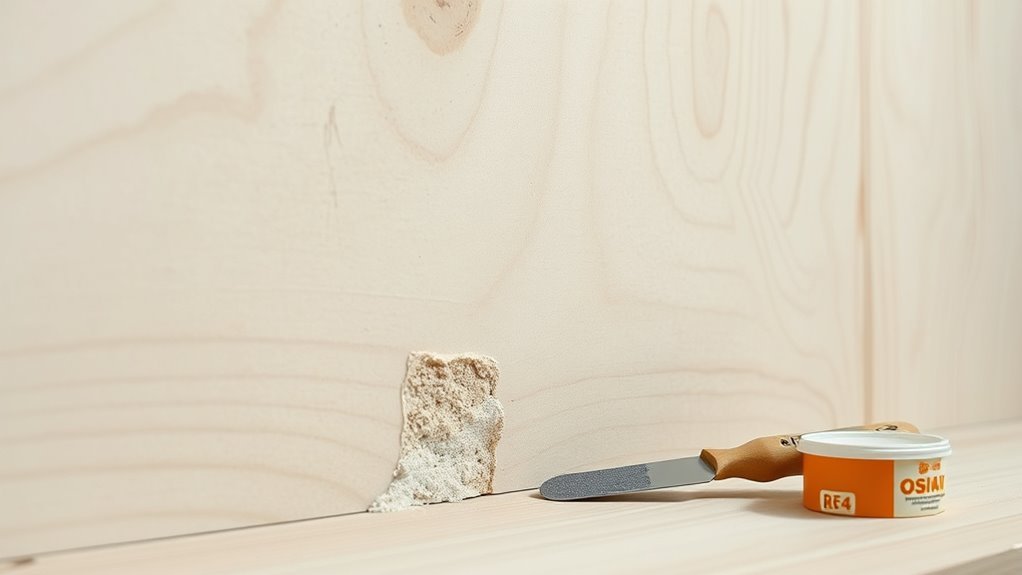
Before you paint, thoroughly inspect OSB for damage, moisture, and loose strands so you don’t seal problems into the finish. You’ll check for soft spots, delamination, and edge swelling, marking areas that need repair.
Prioritize moisture control: find leaks, measure humidity, and dry the board fully before work.
Remove loose strands and sand rough patches to create consistent surface preparation, filling gaps or gouges with an appropriate wood filler.
Replace sections that are structurally compromised.
After repairs, recheck flatness and cleanliness so the substrate’s ready for sealing and priming without hidden defects.
Seal & Prime OSB Before You Paint (Prevent Swelling & Tannin)
Why seal OSB first? You’ll prevent swelling and tannin bleed by blocking moisture and resins.
For effective surface preparation, clean dust and sanding residue, then apply a sealing coat—use a primer or sealer designed for engineered wood.
Test material compatibility with your chosen sealer to avoid adhesion or discoloration issues.
Work in thin, even coats, letting each cure fully before light sanding and a second coat.
Sealing stabilizes the panel and creates a uniform base so later coatings perform predictably.
Don’t skip this step; it protects the substrate and improves long-term finish durability.
Choose Primer and Paint That Work on Textured OSB
Which primer will stick and which paint will hide those rough flakes? You’ll want a high‑adhesion, oil‑based or bonding latex primer formulated for engineered wood; it soaks and seals without lifting texture.
Use a high‑adhesion oil or bonding latex primer made for engineered wood to soak, seal and prevent texture lift.
For texture enhancement, choose a primer that evens porosity so subsequent coats don’t puddle in grooves.
Pick a topcoat with good hide and flexible solids—satin or eggshell hides flaws better than flat or high‑gloss.
During color selection, test swatches on primed OSB to see how light and shadow play across flakes.
Let primer dry fully before deciding; the right combo reduces sanding and boosts durability.
Paint OSB: Step‑by‑Step for Smooth, Long‑Lasting Coverage
Once you’ve primed and tested colors, start painting OSB methodically so coats lay down smoothly and last—work in a well‑ventilated area, use a quality brush for edges and a short‑nap roller for the field, and apply thin, even coats that follow the board grain to avoid trapping paint in grooves.
Begin by cutting in corners and seams, then roll in overlapping passes, maintaining a wet edge to prevent lap marks.
Sand lightly between coats where rough OSB wall textures show, vacuum dust, and tack if needed.
Follow manufacturer dry times, apply two to three thin coats, and inspect under varied light.
Troubleshoot and Maintain Painted OSB (Fix Flaking, Clean, Recoat)
If paint starts to flake, peel, or look dull over time, act quickly to isolate the problem and prevent further damage; you’ll save time and materials by diagnosing whether it’s adhesion failure, moisture, or surface contamination before you repair.
Inspect and test small areas, then follow a focused plan:
Inspect and test small areas first, then follow a focused plan to diagnose and repair paint problems.
- Remove loose paint, sand feathered edges, and clean for proper surface preparation.
- Test moisture with a meter; fix leaks or humidity issues before recoating.
- Prime bare OSB with a bonding primer to restore adhesion.
- Recoat using recommended coatings and maintain ventilation to extend paint durability.
Frequently Asked Questions
Can You Paint OSB Outdoors Without Weatherproof Cladding?
Yes — you can, but you’ll need proper outdoor protection and thorough surface preparation. Clean, sand, prime with a high‑quality exterior primer, seal seams, then use exterior paint or a weatherproof coating to extend OSB lifespan outdoors.
Will Paint Hide the Visible Flakes and Texture Completely?
No — you won’t get a flawless finish like a glass pane; the flakes and texture’ll still show unless you do thorough surface preparation and use primers or surfacers that improve paint adhesion, then sand and topcoat carefully.
Is Oil-Based Primer Better Than Latex on OSB?
No — oil-based primer isn’t necessarily better than latex on OSB; you’ll choose primer types based on adhesion, stain blocking, and cure time, and match them to your desired paint finish for durability and appearance.
Can Painted OSB Be Used in High-Humidity Bathrooms?
Yes — you can, but treat it gently: you’ll boost mildew resistance and paint durability by sealing edges, using a high-quality oil- or latex-compatible primer, and applying a moisture-tolerant topcoat, plus good ventilation and routine inspection.
How Long Before Moving Furniture Against Painted OSB?
You should wait at least 48–72 hours before furniture placement; that drying time guarantees paint cures enough to resist scuffs and transfer. For heavy pieces, wait a full week and use pads to protect the painted OSB surface.
Conclusion
You’ve prepped, sealed and primed like a pro, so your OSB walls won’t swell or bleed tannins—think of them as a ship’s hull you’ve armored against weather. Now you’re left with a surface that’ll take paint and stand up to daily life. Keep an eye out for flaking, touch up, and clean gently; with a little maintenance, your walls will wear their new coat proudly, like a well‑kept uniform.
