
How to Paint Wall Corners Two Different Colors
You can get a crisp two-color corner by prepping, priming, and either taping or freehand cutting a steady edge. Clean, sand, and fill imperfections, then prime high-contrast areas or repairs. Paint the first color, let it dry to touch, seal tape edges, and cut in the second color with an angled brush or low-tack tape. Remove tape while paint is tacky and touch up any bleed. Keep going for tips on tools, finishes, and fixes.
Quick Step-by-Step: Paint a Split-Color Corner
If you want a clean, sharp split between two colors, start by gathering your tools—painter’s tape, a straightedge, a quality angled brush, rollers, and your chosen paints—and prepping the surfaces by cleaning and priming as needed.
Measure and mark the dividing line, use tape with a straightedge to secure a crisp edge, and seal the tape edge with a thin coat of the base color.
Measure and mark the dividing line, apply tape with a straightedge, and seal the edge with a thin base coat.
Paint the first side, let it dry, remove tape from that side, then tape along the dried paint edge for the second color.
Consider color psychology and historical color trends when selecting hues.
What a Two-Color Corner Can Achieve
A two-color corner gives you instant visual interest by turning an ordinary junction into a deliberate design feature. You can use contrasting hues to highlight architectural lines or softer contrasts to create a subtle focal point.
Define Visual Interest
When you paint a corner two different colors, you create an immediate focal point that guides the eye and reshapes how a room feels. You use contrast to spark curiosity, break monotony, and give furniture and art a clearer stage.
Color psychology helps you choose hues that evoke calm, energy, or intimacy, while subtle juxtapositions can add sophistication. You can reference historical trends for inspiration—think period palettes or modernist duos—to ground choices.
A well-defined corner becomes an intentional design element, not an accident: it directs movement, highlights architectural lines, and expresses mood without needing extra decor.
Manipulate Perceived Space
Shifting focus from visual interest to spatial effect, you can use a two-color corner to make rooms feel larger, cozier, or more dynamic. You position light, cool hues on the side you want to recede and warm, darker tones where you want intimacy, applying color psychology to guide perception.
A crisp contrast along the corner visually stretches or compresses planes, so you plan placement deliberately. Consider historical trends—Victorian rooms used deep corners for drama; midcentury schemes opened spaces with contrasting accents—to inform your choices.
Test samples at different times of day to confirm the intended spatial illusion.
Pick Complementary Colors for a Corner Split
Before you pick colors, check how much natural and artificial light the corner gets so hues read true at different times of day.
Match colors from complementary families—like a muted blue with a warm terracotta—to create contrast without clashing.
Aim for a warm-cool balance so the split feels intentional and the room stays visually steady.
Assess Room Lighting
How will light in the room change the way each color reads at the corner? You’ll study natural and artificial light sources, noting windows, lamps, and shadows that shift hues across room furniture and affect perceived contrast.
Low ceiling height and recessed fixtures concentrate light differently than tall, airy rooms, so test swatches at various times. Place samples near expected furniture and view from multiple angles to see how glare, reflection, and shadow soften or sharpen the split.
Decide whether one color should read warmer or cooler under current lighting, then adjust saturation and finish so both hold their desired presence at the corner.
Choose Complementary Families
When you pick two colors for a corner split, aim for families that balance each other—think warm vs. cool, muted vs. saturated, or light vs. dark—so the meeting point feels intentional rather than jarring. You’ll use color psychology to set mood and choose hues that read well together from different angles.
Consider how wall texture alters sheen and perceived depth; smoother walls show true tone, textured walls soften contrasts. Use this quick guide to pair families confidently:
- Soft neutrals + deep jewel tones
- Muted pastels + warm taupes
- Cool slate + rich walnut browns
- Pale gray + saturated teal
- Sunwashed beige + charcoal
Balance Warm And Cool
If you want a corner split that feels intentional, balance one warm and one cool hue so each side enhances the other without overpowering the room. You’ll choose tones that play off color psychology—warm shades energize, cool ones calm—so the corner reads as thoughtful, not chaotic.
Test samples under your room’s light, then sit with them before committing. Consider paint durability for high-traffic corners; pick finishes that resist scuffs and clean easily.
When you tape and cut in, let each color keep its character by using a crisp line and steady brushwork so both hues stay distinct and harmonious.
Best Paint Finishes and Sheens for Corner Splits
Because corner splits put two surfaces in such close visual contrast, choosing compatible sheens matters more than you might expect: pick finishes with similar light reflectance so the seam reads clean instead of ragged.
You’ll balance color psychology with practical paint durability when selecting sheens; glossier options hide scuffs but highlight imperfections, while matte conceals texture but may wear faster. Consider room use, lighting, and maintenance needs.
Quick cheat list:
- Use eggshell for living areas: soft sheen, forgiving.
- Satin for trim-adjacent walls: durable, slight glow.
- Matte for low-reflective elegance.
- Semi-gloss where cleaning matters.
- Match sheen levels across the corner.
Tools and Materials Checklist for Corner Painting
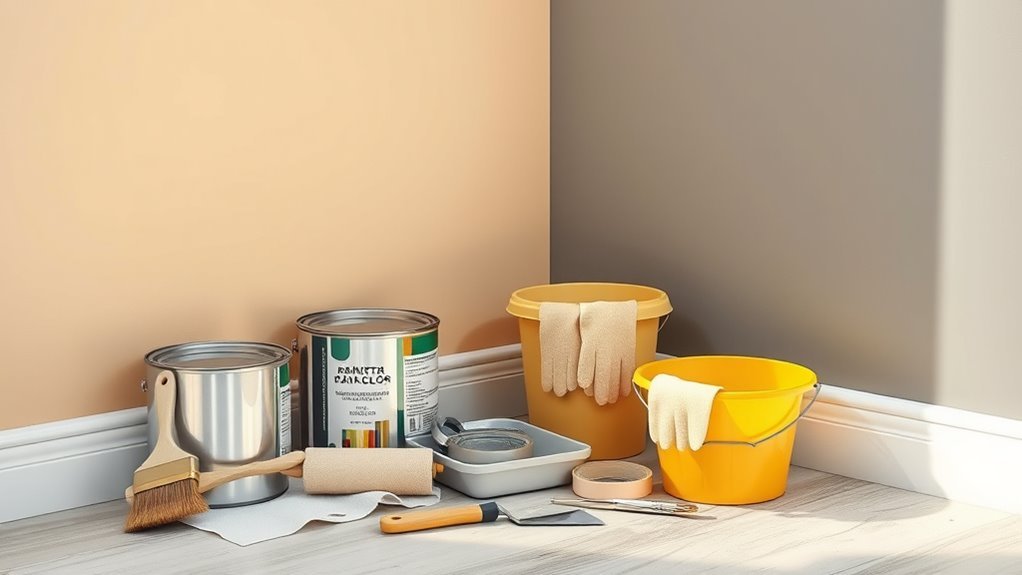
You’ve picked the sheens and know how they’ll interact at the corner; now gather the gear that keeps those edges crisp.
You’ll need two quality paints chosen for color psychology and paint durability, plus primer if switching between dark and light.
Tools: angled sash brush (2–2.5″), a 3–4″ roller with matching nap, painter’s tape (high-quality, low-tack), a sharp utility knife, and a steady edging tool or trim guide.
Supplies: drop cloths, paint tray, stirring stick, bucket of water (latex) or solvent (oil), rags, and sandpaper (120–220 grit).
Check brushes for loose bristles first.
Measure and Mark the Exact Corner Boundary
Before you tape, mark the exact line where one color ends and the other begins so both sides stay crisp.
Use a plumb bob or level to transfer the corner point straight down for a perfectly vertical guideline.
Once the line’s marked, you can apply tape or cut in with confidence.
Mark The Exact Line
How will you know where one color stops and the other begins? Mark the exact line by measuring from the corner and noting the boundary at eye level. Think about color psychology and historical inspiration when placing that line; it affects balance and mood.
Use a pencil or painter’s tape as temporary guides, then transfer marks up and down the wall for consistency.
- Measure from the corner at multiple heights
- Make small pencil ticks outside the paint area
- Snap a light chalk line if appropriate
- Apply low-tack painter’s tape over marks
- Re-check alignment before priming
Use A Plumb Bob
When accuracy matters, hang a plumb bob at eye level to mark the true vertical where the two colors meet. The weighted line gives a precise reference even on uneven ceilings or walls. You’ll let gravity define the seam so your contrasting hues align perfectly, which supports the desired color psychology by keeping progressions crisp.
Hold a pencil against the string, mark from ceiling to baseboard, and snap a chalk line if needed. Tape along the marked edge for a clean mask, then paint each side separately to preserve paint durability.
Clean the bob after use and store it for future projects.
Prep Walls: Clean, Sand, and Patch
Although it’s tempting to jump straight to taping and painting, you’ll get cleaner, longer-lasting results if you thoroughly clean, sand, and patch the walls first. You’ll remove grime, uneven texture, and loose paint so both colors sit smoothly and true to the room’s color psychology. Check paint storage dates before using old cans. Follow these steps:
Although tempting to skip ahead, clean, sand, and patch walls first for smoother, longer-lasting paint results
- Wipe walls with mild detergent, rinse, dry.
- Sand rough spots with fine-grit paper.
- Scrape loose or flaking paint.
- Fill holes and dents with spackle; sand flush.
- Vacuum dust and wipe with a tack cloth.
Do inspections by eye and touch before taping.
When and How to Prime High-Contrast Corners
Want crisp, true-to-color shifts at a corner? Prime when colors contrast strongly or surfaces differ. Use a stain-blocking primer on repairs, then a tinted primer matching the darker hue to prevent bleed-through. Consider color psychology and historical trends: darker tones absorb light, lighter tones reflect it, so primer choice preserves the intended mood.
| Step | Primer Type | Purpose |
|---|---|---|
| 1 | Stain-blocking | Seal patches |
| 2 | Tinted dark | Prevent bleed |
| 3 | Universal | Adhesion |
| 4 | Quick-dry | Speed up coats |
Tape after primer cures; then paint each side.
Protect Trim, Ceiling, and Floors Before Taping
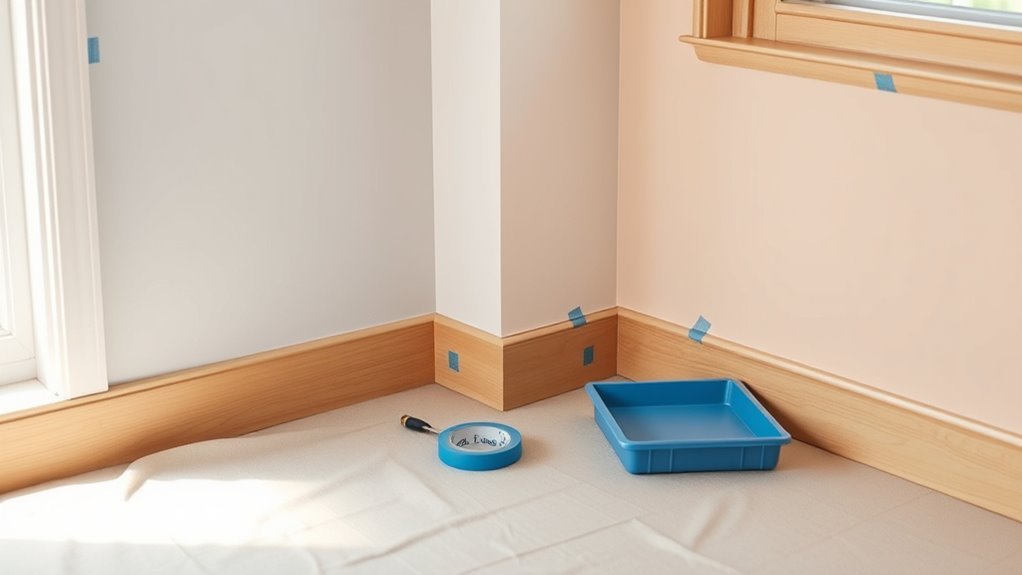
Before you tape, protect trim, ceiling, and floors so paint stays where it belongs and cleanup stays minimal. You’ll reduce mistakes and preserve the crisp lines that let color psychology shine, while improving paint durability by avoiding drips and abrasion during work.
Prep quickly and smartly:
- Lay rosin paper or drop cloths on floors to catch spills.
- Mask baseboards and crown molding with low-tack painter’s tape.
- Cover light fixtures and switches with plastic sheeting.
- Use a thin foam roller guard along ceilings to prevent splatter.
- Keep a damp cloth and a small scraper handy for immediate touch-ups.
Tape or Don’t Tape: Choosing the Right Strategy
When you’re deciding whether to tape the corner, weigh speed against precision. If you want quick work and don’t mind a subtle imperfection, freehand cutting can save time and still respect color psychology by preserving visual flow between hues.
If you prefer control, taping slows you but reduces mistakes that could undermine paint durability at the edge. Consider your brush skills, the paint’s tendency to bleed, and how crisp you want the shift to read in the room.
Test a small section first, and adjust: sometimes partial taping or a steady hand delivers the best mix of speed and finesse.
Use Painter’s Tape for a Crisp Corner Line
If you want a sharp, professional-looking split, apply painter’s tape along the corner line and press it firmly to seal the edge; you’ll prevent bleed and keep paint edges crisp. Use high-quality tape, align it carefully, and remove it while paint is tacky for best results.
Consider how color psychology influences your choice—bold contrasts read differently than soft hues. Remember some historical techniques inspired the idea of masking to protect surfaces.
Consider how color psychology shapes perception—bold contrasts command attention, while softer hues soothe.
- choose quality tape
- smooth edges with a putty knife
- paint away from the tape
- peel at a 45° angle
- fix tiny bleeds with a fine brush
The Half-Tape Method for Cleaner Seams
Because you want an ultra-clean seam without bulky paint buildup, the half-tape method gives you precise control: press tape halfway over the corner ridge so one wall gets a thin sealed edge while the other side is left free for brushing. Then remove the tape while the paint is still tacky to prevent peeling.
You’ll align tape carefully, smoothing to eliminate gaps that invite bleed. Work wall by wall, keeping tools clean to preserve paint durability.
This approach helps maintain crisp *changeovers* that support color psychology choices—sharp contrasts or subtle shifts—so your corner reads intentional, not sloppy.
Paint the First Color Without Contaminating the Other Side
Now that the half-tape edge is sealed, start painting the first wall with steady, controlled strokes so paint doesn’t creep onto the untaped side. You’ll focus on crisp coverage, mindful of how Color psychology and historical trends influence your hue choice.
Work from top to bottom, overlapping slightly away from the taped seam.
Work top to bottom, overlapping just away from the tape for a seamless, controlled finish.
- Use a quality angled brush for corners.
- Keep a dry brush handy to remove stray drips.
- Roll in sections, feathering toward the tape.
- Press tape edges after paint dries slightly, not wet.
- Inspect under good light for bleed or thin spots.
Stay patient and precise to protect the opposite color.
How Long to Wait Before Applying the Second Color
How long you wait depends on paint type, humidity, and temperature, since those affect drying time. Use the touch test—lightly press a hidden spot after the manufacturer’s minimum dry time to see if it’s tacky.
If it’s dry to the touch and not tacky, you can start the second color; if not, wait longer and recheck.
Drying Time Factors
When you plan the second color, remember drying time varies with paint type, humidity, temperature, and how thick you applied the first coat. You’ll also consider color psychology when choosing finishes, since gloss reflects light differently, and paint durability affects how many coats you’ll need.
Check the can for recoat times, then account for conditions in your room.
- Oil vs. latex: oil takes longer
- Humidity: higher slows drying
- Temperature: cool slows, warm speeds
- Coat thickness: thin dries faster
- Ventilation: increases evaporation and cure speed
Touch Test Timing
You’ve checked the can and accounted for humidity, temperature, and coat thickness, so the next step is the hands-on check: the touch test.
Lightly press an inconspicuous spot after the paint feels dry to the touch—usually 1–2 hours for latex, longer for oil. If tacky, wait and retest every 15–30 minutes. Avoid rubbing; lift your finger to prevent smudges.
Once the paint is dry-to-touch but not fully cured, you can tape and apply the second color with confidence.
Consider how color psychology and historical inspiration influence drying expectations—darker pigments and richly pigmented hues often need extra time before crisp corner progression.
Press and Seal Tape to Prevent Bleed-Through
Want to keep paint from seeping under your tape? Press-and-seal creates a tight barrier so edges stay crisp. You’ll boost paint durability at the joint and protect the new hue—handy when color psychology matters and contrasts are bold.
Apply tape, press a sheet of press-and-seal over the seam, and smooth firmly. Remove after paint skins but before fully cured.
- Align painter’s tape precisely along the corner
- Cover tape with press-and-seal, overlapping slightly
- Smooth with a credit card or squeegee
- Paint the first color, avoid heavy buildup
- Peel seal slowly for a clean line
Cut In the Second Color Along the Taped Edge
Before you roll the second color, carefully cut in along the taped edge so the line stays sharp and the paint doesn’t build up on the seal. Use a steady hand and a high-quality angled brush, keeping a thin bead of paint on the bristles to prevent seepage. Think about color psychology when choosing contrast and where the eye will land. Proper cutting-in also affects paint durability by reducing overlapping layers that can peel. Work in short sections, remove tape while paint is tacky, and inspect for gaps.
| Tool | Tip |
|---|---|
| Angled brush | Small strokes |
| Paint tray | Thin load |
| Light | Reveal flaws |
| Tape edge | Press seal |
| Timing | Remove tape quickly |
Brush and Roll for Even Coverage
After you cut in the second color with a steady brush, don’t let it sit—smooth those edges with a roller while the paint is still wet.
You’ll get a consistent finish by feathering the brush strokes into the rolled area. Keep a light, even pressure on the roller to avoid lap marks.
Cut-In With Brush
Ready to cut in with clean, crisp lines? You’ll use a steady angled brush to define the corner where two colors meet, considering color psychology to place bold or calming tones strategically.
Keep brush maintenance simple: clean after each session to preserve crisp edges.
- Load brush moderately, tap off excess
- Hold brush at a 45° angle to corner
- Paint inward from the corner, feathering slightly
- Keep a wet edge to avoid lap marks
- Check for drips and smooth immediately
Work patiently, repaint thin layers if needed to achieve a flawless progression.
Smooth With Roller
Once you’ve laid in the corner with your angled brush, switch to a nap-appropriate roller to blend the cut-in into the field paint—this “brush and roll” technique evens out texture and hides brush strokes while preserving your crisp line.
Work in short, overlapping strokes from the corner outward, keeping a wet edge to avoid lap marks. Use light pressure and a consistent rhythm so coverage stays uniform.
Consider how color psychology affects perception at joints: darker hues recede, lighter ones advance.
Note historical trends in finish choices; matte hides flaws, satin or eggshell cleans easier near high-traffic corners.
Remove Tape Cleanly Without Tearing Paint
When the paint’s dry to the touch but not fully cured, pull the tape off at a sharp angle toward the painted surface to avoid lifting the fresh paint. You’ll protect edges and respect color psychology choices while preserving paint durability by removing tape deliberately.
If tape resists, score along the edge with a utility knife. Warm the tape slightly with a hairdryer for stubborn spots. Clean any residue with a damp cloth.
- Pull slowly at 45–60 degrees
- Score before lifting if paint peels
- Use low-tack painter’s tape initially
- Warm adhesive for easier removal
- Wipe edges gently after removal
Fix Bleed-Through: Quick Touch-Up Tricks
If you spot color bleed along the corner, first seal the paint edges with a thin coat of clear sealer or edge primer to lock the colors in.
For stubborn spots, apply a small dab of primer before repainting so the new color won’t soak through.
Finish by feathering the touch-up with a soft brush to blend the repair into the surrounding wall.
Seal Paint Edges
Notice bleed-through along your freshly taped edge? Seal paint edges fast to protect color psychology and paint durability. You’ll stop seepage and keep crisp lines by addressing gaps and wet spots immediately.
- Press tape edges firmly with a plastic applicator
- Run a thin bead of clear acrylic sealer along the tape
- Smooth sealer into tiny gaps with a damp finger
- Let sealer dry, then repaint the contrasting color
- Remove tape at a 45° angle while paint is slightly tacky
These steps preserve crisp transitions and guarantee long-lasting, consistent finishes without redoing large areas.
Use Primer Spots
Although tape and sealers help, tiny bleed-through spots still happen and you’ll want a fast, reliable fix—use primer spots to block stains and restore crisp edges.
When you spot tiny overlaps or dark flecks, dab a small amount of primer with a fine brush, letting it dry fully before repainting. Primer seals tannins and previous colors, preserving your chosen hues and supporting paint durability so the corner stays clean longer.
That control also helps color psychology: true tones read correctly without ghosting from underlying shades. Keep spots minimal, sand if needed, then repaint for seamless contrast.
Feather With Brush
When you spot paint bleed at a corner, feathering with a fine brush lets you blend the edge without re-taping the whole wall. You’ll fix small bleeds fast using precise color blending and Feathering techniques.
Dab off excess, then work light, short strokes from the clean color into the bleed, carrying pigment toward the edge. Keep a damp rag handy to lift mistakes. Match pressure and direction to surrounding texture so repair disappears.
- Use a small, angled brush
- Load minimal paint
- Stroke outward from clean paint
- Blend with light pressure
- Clean edges with a damp cloth
Deal With Drips, Runs, and Uneven Corner Edges
If paint drips, runs, or leaves an uneven edge in the corner, act quickly while the paint’s still wet. Gently lift excess with a clean, damp brush or a folded paper towel, working from the corner outward to avoid smearing into the other color.
Smooth small runs with light, downward strokes; reblend edges by feathering with a slightly loaded brush. For stubborn drips, wait until tacky and trim with a sharp blade, then sand lightly once dry.
Remember how color psychology affects perception—clean edges boost confidence in your finish—and choose quality products for better paint durability.
Touch Up Both Colors for a Seamless Junction
Since you’ve fixed runs and smoothed edges, now touch up both colors to make the corner read as one clean line. You’ll refine the junction by feathering, keeping consistent sheen, and considering color psychology so the seam feels intentional. Work patiently and test small areas.
Since runs are fixed and edges smoothed, touch up both colors—feather the seam, match sheen, and work patiently.
- Use a fine brush for crisp lines
- Lightly feather edges for a visual blend
- Match sheens to support paint durability
- Stand back often to judge alignment
- Clean brush and recoat thinly if needed
Focus on steady strokes, minimal overlap, and letting coats dry fully for a seamless, durable finish.
How to Handle Textured or Uneven Corners
Because textured or uneven corners catch light and hide mistakes, you’ll need a different approach than you used on smooth walls. Start by cleaning and inspecting for texture issues; remove loose debris and mark high spots.
Use a flexible sandpaper or scraper to gently even sharp ridges, but don’t flatten intentional texture. Apply a thin skim coat or joint compound to truly wildly uneven surfaces, then sand smooth when dry.
When painting, use a high-quality angled brush and short, controlled strokes to work paint into crevices. Feather edges and apply thinner coats, building coverage slowly for a neat junction.
Approach Differences: Inside vs. Outside Corners
When you paint inside corners, you’ll focus on feathering and careful cutting to avoid overlap where two paints meet.
For outside corners, you’ll use crisp masking and a steady edge to keep the corner line sharp and prevent paint buildup.
Each situation calls for different tools and wrist control, so pick the technique that matches the corner type.
Inside Corner Techniques
Although inside corners look simple, they demand a different approach than outside corners because light, shadow, and paint build-up affect how crisp the line reads. You’ll want clean technique and awareness of Color psychology and historical trends when choosing hues that meet mood and period expectations. Work slowly, feather edges, and use proper tools to avoid lap marks. Consider the corner’s shadow when picking sheen.
- Use angled brush for control
- Cut in one wall at a time
- Keep thin, even coats
- Lightly sand between coats
- Seal edges with a fine brush
These steps keep lines sharp and consistent.
Outside Corner Tips
Since outside corners catch light and wear differently than inside ones, you’ll need a firmer hand and slightly different tools to keep the color break crisp and durable. Use a high-quality angled brush and a steady elbow to paint along the edge; press firmly but smoothly to avoid drips.
Consider edge guards or low-tack tape for straighter lines on textured walls. Move furniture placement away from corners so you can work cleanly and avoid scuffs.
After the first coat dries, inspect in natural light, touch up with a tiny brush, and apply a maintenance-friendly finish where traffic and abrasion are highest.
Working Around Moldings, Baseboards, and Trim
If you want crisp two-color corners without paint bleeding onto trim, take time to prep moldings, baseboards, and other trim before you roll the walls—clean, sand lightly if needed, and apply painter’s tape precisely along the trim edge so the tape’s adhesive sits flush against the molding.
Consider paint sheen and trim profile: satin hides flaws, semi-gloss cleans easier. Remember room intent—color psychology and historical styles influence trim contrast.
Use a steady angled brush for edges. Remove tape while paint’s tacky.
Markdown checklist:
- Clean and degrease trim
- Sand and wipe dust
- Apply high-quality tape
- Cut in with an angled brush
- Peel tape at 45°
Speed Techniques for One-Person Corner Painting
You can speed things up by using quick masking tricks like pre-cut painter’s tape strips and corner guards so you don’t waste time measuring.
Practice an efficient cutting technique with a steady brush and a light, confident wrist motion to get a clean line on the first pass.
Combine both approaches and you’ll cut down touch-ups and finish corners solo much faster.
Quick Masking Tricks
When you’re working solo on a two-tone corner, fast, reliable masking is what keeps edges crisp without slowing you down. You’ll pick tape that respects color psychology — choose tape widths that prevent bleed for lighter tones — and consider paint durability when sealing edges.
Prep quickly: clean, dry, and press tape firmly. Use short runs and overlap corners, then peel at a 45° angle after paint skins over. For speed, rely on simple tools and steady rhythm.
- Use 1/8″ to 1″ tape selection
- Burnish edges with a plastic card
- Mask small gaps with caulk
- Label tape sides
- Work in sections
Efficient Cutting Technique
Although steady hands help, mastering a few fast cutting moves lets you tackle a two-tone corner solo without fuss. Stand square to the corner, load a slim angled brush, and anchor your elbow to your hip for stability.
Cut a crisp line 1–2 inches from the corner, using light, continuous strokes; wipe excess paint on a rag rather than blotting. Switch sides quickly, letting the first coat dry to touch before re-taping.
Think about color psychology when choosing contrast and avoid overloading edges to preserve paint durability. Practice short stretches for speed, then expand to full-length runs.
When to Call a Pro for Complex Corners
If tricky angles, damaged drywall, or multiple color shifts make the corner look uneven, call a pro—you’ll save time and avoid costly fixes. You’ll also want expert help when color psychology choices or eco-friendly paints need precise application to preserve finish and tone.
Hire someone if edges require texture repair, scaffolding, or matching complex trims. Consider skill level, timeline, and budget before deciding.
- Structural repair or crumbling drywall
- Intricate trim, crown molding, or beams
- Multiple paint types or finishes
- High ceilings or hard-to-reach areas
- Tight deadline or resale quality standards
Common Mistakes That Ruin Corner Splits (And How to Avoid Them)
Because sharp corner splits depend on clean lines and proper prep, even small mistakes can make your two-tone job look amateurish. You’ll avoid bleed by using crisp tape, smoothing edges, and sealing the tape with the base color before cutting in.
Don’t rush drying — wet paint lifts tape and muddies the split. Pick compatible finishes so sheen differences don’t highlight flaws.
Consider color psychology when choosing contrasts; overly aggressive contrasts can overpower a room. Study historical color trends for balance ideas, but test samples in your light.
Fix gaps with a fine brush, not heavy rollers, for precise results.
Maintain and Clean Two-Tone Corner Walls
Now that you’ve got crisp corner splits, keep them looking sharp with simple maintenance and careful cleaning. You’ll protect paint durability and preserve color psychology effects by routine care. Use gentle cleaners, test hidden spots, and fix scuffs quickly to maintain contrast and mood.
- Dust corners weekly with a soft brush or microfiber.
- Wipe marks with mild detergent and lukewarm water.
- Touch up chips with matching paint and a small brush.
- Avoid abrasive tools or harsh chemicals that harm finishes.
- Recoat high-traffic areas every few years to restore color depth and durability.
Budget-Friendly Materials and Where to Save
Looking to cut costs without sacrificing a professional look? You can prioritize quality where it matters: buy mid-grade paint for main surfaces and affordable trim paint for corners. Consider sample pots to test color psychology effects before committing. Rent a pole sander, reuse drop cloths, and pick multipurpose brushes. Historical trends show DIYers have long traded splurge items for smart tools.
| Item | Where to Save |
|---|---|
| Paint | Mid-grade for walls |
| Trim | Budget trim paint |
| Tools | Rent or borrow |
| Tape | Generic painter’s tape |
| Testers | Small sample pots |
Shop sales and compare coverage to minimize waste.
Style Ideas: Corner Color Combos and Placements
When you choose corner color combos, think about how contrast, harmony and placement change a room’s flow; bold hues can anchor a seating area while softer shades expand light-filled spaces. You’ll use color psychology to steer mood and reference historical styles for timeless pairings.
Position darker paint behind furniture, lighter on shared sightlines, or split colors vertically for drama. Consider finishes and trim to clarify the break. Try combinations that suit scale and function.
Place deeper shades behind furniture, lighter hues on sightlines, or divide walls vertically—use finishes and trim to define the transition.
- Deep navy + warm white for focus
- Sage + clay for calm
- Charcoal + pale gray for modern edge
- Terracotta + cream for vintage warmth
- Teal + blush for playful balance
Troubleshooting Checklist to Finish the Project
If you run into issues as you wrap up, use this concise troubleshooting checklist to diagnose and fix the most common corner-paint problems—uneven edges, bleed-through, visible seams, and mismatched sheen—so you can finish with crisp, professional results.
Check tape adhesion and re-tape any gaps, press firmly along the corner, and seal edges with a thin bead of caulk where seams show.
Sand and feather progressions, then touch up with matching basecoat and final coat.
Adjust sheen by recoating with the correct finish.
Reevaluate color choices briefly—color psychology and historical trends can guide final tweaks for balanced, intentional contrast.
Frequently Asked Questions
Can I Use Two Different Types of Paint (Brand or Formula) on Each Side?
Yes — you can, but check paint compatibility and match sheens; you’ll prepare surfaces well, cleaning and sanding, prime if needed, and feather edges for adhesion so different brands or formulas won’t separate or show uneven finish.
Will Humidity or Season Affect Drying Times for a Two-Color Corner?
Yes — humidity variability and seasonal changes will affect drying times; you’ll notice slower drying in high humidity or cold seasons and faster drying in warm, dry periods, so adjust ventilation, timing, and touch-up scheduling accordingly.
Can Wallpaper Remain on One Side While Painting the Other?
Yes, you can leave wallpaper on one side while painting the other, but you’ll need to guarantee wallpaper removal won’t be required later and that paint adhesion on the painted side is protected from moisture and edge seepage.
How Do I Match the Corner Seam if Walls Settle Later?
By tomorrow’s telegram, you’ll align the corner seam with a flexible caulk bead; you’ll monitor wall settling, repainting or re-caulking as cracks appear, and you’ll feather paint edges to conceal movement over time.
Are There VOC or Odor Concerns When Painting Bedrooms With Kids?
Yes — you should care: VOC concerns matter, and you’ll manage odor management by choosing low‑ or zero‑VOC paints, ventilating rooms, painting when kids aren’t present, and airing out spaces until smells dissipate.
Conclusion
You’ve got this—painting a split-color corner transforms a room faster than lightning. Stick to good prep, use painter’s tape and a steady brush or an edging tool, and apply clean-cut techniques so each color reads crisp and intentional. Pick finishes that coordinate, clean tools promptly, and touch up seams after drying. With patience and the right materials, your two-tone corner will look professionally done and hold up beautifully.
