
How to Tell If Apartment Has Concrete Floors?
To tell if your apartment has concrete floors, look for a uniform color in gray or earthy tones, and note the solid, dull sound when you walk on it. Check for coldness underfoot, as concrete tends to feel cooler than other materials. Inspect baseboards; vinyl or tile indicates a higher chance of concrete. Look for cracks in the surface and a minimalist aesthetic. There’s more to discover about identifying your flooring type, so keep exploring!
Visual Characteristics of Concrete Floors
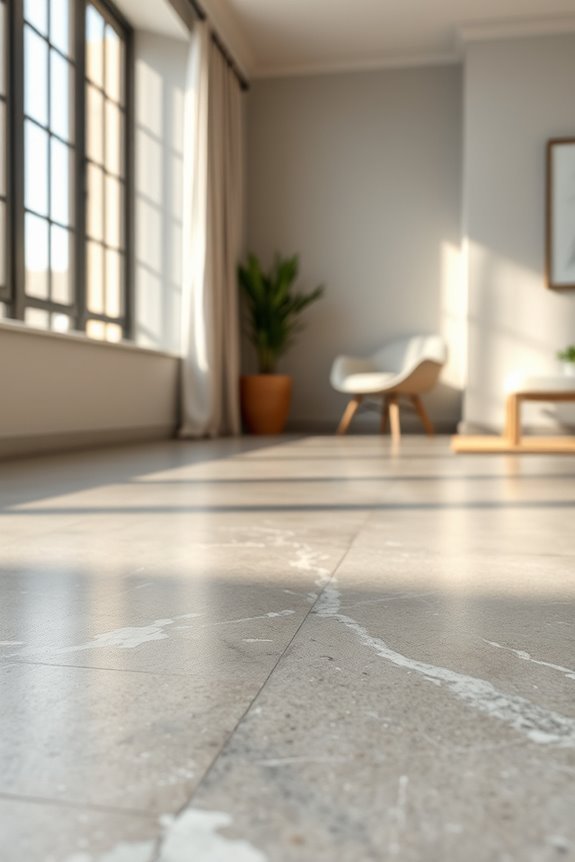
While you mightn’t think about it at first, concrete floors have distinct visual characteristics that can help you identify them. One of the most noticeable traits is their color consistency; concrete often presents a uniform hue, ranging from gray to various earth tones.
Unlike other flooring options, which may feature varied patterns or shades, concrete maintains a solid appearance. Additionally, take note of the surface sheen. Concrete can be polished to achieve a glossy finish, reflecting light beautifully, or left matte for a more industrial look.
This sheen can change based on the treatment and sealing applied, so observe closely. By focusing on these visual cues, you’ll quickly spot whether your apartment has concrete floors.
Color and Texture Variations
Concrete floors can surprise you with their range of color and texture variations.
Concrete floors offer an unexpected variety of colors and textures that can enhance any space.
When you’re evaluating a space, take a close look at these aspects, as they can reveal a lot about the flooring.
Here are some key points to reflect on:
- Color Variations: You might find hues ranging from gray to earthy tones, depending on the mix used.
- Staining: Some floors have stains that create unique patterns, adding character.
- Polished vs. Matte: Polished concrete presents a glossy finish, while matte surfaces offer a more rustic look.
- Texture Patterns: Look for finishing techniques, like brooming or stamping, which can enhance the floor’s aesthetic.
Identifying these features can help you confirm if the apartment has concrete floors.
The Sound Test: Tapping and Walking
You might be surprised by how much sound can reveal about the flooring in an apartment.
Start with the tapping technique: gently tap your foot or a hard object on the floor. If it produces a hollow sound, you might be dealing with a wooden floor or laminate. A solid, dull thud typically indicates concrete.
Next, pay attention to your walking rhythm. Walk across the floor and listen closely. Concrete floors often create a firm, steady sound, while softer flooring will dampen your steps.
Combine both methods for a clearer understanding of the flooring material. If you hear a lot of echo, that’s another sign you’re likely on concrete.
Trust your ears; they can guide you in identifying the floor type.
Checking for Temperature Differences
To check for temperature differences, start by feeling the floor—coldness can indicate a concrete surface.
Next, compare the temperatures of different rooms; concrete often keeps spaces cooler than other flooring materials.
Finally, observe how these temperatures change with the seasons, as concrete can retain cold in winter and heat in summer.
Feel for Coldness
One effective way to determine if an apartment has concrete floors is by checking for temperature differences. You can often feel a distinct cold sensation when you walk barefoot or in socks.
To help with your assessment, try the following steps:
- Walk around: Move from room to room and notice how the floors feel underfoot.
- Touch surfaces: Kneel down and place your hand on various surfaces; concrete will feel cooler compared to wood or carpet.
- Check corners: Pay attention to corners and less-used areas; they might reveal more about the underlying flooring.
- Evaluate changes: If you notice a significant temperature difference when moving between rooms, it may indicate a concrete foundation.
These observations can guide your surface comparison effectively.
Compare Room Temperatures
How can comparing room temperatures help identify concrete floors? When you notice temperature fluctuations between rooms, it could signal the presence of concrete beneath your feet.
Concrete has a higher thermal mass than other flooring types, which means it can absorb heat and retain it longer. So, if one room feels markedly cooler or warmer than another, it might indicate concrete floors.
To check this, spend time in each room and note the temperature differences. If you find that a room with concrete floors feels colder on a chilly day or retains heat longer during warmer weather, it’s a strong indicator.
This simple comparison can help you determine if concrete flooring is a factor in your living space.
Check Seasonal Changes
Have you noticed how your apartment feels throughout different seasons?
Seasonal effects can greatly impact your comfort and may indicate whether you have concrete floors. Concrete tends to absorb and retain heat, leading to noticeable temperature fluctuations.
Here’s how to check:
- Winter: Feel how cold the floors are; concrete can make your space chillier.
- Summer: Notice if the floors stay cool despite outside heat; concrete naturally remains cooler.
- Transition Seasons: Observe if the floor temperature changes rapidly with the weather; concrete may lag behind.
- Humidity Levels: Monitor how moisture affects the temperature; concrete can influence humidity perception.
Inspecting Baseboards and Trim
Inspecting baseboards and trim can reveal important clues about the flooring beneath them.
First, take a close look at the baseboard materials. If you notice wood or MDF, it’s likely that the floors aren’t concrete, as these materials often indicate carpet or hardwood.
On the other hand, if the baseboards are made of vinyl or tile, there’s a higher chance you might be dealing with concrete floors.
Next, consider the trim styles. Simple, minimalistic trim often accompanies modern designs, which can indicate concrete floors, while ornate or intricate styles may suggest different flooring types.
Looking for Cracks and Imperfections
When you’re inspecting the floors, keep an eye out for cracks and imperfections.
Look closely at the surface for any gaps or texture variations that might indicate a concrete foundation.
These signs can help you confirm whether the apartment has concrete floors.
Inspect Floor Surface
A thorough examination of the floor surface can reveal essential signs of whether concrete lies beneath your feet.
Pay attention to the following details to assess the flooring materials and their surface durability:
- Cracks: Look for visible cracks, which might indicate underlying concrete.
- Imperfections: Check for uneven spots or texture changes; these could signal a concrete foundation.
- Sound: Tap the floor with your foot; a hollow sound may suggest a concrete layer.
- Temperature: Feel the floor’s temperature; concrete tends to stay cooler than other materials.
Check for Gaps
Looking for gaps in the flooring can provide critical clues about whether concrete lies beneath. During your gaps inspection, pay close attention to any cracks or imperfections in the surface.
If you notice significant spaces between the planks or tiles, it might indicate a concrete foundation. This is especially true if the gaps seem consistent and appear in multiple areas.
Conducting a thorough flooring assessment can help you determine the overall condition of the floor. Look for unevenness or large cracks, which can further suggest that you’re dealing with concrete.
Observe Texture Variations
Noticing texture variations in the flooring can reveal important information about what’s underneath.
When inspecting the surface, keep an eye out for cracks and imperfections that might indicate concrete floors.
Look for:
- Texture Differences: Feel for smooth and rough areas; concrete often has a more uniform feel.
- Surface Patterns: Check for any distinct patterns, as concrete can sometimes have stamped designs.
- Cracks: Examine for visible cracks—small ones are common in concrete due to settling.
- Bumps or Unevenness: Notice if the surface is level; concrete may have slight unevenness from wear or installation.
Evaluating the Apartment’s Overall Aesthetic
The overall aesthetic of an apartment can reveal much about its design and layout, including whether it features concrete floors. When you walk through the space, take note of the color palette and furnishings.
Concrete floors often contribute to a modern, industrial vibe, which can greatly enhance the aesthetic appeal. Consider how the floors complement other design elements, like walls and furniture.
If the decor is minimalist with clean lines, it’s likely that the apartment showcases concrete flooring. Pay attention to how natural light interacts with the surfaces; concrete can reflect light beautifully.
Examining the Finish or Sealant
While exploring the apartment, pay attention to the finish or sealant on the floors, as it can offer essential clues about the flooring material.
When examining sealants, look for specific characteristics that can help in identifying finishes. Here are four key points to take into account:
- Gloss Levels: A high-gloss finish often indicates a sealant, while a matte finish may suggest a raw concrete floor.
- Texture: Smooth surfaces usually signify a polished concrete finish, whereas rough textures might point to unfinished concrete.
- Color: Stained or dyed concrete floors can indicate treatments applied to sealants.
- Wear Patterns: Look for scratches or scuffs, which can help you understand the durability and type of sealant used.
Identifying finishes will aid you in determining if the floors are concrete.
Assessing the Weight of Furniture
When you’re evaluating the weight of your furniture, start by checking the floor thickness to gauge its strength.
Pay attention to how sound resonates when you move heavy items, as that can indicate the flooring type.
Also, assess the vibration response; concrete floors typically have a distinct feel when pressure is applied.
Check Floor Thickness
To determine if an apartment has concrete floors, checking the floor thickness can be a revealing step, especially when considering the weight of your furniture. Here’s how you can assess this:
- Tap the Floor: Lightly knock on the surface and listen; a hollow sound may indicate a different material.
- Check Baseboards: Remove them to measure the thickness; concrete will usually be thicker than wood or laminate.
- Look for Structural Integrity: Observe how the floor supports heavy pieces; concrete can handle significant weight due to its floor density.
- Inspect for Cracks: Minor cracks might suggest a concrete foundation, as other materials typically don’t exhibit this feature.
These steps will help you better understand your apartment’s flooring.
Assess Sound Resonance
Another effective method to determine if your apartment has concrete floors is by evaluating sound resonance, especially when considering how your furniture will interact with the flooring. Concrete typically offers less sound absorption than other materials, which means noise levels from footsteps and furniture movement can be more pronounced.
To assess this, consider how different types of furniture impact sound:
| Furniture Type | Sound Resonance Level |
|---|---|
| Lightweight Items | High |
| Medium Weight | Moderate |
| Heavy Furniture | Low |
If you notice echoes or increased noise levels with lightweight or medium-weight furniture, it’s likely you’re dealing with concrete floors. These observations can guide your choice of furnishings for a more comfortable living environment.
Evaluate Vibration Response
How can you gauge the vibration response of your apartment’s flooring? Understanding the weight of your furniture is essential for effective vibration analysis and evaluating floor stability.
Here are some steps to help you evaluate how your flooring reacts:
- Assess Furniture Weight: Identify the weight of your pieces. Heavier items may cause more vibrations.
- Test with Movement: Walk around while pushing or shifting furniture. Notice any vibrations through the floor.
- Listen for Noises: Pay attention to creaking or rattling sounds that might indicate instability.
- Observe Effects: Watch if items on shelves shake or shift when you move heavier furniture.
Inquiring With the Landlord or Property Manager
Wondering if your potential apartment has concrete floors? The best way to find out is to ask your landlord or property manager directly.
When you inquire, don’t hesitate to mention your specific interest in flooring types. You can also check your lease agreement for any details regarding construction materials.
If you’re unsure, pose maintenance inquiries about the flooring. For example, ask how the floors handle moisture or if there’s a history of water damage. These questions can lead to insightful answers about the apartment’s flooring.
Recognizing Other Flooring Types
When you’re checking out an apartment, pay attention to the flooring.
Different materials can show unique visual patterns and textures, and they often produce distinct sounds when you walk on them.
You might also notice how the temperature and surface feel can vary, helping you identify what’s underfoot.
Visual Patterns and Texture
Visual patterns and textures can be your first clue in identifying the type of flooring in an apartment. Engaging in texture analysis and pattern recognition can help you distinguish between concrete and other materials.
Here are some visual cues to reflect upon:
- Concrete: Look for a smooth, sometimes glossy surface with subtle patterns or aggregate peeking through.
- Wood: Notice the distinct grain patterns and warm tones that vary from plank to plank.
- Tile: Identify uniform shapes and often vibrant designs; tiles may have a glossy or matte finish.
- Carpet: Observe the soft texture and patterns that are often plush or looped, usually hiding the underlying floor.
Sound and Acoustics
Sound plays a significant role in identifying flooring types, as different materials produce distinct acoustic qualities. Concrete floors typically have hard, reflective surfaces, leading to louder sounds and less sound insulation. In contrast, carpets and some wood floors absorb sound, creating a softer acoustic environment. To help you recognize various flooring types, here’s a quick comparison of their acoustic properties:
| Flooring Type | Acoustic Properties |
|---|---|
| Concrete | Loud, minimal insulation |
| Hardwood | Moderate, some absorption |
| Carpet | Soft, excellent insulation |
| Tile | Hard, reflective, loud |
| Laminate | Moderate, some absorption |
Temperature and Surface Feel
One effective way to determine if an apartment has concrete floors is by considering the temperature and surface feel underfoot.
Concrete tends to retain heat, leading to noticeable temperature fluctuations, especially in colder months. You might feel the chill of concrete on your bare feet, while other flooring types often provide more warmth due to better surface insulation.
Here are some key points to assess:
- Feel the Surface: Is it cold or warm?
- Check for Insulation: Does the floor seem soft or cushioned?
- Evaluate Temperature: Does the floor maintain a consistent temperature?
- Walk Around: Are there areas that feel considerably colder?
Investigating Floor Plans and Specifications
While exploring potential apartments, it’s essential to dig into the floor plans and specifications provided by the property management. These documents give you insights into the layout and dimensions of the space, helping you visualize how the apartment will meet your needs.
Pay close attention to the material specifications, as they often indicate the type of flooring used throughout the unit. If the specifications mention concrete or polished concrete, it’s a strong indication that you’ll have a concrete floor.
Additionally, look for details about any underlayment or finishing, as this can affect your overall comfort and aesthetics. By thoroughly reviewing these documents, you’ll be better equipped to determine whether the apartment matches your preferences.
Observing Transition Areas Between Rooms
After reviewing the floor plans and specifications, take a closer look at the areas where different rooms meet.
These junction areas often reveal important connection indicators that provide clues about the flooring material.
Junction areas are key to understanding flooring materials, offering vital clues for discerning connections.
Pay attention to the following:
- Change in Height: If the floor level shifts, it may indicate different materials.
- Visible Joints: Look for seams or joints where flooring types meet; concrete floors may have distinct edges.
- Texture Differences: Notice any changes in texture; concrete can feel different than wood or carpet.
- Room Boundaries: Observe how the flooring flows across room boundaries; a consistent surface may suggest a concrete foundation.
Utilizing a Magnet Test for Metal Reinforcement
To determine if an apartment has concrete floors, you can perform a simple magnet test to check for metal reinforcement within the concrete.
Grab a strong magnet, as its magnet strength will play an essential role in your detection efforts. Move the magnet across the floor and observe how it reacts. If it sticks or shows a noticeable pull, you’ve likely found metal reinforcement, such as rebar or wire mesh, embedded within the concrete. This indicates that the flooring is indeed concrete.
Conversely, if the magnet doesn’t react, the floors might be made of another material. This quick test can save you time and help you make informed decisions about your apartment choice.
Conclusion
So, now you’re an expert in spotting concrete floors, right? Ironically, while you might’ve thought you’d be living on something softer and cushier, concrete can be surprisingly stylish. Who knew your apartment could have that industrial chic vibe? Next time you walk through an apartment, just tap your feet and check for that cool temperature—because nothing says “home sweet home” quite like a solid slab beneath your feet! Enjoy your concrete paradise!
