
Is Enamel Paint Latex or Oil Based?
Enamel paint can be either—you’ll find water‑based (latex/acrylic) enamels and solvent/alkyd (oil) enamels. Check the label: “acrylic,” “latex,” or “water‑based” means latex; “alkyd,” “solvent,” or “oil‑based” means oil enamel. Water‑based enamels dry faster, yellow less, and clean up with soap; oil enamels level out smoother and can be tougher but emit more VOCs and take longer to cure. Keep going and you’ll get tips on choosing, prepping, and applying each type.
Which Enamel Should You Use? Quick Checklist
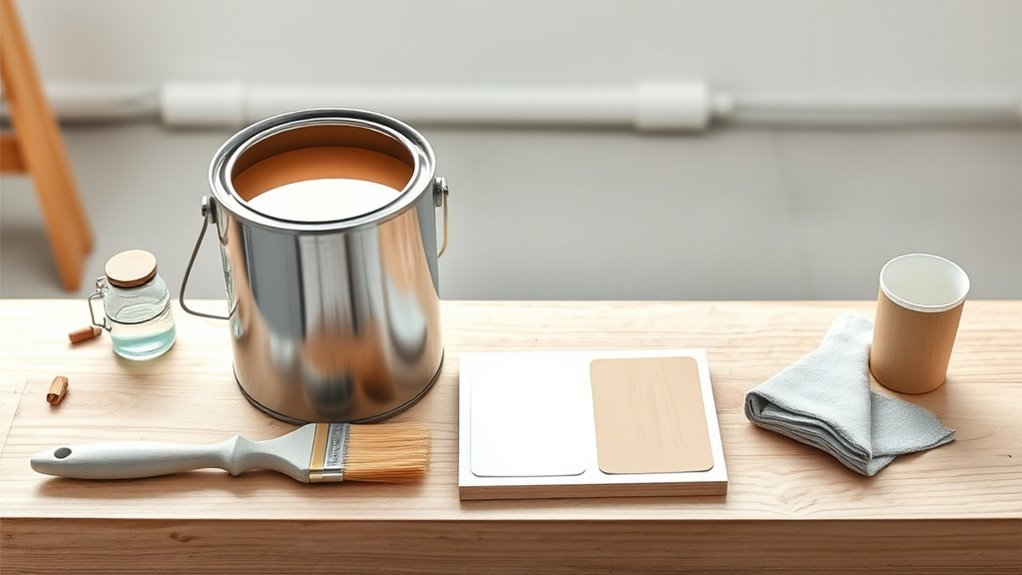
If you want a fast, durable finish, pick latex enamel for indoor walls and trim.
Choose oil-based enamel when you need extra hardness and a smooth, glass-like look for cabinets, doors, or heavy-wear surfaces.
Choose oil-based enamel for cabinets, doors, and high-wear areas when you want extra hardness and a glass-like finish.
You’ll evaluate surface, traffic, and drying time: choose latex for quick recoats and lower odor; pick oil for superior leveling and resistance.
Consider Color matching — test swatches under your lighting and on the actual substrate.
Match primer to paint type.
For Application techniques, use high-quality brushes for oil and synthetic rollers for latex; thin coats, sanding between coats, and proper ventilation will guarantee lasting results.
Is Enamel Paint Always Oil-Based?
You might assume enamel paint is always oil-based because that’s where it started, but that’s no longer the whole story. Today you can choose water-based enamels that mimic many of the hard, glossy qualities of traditional oil formulas.
Knowing the origins and the performance differences—drying time, durability, cleanup—will help you pick the right type for your project.
Oil-Based Origins
Ever wonder whether “enamel” always means oil-based? You’ll find that enamel paint began as oil-based formulations—historical context shows varnishes and alkyds provided hard, glossy finishes prized for durability. You’ll learn manufacturers called many tough oil coatings “enamels,” so the term stuck.
You should also weigh environmental impact: traditional oil enamels emit stronger solvents and VOCs, affecting indoor air and disposal. If you’re restoring or painting, consider that oil origins explain classic performance traits like adhesion and hardness.
Keep in mind why older projects used oil enamels when evaluating finishes and techniques for your work.
Water-Based Enamels
Wondering whether enamel always means oil-based? You’ll find water-based enamels offer similar hard, glossy finishes without relying on solvents.
You get better color consistency from modern water formulas, since pigments suspend evenly and fade less over time. They clean up with soap and water, so you’ll reduce VOC release and lessen environmental impact compared with traditional oils.
You can use them on trim, cabinets, and furniture where low odor and quicker recoat times matter. Check compatibility with primers and existing coatings, but don’t assume enamel equals oil—water-based options are common and practical.
Performance And Differences
Although enamel traditionally meant oil-based formulas, it now describes a performance category—hard, durable, glossy finishes—rather than a specific solvent system. You’ll notice oil-based enamels often level out and resist wear, while modern latex enamels deliver faster drying, easier cleanup, and better flexibility.
Choose based on substrate, exposure, and desired color consistency: oil types can deepen hues; water-based versions keep pigments stable over time. Consider application methods too—brushing, rolling, or spraying perform differently with each chemistry.
Match primer and follow cure times; that’s how you’ll get lasting sheen, adhesion, and the practical benefits of true enamel performance.
What “Enamel” Means on Paint Labels
When you see “enamel” on a paint label, it usually refers to the finish and hardness rather than a specific chemistry.
Check the label for words like “latex,” “acrylic,” or “alkyd/oil” to know whether the product is water- or oil-based.
That distinction matters for drying time, cleanup, and long-term durability.
Enamel Definition On Labels
What does “enamel” actually mean on a paint label? You should know it signals finish and performance more than chemistry. Enamel describes a hard, durable surface that resists scuffs, ideal when color matching matters for trim or cabinetry.
It implies a smoother paint texture and higher sheen options compared with flat house paints. Labels use “enamel” to set expectations—toughness, gloss, and application method—without promising a specific binder.
You’ll still need to check ingredients and drying times to determine oil or latex formulation. Use labels plus technical data to confirm suitability for your project.
Oil Vs. Latex Indicators
If you’re trying to tell whether an “enamel” label means oil or latex, look past the word itself and scan for specific indicators like binder type, VOC level, and recommended cleanup—those details reveal the chemistry.
Check for terms: “alkyd” or “solvent-based” signals oil; “acrylic,” “water-based,” or “latex” signals latex.
Low VOC and soap cleanup point to latex; higher VOC and mineral spirits cleanup point to oil.
Also note recommended Application techniques—brush type, drying time, sanding steps.
For Color matching, ask the retailer whether their spectrometer accounts for binder differences, since sheen and pigment appearance shift between oil and latex.
Chemical Differences: Water vs Oil Enamel
Because the binders and solvents differ fundamentally, you’ll notice water-based (latex) and oil-based enamels behave and cure very differently at the chemical level.
Because their binders and solvents differ, latex and oil enamels cure and behave very differently chemically.
You’ll see latex uses acrylic or vinyl polymers dispersed in water, so film formation relies on coalescence as water evaporates.
Oil enamel uses alkyd or oil polymers that oxidize and crosslink, so curing is chemical.
That affects color retention and environmental impact: latex emits fewer VOCs and resists yellowing; oil cures harder but can yellow and release more solvents.
- Evaporation vs oxidation
- Polymer dispersion vs preformed polymers
- VOC levels
- Yellowing tendency
- Cleanup method
Enamel Finish and Durability Compared
Now that you know how latex and oil enamels cure differently, you’ll see those chemistry differences show up in the finish and longevity you get.
You’ll notice oil-based enamel usually yields a smoother, glossier surface that resists wear and stains, while latex enamel often gives a tougher, more flexible film that handles impacts and temperature changes better.
Choose based on use: high-traffic trim benefits from oil sheen and richer enamel color depth; exterior siding and flexible surfaces favor latex resilience.
Consider enamel textures too—matte hides flaws, semi-gloss balances durability and cleanability—so pick what matches function.
Drying, Curing, and Odor Differences
How quickly will your enamel be ready for handling and returning a room to use? Drying times vary: latex enamel dries to touch in hours, oil-based takes longer but cures tougher. You’ll notice odor differences—latex smells milder, oil-based emits stronger solvent fumes.
Curing affects hardness, sheen stability, color matching, and how texture options settle.
- Check label for tack-free and recoat windows.
- Ventilate to reduce odors and speed curing.
- Test a small patch for final texture options and sheen.
- Allow full cure before heavy use to avoid marks.
- Consider room temperature and humidity for accurate color matching.
Cleanup and Tool Care: Soap and Solvents
When you finish a job, clean tools immediately to prevent dried enamel from ruining brushes and rollers.
If you used latex enamel, wash brushes and rollers with warm soapy water, working the bristles until paint thins; rinse and repeat.
For oil-based enamel, use mineral spirits or paint thinner in a well-ventilated area, then wash with soap to remove residue.
Match solvent choice to paint type, and store cleaned tools flat or hanging to keep shape.
Maintain tools during color mixing and choose proper brush selection for finish type—synthetic for latex, natural or oil-rated for oil-based—to extend tool life.
Best Uses for Latex Enamel (Cabinets, Trim)
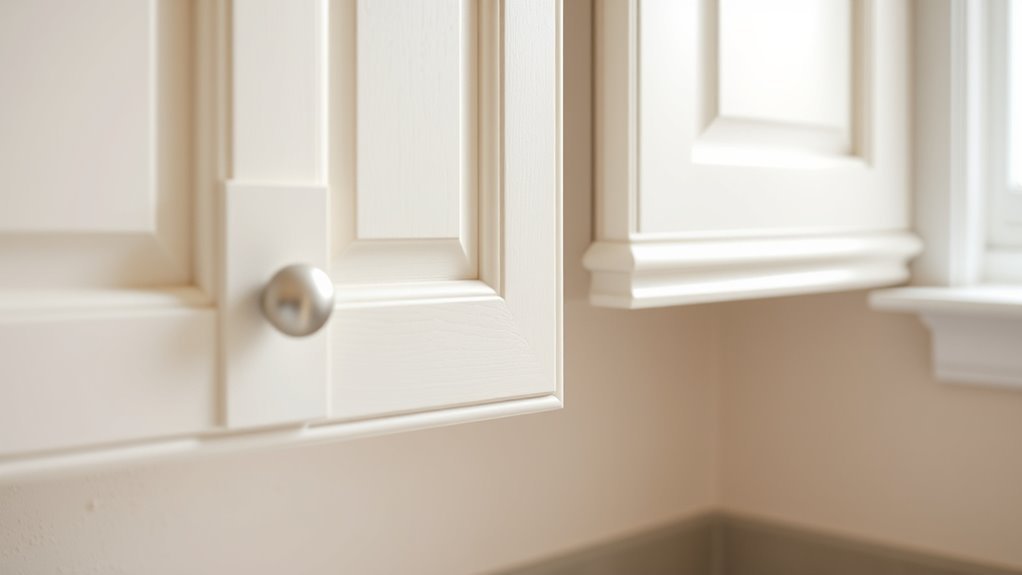
Because latex enamel dries quickly and cleans up with water, it’s an excellent choice for cabinets and trim where you want durable, low-odor finishes that go back into service fast. You’ll appreciate easy application, reduced yellowing over time, and improved color matching compared with older formulas; this reflects the historical evolution of waterborne enamels.
Use latex enamel when you need a smooth, washable surface that resists scuffs on doors, casings, and built-ins. It sands and recoats well, so maintenance stays simple.
- Kitchen cabinets
- Window and door trim
- Baseboards and moldings
- Built-in shelving
- Children’s room furniture
Best Uses for Oil-Based Enamel (Metal, High-Wear)
If you’re working with metal, oil-based enamel gives you a hard, durable finish that stands up to rust and abrasion. You’ll also get superior resistance to scuffs and constant contact in high-traffic areas.
For doors, railings, and machinery that see heavy use, oil-based enamel is usually the smarter choice.
Metal Surface Durability
Although metal exposed to constant abrasion and weathering demands tougher protection, oil-based enamel is often your best choice for high-wear surfaces because it bonds strongly, resists chipping, and forms a hard, durable finish that stands up to impacts and frequent cleaning.
You’ll get longevity if you focus on Surface preparation—removing rust, degreasing, and using a suitable primer—and on Color matching to maintain aesthetics under wear. Apply thin, even coats and allow full cure between layers.
Consider enamel for machinery, railings, garage doors, and outdoor trim where durability matters.
- Automotive panels
- Industrial equipment
- Stair handrails
- Loading dock edges
- Exterior gates
High-Traffic Wear Resistance
When you need paint that will take constant footfall, equipment contact, or frequent cleaning, oil-based enamel outperforms most alternatives on metal surfaces; it cures to a hard, chip-resistant film that stands up to repeated abrasion and impact. You’ll choose oil-based enamel for loading docks, stair treads, handrails, and machinery housings because it resists scuffs and chemical cleaners. Color matching stays stable over time, and Finish options range from high gloss to satin for visibility or reduced glare. Consider primer, surface prep, and proper cure time to maximize wear life.
| Surface | Typical Use |
|---|---|
| Stair tread | Foot traffic |
| Handrail | Contact points |
| Machinery | Abrasion |
| Dock edge | Impact/cleaning |
Prep, Adhesion, and Priming Tips by Enamel Type
Wondering how to get enamel to stick and look its best? You’ll prep by cleaning, sanding, and removing old gloss so primers bond.
Consider oil or latex enamel differences: oil tolerates minimal moisture; latex needs thorough deglossing. Remember color mixing effects and historical developments that shaped primer chemistry when matching systems.
- Choose a primer rated for your enamel type.
- Sand between coats for mechanical adhesion.
- Use a bonding primer on slick surfaces.
- Allow full cure times before topcoats.
- Test adhesion with a small patch and tape pull.
Follow manufacturer instructions and avoid cross-compatibility mistakes for durable results.
Painting Techniques and Troubleshooting for Enamel
How do you get a smooth, durable enamel finish without common pitfalls? You sand, clean, and apply thin, even coats, letting each dry fully. Use proper brushes or a spray gun, control humidity, and avoid overworking edges. For Color mixing, match base types and test small patches to ensure uniform color and finish sheen. Troubleshoot runs by wet-sanding and recoating; tackle orange peel with light sanding and another thin coat. Visualize steps with this table:
| Step | Tool | Result |
|---|---|---|
| Prep | Sandpaper | Smooth base |
| Apply | Brush/spray | Even coat |
| Dry | Time/temp | Hard cure |
| Fix | Sand/recoat | Flawless sheen |
VOCs, Smell, and Safe DIY Use
Because enamel paints — especially oil-based and some solvent-borne alkyds — release volatile organic compounds (VOCs), you’ll want to manage ventilation, exposure time, and product choice to protect your health and your home. You should open windows, run fans, and avoid enclosed overnight drying.
Choose low-VOC or eco friendly options when possible, and use gloves and respirators for older formulations tied to historical uses. Dispose of rags properly to prevent fires.
- Work outdoors or in well-ventilated spaces
- Wear appropriate PPE: mask, gloves, eye protection
- Limit exposure time; take breaks
- Store cans tightly sealed
- Follow local disposal rules
Quick Decision Flowchart: Choose the Right Enamel
When choosing an enamel, start by matching the substrate and environment to the paint’s chemistry. Decide: is the surface metal, wood, or indoor trim?
Pick oil-based for high-moisture or heavy-wear areas; choose latex for easy cleanup and low VOCs. Check desired finish and Color matching — oil often levels smoother, latex gives truer waterborne pigments.
Consider Application methods: brush for detail, roller for walls, spray for smooth factory-like results.
Test a small patch, curing time, and adhesion with proper primer. If in doubt, consult manufacturer specs and pick the formula that meets durability, odor, and cleanup needs.
Frequently Asked Questions
Can Enamel Paint Be Used on Outdoor Concrete Surfaces?
Yes — you can use enamel paint on outdoor concrete surfaces. You’ll need thorough surface preparation, priming and cleaning, and you’ll choose a weather resistance formula so the coating holds up to moisture, UV and temperature changes.
Are Enamel Paints Food-Safe Once Fully Cured?
No, enamel paints usually aren’t food-safe even when cured; you’ll need to confirm food safety and follow the curing process precisely, because some cured enamels still leach chemicals—opt for certified food-grade coatings instead.
How Long Can Mixed Enamel Paint Be Stored Unopened?
Unopened mixed enamel paint’s shelf life typically ranges six months to two years; you’ll prolong storage duration by keeping cans sealed, cool, dry, and away from temperature extremes, but always check manufacturer dates and smell for spoilage.
Do Enamel Paints Require Specific Respirator Protection?
Yes — you should use respirator safety when working with enamel; you’ll protect against paint fumes, using a properly rated respirator (organic vapor/particulate as needed), guarantee fit, and follow ventilation and manufacturer guidance.
Can Enamel Be Colored With Universal Tinting Pastes?
About 70% of painters report successful tinting with universal pastes; you can use them, but check color compatibility and tinting limitations—universal pastes often work, yet strong pigments or alkyd enamels may need manufacturer-specific tints.
Conclusion
You’ve got oil’s slow, hard finish and latex’s quick, forgiving touch—one like polished metal, one like fresh linen. Decide by use: oil for wear, latex for ease. Prep and primer bridge their differences, so your surface won’t betray you. Choose low-VOC options if smell matters, and test a small patch to see how sheen and adhesion behave. Trust the right enamel for the job, and your paint will wear its purpose proudly.
