
Is It Necessary to Sand Walls Before Painting?
You usually should sand or at least scuff walls before painting to give new paint something to grip, blend repairs, and prevent peeling or visible seams. Light scuffing or a liquid deglosser works on smooth, low-gloss surfaces; heavier sanding’s needed for glossy, flaking, or patched areas. Clean dust thoroughly and prime repaired spots for uniform absorption. Don’t sand lead-painted surfaces yourself—call a pro. Keep going to learn when to sand, scuff, or hire help.
Should You Sand, Scuff, or Skip?
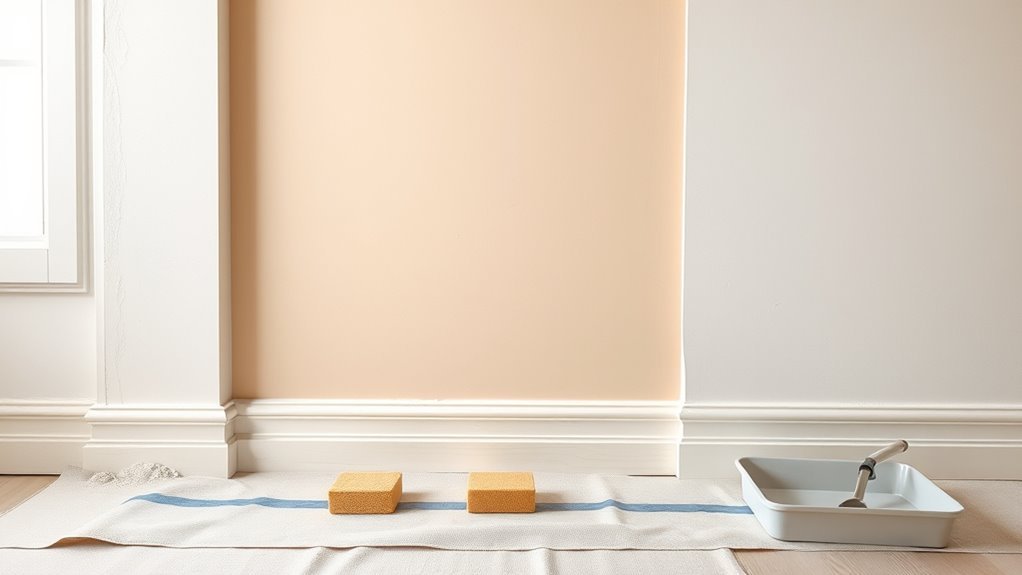
Wondering whether you should sand, scuff, or skip prepping your walls? You’ll decide based on surface condition and desired finish: sand glossy patches to improve adhesion, scuff minor semi-gloss or satin areas with a Scotch-Brite pad, and bypass light sanding on fresh, matte drywall primed properly.
Consider paint sheen—higher gloss needs more prep—to avoid poor bonding or visible defects. Also weigh color matching: if you’re covering a darker hue, sanding and priming help prevent bleed-through and ensure true color payoff.
Pick the simplest prep that guarantees adhesion and even coverage for your project’s goals.
Why Sanding Walls Matters for Paint
Because paint needs a stable, slightly rough surface to grab onto, sanding helps guarantee adhesion and a smoother final look. You’ll prep problem spots, reduce glossy paint sheen, and make color matching easier by evening surface texture. Light sanding removes contaminants and feather-sands edges, so new paint lays flat without pooling. You won’t need aggressive abrasion everywhere—target high-gloss areas, patched drywall, and trim junctions. The result is a uniform appearance and fewer touch-ups. Use fine grit for final smoothness, wipe dust, then prime where needed to assure consistent color matching and sheen across the wall.
| Area | Action | Result |
|---|---|---|
| Glossy paint | Scuff/sand | Dulls sheen |
| Patches | Sand edges | Blends texture |
| Trim | Light sand | Better bond |
| New drywall | Sand skim | Uniform finish |
| High spots | Sand down | Even color |
How Sanding Improves Adhesion and Longevity
When you sand before painting, you create tiny abrasions that give new paint something to mechanically bite into, which directly boosts adhesion and reduces the chance of peeling or flaking over time.
You improve surface texture so the coating lays down evenly and grips rather than slides. That grip matters when paint compatibility varies between old and new finishes; sanding evens the profile and helps different formulations bond.
You’ll also remove gloss and minor contaminants that interfere with chemical adhesion. Overall, prepared walls let the paint perform as designed, extending finish life and reducing maintenance, peeling, and premature recoating.
Quick Signs Your Walls Need Sanding
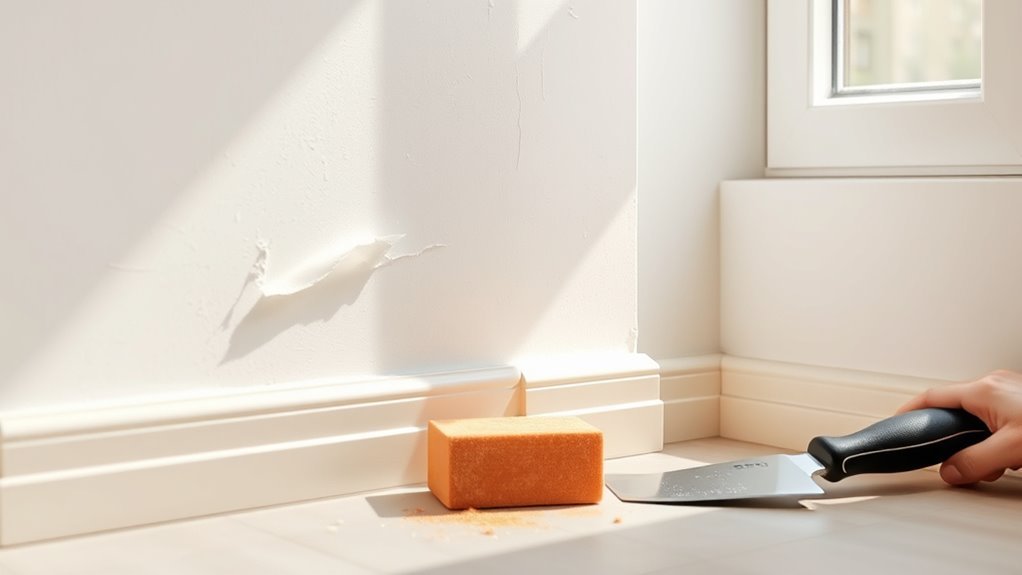
If your walls show visible defects or the old finish feels slick, you’ll want to sand before repainting. Look for peeling, flaking, or bubbling paint, noticeable brush or roller marks, and glossy surfaces that resist new coats.
Sanding evens texture so color matching works reliably and avoids patchy results. If you see repaired patches or uneven sheen, sand to blend them. Choose appropriate grit and test a small area.
For sustainability, consider eco friendly options like low-dust sanders and recycled sanding pads. When in doubt, light sanding prevents adhesion problems and gives a cleaner, longer-lasting finish.
When Light Scuffing Is Enough
If the marks on your wall are shallow and cosmetic, you don’t always need full sanding — light scuffing can be enough.
For those cases, you’ll want to wipe, spot-fill any tiny nicks, and lightly abrade the surface so new paint will adhere.
Also pick a paint with good coverage and stain-blocking properties so you won’t regret skipping heavy sanding.
When Scuffs Don’t Matter
Wondering whether every little scuff needs sanding? You don’t always have to sand—light surface scuffs often disappear under a fresh coat, especially with good color matching and when you use eco friendly solvents for cleanup.
If scuffs are superficial, paint will bond and hide them without aggressive prep. Focus on visible impact: if the scuff doesn’t catch your eye from normal distance, skip sanding.
Keep walls clean, remove dust, and spot-prime only when needed. Save time and avoid unnecessary abrasion—sanding’s worth it when texture or adhesion issues appear, not for every minor mark.
Prep Steps For Scuffing
When scuffs are light, you can skip heavy sanding and follow a few simple prep steps to guarantee paint sticks and looks smooth.
Start by cleaning the area with mild detergent and water; remove grease, dust, and chalky residue.
Lightly scuff with fine-grit sandpaper or a scuff pad to create a key for adhesion, then wipe with a tack cloth.
Spot-prime any bare patches to prevent flashing and help with color matching later.
Feather edges of old paint to avoid visible shifts.
Finally, let primer dry fully and inspect paint sheen consistency before recoating.
Paint Selection Considerations
Since you’ve only done light scuffing, choose paints formulated for good adhesion and hide—like high-quality acrylic latex or paints labeled “no-sand” or “direct-to-substrate.” You’ll want a paint with strong pigment load to cover minor imperfections without extra sanding.
Pick finish based on traffic: eggshell for living areas, satin for kitchens and baths. Consider color psychology when selecting hues to set mood and perceived space; test samples on your wall.
If indoor air quality matters, opt for low-VOC or eco-friendly paints that still promise durability. Always follow manufacturer prep notes and use proper primer if recommended.
When Full Sanding Is Necessary
If paint is peeling, blistering, or chalking, you’ll need to strip or fully sand the old, failing finish so the new coat will adhere.
You should also sand any rough patches from patched drywall or joint compound until the surface is smooth and feathered into the surrounding wall.
Skipping full sanding in these cases will show through the new paint and shorten its lifespan.
Remove Old Failing Paint
Noticing large sections of peeling, bubbling, or flaking paint means you’ll need to remove the old coating completely before repainting. Leaving it will prevent the new paint from adhering properly and lead to future failure.
You should scrape and sand back to a sound substrate, then clean and prime exposed areas. Remove loose material instead of feathering excessively; full removal avoids trapped defects.
After prep, consider color matching for patches so touch-ups blend, and pick a paint sheen consistent with surrounding surfaces to hide progressions.
Wear a mask, work methodically, and inspect for remaining adhesion issues before applying new paint.
Smooth Rough Repairs
When rough patches, raised seams, or heavy filler stand proud of the wall, you’ll need to sand back to a smooth, uniform surface before painting. Full sanding guarantees the final coat lays flat and hides repairs.
You’ll work systematically, knocking down high spots, feathering edges, and re-smoothing compound so light doesn’t reveal bumps. Match surrounding wall textures as you sand and reapply skim coats where needed to preserve texture continuity.
After sanding, clean dust thoroughly to aid adhesion and true Color coordination. If repairs span large areas, full sanding guarantees a seamless finish and prevents repaired zones from standing out.
New Drywall: Do You Need Sanding?
Although fresh drywall looks smooth, you’ll usually need to sand at least lightly before painting to remove joint compound ridges, nail pops, and surface dust that can telegraph through the finish.
You’ll prep seams, feather edges, and guarantee a uniform surface so color matching reads true and paint sheen stays consistent. Focus on light sanding with fine grit and vacuum between steps.
- Sand high spots and ridges until seamless.
- Spot-sand patched areas to blend with paper.
- Wipe or tack cloth to remove dust before priming.
Prime after sanding; primer evens porosity and helps the topcoat perform.
Plaster Walls: Sand or Just Repair?
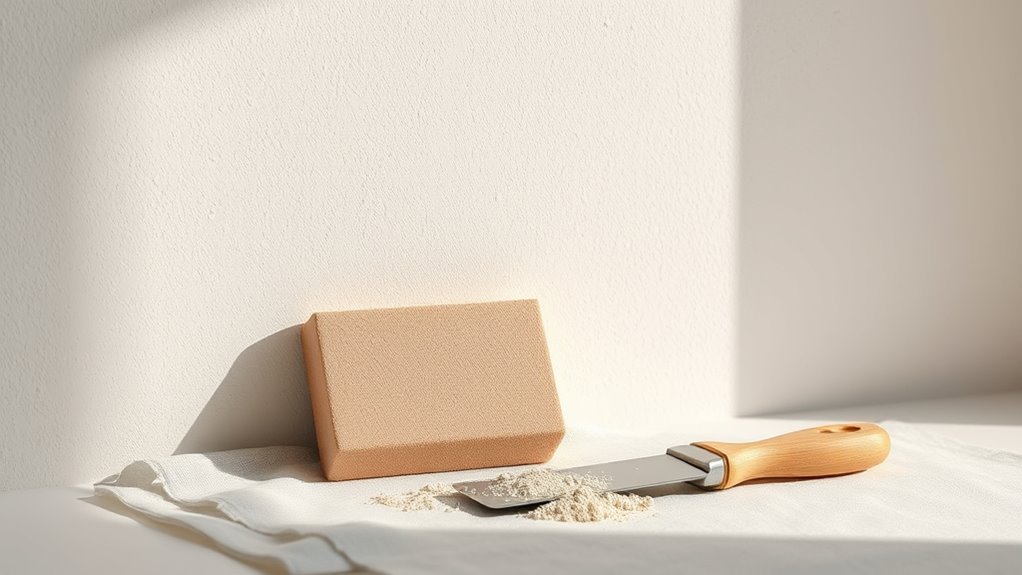
Plaster walls usually don’t need aggressive sanding like drywall does; you’ll mostly repair cracks, loose patches, and any rough spots before painting. Inspect for hairline cracks and delamination, scrape loose plaster, and fill gaps with compatible compound.
Sand minimally to feather repairs so they blend with existing wall textures without flattening them. Prime repaired areas to guarantee uniform absorption and reduce the risk of old paint reacting.
Use low-VOC products and ventilate well to limit paint fumes while you work. If textured patterns are important, avoid over-sanding; preserve the surface character and focus on proper patching and priming.
How Textured Walls Change Sanding Needs
Because textured surfaces catch and show imperfections differently than smooth walls, you’ll need to adjust your sanding strategy to preserve the texture while still creating a good paint surface. You shouldn’t flatten peaks or alter patterns; instead, focus on smart prep.
Evaluate wall textures and pick gentle sanding techniques that roughen glossy spots and feather repairs without losing character. Use light hand-sanding, sanding sponges, or targeted abrasion.
Consider these steps:
- Lightly sand repaired areas to blend with the existing texture.
- Use sanding sponges to follow contours without crushing texture.
- Clean dust thoroughly so new paint adheres evenly and looks consistent.
Does Glossy Paint Require Full Sanding?
If your wall has a glossy finish, you’ll often need to sand enough to scuff the surface so new paint can adhere. You don’t always have to sand down to bare drywall — light sanding or using a deglosser can work as alternatives when the surface is sound.
Regardless of method, you should clean, repair, and prime glossy areas to guarantee a durable finish.
When Sanding Is Necessary
When you’re repainting a surface with glossy paint, you usually need to sand enough to dull the sheen so the new coat will adhere. Full stripping to bare substrate isn’t always required, but light sanding or scuffing is essential to remove the hard, slick finish and any loose particles before priming.
You should sand when adhesion is poor, when repairs change wall texture, or when you change between very different colors for proper color coordination. Assess gloss level, flaking, and previous prep.
Use fine sandpaper, clean dust, then prime. Consider spot-sanding versus whole-panel sanding based on condition.
- Assess adhesion
- Fix texture
- Clean and prime
Alternatives To Full Sanding
You don’t always have to sand down glossy paint to bare substrate to get good adhesion. You can degloss with an abrasive pad or chemical deglosser to scuff the surface lightly, then clean thoroughly.
Use bonding primers designed for gloss; they bridge slick finishes without aggressive sanding. When changing hues, consider color matching primer-tints to reduce coats and hide old tones.
For smaller touch-ups, adhesion-promoting primers and feathered edges work well.
If you prefer eco-friendly options, choose low-VOC deglossers and primers or water-based alternatives. These approaches save time while maintaining a reliable bond and finish.
Proper Surface Preparation
Although glossy paint can seem stubborn, you don’t always have to sand down to bare drywall to get a durable finish—proper surface prep focuses on cleaning, deglossing, and priming to guarantee adhesion. You’ll assess the wall texture and paint sheen first, feeling for bumps, grease, or peeling.
Then follow this simple routine to secure a lasting coat:
- Clean with mild detergent, rinse, and let dry to remove oils and dust.
- Scuff glossy surfaces with fine sandpaper or a liquid deglosser to reduce sheen without aggressive sanding.
- Spot-prime repaired areas and use a bonding primer over glossy finishes before repainting.
How to Test a Glossy Surface
If a wall looks shiny, test it before you sand so you know whether the finish is glossy or just aged gloss, and what prep it needs. Start with a simple touch test: press your fingertip and feel for slickness.
Next, use a small drop of rubbing alcohol on a cotton ball; rub an inconspicuous spot. If paint softens or comes off, it’s lacquer or poorly cured; you’ll need stripping or cleaning. If it stays, it’s true gloss—light abrasion helps adhesion.
For textured or decorative wall finishes, test multiple areas.
Consider eco-friendly sanding options like low-dust pads or hand-sanding first.
What Grit to Use by Situation
For bare drywall you’ll want a finer grit, like 120–150, to smooth seams without damaging the paper.
For previously painted surfaces choose 120–180 for light scuffing or 80–100 if you need to remove glossy or peeling paint.
Match grit to the job so you avoid over-sanding or leaving rough spots.
Bare Drywall Grit
When you’re prepping bare drywall, choosing the right sandpaper grit makes a big difference in how smooth the surface turns out and how much work you’ll do afterward. You’ll want to match grit to the repair size and desired wall texture, since final smoothness affects paint adhesion and paint sheen.
Choose coarse for heavy leveling, medium for seams and skim coats, fine for final touch-ups.
- 80–100 grit: remove high spots, shape joint compound quickly.
- 120–150 grit: blend seams and smooth small fills without gouging.
- 220 grit: final smoothing before priming for a consistent paint sheen.
Painted Surface Grit
Although painted walls usually need less aggressive sanding than bare drywall, you’ll still pick the grit based on the existing finish and the fixes you’re making. If the paint sheen is glossy, start with 120–150 grit to scuff and promote adhesion without gouging.
For eggshell or satin finishes, 180–220 grit smooths imperfections while preserving sheen. Matte finishes often need only light 220–320 grit.
Use coarser 80–100 grit for heavy flaking or thick texture repairs, then finish with finer grits.
Match your sanding to wall texture and touch up primer spots before repainting for even results.
Sanding Painted Walls Without Damage
If you want a smooth, durable finish without causing harm, sanding painted walls carefully is key. You’ll remove surface imperfections, scuff glossy paint for adhesion, and preserve underlying layers for accurate color matching and paint sheen.
Work gently with fine grit, test a small area, and clean dust before priming. Follow this simple routine:
- Inspect and repair chips or flaking paint.
- Lightly sand in even strokes, avoiding deep gouges.
- Wipe with a tack cloth and let the wall dry.
Take time; controlled, minimal abrasion prevents damage and keeps your repaint predictable and professional.
Hand Sanding Vs. Power Sanding
When you’re choosing between hand sanding and power sanding, think about how each method prepares the surface and what finish you need.
Hand sanding gives you control for small spots and delicate areas, while power sanders speed the job but can remove more material quickly.
Also weigh dust control — vac-equipped sanders and masks cut cleanup and health risks compared with manual sanding.
Surface Preparation Differences
Wondering whether to grab a sanding block or rent a sander? You’ll choose based on surface prep needs: detailed spots, delicate trim, or broad wall areas. Consider how texture, old finishes, and planned repainting affect outcomes, and remember color theory when prepping surfaces to guarantee true hues.
For furniture preparation, hand sanding preserves edges and detail.
- Hand sanding for control, delicate molding, and feathering small repairs.
- Power sanding for larger flat areas and removing stubborn coatings.
- Hybrid approach: start coarse with a sander, finish by hand for smoothness and precision.
Speed And Efficiency
Although hand sanding gives you fine control, power sanding dramatically speeds up prep on large, flat surfaces—so you’ll pick the method that balances time with the finish you need.
If you’re tackling a small room or delicate trim, hand sanding lets you feel imperfections and avoid overworking thin areas.
For broad walls, a power sander shaves hours off prep, letting you move on to primer, color mixing, and topcoats sooner.
Faster sanding can shorten overall turnaround, but remember paint drying still dictates curing time.
Choose hand or power based on surface size, detail level, and your schedule.
Dust Control Methods
How will you keep dust from taking over the room? You’ll weigh hand sanding’s low dust and control against power sanding’s speed; either way, contain particles before they settle, especially if you’ll analyze color psychology or use eco friendly paints that deserve a clean surface.
- Seal vents and doorways with plastic sheeting and tape.
- Wet-sand lightly or use a sanding block for targeted work.
- Attach a HEPA vacuum to power sanders or run a portable HEPA air purifier.
You’ll clean thoroughly between steps, wipe surfaces with a damp cloth, and let filters run to minimize cleanup and protect your chosen finish.
When to Use a Sanding Block
When you need precise control over a small area, reach for a sanding block—its flat, stable surface helps keep pressure even and prevents creating dips or gouges in the wall. You’ll use it on bumped corners, patched spots, and subtle gradations where wall textures meet different paint sheen. A sanding block lets you maintain a level plane and feel progress.
| Area | Action |
|---|---|
| Patch seams | Smooth to feather edges |
| Corners | Light passes to preserve shape |
| Trim junctions | Blend sheen differences |
Work with light, even strokes, check often, and stop when surfaces read uniform.
When to Use a Sanding Sponge
If you’re smoothing contours or working around curved trim, reach for a sanding sponge—it flexes with surfaces so you can sand concave and convex areas evenly without gouging. You’ll use it for gentle feathering, shaping joints, and prepping textured spots before primer or eco friendly paints. It’s handheld, forgiving, and reusable.
- Use a fine-grit sponge to blend repairs into surrounding drywall.
- Choose a firm sponge for gentle shaping of wood trim edges.
- Replace the sponge when it tears or clogs to avoid uneven finish.
Remember color psychology: smoother surfaces reflect light consistently, influencing perceived hue and depth.
How Wet Sanding Works and When
You’ll want to wet sand when the wall has glossy or uneven finishes, minor runs, or sanding dust that clogs dry paper.
Use fine-grit, water-lubricated sandpaper and keep the surface and paper wet to prevent scratching and to carry away residue.
Work gently in light, even strokes and wipe the wall clean before repainting.
When To Wet Sand
Although dry sanding handles most prep jobs, wet sanding gives a smoother finish and reduces dust when you’re dealing with glossy paints, multiple primer/coats, or visible surface imperfections that need feathering.
You’ll choose wet sanding when you want tight color matching after spot repairs, to blend edges, or to remove minor runs without reopening texture.
Remember ventilation tips: work near open windows and use a fan to clear moisture and fumes.
Use water with mild soap, a soft sanding pad, and light pressure.
Stop when the surface feels uniformly smooth, wipe dry, and allow full cure before recoating.
- Blend repaired spots
- Smooth glossy finishes
- Remove minor runs
Wet Sanding Technique
When you wet sand, water lubricates the abrasive and lifts away grit so the paper cuts smoothly without clogging, letting you work slowly enough to level glossy spots, blend repairs, or take down high ridges without gouging the surface.
You’ll use fine-grit wet/dry paper, keep the surface wet, and sand with light, even pressure following the grain or stroke pattern. Rinse frequently, inspect for scratches, and finish with a tack cloth.
Wet sanding suits final smoothing before topcoats, especially when using eco-friendly paints that highlight flaws.
Consider color psychology when choosing sheen and finish to affect perceived texture.
How Much Pressure to Apply When Sanding
If you press too hard while sanding, you’ll gouge the drywall or strip paint unevenly; light, steady pressure lets the abrasive do the work and produces a smooth, even surface. You’ll judge pressure by feel: keep the pad moving, avoid lingering. Consider wall texture and paint sheen—smoother sheens need gentler touch to prevent visible scratches.
- Use firm but gentle strokes, letting grit abrade rather than force.
- Test pressure on an inconspicuous spot; adjust if the surface dulls unevenly.
- For rough patches, increase passes instead of force to blend differences.
Stop frequently to inspect and adjust your technique.
Feather Edges So New Paint Blends
When you feather the old paint, you soften the hard edge so the new coat sits evenly.
Use light, controlled strokes to create smooth blending edges instead of sharp lines.
Finish by blending with fine sanding so the repair disappears under the fresh paint.
Feathering The Old Paint
Although the old paint edge looks minor, you’ll want to feather it so the new coat blends smoothly and avoids visible ridges. You’ll sand the edge lightly, wipe dust, and use thin layers to avoid lap marks. If you’re working near wall murals, mask carefully to protect artwork and limit sanding. Ventilate to reduce paint fumes while you work.
- Light sanding: use fine-grit to taper the edge evenly.
- Clean: remove dust so primer and paint adhere.
- Thin coats: build color gradually to hide gradual change.
Feathering saves touch-ups and keeps finishes uniform without harsh lines.
Smooth Transition Edges
Because rough edges show up under even thin coats, you’ll want to feather the old paint into the new so the changeover disappears rather than stands out. You’ll blend edges by lightly sanding where old layers meet fresh, working outward to create a gentle slope that disguises seams.
Match the surrounding wall textures as you feather so light reflects consistently. Use a tack cloth to remove dust, ventilate well to disperse paint fumes, and wear a respirator if needed.
Feathering minimizes visible lines and reduces the need for heavy touch-ups, giving you a seamless, professional-looking finish with less rework.
Blend With Fine Sanding
If you want new paint to disappear into the old, lightly sand the join where they meet so the edge slopes gently rather than stopping abruptly. You’ll feather edges with fine sandpaper, easing texture removal without damaging substrate or moisture barriers. Work in small sections, check the slope by touch, and keep grit consistent so paint lays evenly.
- Use 220–320 grit for smooth feathering.
- Avoid deep gouges; sand just enough for blend.
- Wipe dust and inspect moisture barriers before priming.
You’ll save time on touch-ups and get an invisible seam when you prime and paint.
How to Sand Patched Areas Seamlessly
When you’ve filled holes or skim-coated a seam, sanding those patched areas properly makes the repair disappear and gives paint a smooth, even finish. Start with 120–150 grit to level high spots, then switch to 220 grit for feathering edges so gradual shifts vanish.
Use a sanding block or pole sander for flat areas and a hand block for small patches. Wipe dust with a damp cloth; consider painting safety by wearing a mask and ventilating the room.
Prime patched spots before painting to match texture and absorption. Remember wall color psychology—smooth surfaces show color and sheen consistently, improving final appearance.
How to Sand Around Trim and Outlets
Although trim and outlets make sanding trickier, you can get clean edges by working slowly and using the right tools. Tape edges, remove outlet covers, and use a sanding sponge for control. Match surfaces so paint and color matching look seamless.
- Use a fine-grit sanding sponge for curves and corners.
- Wrap sandpaper around a block for straight edges near trim.
- Feather patched areas toward the outlet opening for smooth blending.
Clean dust with a tack cloth, inspect for remaining sheen, and choose primer choices that suit stain-blocking or adhesion needs.
Paint only after surfaces are dust-free and evenly abraded.
Preparing Trim and Doors Differently
Because trim and doors see different wear and finish expectations, you’ll prep them with distinct techniques and materials.
Trim and doors require different prep—use tailored sanding and materials to meet their unique wear and finish needs.
You’ll sand trim lightly with fine-grit paper to scuff glossy surfaces, remove dirt, and smooth old drips, then wipe with a tack cloth.
For doors, focus on edges and panels, sanding more where hardware rubs.
Use fillers for gouges and caulk seams around trim for crisp lines.
Avoid aggressive sanding that damages profiles, especially with decorative finishes.
Keep wall textures separate—mask carefully to prevent dust and protect textured areas from unwanted sanding or primer splatter.
When Primers Reduce Sanding Needs
If you pick the right primer—bonding or stain-blocking types—it can cut down on how much sanding you’ll need.
Primers that improve adhesion often let you skip full sanding and instead focus on trouble spots.
In most cases you’ll only have to spot-sand chips, drips, or glossy patches before priming.
Primer Types Matter
Which primer you choose can seriously cut down on how much sanding you’ll need. Pick one that suits the surface and your goal: color matching reduces the number of coats, while primers that even out texture can minimize rubbing. Consider paint sheen compatibility to avoid surprises when topcoating.
- Use a stain-blocking primer for spots and marks.
- Try a high-build primer to hide minor imperfections.
- Select a tinted primer when shifting from dark to light.
You’ll save time by matching primer type to the job, preventing unnecessary sanding without sacrificing finish quality.
Adhesion Over Sanding
When you prioritize adhesion by using the right primer, you often don’t need aggressive sanding to get a durable, smooth finish. You can rely on bonding primers designed for slick surfaces or problematic wall texture to create a stable base, minimizing time spent sanding.
Choose a primer matched to substrate and the paint sheen you plan to use so topcoat appearance and durability stay predictable. Clean and degrease first, then spot-treat imperfections rather than scuffing whole walls.
That approach preserves delicate textures, reduces labor, and still yields a professional finish when you follow primer and paint manufacturers’ instructions.
Spot-Sanding Only
Although primers can cut down on the need to sand every surface, you’ll still want to spot-sand areas with loose paint, rough patches, or drips so the primer and topcoat lay down smoothly. You’ll focus on problem spots instead of sanding whole rooms, which saves time and limits exposure to paint fumes.
Check wall texture and connections where old and new finishes meet. Targeted sanding helps primer bond and keeps you’ll get an even finish.
- Smooth bumps and drips until they’re feathered.
- Remove flaky paint to bare substrate.
- Lightly scuff glossy spots for adhesion.
Paint Types and Sanding Requirements
Because different paints bond and dry in different ways, the sanding you do depends on the type of paint you’re applying. You should consider paint textures and color schemes when prepping: flat paints hide imperfections but need light sanding for adhesion; satin and semi-gloss usually require more deglossing; glossy finishes demand thorough sanding for new coats to stick.
| Paint Type | Sanding Need |
|---|---|
| Flat/Matte | Light |
| Eggshell/Satin | Moderate |
| Semi-gloss/Gloss | Heavy |
| Specialty (textured) | Spot-sand |
Match sanding to finish to ensure smooth results without overworking the surface.
When to Use Paint-and-Primer Products
If your walls are smooth, clean, and in good condition, you can often skip heavy sanding and use a paint-and-primer product. It works best when you just need color change or light coverage rather than fixing major flaws.
You’ll save time and coats, but don’t expect it to hide peeling, stains, or deep imperfections.
Best Surface Conditions
When walls are clean, sound, and already painted in a similar color, you can usually use a paint-and-primer product to save time and effort. You’ll want surfaces free of peeling, heavy stains, and loose texture so adhesion stays strong.
Consider color theory when shifting shades; small contrasts mask imperfections and reduce coats. Also weigh environmental impact: low-VOC paint-and-primer blends cut solvents and waste.
Check these ideal conditions:
- Smooth, intact finish with no flaking or bubbling
- Lightly stained or uniformly faded walls that need refresh rather than repair
- Existing sheen compatible with the new product for proper bonding
When Coverage Suffices
Once your walls are sound, lightly stained, and close in tone to the new shade, a paint-and-primer product will usually give the coverage you need in one coat. You’ll save time when color matching is minor and existing sheen is low.
Prep by cleaning and repairing chips; scuff or degloss glossy areas so the product adheres. Skip a separate primer application unless you have severe stains, drastic color changes, or porous patches.
Test a small area to confirm hide and adhesion. If the sample covers well and dries uniformly, you can proceed confidently without full priming, cutting labor and material costs.
Chemical Deglossers Vs. Sanding: When
Although both chemical deglossers and sanding aim to promote paint adhesion, they work very differently and suit different situations. You’ll choose based on gloss level, time, and substrate.
Use chemical deglossers when you need quick dulling on glossy paint or when you can’t sand delicate trim; pair with chemical primers for stubborn spots.
Sanding wins for rough or flaking surfaces and when you want mechanical bite.
Consider eco friendly finishes and ventilation needs before using solvents.
Pick sanding if texture and durability matter; pick deglossers for speed and minimal mess.
- Quick deglossing: glossy enamel
- Sanding: peeling or uneven areas
- Primer-first: when adhesion is doubtful
How Sanding Affects Textured Finishes
If you sand textured walls too aggressively, you’ll flatten the peaks that give the finish its character and end up with visible low spots that show through new paint.
You should use gentle, targeted sanding to knock down only high ridges and loose material without altering overall texture or wall patterns. For decorative finishes, spot-sand by hand with fine-grit sandpaper and a light touch, preserving intentional relief.
When repair is needed, feather edges carefully so patched areas match surrounding texture. Test a small area first to confirm the look before proceeding across the entire wall to avoid uneven results.
How Humidity Affects Sanding and Paint
Because moisture in the air changes how sandpaper, joint compound, and paint behave, you’ll get different results sanding and painting on humid days than on dry ones. You should account for humidity impact and moisture effects to avoid soft, clogged sanding and slow-drying paint.
High humidity can swell drywall and hide imperfections. Low humidity can make dust airborne and cause rapid drying.
- In high humidity, sandpaper clogs quicker and cuts less efficiently.
- Allow longer dry times for primers and spackle to prevent trapping moisture.
- Use ventilation or dehumidifiers to control humidity impact before sanding and painting.
Dust-Minimizing Prep for the Room
Before you sand, seal off furniture and doorways with plastic to keep dust contained.
Wipe walls with tack cloths after sanding to pick up fine particles, and use a HEPA vacuum for cleanup so dust doesn’t resettle.
These simple steps cut cleanup time and protect your belongings.
Seal Off Furniture
Want to keep sanding dust off your couch and shelves? Seal off furniture before you sand to protect upholstery and finishes, and to keep your Paint color selection process clean and stress-free. Cover pieces with breathable drop cloths or plastic sheeting, taping edges to baseboards so dust can’t slip underneath.
Move small items to another room or into sealed bins. Consider elevating furniture on blocks to wrap beneath.
- Use heavy-duty plastic for long projects.
- Drape breathable cloths to avoid trapped moisture.
- Label covered items to speed unpacking.
These steps give reliable Furniture protection while you prep walls.
Use Tack Cloths
If you want a truly dust-free surface before painting, use a tack cloth to pick up the fine particles that sweeping and vacuuming miss. You’ll glide the sticky cloth over walls, baseboards, and trim after sanding or patching, removing grit that can affect finish and color matching.
Tack cloths’re inexpensive and disposable, so they fit tight budget considerations while improving adhesion and preventing specks in your topcoat. Don’t overwork the surface—light passes suffice.
Replace cloths when saturated, and avoid solvents that leave residue. This small step saves time retouches and yields a smoother, more professional-looking paint job.
Opt For HEPA Vacuum
When you’re prepping a room for painting, choose a HEPA-equipped vacuum to trap the fine dust sanding kicks up instead of just scattering it around; these vacuums capture particles standard models miss, reducing airborne grit that can settle back on walls and ruin your finish.
You’ll protect freshly sanded wall textures and preserve the desired paint sheen by removing microscopic debris. Use the vacuum before, during breaks, and after sanding to keep the surface clean.
Quick tips:
- Vacuum ceilings and ledges first to prevent fallout.
- Work from top to bottom for efficiency.
- Use attachments to reach corners and trim.
Dust Control Techniques for Drywall Sanding
Because sanding drywall kicks up a lot of fine dust, you’ll want to use targeted control methods to keep it from spreading through your home. Seal off the room with plastic sheeting and tape around doorways and vents.
Seal the room with plastic sheeting and tape around doors and vents to contain drywall dust.
Use a sanding pole with a dust-collection attachment or a vacuum that connects directly to the sander to capture particles at the source. Wet-sanding sponges work for light smoothing and reduce airborne dust, though they’ll slightly alter wall texture.
Wear a fitted N95 respirator and safety glasses.
After sanding, HEPA-vacuum surfaces and wipe with damp cloths to remove residual dust before priming and evaluating paint sheen.
How to Protect Floors and Furniture
After you’ve controlled drywall dust, protect floors and furniture to keep cleanup simple and prevent paint damage. Lay drop cloths, secure edges with painter’s tape, and move small items out of the room so you won’t risk smudges or tracked paint during paint drying. Use plastic sheeting for large furniture and wrap fragile pieces to block dust.
- Cover floors with layered cloths or rosin paper for traction.
- Tent tall furniture with plastic for color matching checks and ventilation.
- Keep a small paint-splash kit—rags, jar of water, and a scraper—for quick touch-ups.
How to Dispose of Dust and Abrasives
If you’re done sanding, don’t just sweep the dust into a corner—collect it and the used abrasives carefully to avoid spreading contaminants and clogging drains.
Wear a mask and dampen dust with a light mist before wiping with disposable rags or vacuuming using a HEPA-equipped vacuum.
Seal grit-filled papers and discarded sanding pads in sturdy bags; label them if lead or old paint is suspected.
Don’t rinse residues down sinks—dispose of wash water outdoors on permeable ground away from storm drains.
Keep samples to check how Wall textures and Color pairing will read under new lighting before final cleanup.
Estimating Time to Sand a Room
When you’re planning a sanding job, estimate time by breaking the room into zones—ceilings, walls, trim, and corners—and timing a representative area to scale up. This gives a realistic baseline rather than guessing by square footage alone.
You’ll factor in current wall colors and existing paint sheen, since darker colors or glossy finishes need more effort. Compare samples, then multiply.
- Time a 10 sq ft wall patch for full-sheen prep.
- Time trim and corners separately; detail work adds minutes per foot.
- Add buffer for repairs, drying, and repositioning equipment.
Record results to schedule work accurately.
Time-Saving Sanding Shortcuts That Work
Although you can’t skip prep entirely, smart shortcuts cut sanding time without hurting the finish. Focus on targeted sanding: smooth only glossy patches, drips, and rough spots instead of entire walls. Use a sanding sponge for corners and a pole sander for broad areas to work faster with less fatigue.
Clean surfaces thoroughly—dust-free walls let primers and eco-friendly paints adhere better, reducing rework. When choosing colors, remember color psychology: lighter hues hide minor imperfections more than dark, intense shades.
Test small areas first so you spend time only where it truly improves the final result.
How to Spot Sanding Mistakes Early
Because sanding flaws can turn up only after priming or in certain lights, you should check for mistakes early and often so you catch them before paint goes on. Walk the room at different angles, using a bright, low-angle lamp to reveal gouges, high spots, or uneven sanding.
Compare patched areas for smoothness and color matching under natural light. Test small areas with the desired paint sheen to see how texture shows.
Use these quick checks:
- Run your hand to feel ridges or soft spots.
- Inspect against shadow lines for consistency.
- Step back to view overall uniformity and edge blending.
Simple Adhesion Test After Sanding
Now that you’ve checked for sanding flaws under varied light and by feel, perform a simple adhesion test to confirm paint will stick.
Tape a 2-inch strip of painter’s tape to the sanded area, press firmly, then pull sharply. If paint or substrate lifts, sand finer and clean again.
Test multiple spots, including edges and around repaired patches, to catch inconsistent adhesion.
Vent the room to disperse paint fumes during testing and drying.
When satisfied, do a small sample coat to confirm finish and color matching under actual light.
Record results to guide primer choice and final prep.
Fixing Deep Gouges: Sand First?
When you’re dealing with a deep gouge, don’t start by sanding it flat — you’ll lose material and make the repair harder. Instead, remove loose debris and undercut the edges slightly so filler can key in properly. You’ll then apply filler, let it cure, and sand just enough to blend.
Focus on these steps:
Focus on these steps: fill in layers, sand minimally to feather, prime, then finish with thin texture-matching coats.
- Fill in layers, compacting each to avoid shrinkage and cracking.
- Sand minimally to feather the repair into surrounding texture for a seamless finish.
- Prime the spot to aid adhesion and to evaluate color matching and paint sheen before final coats.
Finish with thin coats to match texture.
Dealing With Lead Paint (When Not to Sand)
If you suspect your home has lead-based paint, don’t sand or disturb it yourself—scraping, sanding, or using heat can release toxic lead dust and fumes that are hazardous, especially to children and pregnant people. You should stop and test first. Use certified lead safety kits or hire a certified inspector. If lead is present, avoid DIY sanding; consider containment, specialized vacuums, or approved chemical stripping performed by trained contractors. Below is a quick comparison to guide choices:
| Option | Risk | Who’s it for |
|---|---|---|
| Test kit | Low | Homeowners |
| Containment | Medium | Experienced DIY |
| Chemical stripping | Variable | Pros only |
| HEPA cleanup | Low | Everyone |
When to Hire a Pro for Sanding
After you rule out or address lead hazards, consider hiring a pro for sanding when the job goes beyond simple patch-and-roll work: large rooms, high ceilings, extensive surface damage, textured or plaster walls, or multiple layers of old paint call for expertise and the right equipment.
You should call a pro if you want consistent results, including precise color matching and control of paint sheen. Pros also handle dust containment, priming, and surface prep efficiently.
Signs you need help:
- uneven or peeling old paint covering large areas
- complex textures or high, hard-to-reach surfaces
- time constraints or desire for flawless finish
What to Ask and Expect From Pros
Because you’re hiring someone to handle tricky prep, know exactly what to ask and what they’ll deliver before work begins. Ask about their sanding method, dust control, and timeline so you can plan.
Ask about sanding methods, dust control, and timelines up front so you know what’s being delivered.
Confirm whether they’ll spot-prime repaired areas and test texture consistency. Request written estimates that detail labor, materials, and any color matching fees; that helps compare contractors and manage budget considerations.
Ask for references and photos of past work, and clarify warranty or touch-up terms.
Expect clear communication about unexpected issues and change orders so the final result matches your expectations without surprises.
Final Cleaning and Tack-Rag Tips Before Painting
Once you’ve agreed on sanding, repairs, and spot-priming with your pro, finish the prep by clearing every surface of dust and debris so paint can adhere smoothly. Wipe walls with a damp microfiber, vacuum trim, and let everything dry.
Use a tack rag for final passes to pick up fine particles before rolling or cutting in. Keep these steps consistent with your chosen color matching and paint sheen to avoid streaks or texture changes.
- Lightly tack in one direction for uniform pickup.
- Replace tack rags when they load with dust.
- Avoid overworking the surface or leaving residue.
Frequently Asked Questions
Can Sanding Alter Wall Insulation or Thermal Performance?
No, sanding won’t change insulation or thermal performance considerably; you’re altering wall texture and doing surface preparation, but you’re not affecting bulk insulation materials. Just avoid cutting into cavity insulation or creating gaps that could.
Will Sanding Release Harmful Volatile Compounds Beyond Lead?
A DIY renovator sanding old mildew-stained drywall can stir up volatile emissions and chemical release from paints and sealants; you’ll inhale VOCs like toluene or benzene, so wear a respirator and ventilate the area well.
Can Pets or Children Safely Remain in Room During Sanding?
No — you shouldn’t keep pets or children in the room during sanding; you’ll protect pet safety and child safety by vacating, using HEPA containment, wearing PPE, and ventilating until dust settles and surfaces are thoroughly cleaned.
Does Sanding Affect Indoor Air Quality Long-Term?
Like a slow fog, sanding can increase airborne dust and boost chemical emissions, and you’ll breathe remnants long after; regular ventilation, HEPA filtration, and wet sanding’ll minimize long-term indoor air quality impacts and protect occupants.
Are There Eco-Friendly Abrasives or Recyclable Sanding Materials?
Yes — you can choose eco friendly abrasives like silicon carbide or ceramic grains on biodegradable backings, and use recyclable sanding materials such as aluminum-oxide discs and paper-backed sandpaper; you’ll reduce waste and lower environmental impact.
Conclusion
You might think skipping sanding saves time, but don’t be too quick—there’s a difference between a quick scuff and proper prep, and that choice can haunt your paint job later. If walls are glossy, patched, or flaky, sanding pays off; if they’re clean and matte, a scuff may do. Know when to stop, when to call a pro, and always clean the dust—because once the roller starts, regrets are hard to undo.
