
Is Latex and Water Based Paint the Same?
They’re not exactly the same, but they overlap: most modern “latex” paints are water‑based polymer emulsions, so if you pick up latex it’ll usually be water‑based. Water‑based is a broader term that can cover different binders and additives with varying durability, sheen, and VOC levels. Choice depends on substrate, finish, and wear. Check labels for acrylic content, primer needs, and VOCs to match performance to use, and keep going to learn the specifics.
Quick Answer: Are Latex and Water‑Based Paint the Same?

Yes — in most everyday conversations, “latex” and “water-based” paint mean the same thing. You’ll find manufacturers, pros, and DIYers using the terms interchangeably because both use water as the main solvent and clean up with soap.
That said, performance varies: acrylic blends resist moisture better than basic vinyls, and additives change flow and durability. When you plan a job, think about color mixing—some pigments shift between formulations—and primer selection; proper primer boosts adhesion and hides stains regardless of label.
What “Water‑Based” Paint Means
Because water is the primary carrier, water-based paint suspends pigments and binders in an aqueous solution that dries by evaporation rather than solvent release.
Because water carries the pigments and binders, water-based paint dries by evaporation instead of releasing solvents
You’ll notice it cleans up with water, emits fewer volatile organic compounds, and typically has lower environmental impact than solvent-based options.
You’ll still get film formation as binders coalesce; that involves physical processes and limited chemical reactions like polymer crosslinking in some formulations.
You can use it indoors, expect faster tack-free times, and choose finishes from matte to gloss.
Read labels for additives and performance claims to match project needs and substrate compatibility.
What “Latex” Paint Actually Is (Chemistry Explained)
What do people mean when they call a paint “latex”? You should know that “latex” usually refers to paints using synthetic polymer latex emulsions as binders, not natural rubber. You get durable, flexible films that dry as water evaporates. That affects color matching and paint sheen behavior during application and curing.
Ingredients and particle size influence gloss, leveling, and how tints blend.
- Polymer latex binder forms the film
- Water acts mainly as the carrier
- Pigments determine opacity and hue
- Additives control drying and flow
- Sheen level affects light reflection and color perception
Formulation Differences: Binders, Solvents, and Additives
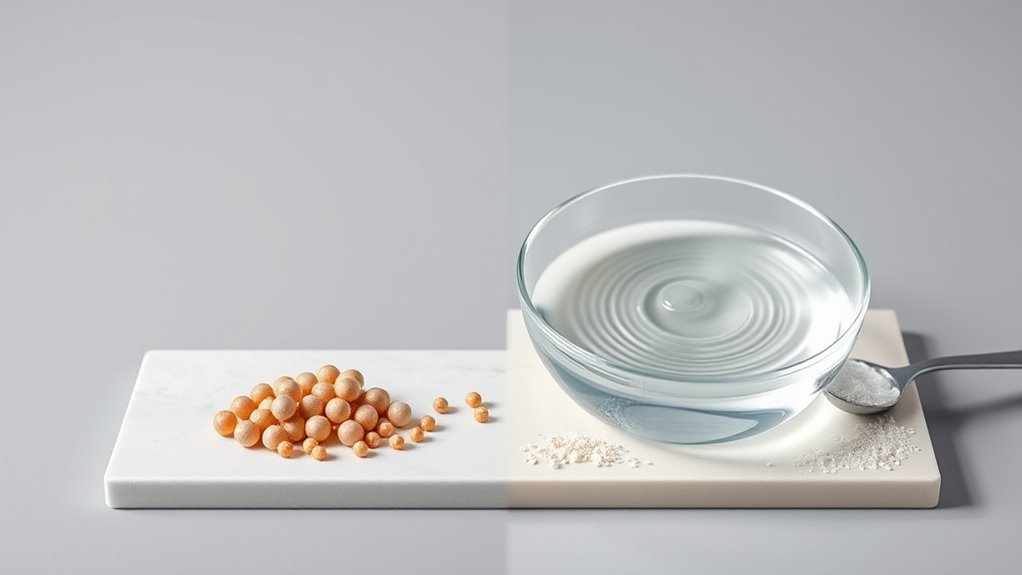
Now that you know “latex” refers to synthetic polymer binders in waterborne paints, let’s look at how different binders, solvents, and additives shape performance. You’ll find acrylic, vinyl-acrylic, and epoxy-modified binders alter flexibility, adhesion, and chemical resistance.
Water is the primary solvent in these systems, reducing VOCs and improving environmental impact compared to solventborne paints.
Additives—thickeners, coalescents, surfactants, mildewcides—tweak flow, drying, and stability. So, you should choose formulations suited to your substrate.
Application techniques like brushing, rolling, or spraying interact with viscosity and open time. Match technique to formula to get consistent, defect-free results.
Coverage, Durability, and Abrasion Resistance
You’ll first look at how much area each coat actually covers and how many coats you’ll need for a solid finish.
Then compare long-term durability so you know which paint resists fading, chalking, or breakdown over time.
Finally, consider abrasion and wear resistance to pick the better option for high-traffic or contact-prone surfaces.
Coverage Per Coat
Because coverage per coat affects how many coats you’ll need and how long the job takes, it’s worth understanding both a paint’s spread rate and how durable that film will be once dry.
You’ll judge coverage by opacity, film thickness, and how well it hides previous colors—so color matching matters when a single coat must conceal a strong hue.
Use proper brush techniques to lay coats evenly; that reduces spotting and abrasion risk.
Consider surface porosity and thinning limits.
- Typical spread rates (sq ft/gal)
- Opacity vs. sheen
- Wet film thickness targets
- Repair and touch-up ease
- Abrasion resistance rating
Long-Term Durability
Having covered how much paint lays down per coat and how evenly it goes on, let’s look at how those factors affect long-term performance: how well coverage holds up over time, how the film resists wear, and how abrasion and cleaning will impact appearance.
You’ll find that consistent color matching reduces the need for frequent touch-ups, preserving perceived durability. Proper brush techniques and application thickness create a uniform film that resists fading and dirt pickup.
Maintain painted surfaces with gentle cleaning to extend life; aggressive scrubbing or thin application compromises protection. Choose higher-quality formulations and follow manufacturer curing times for best longevity.
Abrasion And Wear Resistance
How does a paint stand up when boots scuff, carts rub, or kids play against it? You’ll judge abrasion and wear resistance by testing coverage, layer adhesion, and texture finish. Choose higher-quality binders for tougher surfaces and consider environmental impact when selecting formulations.
- High-traffic durability: opt for scrubbable, hard-wearing coats
- Surface prep: clean and prime to improve adhesion and lifespan
- Finish choice: satin and semi-gloss resist wear better than flat
- Maintenance: easy-to-clean paints extend usable life
- Eco-friendly options: low-VOC formulas balance performance with environmental impact
Measure real-world wear for confident, lasting results.
Drying Time and Recoat Window
You’ll notice latex and water-based paints dry at different speeds, which affects how soon you can handle the surface.
Typically latex films dry faster to the touch, while some water-based formulas need a bit more time before you can recoat.
Knowing each paint’s ideal recoat window helps you plan coats without trapping moisture or causing adhesion problems.
Drying Time Differences
Because latex and water-based paints behave differently as they cure, their drying times and recoat windows can affect how quickly you finish a project. You’ll notice water-based formulations often dry faster to the touch, while some latex blends take longer to harden fully.
Choose based on schedule and desired performance: eco-friendly finishes may trade faster drying for gentler solvents, and color retention ties to binder chemistry and cure time.
Plan for humidity and temperature. Consider these practical points:
- Touch dry vs. full cure timelines
- Recoat window variability
- Temperature and humidity effects
- Surface porosity impact
- Manufacturer recommendations
Ideal Recoat Window
When timing your next coat, aim for the paint’s recommended recoat window rather than just when it feels dry to the touch, since touching up too soon can lift or wrinkle the film and waiting too long can cause poor adhesion between layers. You’ll check manufacturer guidelines, ambient temperature, and humidity to find the ideal interval. Proper Paint storage preserves recoat reliability and helps with accurate color matching later. Monitor conditions and test a small area before full recoating to avoid issues.
| Factor | Recommendation |
|---|---|
| Temp | Follow label range |
| Humidity | Keep moderate |
| Test patch | Always do one |
| Storage | Cool, sealed container |
Adhesion and Best Surfaces for Each Type
Although both latex and water-based paints stick well to many surfaces, they differ in adhesion strength and ideal substrates. You’ll find latex (often acrylic-latex) bonds strongly to drywall, wood, and previously painted metal when you use proper primer selection. It tolerates moderate surface variations and aids color mixing consistency.
Water-based (pure waterborne) paints excel on sealed, smooth surfaces and modern composites. They offer easier cleanup and less chalking.
Choose primers for porous or glossy substrates. Consider light sanding for slick plastics. Match paint type to substrate for durability and finish longevity.
- Drywall: latex with primer
- Bare wood: latex, oil primer optional
- Metal: primer then latex
- Plastics/composites: water-based after sanding
- Previously painted: either, check adhesion
VOCs and Indoor Air Quality: Latex vs Water‑Based

If you’re concerned about indoor air quality, VOCs (volatile organic compounds) are the main difference to check between latex and water‑based paints. You’ll find modern water‑based formulations typically release far fewer VOCs than older solvent‑based latex options, so they’re friendlier for occupied spaces.
When choosing, consider ventilation, drying time and low‑VOC or zero‑VOC labels. Note that lower VOCs don’t affect color matching; manufacturers still offer precise tints.
Also, paint sheen choices (matte, eggshell, gloss) remain unchanged by VOC level, though higher sheen can hide imperfections and may require different cleaning care.
Cost and How Price Maps to Performance
Because price tags bundle raw materials, pigment quality, and added technologies, you’ll often pay more for paints that deliver better coverage, durability, and lower VOCs.
You’ll weigh upfront cost against longevity: cheaper options need more coats and touch-ups, raising labor and waste. Higher-end formulations can reduce environmental impact and simplify application techniques, saving time and disposal costs.
Consider lifecycle value, not just sticker price.
- Upfront price vs coats required
- Durability and maintenance frequency
- Pigment quality and color retention
- Environmental impact and VOC content
- Ease of application techniques and cleanup
When to Choose Latex vs Water‑Based (Walls, Trim, Cabinets)
When choosing between latex and water‑based paints for walls, trim, or cabinets, think about the surface, desired finish, and how much wear it’ll see.
For walls, latex (acrylic) gives durability and easy cleaning; pick higher sheen for high-traffic areas.
For trim, water‑based enamel dries fast, sands smooth, and resists yellowing—ideal for crisp edges.
For cabinets, choose water‑based for hard, durable finishes that cure clear and don’t amber.
Also consider eco-friendly options: many water‑based formulas meet stricter VOC regulations, so you’ll get performance with lower emissions and faster recoat times.
Common Mistakes (And Fixes) With Latex and Water‑Based Paint
Although paint formulas have improved, you’ll still run into common mistakes—poor surface prep, wrong sheen choice, and improper drying times—that cost you time and finish quality. Recognizing these early makes fixes simple and prevents costly rework. You’ll benefit from knowing basic Historical development and Environmental impact context so you appreciate water‑based advantages.
Fixes are straightforward: prep, test, thin, dry, recoat.
- Skipping primer → prime to seal and improve adhesion
- Over‑thinning → follow label ratios; test first
- Wrong sheen → sample panels to judge light bounce
- Rushing recoats → respect drying times, control humidity
- Poor cleaning → remove grease and dust before painting
How to Read Labels and Pick the Right Product at the Store
When you’re at the store, check the label to confirm whether a product is water-based or specifically labeled “latex,” since formulations and performance can differ.
Look for key indicators like VOC levels, recommended surfaces, sheen, and drying time to match the job.
If anything’s unclear, compare technical data sheets or ask staff before you buy.
Water-Based vs. Latex
Because label language can be confusing, you’ll want to focus on three clear things at the store: the binder type (look for “acrylic” or “vinyl” to confirm water-based), the VOC level and dry-time info, and any surface- or durability claims that match your project.
Water-based and latex are often used interchangeably, but “latex” usually means a waterborne binder; check specifics. You’ll weigh ease of cleanup, odor, and finish. Think about color matching and proper paint storage to keep samples accurate.
- Surface compatibility
- Finish (flat to gloss)
- Dry and recoat times
- Cleanup and odor
- Durability claims
Key Label Indicators
Want to pick the right paint without guessing at the store? Read labels for finish, base, and VOCs. Look for “latex” or “water-based” to confirm composition; manufacturers sometimes use both terms, so check ingredients.
Use the tint card and chip for accurate color matching, and bring samples or photos for comparison under store lighting.
Note coverage and recommended coats to estimate quantity.
Check VOC ratings and eco labels to judge environmental impact—lower VOCs mean fewer fumes.
Finally, scan application tips and substrate notes so you buy paint suited to your surface and project.
Frequently Asked Questions
Can I Mix Latex and Water‑Based Paints From Different Brands?
Yes — you can usually mix latex and other water‑based paints from different brands, but you’ll test adhesion and color matching first; if adhesion’s poor or color’s off, don’t combine them and use a single compatible brand instead.
Do Water‑Based Primers Work With Oil‑Based Undercoats?
Yes — you can, but you’ll need to sand and scuff oil undercoats first so primer adhesion improves; otherwise paint durability suffers. Use a bonding primer formulated for oil-to-water shift and follow manufacturer cure recommendations.
How Do Climate and Humidity Affect Latex Vs Water‑Based Paints?
Like a mood swing in weather, you’ll find latex handles humidity better while water‑based paints dry faster; you’ll get improved paint durability and color retention in dry, stable climates, but extreme humidity can soften films and dull hues.
Are There Special Disposal Rules for Leftover Latex or Water‑Based Paint?
Yes — you’ve got rules: you shouldn’t pour leftover paint down drains; follow local hazardous waste guidelines, use proper paint storage, dry small amounts for trash, or take usable water‑based/latex paint to community recycling or hazardous waste centers.
Can I Spray Water‑Based Paint Through Any Paint Sprayer?
Yes — you can spray many water‑based paints, but about 70% of pros thin or use specialized tips to avoid clogging. Consider paint texture, choose proper application techniques, and test nozzle size for smooth coverage.
Conclusion
In short: no, they’re not identical — “water‑based” just means water is the main solvent, while “latex” refers to acrylic or vinyl acetate binders used in many water‑based paints. You’ll usually pick latex water‑based paints for walls and trims because they dry fast and clean up easily, but check labels for durability and sheen if you need heavy wear resistance. So which one fits your project best — quick refresh or long‑lasting finish?
