
Is Latex Paint Good for Metal
Yes—you can use latex paint on many metal surfaces if you prepare and prime them properly. You’ll need to clean, de-rust or scuff, and apply a metal-appropriate primer so the latex will bond and resist corrosion. Latex dries fast, cleans up with soap and is flexible, making it great for indoor fixtures, decorative railings, and garden accents, but avoid it for high-heat or heavy-wear parts where enamel is better. Keep going and you’ll find tips on prep, primers, and best uses.
Is Latex Paint Appropriate for Metal Surfaces?
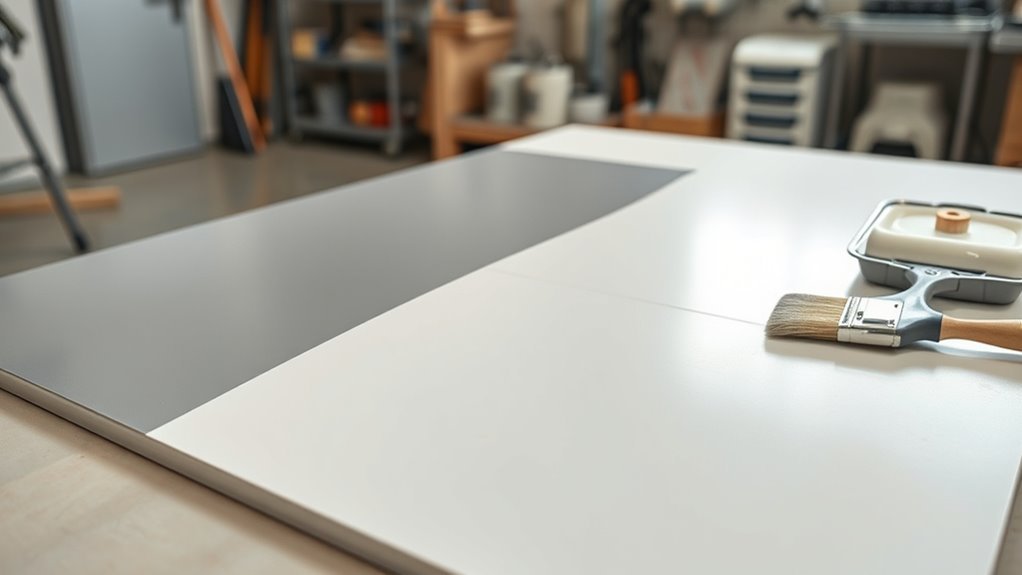
Yes—you can use latex paint on many metal surfaces, but it works best when the metal is properly prepared and primed first. You’ll need to clean, sand, and apply a metal-compatible primer to guarantee adhesion and rust prevention.
Latex offers wide color options and easy cleanup, letting you refresh outdoor furniture or indoor fixtures without harsh solvents. Use appropriate brush techniques—long, even strokes for panels, light cross-hatching for textured areas—to avoid streaks and pooling.
While latex won’t match specialty coatings for extreme wear or heat, it’s a practical, user-friendly choice for many everyday metal projects.
When to Choose Latex for Metal Projects
When you want an easy, low-odor finish for indoor fixtures or outdoor items that won’t face heavy abrasion or extreme heat, choose latex—especially if you’re repainting furniture, railings, or decorative metalwork. You’ll benefit from quick drying, easy cleanup, and reduced paint fumes; just prep with appropriate metal primers for adhesion. Use latex for projects needing flexibility and color retention, and when you want a safer indoor option. Below’s a quick comparison to help decide.
| Project Type | Durability Need | Prep Tip |
|---|---|---|
| Indoor fixtures | Low–Medium | Use metal primers |
| Decorative railings | Medium | Clean and prime |
| Garden decor | Low | Touch-up friendly |
| Light trim | Low | Minimize paint fumes |
When to Avoid Latex on Metal
You can still choose latex for many metal jobs, but skip it when the piece will face high abrasion, constant moisture, extreme heat, or heavy outdoor exposure—conditions that cause latex to chip, peel, or soften. If durability matters, opt for alternatives and focus on primer selection and proper surface prep.
Also avoid latex when you need flawless color matching or complex color mixing that requires solvent-based tints.
Consider these scenarios:
- High-traffic items: railings, tools, machinery surfaces
- Wet environments: boats, plumbing fixtures, exterior drains
- High-heat parts: engines, grills, exhaust components
- Critical aesthetic jobs needing long-term color fidelity
How Latex vs Oil/Enamel Performs on Metal

Although latex paints dry faster and clean up with soap and water, they don’t match oil/enamel for toughness and adhesion on metal.
You’ll find latex flexible, resisting cracking as metal expands, and offering more color options and easier cleanup.
Oil/enamel bonds harder, resists abrasion, and often outperforms in harsh or high-touch settings.
Latex gives a variety of finish textures and is user-friendly for DIY jobs, but it may chip sooner without proper priming.
If you need long-term durability or a glassy, hard enamel sheen, choose oil/enamel; pick latex for versatility, quicker recoat, and kinder cleanup.
Which Metals Take Latex Best (Steel, Aluminum, Iron)
When you paint metal, the type matters—steel usually takes latex well if you clean and prime it first.
Aluminum can be trickier because its smooth surface needs roughening or a special primer for good adhesion.
For iron, you’ll have to treat and seal any rust before painting to get lasting results.
Steel Surface Compatibility
Curious which metals take latex paint best? For steel, you’ll find it accepts latex well when you prep properly. It’s forgiving with color options and can resist mild exposure, but you must address rust and surface oils first.
- Clean thoroughly: remove grease and scale.
- Remove rust: sand or use rust converter.
- Prime: use a metal primer for adhesion.
- Finish: apply latex coats for flexibility and UV tolerance.
You’ll want primers that boost chemical resistance and adhesion. Outdoors, expect maintenance; indoors, steel painted with latex holds up nicely when prepared and primed correctly.
Aluminum Paint Adhesion
How well does latex paint stick to aluminum? You’ll find adhesion is decent if you prep properly: clean, scuff with fine sandpaper, and use a high-quality primer designed for non-ferrous metals.
Aluminum’s smooth, oxide-layered surface resists paint, so primers and mechanical abrasion help create a stable bond. Choose latex compatible primers to preserve your chosen paint color and achieve even metal finishes.
Apply thin, even coats and allow full curing between layers. Outdoors, pick exterior-grade latex and consider occasional touch-ups to maintain coverage.
With proper surface prep, aluminum accepts latex well and looks professional.
Iron Rust Considerations
Because rust changes a metal’s surface chemistry and texture, you’ll get very different results with latex depending on whether you’re painting steel, aluminum, or iron.
You’ll need to evaluate rust depth and remove loose scale; otherwise adhesion and color matching suffer.
Iron often needs stronger prep and rust converter primers. Steel behaves similarly but can accept more primer types. Aluminum rarely rusts but oxidizes; use etching primer.
- Inspect and remove loose rust for consistent texture options.
- Choose a rust-inhibiting primer for iron and steel.
- Test color matching over primer before full coats.
- Sand lightly on aluminum to promote adhesion.
How to Test Adhesion of Latex on Metal?
Before testing adhesion, make sure the metal is clean, dry, and properly prepped—no rust, oil, or loose mill scale.
You can then use a simple adhesion tape test: press strong tape onto the painted surface, pull it off sharply, and inspect for paint removal.
If paint flakes or peels where the tape was, you’ll need to improve surface prep or use a primer before repainting.
Surface Preparation Check
Once you’ve prepped the metal surface, you should verify adhesion with a few simple tests so you don’t waste time or materials on a finish that will peel.
Check a small trial area to confirm Color matching and evaluate Finish options under real light.
Feel for smoothness and make certain no powdery residue remains.
Use solvent on a rag to test cured paint resistance.
- Apply a small test patch and let it cure fully.
- Scrape gently with a fingernail to detect lifting.
- Rub with a mild solvent to check resistance.
- Inspect edges for blistering or flaking before full application.
Adhesion Tape Test
If you want a fast, reliable way to check whether latex paint will stick to metal, perform a simple adhesion tape test: apply a high-quality pressure-sensitive tape over a cured test patch, press it firmly, then pull it off sharply at a 90-degree angle to see if the paint lifts. You’ll prep a small area, test primer and finish, and note any flaking. Record results to compare color options and texture effects. Use this quick table for visualization:
| Area | Tape Pull | Result |
|---|---|---|
| Primer | Single pull | No lift |
| Flat finish | Single pull | Some lift |
| Textured | Multiple pulls | Partial lift |
| Gloss | Single pull | No lift |
Prep Steps for Painting Metal With Latex
To get a durable, smooth finish on metal with latex paint, you’ll need to clean, remove rust, sand, and prime the surface so the paint can adhere properly. Start by degreasing with a solvent, then strip loose paint and scale.
To achieve a durable, smooth finish on metal with latex paint: degrease, remove rust, sand, and prime.
Choose primer suited for metal and consider color matching to your topcoat to reduce coverage layers. Decide on texture options—smooth or stippled—before final coats.
- Wear gloves and eye protection.
- Use a wire brush or chemical remover for rust.
- Sand to a dull sheen and wipe dust away.
- Apply metal primer evenly and let cure.
Prep Tips by Metal Type (Steel, Aluminum, Galvanized)
Before you paint, match your cleaning method to the metal—use degreasers and scotch-brite on aluminum.
Use stronger cleaners and wire-brushing on steel.
For galvanized surfaces, use a mild acid or specialty cleaner.
Treat rusted steel by removing loose scale, sanding to bare metal, and applying a rust converter or primer.
Aluminum needs light abrasion and an etching primer if it’s oxidized.
For galvanized metal, scuff the surface, neutralize any zinc salts, and use a primer designed for zinc-coated substrates.
Surface Cleaning Methods
Wondering how to prep different metals for latex paint? You’ll focus on surface cleaning methods that guarantee metal finishing and paint compatibility.
Clean steel with degreaser, rinse, and scuff sand.
Aluminum needs non-chlorinated cleaner and light abrasion.
Avoid harsh etchants on galvanized—use a mild acid wash or commercial galvanized cleaner.
For all metals, remove oil, dust, and salts before priming.
- Use a clean rag and solvent for grease removal.
- Rinse thoroughly and let surfaces dry.
- Sand or scuff to promote adhesion without removing coating.
- Apply a compatible primer after cleaning to lock in paint compatibility.
Rust And Corrosion Prep
Although metal looks solid, rust and corrosion can quickly undermine paint adhesion and longevity, so you’ll need targeted prep for each metal type.
For steel, remove scale and rust with a wire brush or grinder. Apply rust converter on pitted areas, then prime with a metal-specific latex primer.
For aluminum, deoxidize with a dedicated cleaner, lightly sand for bite, and use an etching primer.
For galvanized surfaces, scuff with abrasive pad and use a primer formulated for zinc.
After prepping, pick latex compatible color options and texture finishes; proper prep guarantees the paint bonds and lasts.
Primers That Bond Latex to Metal and When to Use Them
If you’re planning to paint metal with latex, pick a primer formulated to promote adhesion and block rust—these primers create the mechanical and chemical bond that latex alone can’t reliably achieve on bare or oxidized metal. You’ll choose based on metal type, exposure, and whether you’ll alter color mixing or final paint sheen.
Use a corrosion-inhibiting epoxy or a zinc-rich formula outdoors, and a universal bonding primer for clean, indoor pieces. Apply per instructions and let cure fully before topcoat.
- Epoxy primers for strong adhesion
- Zinc-rich primers for active rust protection
- Universal bonding for varied substrates
- Rust converter primers for flaky metal
Best Applicators & Techniques for Latex on Metal
Once your primer’s cured and the metal’s prepped, pick applicators and techniques that match the job: small brushes and foam applicators work for tight spots and trim.
Once primer’s cured and metal prepped, choose small brushes or foam applicators for tight spots and trim.
A quality nylon or polyester brush handles edges and detail without shedding, and a short-nap roller covers flat areas quickly with a smooth finish.
You’ll apply thin, even coats to avoid drips and runs; hold brushes at a 45° angle, use light pressure, and roll in one direction for uniform texture.
For spray, keep a consistent distance and overlap passes.
Consider color options and texture finishes to match durability and appearance goals.
Drying & Recoat Times for Latex on Metal
When you paint latex on properly primed metal, drying and recoat times depend on temperature, humidity, and film thickness, so plan accordingly. You’ll usually get surface dry in 30 minutes to an hour and recoat windows from 2 to 6 hours under ideal conditions.
Cooler or humid weather slows curing; thicker coats take much longer. Choose thinner coats and controlled conditions for faster turnaround.
- Allow at least 24 hours before subjecting to light use.
- Check manufacturer specs for precise recoat times.
- Consider how Color options and Finish types affect perceived drying.
- Avoid sanding too soon to prevent defects.
Preventing and Repairing Rust Under Latex
Before you paint, you need to prep the metal by removing loose scale, cleaning off grease, and sanding to create a sound, keyed surface.
If rust is already present, you should wire-brush or sand it back to bare metal, then apply a rust converter or metal primer designed for corrosion control.
Taking these steps prevents undercutting and helps latex topcoats adhere and protect longer.
Surface Preparation Steps
How will you keep rust from forming under a latex coat? Start by cleaning and drying the metal; you’ll remove oils and loose particles so primer adheres, preserving color blending and texture effects later.
Next, scuff the surface to key the paint.
- Wipe with a degreaser and dry thoroughly.
- Sand lightly to remove gloss and promote adhesion.
- Apply a rust-inhibiting primer compatible with latex.
- Seal seams and joints with a flexible metal primer or caulk.
Finish only when primer cures. These steps block moisture, stabilize the metal, and guarantee your latex topcoat performs without lifting.
Treating Existing Rust
If you’ve prepped the metal but spot rust or suspect corrosion beneath the surface, you’ll need to treat it thoroughly so latex will hold and prevent future lifting.
You should remove loose rust with a wire brush or abrasive pad, then apply a rust converter to chemically stabilize remaining corrosion. After drying, sand smooth and clean off dust.
Use a metal primer formulated for rust inhibition before applying the latex topcoat.
Choose appropriate color options and finish types to match style and protection needs—satin or semi-gloss shed moisture better.
Monitor regularly and touch up chips promptly to stop rust recurrence and prolong the coating.
Durability & Maintenance: What to Expect Long Term
When you use latex paint on metal, expect reasonable durability for everyday wear but plan for touch-ups and occasional repainting, especially on high-contact or outdoor surfaces. You’ll maintain appearance by addressing chips quickly, using gentle cleaners, and monitoring for corrosion where coating fails.
Consider color matching when doing spot repairs so patches blend, and pick finish options that suit exposure and desired sheen.
- Inspect annually for chips, rust, or peeling.
- Clean with mild detergent; avoid abrasive tools.
- Sand and prime exposed bare metal before repainting.
- Repaint high-wear areas every few years to preserve protection.
Cost, Environmental & Safety Trade-offs
Because latex paint usually costs less up front and cleans up with water, you’ll save on supplies and disposal compared with many oil-based options. However, you should weigh that against lifecycle impacts and safety.
You’ll spend less on solvents and can reuse many brush types, yet frequent repainting raises cumulative cost and waste.
Low-VOC formulations cut indoor emissions but still involve manufacturing footprints and pigment concerns during color mixing.
Wear gloves and ventilate when sanding or applying primers; cured latex is low-toxicity, but dust and flake disposal deserve care.
Balance upfront savings with longevity, environmental impact, and safe work practices.
Quick Checklist: Use Latex or Pick a Metal-Specific Paint?
Wondering whether to grab latex paint or a metal-specific product? You’ll weigh adhesion, durability, and prep time quickly. Latex works for indoor, low-wear metal; metal-specific paints beat it outdoors or on rusty surfaces. Consider color mixing limits and texture options when matching finishes.
- Surface prep: remove rust, clean, prime when needed.
- Exposure: choose metal-specific for moisture and UV resistance.
- Finish: assess color mixing flexibility and desired sheen.
- Maintenance: expect easier touch-ups with latex, longer life with metal-formulated coats.
Use this checklist to decide based on environment, use, and aesthetic priorities.
Frequently Asked Questions
Can Latex-Painted Metal Be Used Outdoors in Coastal/Marine Environments?
Yes — you can, but you’ll need proper prep and protection. You’ll want corrosion resistance and weather durability from primers, marine-grade latex or topcoats, and regular maintenance; otherwise coastal salt and moisture will quickly degrade the finish.
How Does Latex Perform on Metal Exposed to High Heat?
Latex performs poorly on metal exposed to high heat; you’ll see reduced paint durability and blistering. You should choose high-heat coatings instead, since latex lacks sufficient heat resistance for sustained elevated temperatures on metal.
Can Latex-Painted Metal Be Powder Coated Later?
Yes — you can powder coat over latex-painted metal, but you’ll need to remove the latex first; otherwise latex adhesion and paint durability will be compromised. You’ll strip, clean, and prep the bare metal for proper powder application.
Does Latex Paint Affect Electrical Conductivity of Metal Surfaces?
About 90% of coatings can reduce conductivity noticeably; you’ll find latex paint creates electrical insulation while usually preserving surface adhesion, so it lowers contact conductivity but still sticks well unless the substrate’s oily or poorly prepped.
Are There Color-Matching Limitations When Repainting Metal With Latex?
Yes — you’ll face some color-matching and repainting limitations because latex’s sheen, primer choice, and metal’s previous coatings can alter hue and coverage, so you’ll need careful prep, test swatches, and possibly custom tinting to match.
Conclusion
Latex paint can work on metal when you prep properly, but it’s not a miracle — think of it as a friendly handshake, not a welded bond. Use it on clean, primed steel or aluminum for low‑wear items; avoid it where water, abrasion, or rust rule. If you want lasting armor, choose metal‑specific coatings. Match the paint to the job, care for the surface, and you’ll keep metal looking sharp while avoiding future headaches.
