
Is Masonry Paint Latex? Differences Explained
Yes — most masonry paints you’ll see are water‑based “latex” formulations (usually acrylic‑modified) rather than natural rubber latex. They’re breathable, easy to clean, quick drying, and resist chalking and UV better than old oil systems; mineral silicates and alkyds are alternatives when you need chemical bonding or extra gloss/durability. Match the paint to substrate moisture, alkalinity, and existing coatings for best results, and keep reading for tests, prep, and failure fixes.
Who Asks “Is Masonry Paint Latex?” : Common User Goals
When you wonder “Is masonry paint latex?” you’re usually trying to solve a practical problem: protect exterior brick, concrete, or render; choose a breathable finish that won’t trap moisture; or pick a product that’s easy to apply and clean up.
You’re often a DIYer, contractor, or heritage custodian balancing Historical applications with modern performance. You want durability against weather, mildew resistance, and clear guidance on substrate prep.
Color matching matters if you’re restoring period façades or matching existing work. You’ll ask about flexibility, vapor permeability, and cleanup — practical points that guide the right masonry paint choice.
Quick Answer: Is Masonry Paint Latex?
Yes — most masonry paints are latex, meaning they’re water-based and easy to clean up with soap and water.
You should know there are oil-based alternatives available for extra durability or specific substrate needs.
We’ll compare the pros and cons so you can pick the right type for your project.
Water-Based Composition
Curious whether masonry paint is latex? You’ll find most masonry paints are water-based latex emulsions. They use acrylic or vinyl binders suspended in water, which dry to form a flexible, breathable film suited to brick, concrete, and render.
You can thin them with water, clean up painting tools easily, and mix tints for color mixing at the store or on-site.
Their formulation resists chalking and adapts to temperature shifts without the heavy fumes of solvent systems.
When you apply, work with proper primers and breathable substrates to guarantee adhesion and long-term protection.
Oil-Based Alternatives
How about oil-based masonry paints — are they still worth considering? You’ll find oil-based options offer durability and sheen that appealed in historical applications, resisting stains and smoothing rough textures. If you prefer traditional finishes or restoring period work, they deliver. Consider ventilation, longer cure times, and solvent disposal. Their cultural significance shows in older neighborhoods where oil finishes defined looks. Weigh longevity against environmental and maintenance costs; latex now matches much performance with easier cleanup. Use oil where authenticity or specific substrate bonding matters, but choose cautiously and test a small area first.
| Attribute | Impression |
|---|---|
| Shine | Glossy |
| Durability | Robust |
| Odor | Strong |
| Dry time | Slow |
| Look | Traditional |
What “Latex” and “Acrylic” Mean in Paint
Wondering what people mean when they call a paint “latex” or “acrylic”? You’ll hear “latex” used loosely to mean water-based paints that use synthetic binders, not natural latex rubber. Manufacturers blend polymers so paints dry fast, clean up with water, and suit many color schemes and historical finishes when matched properly.
Acrylic refers to paints where acrylic polymer is the main binder, offering stronger adhesion, flexibility, and UV resistance than generic latex formulations. You’ll pick acrylic for durability on exterior masonry or trim, while water-based latex variants give easier application and lower odor for interior projects.
What Masonry Paint Is Designed to Do
You’ll want masonry paint that shields masonry from rain, sun, and freeze-thaw cycles to prevent weathering.
It should also form a breathable barrier so trapped moisture can escape without letting water in.
Finally, the right latex formulation will boost surface durability, resisting abrasion and prolonging the finish.
Protects Against Weathering
Want your exterior walls to stay intact through sun, rain, and freezing temperatures? You’ll pick masonry paint that resists UV fading, sheds water, and tolerates thermal movement so cracks and peeling are minimized. Good formulations combine flexible binders and pigments, giving long-lasting Color options that stay true.
Proper application techniques — clean surface, prime where needed, apply at recommended thickness — guarantee the protective film forms evenly. You’ll also look for mildew inhibitors and abrasion resistance for high‑traffic areas.
When you follow label instructions and match product to substrate, the paint becomes a practical weather shield that lowers maintenance and extends life.
Breathable Moisture Barrier
Along with UV resistance and flexibility, masonry paint is formulated to act as a breathable moisture barrier—keeping liquid water out while letting trapped vapor escape from the substrate. You’ll rely on this balance to prevent blistering and salt migration without sealing walls shut. Proper application pairs color blending with texture enhancement so finishes remain attractive while performing. Choose breathable formulations for older masonry and guarantee substrate prep for maximum adhesion. Table:
| Function | Benefit | When to Choose |
|---|---|---|
| Vapor permeability | Prevents trapped moisture | Historic brick |
| Water repellence | Keeps rain out | Exposed facades |
| Aesthetic finish | Color blending, Texture enhancement | Visible surfaces |
Enhances Surface Durability
While protecting against weathering and abrasion, masonry latex paint also strengthens surfaces by filling micro-porosity and bonding to substrate irregularities, so your walls resist chipping, erosion, and surface dusting longer.
You’ll notice improved impact resistance and fewer hairline cracks once pores are sealed and binders form a cohesive film. That sealed film preserves surface texture while reducing dirt pickup, making maintenance easier.
Choosing the right paint color won’t compromise durability; pigments and additives work together to maintain adhesion and UV stability.
Apply at recommended thickness and allow full cure to get the long-term performance you expect from quality masonry latex.
Binders Explained: Latex/Acrylic, Mineral, Alkyd
Binders are the heart of masonry paint, and they determine how the coating bonds, flexes, and weathers on brick, concrete, or stone. You’ll choose binders based on performance needs and color matching: latex/acrylic gives flexibility and UV resistance, mineral (silicate) offers chemical bonding to masonry for longevity, and alkyd supplies tough, oil-based adhesion where abrasion resistance matters.
Consider substrate movement, breathability, and cleaning routines when selecting. Application techniques differ: water-based latex needs clean, damp substrates; mineral systems often require alkaline surfaces and specific primers; alkyds need solvent-compatible prep and ventilation for proper cure.
Why Manufacturers Call Some Masonry Paints “Latex
Why do manufacturers call some masonry paints “latex”? You’ll see the term used because those paints use synthetic polymer binders derived from latex emulsions. This echoes historical applications where water‑based ease and flexibility mattered for breathable masonry.
Manufacturers kept the familiar label to signal user-friendly cleanup and adaptability, not literal natural latex content. When you compare products, “latex” helps with quick color matching and formulation choices, since those emulsions accept pigments consistently.
Non‑Latex Masonry Paint Types to Expect
Since “latex” mostly signals water‑based, pigment‑friendly emulsions, you should also know what else is on the market: non‑latex masonry paints include oil‑based alkyds, mineral silicate paints, cementitious coatings, and high‑solids acrylics with different chemistries. You’ll pick based on durability, breathability, and desired appearance. Oil alkyds add gloss and years of wear; silicates bond chemically to masonry for longevity; cementitious coats repair and protect textured surfaces; specialty high‑solids give tough, tailored sheens. Consider color customization and historical finishes when matching period properties or modern schemes.
| Type | Key trait |
|---|---|
| Alkyd | Durable gloss |
| Silicate | Mineral bond |
| Cementitious | Repairing |
| High‑solids | Tough finish |
How Masonry Surfaces Affect Paint Choice (Brick, Render, Concrete)
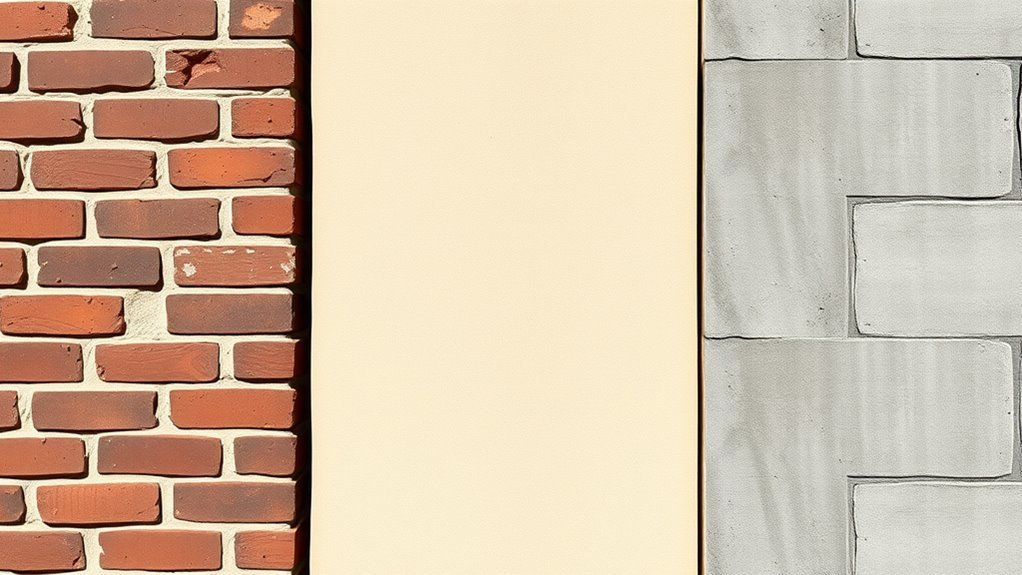
When you’re choosing masonry paint, start by matching the coating to the substrate—brick, render, and concrete all absorb, breathe, and age differently, so the wrong formula will fail faster or hide underlying problems.
Match your masonry paint to the substrate—brick, render, and concrete absorb and age differently.
You’ll pick breathable, flexible paints for render to accommodate movement and fine surface texture, while denser masonry may accept tougher, less flexible coatings.
For brick, consider porous profiles and aim for color matching that respects depth and shadow.
Concrete often needs primers and finishes that tolerate rough texture and possible efflorescence.
Assess adhesion, durability, and finish sheen for each substrate before you commit.
Why Moisture and Alkalinity Matter for Masonry Finishes
Although often invisible, moisture and alkalinity are the two factors that most directly determine whether a masonry finish will stick, breathe, and last. You’ll choose different primers, binders, and drying times depending on how wet or alkaline the substrate is.
You’ll test for salts and pH because high alkalinity can break down pigments and binders, while trapped moisture causes blistering and efflorescence.
For historical applications you’ll need breathable, tolerant coatings that respect original materials. For modern aesthetic considerations you might accept tighter films, but only after proper remediation.
In short, control moisture and neutralize alkalinity before finishing.
Adhesion: How Latex Performs on Different Masonry Substrates
If you’re aiming for durable results, adhesion is where latex succeeds or fails on masonry. You’ll find latex bonds well to clean, sound concrete, brick, and rendered surfaces when you prepare them: remove loose material, treat efflorescence, and use a primer matched to substrate porosity.
Smooth, low-porosity masonry may need a bonding primer to avoid peeling and to preserve surface gloss. Rough, highly absorbent substrates need sealing to prevent rapid film formation and poor color matching.
Test small areas first, especially on previously painted or variable substrates, and sand or etch as needed for consistent adhesion and finish.
Breathability: Latex/Acrylic vs Limewash and Silicate
When you compare vapor permeability, latex/acrylic paints usually let far less moisture pass than limewash or silicate coatings.
That lower permeability can raise the risk of trapped moisture behind the film, especially on damp or salt-laden masonry.
Consider how drying time for the wall will lengthen with low-perm finishes and choose coatings accordingly.
Vapor Permeability Rates
How breathable is your masonry coating? You’ll find vapor permeability varies: limewash and silicate allow high vapor diffusion, while latex/acrylic limits it.
Historical applications show breathable finishes on masonry, and pigment variations can slightly alter permeability.
- Limewash: very high permeability, lets masonry expel vapor.
- Silicate: high permeability, chemical bond keeps surface open.
- Acrylic/latex: lower permeability, forms a film that resists vapor flow.
- Mixed systems: additives or heavy pigments reduce breathability; choose formulations that match substrate needs.
Match permeability to wall conditions to preserve masonry health.
Moisture Trapping Risk
Because vapor permeability differs so much between limewash/silicate and latex/acrylic, you need to think about moisture trapping when selecting a masonry coating.
If you use low-permeability latex or acrylic over damp or porous masonry, trapped moisture can accumulate behind the film. That moisture buildup increases freeze-thaw stress and encourages mold, efflorescence, and weakening of the substrate.
Over time, internal pressure and substrate decay promote paint peeling and coating failure.
Choose breathable limewash or silicate on historic or damp walls to let vapor escape, or guarantee the substrate is dry and repaired before applying impermeable masonry paints.
Wall Drying Time
Curious how long walls actually take to dry after you paint them? You’ll notice latex/acrylic films dry fast to the touch—hours—but trap more moisture, slowing full cure. Breathable limewash and silicate coatings let moisture escape, so substrates dry more evenly and resist blistering.
Consider these factors:
- Surface porosity: denser masonry slows drying, affecting color matching.
- Ambient conditions: humidity and temperature change cure times dramatically.
- Coating thickness: thicker layers prolong drying and can alter Texture options.
- Previous moisture: trapped damp beneath latex may need remediation before repainting.
Choose breathable systems where long-term substrate drying matters.
Durability: Latex vs Mineral Masonry Paints
When you’re choosing between latex and mineral masonry paints, durability becomes the deciding factor for how long the finish will protect and look good under real-world conditions. You’ll notice latex resists abrasion and retains flexibility, while mineral paints resist weathering and chemical breakdown. Consider color fading and surface texture — latex keeps pigments brighter on flexible substrates; mineral paints maintain a matt, mineral-rich feel that ages gracefully. Choose based on exposure and desired look.
| Emotion | Reaction |
|---|---|
| Trust | Confidence in protection |
| Pride | Loved appearance |
| Relief | Less maintenance |
| Awe | Timeless finish |
Flexibility and Crack‑Bridging in Latex Masonry Paint
If your walls move with temperature shifts or minor settling, latex masonry paint flexes with the substrate and helps bridge hairline cracks rather than letting them reopen, thanks to its elastic polymer matrix.
You’ll notice fewer micro-gaps and reduced moisture ingress where surface porosity is controlled, and maintenance becomes simpler.
Pay attention to application thickness and primer choice to maximize performance.
Consider these factors when selecting a latex formula:
- Elastic modulus — higher elasticity improves crack-bridging.
- Film thickness — thicker films bridge wider fissures.
- Primer compatibility — seals porous substrates.
- Aging effects — monitor for color fading and loss of flexibility.
UV Resistance and Color Retention of Latex Formulas
Flexibility and crack-bridging help keep coatings intact, but sunlight poses a different challenge: UV radiation breaks down the polymer chains in latex paints, causing chalking, loss of gloss, and color fading over time.
You’ll want formulas with built-in UV protection and stable pigments so colors hold longer on exterior masonry. Look for acrylic-rich binders, lightfast pigments, and additives that resist polymer degradation.
Proper film thickness and maintenance coatings extend life, but no latex is immune—exposure level matters. Test small areas or consult technical data sheets for pigment stability and accelerated UV aging results before committing to a color.
Stain Resistance and Cleanability of Latex Masonry Paint
Because exterior surfaces get dirty fast, you’ll want latex masonry paints that resist stains and wipe clean without damaging the film. You’ll appreciate formulations that balance stain resistance with Color customization so you can refresh appearance without sacrificing durability. Choose Eco friendly formulations when possible; they often use milder solvents yet still offer washable finishes. Consider surface prep and topcoat recommendations to maximize cleanability.
- Hydrophobic additives reduce dirt adhesion and ease washing.
- Durable binder types prevent film softening during cleaning.
- Test cleaner compatibility on a hidden patch first.
- Matte vs. gloss affects scrubbability—gloss cleans easier.
When Not to Use Latex‑Based Masonry Paint
While latex masonry paints work well for many exterior jobs, don’t use them on surfaces that remain constantly damp, on areas with active water penetration, or over substrate types that need vapor permeability. Those conditions will trap moisture, cause peeling, or lead to mildew.
You should also avoid latex on historically significant buildings where breathable limewash or traditional coatings suit historical applications and conservation rules.
Don’t pick latex if aesthetic considerations demand a specific texture, sheen, or color stability that solvent‑based or mineral paints provide.
When in doubt, consult a conservator or specialist to match material performance and preservation needs.
Compatibility Checklist Before Choosing Latex Masonry Paint
Before you pick a latex masonry paint, check the surface moisture levels to make sure the substrate is dry enough for adhesion.
Confirm what type of paint is already on the wall so you know whether latex will bond or if you need a primer or different system.
Also consider your climate and exposure—freeze‑thaw cycles, heavy rain, and UV will affect longevity and product choice.
Surface Moisture Levels
If your masonry holds excess moisture, latex paint won’t adhere properly and you’ll get peeling or blistering down the line. You need to test and control surface moisture before painting.
Measure dampness with a meter or tape test; let walls dry to recommended levels so paint absorption is consistent.
Seal active leaks and improve ventilation; damp substrates ruin finish and shorten lifespan.
Follow manufacturer guidelines for maximum moisture content and allow extra drying after rain.
- Use a moisture meter for accurate readings.
- Perform a plastic sheet/tape test.
- Fix leaks and improve drainage.
- Wait longer after wet weather.
Existing Paint Type
After you confirm the wall is dry, check what’s already on the surface—latex paint bonds well to other latex, but oil-based or alkyd coatings, masonry primers, and certain elastomeric finishes can block adhesion. You’ll test adhesion with a scrape or tape test; if the existing film peels or resists, strip or sand it.
Porous masonry with old mineral paint may need a primer formulated for alkaline substrates. Consider how your chosen color palettes will cover or reveal previous hues and adjust tinting or primer choice.
Match application techniques—brush, roller, or sprayer—to surface texture and coating compatibility.
Climate And Exposure
How will local weather and sun exposure affect your latex masonry paint choice? You’ll need to match paint flexibility to Temperature fluctuations and pick UV-resistant formulas for intense sun. Consider how moisture, freeze-thaw cycles, and wind-driven rain stress coatings on different Surface textures.
- Choose high-elasticity latex for wide Temperature fluctuations to prevent cracking.
- Use breathable, water-repellent paints on rough, porous Surface textures to avoid trapped moisture.
- Select UV-stable pigments and additives if sun exposure is strong to prevent fading and chalking.
- For coastal or high-humidity sites, prioritize mildew-resistant, corrosion-inhibiting masonry latex.
Primer Requirements for Latex on Masonry
Because masonry soaks up paint unevenly, you’ll need a proper primer before applying latex to guarantee adhesion and uniform coverage. Choose a masonry or acrylic primer that seals pores, helps with color matching, and creates a consistent base. You’ll want to use quality paint brushes or rollers suited for textured surfaces so primer reaches crevices. For efflorescence or high-alkali surfaces pick an alkali-resistant primer. Let primer fully dry and follow manufacturer recoat times to avoid peeling. The right primer reduces coats of finish and improves longevity.
| Primer Type | Best Use |
|---|---|
| Acrylic | General masonry |
| Masonry-specific | New brick/stone |
| Alkali-resistant | High-alkali surfaces |
| Bonding | Smooth or glossy masonry |
Surface Preparation: Step‑by‑Step
Start by cleaning and repairing the masonry so dirt, efflorescence, and cracks are removed or fixed.
Then you’ll apply the right primer to seal porous surfaces and improve adhesion.
Follow those steps carefully to guarantee your latex paint lasts and looks even.
Clean And Repair
Before you apply Masonry Paint Latex, clean and repair the surface so the finish will adhere and last. You’ll remove dirt, efflorescence, and loose material, matching cleaning method to surface texture. Patch cracks and spalls with compatible mortar or filler, let cures fully, and sand rough spots to an even plane. Consider how repairs affect final paint color—use test patches.
- Sweep and pressure‑wash gently, avoiding damage.
- Treat efflorescence with appropriate cleaner, rinse thoroughly.
- Fill cracks, compact joints, and tool smooth.
- Sand and brush to uniform texture before proceeding to priming.
Priming And Sealing
How will you guarantee a consistent, long‑lasting finish? Start by choosing the right primer for masonry—alkyd or masonry-specific latex—and test adhesion on a small area. Seal porous patches and allow full cure before sanding.
If you need color matching, apply a thin mist coat so topcoat pigments read accurately, then adjust tinting. For projects involving historical finishes, pick breathable primers that prevent trapped moisture and respect original textures.
Mask edges and use a roller for even coverage. Let primer dry completely, inspect for pinholes, and spot-seal before applying your masonry paint topcoat for durable results.
Application: Brush, Roller, Spray Best Practices
When you apply masonry latex, choose the method that matches the surface texture, job size, and your comfort level. You’ll prevent color fading and respect texture variation by selecting appropriate tools and technique. Clean, dampen, and mask areas before starting.
Work systematically to maintain wet edges and consistent coverage; watch for drips on rough masonry.
- Brush: use stiff nylon/bristle for edges and crevices; feather strokes to blend.
- Roller: pick nap depth for texture; load evenly, roll in overlapping passes.
- Spray: adjust pressure and tip, back-roll for uniformity.
- Cleanup: flush equipment, inspect for missed spots.
Drying and Recoat Times for Latex Masonry Paint
Although temperature, humidity, and coat thickness all affect how quickly masonry latex dries, you can generally expect it to be touch-dry within 1–2 hours and ready for a light recoat in 4–6 hours under moderate conditions. You should monitor conditions to preserve color consistency and minimize texture variation; colder or humid air slows curing and can darken wet film. Use a tack test before recoating and avoid heavy builds that trap solvents. Follow manufacturer minimums for full cure.
| Condition | Expected Recoat |
|---|---|
| Moderate | 4–6 hours |
| Warm/dry | 2–4 hours |
| Cool/humid | 6–12 hours |
| Heavy coat | 12+ hours |
Coverage Rates and Calculating Material Needs
Now that you know typical dry and recoat times, you’ll also want to estimate how much paint and primer your project needs so you don’t run out mid-job. Measure surface area, subtract windows and doors, and check manufacturer coverage per litre—masonry textures cut coverage.
Account for primer, two coats of paint, and potential touch-ups. Consider color options that may need extra coats (deep hues often require more) and factor pricing considerations into your total budget.
Use this checklist to calculate quantities precisely:
- Measure wall area accurately.
- Subtract openings.
- Apply manufacturer coverage rates.
- Add 10–15% waste.
Common Failures With Latex on Masonry (And Fixes)
Because masonry presents unique textures, moisture paths, and adhesion challenges, latex coatings can fail in predictable ways if you don’t address the root causes. You’ll see peeling from trapped moisture, powdery efflorescence, and blistering where breathability’s blocked.
Historical applications often worsened these issues by sealing the masonry without proper preparation. To fix peeling, remove loose paint, treat salts, and use a breathable masonry primer.
For efflorescence, eliminate the water source and apply salt-resistant products. For poor aesthetics, consider texture-matching skim coats and respect aesthetic considerations like original finishes.
Regular inspection and proper substrate prep prevent repeat failures and prolong coating life.
Simple Compatibility Test: Try a Small Area
Before you paint the whole wall, try the latex on a hidden spot like behind a downspout so you can assess results without ruining a visible area.
Let it cure fully, then check adhesion by gently scoring and rubbing the patch to see if the paint peels or powders.
If it bonds and cures cleanly, you can proceed with more confidence; if not, try a different product or primer.
Test On Hidden Spot
When you’re ready to paint, always test a small, hidden area first to confirm the masonry paint will adhere and look right; this quick check prevents costly mistakes and guarantees compatibility with your surface and primer.
You’ll assess texture, match to historical applications if restoring older structures, and preview color customization without committing. Follow these quick steps:
- Clean a discreet patch and let it dry.
- Apply primer if planned, then a thin coat of masonry latex.
- Wait recommended drying time to inspect finish and sheen.
- Note any peeling, staining, or unexpected color shift before proceeding.
Check Adhesion & Cure
After testing that hidden patch, expand the check to a slightly larger, inconspicuous area to confirm adhesion and cure under real conditions.
Clean the surface first—proper surface cleaning removes dust, efflorescence, and loose material that wrecks bonding.
Apply the masonry paint as you’d for the job, noting temperature and humidity.
Let it dry fully, then test adhesion by gently scraping or using tape to assess lift.
Observe cure time versus the label; if it’s tacky long after the stated period, storage conditions or old paint storage may have degraded binders.
Record results before proceeding with the full application.
Maintenance and Repaint Cycles for Latex Finishes
Because latex finishes are durable but not indestructible, you’ll want a simple maintenance routine and a clear repaint schedule to keep masonry looking its best. Wipe dirt yearly, inspect for chalking or flaking, and note any fading where color mixing or uneven paint sheen altered appearance.
Repaint high-exposure areas every 5–7 years; sheltered walls can go 7–10 years.
- Clean surfaces with mild detergent and rinse thoroughly.
- Scrape and sand failed spots, then prime porous patches.
- Match original color mixing formulas or sample if fading occurred.
- Test a small area for adhesion and sheen before full repaint.
Cost Comparison: Latex vs Alternatives
Though latex paints often cost a bit more up front than basic masonry emulsions, you’ll usually save over time thanks to quicker application, lower labor hours, and less frequent recoating.
When comparing costs, factor in durability, patching frequency, and how readily you can match color options during touch-ups.
Acrylic, mineral, and lime-based alternatives might be cheaper initially but demand more prep or specialized application techniques that raise labor costs.
If you’re DIYing, latex’s forgiving spread and faster drying cut total hours.
For contractors, predictability of coverage and fewer callbacks make latex competitive despite higher material prices.
VOCs and Environmental Factors for Latex Masonry Paint
When choosing latex masonry paint, pay attention to VOC content levels listed on the label so you can limit harmful emissions. Low-VOC and zero-VOC options will reduce indoor air impact during and after application.
You’ll also want to ventilate work areas to keep air quality safe for occupants.
VOC Content Levels
VOC content in latex masonry paint directly affects indoor air quality and local air pollution, so you should consider it when choosing a product. You’ll find low-VOC and zero-VOC options that cut VOC levels and reduce paint odor, though “zero” can still emit trace organics.
Manufacturers list grams per liter (g/L); regulations and labels vary by region. Balance performance, durability, and environmental ratings when selecting a formula for exterior or semi-enclosed spaces.
- Check g/L values and certification.
- Prefer low-VOC for frequent repainting.
- Note solvent-free blends often mean less odor.
- Verify wet vs. cured emissions.
Indoor Air Impact
How will the paint you choose affect the air inside your home? You’ll want low-VOC or zero-VOC latex masonry paint to minimize irritating fumes and long-term exposure. Proper ventilation during application and curing cuts airborne contaminants quickly.
Consider how Color matching may require sample swatches—test outside reactions and off-gassing before committing. Note that different Texture options can influence surface area and dust accumulation, subtly affecting indoor particles and cleaning needs.
For sensitive occupants, pick certified low-emission products, allow full cure time, and use air purifiers if needed. These steps reduce VOC impact and keep indoor air safer and more comfortable.
How to Read a Product Label and Technical Data Sheet
Curious about what all those numbers and symbols mean on a masonry paint label? You’ll learn to scan for VOC, coverage (m²/L), dry time, and substrate compatibility. The technical data sheet (TDS) gives application temperature, recommended coats, and info on color mixing and paint textures so your finish matches expectations.
Curious about masonry paint labels? Learn to read VOC, coverage, dry times, substrate notes, and use the TDS—not claims.
- Coverage and spread rate — calculate needed litres.
- Dry and recoat times — plan your schedule.
- Surface prep and adhesion — follow substrate notes.
- Safety, VOC, and disposal — protect indoor air and comply with regs.
Use TDS figures, not promotional claims, for decisions.
When to Hire a Pro for Masonry Painting
Having the right figures from the label and TDS helps you plan, but some projects still call for professional help. You should hire a pro when surfaces need repair, match historical techniques, or require complex substrate prep. Pros handle scaffolding, moisture issues, and color matching for murals or artistic applications. If safety, warranty, or tight timelines matter, bring in experts.
| Reason | Problem | When to Hire |
|---|---|---|
| Structural repair | Cracks/efflorescence | Always |
| Access | High walls/scaffolding | Often |
| Finish | Murals/detail work | If artistic applications |
| Compliance | Heritage rules | Required |
Best‑Use Cases: When Latex Masonry Paint Is the Top Pick
When you need tough, long‑lasting coverage for exterior walls, latex masonry paint is often your best choice. It handles moisture‑prone areas well, resisting mildew and water damage.
And because it dries quickly, it’s ideal for projects with tight schedules or multiple coats.
Exterior Walls Durability
Why choose latex masonry paint for exterior walls? You’ll get durable coverage that withstands sunlight and temperature swings while matching interior decoration choices and current paint color trends for cohesive curb appeal. It’s flexible, resists fading, and cleans easily, so you’ll maintain a fresh look with minimal effort.
- Breathable film protects masonry and reduces peeling.
- UV resistance keeps color consistent with interior palettes.
- Elasticity accommodates minor substrate movement.
- Low-maintenance finish allows simple cleaning and touch-ups.
Choose latex when you want long-lasting exterior protection that complements indoor design without complex upkeep.
Moisture‑Prone Areas
Where should you use latex masonry paint in moisture‑prone areas? Use it in basements, laundry rooms, and bathroom walls where humidity and occasional splashes occur. You’ll benefit from latex’s resistance to mildew and ease of cleaning, so surfaces stay sound longer.
For interior decor, pick finishes that tolerate moisture without sacrificing style—satin or semi‑gloss work well. Pay attention to color matching when blending repaired patches; latex maintains consistent hues and hides slight texture differences better than some alkyd options.
Always prep surfaces, guarantee proper ventilation, and pair paint with suitable sealers for lasting protection and appearance.
Quick Drying Projects
If you need a fast turnaround after tackling moisture-prone rooms, latex masonry paint is often the smartest choice for quick-drying projects. You’ll appreciate its rapid recoat time for tight schedules, and its ease with color mixing lets you match trims or test samples fast.
Because it adapts to varied surface textures, you can move from rough block to smooth stucco without special curing waits. Use it when you need reliable, quick results indoors or outdoors.
- Patch repairs: small areas cured and recoated same day.
- Accent walls: fast color changes.
- Trim touch-ups: minimal downtime.
- Sample trials: rapid color mixing tests.
Best‑Use Cases: When Mineral or Silicate Paints Are Better
When you’re working with historic masonry, lime-based substrates, or surfaces that need to breathe, mineral and silicate paints often outperform acrylic latex; they chemically bond to mineral substrates, allow vapor permeability, and resist moisture-driven damage without trapping salts.
You should choose mineral or silicate coatings for porous stone, lime plaster, or masonry showing salt efflorescence. They suit conservation work, damp-prone exteriors, and situations demanding long-term color stability under UV.
Consider limited color options versus latex and use appropriate application tools—natural-bristle brushes, soft rollers, or low-pressure sprayers—and follow manufacturer prep and curing guidance for durable, breathable finishes.
Real‑World Examples: Successful Latex Masonry Projects
Although latex isn’t always the first choice for historic or highly porous masonry, you’ll find plenty of successful projects where modern acrylic-latex masonry paints delivered durable, attractive results—think townhouse facades, commercial block walls, and renovated concrete porches—by pairing proper surface prep, the right primer, and breathable formulations to manage moisture and adhesion.
Modern acrylic-latex masonry paints can yield durable, attractive results on facades and porches when paired with proper prep, primer, and breathability
You can use latex in historical applications when testing and sensitive repairs guide choices, and you’ll appreciate Color customization for unified streetscapes.
Examples include:
- Restored brick rowhouses with tailored hues.
- Coated cinderblock storefronts resisting grime.
- Painted stucco patios updated for wear.
- Concrete steps renewed for safety and style.
How to Evaluate Products: Specs to Check
Before you pick a latex masonry paint, focus on the technical specs that determine performance: look for VOC levels, binder type (100% acrylic vs. vinyl/acrylic), recommended substrate and porosity, moisture-vapor transmission (breathability) ratings, and stated adhesion to masonry or concrete. Check tinting limits for Color blending and manufacturer guidance on brush techniques for textured surfaces. Compare cure times and temperature ranges. Review warranty and UV resistance. Use the table below to compare key metrics quickly.
| Spec | Typical Good Value | Why It Matters |
|---|---|---|
| VOC | <50 g/L | Indoor air quality |
| Binder | 100% acrylic | Durability, flexibility |
| Breathability | High | Prevents trapped moisture |
Quick Troubleshooting Guide for Common Problems
If you run into peeling, blistering, uneven coverage, or slow drying, start by identifying the likely cause—surface contamination, improper primer, wrong temperature, or excessive film thickness—and address that root issue before repainting.
Check adhesion with a tape test, clean and etch masonry, and use a breathable masonry primer.
Check adhesion with a tape test, clean and etch masonry, and apply a breathable masonry primer first.
Match color matching at a shop to avoid surprises, and test small areas for your chosen paint finishes.
Monitor humidity and temperature during application, thin coats if recommended, and allow full cure between coats.
- Clean/etch surface
- Use correct primer
- Control environment
- Test color/finish
Decision Checklist: Choose Latex Masonry Paint or Not
Wondering whether latex masonry paint is the right choice for your project? You’ll weigh durability, breathability, cost, and maintenance. Check surface type, exposure, and desired finish. Consider Color options and how easily you’ll match or touch up later. Think about available Application tools—rollers, brushes, or sprayers—and your skill level. Use this quick checklist to decide.
| Factor | Yes/No |
|---|---|
| Surface sound and clean | |
| Frequent moisture? | |
| Need flexible finish | |
| Limited tools/expertise |
If most answers favor latex, it’s practical; if not, explore alternatives.
Frequently Asked Questions
Can I Tint Masonry Latex Paint to Match Any Color Accurately?
Yes — you can tint masonry latex paint to match most colors accurately; you’ll use professional color matching and tinting options, but test samples first, since substrate, lighting, and pigment limits can affect the final result.
Are There Masonry-Safe Rollers or Brushes Recommended for Latex Application?
Yes — you should choose masonry-safe rollers and brushes. For brush selection, pick stiff synthetic bristles; for roller types, use 3/4″ to 1″ nap synthetic or polyester blends designed for rough masonry surfaces. You’ll get better coverage.
How Long Should Newly Painted Masonry Cure Before Heavy Rain?
You should wait at least 48–72 hours before heavy rain to guarantee proper curing; you’ll ensure this by thorough surface preparation and monitoring weather conditions, since moisture and poor prep can ruin adhesion and finish integrity.
Will Masonry Latex Paint Prevent Efflorescence From Appearing?
No, masonry latex paint won’t reliably prevent efflorescence; you should treat the masonry surface with proper efflorescence prevention—cleaning, using breathable sealers or mineral salts inhibitors—then apply suitable masonry surface treatment for lasting protection.
Are Warranties Different for Latex Versus Mineral Masonry Paints?
Yes — warranties often differ: like comparing apples to oranges, you’ll see varied coverage based on application techniques and paint durability; manufacturers set specific terms, so you should read fine print and follow recommended preparation for full protection.
Conclusion
So is masonry paint latex? Often, yes — but not always. You’ll find many masonry paints use acrylic (a type of latex) for flexibility and breathability, yet mineral- and alkyd‑based options exist too. Think about your substrate, climate, and whether you need vapor‑permeability or extreme durability. If you choose latex/acrylic, prep and primers matter. Decide on purpose first, then pick specs. Ready to weigh tradeoffs and pick the right coat for your wall?
