
Is Spray Paint Latex or Oil Based? Paint Types Guide
Spray paint can be either—some cans are water‑based (often called latex or acrylic) and others are oil‑based (alkyd/solvent). You’ll pick latex for quick‑drying, low‑odor jobs and flexible indoor surfaces; choose oil‑based for tougher adhesion, a smoother sheen, and high‑wear outdoor or metal pieces. Check the label or TDS for binder and solvent info, test with water if unsure, and follow surface prep and ventilation—keep going for tips on tests, primers, and cleanup.
Quick Answer: When to Use Latex vs Oil‑Based Spray Paint
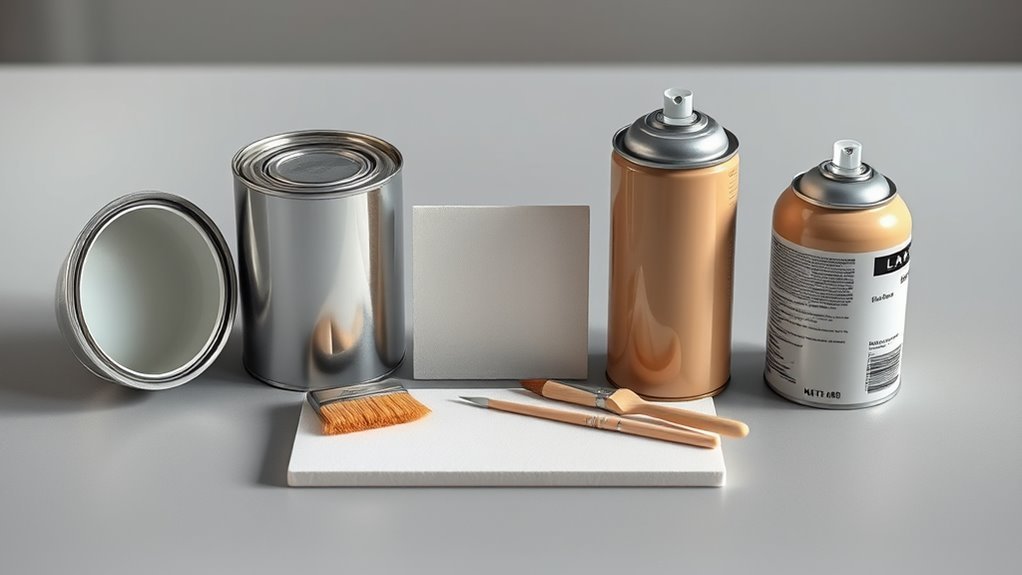
When you need quick coverage and easy cleanup, choose latex spray paint; if you need tougher durability, higher gloss, and better adhesion on metal or high‑traffic surfaces, go with oil‑based. You’ll pick latex for indoor walls, primed wood, and projects where fast recoat and simple cleanup matter.
Use oil‑based for outdoor trim, metal furniture, or floors that face abrasion.
Practice good spray paint storage: keep cans cool, dry, upright, and labeled.
For color mixing, test small swatches and layer thin coats rather than blending cans. That approach gives predictable tones and reduces runs, drips, and wasted paint.
What “Latex” and “Oil‑Based” Mean for Spray Paint
When you choose between latex and oil‑based spray paint, you’re really choosing water‑based versus oil formulas that use different binders and solvents. That choice affects how the paint performs—durability, drying time, and adhesion—and how you clean up afterward.
I’ll explain the binder/solvent differences, performance tradeoffs, and cleanup steps so you can pick the right one.
Water-Based Versus Oil
Curious about what people mean by “latex” or “oil‑based” spray paint? You’ll find water‑based (often called latex) dries faster, cleans with soap and water, and suits color matching on porous surfaces.
Oil‑based sprays give deeper sheen and longer open time, aiding blendy application techniques on metal or trim.
You’ll pick water‑based for quick projects, low odor, and easy cleanup; choose oil for durability and smoother finishes where flow matters.
Both require proper surface prep and compatible primers.
Consider ventilation, drying time, and end use when selecting between water‑based and oil options.
Binder And Solvent Differences
Although the words “latex” and “oil‑based” get tossed around like simple labels, they actually describe two different combinations of binders and solvents that determine how spray paint behaves.
You’ll find latex uses acrylic or vinyl binders suspended in water-based solvents, so pigments disperse differently and color mixing stays stable without harsh solvents.
Oil‑based spray paints rely on alkyd or oil binders dissolved in organic solvents, altering drying chemistry and pigment suspension.
That difference affects VOCs and environmental impact, so choose based on regulations and your priorities.
Knowing the binder/solvent combo helps you predict adhesion, longevity, and indoor use suitability.
Performance And Cleanup
How do latex and oil‑based spray paints actually perform and clean up differently? You’ll find latex dries faster, resists yellowing, and flexes with substrates, so it’s forgiving for exterior work and quick recoats.
Oil‑based gives smoother leveling and longer open time, helping hide imperfections and aiding color mixing for deeper tones, but it yellows and takes longer to cure.
Cleanup differs: use soap and water for latex, mineral spirits or turpentine for oil‑based.
For spray systems, avoid cross‑contamination—flush equipment thoroughly. Regular spray gun maintenance prevents clogs and finish problems, regardless of which chemistry you choose.
What’s Inside Spray Paint: Binders, Solvents, Pigments
When you spray a can, three core components work together to form the finish: binders that make the paint stick and film over the surface, solvents that keep it flowing and evaporate as it dries, and pigments that give color and opacity.
You choose binders (acrylic, alkyd, or enamel) based on flexibility and durability; they determine adhesion and gloss.
Solvents control viscosity and drying time, so you adjust distance and application techniques for smooth coats.
Pigments define your color palette and hiding power; higher pigment loads cover better.
Together they set performance—drying, toughness, and final appearance.
Read Spray Paint Labels & TDS to Identify the Type
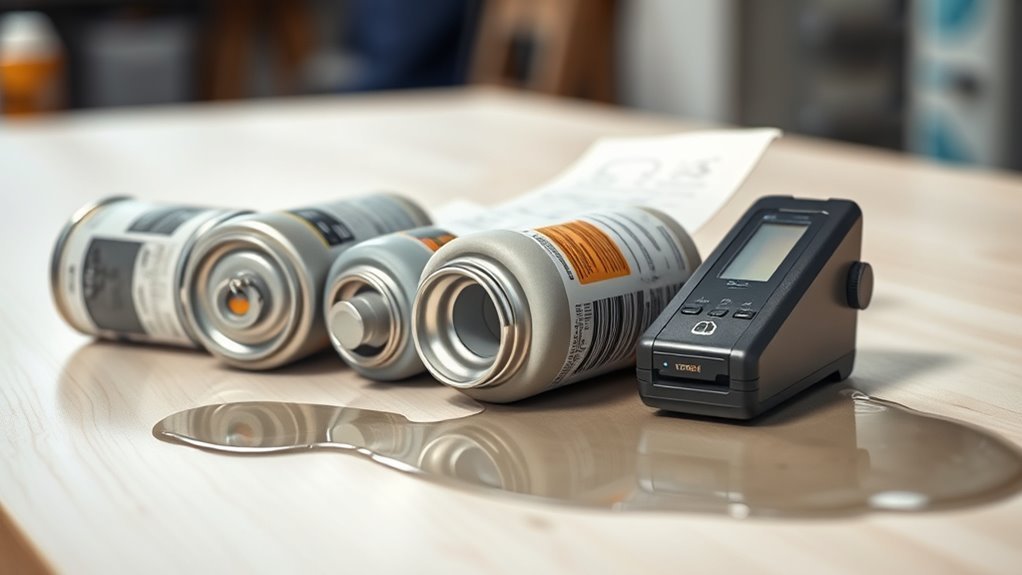
Now that you know what binders, solvents, and pigments do, the next step is learning how to read a spray paint label and the product’s Technical Data Sheet (TDS). This will help you identify its type and expected performance.
Check the ingredients/binder section for acrylic, alkyd, or polyurethane. Solvents will hint if it’s water‑ or oil‑based. Look for VOC content, dry times, adhesion, and recommended substrates.
Check binders (acrylic, alkyd, polyurethane), solvent type, VOCs, dry times, adhesion, and recommended substrates.
TDS often lists compatible primers and suggested spray techniques and spray tip sizes. Use manufacturer color matching data to confirm finish and opacity.
Save PDFs or photos so you can compare products before buying.
Four Quick Tests to Tell Water‑ vs Oil‑Based Spray Paint
If you’re unsure whether a spray can is water‑ or oil‑based, four quick, low‑risk tests will tell you in minutes.
First, do a water rub: wet a cloth, scrub a small dried spot—water‑based softens; oil‑based resists.
Second, smell test: oil smells solventy; water is milder.
Third, lacquer thinner test: apply a drop—oil reacts, water won’t.
Fourth, adhesion scratch: sand a tiny area, spray a test stripe—water beads differently than oil and responds to different Spray techniques.
Note Color mixing behavior too: water tends to blend differently when layered; oil shows stronger tinting and sheen.
When to Choose Water‑Based Spray Paint (Best Surfaces & Finishes)
You’ll want water‑based spray paint for porous and primed surfaces like drywall, wood, and some plastics because it adheres well and cleans up easily.
It comes in a range of sheens—from matte to glossy—so pick the finish based on look and light reflection.
For durability, expect good wear with proper prep and a clear coat, and wipe spills quickly to keep the surface looking new.
Best Surfaces For Water‑Based
When you want a low‑odor, fast‑drying option that’s kinder to indoor air, water‑based spray paint is best for porous, lightly prepped, and smooth nonrust metal surfaces like sealed wood, MDF, plaster, primed drywall, and many plastics.
You’ll appreciate its reduced environmental impact compared with oil, reflecting modern formulation shifts and historical development toward safer solvents. Choose water‑based when adhesion needs are moderate and cleanup with soap is preferred.
Prep and primer still matter for durability. Typical suitable surfaces include:
- Sealed interior wood
- Medium‑density fiberboard (MDF)
- Plaster and primed drywall
- Smooth, clean plastics
- Nonrust metal with primer
Finish Types And Sheens
Though water‑based spray paints come in fewer extremes than oil formulas, they still offer a useful range of sheens—from flat and satin to semi‑gloss and high‑gloss—so you can match durability and appearance to the surface and room.
You’ll pick flat or satin for walls and matte furniture, semi‑gloss for trim and cabinets, and high‑gloss for accents that need cleaning.
Remember that Color mixing matters less with water bases but adjust tones carefully. Practice spray techniques to control coverage and avoid runs.
Test on scrap pieces to confirm sheen and color before committing to the final project.
Durability And Care Tips
If you need a durable, easy‑care finish for indoor projects, reach for water‑based spray paint for porous surfaces like drywall, MDF, and unsealed wood as well as previously painted metal and plastic that can tolerate a gentler solvent.
You’ll get fast curing, low odor, and good abrasion resistance when you prep properly and seal with clear coats. Pay attention to color matching and consistent spray patterns to avoid streaks and patchiness. Follow simple maintenance: wipe gently, avoid harsh chemicals, and touch up promptly.
- Clean and sand before painting
- Test color matching on a scrap
- Use even spray patterns
- Apply thin coats
- Seal with compatible topcoat
When to Choose Oil‑Based Spray Paint (Metal, Wood, High‑Wear)
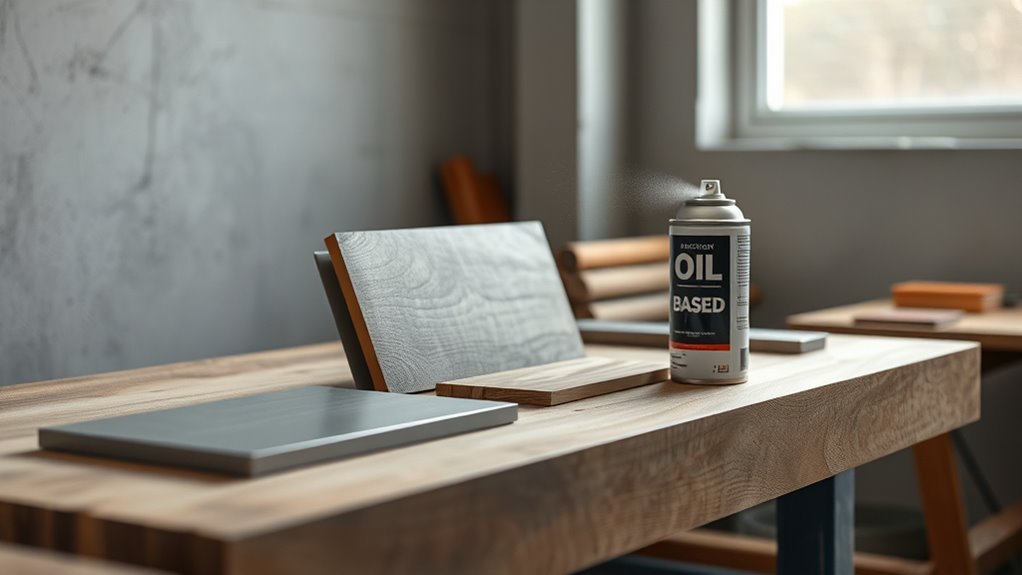
Because oil-based sprays form a hard, durable film, you should pick them for metal, bare wood, and any surface that’ll see heavy wear or frequent handling. You’ll get superior abrasion resistance, better solvent and moisture tolerance, and a smoother leveling finish that withstands knocks.
Choose oil-based sprays for metal and bare wood—they form a hard, durable film that resists abrasion and moisture.
Choose oil-based for tools, outdoor metalwork, trim, and flooring where longevity matters.
Remember color mixing limits: oil formulas blend differently than latex, so match bases and test small areas. Also factor in spray gun maintenance—clean thoroughly to avoid clogging and preserve finish quality.
Expect longer cure times and stronger fumes; ventilate and use proper PPE.
Prep and Adhesion Tips for Latex Spray Paint on Wood, Metal, Plastic
When you plan to use latex spray paint on wood, metal, or plastic, prep determines whether the finish will bond, look smooth, and last—so spend time cleaning, deglossing, and priming appropriate to each material.
You’ll remove dirt, sand glossy spots, and choose primers formulated for each substrate.
Practice even spray technique and test color mixing on a scrap piece.
Apply thin, overlapping coats and allow flash time between passes.
- Clean with degreaser and dry thoroughly
- Sand or scuff glossy surfaces lightly
- Use primer matched to material
- Maintain consistent spray technique
- Test color mixing on scrap before final coats
Surface Prep and Curing Tips for Oil‑Based Spray Paint
Before you spray with oil‑based paint, clean the surface thoroughly to remove grease, dust, and old finish so the coating can bond properly.
Choose a primer rated for oil paints and the substrate—metal needs rust‑inhibiting primers, while glossy wood and some plastics benefit from a high‑adhesion oil primer.
Allow adequate curing time in warm, well‑ventilated conditions and follow the manufacturer’s temperature and humidity guidelines to avoid tackiness and guarantee a hard, durable finish.
Surface Cleaning Essentials
Although oil-based spray paint tolerates minor surface imperfections better than some coatings, proper cleaning and curing are still essential to get a durable, smooth finish. You’ll remove dirt, grease, and loose material before painting, consider eco friendly options for cleaners, and verify color matching techniques on a small test area.
Clean thoroughly, let surfaces dry, and follow cure times.
- Wipe with a degreaser or mild soap solution.
- Use fine sandpaper to scuff glossy spots.
- Rinse and dry completely before spraying.
- Tack cloth to lift dust before application.
- Allow full cure per manufacturer directions.
Proper Primer Selection
Which primer will give you the best bond and longest-lasting finish? You’ll choose an oil‑based or bonding primer for nonporous or previously painted surfaces. Use an alkyd primer for bare wood or metal to resist tannin bleed and rust.
Match primer flexibility to the topcoat to prevent cracking. Consider primer tinting — subtle color mixing helps reduce finish coats and improves coverage.
Apply primer with proper film thickness and follow recommended sanding between coats. Keep the spray equipment clean to prevent contamination — regular spray gun maintenance ensures consistent atomization and adhesion for a durable oil-based system.
Curing Time and Conditions
When you spray an oil‑based finish, curing—not just surface dry—determines when the piece can be handled or topcoated, so plan for longer times than with water‑based products. You’ll control curing by temperature, humidity, air flow, and film thickness. Consider environmental impact and cost comparison when choosing ventilation and heaters; faster curing costs more and may increase VOCs.
Wait recommended times before sanding or recoating to avoid adhesion failures. Use tack cloths and clean environments to prevent defects.
- Aim for 50–75°F and moderate humidity.
- Thin coats dry faster than heavy films.
- Increase airflow without dust.
- Allow full cure before heavy use.
- Test on scrap first.
Spray Paint Cleanup, Safety & Ventilation: Latex vs Oil
Because spray paint particles linger in the air and on surfaces, you’ll want to treat cleanup, safety gear, and ventilation as integral parts of the job rather than afterthoughts.
Wear an appropriate respirator, gloves, and eye protection; latex and oil-based aerosols both emit fine particulates. However, oil formulas often carry stronger VOCs, so prioritize ventilation.
Open windows, use fans to create crossflow, and avoid enclosed spaces.
Collect overspray and used rags for proper spray paint disposal—don’t toss them in regular trash.
Follow local spray paint environmental regulations to prevent contamination, and store cans upright in cool, ventilated areas.
Troubleshooting Peeling, Bubbling, and Incompatible Layers
If paint starts peeling, bubbling, or refusing to bond, you’ll need to diagnose adhesion, moisture, and chemical compatibility issues before repainting. You’ll check Peeling causes: old flaking finish, trapped moisture, or oil-over-latex conflicts.
If paint peels, bubbles, or won’t bond, diagnose adhesion, moisture, and chemical conflicts before repainting.
Test Surface compatibility by sanding, solvent wiping, or a small adhesion patch. Follow a logical fix sequence: remove compromised layers, dry and decontaminate, prime with a compatible primer, then spray.
- Identify visible failure points and age of previous coating.
- Measure moisture and allow full drying time.
- Sand glossy or contaminated areas to key the surface.
- Use primers matched to substrate and topcoat.
- Perform a small test panel first.
Decision Checklist: Pick the Right Spray Paint for Your Project
Now that you’ve diagnosed adhesion and compatibility issues, pick a spray paint that matches your substrate, environment, and desired finish so your repair holds up. Use this checklist: identify material, choose latex or oil-based, test color matching, and practice spray techniques. Prioritize primer, drying time, and corrosion resistance. Follow surface prep and cure recommendations.
| Step | Question | Action |
|---|---|---|
| 1 | Substrate? | Select compatible paint |
| 2 | Location? | Pick indoor/outdoor formula |
| 3 | Finish? | Gloss, satin, matte |
| 4 | Color matching? | Test swatch |
| 5 | Technique? | Adjust nozzle and distance |
Frequently Asked Questions
Can Spray Paint Be Used on Fabrics Safely?
Yes — you can use spray paint on fabrics safely if you do Fabric preparation first: wash, dry, and stretch fabric, then test adhesion. Use fabric-specific sprays, apply light coats, heat-set to improve Spray paint adhesion and flexibility.
How Does Temperature Affect Spray Paint Curing Times?
Right off the bat, temperature effects speed or slow the curing process: you’ll cure faster in warmth and slower in cold, so don’t rush it — patience pays off — and humidity also plays a supporting role.
Are There Eco-Friendly Spray Paint Brands or Low-Voc Options?
Yes — you can choose eco friendly paints and low VOC options; you’ll find several brands offering water‑based spray paints, reduced odors, and safer solvents, so you’ll minimize fumes while keeping durability and color variety.
Can Spray Paint Colors Change as They Age or Yellow?
A vintage bicycle I restored showed yellowing effects after years outdoors. You’ll see color fading and uneven tones as UV, heat, and solvent breakdown alter pigments; choosing UV-resistant, low-VOC formulas and clear coats helps prevent it.
Is Spray Paint Allowed for Use in Apartment Balconies or Indoors?
You can use spray paint on balconies if building rules allow and you follow balcony safety; indoors you shouldn’t unless you have strong indoor ventilation, respirators, and drop cloths, because fumes and overspray can be hazardous.
Conclusion
When choosing spray paint, follow your surface, conditions, and durability needs: use latex (water‑based) for quick, low‑odor jobs and flexible surfaces, and oil‑based for tough, glossy, long‑lasting finishes. Read labels, do the water test, and prep and cure surfaces carefully to avoid peeling or bubbling. Clean latex with soap and water, use solvents for oil types, and always ventilate. Like a locksmith with the right key, pick the paint that fits the job and follow proper steps.
