
Is Valspar Duramax Exterior Paint Water Based?
Yes — Valspar Duramax exterior paint is water‑based; it’s a latex/acrylic formula you can clean up with soap and water and that’s designed for exterior durability. You’ll get good adhesion, flexibility, and UV resistance from the acrylic binders, plus lower VOCs and faster drying than traditional oil paints. It still needs proper prep and priming for best results, and environmental conditions affect cure times — continue on to learn how formulation and application impact performance.
Quick Answer: Is Valspar Duramax Water‑Based?
Yes — Valspar Duramax exterior paint is water-based; it uses a latex (acrylic) formula designed for easier cleanup, lower VOCs, and faster drying than oil-based coatings. You’ll find it handles well, so you can apply without extended odor or solvent hassles, and it resists yellowing.
For color matching, you can rely on most retailers’ spectrophotometers to reproduce shades accurately, but sample a swatch on your surface first because sheen and substrate affect appearance.
Check VOC levels on the label if you’re sensitive or facing local restrictions. Overall, it’s a user-friendly, low-emission choice for exterior projects.
Is Valspar Duramax Latex (Water) or Oil‑Based?
Since we already noted Duramax is water-based, you can expect Valspar Duramax to be a latex (acrylic) formulation rather than oil-based. It uses acrylic resins suspended in water to give you easier cleanup with soap and water, lower VOCs, and faster drying compared with alkyd (oil) paints.
Since Duramax is water-based, expect a latex (acrylic) formula — easier cleanup, lower VOCs, and faster drying
You’ll get good adhesion, flexibility, and resistance to cracking, useful for exterior surfaces. Consider how this affects color matching and environmental impact when choosing paint.
- Surface prep: acrylic bonds well to primed substrates.
- Cleanup: soap and water vs solvents.
- Durability: UV and mildew resistance.
How to Confirm the Product Type on the Label and TDS
Check the paint can label for clear wording like “water‑based,” “latex,” or “acrylic” and any solvent warnings.
Then open the product’s Technical Data Sheet (TDS) to confirm the binder type and application notes.
If the label and TDS disagree, contact Valspar or your retailer for clarification.
Check The Label
Wondering how to confirm you’ve got the right Valspar Duramax exterior product? Check the label first: it names the formula, surface prep, and often states whether it’s water-based. Look for color matching codes and any eco friendliness claims or low-VOC badges. Don’t assume packaging size means type.
- Confirm wording like “latex” or “water-based” and manufacturer SKU.
- Verify color matching information and batch numbers for touch-ups.
- Note eco friendliness symbols, VOC levels, and disposal instructions.
If the label’s unclear, keep the can number and contact Valspar support before you buy or apply.
Review The TDS
If the label leaves any doubt about whether your Valspar Duramax is water-based, the Technical Data Sheet (TDS) will confirm the product type and give the detailed specs you need.
Download the TDS from the manufacturer or request it from your retailer, then scan for “vehicle” or “solvent” language, resin type, and recommended thinners.
The TDS also lists gloss, dry time, and application methods that affect color matching on different substrates.
Check VOC regulations and reported VOC content to verify compliance with local rules.
Use the TDS as the definitive reference when labeling is ambiguous.
What’s in Duramax: Binders and Key Ingredients
Now let’s look at what makes Duramax perform so well: you’ll find acrylic polymer binders, pigments and fillers, plus targeted additives and coalescents.
The acrylic binders form the durable film, pigments and fillers provide color and opacity, and additives tweak flow, drying, and weather resistance.
Understanding these components helps you choose the right product and troubleshoot finish issues.
Acrylic Polymer Binders
What makes Duramax’s water‑based exterior finish stick, resist weather, and hold color? You get that from acrylic polymer binders — the tough, flexible matrix that locks pigments and enables color matching while supporting eco friendly options. They form a durable film that resists cracking, UV degradation, and moisture.
- Improved adhesion: binders help the paint cling to diverse surfaces for long-lasting protection.
- Flexibility and weather resistance: polymers expand and contract without failing, minimizing chalking and peeling.
- Formulation control: binder chemistry balances sheen, durability, and compatibility with stains and primers.
Pigments And Fillers
How do pigments and fillers give Duramax its color depth and functional heft? You’ll find inorganic and organic pigments deliver hue, opacity, and UV resistance. Fillers like calcium carbonate control sheen, film build, and cost.
Pigment selection affects color matching precision, weatherfastness, and hiding power, so manufacturers balance tint strength with dispersibility. Fillers modify rheology and reduce sag without compromising adhesion from the binder.
Because Duramax is water-based, pigment and filler choices help meet VOC regulations by avoiding solvent-reliant extenders. You’ll notice durable color retention and consistent application when pigments and fillers are properly formulated.
Additives And Coalescents
Although binders form the film and pigments give color, additives and coalescents are what fine-tune Duramax’s performance, letting you apply it easily and trust it outdoors. You’ll notice flow modifiers, mildewcides, and coalescents working behind the scenes to control leveling, durability, and drying.
They also help with Color matching consistency across batches and support Eco friendly options by reducing solvent needs.
- Flow agents: improve brush/roll laydown and reduce marks.
- Biocides: prevent mold growth on exterior surfaces.
- Coalescents: aid particle fusion at lower temperatures for stronger films.
These components optimize real-world results.
How Duramax’s Chemistry Affects Durability and Adhesion
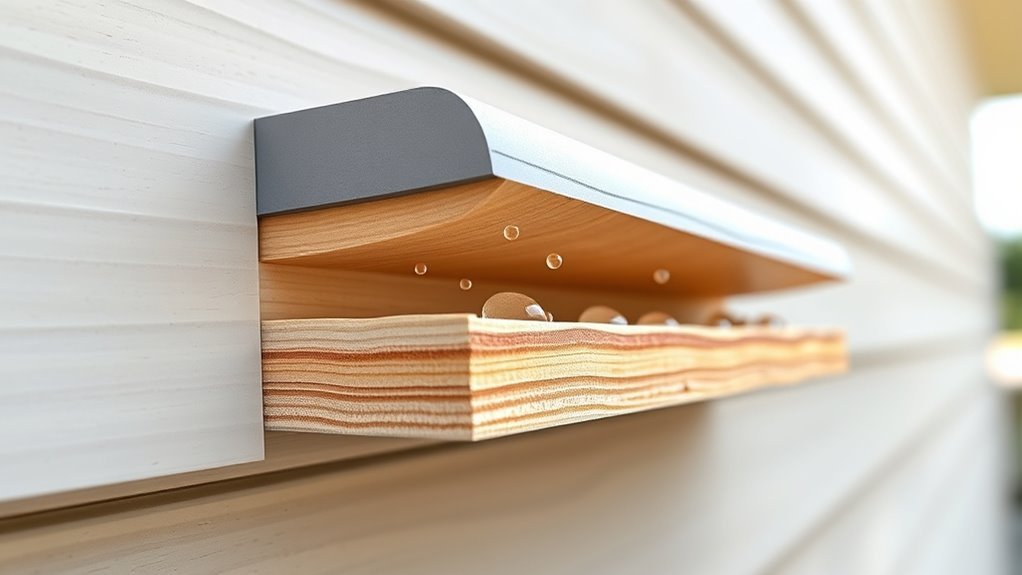
Because Duramax blends acrylic resins with advanced crosslinkers, you’ll get a paint film that resists chalking, UV breakdown, and moisture intrusion while still bonding tightly to typical exterior substrates. You’ll notice strong adhesion on wood, fiber cement, and properly prepared metal; the crosslinked network minimizes peeling and improves color retention over years. Formulation choices also reduce volatile organics, lowering environmental impact without sacrificing performance. Proper surface prep still matters. Quick reference:
| Property | Effect |
|---|---|
| Adhesion | Reduced peeling, better hold |
| Durability | UV/moisture resistance |
| Color retention | Long-term fade control |
Drying and Recoat Times (Temperature & Humidity)
Curious how temperature and humidity change Duramax’s drying and recoat windows? You’ll notice faster surface dry in warm, low-humidity conditions and slower cure when it’s cool or muggy. Aim for 50–90°F and RH under 70% for predictable results.
Consider how Color options and branding consistency affect project timing — darker tints can retain heat and alter cure slightly.
- High temp/low humidity: quicker recoat, watch flash time.
- Low temp/high humidity: extend dry and recoat intervals.
- Moderate conditions: follow label times for best finish and adhesion.
Surface Prep and Priming for Valspar Duramax
Before you start painting with Valspar Duramax, prep the surface thoroughly so the primer and topcoat adhere and the finish lasts. You’ll remove dirt, mildew, and loose paint with a mild detergent, pressure washer on low, or sanding where needed.
Repair cracks and caulk gaps; sand smooth and wipe clean. Choose a compatible primer—stain-blocking for tannin bleed, bonding primer for slick surfaces.
Consider color matching when switching drastic hues; a tinted primer reduces coats. Also evaluate Environmental impact: pick low-VOC primers and dispose of waste properly.
Let primer dry fully before applying Duramax topcoat.
Best Tools and Techniques for a Smooth Finish
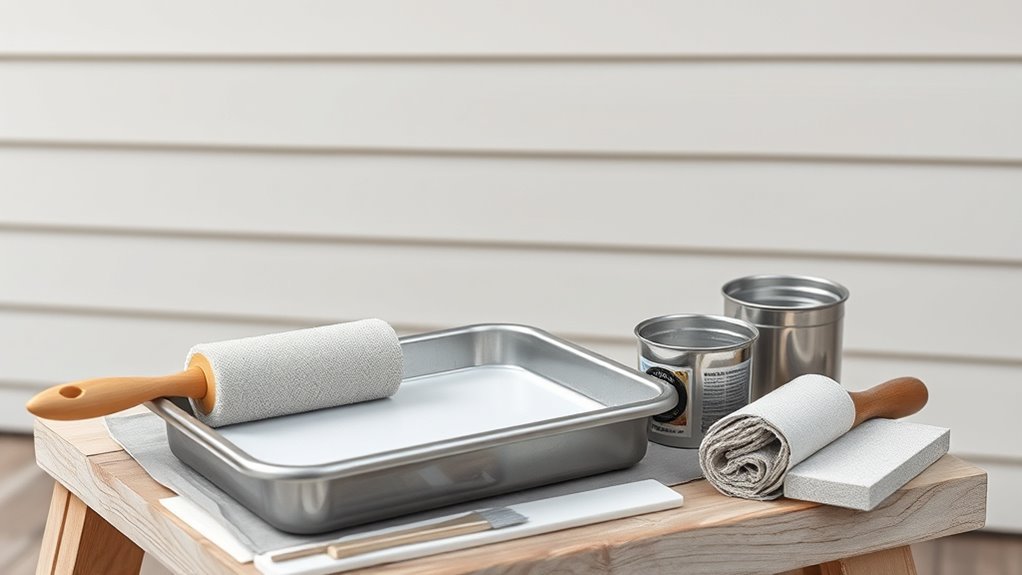
You’ll get the best finish by starting with proper surface preparation—clean, sand, and prime where needed so the paint adheres evenly.
Choose the right application tools, like quality synthetic brushes, a foam roller for smooth siding, or a sprayer for large areas.
With the prep done and tools matched to the job, you’ll avoid runs, lap marks, and uneven texture.
Proper Surface Preparation
Because paint only performs as well as the surface beneath it, proper preparation is the step that determines whether your Valspar Duramax water-based finish looks professional and lasts. You’ll clean, sand, and repair to guarantee adhesion, consider color matching on test patches, and choose eco-friendly options for cleaners and primers when possible.
Focus on removing mildew, loose paint, and chalking; feather edges and fill gouges with exterior filler; and degloss glossy areas for bite. Don’t skip primer on bare wood or metal.
Follow this checklist:
- Clean and mildew-treat surfaces
- Sand, fill, and feather edges
- Prime as needed, test color matching
Application Tools Choice
When you want a factory-smooth finish with Valspar Duramax water-based exterior paint, pick the right brushes, rollers, and sprayer and keep them clean and well-maintained.
Choose synthetic-bristle brushes for trim, a 3/8″–1/2″ nap roller for siding texture, and an HVLP or airless sprayer for large areas; test spray patterns first.
Maintain tools: rinse with warm water immediately, use mild detergent for buildup, and store dry.
For projects requiring precise color matching and branding consistency, label mixed cans and clean tools between shades to avoid contamination.
Practice technique on scrap to control overlap and film thickness.
Cleanup: Water vs Solvent Procedures
While water-based Duramax simplifies most cleanup tasks, you’ll still want to know when to use plain water and when a solvent is necessary. Water handles brushes, rollers, and spills right away, but cured paint, heavy buildup, or equipment left to dry may require a compatible solvent or remover.
Water-based Duramax makes cleanup easy, but cured paint or heavy buildup may still need a compatible solvent.
You’ll appreciate Duramax for Color options and Eco friendly formulations, yet cleanup varies: fresh drips rinse with soap and water; dried globs need mechanical scraping plus a remover; thin spots in spray equipment may demand a mild solvent. Follow label guidance and test solvents on scrap to protect finishes.
- Rinse fresh tools immediately.
- Scrape then solvent for cured paint.
- Test solvent compatibility first.
When to Choose Oil‑Based Paint Over Duramax (Use Cases)
After you’ve handled cleanup choices for Duramax, you’ll want to know the specific situations where oil‑based paints still make more sense. You’ll pick oil when you need superior adhesion on chalky or knotty wood, when penetrating sealer performance matters, or when extreme solvent resistance is required.
Restoration tasks needing exact color matching to older oil finishes often benefit from oil formulas. Also choose oil if local VOC regulations allow its use for durability needs and you can manage ventilation.
For trim, floors, or metal prone to wear, oil‑based coatings can outperform water‑based Duramax despite longer cure and cleanup demands.
Duramax in Real Life: Pros, Cons, and Owner Tips
If you want a dependable, low‑odor exterior coating that’s easy to apply and clean up, Duramax delivers — but it’s not perfect for every job. You’ll appreciate easy brushing, fast drying, and reduced environmental impact vs older solvent paints.
Expect solid color matching at the store, though tricky trims may need touchups.
- Prep: clean, sand, and prime for best adhesion.
- Application: use high-quality tools and thin coats; avoid extreme temps.
- Maintenance: spot-touch annually to keep finish consistent.
You’ll save time and odor headaches, but weigh durability needs against specific surfaces before committing.
Mildew and Weather Resistance: What’s Intrinsic vs. Formulation‑Based
You’ve seen how prep, application, and maintenance affect finish and longevity; now consider how much mildew and weather resistance come from the paint itself versus additives and your surface prep. You’ll want Duramax’s resin and film-forming properties for baseline resistance; biocides and sacrificial coatings add protection but can affect environmental impact. Proper cleaning, primer, and drainage reduce reliance on additives. Color matching and pigment choice influence heat absorption and fading, indirectly affecting mildew. Balance formulation choices with responsible maintenance to get durable, low-impact results.
| Intrinsic | Formulation/Additives |
|---|---|
| Resin type | Biocides |
| Pigments | Algaecides |
| Film strength | UV stabilizers |
| Adhesion | Water repellents |
| Heat retention | Sacrificial coatings |
Frequently Asked Questions
Can Valspar Duramax Be Used on Siding Made From Fiber Cement?
Yes — you can use Valspar Duramax on fiber cement siding; you’ll guarantee fiber cement compatibility and follow proper siding preparation: clean, repair, prime if needed, then apply according to temperature and coverage recommendations for durable results.
Is Duramax Available in Custom Color Matching at Any Retailer?
Yes — you can get Duramax in custom color matching at many retailer options; you’ll find the shade blended to your dream, and you’ll walk out confident, knowing stores like Lowe’s and other dealers can match it precisely.
How Long Does Unopened Duramax Paint Remain Shelf-Stable?
Unopened Duramax paint generally remains shelf-stable for about 2–5 years; you’ll preserve quality by proper paint storage in a cool, dry place, sealed tightly. Shelf life varies with formulation and storage conditions.
Are There VOC Differences Between Duramax Finishes (Flat vs. Gloss)?
Yes — you’ll notice VOC content can vary between Duramax finishes; finish comparison shows flatter sheens often have slightly lower VOCs than high-gloss, but formulation differences matter, so check the specific product’s VOC rating before buying.
Can Duramax Be Applied Over Existing Elastomeric Coatings?
Absolutely — you can apply Duramax over many elastomeric coatings, but don’t treat it like magic; you’ll still need to clean, sand, and prime for strong paint adhesion, and avoid interior application unless manufacturer permits.
Conclusion
Yes — Valspar Duramax is a water‑based (latex) exterior paint. It’s formulated with acrylic/binder latex and designed for low‑odor application and water cleanup. Check the label or technical data sheet (TDS) for “latex,” “water‑based,” or “acrylic” to confirm; if it says “alkyd” or “oil‑based,” it’s not. Water‑based chemistry gives good adhesion, mildew resistance, and durability for most exterior jobs, while oil paints are better for some trim and specialty uses.
