
Should I Paint All My Walls the Same Color
You should paint all your walls the same color when you want a calm, cohesive look that makes small rooms feel bigger and simplifies decorating and upkeep. Pick a versatile undertone that flatters your lighting and use trim, ceilings, or furnishings for contrast so spaces don’t feel flat. Match finish to traffic and moisture for durability, and test swatches at different times of day to avoid surprises—keep going to learn room-specific tips and common pitfalls.
Should You Paint All Walls the Same Color?
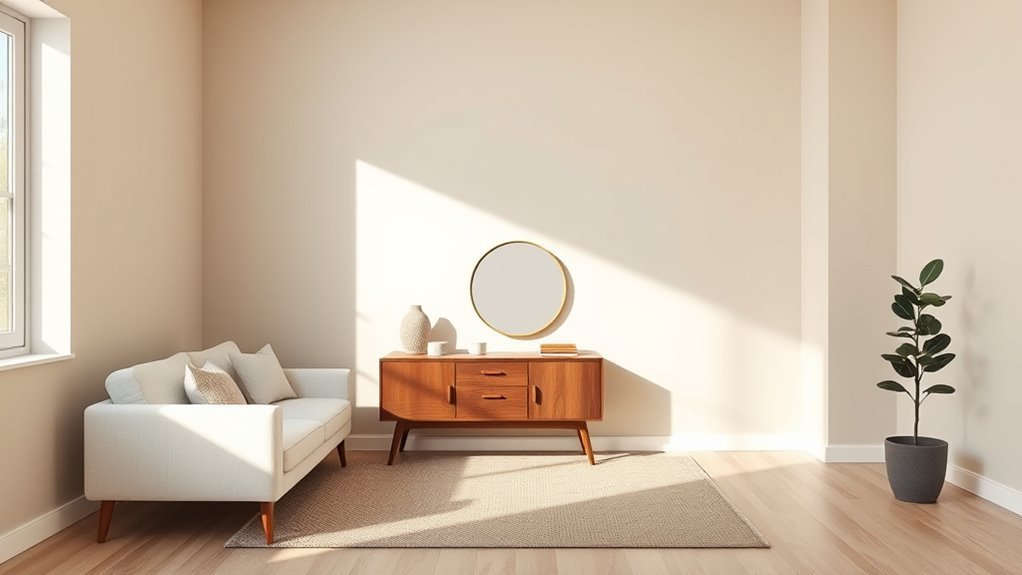
If you want a cohesive, calm look, painting all walls the same color is an easy way to achieve it. You’ll create flow, simplify furniture choices, and make small rooms feel larger.
Consider color psychology: soft neutrals soothe, warm tones energize, and cool hues relax—pick intent first.
Think about color psychology: neutrals calm, warm shades energize, cool hues soothe—choose your mood first.
Uniform walls also align with current paint trends favoring minimal, serene spaces, so resale appeal can improve. You’ll avoid visual clutter and ease maintenance, since touch-ups blend.
That said, uniform color isn’t required; use it when you want unity, simplicity, and a backdrop that highlights art, texture, or architectural details.
Quick Decision Framework: When to Go Monochrome vs. Mixed
Think about how you’ll use the room first—you’re more likely to want a calm, monochrome scheme in a bedroom and a more dynamic mixed palette in a playroom or home office.
Check the lighting and desired mood, since natural light can make bold contrasts feel airy while dim spaces benefit from a unified tone.
Finally, let architectural details guide you: highlight molding or niches with a different color, but keep expansive walls consistent to avoid visual chaos.
Room Functionality First
Because how you use a room shapes how its colors work, start by listing each space’s primary functions before picking a scheme. You’ll weigh color psychology and paint durability against traffic, purpose, and furniture.
For active, high-use rooms you’ll favor durable finishes and simpler palettes; for relaxation spaces you’ll let softer contrasts support mood.
Use this quick checklist to decide between monochrome cohesion or mixed accents:
- High traffic: choose durable paint, easy-to-clean tones
- Multi-use: keep a unifying base color, add functional accents
- Formal/entertaining: consider elegant contrasts for focal points
- Rest/bedroom: prioritize calming hues and simple schemes
Lighting And Mood
After you’ve mapped each room’s function, look at how natural and artificial light shape color perception—light can make the same paint read warm, cool, bright, or muted, and that should guide whether you keep walls uniform or introduce accents. You’ll use color psychology to match mood: bright north light benefits warm or mixed palettes; sunny south exposures handle monochrome drama. Cultural influences may steer hue choices for formality or calm. Quick framework:
| Light Type | Best Strategy |
|---|---|
| North / Cool | Add warm accents |
| South / Bright | Monochrome or bold accents |
| Artificial / Variable | Test samples at night |
Architectural Details Matter
When you assess a room’s moldings, door and window trims, built-ins, and ceiling treatments, decide whether those features should blend or stand out—uniform paint minimizes visual clutter and highlights form, while contrasting tones emphasize depth and detail.
You’ll weigh Color psychology—calmer palettes unify, bold accents energize—and paint durability for high-touch trim versus flat walls. Use this quick framework to choose monochrome or mixed finishes based on feature prominence, maintenance, and mood.
- Blend trims with walls for seamless, calming spaces
- Accent trims to showcase architectural interest
- Choose durable finishes where wear occurs
- Match contrast level to intended mood
How Room Function Should Drive Your Wall Color
Think about what you use the room for and choose colors that support that mood—calming tones for bedrooms, energizing hues for workspaces.
Check how activity lighting changes those colors at different times of day so you’re not surprised by shifts in tone.
And pick paints with durable, cleanable finishes where wear and spills are likely, like kitchens and kids’ areas.
Match Mood To Function
How do you want each room to feel and perform? Match mood to function by choosing colors that support activities and considering color psychology plus paint durability for high-traffic areas. Pick hues that aid focus, relaxation, appetite, or energy.
- Home office: cool, muted tones for concentration.
- Bedroom: soft, warm shades to promote rest.
- Kitchen: lively, clean colors that resist stains; durable finishes.
- Playroom: bright, stimulating colors with scrubbable paint.
You’ll balance atmosphere and practicality: use calming palettes where you rest, vivid tones where you want activity, and tougher paints where wear is expected.
Consider Activity Lighting
Why does the light you use matter as much as the paint? You choose bulbs and fixtures based on tasks: bright, cool light for a home office; warm, dimmable fixtures for a living room.
Activity lighting shifts how color reads, so factor in color psychology—cool light sharpens blues and greens, warm light enhances reds and yellows.
Test paint swatches under real fixtures at different times.
Also consider practical needs: high-use areas may need finishes that resist marks, affecting perceived paint durability.
Match light to function and color choice so your walls support activities instead of undermining them.
Durable Finishes For Use
Lighting affects how colors read, but the room’s function should steer your choice of paint finish and color, too. You’ll pick finishes for traffic, moisture, and cleaning needs while keeping color psychology in mind. High-traffic areas want scrubbable, durable options; calm spaces can use softer sheens.
- Hallways: satin or semi-gloss for paint durability and easy cleaning.
- Bathrooms: mildew-resistant semi-gloss for moisture-prone walls.
- Living rooms: eggshell balances durability with subtle texture.
- Bedrooms: matte or low-sheen to support restful color psychology.
Match finish to use, not just aesthetics, so colors look and last as planned.
How Natural Light Affects a Single-Color Wall Scheme
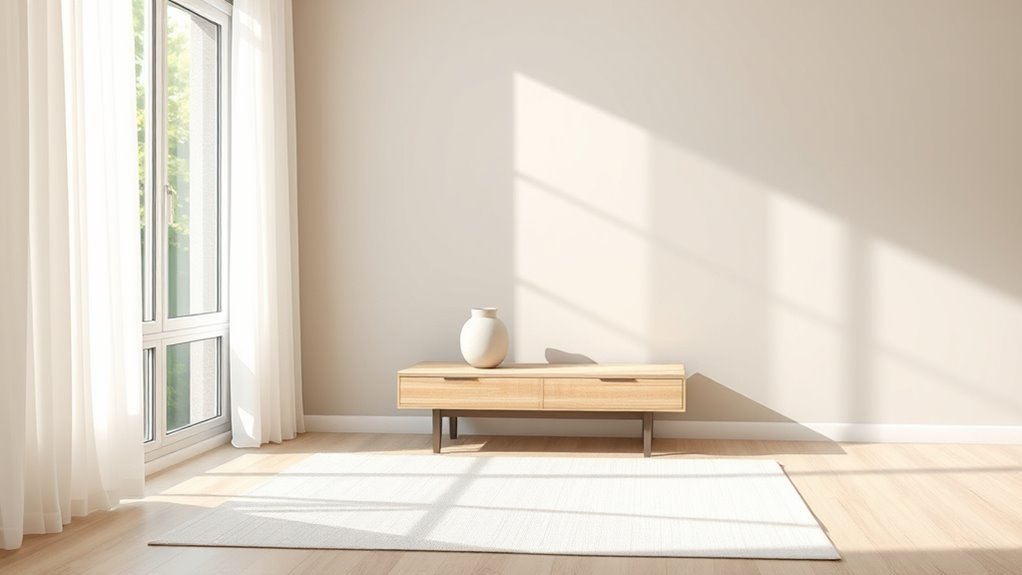
Because natural light shifts throughout the day, it can dramatically change how a single paint color reads in each room. So you’ll want to observe tones at morning, noon, and evening before committing.
Because daylight shifts, watch a paint’s tones at morning, noon, and evening before deciding.
Pay attention to how natural light alters warmth, depth, and undertones across walls. North-facing rooms cool colors, south-facing ones amplify warmth.
Test large swatches on multiple walls to see reflected hues from floors and furnishings inside your wall scheme. Note glare, shadow patterns, and fading risks.
Choose finishes that tolerate light exposure, and pick a color that remains pleasing under varied daylight to avoid surprises.
When Will Uniform Walls Make Small Spaces Look Bigger?
When will painting all your walls the same color actually open up a small room? You’ll notice space feels larger when you use a light, warm hue that reflects light and follows color psychology to calm the eye.
Match ceiling and trim for seamless sightlines, and keep contrast minimal so walls recede.
Choose finishes smartly—satin hides imperfections and improves paint durability in high-traffic areas.
- Pick pale, warm neutrals to boost perceived space
- Keep furniture low-profile and tonal
- Maintain consistent lighting to avoid sharp shadows
- Use durable, washable paint for longevity and upkeep
When Varying Wall Colors Adds Depth and Personality
If you want a room that feels layered and full of character, varying wall colors gives you immediate depth and personality without heavy décor changes. You can highlight architectural features, create zones, or set moods by pairing a dominant neutral with richer accent walls.
Use color psychology to choose hues that energize, soothe, or focus specific areas. Consider how light shifts tones across surfaces and pick finishes that mask imperfections.
Also check paint durability for high-traffic spots so your palette stays crisp. Keep contrasts balanced—too abrupt can feel chaotic, subtle shifts feel intentional and cohesive throughout the space.
When Architecture Should Change Your Color Plan
Think about how the room’s function sets the tone—calm, energizing, or focused—and let that steer whether you keep a uniform color or switch it up.
Then look at architectural features like alcoves, trim, or built-ins; they’re natural places to change color to highlight or downplay structure.
You’ll get better results when function and form work together in your color plan.
Room Function Dictates Tone
Because the way you use a room shapes how it should feel, let the function guide your color choices: calming, cool tones for sleep spaces; energetic, warm hues for kitchens and play areas; and neutral, unobtrusive shades where focus or flexibility matters.
You’ll use color psychology to set mood and consider paint durability where traffic or moisture is high. Match finish and tone to purpose so cleaning and maintenance aren’t an afterthought.
Practical contrasts can define zones without different colors. Examples:
- Soft blues for bedrooms, low-sheen for longevity
- Warm yellows in cooking areas
- Durable mid-tones for hallways
- Neutral offices for focus
Architectural Features Guide Choices
When a room already boasts strong architectural elements—crown molding, exposed beams, deep window casings, or an arched doorway—let those features steer your color decisions so they read as intentional rather than incidental. You’ll highlight trim with a crisp contrasting hue to emphasize profiles, or match walls to let shapes recede.
Use color psychology to choose warmth or calm depending on function, and pick finishes that balance look with paint durability in high-traffic zones. Consider painting focal elements darker for drama, or lighter to enlarge space.
Test samples under real light, then commit where proportion and detail feel right.
Use an Accent Wall Without Breaking Cohesion
Though an accent wall can instantly add personality, you’ll keep the room cohesive by choosing a hue that ties into existing tones and repeating that color in smaller accents. Consider color psychology to match mood—calming blues, energetic yellows—and balance contrast so the wall reads intentional, not jarring. Match undertones to trim, upholstery, or art.
Also factor paint durability where high-traffic walls need tougher finishes; you can use the accent shade in durable formula on the focal wall and softer sheens elsewhere.
- Repeat accent color in pillows
- Echo it in rugs or lamps
- Use framed art with the same tone
- Tie in metallic or wood accents
Pick the Right Paint Finish When All Walls Match
When you paint all the walls the same color, pick a finish that matches each room’s function—durable satin for high-traffic areas, washable eggshell for living spaces, and matte for low-traffic rooms.
Remember that higher sheens highlight flaws, so choose lower sheens for imperfect surfaces and consider a glossier finish where you want reflections.
Finally, balance natural and artificial light with texture: glossier finishes bounce light and make spaces feel brighter, while flat finishes absorb light for a cozy, textured look.
Match Finish To Function
How shiny should your walls be? You’ll match finish to function by balancing appearance, color psychology, and paint durability.
Choose finish based on room use: matte for cozy, eggshell for living areas, satin for family rooms, semi-gloss for trim and kitchens.
Consider cleaning needs and light reflection—higher sheen resists stains and brightens small spaces.
Test swatches on walls to see how the finish shifts tone and mood under your lighting.
Keep consistency when walls are the same color, but vary sheen between surfaces for practicality.
Prioritize function: easy maintenance where needed, softer look where comfort matters.
Consider Sheen For Flaws
Because sheen highlights texture, you’ll want to think about how it exposes imperfections when all walls share the same color. You’ll choose a finish that balances durability and flaw concealment: flat or matte hides bumps and patched areas best, while eggshell offers a slight sheen without shouting flaws.
Satin and semi-gloss resist scuffs but amplify texture, so use them where durability matters. Consider sheen considerations for trim and high-traffic zones separately so walls remain visually even.
Test small sections in different lights to confirm the finish masks imperfections and keeps a cohesive, polished look throughout your space.
Balance Light And Texture
If you want a room that feels cohesive rather than flat, match your paint finish to how light and texture interact in the space. You’ll use sheen to control shine and shadow, guiding mood through color psychology while considering paint durability where wear matters.
Matte hides imperfections and soaks up light; eggshell balances softness and cleanability; satin offers subtle sheen for textured walls; semi-gloss reflects more light and boosts durability on trim.
- Matte for low-reflective, cozy walls
- Eggshell for living areas with light traffic
- Satin for textured or high-traffic surfaces
- Semi-gloss for trim and washable spots
How to Pick One Paint Color That Works Across Rooms
When you pick a single paint color for multiple rooms, think about light, finish, and the role each space plays so the hue feels intentional rather than flat.
Consider how color psychology affects mood—calming blues for bedrooms, energizing yellows for kitchens—and choose a base tone that translates well under varied lighting.
Let color psychology guide rooms—soothing blues for sleep, lively yellows for kitchens—and pick a base tone that reads well in all light.
Prioritize paint durability in high-traffic zones and pick a sheen that’s forgiving where you need washability.
Use trim, rugs, art, and textiles to create subtle contrasts without changing wall color.
Aim for a versatile undertone (warm or cool) that harmonizes your home’s materials and natural light.
Test Paints: Swatches, Samples, and Live Trials
Before you commit to a color across rooms, test it in the actual spaces with swatches, sample pots, and live trials to see how light and materials change the look. You’ll observe undertones, how color psychology affects mood in each room, and whether finish and paint durability meet traffic needs.
Apply samples on different walls, near windows, and next to furnishings. Live trials let you live with the shade for days.
- Paint 12×12″ swatches in multiple spots
- Use sample pots to coat a 2×2′ panel
- Try matte and semi-gloss finishes
- Note wear after a week
Create Flow Between Rooms Using One Color
Although a single color might seem limiting, using it strategically lets you create a seamless visual flow that makes your home feel larger and more cohesive. You’ll pick one base hue and vary sheen, accents, and lighting to define spaces without breaks.
Consider color psychology to set mood *gradations*—calming tones for bedrooms, energizing ones for kitchens—while choosing finishes that match traffic and paint durability needs. Use trim or a subtle tone shift to frame entries.
The table below gives simple ideas for continuity, contrast, and function to help you plan rooms that connect naturally.
Pair Furniture, Textiles, and Art With One Wall Color
If you pick one wall color for most rooms, lean into contrasts and coordinated accents so furniture, textiles, and art feel intentional rather than muted. You’ll use color psychology to emphasize mood—warm neutrals cozy, cool tones calm—while modern paint technology ensures consistent finish.
Choose textiles and rugs that echo undertones, pick furniture with deliberate contrast, and hang art that ties accent hues together. Balance scale and texture so pieces read clearly against uniform walls.
Try these quick pairings:
- Deep leather sofa with brass accents
- Wool rug picking up wall undertone
- Bold framed art echoing a secondary hue
- Mixed-metal lighting to bridge tones
Add Contrast With Trim, Ceilings, and Doors
When you keep walls the same color, paint the trim, ceiling, and doors in contrasting shades to add depth and definition without overwhelming the scheme. You’ll use contrast to highlight architectural lines and guide sightlines, letting a crisp trim or darker door create focal points.
Consider color psychology when choosing hues—lighter ceilings lift, darker trim grounds. Select finishes that suit use: semi-gloss trims resist scuffs, flat ceilings hide imperfections.
Prioritize paint durability in high-traffic areas like doors and baseboards. Test samples together to guarantee harmony and durability before committing to a full-room application.
Room Guides: Living Room, Kitchen, Bedroom, Bathroom
Because each room serves a different purpose, you’ll want color strategies tailored to function and feel. You’ll use color psychology to set mood—energizing hues in kitchens, calming tones in bedrooms—while considering paint durability for high-traffic areas.
Match paint to purpose: use color psychology for mood—energizing kitchens, calming bedrooms—while choosing durable finishes for busy areas.
Balance uniformity and variety: a cohesive palette ties rooms together without forcing one shade everywhere.
- Living room: social, flexible tones that support furniture and light
- Kitchen: bright, clean colors resistant to stains and frequent cleaning
- Bedroom: muted, restful shades for sleep and relaxation
- Bathroom: moisture-resistant finishes and crisp colors for a fresh feel
Common Mistakes When Painting Every Wall the Same Color
Although painting every wall the same color can simplify choices, many people make avoidable mistakes that dull a room’s impact. You might ignore color psychology, choosing a shade that shrinks energy or clashes with light. Don’t forget contrast: monotony flattens texture and furnishings. Skimping on primer or cheap paint hurts paint durability and leads to patchy wear. Measure undertones in different light, test large swatches, and plan trim or ceiling accents to break uniformity. Balance cohesion with focal points so rooms feel intentional, not washed out.
| Mistake | Fix |
|---|---|
| Ignoring light | Test swatches |
| Wrong undertone | Compare at dusk |
| Cheap paint | Upgrade for durability |
| No focal point | Add trim or art |
Cost, Time, and Maintenance Benefits of a Single Palette
If you pick a single palette for your rooms, you’ll save money, shave hours off prep and painting, and simplify ongoing maintenance. You’ll buy less paint, reuse tools, and cut labor time whether DIY or pro.
Choose one palette to save money, speed painting, and simplify maintenance across every room.
A unified scheme also eases decisions influenced by color psychology, keeping flow and mood consistent.
Fewer touch-ups and matched touch-ups mean less hassle; choosing high-quality finishes improves paint durability, so surfaces resist wear longer.
- Lower material and labor costs
- Faster prep, painting, and cleanup
- Easier touch-ups and matching
- Longer-lasting finish with better paint durability
Frequently Asked Questions
Will Painting All Walls One Color Affect My Home’s Resale Value?
Yes — it can. You’ll appeal broadly with neutral hues that use color psychology to soothe buyers, creating interior harmony; bold, personal shades might reduce offers, but tasteful accents preserve character without harming resale.
Can I Use Different Paint Brands With the Same Color?
Like a choir singing in tune, yes — you can use different brands with the same color, but you’ll need to test for color consistency and check brand compatibility; swatch, match finish, and apply samples under real lighting.
How Do I Handle Walls With Heavy Stains or Damage?
You should repair and clean first: do wall preparation—patch holes, sand, wash grime—then use stain-blocking primer for stain coverage. You’ll spot-prime tough areas, let it dry fully, then repaint for an even finish.
Is Odor Stronger When Painting an Entire House One Color?
Yes — painting an entire house one color can increase odor intensity, but you can reduce it: open windows, run fans, use low-VOC paint, ventilate during and after painting, and seal stains first for better results.
Do I Need to Repaint Trim and Doors When Matching Walls?
Measure twice, cut once: you don’t have to repaint trim and doors when matching walls, but you’ll want consistent color coordination and an appropriate paint finish for durability; otherwise contrast can highlight imperfections or look unfinished.
Conclusion
If you want cohesion, simplicity, and a touch of restraint, painting all your walls the same color usually delivers. Consider room function, light, and trim contrast before committing so the space won’t feel flat. In small, dim rooms, one shade can expand the feel; in bright, active rooms, mix textures and accents. Go uniform when you need calm and efficiency—think like a modernist with a pocket watch: deliberate, elegant, and practical.
