
What I Need to Paint a Wall? Beginner Guide
You’ll need basic prep, the right tools, quality primer and paint, and safety gear to get a smooth, lasting finish. Clean and repair the wall, sand and remove dust, then tape trim and cover floors. Use a good primer, choose the proper paint and sheen, and have rollers, angled brushes, trays, spackle, sandpaper, drop cloths, and a sturdy ladder on hand. Work with a wet edge and proper ventilation, and if you keep going you’ll find step-by-step tips, quantities, and troubleshooting.
Quick Start: Paint a Wall in 6 Steps

Ready to get your wall painted?
You’ll prep the surface, wash and sand imperfections, and patch holes. Tape trim and lay a drop cloth.
Choose wall color, test a small swatch, and mix paint thoroughly.
Start with cutting in along edges using steady brush strokes, then roll in overlapping W patterns for even coverage.
Let first coat dry, inspect for drips or thin spots, and lightly sand if needed.
Apply a second coat with same paint techniques for uniform finish.
Remove tape before full drying, clean tools, and admire your freshly painted wall.
Quick Checklist: What You Need
Before you start, make a quick checklist so you don’t run out of anything mid-job.
Gather essential tools like brushes, rollers, trays, drop cloths, tape, and a stir stick, plus the right paint, primer, and any patching supplies.
Having these items on hand saves time and keeps your finish clean and consistent.
Essential Tools
You don’t need a truckload of gear to paint a wall—just a few reliable tools that make the job faster and neater: a roller and tray, angled brush, painter’s tape, drop cloths, a sturdy ladder, sandpaper, spackle and putty knife, and a good-quality primer and paint.
Gather a variety of rollers and brushes suited to paint types you’ll use; synthetic brushes for latex, natural for oil. Learn basic brush techniques—cutting in, feathering, and maintaining a wet edge.
Keep a small bucket for touch-ups, rags for spills, and a scraper for loose paint. Organize tools before starting.
Paint And Supplies
Once you’ve got your tools, pick paint and supplies that match the surface and finish you want: the right primer, the correct type of paint (latex for most interior walls, oil for trim or high-moisture areas), the finish level (flat, eggshell, satin, semi-gloss), plus enough gallons to cover the square footage with at least one coat spare.
Choose quality brushes, rollers, trays, drop cloths, and painter’s tape. Consider paint types and basic color theory when sampling swatches.
Quick checklist:
- Primer, paint, and finish.
- Brushes, rollers, tray, and tape.
- Drop cloths, sandpaper, and cleaner.
Choose the Right Interior Paint
Picking the right interior paint starts with matching the finish and formula to the room’s needs—durable, scrubbable paints suit kitchens and kids’ rooms, while lower-sheen, breathable paints work better for bedrooms and ceilings.
You’ll choose between water- and oil-based paint types, considering odor, drying time, and durability. Think about color psychology: cool tones calm, warm hues energize; test samples on different walls and view them in morning and evening light.
For high-humidity spaces, pick mold-resistant formulas. Buy enough primer if covering stains or drastic color changes. Read labels for VOC levels and coverage to avoid surprises.
Pick the Best Paint Finish
Think about sheen and durability when you pick a finish, since gloss levels affect both appearance and how well the surface stands up to wear.
Match the finish to the room’s function—use tougher, scrubbable finishes in kitchens and bathrooms and lower-sheen options in bedrooms or living areas.
Choosing the right sheen makes maintenance easier and keeps the room looking its best.
Sheen And Durability
Because the finish affects both appearance and wear, you should choose a sheen that matches the room’s use and surface condition.
Consider sheen types and durability factors before buying paint. Higher sheen gives more washability but highlights imperfections; lower sheen hides flaws but cleans less easily. Balance looks and maintenance.
- Flat/Matte: hides imperfections, low durability—best for low-traffic walls.
- Eggshell/Satin: moderate sheen and durability—good compromise for living areas.
- Semi-gloss/Gloss: highest durability and cleanability—ideal for trim or areas needing frequent cleaning.
Pick based on surface prep and how often you’ll scrub.
Room Function Match
Which finish suits the room you’re painting? You’ll pick based on use: high-traffic kitchens and kids’ rooms need durable, washable semi-gloss or satin; bedrooms and living areas benefit from matte or eggshell to soften light and prioritize comfort.
Consider color psychology when choosing sheen—glossier finishes amplify brightness and energy, while flatter finishes mute tones for calm. Match finish to function: moisture-prone bathrooms require mildew-resistant satin; hallways need scrubbable options.
Think about room ambiance you want to create, then balance durability with appearance. Test samples on the wall to see how sheen alters both color and mood.
How Much Paint You’ll Need
Start by measuring the wall’s height and width and multiplying them to get the square footage; this tells you how much surface you’ll need to cover.
Check the paint can for paint coverage (usually listed in sq ft per gallon) and factor in paint types—matte and textured finishes may need more coats.
Estimate coats: one for light colors over similar tones, two for most projects. Consider doors, windows, and trim separately.
- Calculate square footage.
- Divide by the coverage per gallon.
- Round up for waste and extra touch-ups.
Buy slightly more than calculated to avoid mid-job shortages.
When and Why to Prime Walls
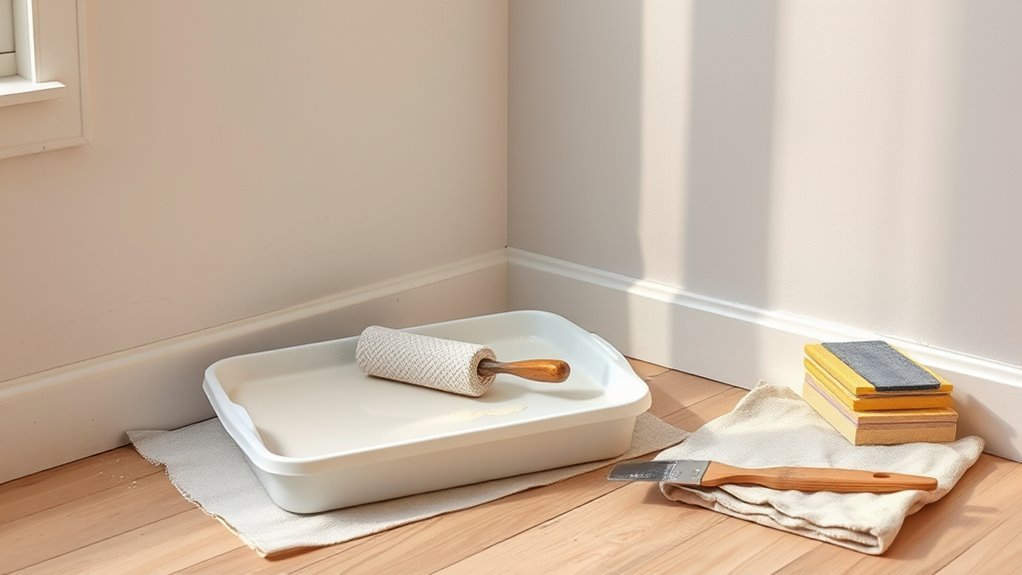
You’ll want to prime before painting when walls are bare, stained, patched, or when you’re making a big color change.
Priming improves adhesion, hides imperfections, and can save you paint and time.
Choose a primer type—latex for general use, oil-based for stains and tannin bleed, or specialty primers for mold or metal—based on the job.
When To Prime
If your wall has never been painted, has stains, or shows uneven patches, prime it before you apply color. Primer creates a uniform surface that helps paint adhere, hide blemishes, and reduce the number of topcoats you’ll need.
You should prime when:
- Covering raw drywall, new plaster, or patched areas — use appropriate priming techniques for porosity.
- Switching from dark to light colors or after stain removal — primer benefits include blocking bleed-through.
- Painting high-moisture rooms or surfaces with previous gloss — prime to improve adhesion and durability.
Prime in dry conditions, follow manufacturer dry times, and sand lightly before topcoats.
Benefits Of Priming
Because primer evens out surface porosity, seals stains, and improves adhesion, it makes your topcoat look better and last longer. You’ll notice fewer coats needed, more even color, and reduced peeling — core primer benefits that save time and money.
Priming also blocks tannin bleed and hides patchy repairs, so your finish reads uniform. Use proper priming techniques: clean and sand first, spot-prime stains, cut in edges, then roll for coverage.
For problem surfaces, apply a targeted coat rather than skipping priming. These steps help your paint perform as planned and extend the life of your work.
Primer Types Explained
When deciding whether to prime, match the primer to the wall’s condition and the finish you want—stain-blocking primers for tannin or water marks, high-build primers for patched or textured surfaces, and bonding primers for slick or previously painted glossy walls.
You’ll pick oil based primer or latex primer based on durability and cleanup; shellac primer works for severe stains; stain blocking primer prevents bleed-through.
Consider a tinted primer to reduce topcoat coats, an eco friendly primer for low VOC, and specialty primer for metal or concrete. Choose bonding primer for smooth surfaces.
Follow instructions and dry times for best adhesion.
- Prep
- Prime
- Paint
Wall-Prep Checklist (Step-by-Step)
Before you open a paint can, get the surface ready with a quick, systematic checklist so you won’t run into problems mid-job.
Start with wall cleaning: dust, grease, and grime compromise adhesion, so wipe walls with a mild detergent solution and rinse.
Do a surface inspection for stains, loose paint, or mold—mark trouble spots.
Remove outlet covers and mask trim, windows, and floors with tape and drop cloths.
Sand glossy areas lightly to promote bonding.
Guarantee good ventilation and comfortable lighting to spot imperfections.
Gather tools and materials so you can work steadily without interruptions.
Repair Holes, Cracks, and Texture
Patch holes, fill cracks, and match texture so your finish looks seamless.
Begin with a wall assessment to find damage and prioritize repairs. Practice basic repair techniques to restore wall integrity and improve paint adhesion. Focus on surface preparation before you paint.
- Use proper hole patching for small to medium damage, and apply compound to stabilize edges.
- For crack filling, widen hairline cracks slightly, insert filler, and smooth for durability.
- For texture matching, feather compound and replicate patterns so the repaired area blends.
These steps guarantee lasting results and a professional-looking painted wall.
Sanding and Patching Tools to Use

You’ll want a handful of reliable sanding and patching tools to get smooth, durable repairs: a variety of sandpapers (coarse to fine), a sanding block or palm sander, putty knives in multiple sizes, a hawk or mud pan, a good-quality joint compound or spackle, and a utility knife for cutting and scoring.
Select appropriate patching materials for the hole size—spackle for small dings, joint compound for wider repairs, mesh tape for cracks.
Use progressive sanding techniques: start coarse to level, finish fine for feathered edges.
Keep dust control tools like a vacuum brush and wear a mask while sanding.
Cleaning and Degreasing Before Painting
Before you paint, wipe the wall to remove dust so the finish will stick evenly.
If you spot grease or stains, use a degreaser or a trisodium phosphate substitute and rinse well.
Let the surface dry completely before you start priming or painting.
Remove Dust First
If dust and grime aren’t removed, paint won’t adhere properly and the finish will look uneven; you need to clear surfaces before priming.
Use simple dust removal techniques and dust prevention methods so paint lasts longer.
- Vacuum with a brush attachment to lift loose particles from walls and corners.
- Wipe with a slightly damp microfiber cloth in overlapping strokes; change cloths when dirty.
- Use tack cloths for final passes to pick up fine dust before painting.
Work top to bottom, allow surfaces to fully dry, and keep windows or fans running to prevent new dust settling.
Degrease Stains Properly
Once dust is gone, tackle grease and stains so paint will stick and look even. You’ll want to identify the stain type—kitchen grease, smoke, or food marks—then choose an appropriate cleaning solution.
Mix a mild detergent for general grime, degreaser for oily spots, or a trisodium phosphate substitute for stubborn residue. Test a small area first. Scrub gently with a sponge, rinse with clean water, and let dry fully.
For persistent stains, use targeted stain removal products and repeat cleaning before priming. Proper degreasing prevents bleed-through and guarantees a smooth, durable finish once you paint.
Essential Tools: Rollers, Brushes, Trays
Rollers, brushes, and trays form the backbone of any wall-painting job, and picking the right ones makes the work faster and neater.
You’ll weigh rollers vs brushes depending on surface area and edges: use a quality roller for flats and a sash brush for corners and trim.
Choose tray types that fit your roller size and cleanup preferences—disposable liners speed work, metal trays last.
Match tray size to your roller and cleanup needs—use disposable liners for speed, metal trays for durability.
Keep edges crisp by pairing a 2–3″ angled brush with a smaller trim brush.
Clean tools promptly, store brushes upright, and replace worn rollers to maintain finish quality.
Choosing Roller Nap for Textured Walls
Pick the roller nap based on how deep and irregular the texture is: short naps (1/4″–3/16″) suit smooth or lightly orange-peel walls, medium naps (3/8″–1/2″) handle slight texture, and long naps (3/4″–1″) reach into heavy textures like popcorn or deep stucco.
For textured surfaces, match nap length to wall texture to control paint absorption and coverage efficiency. Choose between roller types—synthetic for latex, natural for oil—during roller selection.
Thicker naps hold more paint for valleys, improving coverage and reducing passes. Test a small area to confirm paint application evenness and adjust nap length if needed.
Which Brush Shapes to Buy and Why
You’ll want a small set of brush shapes to handle every job: flat brushes for fast coverage, angled brushes for clean trim lines, and round brushes for tight detail work.
Choose sizes that match the area you’re painting so you won’t struggle with control or efficiency.
With those three shapes on hand, you’ll cover walls, edges, and corners without extra fuss.
Flat Brushes For Coverage
When you want fast, even coverage on a wall, flat brushes are your go-to tool because their straight edge and full-bodied bristles lay paint smoothly and minimize visible strokes.
You’ll choose flat brush types based on bristle material and width: synthetic for latex, natural for oil, narrow for edges, wide for fields.
Use proper coverage techniques: load the brush, cut in, then fill with long, even strokes. Practice pressure control to avoid ridges.
- Synthetic 2″–3″ for general walls
- Natural bristle for oil-based paints
- Wide 3.5″–4″ for large areas
Angled Brushes For Trim
1. You’ll want at least one 2–2.5-inch angled sash brush and a smaller 1–1.5-inch version for tight spots.
Angled brush techniques let you cut clean lines along baseboards, window frames, and door casings with controlled strokes and reduced bleed. Choose synthetic bristles for latex and natural for oil; a comfortable handle and firm ferrule improve control.
Use the larger brush for long straight runs and the smaller for corners and narrow trim.
Trim painting tips: load sparingly, start away from the edge, then pull toward it, and maintain a steady wrist for crisp, professional results.
Round Brushes For Detail
A round brush lets you tackle tight details and delicate edges with precision that flat or angled brushes can’t match. You’ll use them for trim corners, small patterns, and touch-ups where control matters.
Choose synthetic rounds for latex, natural hair for oil or varnish, and varied sizes for versatility. Remember detail techniques: light pressure, rotation for tapered strokes, and loading just enough paint.
- Small (0–4) for fine lines and accents.
- Medium (6–10) for edges and small panels.
- Large (12+) for broader detail work and blending.
Follow brush maintenance: clean thoroughly, reshape, and store upright to prolong life.
Painter’s Tape: When and How to Use It
Painter’s tape helps you get crisp, professional-looking edges without slowing the job down—use it to protect trim, ceilings, and fixtures or to create clean lines for accent walls.
Before applying tape, finish surface preparation: clean, dry, and smooth edges so tape adheres properly. Use tape techniques like pressing firmly along seams and tearing at a 45° angle for neat ends.
Paint up to the tape edge, then remove it while paint’s tacky to avoid peeling. For curved or textured areas, use flexible frog tape or score the tape with a blade after painting for the sharpest line.
Drop Cloths and Floor Protection Options
You’ll want to choose the right floor protection before you start rolling—canvas drop cloths are durable, absorbent, and reusable for messy jobs.
For quick, lightweight coverage or to protect furniture, plastic sheeting works well and can be taped down to seal edges.
Compare durability, slip risk, and cleanup needs to pick the best option for your space.
Canvas Drop Cloths
If you want reliable floor and furniture protection that won’t shift or tear, canvas drop cloths are the go-to choice for most painting jobs. You’ll get durable coverage, absorbency for spills, and textured grip so tools don’t slide.
For canvas care, shake out debris, launder before storage, and air dry to avoid mildew. Choose weight and size to fit your room.
- Heavy cotton: best for high-traffic areas and repeated use.
- Pre-washed: softer, less likely to bleed dye.
- Tape-friendly edges: secure without tearing or leaving residue.
Use drop cloths to work confidently and cleanly.
Plastic Sheeting Options
Plastic sheeting gives you an inexpensive, lightweight barrier for protecting floors, furniture, and fixtures during painting projects. You’ll choose from plastic sheeting types like polyethylene rolls, pre-cut sheets, or reinforced film.
Thinner sheets are cheap and usable for short jobs; thicker options resist tears and wet paint. Consider plastic sheeting thickness measured in mils—4–6 mil works for basic protection, 10–12 mil for heavy-duty coverage.
Use painter’s tape to secure edges and overlap seams, and add cardboard or ram boards in high-traffic areas. Dispose responsibly or reuse intact sheets for future touch-ups to save money.
Ladder, PPE, and Jobsite Safety
Three essentials keep a paint job safe and efficient: a sturdy ladder, proper PPE, and clear jobsite practices.
You’ll follow ladder safety and ladder maintenance routines, wear PPE essentials like gloves, goggles, and a mask, and enforce jobsite precautions to prevent accidents.
Keep fall protection in mind and tidy your area for workspace organization.
- Inspect ladder: check hinges, feet, and load rating.
- Wear PPE: gloves, eye protection, respirator as needed.
- Enforce site rules: no clutter, stable footing, one person on ladder at a time.
How to Set Up Your Workspace
Start by covering floors and furniture with drop cloths or plastic to catch paint splatters and protect surfaces.
Keep your brushes, rollers, trays, and tape within arm’s reach on a small table or tool caddy. That way you’ll work faster and avoid tracking paint around the room.
Protect Floors And Furniture
Before you dip a brush, clear the area and give your floors and furniture solid protection so paint mistakes stay off what you want to keep clean.
Good surface preparation and workspace organization cut cleanup time.
Lay heavy-duty floor coverings—drop cloths or plastic sheeting—taped at edges to prevent slips. Use furniture protection like moving blankets or plastic, and move small items out entirely.
Create a protected perimeter around trim and vents.
Checklist:
- Secure floor coverings, tape seams.
- Wrap or relocate furniture protection items.
- Remove or cover trim and fixtures to keep paint off them.
Organize Tools Nearby
Set up a compact work zone so your tools are within arm’s reach and you don’t waste time hunting for supplies.
Place your roller tray, brushes, tape, drop cloth clips, and a small bucket on a sturdy table or portable caddy. Use a tool belt or wall-mounted hooks for frequently used items to speed movement.
Group similar items together to improve tool organization and label containers if helpful. Keep a damp cloth and trash bag handy for quick cleanups.
Position lighting and an extra tray within reach to maintain workspace efficiency. Take a minute to tidy every hour.
Cutting In: Brush Technique for Clean Edges
When you want crisp, professional-looking edges, cutting in with a brush is the skill that gets you there; it’s about steady hands, the right brush, and a confident stroke.
You’ll focus on brush angles and brush pressure to control paint flow and achieve edge precision. Aim for clean strokes and edge definition; technique practice builds muscle memory.
Follow these steps:
- Load the brush moderately, tap excess, hold at a 45° angle and cut a steady line.
- Use short, controlled strokes away from the wet edge to refine the line.
- Smooth with light pressure for a final crisp result.
Rolling Technique to Avoid Lap Marks
If you want a smooth, uniform finish, roll while keeping a wet edge and working in small, overlapping sections. Use a quality roller, load it evenly, and start with an L or W pattern; then fill in without pressing too hard. Maintain consistent pressure and pace so your rolling technique prevents lap marks. Work one wall at a time, blending each new pass into the wet edge before it dries. Check light angles to spot thin areas. Clean up drips immediately and let coats dry fully before recoating to avoid reactivating edges and creating visible lap marks.
| Tool | Purpose |
|---|---|
| Roller | Even coverage |
| Tray | Control load |
| Extension | Reach high areas |
Keeping Sheen and Color Consistent
Make sure you match the sheen level of your touch-up paint to the existing finish so light reflects the same way across the wall.
When you apply new paint, feather the edges and work wet-to-wet to blend it into the old surface.
Test a small area first so color and gloss look uniform before you finish the whole wall.
Match Sheen Levels
1 simple step to keep a freshly painted wall from looking patchy is to match the paint sheen as well as the color; mismatched sheens catch light differently and make even identical hues appear off.
You’ll check sheen variations and do sheen comparisons before buying. Follow sheen recommendations for room use, note sheen applications (trim vs. wall), and consider sheen longevity and sheen maintenance.
- Test small swatches under room light to see finish differences.
- Use the same sheen from the same paint line to avoid texture shifts.
- Clean and prep surfaces so the chosen sheen performs evenly over time.
Blend New Paint
Now that you’ve matched sheen, you’ll want to blend new paint so repaired or touched-up areas disappear completely; even perfect color and sheen can look off if brush strokes or layering show.
Use thin coats, feathering edges outward with a damp brush or roller to merge wet paint into existing finish. Work quickly so overlap is wet-on-wet.
For larger spots, repaint the whole wall section between natural breaks. If shade varies, adjust with small amounts during paint mixing, testing swatches on scrap.
Practice consistent stroke direction and light sanding between coats for seamless color blending and invisible repairs.
Drying Times and Recoating Guidance
Because paint dries in stages—surface set, tack-free, then fully cured—you’ll want to wait the manufacturer’s recommended recoat time before applying another coat.
Use proper drying techniques: control temperature, humidity, and airflow so recoat timing matches the label. Check tackiness with a fingertip; if paint lifts, wait longer.
- Wait label time (often 2–4 hours latex, longer for oil).
- Speed drying with fans and dehumidifiers, but avoid heat blasts that cause cracking.
- Allow full cure (days to weeks) before heavy use or cleaning.
Follow recoat timing to avoid peeling, visible seams, or uneven sheen.
Painting Around Trim, Outlets, and Fixtures
Before you start rolling, protect adjacent surfaces with painter’s tape and drop cloths so trim, floors, and fixtures stay clean.
When painting around outlets and switches, turn off power, remove plates, and use a small brush or angled trim brush for crisp edges.
Take your time at corners and gaps—careful cutting in around obstacles gives the neatest results.
Protecting Adjacent Surfaces
When you’re painting a wall, take a few minutes to protect trim, outlets, and fixtures so your clean lines stay clean and you avoid tedious touch-ups later.
Use proper tape techniques during surface preparation: clean surfaces, sand glossy trim lightly, and apply painter’s tape with firm pressure. Cover outlets and fixtures with small plastic bags or outlet covers. Lay drop cloths to catch drips.
- Tape edges: seal tape against trim for crisp lines.
- Mask fixtures: protect light switches, plates, and hardware.
- Protect floor: fold and tape drop cloths to prevent movement.
Check tape before painting and remove it while paint’s tacky.
Painting Around Obstacles
Now that the adjacent surfaces are taped and protected, you can focus on painting precisely around trim, outlets, and fixtures without risking drips or smudges.
Work with a small angled brush for crisp edges along trim; use a steady hand and short strokes. Turn off power and remove outlet covers, or paint around plates with a thin brush if you prefer.
For light fixtures, use painter’s tape and plastic sheeting. Practice obstacle navigation by cutting in slowly and using creative solutions like narrow foam rollers for tight spots.
Clean spills immediately and inspect edges after drying for touch-ups.
Painting an Accent Wall or Textured Wall
A single accent or textured wall can transform a room, so plan your approach to highlight its character without overwhelming the space.
You’ll choose between accent wall techniques and textured wall options based on light, furniture, and mood.
Prep carefully: clean, sand, and prime porous textures. Use painter’s tape to protect trim and adjacent walls.
Apply paint with appropriate tools — rollers for flat surfaces, stippling brushes or specialty rollers for texture.
- Pick color and finish that complement the room.
- Test paint on a small section first.
- Use thin, multiple coats for even coverage.
Specialty: Murals, Stripes, and Patterns
If you want a bold focal point, murals, stripes, and patterned walls let you personalize a room beyond a single color.
Start by planning scale, colors, and layout; sketch designs and measure precisely. For murals, study mural techniques like grid transfer, projection, and layering glaze to build depth.
For stripes, use level lines and quality painter’s tape; decide between equal-width or varied bands.
For patterns, try stencils, repeat motifs, or hand-drawn elements and test samples on cardboard first.
Gather brushes, rollers, fine liners, drop cloths, and appropriate primers.
Work slowly, step back often, and let coatings dry between layers.
Common Beginner Mistakes to Avoid
Bold designs like murals and stripes amp up a room, but they also raise the stakes for common beginner mistakes that can ruin the effect.
You’ll want to avoid rushed prep, poor color selection, and ignoring wall texture. Be methodical: clean, sand, and prime before you paint.
- Skipping prep: dirt and uneven wall texture stop paint from adhering and show flaws.
- Bad color selection: test swatches in different light; a hue can read very differently.
- Cheap tools and technique: low-quality brushes, wrong roller nap, or inconsistent strokes create messy edges and visible flaws.
Troubleshooting: Streaks, Bubbles, Peeling
Three common problems—streaks, bubbles, and peeling—usually stem from prep or technique errors, and you can fix or prevent each with the right steps.
For streak prevention, use quality rollers, maintain a wet edge, and thin heavy paint as directed.
For bubble remedies, pop trapped bubbles with a pin, smooth and recoat, and avoid painting in direct sun to reduce heat-created air pockets.
Understand peeling causes: poor surface cleaning, adhesion issues, or moisture effects from leaks.
Peeling often results from poor cleaning, bad adhesion, or moisture—check surfaces, fix leaks, and prime properly.
Address texture solutions by sanding rough spots and using proper primer.
Proper prep and environment prevent most failures.
Touch-Up Tips to Keep Paint Looking New
Once you’ve fixed streaks, bubbles, and peeling, you’ll want to keep the finish looking fresh with simple touch-up techniques.
Keep a small jar of your paint and the original sheen handy for quick fixes. Match texture by using the same brush or roller nap. For best paint maintenance, spot-clean marks gently before touching up.
- Wipe and dry the area, sand lightly, then apply thin coats.
- Feather edges so repairs blend; let each coat cure fully.
- Store a labeled sample and record color/mix details for future touch up techniques.
How to Clean and Store Tools
After you finish painting, clean your brushes, rollers, and trays promptly so dried paint doesn’t ruin them—flush water-based paint with warm, soapy water and use mineral spirits for oil-based products.
Rinse until water runs clear, spin or shake excess, and reshape bristles. Dry tools flat or hang to prevent misshaping.
For rollers, remove nap and store covers labeled for future use.
Perform regular tool maintenance: inspect ferrules, replace bent scrapers, and lubricate moving parts on edgers.
Store everything in a cool, dry area away from direct sunlight. Use sealed containers or pegboards for safe storage and easy access.
Storing and Using Leftover Paint Safely
When you finish a project, don’t toss leftover paint—store it properly so you can reuse it safely and avoid waste. Seal cans tightly, label with color and date, and keep them upright in a cool, dry place away from heat or direct sun.
When a project ends, store leftover paint properly—seal, label, and keep cans upright in a cool, dry spot.
Follow these paint safety tips to prevent spills and fumes: use gloves, ventilate the area, and keep children and pets away.
- Tighten lids and add plastic wrap under the lid.
- Transfer small amounts to airtight jars for easy use.
- Dispose of unusable paint at a hazardous-waste site per local rules.
Low-VOC and Eco-Friendly Paint Choices
If you’re storing paint responsibly, it’s also worth choosing low-VOC and eco-friendly options for future projects to reduce fumes and environmental impact.
You’ll breathe easier and protect sensitive household members by picking paints labeled low-VOC or zero-VOC. Look for brands that list eco friendly pigments and use sustainable materials in their formulations.
Check for third-party certifications like Green Seal or EPA Safer Choice, and read ingredient lists when possible.
Natural options—milk, clay, or lime paints—can work well for some surfaces. Test a small area first to confirm coverage and finish before committing to a whole room.
Budgeting: Where to Save or Splurge
While you can skimp on some supplies, prioritize spending on a quality primer and the paint itself since they determine the final look and durability.
Skimp where you must, but invest in quality primer and paint—they determine finish and longevity.
You’ll want budget friendly options for brushes, rollers, and tape, but don’t compromise on adhesion or pigment.
Splurge wisely on high-coverage paint to cut coats and time. Consider these choices:
- Brushes/rollers: buy mid-range for good nap and shedding resistance.
- Primer and paint: invest in high-quality products to improve finish and longevity.
- Prep and tape: choose decent drop cloths and painter’s tape to avoid costly touch-ups.
When to Hire a Pro Instead of DIY
Because some jobs demand expertise or time you don’t have, hire a pro when the project risks structural damage, requires specialized finishes, or will consume more hours than you can spare.
You should call professional painters for high ceilings, textured walls, lead paint, mold remediation, or intricate trim work.
Factor budget considerations against your time, safety, and finish quality—DIY may save money but cost more if mistakes happen.
Get written quotes, check references, and confirm warranties.
If the timeline is tight or the scope exceeds your skills, hiring pros prevents costly rework and delivers a reliable, durable result.
How to Choose Colors for Size and Mood
How do you pick a color that makes a room feel both spacious and welcoming? Use color psychology to guide mood influence without ignoring personal preference.
Consider room size and light effects: pale hues expand, warm tones invite. Weigh color combinations for balance and check seasonal trends if you want updates. Remember cultural meanings can shift perception.
Consider room size and light: pale hues broaden, warm tones invite; balance combinations and note shifting cultural meanings.
- Test samples on different walls to see light effects across day.
- Choose dominant and accent colors for mood influence and contrast.
- Prioritize practical finishes, then tweak by personal preference and brief trend cues.
Time Estimates for Each Project Stage
When you plan a paint project, break the work into clear stages—prep, priming, painting, drying, and cleanup—and assign realistic time blocks to each so you can schedule around daily life. You’ll estimate prep (1–3 hrs), priming (1–2 hrs plus dry time), painting (2–6 hrs per coat), drying (2–24 hrs depending on paint), and cleanup (30–90 mins). Good time management keeps the project timeline realistic and reduces stress.
| Stage | Typical Duration |
|---|---|
| Prep | 1–3 hours |
| Painting | 2–6 hours per coat |
| Drying/Cleanup | 2–24 hours / 30–90 mins |
Final Quality Checklist Before Finishing
Before you call the job done, walk the room with a checklist to catch missed spots, drips, or uneven coverage so the finished result looks professional.
Before declaring the job finished, walk the room with a checklist to catch missed spots.
You’ll do a quick quality assurance sweep, noting areas that need touch-ups and planning final touches. Focus on edges, corners, and uniform sheen. Use good light and step back often.
- Inspect for missed spots, drips, and roller lines; mark them.
- Touch up edges and trim with a steady brush; blend into surrounding paint.
- Confirm consistent color and sheen across walls; correct any variance before cleaning up.
Frequently Asked Questions
Can I Paint Over Wallpaper Without Removing It First?
Yes — you can paint over wallpaper if it’s firmly adhered and well prepped. You’ll need proper wall preparation: clean, repair seams, sand, prime with an appropriate sealer. Choose paint types that are durable and non-penetrating.
How Do I Handle Mold or Mildew on Walls Before Painting?
You should remove mold using a bleach or vinegar solution, scrub, dry thoroughly, and repair damaged areas; then prime and paint with a mold-resistant product to guarantee mildew prevention and proper long-term mold removal results.
Will Indoor Humidity Affect Paint Adhesion Long-Term?
Yes — you’ll face trouble long-term: like a slow tide eroding cliffs, high humidity levels can weaken adhesion, especially with water-based paint types; controlling moisture and choosing compatible primers and paints prevents peeling and mold recurrence.
Are Magnetic or Chalkboard Paints Safe for Bedrooms?
Yes — you can use magnetic or chalkboard paints in bedrooms; they’re generally safe when cured and low-VOC. You’ll enjoy magnetic paint benefits for displays, and chalkboard paint uses for creativity, notes, and kid-friendly walls.
How Do I Dispose of Old Paint Cans Legally?
Better safe than sorry: you’ll check local paint recycling programs and hazardous waste collection events, empty cans cured per guidelines, seal partially full cans for drop-off, never pour down drains, and follow municipal disposal rules.
Conclusion
You’re ready to refresh a room: roll, rinse, and relax. With simple supplies, smart shades, and strategic steps, you’ll save time and avoid slip-ups. Pick paint that performs, finishes that flatter, and quantities that cut corners. If the job’s too big, call a pro. Take your time, trust your tools, and tidy thoroughly for truly terrific results. Small prep pays; smooth strokes produce a polished, pleasing place you’ll proudly paint again.
