
What Is the Best Exterior Paint for Stucco? Guide
You should use a breathable, flexible 100% acrylic-latex exterior paint with a masonry primer because it bonds well, lets moisture escape, resists cracking and mildew, and preserves stucco texture. Pick a flat or low-sheen finish to hide irregularities. In damp climates prioritize vapor-permeable, mold-resistant formulations; in hot, sun-exposed areas choose UV-stable acrylics. Repair and clean before you paint, and follow maintenance tips—keep going to learn specific product and climate recommendations.
Quick Answer: Best Exterior Paint for Stucco
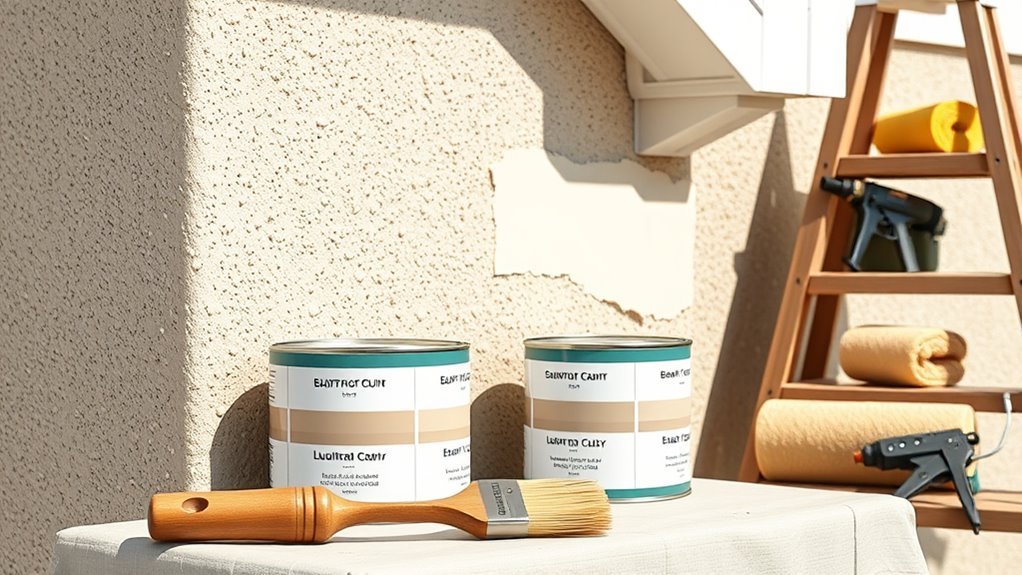
When you need a quick answer, acrylic latex paint is the best choice for stucco because it bonds well, breathes to release moisture, and resists cracking and mildew.
For quick results, use 100% acrylic latex—it bonds, breathes, and resists cracking and mildew on stucco.
You’ll pick a flat or low-sheen finish to hide texture while allowing vapor transmission.
Prep matters: clean, repair cracks, and use a masonry primer so your coat lasts.
For durability, choose 100% acrylic formulas rated for exterior masonry.
Follow stucco maintenance tips like annual inspections and gentle washing.
Use color selection strategies that account for sunlight, neighborhood harmony, and heat absorption to keep your exterior both attractive and long-lasting.
Who This Guide Helps and Why It Matters
Because stucco behaves differently than wood or vinyl, this guide helps homeowners, DIYers, and contractors who want paint that lasts and protects—whether you’re repainting a bungalow, fixing hairline cracks, or choosing colors for a sun‑baked facade.
You’ll get clear homeowner benefits: longer lifespan, fewer repairs, and smarter maintenance tips. Learn practical painting techniques and surface considerations so your coating bonds and breathes.
We’ll weigh color psychology for curb appeal, environmental impact of low‑VOCs, and straightforward cost analysis to fit budgets. Follow application timing advice to avoid failures and keep results durable, attractive, and low‑maintenance.
Why Stucco Needs Special Paint
You’ll want paint that lets stucco breathe so trapped moisture can escape instead of causing damage.
Choose flexible coatings that move with the substrate to prevent cracking and peeling.
And pick formulations with mold- and mildew-resistant properties to protect porous surfaces in damp conditions.
Breathability Prevents Moisture Trapping
Although stucco’s porous texture looks solid, it actually breathes—and if you seal it with the wrong paint, trapped moisture can cause peeling, efflorescence, and structural damage.
You need breathable paints or breathable primers to allow vapor to escape while shedding liquid water. That balance supports proper moisture management and improves paint longevity by preventing blistering and delamination.
Choose formulations labeled vapor-permeable or masonry-grade; they let internal dampness migrate out without absorbing rain. When you prioritize breathability, you reduce hidden rot and salt deposits and keep finishes intact longer.
Always confirm vapor-permeability ratings before applying to stucco.
Flexible Coatings Resist Cracking
Breathable paints help moisture escape, but they won’t stop the hairline cracks that form as stucco expands and contracts with temperature and humidity changes.
You need flexible coatings that bend with movement, offering flexibility benefits that prevent paint from splitting and exposing substrate. That flexibility also enhances coating durability by reducing stress points and extending service life.
Choose elastomeric or acrylic-latex blends designed for stucco movement. Apply per manufacturer specs for proper film thickness and adhesion.
Consider these practical advantages:
- Fills and bridges small cracks
- Absorbs thermal and moisture-induced movement
- Minimizes repaint frequency
- Preserves substrate protection and appearance
Mold And Mildew Resistance
Because stucco’s textured surface and porous nature trap moisture and organic debris, mold and mildew find plenty of places to take hold unless you use a paint formulated to resist them. You’ll want mildew deterrents and coatings with algae resistance so spores can’t colonize. Choose breathable, water-shedding finishes with biocide additives, and clean surfaces before painting. Proper prep and ventilation reduce moisture buildup. Regular inspections catch early growth. Here’s a quick comparison to guide choices:
| Feature | Benefit |
|---|---|
| Biocide additives | Kill spores |
| Breathability | Prevents trapped moisture |
| Water-shedding finish | Limits wetness |
| Easy-clean surface | Removes growth |
Stucco Texture and Paint Choice
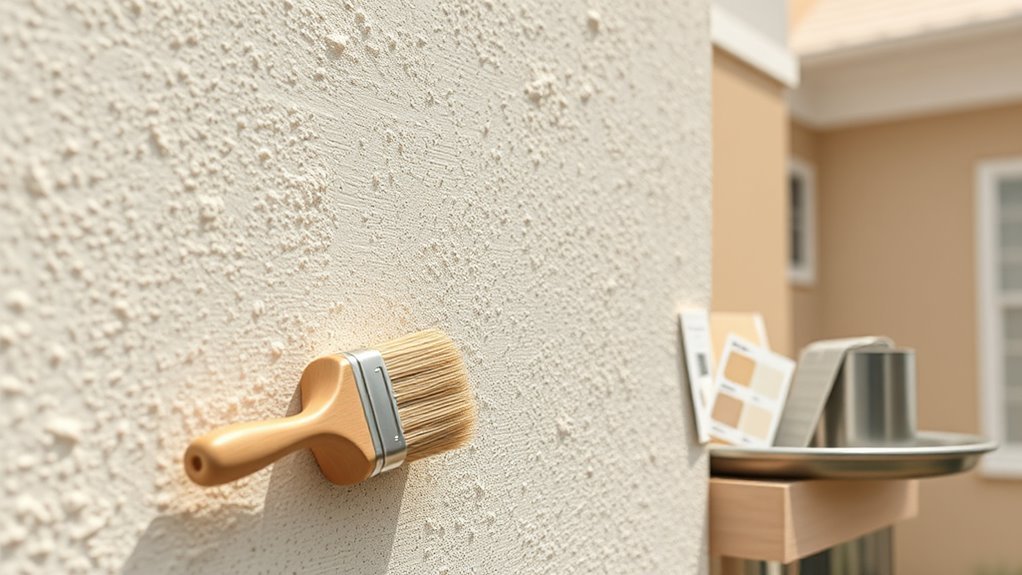
You’ll want to match the paint’s finish and viscosity to your stucco’s texture so it fills crevices without clogging the surface.
Consider whether brushes, rollers, or a sprayer will give the coverage and penetration your texture requires.
Choosing the right tool and paint together makes the job faster and the finish more durable.
Match Paint To Texture
When selecting paint for stucco, match the finish and formulation to the texture so the coating adheres properly and highlights the surface rather than obscuring it.
You’ll want paint texture and texture compatibility to guide choices: smooth stucco takes low‑sheen acrylics, coarse sprays need higher build elastomeric options.
Consider porosity and relief, then pick breathable, flexible coatings that resist cracking.
- Smooth: low‑sheen acrylics for even coverage and durability.
- Lightly textured: medium‑build acrylics for balanced fill.
- Heavily textured: high‑build or elastomeric paints to bridge crevices.
- Porous stucco: breathable formulations to avoid trapped moisture.
Consider Application Tools
1 simple rule: match your application tools to the stucco’s texture and the paint’s build so you get even coverage without clogging or overspray.
You’ll choose paint brushes for edges, roller types with nap suited to texture matching, or sprayer techniques for deep crevices.
Prioritize surface preparation, removing dust and repairs before you begin.
Gauge paint thickness and adjust sprayer settings or roller pressure.
Plan application timing around temperature and drying times to avoid sagging.
Work in thin coat layering, letting each coat dry fully.
Keep clean tools to preserve finish and prevent contamination.
Climate Effects on Stucco Paint Performance
Because stucco breathes and moves with temperature swings, your paint choice has to handle moisture, UV, and thermal expansion without failing.
You’ll match paint to climate zones and seasonal changes: colder areas need flexible formulas for temperature fluctuations, while hot regions demand high UV resistance.
Consider humidity levels and precipitation effects—coatings with strong weather resistance prevent blistering and mildew.
Picking the right product extends paint lifespan and reduces maintenance.
Test finishes for adhesion and flexibility in your local conditions.
Monitor local forecasts and choose formulations rated for your zone to balance protection, appearance, and durability.
- Flexibility for temperature swings
- UV exposure resistance
- Moisture and humidity defense
- Precipitation effects management
Breathability: Vapor Permeability Explained
Think of breathability as how easily moisture vapor can pass through paint and the stucco beneath it; you want coatings that let trapped moisture escape without letting liquid water in.
You’ll look for high vapor permeability ratings so internal moisture won’t accumulate and cause blistering or staining. Good moisture management balances drying and weather resistance: breathable paints reduce freeze-thaw damage and mold risk while still shedding rain.
When choosing, check technical data for perm ratings or vapor transmission tests, match coating porosity to your substrate, and remember proper surface prep and substrate repair amplify breathability benefits and long-term performance.
Flexibility: Elastomeric vs. Standard Paints
You’ll want to evaluate how much movement your stucco goes through before choosing paint.
Elastomeric coatings can stretch and bridge hairline cracks, while standard paints have much lower movement tolerance.
That difference affects durability and how often you’ll need to touch up or repaint.
Elastomeric Paint Stretching
When stucco shifts or hairline cracks form, elastomeric paints stretch to bridge gaps that standard acrylics can’t, letting your exterior move without splitting the coating.
You get elastomeric benefits like superior crack-sealing and enhanced paint longevity, so your walls stay protected through temperature swings and minor settling.
Apply properly and the flexible membrane accommodates movement rather than failing.
- Bridges hairline cracks to prevent moisture intrusion.
- Expands and contracts with temperature changes.
- Reduces need for frequent repairs and repainting.
- Adds a thicker protective layer compared with typical exterior paints.
Standard Paint Movement Limits
Because exterior surfaces shift with seasons and settling, you want paint that can handle movement without cracking. Standard paints form a rigid paint film with limited movement allowance, so they suit stable stucco but not large cracks. You’ll choose them for durability, color retention, and easier application when movement is minimal. Know limits: small hairline cracks may be fine; active joints need sealant or elastomeric alternatives. Use primer and proper substrate prep to maximize performance. Compare properties quickly:
| Property | Standard Paint |
|---|---|
| Flexibility | Low |
| Movement Allowance | Small |
| Best Use | Stable stucco |
| Repair Need | Moderate |
Elastomeric Coatings: Pros, Cons, Risks for Stucco
Though elastomeric coatings can amazingly seal and bridge hairline cracks, they’re not a one-size-fits-all fix for stucco. You’ll appreciate elastomeric advantages like extreme flexibility and water shedding, which extend surface life.
Yet elastomeric drawbacks include trapping moisture behind poorly cured stucco and hiding structural issues.
- Durability: stretchy film resists cracking and lasts longer than standard paint.
- Breathability risk: some formulations limit vapor escape, causing blistering if applied too soon.
- Maintenance: repairs are easy, but mismatched patches show.
- Cost and prep: higher material cost and strict substrate prep are mandatory.
Mildew and Algae Resistance for Stucco Paint
If your stucco sits in a shaded, humid spot, mildew and algae can quickly discolor and degrade the finish. Choose paints formulated with biocides and mildewcides that actively resist growth.
You’ll want a breathable, water-shedding exterior paint offering proven mildew resistance to prevent staining and surface deterioration. Look for products tested for algae prevention and labeled for high-humidity environments.
Prepare surfaces by cleaning existing growth with a fungicidal wash, repair cracks, and guarantee proper drainage before painting.
Reapply recommended maintenance coats and address persistent infestations promptly to protect texture and lifespan without trapping moisture.
UV Resistance and Color Retention
You’ll want stucco paint that includes high-quality UV stabilizers to slow sun damage and keep the finish intact.
Look for formulations with pigments rated for fade resistance so colors stay true longer.
Choosing both features together gives you durable color retention on sun-exposed walls.
High-Quality UV Stabilizers
Because stucco sits in direct sunlight for years, high-quality UV stabilizers are essential to keep paint from fading and chalking. They help maintain the original color and sheen much longer than unprotected coatings.
You’ll want coatings formulated with high-quality pigments and dedicated UV protection to slow the breakdown of binders and pigments. Choose paints that list stabilizers or lightfast additives on the label, and pair them with proper priming. Maintenance washes extend life.
Consider these priorities when selecting products:
- Stabilizer type and concentration
- Compatibility with stucco breathable systems
- Manufacturer UV test data
- Warranty and expected color retention
Pigment Fade Resistance
UV stabilizers help, but pigment fade resistance determines how well the color itself holds up under sunlight and heat.
You should pick paints formulated with concentrated, lightfast pigments so pigment longevity isn’t an afterthought. High-quality inorganic pigments resist UV breakdown better than many organic dyes, preserving color stability on sun-exposed stucco.
Look for products with published fade-test results or ASTM ratings showing minimal Delta E change over time. Proper surface prep and breathable, UV-resistant binders also support retention, but pigment selection matters most.
Choosing paints with proven pigment longevity gives you truer, longer-lasting exterior color on stucco.
Water Repellency vs. Waterproofing for Stucco
When deciding between water repellency and waterproofing for stucco, know they serve different purposes: repellents shed water while letting vapor escape, whereas waterproofing blocks both liquid and moisture vapor. You’ll choose based on exposure, substrate condition, and ventilation.
Consider these points:
- Water repellency benefits: preserves breathability, reduces staining, and prevents surface wetting without trapping moisture.
- Waterproofing techniques: membranes and heavy coatings stop leaks but can trap vapor if substrate isn’t dry.
- Use repellents where drainage and drying are reliable.
- Use waterproofing for chronic leak sources after fixing underlying issues.
Acrylic Latex Paints: Pros and Cons
If you want a balance of durability, breathability, and ease of application, acrylic latex paints are a go-to choice for stucco: they form a flexible, water-resistant film that lets vapor escape, resist cracking, and clean up with soap and water—making them well suited for most exterior stucco jobs.
You’ll find Acrylic varieties in many sheens and formulations; weigh Environmental impact by choosing low-VOC options.
Follow proper Application techniques: clean, repair, prime porous stucco, and apply with brush, roller, or airless sprayer.
Consider Color selection carefully—darker hues retain heat.
Verify Surface compatibility with primers and existing coatings.
100% (Pure) Acrylic Options Explained
When you choose pure acrylic for stucco, you get top-tier durability and flexibility that resists cracking as the wall moves.
It also breathes well, helping control moisture and preventing trapped dampness that can damage stucco.
Apply it with the right back-rolling and coverage techniques so you get an even, long-lasting finish.
Durability And Flexibility
Because stucco moves with temperature and settling, you’ll want a paint that stays flexible without sacrificing toughness.
Pure acrylics deliver both: they resist cracking, tolerate substrate movement, and hold up to UV and abrasion.
Prioritize proper color selection and thorough surface preparation so the flexible film adheres and wears evenly.
Consider these practical aspects:
- Elasticity — stretches with minor cracks to prevent peeling.
- Toughness — withstands impact and weathering over years.
- Adhesion — bonds well after cleaning and priming.
- Maintenance — easier touch-ups without visible seams.
Choose high-quality acrylics for lasting performance on stucco.
Breathability And Moisture Control
Since stucco traps moisture from both inside and out, you’ll want a paint that breathes as well as it protects. You should choose pure acrylics formulated for moisture management; they let vapor escape while resisting water intrusion.
Breathable coatings prevent blistering, peeling, and trapped damp that causes staining or mold. Pure acrylics balance permeability with durability, so you won’t sacrifice weather resistance.
Look for products labeled vapor-permeable or vapor-open and check moisture vapor transmission rates if available. By prioritizing breathable coatings designed for stucco, you’ll maintain substrate health and reduce moisture-related maintenance without compromising long-term exterior protection.
Application And Coverage Tips
Start by choosing a pure acrylic labeled for stucco and plan your coats around its spread rate and recommended wet film thickness—doing so guarantees you get the advertised coverage and performance.
You’ll prep surfaces, repair cracks, and use primers when specified. Focus on paint application techniques that suit rough textures: thick-nap rollers, airless sprayers, and brush-cutting at edges.
Consider weather—temperature and humidity affect drying and adhesion.
- Clean and repair surfaces for consistent absorption.
- Apply primer where porosity varies.
- Use overlapping passes and maintain wet edge.
- Track coverage considerations: calculated spread rate per coat.
Masonry Paints: Are They Right for Stucco?
Wondering whether masonry paint will protect and beautify your stucco? You’ll find masonry paint types—acrylic, silicone, and lime-modified—offer varying breathability and water resistance.
Choose an option that matches your wall’s porosity and local climate.
For stucco paint application, prep is critical: clean, repair cracks, and use a masonry primer if recommended.
Apply with brush, roller, or sprayer in thin, even coats, allowing full drying between layers.
Masonry paints adhere well and resist efflorescence when chosen correctly, but avoid impermeable, oil-based coatings that trap moisture and can damage stucco over time.
Limewash and Mineral Paints as Alternatives
Although they work differently from modern acrylics, limewash and mineral paints give stucco a breathable, historical finish that many homeowners prefer.
You’ll find these options let moisture pass, reduce blistering, and age gracefully. Consider limewash benefits for a soft, chalky patina that self-renews with reapplication.
Mineral paint advantages include strong adhesion and mineral bonding for longevity on alkaline surfaces. Choose based on exposure, desired look, and maintenance willingness.
- Limewash: breathable, natural, patina develops.
- Mineral paint: durable, chemically bonded, low chalk.
- Prep: clean, repair, guarantee porosity.
- Maintenance: periodic refresh vs. repainting.
Best Paint Sheens for Stucco
One or two coats of the right sheen can make stucco look cleaner and last longer, so pick a finish that balances appearance, durability, and breathability. You’ll want the best finish that resists dirt yet lets moisture escape. Flat hides texture but isn’t as washable. Eggshell offers slight sheen and easier cleaning. Satin boosts durability for trims. Avoid high gloss on stucco; it highlights flaws and traps moisture.
| Sheen | Use |
|---|---|
| Flat | Hides texture |
| Eggshell | Slight sheen, washable |
| Satin | Durable, easy clean |
| Semi-gloss | Accents only |
| Gloss | Not recommended |
How to Read Paint Labels for Stucco
Now that you’ve picked a suitable sheen, the next step is to make sure the paint itself is designed for stucco.
Read paint label symbols and the paint ingredient breakdown to confirm masonry or exterior stucco compatibility. Look for weatherproofing, flexibility, and breathable claims.
- Check symbols indicating UV, rain, and freeze resistance.
- Scan the paint ingredient breakdown for acrylic binders and elastomers.
- Note any mold/mildew inhibitors and surface prep instructions.
- Verify coverage and recommended substrate—stucco or masonry listed.
Use labels to compare formulations quickly; trust clear symbols and an honest ingredient breakdown.
Key Specs to Compare: VOC, MIL, PERM
When you’re comparing paints for stucco, focus on three specs that determine performance: VOC (volatile organic compounds), MIL (film thickness in mils), and PERM (vapor permeability).
When comparing stucco paints, check VOCs, film thickness (mils), and perm ratings to ensure performance and breathability.
You’ll check VOC regulations to limit fumes and environmental impact, choosing low-VOC options when required.
Mil thickness affects paint durability and how well it hides texture—thicker films resist wear but need proper application techniques.
Perm ratings tell you if moisture can escape through stucco; high permeability avoids trapped moisture.
Balance surface compatibility, color choices, and planned maintenance to pick a paint that performs without compromising the wall or local rules.
Top Exterior Paints for Stucco (Brand Roundup)
Now that you’ve compared key specs, let’s look at specific brands that perform well on stucco.
I’ll cover the best acrylic latex options, leading elastomeric choices, and recommended masonry primers so you can match product to surface needs.
You’ll get clear picks for durable, breathable finishes that resist cracking and moisture.
Best Acrylic Latex Options
Acrylic-latex paints are the go-to for most stucco surfaces because they combine flexibility, breathability, and long-lasting color.
You’ll get acrylic benefits like UV resistance and color retention plus latex features such as easy cleanup and good adhesion.
Pick a high-quality exterior acrylic-latex to resist dirt and fading, and guarantee proper surface prep and primer for porous stucco.
Here are recommended options to take into account:
- Benjamin Moore Aura Exterior (high hide, durable finish)
- Sherwin-Williams SuperPaint Exterior (balanced performance, good coverage)
- Behr Premium Plus Ultra Exterior (paint-and-primer, mildew resistant)
- PPG Timeless Exterior (long-lasting gloss and color)
Top Elastomeric Choices
Because stucco expands and contracts with temperature and moisture, elastomeric paints are worth considering if you want superior crack-bridging and waterproofing performance. You’ll pick brands based on durability, flexibility, and breathability. Consider elastomeric benefits like long-term crack sealing and mildew resistance. Use proper application techniques—clean, repair hairline cracks, apply primer where needed, and use thick, even coats with a roller or sprayer. Compare top options below:
| Brand | Coverage | Key Feature |
|---|---|---|
| Brand A | 200–300 sq ft/gal | High elasticity |
| Brand B | 150–250 sq ft/gal | UV resistant |
| Brand C | 180–280 sq ft/gal | Mold inhibitors |
Recommended Masonry Primers
Start with a dedicated masonry primer—it’s the foundation for any durable stucco paint job and helps your topcoat adhere, block stains, and breathe.
You’ll choose among masonry primer types like acrylic, silane/siloxane, and alkali-resistant formulas depending on porosity and exposure.
Focus on proper primer application: clean, repair, and dampen the surface, then apply according to label coverage and dry times.
Consider stain-blocking and vapor-permeable options for best longevity.
- Acrylic masonry primer — good adhesion and breathability.
- Silane/siloxane sealer-primer — repels water, lets vapor pass.
- Alkali-resistant primer — for fresh stucco.
- Stain-blocking primer — for tannins and efflorescence.
Budget Picks vs. Premium Stucco Paints
Budget-conscious homeowners often face a clear trade-off: you can save upfront with budget stucco paints that cover well but may need recoating sooner, or spend more on premium formulations that resist mildew, hide imperfections, and last considerably longer.
You’ll weigh budget options against premium choices based on lifespan, finish, and warranty. If you’re painting a short-term rental or experiment, cheaper paints cut costs.
For high-exposure walls or long-term value, invest in elastomeric or high-build acrylics that reduce maintenance.
Compare data sheets for UV, water resistance, and recommended coats so your decision matches expected performance and maintenance budget.
DIY vs. Professional-Grade Stucco Paint
Thinking of tackling stucco yourself or hiring pros? You’ll weigh DIY tips against professional insights, budget, skill, and time.
DIY saves money if you’re prepared to prep, choose breathable elastomeric or acrylic paint, and master application on textured surfaces.
Pros bring consistent coverage, proper equipment, and warranty-backed results for complex repairs or large jobs.
Consider maintenance: DIY lets you control touch-ups; pros reduce callbacks.
Here’s a quick checklist to decide:
- Skill level: comfort with ladders and texture.
- Scope: small patch vs. whole house.
- Cost: tools, time, and materials.
- Longevity: warranty and finish quality.
How Much Paint Do You Need for Stucco Walls?
Wondering how much paint you’ll need for stucco walls? Measure wall square footage (length × height), subtract windows and doors, then factor texture: rough stucco soaks more.
Check paint coverage on the can—usually stated in square feet per gallon—but expect lower real-world yield on textured surfaces.
Check the can for square feet per gallon—but remember textured stucco reduces real-world coverage.
Use paint calculators online to speed estimates and compare one- versus two-coat needs. For a single coat on moderately rough stucco, plan 200–300 sq ft per gallon; for very rough, drop to 150–200.
Always round up and buy a bit extra for touch-ups and color matching, noting that primers change required quantities.
Surface-Prep Checklist Before Painting Stucco
Before you paint, take these surface-prep steps to guarantee the stucco will accept and hold the finish: clean off dirt and mildew, repair cracks and delamination, remove loose or chalky paint, and mask nearby surfaces.
You’ll follow basic stucco maintenance tips and observe painting safety precautions throughout. Inspect for hairline cracks, crumbling, or efflorescence; note areas needing patching.
Use appropriate patch compounds and allow full cure. Sand glossy spots, scrape loose paint, and prime repaired areas.
Protect plants, windows, and trim with tape and drop cloths. Confirm surfaces are dry before applying primer and paint.
- Inspect and mark defects
- Patch and cure repairs
- Remove loose paint and sand
- Mask and protect surrounding areas
Cleaning and Removing Mildew From Stucco
Start by evaluating the mildew severity so you know whether you need a light scrub or a stronger treatment.
Use safe cleaning solutions—like diluted bleach or a commercial mildew remover—and wear protective gear while you work.
After cleaning, take steps to prevent future growth by improving drainage, trimming vegetation, and applying a mildew-resistant primer or paint.
Assess Mildew Severity
Mildew on stucco can range from light surface spotting to deep, stubborn colonies, so you’ll want to assess how extensive and entrenched the growth is before cleaning.
Start with a quick mildew assessment: note color, texture, spread, and whether stucco feels soft or crumbly. That informs repair needs and future prevention strategies.
Use a checklist to prioritize treatment and safety gear. Consider photographing areas for monitoring.
- Inspect color (black, green, gray)
- Check texture and substrate integrity
- Map spread and proximity to moisture sources
- Record photos and dates for follow-up
Safe Cleaning Solutions
Now that you’ve evaluated the extent and location of the growth, it’s time to pick safe, effective cleaners that won’t harm your stucco or surrounding landscaping.
Use eco friendly options first: biodegradable cleaners or homemade solutions made from natural ingredients.
Mix a vinegar mixture (one part white vinegar to three parts water) for light mildew, or combine baking soda and water into a paste for stubborn spots.
Add a few drops of dish soap to help cling and lift grime.
Test a small area, scrub gently with a soft brush, then rinse.
Reserve pressure washing for durable stucco and low pressure settings.
Prevent Future Growth
If you want to keep mildew from coming back, focus on reducing moisture and blocking spores before they take hold.
You’ll improve mildew prevention and moisture control by addressing sources and using treatments that stop regrowth. Clean affected areas, repair leaks, and apply a mildew-resistant primer or paint when surfaces are dry.
- Inspect and fix roof, gutters, and flashing to prevent water intrusion.
- Trim vegetation to boost airflow and sunlight on stucco surfaces.
- Use breathable, mildew-resistant coatings specified for stucco to allow vapor escape.
- Maintain periodic cleaning and quick spot treatments to catch spores early.
Repairing Stucco Cracks and Holes Before Painting
Start by inspecting the entire surface for hairline cracks, chips, and soft spots you can widen with a putty knife. Addressing these defects before painting prevents moisture intrusion and guarantees the finish will adhere evenly.
Next, clean debris and loose stucco, then use appropriate crack sealing materials—elastomeric sealant for hairline splits, mortar repair for deeper fissures.
For holes, apply patching techniques: dampen area, fill in layers, and level with a trowel. Allow proper cure time between layers.
Finish by sanding high spots and removing dust so paint bonds to a sound, stable substrate.
Best Primers for Stucco and When to Use Them
Before you pick a primer, assess the stucco for porosity, previous coatings, and moisture to know what it needs.
You’ll learn the differences between acrylic, bonding, and masonry primers and which ones match specific conditions.
I’ll also cover when to apply primer relative to repairs and paint for the best adhesion and durability.
Surface Assessment First
While evaluating your stucco’s condition, focus on porosity, existing coatings, and any damage that could affect adhesion. You’ll inspect for crumbling, chalking, or previous paint that alters absorption. Match primer choice to stucco types and planned paint finishes so the topcoat performs well.
- Test porosity with a water droplet to see absorption rate.
- Check for oil-based or alkyd coatings that need stripping.
- Note hairline cracks, delamination, or efflorescence requiring repair.
- Identify texture variations that affect primer coverage and sheen uniformity.
Make repairs first; a clean, stable surface guarantees primers bond and finishes last.
Primer Types Explained
Now that you’ve assessed porosity, coatings, and damage, you can pick the primer that matches your stucco’s condition and the topcoat you plan to use.
For high-porosity or new stucco, use acrylic primers for strong primer adhesion and primer durability; masonry primers work when salts or efflorescence are present.
For previously painted, smooth surfaces, choose stain-blocking or bonding primers.
Consider primer compatibility with elastomeric or latex topcoats to prevent peeling.
Understand primer benefits—sealing, uniform absorption, and enhanced topcoat performance—and primer applications: spot-treat repairs, full-wall sealing, or targeted stain blocking during primer selection.
Application Timing Tips
Because timing affects adhesion and longevity, choose your stucco primer not just for type but for when you’ll apply it relative to repairs, weather, and the topcoat schedule.
You’ll plan around application weather, substrate moisture, and curing windows. Use timing techniques that match product specs and local climate.
- Apply primer after repairs and full cure—no trapped moisture.
- Avoid high humidity or imminent rain; follow recommended temperature ranges.
- Allow specified dry time before caulk or trim work to prevent sealant failure.
- Schedule topcoat within the primer’s recoat window to guarantee proper bonding and uniform finish.
Application Methods: Brush, Roller, Airless Sprayer
Choosing the right application method for stucco—brush, roller, or airless sprayer—makes a big difference in coverage, texture, and finish. You’ll use brush techniques for edges and crevices, enjoy roller advantages for broad, even coverage, and rely on sprayer efficiency for speed on large surfaces. Follow application tips: work wet‑edge, maintain consistent pressure, and overlap passes.
| Method | Best Use | Notes |
|---|---|---|
| Brush | Trim & detail | Precision, slower |
| Roller | Walls & texture | Even coverage |
| Sprayer | Large areas | Fast, needs masking |
Prep, test, and clean equipment after each session.
Recommended Roller Nap and Spray Tip Sizes
After you’ve picked between brush, roller, or sprayer for your stucco, pick the right roller nap and spray tip to match the texture so you’ll get full coverage without overworking the finish.
After choosing brush, roller, or sprayer, match the roller nap or spray tip to the stucco texture for full coverage.
For smooth stucco use a 3/8″ nap; light texture needs 1/2″ to reach shallow pores. Heavier, rough finishes require 3/4″ to 1″ naps so the roller nap holds enough paint.
With sprayers, choose spray tips by size: smaller orifice for thin coatings, larger for thick or textured paints. Match tip size to pressure and paint viscosity to avoid overspray or clogging.
- Smooth — 3/8″ nap
- Light texture — 1/2″ nap
- Heavy texture — 3/4″–1″ nap
- Sprayer — pick spray tips by paint thickness
How Many Paint Coats Does Stucco Need?
When painting stucco, you’ll typically need two coats to get even coverage and durable protection; a primer counts as a separate step and may be required on bare or patched areas.
Start with thorough stucco preparation: clean, repair cracks, and let patches cure before priming. Apply primer only where substrate shows or repairs were made.
For paint application, use a roller and brush or airless sprayer to reach textured surfaces, working top to bottom.
Two topcoats usually provide uniform color and weather resistance; a third coat is rarely needed unless hiding a bold color or severe surface irregularities.
Drying Times and Ideal Weather for Stucco Paint
Because stucco is porous and textured, paint and primer need longer to dry than on smooth surfaces, so plan for longer windows of good weather. You’ll monitor drying conditions closely: humidity, temperature, and wind affect cure time and final adhesion.
Aim for consecutive dry days with moderate temperatures; avoid painting before rain or in intense sun that can skin the surface. Consider morning starts to use diurnal drying without overheating.
Prepare contingency plans for unexpected weather impact, like tarps and flexible scheduling, so you won’t rush coats and compromise durability.
- Check humidity and temp
- Avoid forecasted rain
- Prefer mild, dry days
- Use shade as needed
Painting Mistakes That Ruin Stucco Finishes
Getting the timing and conditions right matters, but even perfect weather won’t save a job marred by common painting mistakes that ruin stucco finishes. You’ll avoid problems by prepping thoroughly: clean, repair cracks, and remove loose coatings before paint application.
Don’t skimp on primer or use interior paints; choose products formulated for stucco maintenance and exterior exposure. Apply paint in thin, even coats to prevent blistering and drips that trap moisture.
Don’t paint over damp surfaces or neglect proper curing times. Finally, avoid overly aggressive power washing post-paint, which can erode texture and undermine long-term stucco maintenance.
How to Test Paint Adhesion on Stucco
Start by inspecting a small, inconspicuous area and perform an adhesion test before repainting stucco. You’ll check for loose paint, dirt, or chalking that weakens adhesion testing on stucco surfaces. Use simple tools and techniques to verify readiness.
Start by testing a small, hidden area—clean, dry, tape, and inspect for loose paint before repainting stucco.
- Clean the spot, let it dry, then press tape firmly and peel sharply—look for removed flakes.
- Score a small X through the paint to reveal substrate; tape test follows.
- Use a putty knife to gently lift edges; note any loose paint or powdering.
- If failure occurs, strip and prime before repainting to guarantee lasting adhesion.
Choosing Stucco Colors: Tips and Trends
How do you pick a stucco color that looks great now and ages well over time? Start by considering color psychology: warm neutrals create comfort, cool grays feel modern, and accent hues add personality.
Test samples on different elevations and view them at multiple times of day. Follow trending palettes for inspiration, but adapt them to your neighborhood and architectural style so the choice feels timeless.
Coordinate trim and metalwork for contrast without overwhelming the primary tone.
Finally, photograph samples and live with them for a week before committing — that small patience prevents costly repainting later.
How Color Affects Heat Absorption and Fading
Picking the right stucco color isn’t just about curb appeal; it also affects how your home handles heat and how long the finish will last.
You’ll use color psychology to choose tones that feel cool or warm, but also consider thermal dynamics: darker hues absorb more solar energy, raising surface temperatures and stressing paint binders. Lighter shades reflect heat, keeping stucco cooler and slowing fading.
Choose UV-resistant, high-quality pigments to prolong color.
Consider these practical points when selecting paint:
- Lighter vs darker heat absorption
- UV stability of pigments
- Finish sheen and heat retention
- Local climate impact on fading
Matching Historic Stucco Colors Accurately
When you’re restoring a historic stucco façade, matching the original color means more than picking a close swatch—it requires studying weathering, pigment composition, and texture so new coatings blend seamlessly with aged surfaces.
You’ll start by researching historic color palettes used in the building’s era and region, then sample underlying layers to identify authentic pigmentation.
Use small test patches and view them at different times and light angles. Match gloss and texture as well as hue so repairs don’t stand out.
Consider breathable, lime-compatible paints that accept mineral pigments, ensuring longevity and visual fidelity without trapping moisture.
Maintenance Schedule for Painted Stucco
Want a simple, reliable calendar for painted stucco upkeep? You’ll stay ahead of problems with routine maintenance tips and seasonal inspections.
Follow this concise schedule to protect finish and substrate.
- Spring: wash surfaces, check for mildew, note hairline cracks.
- Summer: inspect for blistering or fading after heat spells; clean gutters to prevent water splash.
- Fall: clear debris, seal joints and check flashing before winter, document any areas needing attention.
- Winter: perform visual checks after storms, remove ice buildup carefully, plan repairs and repainting in mild weather.
Stick to this rhythm to prolong paint life.
Touch-Up and Spot Repainting Techniques
A few targeted touch-ups each year will keep painted stucco looking uniform and prevent small flaws from becoming bigger problems; you’ll extend the finish and avoid costly full repaints.
For touch up techniques, clean the area, remove loose paint, and let the surface dry. Use matching paint from the original batch or a color-matched sample, applying thin coats with a small brush or foam roller to blend texture.
For spot repainting, feather edges into surrounding paint, allow proper cure time between coats, and check in different light to guarantee color match.
Seal patched stucco with the same breathable exterior paint for durability.
Signs Your Stucco Paint Needs Replacement
You’ll know it’s time to replace stucco paint when you spot cracking or flaking that exposes the underlying surface.
Large peeling areas or paint hanging off in sheets are clear signs the coating has failed.
Also watch for faded or discolored sections that won’t respond to cleaning or touch-ups.
Cracking Or Flaking
When paint starts cracking or flaking off your stucco, it’s a clear signal that the coating’s lost adhesion or flexibility and needs replacing.
You’ll notice hairline fissures or larger flakes exposing substrate; ignore them and moisture will worsen damage. Addressing crack prevention and flaking solutions early saves time and cost.
- Inspect surfaces for patterns of cracking to determine cause and extent.
- Test adhesion by tapping and scraping small areas to gauge flaking severity.
- Prep properly: clean, repair hairline cracks with appropriate caulk or patch, and allow full curing.
- Choose flexible, breathable exterior paint formulated for stucco to prevent recurrence.
Peeling Paint Areas
Peeling paint on stucco is a clear sign that the coating’s failed—flakes and sheets lifting away expose the substrate and let water in, so you should act promptly.
When you spot peeling paint, scrape loose material, inspect for moisture, and test adhesion nearby. If underlying stucco is sound, clean, etch, and use a quality primer before repainting; if compromised, address stucco repairs first.
Use appropriate repair techniques: patch with compatible cementitious filler, allow full cure, then prime.
Choose breathable, elastic exterior paint designed for stucco to prevent recurrence.
Regular inspection and timely repair techniques save larger restoration costs.
Faded Or Discolored
After addressing peeling and any substrate repairs, check for faded or discolored areas—these are often the first visual signs your stucco paint has lost its protective and aesthetic qualities.
You’ll notice faded colors where sun exposure is highest and discolored surfaces from dirt, mildew, or chemical staining. If cleaning doesn’t restore uniformity, plan repainting. Consider breathable, UV-resistant coatings to prevent recurrence.
- Inspect all elevations for uneven fading.
- Clean spots with a mild detergent, then reassess.
- Test a small repaint area to match texture and color retention.
- Choose high-quality, breathable exterior stucco paint.
Cost Estimate: Painting vs. Recoating Stucco
How much will your project actually cost depends on whether you’re painting over existing stucco or recoating it with a textured finish; painting generally runs cheaper because it skips the labor-intensive prep and material costs of retexturing.
For a clear cost comparison, factor paint quality, primer, and surface repair versus skim coat materials, specialized textures, and skilled labor for recoating.
In project budgeting, include scaffolding, permits, and cleanup.
Painting might save 40–60% upfront, while recoating adds longevity and hides imperfections but costs more.
Get multiple quotes, inspect substrate condition, and weigh immediate savings against long-term maintenance.
Environmental & VOC Considerations for Stucco Paint
Because stucco covers large exterior areas, the environmental impact of your paint choice matters — you’ll want low-VOC or zero-VOC formulations that cut harmful emissions during application and curing.
You should weigh eco friendly options that still offer durability, breathability, and mildew resistance. Low VOC benefits include better air quality, safer application, and easier compliance with local regulations.
Also consider lifecycle impacts: packaging, transport, and recyclability.
- Choose certified low- or zero-VOC paints.
- Verify breathability for stucco substrates.
- Prefer durable formulas to reduce recoats.
- Check manufacturer transparency on ingredients and recycling.
Paint Choices for Synthetic vs. Traditional Stucco
When you move from considering environmental and VOC factors, you should also match your paint choice to whether your stucco is synthetic (EIFS, acrylic-based) or traditional cement-based stucco, since each substrate has different adhesion, flexibility, and moisture-handling needs.
For synthetic stucco, pick breathable acrylic coatings formulated for EIFS that allow movement and resist peeling; avoid impermeable oils that trap moisture.
For traditional stucco, choose mineral-based or elastomeric latex paints that tolerate alkalinity and hairline cracking while shedding water.
In both cases, use primers made for the substrate and verify compatibility with repair materials to guarantee long-lasting adhesion and performance.
Hiring Painters? Questions to Ask About Stucco Paint
Thinking of hiring painters for your stucco? Ask targeted questions to guarantee quality, durability, and the right finish. Include how choices differ from interior painting and how color psychology affects curb appeal.
- What stucco-specific primers and breathable exterior paints do you recommend, and why?
- How will you prepare and repair stucco surfaces to prevent moisture trapping?
- Can you explain finish options, application methods, and expected drying times?
- Do you provide a written paint schedule, color samples, and guidance on color psychology for coordinating trim and accents?
Require references, proof of insurance, and examples of past stucco work before hiring.
Warranty Expectations and Longevity Claims
When you compare stucco paints, check the fine print on warranty coverage limits so you know what’s actually protected.
Ask painters for expected lifespan estimates based on your climate and surface prep, not just the label’s headline years.
Finally, be skeptical of bold longevity claims and ask for documented examples or prorated terms so you can match promises to reality.
Warranty Coverage Limits
A clear warranty can make or break your paint choice, so read the fine print to understand exactly what the manufacturer covers and for how long.
You’ll want to confirm warranty terms and coverage details, noting exclusions, required prep, and maintenance obligations. Limitations often void claims for improper application, color change, or environmental damage.
Keep records and photos to support future claims.
- Coverage scope: what defects are covered and remedies offered.
- Duration: official start date and any prorated periods.
- Exclusions: common causes that invalidate claims.
- Claim process: documentation, contacts, and timelines.
Expected Lifespan Estimates
Expect realistic lifespan estimates by matching the manufacturer’s warranty language to real-world conditions: paint brands often quote a 10–25 year life for stucco, but that assumes proper surface prep, compatible primers, ideal climate, and routine maintenance—otherwise you’ll see premature chalking, peeling, or color fade long before the warranty term ends.
When evaluating claims, consider substrate quality, application technique, and local weather extremes; these variables drive paint longevity more than marketing.
Also weigh environmental impact: low-VOC formulations may perform differently, and harsh UV or salt exposure will shorten service life.
Use warranties as guides, not guarantees.
Claims Vs. Reality
You’ve seen how warranties assume ideal prep, materials, and conditions, so now look closely at what paint makers actually promise versus how their products perform in real life.
You’ll learn claims vs. reality and get misconceptions debunked so you can set realistic expectations for stucco finishes.
- Manufacturer warranties often cover peeling, not fading; verify scope and exclusions.
- Longevity claims assume proper substrate prep and regular maintenance; skip those, and lifespan shortens.
- Environmental factors—sun, moisture, salt—drive real-world wear more than marketing suggests.
- Document prep and application; manufacturers may deny claims if procedures or products deviate.
Troubleshooting Peeling, Efflorescence, Blistering
When paint peels, efflorescence appears, or blisters form on stucco, don’t assume it’s just bad paint—these problems signal underlying moisture or adhesion issues that need diagnosing before you repaint.
You’ll inspect for peeling causes like trapped moisture, bad adhesion, or incompatible coatings.
For efflorescence solutions, remove salts with a stiff brush, fix water infiltration, and allow the wall to dry fully before treating.
For blistering prevention, eliminate trapped vapor and avoid painting in direct sun or on damp stucco.
Proper surface preparation—cleaning, repairs, and priming—gives new paint a fighting chance to bond and last.
Extending Paint Life With Sealers and Repellents
Sealers and water repellents can greatly extend the life of stucco paint by blocking moisture, reducing salt migration, and improving adhesion, so it’s worth choosing the right product for your wall’s condition.
You’ll get sealer benefits like deeper penetration, reduced efflorescence, and a stable substrate for topcoat adhesion. Repellent options include silane/siloxane, acrylic, and silicone blends; pick based on porosity and desired breathability.
Apply to clean, dry stucco and test a small area.
- Assess porosity and contamination.
- Choose breathable sealer benefits over film-formers.
- Follow manufacturer cure times.
- Reapply per exposure level.
Quick Decision Guide: Pick Paint by Climate & Budget
You’ll want to match your paint choice to your local climate—flexible, breathable formulas work best in wet areas, while UV-resistant coatings suit sunny, hot regions.
Balance upfront cost against long-term durability so you’re not repainting sooner than necessary.
Also consider how much maintenance you’re willing to do, since low-maintenance options can save time and money over the years.
Match Paint To Climate
Because climate affects how paint adheres and wears, match your stucco paint to local conditions rather than picking on looks alone.
You’ll want to weigh climate considerations and temperature variations so coatings resist cracking, chalking, or mold.
Pick breathable elastomeric for humid or freeze-thaw zones, acrylic-latex for mild climates, or mildew-resistant formulas where moisture’s common.
Consider UV-stable pigments in intense sun.
- High humidity: breathable, mold-resistant paints.
- Hot, sunny: UV-stable acrylics or elastomeric with pigment protection.
- Cold/freezing: flexible elastomeric to handle expansion.
- Mild climates: standard exterior acrylic-latex works well.
Balance Cost And Durability
When weighing cost against durability, think about how long you want the paint to last and how much maintenance you’ll tolerate—cheaper acrylic-latex buys you savings now but may need repainting sooner, while elastomeric or premium acrylics cost more up front and cut long-term repairs.
You should compare lifecycle expenses to judge cost effectiveness: factor initial price, expected lifespan, and likely repair frequency.
Evaluate durability factors like UV resistance, flexibility for hairline cracks, and water shedding.
Pick a paint that balances your budget and expected exposure; sometimes spending a bit more now lowers total cost and hassle over a decade.
Consider Maintenance Needs
If your climate swings between wet winters and hot, sunny summers, pick a paint that minimizes upkeep so you don’t spend weekends repainting or patching.
You’ll want breathable, flexible coatings that resist moisture and UV so stucco upkeep stays manageable.
Consider how often you’ll inspect and touch up—maintenance frequency should guide finish and quality choices. Higher-quality elastomeric or masonry paints cost more now but cut long-term labor.
Match product warranties to expected inspection intervals and local weather.
Prioritize mildew resistance in humid areas and easy-clean finishes where dust and pollen build up.
- Choose breathable, flexible coatings
- Prioritize mildew resistance
- Match warranty to inspection intervals
- Select easy-clean finishes
Product Checklist to Bring When Shopping for Stucco Paint
As you head to the store, bring a compact checklist that covers the stucco’s condition, the square footage, current paint type, and any primers or sealers you’ve already used so staff can match products and coverage rates.
Also include photos of problem areas, notes on texture (smooth, rough, patched), and the exterior’s exposure (sun, moisture).
List desired finish and color samples, plus required tools—rollers, brushes, extension poles, and masking materials.
Carry budget limits and warranty preferences.
This set of shopping essentials helps staff recommend compatible paint types, primers, and application tips so you buy the right products.
Frequently Asked Questions
Can Stucco Paint Be Applied Over Existing Elastomeric Coatings?
Yes — you can, but you’ll verify elastomeric paint compatibility first. You’ll strip loose film, clean, etch if needed, and prime compatible areas; proper stucco surface preparation guarantees adhesion and prevents peeling when applying new stucco paint.
Will Painted Stucco Affect Home Insurance or Resale Value?
About 70% of buyers judge curb appeal quickly, so yes — painted stucco can affect insurance implications and resale considerations. You’ll boost appeal with quality paint, but disclose coatings for accurate coverage and valuation.
Can Colored Stucco Be Lightened Without Full Repainting?
Yes — you can lighten colored stucco without full repainting by using gentle pressure washing, color-lifting cleaners, or applying a light-toned masonry stain. You’ll follow stucco maintenance tips and color fading solutions to match finishes.
Are Specialty Paints Needed for Textured Stucco Accents?
Yes — you’ll want specialty paints for textured finishes to guarantee paint adhesion and durability. Choose high-build elastomeric or masonry paints designed for rough surfaces; they’ll flex, fill texture, resist cracking, and adhere better overall.
How Long Should New Stucco Cure Before Painting?
About 30% of stucco failures occur when painted too soon, so you should let new stucco cure 28–42 days. You’ll focus on stucco preparation, ensuring proper curing time, moisture testing, and surface cleaning before painting.
Conclusion
Think of your stucco as a weathered lighthouse—rough, porous, and standing guard. Choose breathable, high-quality exterior paint like a seasoned keeper: elastomeric or acrylic that flexes with temperature and sheds moisture. In dry or coastal climates tweak choices, but always prep, patch, and prime. With the right paint and a little maintenance, your lighthouse won’t just resist storms—it’ll glow, guiding your home safely through seasons for years to come.
