
What Is the Best Nap for Painting Walls?
For most interior walls you’ll want a 3/8-inch nap for smooth drywall, 1/2-inch for light texture, and 3/4–1-inch for rough or stucco; shorter naps (1/4-inch or less) suit very smooth plaster and high-gloss finishes. Nap affects how much paint the roller holds, how easily it hides imperfections, and the final texture, so match nap to surface and paint type. Keep a tester patch handy, and if you keep going you’ll find tips on technique and materials.
Quick Answer: Best Nap Lengths for Common Walls
For most interior walls you’ll want a roller with a 3/8-inch nap — it holds enough paint for a smooth finish on drywall without leaving texture.
You’ll choose naps based on surface: 1/4-inch for very smooth plaster, 3/8-inch for standard drywall, 1/2-inch for lightly textured surfaces, and 3/4–1-inch for rough or stucco.
Consider nap material too—synthetic blends suit latex paints, natural fibers work with oil-based finishes.
Match roller types to job size: short-handled frames for detail, long-handled poles for ceilings and large walls.
Pick nap length and material to match surface texture and paint type.
Who This Guide Helps and What You’ll Decide
Who needs this guide and what’ll you decide? You’ll know if you’re a DIYer, renter, or pro choosing nap for different room scenarios.
This guide covers painting techniques, surface preparation, roller selection, finish types, and paint application so you make targeted choices. You’ll avoid common mistakes and weigh paint types against cost considerations and project planning constraints.
Quick Decision Flowchart : Which Nap to Use?
When you’re choosing a roller, think about the wall’s surface: pick a short nap for smooth walls to get a tight, even finish.
For textured or popcorn surfaces, use a long nap to reach into crevices and hold more paint.
This quick rule will help you grab the right roller and avoid touch-ups.
Short Nap For Smooth Surfaces
If you’re dealing with smooth walls and want fast, even coverage, pick a short nap roller—typically 1/8″ to 3/16″. You’ll get short nap benefits like minimal texture, crisp finish, and less paint waste.
Use rollers made from woven microfiber, mohair, or high-density foam for best results; these ideal materials hold paint evenly and release it smoothly.
Work in overlapping W-patterns, maintain a wet edge, and avoid overworking to prevent streaks. For trims and doors, match nap size to surface smoothness.
Clean rollers promptly to preserve pile integrity and guarantee consistent performance on future jobs.
Long Nap For Textured Walls
Because textured walls hold more paint and hide roller marks, you’ll want a long-nap roller—typically 3/8″ to 1″—to push paint into crevices and get even coverage, especially on popcorn, stucco, or heavily orange-peeled surfaces.
You’ll start with surface assessment and proper wall preparation to remove dust and loose material. Choose roller selection that balances paint absorption and coverage efficiency.
Use roller techniques like cross-rolling and light pressure; these application methods force paint into textured surfaces without excess drips.
Follow painting tips: keep a wet edge, reload frequently, and check finish quality as you go for consistent results.
Why Nap Length Affects Coverage and Texture
Choosing the right nap length changes how much paint your roller holds and how it leaves texture on the wall.
You’ll find shorter naps give smoother coverage on flat surfaces, while longer naps hold more paint and create a pronounced texture on rougher walls.
Understanding those trade-offs helps you match nap length to the finish you want.
Nap Length Effects
When you pick the right roller nap, it directly changes how much paint the roller holds and how that paint lays on the wall. You’ll notice nap material alters paint absorption and roller efficiency; longer naps soak more, shorter naps release more evenly.
Consider surface compatibility: smooth walls suit short naps, textured surfaces need longer ones. Match application technique to nap length to preserve finish durability and avoid streaks.
- Short nap: controlled release, low paint absorption, sleek finish.
- Medium nap: versatile, balanced roller efficiency, good for light texture.
- Long nap: high absorption, hides imperfections, needs careful maintenance tips.
Texture And Coverage
1 key way nap length affects your paint job is by changing how texture reads and how much coverage you get: shorter naps lay paint thin and smooth, so surface imperfections and brush marks show through, while longer naps push paint deeper into crevices and produce a more textured, forgiving finish that hides flaws but uses more paint.
You’ll choose nap based on texture types and desired paint finishes. Consider roller materials, surface preparation, and application techniques to avoid coverage issues.
Match paint consistency to wall conditions to control paint absorption. Practice roller care to maintain even laydown and predictable results.
How Nap Length Changes Paint Load and Release
Because nap length determines how much paint the roller fibers can pick up and how quickly they release it, you’ll notice real differences in coverage and finish as you switch between short and long naps.
You control paint absorption and texture interaction by choosing nap length during surface preparation and paint selection. Short naps give precise roller application and faster release for smooth surfaces, improving coverage efficiency and finish quality.
Longer naps hold more paint, slowing release but filling minor irregularities. Maintain rollers to preserve load characteristics; proper roller maintenance sustains consistent results.
- Short nap: quick release, higher control
- Medium nap: balanced load and spread
- Long nap: maximum hold, slower release
Matching Surface Roughness to Nap Length
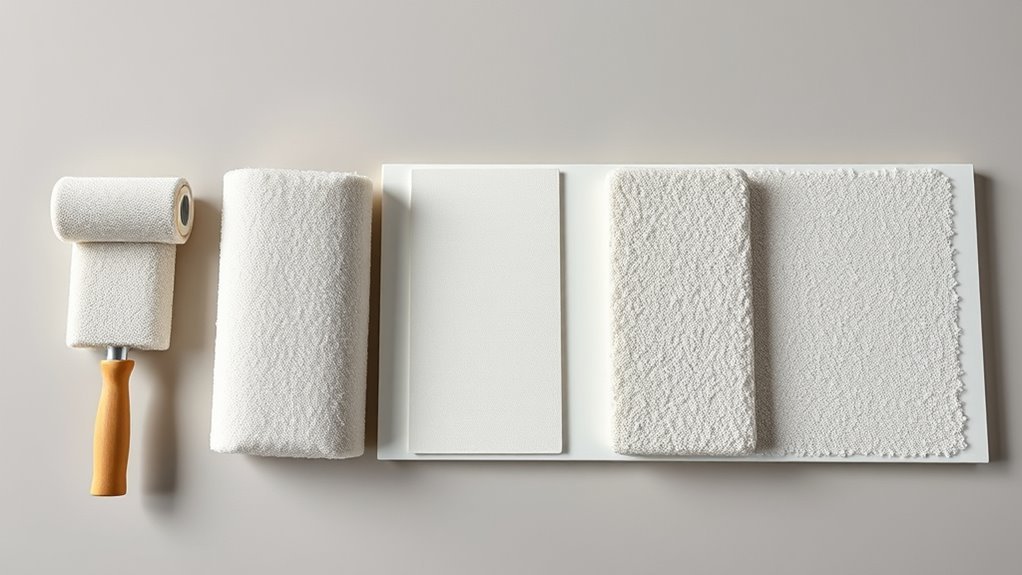
Now that you know how nap length affects paint load and release, match the roller nap to your wall’s texture to get the best coverage and finish. You’ll pick roller cover types based on roughness: short naps for smoother surfaces, medium for lightly textured walls, and long naps for heavy texture.
Consider surface compatibility—pile thickness must reach into valleys without overloading peaks. Test a small patch to confirm even coverage and minimal splatter.
Swap nap lengths if seams, roller marks, or thin spots appear. Choosing the right nap reduces touch-ups, improves coverage, and speeds the job.
Best Nap for Smooth, Prepped Drywall (1/8″–3/16″)
For smooth, prepped drywall with a texture of about 1/8″–3/16″, choose a short-nap roller—typically 1/4″ or less—so the cover lays down paint evenly without trapping excess in the surface and keeps the finish sleek.
You’ll prefer a dense synthetic nap for durability and minimal lint. Consider nap material options and nap size variations when picking rollers to match paint sheen and hide.
Use a quality frame and apply light pressure, keeping strokes consistent. Clean or replace covers between coats to avoid buildup and streaking.
- Synthetic 1/4″ for latex paints
- Microfiber for ultra-smooth finish
- Low-lint woven covers
Best Nap for Lightly Textured Drywall / Orange Peel (3/16″–3/8″)
If your walls have a light orange-peel texture (about 3/16″–3/8″), pick a slightly thicker nap than you used on smooth drywall so paint reaches into the small peaks and valleys without leaving bare spots.
Choose a 3/8″ nap for standard latex wall paint; it balances coverage and control. The texture impact means a thicker nap traps more paint in pits, reducing roller drag.
Load the roller evenly and use a consistent roller technique: work in overlapping W patterns, back-roll lightly to flatten ridges, and avoid excess pressure that splatters.
Test a small area to confirm coverage before tackling the whole room.
Best Nap for Knockdown and Heavy Texture (3/8″–1/2″)
Choose a 1/2″ nap roller for knockdown and heavy textures (3/8″–1/2″) to guarantee paint reaches deep crevices and covers irregular peaks without overworking the surface.
You’ll focus on roller selection and surface preparation to match texture finish and optimize coverage efficiency. Adjust paint viscosity for better paint application on uneven surfaces, thinning slightly if needed.
Use steady application techniques and maintain a wet edge to avoid lap marks. Practice roller maintenance—clean thoroughly to preserve nap performance.
Match roller to knockdown texture, test a small area, then proceed when texture matching and coverage look consistent.
- Test paint viscosity and coverage efficiency
- Use steady application techniques; keep a wet edge
- Clean and store rollers for proper roller maintenance
Best Nap for Plastered and Old Plaster Walls (3/8″–1/2″)
Moving from heavy textures to plastered or old plaster walls, you’ll still want a 3/8″–1/2″ nap to get paint into hairline cracks and slight surface irregularities without leaving an overly stippled finish.
You should prep by cleaning, drying, and addressing loose plaster as part of plaster wall maintenance, sanding skim coats smooth and filling gaps.
Use quality primer and follow paint adhesion techniques—scuff-sanding and a bonding primer—to guarantee even coverage and durability.
Roll slowly with light, overlapping passes to force paint into tiny crevices, then back-roll for uniform texture.
This nap balances penetration and a refined finish on older plaster.
Best Nap for Masonry, Brick, and Rough Concrete (3/4″–1″)
When you’re covering masonry, brick, or rough concrete, a 3/4″–1″ nap gives paint the loft it needs to reach deep pores and irregular mortar joints without letting the roller wear out too fast.
You’ll prepare the surface with proper masonry preparation—cleaning, repairing, and drying—to control paint absorption and optimize paint adhesion.
Choose a durable roller material that resists clogging in coarse surface texture and use consistent roller application for even paint finish and coating durability.
- Use thick nap for deep pores and mortar joints
- Match roller material to surface texture and absorption
- Maintain consistent stroke for adhesion and finish
Priming vs. Topcoat: Choosing Nap for Each Step
When you’re priming, you’ll want a nap that grabs and seals the surface—usually slightly thicker than your final coat to fill pores and promote adhesion.
For the topcoat, switch to a nap that matches the sheen and smoothness you want, often shorter for smoother finishes and longer for textured walls.
Picking the right pair makes the finish look better and last longer.
Primer Nap Choices
1 key decision in prepping walls is matching nap thickness to the job: you’ll want a shorter nap for primer on smooth surfaces to guarantee even bonding and a slightly thicker nap for textured or porous walls so the primer penetrates properly.
Choose primer types based on surface preparation and desired primer benefits. Match roller materials to primer viscosity for ideal roller coverage and paint adhesion. Watch drying times and use proper application techniques to avoid lap marks.
- Smooth surfaces: short nap, synthetic roller materials.
- Textured/porous: medium nap, thicker nap for coverage.
- Specialty primers: select roller and technique per label.
Topcoat Nap Selection
Choosing the right nap for your topcoat matters because it directly affects finish uniformity and coverage—use a shorter nap for smooth, cured primer to get a crisp, even sheen, and step up to a medium or thicker nap only for heavy textures to avoid roller stipple masking the paint’s finish.
When you choose nap material types, consider the sheen and paint weight: synthetic blends suit latex, natural fibers work with oil, and microfibers lay down smooth sheens.
Match roller cover sizes to surface area and detail — smaller covers for trim and tight spots, larger for open walls — and test before committing.
Nap Choices for Latex vs. Oil-Based Paints
Although both latex and oil-based paints can cover well, you’ll want different roller naps for each to get the best finish and efficiency. You’ll match nap materials and roller cover to paint absorption and surface compatibility.
Although both cover well, latex and oil paints need different roller naps for best finish and efficiency.
Latex paint, thinner and water-based, soaks into naps differently than oil based paint; choose shorter naps for smooth walls and longer naps for textured surfaces. Consider application technique—pressure, speed, and overlap—since it affects finish quality and waste.
- Latex paint: short to medium nap for controlled absorption and smooth finish.
- Oil based paint: medium nap to aid even leveling.
- Rough surfaces: longer nap for coverage.
Nap for Low-Sheen, Eggshell, and Satin Finishes
When you’re working with low-sheen, eggshell, or satin finishes, you’ll want a nap that matches the surface smoothness to avoid highlighting imperfections.
Choose a nap that balances coverage without leaving texture — shorter naps for smooth walls, slightly longer for minor imperfections.
Also pick a roller material compatible with the paint to guarantee even laydown and durability.
Surface Smoothness Needs
If you want low-sheen, eggshell, or satin finishes to look their best, aim for the smoothest possible surface before rolling—these sheens reveal texture more than flat paint does.
You’ll use smoothing techniques like sanding, patching, and priming to remove imperfections, then choose a short-nap roller for even paint application. Prepare thoroughly so the finish reads sleek rather than bumpy.
- Sand and fill: remove bumps, feather edges, wipe dust.
- Prime: seal patched areas for uniform absorption.
- Roll technique: use light, consistent pressure with a quality short-nap roller to minimize texture.
Paint Coverage Balance
Smoothing the wall gets you most of the way to a pro-looking eggshell or satin finish, but you also need to balance coverage and texture by choosing the right roller nap. You’ll manage paint absorption and coverage consistency by matching nap to surface compatibility and texture matching. Good surface preparation and application technique boost roller efficiency; regular roller maintenance preserves even paint application. Short naps suit low-sheen finishes for minimal texture; slightly thicker naps help hide minor imperfections while keeping sheen intact.
| Nap Length | Best For | Result |
|---|---|---|
| 1/4″ | Smooth | Low texture |
| 3/8″ | Light orange peel | Balanced |
| 1/2″ | Slightly textured | Hides flaws |
| 3/4″ | Rough | High coverage |
Roller Material Choice
Pick the right roller material and you’ll control both finish and paint pickup for low-sheen, eggshell, and satin coatings.
You’ll choose roller fabric based on surface compatibility and paint absorption—synthetic for smooth, wool blend for slight texture.
Consider roller durability and lint shedding; cheaper covers may leave fibers on delicate finish types.
Match nap to texture variation and application techniques to avoid stipple or uneven sheen.
Factor cleaning methods to extend life and weigh cost analysis versus performance.
Test a small area to confirm look and feel, then commit to the material that balances coverage, finish, and long-term durability.
- Choose fabric by surface
- Check shedding and cleanability
- Balance cost and performance
Nap for Semi-Gloss and High-Gloss Finishes
Because semi-gloss and high-gloss finishes highlight every texture, you’ll want a short nap that lays down paint smoothly without trapping extra air or showing roller stipple.
You’ll appreciate semi-gloss advantages like easier cleaning and improved finish durability, though high-gloss disadvantages include revealing imperfections.
Focus on sheen levels and proper surface preparation to minimize flaws. Use application techniques that control drying times and limit paint absorption for even coverage.
Choose roller performance that spreads thin, uniform coats—short naps on smooth rollers work best.
In finish comparison, short naps give the crisp, reflective look these sheens demand.
Matching Nap to Paint Viscosity
When you’re choosing a roller nap, match it to the paint’s thickness: short naps work best with thin, low-viscosity paints for smoother coverage.
If you’re using thicker, high-viscosity paints, pick a longer nap to hold and release more material evenly.
This simple swap helps prevent streaks and guarantees consistent coverage.
Short Nap For Thin Paints
If you’re working with thin, low-viscosity paints, a short-nap roller (1/8″ to 1/4″) helps you lay down a smooth, even coat without trapping excess paint in the fibers. It spreads the thinner formula efficiently and minimizes roller texture on the wall. You’ll choose a short nap for ideal paint application and faster drying.
Focus on surface preparation to remove dust and gloss so paint adhesion improves. Control roller technique to limit splatter and manage paint absorption for consistent finish quality. Pick the right roller selection to match sheen and substrate.
- Prep: clean, sand, prime.
- Load: moderate, even.
- Roll: light pressure, overlap.
Long Nap For Thick Paints
Although thicker, high-viscosity paints need more nap to hold and release paint evenly, you’ll get smoother coverage and fewer touch-ups by using a long-nap roller (3/8″ to 3/4″) that matches the paint’s body and the surface texture.
You’ll notice long nap benefits immediately: it loads more thick paint application onto the roller, deposits evenly into pores and textured surfaces, and minimizes roller drag.
Work in consistent strokes, avoid overworking edges, and maintain a wet edge.
Clean rollers thoroughly after use to preserve pile.
Choosing nap by viscosity saves time and produces a professional-looking finish.
Nap Interaction With Roller Materials (Polyester, Microfiber, Lambswool)
Picking the right roller fabric matters because polyester, microfiber, and lambswool each hold and release paint differently, so your choice affects coverage, finish, and shedding.
You’ll want a roller material comparison that highlights nap material effects on absorption, release rate, and texture transfer. Match nap length to surface and paint thickness to avoid streaks or excess lint.
- Polyester: sheds less, good for latex, performs on smooth to semi-rough walls.
- Microfiber: excels at holding more paint, gives even coverage, reduces splatter.
- Lambswool: holds lots, great for rough textures, may shed more initially.
When to Choose Woven vs. Knit Roller Covers
Whether you’re covering smooth drywall or a textured plaster, choosing woven or knit roller covers affects paint release, linting, and the finish you get. You’ll pick woven when you want consistent paint release and durability—woven benefits include lower lint and smooth coverage on semi-rough surfaces. Choose knit for better paint pickup and quicker release on rougher textures—knit advantages are high capacity and faster coverage. Match material to surface: woven for controlled laydown, knit for speed. Test a small area to confirm appearance and lint.
| Woven | Knit |
|---|---|
| Low lint | High capacity |
| Smooth laydown | Fast coverage |
How Pile Density Changes Finish and Linting
Because pile density determines how much paint the cover holds and how it releases it, you’ll notice real differences in finish and linting as you move between low- and high-density rollers.
You’ll choose roller selection based on desired finish quality and paint absorption: low density sheds less initially but can cause linting issues on smooth surfaces; high density holds more paint, aiding texture uniformity but risking uneven release if paint consistency is off.
Balance surface adhesion and finish durability by adjusting application technique and testing a small area.
Consider these quick guidelines:
- Low density: smoother finish, less lint after washing.
- High density: greater paint absorption, richer texture.
- Medium density: best compromise for finish durability and consistent results.
Using Different Naps for Cut-In and Trim Work
When you’re cutting in along ceilings and corners, grab an edge nap brush to control paint and avoid drips.
For trim and narrow areas, a short nap roller gives a smoother, quicker lay-in than a full nap would.
Using each tool where it excels speeds the job and improves the finish.
Edge Nap Brushes
Trim work demands precision, so pick edge nap brushes that match the surface you’re cutting in—short napped brushes for smooth trim and slightly longer naps for textured surfaces.
You’ll notice edge nap textures affect paint pickup and line control, and understanding edge nap benefits helps you choose the right tool. Use brushes that hold paint evenly, maintain a sharp edge, and resist splaying.
- Choose short napped sash or angled brushes for smooth moldings and clean lines.
- Use medium nap edges for lightly textured trim to balance coverage and control.
- Match brush material to paint type to avoid shedding and drag.
Short Nap Rollers
After you’ve picked the right edge nap brushes, switch to short nap rollers for cut-in and close-in work where control matters.
You’ll appreciate short nap benefits: reduced splatter, crisper lines, and smooth coverage on lightly textured surfaces. Choose among short nap types—microfiber for even laydown, woven for durability, or foam for ultra-smooth finishes—based on paint and surface.
Roll slowly, maintain a light touch, and reload less frequently to avoid buildup at edges. Use a loaded brush for corners, then blend with the short nap roller to unify texture.
That combo speeds work and keeps trim lines clean.
Switching Naps Between Surfaces in the Same Room
If you need to switch naps between surfaces in the same room, plan the sequence so you don’t rework dried edges or contaminate fresh areas; start with the ceiling and work down to walls, then finish with trim and doors.
Use nap switching strategies based on surface compatibility: match nap thickness to texture, keep dedicated rollers for smooth versus textured surfaces, and avoid cross-contamination by labeling covers.
Change rollers at logical breaks and clean trays between swaps. You’ll save time and maintain finish consistency by sequencing work, staging materials, and inspecting edges before moving to the next surface.
- Match nap to texture
- Label rollers
- Clean trays
Roller Width Plus Nap: Balancing Speed and Control
Choose a roller width that matches the scale of your walls—wider rollers cover more area but can be harder to control around trim.
Pick a nap height that balances speed with finish: shorter naps give a smoother look on flat surfaces while longer naps hold more paint for textured walls.
Match nap to surface texture so you don’t lose detail or leave roller marks.
Roller Width Impact
While a thicker nap helps the roller hold more paint, the roller’s width determines how quickly you can cover a wall and how much control you retain around edges and corners.
You’ll pick widths based on room size, trim proximity, and roller cover types; wider rollers speed coverage but reduce maneuverability, while narrow ones give edge control.
Consider paint absorption too—wider covers soak up more and need reloading less often.
Balance your choice: speed versus precision, and how often you want to reload.
- Wide (9–18″): fast for large, open walls.
- Medium (7–9″): versatile for most rooms.
- Narrow (4–6″): precise near trim.
Nap Height Tradeoffs
You’ve picked a roller width that balances speed and control; now think about nap height, which further shapes coverage and finish.
Choose a shorter nap for smooth walls to reduce stipple and increase control, and pick a longer nap when you need faster coverage on less uniform surfaces.
Weigh nap height benefits like improved hold and fewer passes against drawbacks such as potential texture pickup or excess paint.
Consider how paint type and desired sheen interact with pile length.
Use nap height considerations to match roller to task: shorter for precision, longer for efficiency, and adjust technique to avoid lap marks.
Surface Texture Matching
When matching roller width and nap to a wall’s texture, think of them as a pair: the width controls how fast you cover ground, and the nap dictates how well paint nests in peaks and valleys.
You’ll assess texture patterns, choose roller compatibility, and balance speed with control. Wider rollers speed work on smooth surfaces; thicker naps grab deep textures. Match nap to peak depth and pick a roller width that lets you maneuver around obstacles without overworking seams.
- Test samples on a small area for texture patterns and finish.
- Use medium widths for mixed surfaces.
- Prioritize roller compatibility for even coverage.
How to Test Nap Choice Before Rolling the Whole Wall
Before you roll the whole wall, test your nap choice on a small, inconspicuous area so you can see how it holds paint, sprays, and texture.
Choose a patch near a corner or behind furniture, coat it with the chosen paint, and let it dry.
Use nap testing techniques: try a short and a longer nap cover side-by-side, noting coverage, lint release, and texture match.
Perform a roller cover comparison by applying equal strokes and checking for streaks or stipple.
Photograph results, wait for full cure, then decide—swap nap lengths if coverage, finish, or maintenance issues show.
Visual Signs You Picked the Wrong Nap
A few obvious visual clues will tell you if the roller nap’s wrong for the job: uneven coverage, visible lint or fibers, excessive stipple, or an overly textured finish that doesn’t match the surrounding wall.
You’ll notice nap length indicators when paint pools in low spots or skips on high points, and roller cover differences show up as fuzzed fibers or patchy sheen.
Check a small test area and inspect edges closely.
Always test a small area and examine edges closely before rolling to catch problems early.
- Fiber shedding or lint trails
- Patchy or thin coverage revealing substrate
- Texture mismatch vs. adjacent surfaces
Fixing Streaks, Roller Marks, and Unwanted Texture
1 simple fix can often rescue a wall marred by streaks, roller marks, or an uneven texture: smooth, deliberate technique paired with the right tools and quick touch-ups.
You’ll start with surface preparation to remove dust and repair imperfections, improving paint adhesion and material compatibility.
Adjust your roller technique—use consistent pressure, maintain a wet edge, and choose the correct nap for coverage efficiency.
For streak elimination and texture correction, lightly back-roll or feather edges while paint application is still wet to blend.
Respect drying time between passes, inspect finish uniformity, and spot-roll thin or thick areas until even.
How Many Coats Per Nap Length for Full Coverage
Depending on the nap length you choose, you’ll need different coat counts to get full coverage—short naps often require more thin coats, while longer naps can lay down more paint per pass.
Consider how nap affects coverage and how many coats you can realistically wait for between sessions.
Also factor in drying time per coat so you space recoats for the best finish.
Coat Count By Nap
Pick the right nap and you’ll often need fewer coats to get full coverage. You should match nap types and roller materials to surface compatibility; coverage factors depend on texture effects, paint viscosity, and application techniques.
Choose shorter naps for smooth walls, medium naps for light texture, and longer naps for pronounced texture to optimize finish quality.
- Short nap: 1–2 coats on smooth, low-viscosity paints with precise application techniques.
- Medium nap: 1–3 coats for moderate texture; balance roller materials and paint viscosity.
- Long nap: 2–4 coats on rough surfaces; texture effects demand more coverage.
Coverage Vs. Nap Length
While nap length won’t single-handedly determine how many coats you need, it strongly influences coverage: shorter naps lay thinner, tighter films so you’ll typically need two coats for full coverage on light colors.
Medium naps often achieve one to two coats depending on paint quality.
Longer naps hold more paint and can cover textured walls faster, improving coverage efficiency, but they can also leave heavier buildup that needs back-rolling for uniformity.
Consider nap durability when choosing—cheap long naps may shed and ruin a finish.
Match nap to surface texture and paint tint to minimize unnecessary coats.
Drying Time Per Coat
Because nap length affects how much paint you lay down, it also influences how long each coat needs to dry before you can safely recoat. You’ll notice thicker naps deposit more paint, increasing coat thickness and extending drying duration.
Match your recoat timing to nap choice and conditions so coverage stays smooth.
- Short nap: thinner coats, quicker drying duration—usually one or two coats for full coverage.
- Medium nap: moderate coat thickness—plan two coats with standard wait times.
- Long nap: heavier coat thickness—allow extra drying duration and expect two to three coats for uniform finish.
Nap Choice, Paint Waste, and Cost Per Room
When you choose the right nap for your walls, you’ll cut paint waste and lower the cost per room because the roller’s fiber length affects coverage, absorption, and how much paint it holds.
Choosing the right roller nap reduces paint waste and costs by matching fiber length to your wall texture.
You’ll use nap selection tips: pick short naps for smooth surfaces to spread paint thinly and reduce splatter, medium naps for lightly textured walls to balance hold and release, and longer naps for rough surfaces to avoid multiple coats.
That improves paint efficiency and trims repainting.
Use consistent roller pressure, load evenly, and measure room area to estimate gallons needed so you don’t overbuy or run short.
Choosing Nap for Stain-Blocking or Tinted Primers
If you’re blocking stains or using tinted primers, pick a nap that lets the primer carry pigment and seal without leaving texture behind; you want smooth coverage that supports stain blocking techniques and the tinted primer benefits without needing extra coats.
Choose a shorter nap for flat, smooth walls and a light-to-medium nap for slightly textured surfaces. Follow these quick guidelines:
- 1/4″ nap — best for smooth drywall; minimizes texture, maximizes pigment laydown.
- 3/8″ nap — good for light orange peel; balances coverage and smooth finish.
- 1/2″ nap — use only if surface has noticeable texture; still keep primer thin.
Cleaning and Caring for Roller Covers by Nap Length
Now that you’ve chosen the right nap for your primer, keep the roller cover in matching condition to get consistent results on topcoats.
After each use, rinse thoroughly with warm water and mild detergent until runoff is clear; longer naps trap more paint so squeeze and repeat. For oil-based products, use mineral spirits before washing.
Spin or shake excess water and reshape the nap with your fingers. Inspect for matting or shedding—short naps recover quickly, long naps need more gentle care in nap length comparison.
Regular roller cover maintenance extends life and preserves even texture for future coats.
How to Store Roller Covers to Preserve Nap
Because proper storage keeps the nap fluffy and ready for the next job, wrap roller covers loosely in plastic or place them in a breathable container so they won’t flatten or collect dust.
Wrap roller covers loosely in plastic or a breathable container to keep the nap fluffy and dust-free.
You should dry covers completely, label them by nap length, and store horizontally to avoid pressure that crushes fibers. Good roller cover storage extends life and uses smart nap preservation techniques.
- Keep covers dry and dust-free in breathable bags.
- Store flat or hang to prevent compression.
- Label by nap length and paint type for quick reuse.
When to Replace a Roller Cover: Nap Wear Signs
Even with careful storage, roller covers will wear out from use, and you should watch for clear signs that the nap needs replacing.
Inspect the nap after each job: matting, bald spots, or loose fibers mean diminished performance. If paint skips, leaves streaks, or you need extra passes, those are nap maintenance tips signaling the end of effectiveness.
Also note excessive shedding during cleaning or a rough texture that’s lost loft. Track roller cover lifespan by counting jobs and noting materials used—heavy coatings shorten life.
Replace when appearance or performance degrades to keep finishes consistent and efficient.
Tool Checklist for Painting by Nap
A simple, focused checklist will make choosing the right tools for each nap length quick and reliable.
You’ll pick roller cover types based on surface texture and paint absorption needs, and gather trays, extension poles, and angled brushes. Match nap length to wall profile and paint viscosity so you don’t overwork the coat.
- Choose roller cover types: short nap for smooth, medium for lightly textured, long for deep texture.
- Test paint absorption: pre-wet or blot samples to see spread and loading.
- Essential gear: tray with grid, pole, angled brush, painter’s tape, drop cloths.
Pro Tips to Get a Uniform Finish With Each Nap
Pick a nap that matches your wall texture and the finish you want, and stick with it for the whole job.
Keep your stroke length, pressure, and overlap consistent so each nap lays down paint the same way.
If you spot inconsistencies, adjust technique before switching naps to avoid uneven patches.
Choose The Right Nap
Nobody wants streaks or uneven texture, so choosing the right roller nap is key to getting a uniform finish.
You’ll match nap length to surface profile: smooth walls use short naps, textured surfaces need longer naps. Use nap selection strategies that consider paint type and desired coverage, and know roller cover types to pick synthetic for latex, natural for oil. Test a small area to confirm.
- Smooth surfaces — 1/4″ nap for minimal texture.
- Semi-rough surfaces — 3/8″–1/2″ nap for balanced coverage.
- Rough/textured — 3/4″–1″ nap to reach crevices.
Maintain Consistent Technique
Now that you’ve matched nap length to your wall’s texture, keep your application consistent so that the chosen nap delivers even coverage.
You should use the same consistent technique across the entire wall: load the roller evenly, use steady pressure, and maintain overlapping strokes.
Stick to one application method’s pattern—either W’s, vertical passes, or cross-hatching—and finish each section before the roller dries.
Re-load the nap at regular intervals to avoid thin spots, and replace or clean rollers when they fray.
Common Pro Mistakes to Avoid When Choosing Nap
When you’re choosing roller nap, it’s easy to assume longer equals better, but pros often overdo it—using too-long naps on smooth walls causes texture, while too-short naps on rough surfaces leave gaps and require extra coats.
You’ll avoid common errors by focusing on nap length considerations and matching roller cover materials to surface texture. Don’t grab whatever’s on the shelf or ignore paint type.
- Pick nap length for surface profile, not habit.
- Match roller cover materials to paint viscosity and sheen.
- Replace worn covers; they create streaks and uneven pickup.
Be deliberate and test before committing.
Quick Comparisons: 3/16″, 3/8″, 1/2″
Think of these three nap lengths as tools in your kit: 3/16″ for smooth drywall and trim, 3/8″ as the versatile all-rounder for lightly textured walls, and 1/2″ for rougher surfaces like orange peel or light stucco.
You’ll pick roller fabric based on surface compatibility and texture variation. 3/16″ minimizes paint absorption for crisp trim and high finish quality.
3/8″ balances coverage efficiency and application technique, easing blotches.
1/2″ boosts paint absorption to fill crevices on rough walls, improving coverage efficiency but altering finish quality.
Your user experience depends on matching nap, fabric, and technique.
Example Nap Choices for 10 Common Room Scenarios
Choose the right nap for each room by matching roller thickness to wall texture and paint type:
Smooth bedrooms and dining rooms do best with 3/16″ for a fine finish.
Living rooms with light orange-peel or eggshell finishes work well with 3/8″.
Basements or exterior-adjacent spaces with heavier texture call for 1/2″ or more to guarantee even coverage.
You’ll pick nap material options and roller styles based on surface and paint.
For ten common rooms, prioritize smooth, semi-smooth, or textured naps:
- Bedrooms, dining rooms: 3/16″ smooth.
- Living rooms, halls: 3/8″ semi-smooth.
- Garages, basements: 1/2″+ textured.
How to Buy Quality Roller Covers: What to Look For
Because a good roller cover makes the job faster and the finish cleaner, you’ll want to focus on pile height, material, and core construction before you buy.
Choose pile height for surface texture: short for smooth walls, medium for light orange peel, long for rough masonry.
Pick pile height to match texture: short for smooth, medium for light orange peel, long for rough masonry.
Compare roller cover materials—polyester for latex, mohair for enamels, blended options for versatility.
Inspect cores: seamless, sturdy cores resist wobble and solvent swelling.
Look for even nap to avoid streaks.
Check trusted roller cover brands for warranties and reviews, but evaluate feel and paint pickup yourself before committing to a pack.
Where to Buy Trusted Roller-Cover Brands
You can find trusted roller-cover brands at big-box home centers, specialty paint stores, and reputable online retailers.
Check brands like Purdy, Wooster, and Benjamin Moore for consistent quality and availability.
If you’re unsure, compare reviews and return policies before you buy.
Where To Buy
1 reliable place to buy trusted roller covers is your local paint or hardware store, where staff can help match pile, nap length, and fabric to your wall surface; you’ll also find a wide selection online from major home-improvement retailers and specialty paint brands if you prefer delivery or want to compare reviews quickly.
You’ll want to research roller cover brands and follow basic buying tips so you get the right tool. Consider availability, return policy, and price when choosing.
- Local paint/hardware store — hands-on help and immediate pickup.
- Major online retailers — fast shipping, broad selection.
- Specialty paint brand sites — direct support and guidance.
Trusted Brand Options
When choosing trusted roller-cover brands, look for names that pros and DIYers consistently recommend—Purdy, Wooster, and Sherwin-Williams are solid starting points because they offer a range of nap lengths and high-quality fibers suited to different wall textures.
You’ll find the best roller by checking brand reputation, user reviews, and product availability at local stores and online retailers.
Compare price comparison and assess brand durability and quality materials. Read customer satisfaction comments about linting and coverage.
Buy where return policies and stock are reliable, and pick a seller that supports exchanges so you can test nap length without risk.
Frequently Asked Questions
Can Nap Length Affect How Quickly Paint Dries?
Yes — nap duration can influence drying because it affects paint thickness and texture; you’ll find thinner naps lay smoother, drying faster under given drying conditions, while thicker naps hold more paint and slow evaporation, especially in humid environments.
Do Nap Choices Influence VOC Release or Fumes?
Worried about fumes—does nap choice matter? You’ll find nap material and texture effects don’t change VOC chemistry; they only affect paint thickness and drying, so you’ll minimize fumes by choosing low‑VOC paint, not nap type.
Will Nap Length Change Color Appearance or Sheen?
No, nap length won’t change color appearance or sheen directly; you’ll maintain color consistency if you apply paint evenly, but improper nap choice can cause sheen variation from uneven texture, so pick consistent rollers and technique.
Are Specialty Naps Needed for Exterior vs. Interior Paint?
Yes—you’ll want different roller types for exterior versus interior; coincidence has it the right nap matches surface texture, so you’ll improve paint application and finish quality by choosing naps suited to rough outdoors or smooth indoor walls.
How Does Nap Choice Impact Cleanup Time and Solvent Use?
Shorter naps reduce paint buildup, so you’ll clean faster and use fewer solvents; roller materials with smooth fibers shed less, while thicker naps trap excess paint and texture patterns, increasing cleanup time and solvent use.
Conclusion
So you’ll pick a nap length like it’s a life-altering choice—3/16″ for smooth walls, 3/8″ for lightly textured, 1/2″ for rougher surfaces—and magically expect perfection. In reality, the “right” roller just helps, it doesn’t paint for you. Choose based on texture, paint type, and room use, then roll confidently. With the right cover, your walls’ll look pro even if you’re still practicing straight lines.
