
What Is the Best Roller for Painting Walls
You’ll get the best wall finish with a high-density 9″ roller and a 9–12mm (3/8″–1/2″) microfiber or blended nap that matches your wall texture and paint type. Use shorter naps for smooth drywall and longer naps for textured surfaces; load the roller evenly, work in “W” patterns, and keep a wet edge for streak-free coverage. Choose a durable frame and clean rollers after use. Keep going to learn specific nap choices, brands, and pro techniques.
Quick Answer: Best Roller for Painting Walls
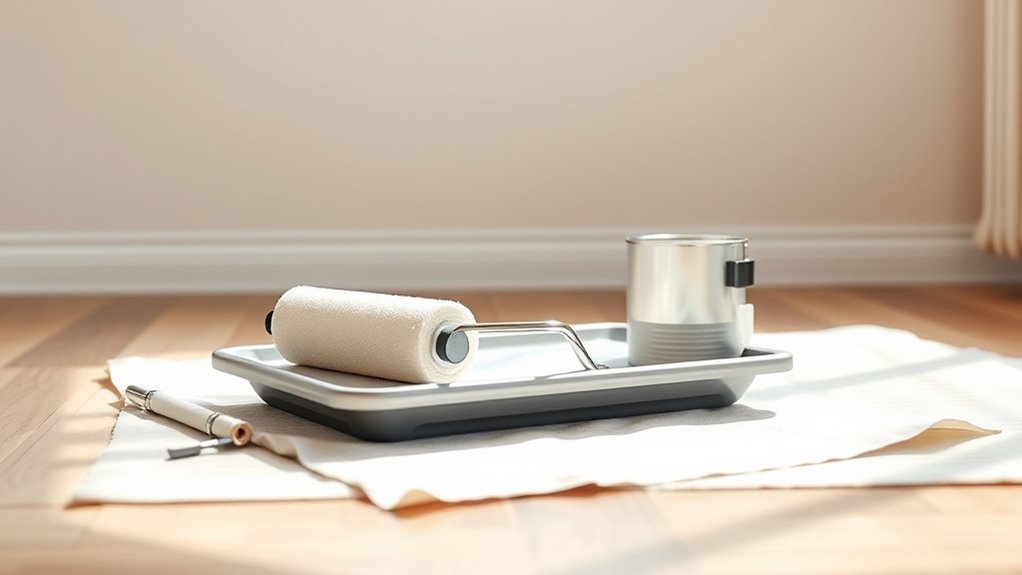
Looking for the best roller for painting walls? You want a 9–12mm nap synthetic roller for most interior walls — it handles typical textures, holds paint well, and gives even coverage.
Choose a roller that sheds minimally and fits your frame; that reduces streaks during color mixing and speeds work when you need quick touch-ups.
Pair it with proper primer selection: use a high-adhesion primer on new drywall or a stain-blocking primer on patched areas.
With the right nap and compatible primer, you’ll get smooth, consistent results without reworking spots or chasing uneven sheen.
How to Choose a Roller: 5-Step Checklist
Start by deciding on the cover material—synthetic covers work best for latex paints while natural fibers suit oil-based paints.
Pick a nap length that matches your wall texture: short naps for smooth surfaces and longer naps for textured walls.
Following these two choices will make the rest of the 5-step checklist simple and effective.
Cover Material Choice
Because the roller cover is what actually transfers paint to your wall, picking the right material matters more than nap thickness alone. You’ll choose synthetic covers for water-based paints and natural fibers for oils and stains; each affects finish, linting, and absorption.
Consider color contrast during test strokes to spot coverage issues quickly. Match cover density to paint viscosity so you’re not forcing more coats.
Don’t forget roller ergonomics: lighter, balanced covers reduce wrist fatigue during large jobs.
Test a small section before committing, and replace covers when they mat or shed to maintain consistent results.
Nap Length Selection
When you pick a nap length, match it to the texture of the surface and the paint’s viscosity. You’ll choose short naps (1/4″ to 3/8″) for smooth drywall and satin or semi-gloss paint, preserving your paint color’s clarity.
Medium naps (1/2″) suit lightly textured walls and standard interior paints, balancing coverage and finish.
For rough or stucco surfaces, use 3/4″ to 1″ naps to reach crevices and avoid frequent touch-ups.
During wall preparation, remove dust and repair imperfections so the nap performs evenly.
Test a small area to confirm coverage, finish, and how the roller handles your paint.
Nap Length: What It Does to Coverage and Texture
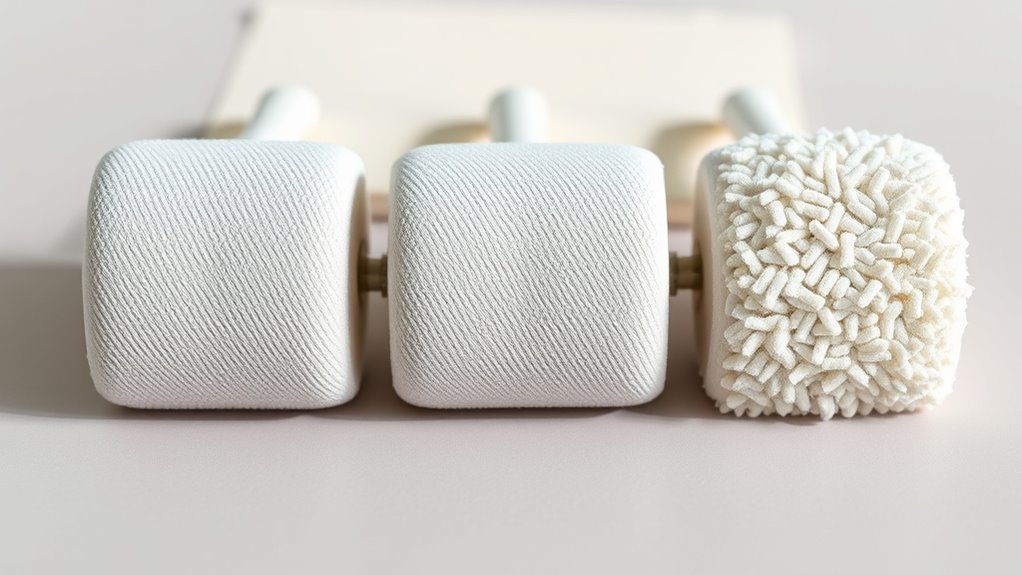
Nap length changes how your roller holds and lays down paint, so pick it based on the surface. Use a short nap for a smooth finish, a medium nap for versatile coverage on slightly textured walls, and a long nap when you want to hide heavy texture.
Knowing this helps you match roller to wall and get the result you want.
Short Nap: Smooth Finish
If you want the smoothest possible wall finish, choose a short-nap roller (1/4″ to 3/8″)—it lays down paint thinly and evenly, minimizing texture and brush marks so trim and flat surfaces look crisp. You’ll get finer control over coverage and better visibility of color matching and paint sheen, so touchups blend seamlessly. Use it on primed drywall, smooth plaster, or semi-gloss areas.
- Apply light, even pressure to avoid streaks and pooling.
- Work in small sections, maintaining a wet edge for uniform sheen.
- Replace rollers often to prevent lint and maintain perfect finish.
Medium Nap: Versatile Coverage
Because it balances paint-holding capacity and surface contact, a medium nap (3/8″ to 1/2″) is the go-to choice for most interior walls—you’ll get good coverage without over-emphasizing texture.
You’ll notice fewer streaks and smoother paint application across slight imperfections, and the roller holds enough paint to reduce reloads. It works well with most latex and acrylic mixes, so color mixing isn’t a headache when matching swatches or blending touch-ups.
Use a consistent, overlapping technique and moderate pressure to avoid lap marks. For general rooms and ceilings with minor texture, the medium nap gives efficient, professional-looking results.
Long Nap: Textured Walls
While a medium nap handles slight texture well, you’ll want a long nap (3/4″ to 1″) when covering heavily textured surfaces like popcorn ceilings, stucco, or rough plaster. It reaches into crevices, hides inconsistencies, and holds more paint so you work faster. Choose a synthetic or lambswool roller for durability and even laydown. Pay attention to color matching and paint sheen—texture can shift perceived hue and gloss, so test a swatch first.
- Use thicker rollers to avoid skipping.
- Back-roll to press paint into recesses.
- Adjust pressure for consistent finish.
Which Nap for Smooth Drywall and Plaster
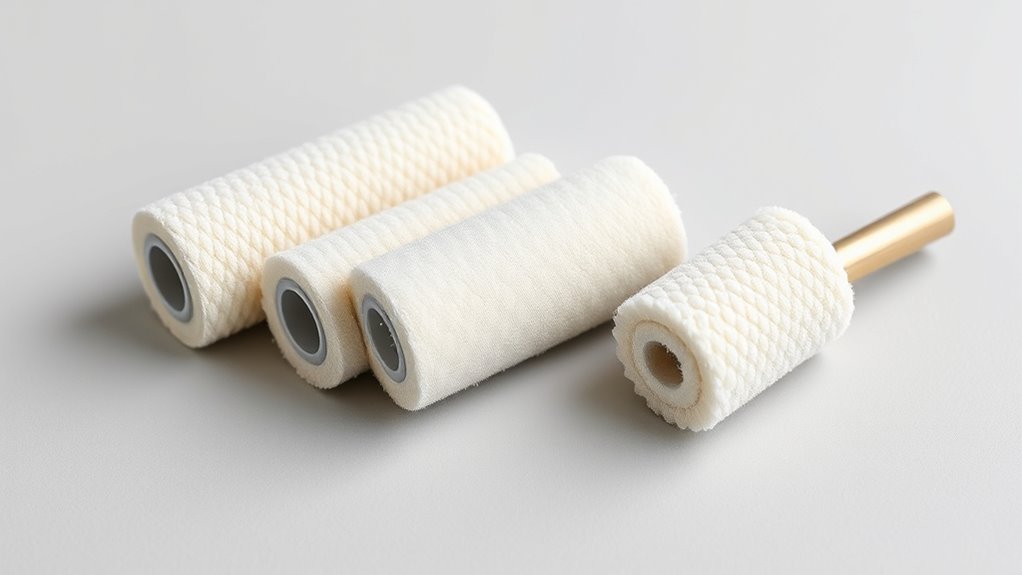
When you’re painting smooth drywall or plaster, choose a short nap—typically 1/4-inch to 3/8-inch—to get an even finish without texture or roller marks. You’ll want a dense microfiber or woven cover that holds paint evenly so paint texture stays minimal.
Use a quality roller frame and balanced handle to improve roller ergonomics, reducing fatigue and maintaining steady pressure. Load the roller evenly, work in overlapping strokes, and avoid pressing hard—let the nap do the spreading.
For trim-like precision, cut in first with a brush, then roll the large areas to achieve a seamless, professional-looking surface.
Which Nap for Light Texture and Orange Peel
If you’ve just finished working with short naps on smooth drywall, shift to a slightly thicker cover for light textures like orange peel—aim for a 3/8-inch to 1/2-inch nap. You’ll fill shallow peaks without overloading the surface, keeping coverage even and minimizing back-roll marks.
Mind ventilation to disperse paint fumes, and pick a roller with good roller ergonomics so you can maintain steady pressure.
- Choose a 3/8″ nap for subtle texture and smoother finish.
- Use 1/2″ for more pronounced orange peel without clogging.
- Clean frequently to avoid shedding and uneven application.
Which Nap for Heavy Texture and Stucco
Because heavy textures and stucco have deep peaks and valleys, you’ll want a thick, rugged nap—typically 3/4-inch to 1¼-inch—to push paint into crevices and guarantee full coverage without excessive passes. You’ll choose a roller that minimizes skipping, holds lots of paint, and follows texture patterns so you don’t miss shadowed spots. Use slow, crisscross strokes and reload frequently for even buildup; that helps with color matching across uneven surfaces. Visualize coverage with this simple grid:
| Peak | Valley | Overlap |
|---|---|---|
| Full | Deep | Blend |
| Thick | Hold | Match |
Roller Materials Overview: Synthetic, Natural, Blended
After you pick the right nap for texture, choosing the roller material determines how paint applies and how the cover performs over time. You’ll pick synthetic for latex and easy cleaning, natural for oil-based finishes and a smooth lay, or blended for versatility.
Consider paint type, finish, and durability, plus color matching needs—some fibers hold pigments differently. Store rollers properly after use; good roller storage preserves nap and prevents contamination.
Choose based on job size, surface, and cleanup preference.
- Synthetic: durable, easy clean.
- Natural: excels with oils, smooth finish.
- Blended: flexible performance.
When to Use Microfiber Roller Covers
When you want a smooth, fast lay with excellent paint pickup and release, choose a microfiber roller cover. It holds more latex paint than standard synthetic naps, applies color evenly, and minimizes splatter for cleaner results.
You’ll use microfiber when you need uniform coverage on walls with light texture, want efficient color matching across batches, or need to reduce touch-ups. It helps control finish consistency so paint sheen reads accurately, especially with eggshell or satin.
You shouldn’t pick microfiber for heavy texture or very coarse surfaces; save those for thicker naps or specialty covers.
When to Use Polyester or Nylon Blends
When you need a roller that stands up to trim work and rough surfaces, polyester or nylon blends are a smart choice. They’ll hold their shape and resist shedding on textured walls, giving you better durability than pure fibers.
With simple cleaning and proper storage, a blended cover will last through multiple jobs.
Best Blend For Trim
Although both polyester and nylon blends work well on trim, choosing the right one comes down to the surface you’re painting and the finish you want. You’ll pick nylon blends for smooth, glossy trim because they give finer paint texture and fewer hairs, helping you achieve sharp edges.
Polyester blends hold more paint, speeding coverage on primed or slightly textured trim. Consider roller storage to protect nap and prevent flattening between coats.
- Nylon: best for ultra-smooth, high-gloss finishes.
- Polyester: faster coverage on primed or subtly textured trim.
- Mixed blends: balance finish control and paint pickup.
Durability On Rough Surfaces
If you’re tackling rough or heavily textured walls, polyester blends usually outlast nylon because their tougher fibers resist abrasion and hold up against repeated scrubbing and touch-ups. You’ll prefer polyester or polyester-nylon mixes when scraping, textured finishes, or masonry cause excessive wear.
Focus on proper surface preparation to remove loose debris and guarantee the roller contacts peaks and valleys evenly.
Check paint compatibility: thicker latex and masonry paints pair well with polyester naps, while some solvent-based coatings may favor nylon.
Choose nap length for texture depth, and pick a blend that balances durability with consistent coverage for long-lasting results.
Care And Maintenance
Because polyester and nylon handle different paints and wear differently, you should clean and store each roller type to match its strengths. Rinse water-based paints from polyester quickly; use solvent for oil-based coatings on nylon blends, and always ventilate to reduce painting fumes. Dry rollers fully before stashing to prevent mildew.
- Clean: flush until water runs clear for latex, use recommended solvent for enamels.
- Dry: spin or blot, then air-dry away from direct heat.
- Store: wrap in plastic or use sealed Roller storage tubes to keep dust out and maintain nap shape.
When to Use Lambswool or Natural Fibers
When you’re working on interior walls that need a smooth, even finish—especially with thicker, high-build paints or textured surfaces—lambswool and other natural-fiber rollers are a smart choice.
You’ll appreciate Lambswool advantages like superior paint holding and a forgiving nap that helps hide brush marks. Use them on plaster, stucco, or walls where you want depth without stipple.
Natural fiber durability means they’ll last through multiple jobs if you clean and store them properly.
Choose natural fibers when you need consistent coverage and a luxurious finish, but avoid them with water-sensitive coatings or solvents that can damage the fibers.
Pile Density: Paint Pickup and Release
When you choose a roller, pile density determines how much paint the cover picks up and how evenly it releases it. High-pile, dense fabrics hold more paint and suit textured walls.
Low-pile, tighter weaves release paint more smoothly on flat surfaces. Nap length further fine-tunes coverage and finish, so match pile and nap to your wall texture and paint type.
High Vs. Low Pile
Curious which roller nap will give you smoother coverage or faster work? You’ll pick high pile for textured walls because it holds more paint and cushions uneven surfaces, aiding color matching across crevices.
Low pile suits smooth drywall, releasing paint evenly for crisp edge trimming and minimal stipple. Consider trade-offs:
- High pile: more pickup, slower release, great for texture, faster coverage but softer edges.
- Low pile: less pickup, quick release, sharper lines, ideal for trim and flat walls.
- Hybrid/medium: balance between coverage and control if you alternate surfaces.
Fabric Density Effects
Although pile length matters, the fabric density (how tightly fibers are packed) often determines how much paint a roller will pick up and how quickly it releases that paint onto the wall.
You’ll notice a tight fabric weave holds less surface paint but transfers it more evenly, reducing drips and splatter. Looser weaves trap more paint internally, giving longer coverage between reloads but risking uneven release.
Fiber thickness interacts with density: thicker fibers create micro-channels that change pickup and laydown, while thinner fibers pack tighter for a smooth finish. Match density to paint type and wall texture to control coverage and minimize touch-ups.
Nap Length Impact
Building on how fabric density controls paint pickup, nap length further shapes how much paint your roller holds and how smoothly it lays that paint down. You’ll choose nap length based on surface texture and desired finish, and that affects coverage and how often you reload with paint color.
- Short nap (1/4″–3/8″) — best for smooth walls; it releases paint evenly for crisp coverage.
- Medium nap (1/2″) — balances pickup and release for slight texture.
- Long nap (3/4″+) — holds more paint for rough surfaces but can leave stipple.
Clean rollers before roller storage to preserve nap performance.
Woven vs Knit Covers: Finish and Lint Risk
When you’re choosing a roller cover, the weave matters: woven covers are tightly braided for durability and less lint, while knit covers have a looped fabric that holds more paint and can give a smoother finish on textured surfaces.
You’ll prefer a linen weave woven cover when you want minimal fuzz and consistent application, especially on smooth walls where surface sheen shows flaws.
Knit covers load more paint, so they reduce reloads and tame stucco or orange-peel textures.
Expect slightly higher lint risk with cheaper knits; pick quality knit or woven blends to balance coverage, durability, and clean results.
Matching Roller Fiber to Paint Sheen
After choosing between woven and knit covers for lint and texture control, you’ll also want to match the roller fiber to the paint’s sheen to get the right look and hide imperfections.
Choose the right roller cover—woven or knit—and match fiber nap to paint sheen for a flawless, low-lint finish
Low-sheen paints conceal flaws better with dense, short-nap fibers; glosses demand smoother, finer fibers to avoid visible stipple. Consider how light reflects and how color matching will reveal edges or touch-ups.
Keep roller storage clean and dry to preserve nap and prevent contamination.
- Matte/eggshell: short, dense fiber for hiding flaws.
- Satin: medium nap for balanced reflection.
- Semi-gloss/gloss: very short, smooth fiber.
Best Rollers for Latex (Water‑Based) Paint
Because latex paints are water‑based and behave differently than oils, you’ll want rollers that release and hold moisture evenly to get smooth coverage without lap marks. Choose synthetic blends—polyester, nylon, or microfiber—for consistent nap and easy cleaning. For flat or eggshell, use shorter naps; for textured walls, go thicker. Keep color matching in mind by using the same roller type across a project. Clean thoroughly and follow proper roller storage to prevent mildew and nap damage.
| Roller Type | Best Use |
|---|---|
| Microfiber | Smooth walls |
| Polyester blend | General purpose |
| Nylon | Durable textured surfaces |
Best Rollers for Oil‑Based and Alkyd Paints
When you’re working with oil‑based or alkyd paints, choosing the right nap length is essential for even coverage without leaving roller marks.
You’ll also want a roller material that’s compatible with solvents—natural fibers or specially labeled solvent‑resistant synthetics work best.
Match nap to texture and material to paint for a smooth, durable finish.
Nap Length Selection
Wondering which nap length works best with oil-based or alkyd paints? You’ll choose based on surface texture and finish goals. Remember proper paint priming and color mixing beforehand to guarantee uniform results.
- 1/4″ nap — Use on smooth walls for minimal texture and even sheen. It holds less oil-based paint, so work quickly.
- 3/8″ nap — A versatile choice for lightly textured surfaces. It balances coverage with controlled release during application.
- 1/2″–3/4″ nap — Best for rougher surfaces. It stores more alkyd paint and helps fill crevices without excessive splatter.
Pick nap length to match surface, not just paint.
Roller Material Compatibility
Although oil-based and alkyd paints behave differently from waterborne products, you can get excellent results by matching the roller material to the binder and solvent. You should choose natural fiber rollers—lambswool or mohair—for oil and alkyds because they hold and release solvent-based binders smoothly, reducing lap marks.
Synthetic blends resist solvent breakdown and suit thicker alkyds or high-solids enamels. Use proper painting techniques: load evenly, avoid overworking, and maintain a wet edge.
After use, follow solvent-specific roller maintenance—flush with mineral spirits, then clean with mild detergent and dry thoroughly—to extend roller life and guarantee consistent finishes.
Roller Sizes Explained: 4″, 9″, and Specialty Widths
If you want clean, efficient results, choose your roller size to match the job. You’ll pick 9″ for walls and ceilings to cover ground fast. Use 4″ for narrow strips and specialty widths for awkward angles.
Manage paint fumes by working ventilated and sealing used rollers in airtight bags for roller storage between sessions.
Consider nap length with each width: shorter naps for smooth surfaces, longer for textured.
Match handle and frame to fit the width so you control reach and pressure.
Replace or clean rollers promptly to avoid dried edges and uneven coverage.
- 9″ — general wall/ceiling work
- 4″ — narrow areas
- Specialty — corners, curves
When to Use 4 Mini Rollers (Trim, Doors, Touch‑Ups)
When you need crisp edges and quick coverage in tight spots, reach for a 4″ mini roller — it’s made for trim, doors, and small touch-ups where a full-size roller’s bulk would slow you down. You’ll control drips, keep lines neat, and handle spot repairs fast. Use one for door faces, narrow trim, or blending after sanding. Match paint carefully for color matching, and store scraps for correct tone. Dispose used rollers responsibly; check local paint disposal rules.
| Task | Tip | Frequency |
|---|---|---|
| Trim | Light nap | Often |
| Doors | Smooth finish | As needed |
| Touch-ups | Feather edges | Immediately |
| Cleanup | Proper paint disposal | After job |
When to Use 9 Rollers (Walls and Ceilings)
When you’re covering large wall areas or tackling ceilings, a 9-inch roller gives you the speed and coverage you need.
Use a thicker nap for textured ceilings and a smoother nap for flat walls to get the best finish.
You’ll also appreciate the longer reach and fewer passes when rolling overhead compared with smaller rollers.
When To Use
Because you’re tackling both walls and ceilings, choose rollers that balance coverage and control so you don’t slow down or leave texture inconsistencies. You’ll pick different naps for smooth walls, textured finishes, or occasional trim work, and you might even reuse a small foam roller for painting furniture touch-ups.
Match roller nap to wall texture options, and swap to a denser cover when cutting in near trim or fixtures.
- Smooth walls: short nap for even finish and less splatter.
- Textured walls: medium nap to fill crevices efficiently.
- Ceilings/rough areas: long nap for maximum coverage.
Ceiling Vs. Wall
If you’re switching between ceilings and walls, pick rollers that match each surface so you get even coverage without extra splatter or visible texture differences. You’ll use shorter naps for smooth walls and longer naps for ceilings with heavy ceiling texture. Rotate rollers: one set for ceilings, another for wall patterns. Clean or label them to avoid cross-contamination. For best results, keep a trim brush for edges and a wider roller for flats. Match nap length to surface and paint type, and change rollers when moving between heavily textured ceilings and patterned or smooth walls to preserve finish quality.
| Surface | Recommended Nap |
|---|---|
| Ceiling (textured) | 3/4″ – 1″ |
| Wall (smooth/patterns) | 1/4″ – 3/8″ |
Specialty Widths: Narrow and Wide Rollers
Although standard rollers work for most rooms, choosing a narrow or wide specialty roller can save you time and improve finish quality for specific tasks. You’ll pick narrow rollers for tight spaces and wide rollers for large, flat walls. Consider texture patterns you want to replicate and how you’ll handle roller storage between coats.
Choosing narrow or wide rollers saves time and improves finish—match roller size to space, texture, and storage needs.
- Narrow (4–7″) — perfect for trim, corners, and around fixtures; control is key.
- Medium (9″) — versatile for average walls; balances reach and maneuverability.
- Wide (18″) — speeds up big rooms and smooths broad surfaces; use with two-hand control.
Roller Core and Frame Quality: Why It Matters
You’ll notice roll performance starts with a durable core that won’t wobble or split under pressure. Pair that with a sturdy frame fit and the cover tracks smoothly without leaving streaks.
Choosing well-made cores and frames saves you time and gives a more even finish.
Durable Core Construction
Because the roller’s core and frame take the stress of every stroke, they determine how smoothly and reliably you’ll work — a solid tubular core resists flexing, tightly fitted end caps prevent wobble, and a sturdy, well-balanced frame keeps the nap running true so you get even coverage without hand fatigue.
Choose cores made from corrosion-resistant metal or high-density plastic so texture patterns stay consistent and paint odors don’t degrade materials. A rigid core avoids sagging under heavy loads.
Consider these features when selecting a roller:
- Material strength and corrosion resistance
- Precise end-cap fit
- Load-bearing, wobble-free design
Sturdy Frame Fit
How well does a roller frame hold up under repeated use? You need a snug, wobble-free fit between core and frame so the sleeve turns smoothly without slipping. A solid frame resists bending, keeps nap contact even, and saves you touch-ups.
Look for an ergonomic grip that reduces hand fatigue during long walls and steady pressure for uniform coverage. Durable bearings or a reinforced axle prevent wobble that ruins color matching across panels.
Choose frames with corrosion-resistant finishes and replaceable parts so your tool stays precise. A well-built fit gives predictable rolls, less waste, and cleaner results every time.
Choosing an Extension Pole: Length and Connections
When picking an extension pole for painting, think about reach first — how high the ceilings are and how far you’ll need to extend to cover walls without straining. Choose a pole that retracts compactly for transport and locks securely to avoid wobble. Consider connection types and compatibility with your roller frame.
- Threaded vs. quick-fit: pick quick-fit for fast swaps, threaded for heavy-duty stability.
- Length: 4–9 feet adjustable covers most rooms; longer needs may need a ladder.
- Material: aluminum is lightweight; fiberglass reduces vibration.
Balance pole choice with tools—don’t forget color mixing and brush comparison when planning.
How to Load a Roller Evenly to Prevent Drips
You’ll want to load the roller consistently by rolling it back and forth in the tray’s well so paint’s distributed evenly.
Keep an eye out for drips and wipe excess paint off the nap with the tray’s ridged edge.
If you’re still getting runs, remove a bit more paint before you start each pass.
Load Roller Consistently
Although it takes a little practice, loading a roller evenly is the single best way to avoid drips and uneven coverage. You’ll notice paint texture and roller grip affect how much paint stays on the nap, so adjust your technique. Follow a steady rhythm and watch the roller as you load.
- Dip and roll: Submerge only a third of the nap, then roll across the tray ridges to distribute paint.
- Check pressure: Use light, even pressure so the roller grip doesn’t squeeze out excess paint.
- Refill often: Top up before the roller runs dry to keep coverage consistent.
Remove Excess Paint
How do you get a roller to lay down smooth, drip-free paint? You load evenly, roll slowly, and remove excess paint before you touch the wall. Dip, roll on tray ridges, then spin the roller on the tray or press lightly against a board. Wipe drips with a rag. Match loading to your paint color’s viscosity; thinner paints need less pickup. After breaks, seal roller storage in plastic to keep it ready. Practice a consistent rhythm to avoid blobs and streaks.
| Step | Action | Tip |
|---|---|---|
| 1 | Dip lightly | Control amount |
| 2 | Roll tray | Even distribution |
| 3 | Test roll | Check for drips |
| 4 | Store wrapped | Preserve nap |
Rolling Technique for Smooth, Streak‑Free Walls
When you roll correctly, you’ll cut down on lap marks and get a consistent finish across the wall. Start with proper color mixing and primer application so your base is uniform. Load the roller evenly, avoiding drips. Work in manageable sections and maintain a wet edge to blend strokes.
Roll evenly, keep a wet edge, and work in sections for a smooth, streak-free finish every time.
- Lightly press and release to spread paint, then finish with gentle, even passes.
- Keep roller naps clean; replace if matted to prevent streaks.
- Overlap strokes slightly and watch drying edges to retouch before they set.
You’ll get smooth, streak‑free walls with steady rhythm and attention.
How to Roll a “W” for Even Coverage
Pick a roller nap that matches your wall texture so the paint spreads evenly from the start.
Begin by rolling a large “W” on the wall without lifting the roller, then lightly fill in the shape with overlapping strokes.
Keep your pressure consistent and don’t overwork the area so coverage stays smooth.
Choose The Right Roller
Although the roller you choose might seem like a small detail, it directly affects coverage, finish, and how much effort you’ll need. Select the correct nap and width for your wall texture and room size so you get even, efficient results.
- Pick nap by texture: smooth walls need 1/4″–3/8″, light texture 3/8″–1/2″, heavy texture 3/4″+ for consistent color contrast and fewer passes.
- Choose width by space: 9″ for general rooms, 12″ for large walls, 4″ mini for trims and tight spots.
- Match quality: use a good roller with proper paint primer compatibility to avoid lint and uneven finish.
Start With A “W
Now that you’ve chosen the right roller, begin each wall by painting a large “W” shape in a 3–4 foot section before filling it in. Start at a comfortable height, load the roller evenly, and move in swift, overlapping strokes to create the W without lifting.
Keep the arms of the W about shoulder-width to spread paint uniformly and avoid hard edges. Watch for drips and maintain consistent pressure. Between sections, re-load rather than overwork the roller.
After work, follow proper roller storage to preserve nap and prevent dried paint. Note how color mixing affects coverage and adjust load accordingly.
Fill In Lightly
Once you’ve laid the “W,” keep the roller moving and fill it in lightly with even, overlapping passes so the paint blends without leaving ridges. You’ll work the painted area until coverage looks uniform, mindful of paint texture and how it levels. Use short, consistent strokes and avoid pressing hard; good roller ergonomics minimizes fatigue and keeps pressure steady.
Check for missed spots from different angles and reload the roller before it drags.
- Maintain light, overlapping passes across the “W” pattern.
- Watch paint texture to ensure smooth leveling.
- Adjust grip and angle for proper roller ergonomics.
Avoiding Lap Marks and Overlap Mistakes
If you keep a wet edge and work methodically, you’ll avoid unsightly lap marks that scream “amateur.” Roll in consistent strokes, overlap each pass slightly, and feather edges before drying. Match color matching and paint finish across batches; stir thoroughly and test a small area. Maintain even nap saturation and don’t press too hard.
| Tip | Why it matters | Quick action |
|---|---|---|
| Wet edge | Prevents lap lines | Work in sections |
| Overlap | Blends coats | 50% overlap |
| Feathering | Smooth transition | Light roll out |
Using Mini Rollers: Pros, Cons, Quick Tasks
Mini rollers are great when you need to touch up trim, paint small walls, or work in tight spots where a full roller won’t fit.
You should know their limitations—less coverage, more seams, and they can show texture if you press too hard.
Clean them thoroughly after each use and store them dry to keep the nap from matting.
Best Uses For Mini Rollers
Wondering when to grab a small roller? You’ll use mini rollers for tight spots, quick touch-ups, and textured areas where color blending matters and primer compatibility is important. They move fast and let you control overlap without splattering.
- Trim and corners: reach narrow edges after cutting in with a brush.
- Small rooms and closets: cover walls quickly without a full-frame setup.
- Accent walls and samples: test colors, blend tones, or roll primer-compatible coats before a full job.
You’ll save time on small tasks and keep large rollers for broad surfaces.
Limitations And Care Tips
Those quick jobs come with trade-offs, so know what your small roller can’t do and how to keep it working well. You’ll struggle on large walls, textured surfaces, and when needing flawless blends—mini rollers can show lap marks and poor color mixing if you’re careless. Use them for touch-ups, trim, and small doors. Clean immediately after use: rinse with warm water or solvent per paint type, spin out excess, and store dry. Apply paint primer with a brush in tight spots first. Replace nap when matted. Table helps compare at-a-glance:
| Task | Strength | Limit |
|---|---|---|
| Trim | Precision | Coverage |
| Touch-up | Speed | Seamlessness |
Specialty Rollers for Faux Finishes and Stippling
Want to add texture or a faux finish that looks professional without hiring a pro? You can achieve rich effects with specialty rollers designed for faux finish work and stippling techniques. Choose tools that match your surface and pattern goals, then test on scrap drywall first.
Achieve professional-looking texture with specialty rollers and stippling—test on scrap drywall to perfect pressure and overlap
- Napped rollers: Use long or short naps for mottled faux finish depth.
- Stipple rollers: Pick dense, textured covers to create fine stipple or popcorn-style texture.
- Patterned rollers: Rollers with carved patterns help mimic plaster, woodgrain, or suede.
Practice pressure and overlap to control texture and avoid obvious seams.
How Roller Size Affects Speed and Control
When you pick a roller, width determines how much wall you cover with each pass and directly affects your speed. A wider roller speeds up large, flat areas but can be harder to control near edges and trim.
Handle length also matters—short handles give precision, while long extensions boost reach and faster coverage.
Roller Width Vs. Coverage
Choose your roller width based on the room size and the level of control you need, because wider rollers cover more area faster while narrower ones let you work around edges and obstacles with greater precision.
You’ll pick widths to balance speed and accuracy: wide for open walls, narrow for tight spots. Think about color coordination when switching rollers to avoid cross-contamination, and plan roller storage so used covers stay separated.
- 9–12″ for living rooms and large, uninterrupted walls — fastest coverage.
- 6–9″ for medium rooms and mixed surfaces — balanced control.
- 4–6″ for trims, corners, and detailed spots.
Handle Length And Control
After picking the right roller width for each area, think about handle length and how it changes your control and speed. You’ll reach higher or keep steady pressure depending on whether you use a short, pistol-style handle or a longer pole.
Short handles give precise control for edges and trim; long handles increase speed on tall walls and ceilings but can reduce fine control.
Prioritize handle ergonomics and grip comfort to prevent fatigue and slipping—choose cushioned, non-slip materials and a balanced weight.
Try a telescoping pole for flexibility so you can switch lengths as the job demands.
Estimating How Many Roller Covers You’ll Need
Because roller covers wear out and different paint jobs demand different naps, you’ll want a quick way to estimate how many covers you’ll need before you start. Consider surface area, texture, and whether you’re doing color matching or switching between tones — you’ll need fresh covers to avoid cross-contamination if you’re not using paint sprayers.
Use this simple checklist:
- Calculate total square footage of walls plus ceilings.
- Increase count for textured surfaces or high-pile naps (add 25–50%).
- Add one extra cover per distinct color or finish for smooth transitions.
Round up and buy a spare; it’s cheaper than stopping mid-job.
How Temperature and Humidity Affect Rolling
If the air’s warm and dry, your paint will thin and dry faster, and if it’s cool or humid it’ll stay tacky longer—both conditions change how a roller lays down paint and how many passes you’ll need. You’ll adjust technique and Roller selection for Climate effects: choose shorter naps in heat to avoid texture, longer naps in humidity for better coverage. Work in smaller sections when drying’s fast; wait longer between coats when it’s cool. Monitor surface tack and maintain consistent roll pressure. Below is a quick reference table to guide choices.
| Condition | Tip |
|---|---|
| Hot/dry | Short nap |
| Cool/humid | Long nap |
| Windy | Small sections |
| Moderate | Standard nap |
Cleaning and Storing Roller Covers Between Coats
When you’re pausing between coats, don’t let your roller sit soaked with paint—rinse it quickly with water (for latex) or solvent (for oil-based), spin out the excess, and wrap it to keep it usable for the next session. You’ll preserve nap and maintain roller ergonomics for longer, which helps keep Painting patterns consistent.
- Rinse and spin: remove paint, shake or spin to expel water/solvent.
- Wrap and seal: use plastic wrap or a plastic bag, keeping nap compressed lightly.
- Short-term storage: refrigerate briefly for long pauses; label with paint color.
When to Toss a Roller vs Keep It for Touch‑Ups
Check the nap—if fibers are matted or falling out, you’ll get uneven coverage and it’s time to replace the roller.
If you notice a drop in coverage performance or streaking after a good cleaning, don’t risk poor touch‑ups.
Also toss any roller that holds old paint odors or visible contamination, since that will ruin fresh paint.
Nap Integrity Check
Because the nap is the roller’s working surface, you’ll want to inspect it closely before deciding whether to keep the cover for touch-ups or toss it. Check for crushed fibers, matting, or stubborn clumps that alter paint texture and affect roller ergonomics during use. Small issues you can revive; severe damage means replace.
- Look for uneven nap height, bald spots, or loose tufts.
- Run your hand to feel for stiffness, resin buildup, or embedded debris.
- Test on scrap wall: if finish varies or hand fatigue increases, retire the cover.
Coverage Performance Drop
If your roller starts leaving streaks, thin patches, or needs more passes to get full coverage, it’s losing its effectiveness and may be past the point of useful touch-ups. You’ll notice uneven texture patterns and trouble matching decorative finishes. Keep rollers only if nap still rebounds, fibers remain intact, and coverage stays even. Toss rollers when they drag, shed, or require multiple coats to hide previous work.
| Sign | Keep | Toss |
|---|---|---|
| Shedding | No | Yes |
| Coverage | Good | Poor |
| Nap rebound | Yes | No |
| Match finish | Yes | No |
| Passes needed | 1–2 | 3+ |
Contamination And Odor
Once you’ve ruled out coverage and nap issues, smell and visible contamination become the next deal-breakers for keeping a roller for touch-ups. You’ll inspect for paint buildup, dust, pet hair, or an off odor that cleaning won’t remove.
Poor Color matching from old residue or lingering solvents signals replacement, not salvage.
- Scrub and rinse using proven Cleaning techniques; if lint or dried flecks persist, toss it.
- Smell test after drying—if solvent or mildew odor remains, don’t risk transferring scent.
- For tiny touch-ups, reserve a dedicated, well-cleaned roller; otherwise replace to ensure flawless finish.
How to Avoid Lint and Fuzz From New Covers
New roller covers often shed lint and fuzz, but you can prevent most of it with a quick prep. Start by running the cover under warm water and gently squeezing to loosen fibers, then spin or shake it out. Use a lint roller or masking tape for lint removal if stray bits remain.
Before painting, load the roller with a thin coat of paint and roll it on scrap cardboard until no more fibers appear—this is key fuzz prevention.
Store unused covers in sealed bags to keep dust off. Replace covers when shedding persists despite these steps.
Best Rollers for Cutting‑In and Trim Work
When you need crisp edges and fast trim coverage, choose a small-diameter roller made for cutting‑in—typically 4 to 6 inches—with a short nap (1/4″ to 3/8″) for smooth surfaces and a slightly thicker nap (3/8″ to 1/2″) for lightly textured trim.
You’ll control paint better than with a full-size roller and avoid brush marks. Consider microfibre or woven covers for less splatter and easy color matching when touching up.
Clean promptly to prolong life and enable roller recycling when worn.
- Small foam for ultra‑smooth trim.
- Microfibre for even laydown.
- Knit for slight texture.
Painting Ceilings: Roller Setup and Tips
Although ceilings can feel awkward to tackle, you can make the job easier by setting up the right roller, extension pole, and ladder before you start.
Choose a medium-nap roller for textured ceilings or a smooth 3/8″ nap for flat surfaces.
Balance the pole length so you reach comfortably without overextending.
Load the roller evenly in a tray to avoid drips and maintain consistent coverage.
Use slow, overlapping strokes working in sections, and keep a wet edge to blend brush-cut areas.
Mind paint viscosity and color mixing to guarantee uniform hue and paint durability across the ceiling.
Take short breaks to inspect coverage.
Painting High Walls Safely With Poles and Rollers
If you’re tackling high walls, using an extension pole with the right roller keeps you steady and efficient while staying safely on the ground. Choose a medium-nap roller for even coverage, test paint color at height, and work in overlapping strokes. Secure the pole and check connections before climbing ladders.
- Prep: clear area, plan strokes, wear eye protection.
- Technique: keep roller loaded but not dripping, use controlled vertical passes.
- Maintenance: clean immediately, inspect for wear, and label roller storage by nap and color.
You’ll finish faster and keep quality consistent without risky setups.
Rollers vs Brushes vs Sprayers: When Each Wins
Because each tool handles paint differently, choosing between rollers, brushes, and sprayers comes down to the surface, finish, and speed you need.
You’ll pick a roller for large, flat walls where even coverage and modest texture matter; it’s efficient and pairs well with primer application.
Use a brush for edges, trim, and detail work when control beats speed.
Choose a sprayer for fast coverage on complex surfaces or when you want a smooth, factory-like finish, but plan for masking and thinning.
Consider color mixing needs and cleanup: sprayers amplify mistakes, brushes let you blend, rollers sit in between.
How Paint Viscosity and Thinning Change Choice
Choosing between rollers, brushes, and sprayers also means thinking about the paint itself: viscosity and whether you thin it change how each tool performs. You’ll notice thicker paint clings to nap, giving fuller coverage, while thinner paint sprays smoothly and levels faster. Consider these effects:
- Use thicker paint with dense naps for even coverage; thinning reduces texture pickup but can increase drip risk.
- If you thin for spraying, test color mixing first—dilution can shift tint and opacity.
- Thinner paint affects roller storage; clean quickly to avoid dried residue and maintain nap integrity.
Handling Textured Accent Walls With Rollers
When you’re tackling a textured accent wall with a roller, pick a nap that reaches into crevices and apply paint with firm, even pressure so the roller deposits paint into the high and low points rather than just skimming the surface.
Before you roll, focus on textured wall preparation: clean, repair, and prime to guarantee adhesion and consistent coverage.
Use a thicker roller sleeve or specialty textured roller, and work in overlapping passes.
Keep a brush for edges and stubborn pockets.
After finishing, follow roller storage tips: clean thoroughly, dry, and store sleeves flat or sealed to preserve nap and prevent distortion.
Troubleshooting Uneven Texture or Roller Marks
If your freshly painted wall shows uneven texture or visible roller marks, don’t panic—you can usually fix the issue without stripping the whole coat. You’ll assess causes like uneven nap, too-thin paint, or inconsistent pressure, and address them promptly. Pay attention where walls meet textured ceilings and at corner trims to blend blends.
- Lightly scuff problem areas, feather edges with a loaded roller, and roll in a “W” pattern for even coverage.
- Use correct nap length and maintain a wet edge to avoid lap marks.
- Touch up with matching sheen and thin glazes if needed.
Common Roller Mistakes and Quick Fixes
Fixing roller marks is often just the start—many problems come from simple mistakes you can avoid on the next coat. You’ll press too hard, overload the nap, or skip the proper load-and-roll rhythm; that causes streaks, sags, and splatter.
Remember basic paint roller history to appreciate why modern nap sizes matter for surface texture. Don’t skimp on preparation: patch and sand, use the right nap, and maintain even pressure.
If lint or dried edges appear, apply quick sanding and a light recoat. Learn simple roller cleaning techniques so your tool performs reliably and won’t transfer defects.
Rollers for Fast‑Drying and Single‑Coat Paints
Because fast-drying and one-coat paints set quickly, you’ll want a roller that lays down even coverage without overworking the film. Choose a short-nap synthetic roller (3/16″–3/8″) for smooth walls and to preserve the paint color’s vibrancy.
For quick-setting, one-coat paints, use a short-nap synthetic roller for even coverage and preserved color vibrancy.
Use a high-density foam for ultra-smooth finishes and rapid pickup.
Keep edges tight to avoid lap marks; match roller width to the wall.
Don’t forget brush maintenance when cutting in—clean brushes promptly to prevent stiffness.
- High-density foam: smooth, single-coat performance
- Short-nap synthetic: balanced coverage
- Narrow roller: control and less waste
Eco‑Friendly and Reusable Roller Options
1 smart choice for greener painting is to pick reusable, low-waste rollers that cut both landfill and long‑term cost. You’ll want rollers with removable, washable covers made from natural fibers or recycled polyester; they work well with Eco friendly paints and reduce single-use waste.
Choose frames that tolerate solvent-free cleaning so you can rinse and reuse rather than discard. Keep a simple maintenance routine: rinse immediately, spin off excess water, and air dry to prevent mildew.
Pair reusable rollers with Reusable brushes for trims and corners to keep your whole project sustainable without sacrificing finish or convenience.
Cost vs Performance: Best Value Rollers
How do you balance upfront price with the finish you actually want? You’ll pick a roller that fits your budget and the painting techniques you plan to use. Cheap rollers save money but can shed and leave texture; midrange options usually hit the sweet spot for smooth coverage and decent nap life.
Consider these value picks:
- High-density foam — smooth for latex, good for light textures and color matching.
- Microfiber blend — durable, minimal shedding, versatile for walls.
- Polyester mid‑nap — affordable, holds paint well, forgiving on imperfect surfaces.
Choose based on walls, paint type, and desired finish.
Professional‑Grade Rollers Worth the Investment
If you’re ready to move beyond value options for frequent projects or flawless finishes, professional‑grade rollers repay the extra cost with durability and consistency you’ll notice on every wall.
You’ll get tighter nap construction that holds more paint, sheds less lint, and creates a smoother laydown—helpful when you’re chasing precise color matching across touchups.
Look for cores and covers specified for paint compatibility (latex, enamel, or specialty coatings) so you avoid texture issues or premature wear.
Investing means fewer replacements, less rework, and more predictable results, especially on large jobs where time and finish quality really matter.
Popular Brands and Model Recommendations
When you’re ready to pick a roller, focus on trusted brands that balance performance and value—Wooster, Purdy, and Benjamin Moore consistently deliver durable cores, low-lint covers, and the right naps for different surfaces.
While these brands are reliable, specialty makers like Corona and Sorensen cater to pros who need specific fibers or heat-set construction.
Specialty makers like Corona and Sorensen serve pros seeking specific fibers and heat-set construction for peak performance
You’ll want to match your roller nap to your paint color sheen and wall texture. Additionally, pick a cover that’s easy to clean for better roller storage between coats.
Recommended models to evaluate:
- Wooster Pro/Doo-Z
- Purdy White Dove
- Benjamin Moore Microfiber Deluxe
Roller Accessories That Improve Results (Trays, Screens)
Although a quality roller cover matters most, the right accessories—trays, screens, extension poles, and covers—make your job faster, cleaner, and more consistent by controlling paint load, reducing drips, and improving reach.
Use a deep tray for heavy-bodied paint and a grid or screen when thinning; screens help you dial paint thickness so you get even coverage without overloading.
An extension pole lets you maintain steady pressure and improve reach without stretching.
Keep spare covers and a splash guard to protect edges.
Thoughtful accessories support smoother color blending and a professional finish while saving time and reducing waste.
Quick Test: How to Try a Roller on a Sample Patch
Before you commit to a full wall, test the roller on a small sample patch to confirm nap, paint load, and finish meet your expectations. Try a discreet area and evaluate coverage, texture, and color matching in different light. Clean the roller between tries, then use proper roller storage if you pause.
- Load: apply paint evenly; avoid overloading that drips.
- Stroke: use your desired pattern and pressure to check texture.
- Dry check: let it dry to confirm sheen and color matching before proceeding.
This quick test saves time and prevents costly repainting.
Frequently Asked Questions
Can I Use the Same Roller Covers for Exterior and Interior Paints?
Yes — you can often use the same roller covers for exterior and interior paints, but you’ll want to match nap to paint finish, rinse thoroughly, and follow roller maintenance to avoid contaminants, shedding, or ruined finishes indoors.
How Long Before First Coat Can I Recoat Without Sanding?
You can usually recoat once the paint is dry to the touch; typical paint drying and recoat timing is 2–4 hours for latex, 24 hours for oil-based, and you shouldn’t need sanding if surface feels smooth.
Do Roller Covers Affect VOCS or Off‑Gassing From Paint?
Yes — roller covers can influence VOC emissions because roller material interacts with paint, affecting film thickness and drying. You’ll reduce off‑gassing by choosing low‑lint, nonreactive materials and using proper ventilation during application.
Are Disposable Roller Covers More Sanitary for Allergen‑Sensitive Homes?
Sanitary simplicity: you’ll see disposable covers reduce residue and control cross‑contamination. You’ll limit allergen concerns by tossing used covers, avoiding fiber buildup and repeated exposure, though proper cleaning and room ventilation still matter.
Can Rollers Be Used for Trim and Doors Instead of Brushes?
Yes — you can use small rollers for trim precision and door application when you want smooth, fast coverage; you’ll need angled brushes for edges and detail, and careful cutting in to avoid overlapping roller texture.
Conclusion
You’ve seen how nap length, material and finish affect coverage, so trust the theory that matching roller nap to wall texture really does speed work and improve finish. Try it: pick the nap recommended for your surface, test a small patch, and compare bleed, coverage and texture. If the results don’t match expectations, adjust nap or upgrade to a pro-grade roller. You’ll save touch-ups, time and money by proving this simple rule.
