
What Paint to Use on Bathroom Walls
You should pick a moisture-resistant, low‑VOC acrylic latex paint in a satin or semi‑gloss sheen so walls resist dampness, wipe clean, and dry fast; use a mold‑inhibiting formula or add mildewcide where humidity is high, and prime with a stain‑blocking or moisture‑resistant primer on repaired or stained surfaces. Avoid flat finishes near showers, and prefer water‑based alkyds if you want oil‑like durability with lower fumes — keep going to learn practical application and upkeep tips.
How to Use This Guide to Pick Bathroom Paint
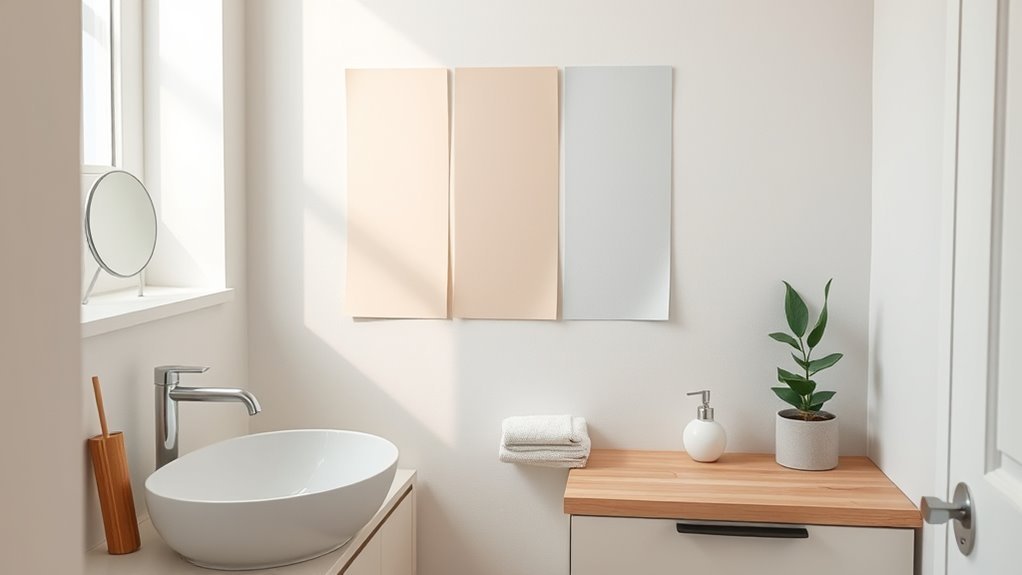
Before you plunge into color swatches and finishes, decide what matters most for your bathroom—durability, moisture resistance, appearance, or budget—and keep that priority list in front of you as you read.
Decide first what matters—durability, moisture resistance, look, or budget—and let that guide every paint choice.
Use this guide to match paints to those priorities: note high-moisture zones, assess existing ventilation systems, and pick sheens that resist mildew where airflow’s limited.
You’ll get clear steps for prepping surfaces, testing small patches, and balancing style with practicality so your Bathroom decor stays fresh longer.
Follow the checklist, compare products by performance not price alone, and choose confidently based on your ranked needs.
Quick Answer: Best Paint for Bathroom Walls
For a quick answer, you’ll want a moisture-resistant paint like latex with mildew inhibitors or a specially formulated bathroom paint.
Pick a finish that balances durability and washability—satin or semi-gloss work best for high-humidity areas.
With those choices you’ll get walls that resist mold, clean easily, and hold up over time.
Moisture-Resistant Paint Types
When you’re choosing paint for a bathroom, pick formulas labeled moisture- or mildew-resistant so walls stand up to steam and splashes. You’ll want acrylic latex or specialist bathroom paints because they resist moisture, dry quickly, and clean easily. Some contain mildewcides for extra protection; others prioritize low VOCs for indoor air quality.
Think about color psychology—lighter, cooler hues can make the space feel fresher—while selecting a paint texture that hides minor imperfections without trapping moisture. Apply a quality primer designed for humid spaces first.
Follow manufacturer instructions for application and drying times to guarantee lasting performance.
Finish And Sheen Choices
Although finish and sheen might seem cosmetic, they directly affect durability, cleanability, and how moisture behaves on your bathroom walls. You’ll want satin or semi-gloss for high-moisture zones because they resist stains, wipe clean, and aid mold prevention when combined with good bathroom ventilation. Flat hides flaws but traps moisture; use it only where splashes are unlikely. Eggshell balances appearance and maintenance in low-traffic areas.
| Sheen | Durability | Best Use |
|---|---|---|
| Flat | Low | Dry walls, ceilings |
| Eggshell | Medium | Low-traffic walls |
| Satin/Semi-gloss | High | Around tubs, sinks |
Decision Framework: Ventilation, Budget, and Trim
Because moisture, money, and trim details shape both durability and finish, you should weigh ventilation, budget, and trim choices together before picking paint for bathroom walls.
Consider bathroom decor goals alongside Ventilation systems: if you have strong extraction, you can prioritize appearance and softer sheens; weak ventilation pushes you toward tougher, washable paints.
Set a budget that balances quality and longevity—mid-range mildew-resistant latex often wins.
For trim, choose semi-gloss for easy cleaning and crisp lines, and budget extra for proper primer and caulk.
Match paint type to trim, budget, and ventilation so your finish lasts and looks intentional.
Why Moisture Resistance Matters in Bathrooms
Ventilation, budget, and trim choices all influence your paint selection, but moisture resistance determines how long that paint will actually hold up in a bathroom. You want coatings that resist peeling, mold, and discoloration from steam and splashes.
Consider how your bathroom lighting highlights flaws and how Ventilation systems reduce humidity — both affect perceived durability.
Good lighting reveals every imperfection, while proper ventilation keeps humidity—and perceived wear—under control.
- Choose paints labeled moisture- or mildew-resistant.
- Match sheen to traffic and cleaning needs.
- Prep surfaces to seal porous areas before painting.
Prioritize moisture resistance so paint stays intact under repeated damp cycles and cleaning, keeping your bathroom looking fresh longer.
Why Latex Usually Beats Oil-Based in Bathrooms
When you’re choosing paint for a bathroom, latex usually wins because it dries faster, cleans up with water, and resists yellowing and mildew better than traditional oil-based formulas.
You’ll appreciate easier touch-ups and lower VOCs, which tie into eco-friendly options if you’re concerned about indoor air quality. Latex lets you pick finishes that handle humidity without the long cure time of oil, and it preserves true hues important for color psychology—so your chosen shade stays consistent and calming.
Paints That Resist Mildew: What Works
You’ll want to pick a mold-resistant paint formula that contains mildewcides to cut down on growth.
Choose finishes made for high-humidity rooms—like satin or semi-gloss—so moisture beads and wipes away.
And don’t skip surface prep: clean, dry, and prime porous areas for the coating to perform.
Mold-Resistant Paint Formulas
Because bathrooms stay humid, choosing a paint that actively resists mold and mildew is one of the smartest steps you can take to protect surfaces and cut down on cleaning. You’ll want formulas with mildewcide additives, low VOCs, and washable finishes. Consider color psychology when picking shades—lighter tones show less staining and feel fresher. Also look for eco friendly options if indoor air matters.
- Acrylic latex with mildewcide: durable, breathable
- Antimicrobial paint: continuous protection without harsh cleaners
- Zero/low-VOC mildewcide blends: safer for occupants and the planet
Apply over clean, primed surfaces for best results.
High-Humidity Finish Options
Curious which finishes actually hold up in steamy bathrooms? You’ll want semi-gloss or satin for easy cleaning and moisture resistance, and eggshell in low-splash zones. Pair finishes with Bathroom decor choices that tolerate sheen, and rely on Ventilation systems to reduce mildew potential. Consider acrylic latex paints labeled mildew-resistant.
| Finish | Best Use |
|---|---|
| Semi-gloss | Trim, shower-adjacent walls |
| Satin | Vanity walls, medium traffic |
| Eggshell | Low-splash areas |
| High-gloss | Cabinets, trim |
| Acrylic latex (mildew-resistant) | General bathroom surfaces |
Choose finishes for practicality and style so your paint lasts.
Surface Preparation Techniques
When preparing bathroom surfaces for mildew-resistant paint, start by removing any existing mold or soap scum so the new coating can bond properly. You’ll clean, dry, and repair surfaces before painting.
Sand glossy areas, patch cracks, and wipe with a mildew-killing solution. Consider primers designed for humid rooms and choose paints labeled for mold resistance.
If you’re adding decorative murals, seal edges to prevent moisture intrusion. For sustainability, pick eco-friendly finishes with low VOCs.
Follow these steps:
- Clean and disinfect, then rinse thoroughly
- Repair and sand for a smooth surface
- Prime with a mold-blocking primer before painting
Acrylic Latex vs. 100% Acrylic vs. Hybrids
Which type of paint will actually hold up best in a humid bathroom? You’ll weigh acrylic latex, 100% acrylic, and hybrids for durability and finish.
Acrylic latex is versatile and affordable, offers good moisture resistance, and often uses eco-friendly pigments; it’s fine for most walls.
100% acrylic gives superior adhesion and flexibility, resisting peeling in steam-prone areas.
Hybrids blend waterborne convenience with solvent-like toughness, balancing performance and cleanup.
Consider how color psychology affects perceived brightness and calm when choosing sheen and tone.
Match paint choice to humidity level and traffic; lean toward higher-performance options in very damp spaces.
Primer Choices for Bathroom Walls
Wondering which primer will actually prevent peeling and mildew in a bathroom? You should pick a primer based on substrate, humidity, and finish you plan to topcoat.
Consider moisture-tolerant options when your bathroom lighting highlights flaws or when ventilation systems are marginal. Choose one that bonds, seals, and dries quickly so coats go on smooth.
- Use a high-quality acrylic primer for painted drywall.
- Pick a shellac-based primer for stubborn stains or odors.
- Opt for a mold-resistant primer in poorly ventilated spaces.
Test adhesion first, follow manufacturer directions, and let proper drying reduce future maintenance.
When to Use Stain-Blocking or Moisture-Resistant Primer
You’ll want to prime before painting whenever the surface has stains, bare patches, or high humidity exposure. Use a stain-blocking primer to seal water marks, smoke, or tannin bleed-through so stains don’t show through your finish.
Choose a moisture-resistant primer in bathrooms with persistent dampness or poor ventilation to help prevent peeling and mold.
When To Prime
When should you reach for a primer before painting bathroom walls? You should prime when moisture, stains, or drastic color changes threaten finish and durability. Consider bathroom ventilation and paint color psychology: priming helps colors read true in steamy light and prevents odors or tannins from bleeding through.
- After water damage or mold cleanup
- When switching from dark to light paint
- If ventilation is poor or humidity stays high
Choose a moisture-resistant or stain-blocking primer accordingly. Apply per instructions, let surfaces fully dry, and spot-check adhesion. Proper priming saves time, improves coverage, and protects your chosen color’s effect.
Stain-Blocking Primer Uses
If your bathroom has persistent stains, high humidity, or frequent color changes, reach for a stain-blocking or moisture-resistant primer before painting.
You’ll use stain-blocking primer when water stains, tannin bleed, or previous dark colors show through new paint. Apply it over patched drywall, around sinks, and near toilets to prevent discoloration and guarantee even coverage.
It also helps when you plan bold bathroom decor or switch to lighter hues, so you won’t need multiple topcoat layers. Choose a primer suited to your finish and coordinate with lighting options to see true color and catch missed spots before topcoating.
Moisture-Resistant Primer Reasons
Because bathrooms stay damp and see frequent splashes, you should pick a moisture-resistant or stain-blocking primer whenever humidity, mold risk, or recurring stains threaten your new paint job. You’ll protect surfaces, help paint adhere, and limit odors that undermine bathroom decor.
Choose a primer when ventilation systems are weak, when water leaks occur, or when switching from glossy tile to matte paint.
Benefits include faster drying and reduced staining. Apply per label, allow full cure, and repaint with a semi-gloss or satin finish for cleanability.
- Weak ventilation systems
- Past mold or mildew stains
- High humidity or frequent showers
Should You Use Oil-Based Paint for Trim and Doors?
Deciding whether to use oil-based paint for trim and doors comes down to the look and durability you want. You’ll get a hard, smooth finish that resists scuffs and cleans easily, useful in humid bathrooms where bathroom ventilation and mold prevention matter.
Oil-based paints yellow less on stained wood and fill minor imperfections, giving a polished result. But they’ve stronger fumes, longer dry times, and require mineral spirits for cleanup, so plan ventilation and drying schedules.
If you prefer faster recoats and lower odor, modern water-based alkyds mimic oil benefits without many drawbacks—choose based on priorities.
Primers for Oil-Based Trim and Doors
Now that you’ve weighed oil versus water-based options for trim and doors, pick the right primer to get the durable, smooth finish oil paints promise. Choose a bonding or stain-blocking primer formulated for oil-based topcoats; it seals tannins and adhesion issues so your trim stays crisp.
Good primers also help with mold prevention in humid bathrooms when combined with proper bathroom ventilation. Consider:
- Shellac-based primers for tough stain and odor sealing.
- Oil-based primers for traditional compatibility and durability.
- Waterborne alkyd primers for lower odor with strong bonding.
Apply per manufacturer instructions and allow full cure before painting.
Which Paint Sheen Works Best in Bathrooms?
When you’re choosing a sheen for bathroom walls, think about moisture, durability, and how much surface imperfections you’ll want to hide. You’ll pick a finish that resists stains, cleans easily, and fits your Bathroom decor while working with Ventilation systems to limit mildew. Consider higher sheen where splashes occur and lower sheen elsewhere for balance. Here’s a quick comparison:
| Area | Benefit | Cleanability |
|---|---|---|
| Near tub/shower | Water resistance | High |
| Vanity walls | Stain resistance | Medium |
| Ceiling | Hides flaws | Low |
Satin vs. Semi-Gloss vs. Eggshell: When to Choose
Although all three sheens can work in bathrooms, pick satin when you want a soft, durable finish that hides minor imperfections. Satin balances subtle reflectivity with forgiveness.
Choose semi-gloss for trim, doors, or areas near showers where moisture and frequent wiping demand higher resistance.
Use eggshell in low-moisture guest baths or ceilings where you prefer minimal sheen.
Consider how bathroom lighting highlights texture and how ventilation systems affect moisture exposure when deciding.
- Satin: hides flaws, moderate sheen
- Semi-gloss: moisture-resistant, easy to clean
- Eggshell: low sheen, cozy look
Match sheen to room function and airflow.
Paint Sheen: Cleaning, Durability, and Appearance
When you pick a sheen for your bathroom, think about how easy it’ll be to clean and how well it’ll stand up to moisture and scrubbing.
Higher-gloss finishes wipe clean with less effort and resist wear, while lower sheens hide imperfections but can be less durable.
Balance the look you want with the maintenance you’re willing to do.
Sheen and Cleanability
Because moisture and mess are inevitable in bathrooms, choosing the right paint sheen matters for both cleaning and long-term appearance. You’ll balance look, maintenance, and indoor health: color psychology influences mood, while eco-friendly options reduce fumes.
Higher sheens wipe better and resist stains, but they’ll reveal imperfections. Lower sheens hide flaws but need gentler cleaning.
- Satin: good wipeability, moderate sheen, versatile.
- Eggshell: subtle finish, easier on walls, less durable for scrubbing.
- Semi-gloss: toughest to clean, highlights flaws, ideal for trim and high-moisture areas.
Pick sheen based on traffic, light, and finish preferences.
Gloss Versus Durability
If you want a bathroom that both looks crisp and stands up to scrubbing, gloss level directly affects how long the finish will last and how it handles wear. You’ll choose higher gloss for high-traffic zones because it resists moisture, stains, and frequent cleaning.
Satin or semi-gloss balances durability and softer reflection. Consider how sheen interacts with color psychology—glossier surfaces feel brighter and more energetic, while matte feels subdued.
Pick eco-friendly options in higher sheens to avoid VOCs without sacrificing toughness. Test samples under your bathroom light, scrub them, and pick the sheen that meets maintenance needs and aesthetic goals.
Prepping Bathroom Walls for Painting
Before you pick up a brush, clear and repair the surfaces so the paint will adhere and look professional. You’ll remove fixtures, clean grime, and sand glossy finishes to help new paint bond. Consider how your Bathroom decor and existing wall textures will affect priming and color choice. Prep steps tidy the job and improve durability.
- Remove hardware and clean with a mild detergent.
- Sand shiny or uneven wall textures lightly; fill dents and nail holes.
- Apply a stain-blocking primer where needed and let it dry fully.
Finish prep guarantees smoother application and longer-lasting results.
Fixing Mold, Mildew, and Water Stains Before Painting
When you tackle mold, mildew, and water stains now, you’ll prevent recurring problems and guarantee the new paint sticks and looks clean. Start by wearing gloves, scrubbing affected areas with a mildew cleaner or diluted bleach, rinsing, and drying thoroughly. Repair leaks and improve humidity control to stop stains returning. Use a stain-blocking primer on stubborn marks. Keep ventilation systems running during and after painting to speed drying and reduce mold risk.
| Problem | Action | Follow-up |
|---|---|---|
| Mold | Clean + disinfect | Dry fully |
| Stains | Prime | Monitor humidity |
Best Paints for Poorly Ventilated Bathrooms
Although small bathrooms often lack airflow, you can still get durable, mildew-resistant finishes by choosing the right paint. Pick semi-gloss or satin for trim and walls since they repel moisture and wipe clean, protecting bathroom artwork from steam.
Use mold- and mildew-resistant formulations labeled for bathrooms, and prioritize paints that bond well to damp surfaces. Pair paint with practical habits: run ventilation fans during and after showers, dry surfaces, and hang artwork away from direct steam.
Recommended options:
- Semi-gloss acrylic enamel for high-moisture zones
- Satin acrylic for balanced sheen and washability
- Specialty bathroom paints with built-in mildew inhibitors
Low-VOC and Zero-VOC Paint Options for Bathrooms
When you’re choosing low‑ or zero‑VOC paint for a bathroom, know that “low” means reduced solvents while “zero” allows only trace levels.
Check labels for durability and mildew‑resistant formulas, since VOC‑friendly paints can still be tough enough for humid rooms.
If moisture is a concern, pick a scrub‑resistant finish rated for bathrooms rather than relying on VOC claims alone.
Low‑ and Zero‑VOC Differences
If you’re sensitive to smells or want a healthier indoor environment, choosing between low‑VOC and zero‑VOC paints matters more than you might think. Low‑VOC formulas greatly reduce emissions compared with traditional paints, while zero‑VOC options aim to eliminate most of those airborne chemicals altogether.
You’ll pick based on scent tolerance, surface needs, and budget. Eco friendly options often overlap with modern formulations, yet Historical styles may require specific pigments not available in zero‑VOC lines.
- Low‑VOC: reduced odor, broader color/pigment choices
- Zero‑VOC: minimal fumes, best for bedrooms/bathrooms
- Tradeoffs: cost, finish, and availability
Durability and Moisture Resistance
Because bathrooms face constant humidity and frequent splashes, you’ll want paint that stands up to moisture without sacrificing low- or zero‑VOC benefits. Choose low- or zero‑VOC formulations labeled for kitchens and baths; they include mildewcides and tougher binders that resist peeling and staining.
Pick semi-gloss or satin sheens for easy cleaning, but balance sheen with bathroom decor and your lighting choices so surfaces don’t glare.
Prep drywall and caulk seams to prevent trapped moisture. Clean regularly and ventilate to extend life.
Even eco-friendly paints perform well when you combine proper product selection, surface prep, and consistent ventilation.
Picking Bathroom Paint Colors That Hide Water Marks
Although you can’t stop every splash, choosing the right paint color can make water marks much less noticeable, so you’ll spend less time scrubbing and more time enjoying your space. Pick mid-tones with subtle warmth; they mask streaks better than stark whites or very dark hues.
Consider finishes and pigments too — vintage murals-inspired palettes and eco-friendly pigments offer durable, attractive options.
- Choose warm mid-tones for even concealment.
- Use satin or eggshell to hide imperfections without showing sheen.
- Test samples near sinks and showers to view real-world marks.
Aim for practical, tested colors rather than trends.
Choosing Paint Colors for Small or Dim Bathrooms
Water marks and lighting both change how a color reads, so after you pick hues that hide splashes you’ll want to rethink those choices for small or dim bathrooms. You should favor lighter, warmer neutrals to visually expand tight spaces and counter weak illumination.
Test samples on multiple walls at different times; natural and artificial light shift tones. Use contrast sparingly—trim or a single accent wall—to avoid crowding the room.
Coordinate paint with bathroom accessories to create cohesion, and guarantee your ventilation systems reduce humidity that can dull color over time. Choose colors that stay true under low light.
Finishes That Help Reflect Light in Dim Bathrooms
If you want to boost brightness in a dim bathroom, choose paint finishes that bounce light instead of swallowing it. You’ll favor sheens that reflect subtly without highlighting flaws; satin and eggshell offer gentle glow, while semi-gloss sends back more light for trims and doors.
Consider how color psychology affects perceived light—paler tones paired with sheen feel airier. Also weigh eco-friendly options to avoid VOCs that irritate in small spaces.
Paler hues and the right sheen make a bathroom feel brighter—choose low‑VOC paints for healthier indoor air.
Quick tips:
- Satin: soft reflection, hides minor texture
- Semi-gloss: highest reflectivity, easy to clean
- Eggshell: balanced sheen for walls
Budget-Friendly Bathroom Paint Options That Perform
You don’t need to spend a lot to get paint that holds up in a bathroom; look for durable budget brands with mold- and mildew-resistant formulas.
Choose moisture-resistant finishes like satin or semi-gloss for high-traffic areas.
Focus your dollars on proper priming to extend the life of the job.
Simple, affordable prep—cleaning, patching, and using a good primer—often matters more than the most expensive topcoat.
Durable Budget Paints
Looking for paint that holds up in a damp, high-traffic bathroom without breaking the bank? You can choose durable, budget-friendly options that resist staining and scrub easily, helping your bathroom accessories stay cleaner and lasting longer when paired with proper ventilation systems.
Consider these practical picks:
- Economy acrylic latex: affordable, easy to apply, wipes clean.
- Contractor-grade eggshell: hides flaws, tougher than flat, good for walls near sinks.
- Satin enamel blend: offers extra durability where traffic is highest.
Pick a color that hides wear, prep surfaces well, and maintain ventilation to extend the paint’s life.
Moisture-Resistant Finishes
Because bathrooms face constant moisture, choose finishes that shrug off humidity and resist mildew while staying budget-friendly. You’ll want semi-gloss or satin latex formulas labeled mildew-resistant; they wipe clean and reflect enough light to hide damp patches.
Look for water-based paints with antimicrobial additives for extra protection without big expense. When color mixing, keep samples small and test in a steamy room to see true tones.
Buy only what you’ll use and follow proper paint storage—seal cans tightly and store in a cool, dry place—to preserve those mildew-resistant properties between touch-ups.
Affordable Prep Tips
When prepping on a budget, focus on a few high-impact steps that cut future repairs and keep paint performing well. You’ll save money and protect your bathroom decor by being selective with materials and effort.
Clean surfaces, repair chips, and choose durable, low-VOC options like eco friendly paints where possible.
- Wipe walls with mild detergent, rinse, dry; good adhesion beats pricey primers.
- Sand glossy spots lightly, patch cracks with affordable spackle, then spot-prime.
- Compare washable, semi-gloss eco friendly paints for durability and low odor; small samples prevent costly mistakes.
Stick to these and you’ll stretch your budget.
High-End Paints and Specialty Coatings Worth It
If you want the best durability and stain resistance for a bathroom, investing in high-end paints or specialty coatings often pays off. You’ll get thicker sheens, enhanced mildew inhibitors, and coatings formulated for humid spaces so they last longer between touch-ups.
Invest in high-end, moisture-resistant paints for longer-lasting, mildew-resistant bathroom finishes with fewer touch-ups.
Pair these paints with solid bathroom ventilation to reduce moisture load, and consider waterproof wallpaper in zones prone to splashes.
Specialty options like epoxy or moisture-resistant primer create hard-wearing finishes for high-traffic baths, while ceramic-infused paints boost scrubbability.
Upfront cost is higher, but you’ll save time and maintenance over years, especially in poorly ventilated bathrooms.
Paint Brands With Mildew Warranties to Consider
Look for brands that back their bathroom paints with a mildew guarantee so you know the finish is designed for damp conditions. Check the specific technology behind the warranty—biocides, fungicides, or mold-resistant binders—and whether those features are built into the formula or require a topcoat.
Read the claim coverage and conditions carefully so you understand what voids the warranty and what proof you’ll need if you file a claim.
Brands With Mildew Guarantees
Several major paint makers now back their bathroom formulas with explicit mildew or mold-resistance warranties, so you can choose products that come with documented protection rather than relying on claims alone.
You’ll still need proper bathroom lighting and ventilation systems to prevent moisture buildup, but choosing a warranteed product gives you recourse if mold appears under normal use.
Look for clear terms, coverage length, and required maintenance. Compare brands that specify application conditions and exclusions.
Examples to evaluate:
- Brand A: multi-year mildew warranty with application guide
- Brand B: transferable warranty for single-family homes
- Brand C: warranty conditional on proper ventilation
Warrantied Paint Technology
Having warranty-backed products is only the start; now you’ll want to compare the technologies behind those guarantees so you can pick a paint that fits your bathroom’s conditions and maintenance habits.
Look for paints with antimicrobial additives, moisture-resistant binders, and durable film-forming resins that resist mildew growth between cleanings.
Consider how Bathroom lighting can affect perceived staining and fading—UV-stable formulations help.
Also factor in your ventilation systems: stronger exhausts reduce moisture load, letting less aggressive but low-VOC mildew-resistant paints perform well.
Match advertised tech to your real environment and maintenance routine to choose a warrantied paint that lasts.
Claim Coverage And Conditions
Which brands actually stand behind their mildew claims, and what hoops will you need to jump through to keep the warranty valid? You’ll check coverage limits, required prep, and proof of purchase. Warranties often demand proper ventilation, moisture control, and manufacturer-approved primers or eco friendly finishes. Read terms for exclusions like existing mold or improper use.
Consider how color psychology affects fading or staining expectations when choosing hues.
- Keep humidity within recommended levels and document maintenance.
- Use specified primers and follow application instructions exactly.
- Register your product and retain receipts to validate any future claim.
Calculate Paint and Primer Quantities Quickly
Before you open a can, measure each wall and door or window opening so you can calculate surface area and know exactly how much paint and primer you’ll need. Subtract openings, then multiply by coat count—usually two paint coats plus one primer coat for raw or patched areas.
Check product coverage on labels (square feet per gallon) and factor for textured surfaces or trim.
Consider bathroom decor choices and how color changes perception; darker tones may need extra coats.
Also account for moisture from ventilation systems that can affect finish longevity, prompting a slightly heavier primer application in damp-prone bathrooms.
Tools and Supplies You’ll Need for a Bathroom Paint Job
Once you’ve calculated square footage and picked your paint, gather the right tools so the job goes smoothly: a quality roller and frame with 3/8–1/2″ nap for bathroom walls, angled brushes for trim and corners, a 2–3″ sash brush for cutting in, painter’s tape, drop cloths or plastic sheeting, a sturdy step ladder, a paint tray and liners, sandpaper and a sanding block, spackling compound and a putty knife for repairs, a damp sponge and bucket for cleaning, and a respirator or mask plus gloves and eye protection for safety—add mildew-resistant primer and bathroom-grade (moisture-resistant) paint, and you’ll be set to start.
- Tape, trays, towels
- Safety gear, mask, goggles
- Sanding, spackle, sponge
Also check ventilation systems before starting; good airflow preserves finishes and protects you.
Choose colors and finishes that suit your bathroom decor and humidity levels.
Step-by-Step Painting Process for Bathroom Walls
Before you start painting, you’ll want to clean the walls and fix any mold, mildew, or loose paint so the finish will stick.
Next, you’ll prime spots that need extra adhesion or stain blocking to guarantee even coverage.
Finally, you’ll apply the bathroom-grade paint in thin, even coats for a durable, washable surface.
Preparation And Cleaning
While proper prep might seem tedious, it’s the step that’ll make your paint look professional and last longer. Start by clearing fixtures and small bathroom decor items, protecting surfaces with drop cloths, and turning on ventilation systems to dry surfaces and disperse dust.
Clean walls with a mild detergent or TSP substitute, rinse, and let fully dry.
Scrape loose paint, sand rough spots smooth, and wipe away residue.
Repair holes or mold with appropriate products, letting them cure before proceeding.
- Remove hardware and cover fixtures
- Deep-clean grout and soap scum
- Sand and dust thoroughly before priming
Priming And Painting
As you move from prep to paint, start by applying a high-quality primer to guarantee adhesion and mildew resistance on damp-prone bathroom walls. Roll primer in thin, even coats, cutting in corners with a brush. Let it dry fully before inspecting for imperfections; sand lightly if needed.
Choose a semi-gloss or satin finish for durability, and paint in small sections to maintain a wet edge. Coordinate timing with ventilation systems and bathroom lighting to ensure proper drying and color accuracy.
Apply two coats, allowing manufacturer-recommended dry times, and clean tools promptly to preserve results and hygiene.
Tips for Painting Around Fixtures, Tile, and Trim
If you want clean, professional-looking edges around faucets, tile, and trim, take your time and use the right tools: a quality angled sash brush for trim, painter’s tape rated for bathrooms, a utility knife to score tape edges, and a small foam roller for flat areas.
Protect bathroom decor and lighting fixtures by removing or masking hardware. Work from top to bottom, cutting in before rolling. Use thin coats and blend into grout lines carefully. Clean up seams while paint is wet for crisp lines.
- Remove outlet covers and tape edges
- Paint trim with steady brush strokes
- Feather edges into tile grout
How Long to Wait Between Coats and Before Use
Because bathroom paint needs to resist moisture and wear, you should wait the manufacturer’s recommended recoat time—usually 2–4 hours for latex and 24 hours for oil-based—before applying another thin coat. Allow full cure (often 7–30 days) before heavy use. Follow the can’s instructions and factor in humidity, ventilation, and temperature, which can lengthen drying and curing times.
You’ll avoid tacky finishes and premature wear by spacing coats properly and ensuring good airflow. Choose products balancing color psychology and durability, and consider eco-friendly options with low VOCs that still meet cure-time specs so your bathroom looks great and stays healthy.
Cleaning and Maintenance to Extend Paint Life
When you keep up with simple cleaning and quick repairs, your bathroom paint will look fresh and last far longer. Wipe walls weekly with a mild detergent solution to remove soap scum and prevent mold; rinse and dry. Spot-treat stains promptly and caulk gaps to stop moisture intrusion. Choose finishes that suit Color psychology—matte hides flaws, satin resists moisture—and consider eco friendly options for low-VOC formulas.
- Use a soft sponge and gentle cleaner; avoid abrasive pads.
- Inspect grout and sealant monthly; address cracks immediately.
- Ventilate during and after showers to reduce humidity and prolong finish.
When to Repaint: Signs Your Bathroom Paint Needs Replacement
Although small scuffs and discoloration might seem minor at first, you should repaint your bathroom once you notice persistent peeling, widespread mold growth, or stains that don’t come out with cleaning.
When peeling, persistent mold, or stubborn stains appear, it’s time to repaint your bathroom.
You’ll also repaint when moisture causes bubbling or when paint chalks under touch. Check ceilings and corners near showers; recurring mildew indicates ventilation design problems that repainting alone won’t fix.
Faded color or uneven sheen that clashes with your bathroom décor signals it’s time for a refresh.
If repairs or a ventilation upgrade are planned, repaint afterward to guarantee adhesion and durability, using mildew-resistant, high-quality bathroom paint.
Frequently Asked Questions
Can I Use Bathroom Paint on Ceilings and Shower Enclosures?
Yes — you can use bathroom paint on ceilings and shower enclosures, but choose mildew-resistant formulations; consider paint finish options (semi-gloss for trim, satin for walls) and follow color selection tips to hide imperfections and brighten space.
Are There Antimicrobial Paints That Actively Kill Bacteria?
Like a guardian shield, yes—you can use antimicrobial coatings that help with bacteria elimination; they contain active agents that reduce microbes on surfaces, but they aren’t a sterilizer, so you’ll still need regular cleaning and proper ventilation.
Will Bathroom Paint Peel if I Install a New Exhaust Fan Later?
Yes — if you install a new exhaust fan later, paint can peel if installation affects exhaust fan compatibility or disrupts surfaces; you should address paint adhesion concerns by using proper prep, compatible fixtures, and re-sealing or repainting as needed.
Can I Paint Over Wallpaper in a Bathroom Safely?
Yes — you can, but tread carefully: like peeling wallpaper from a damp cliff, Wallpaper removal and Surface preparation matter. You’ll need to remove loose paper, clean, repair, prime, then use a moisture-resistant paint for lasting results.
Do Tinted Primers Affect Final Mildew Resistance?
Yes—tinted primers can slightly affect mildew resistance; you’ll want mildew-resistant primers and proper priming techniques to maximize mildew prevention. Don’t rely on tint alone; use a mold-resistant primer and finish with mildew-resistant paint.
Conclusion
You’ve got the tools to pick paint that resists moisture, hides wear, and fits your budget—so pick something durable and ventilate well. Remember: bathrooms can produce up to 20 gallons of water vapor a day in a busy household, so moisture resistance isn’t optional. Choose quality latex for ease, use semi-gloss on trim, and wait recommended drying times. With regular cleaning and good ventilation, your paint will last longer and look fresher.
