
What Paint to Use on Exterior Walls? Top Picks
Pick a high-quality exterior acrylic latex for most walls — it’s durable, UV‑resistant, mildew‑resistant, and cleans up with water. Use elastomeric coatings on cracked or highly porous masonry to seal and flex with thermal movement. For metal or specialty trim, consider rust‑inhibiting primers and oil‑based or specialty metal paints. Always prep and prime bare or patched areas, test a small patch, and balance upfront cost with long‑term durability if you want a dependable finish and more guidance.
Quick Decision Guide: Choose the Right Exterior Paint
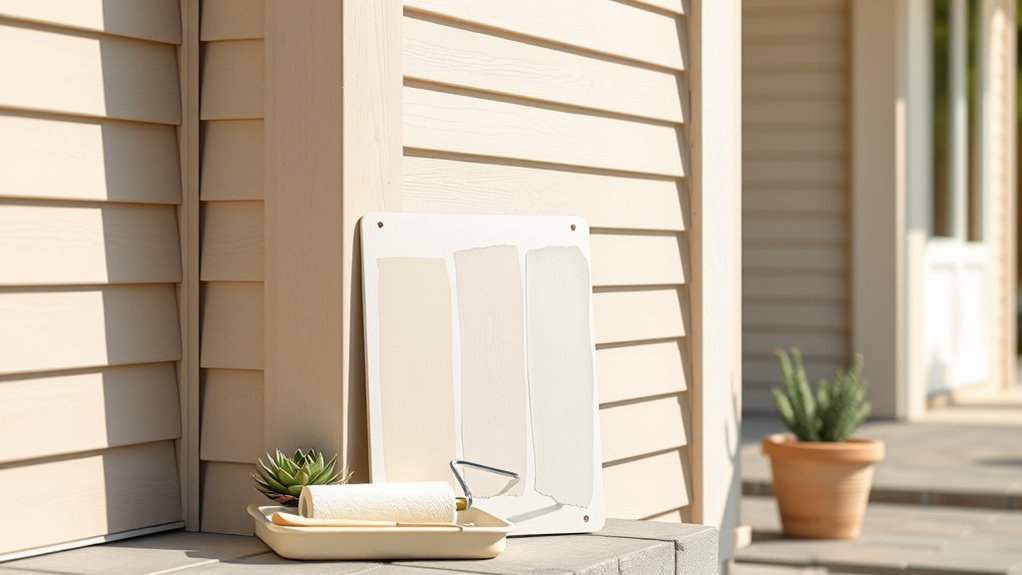
Wondering which exterior paint will hold up best? You’ll first assess surface type, climate, and maintenance willingness to narrow choices quickly.
Prioritize durability, UV resistance, and mildew control while considering color selection to complement architecture and neighborhood.
Prioritize durability, UV resistance, and mildew control while choosing colors that complement your home’s style and neighborhood
Check label performance ratings and warranty details, then test small patches to confirm adhesion and finish.
Plan application techniques—brush, roller, or sprayer—based on texture and access, and prep thoroughly: clean, sand, and prime where needed.
Time projects for mild, dry weather. With these clear steps, you’ll choose paint that lasts and reduces costly touchups.
Core Decision: Latex vs. Oil‑Based Exterior Paint
You’ll need to weigh coverage and durability against dry time and cleanup when choosing between latex and oil‑based exterior paint.
Latex usually covers well, dries fast, and cleans up with water, while oil gives tougher durability but takes longer to dry and needs solvents.
Think about your climate, project timeline, and willingness to use mineral spirits before deciding.
Coverage And Durability
While both latex and oil‑based exterior paints can protect your home, they differ in how they cover surfaces and how long that protection lasts. You’ll pick based on climate, weather conditions, and surface preparation.
Latex often spreads easier, resists cracking, and flexes with siding, giving good long‑term coverage in variable climates.
Oil‑based coats level out to a smoother finish and can hide imperfections, but may yellow and need recoating differently.
Consider maintenance cycles and expected wear when choosing.
- Latex: breathable, flexible, resists fading
- Oil: smooth, high initial hide
- Prep: essential for adhesion
- Longevity: depends on exposure and upkeep
Dry Time And Cleanup
Because dry time and cleanup affect how quickly you can finish a job and get back to normal, think about them early when choosing between latex and oil‑based exterior paint.
You’ll find latex dries faster, so you can apply a second coat the same day using simple drying techniques like cross‑ventilation and warm, low‑humidity conditions. Cleanup is easier, too—you’ll use soap and water instead of harsh paint solvents.
Oil‑based paint needs longer cure times and tougher cleanup with mineral spirits, so plan for extended workspace protection and disposal.
Weigh speed and convenience (latex) against durability and sheen preferences (oil).
Why Acrylic Exterior Paint Is the Best All‑Purpose Choice
You’ll find acrylic exterior paint gives you the best balance of durability and weather resistance, standing up to sun, rain, and temperature swings without cracking.
It also keeps color longer and lets walls breathe, reducing moisture buildup and peeling.
That combination makes acrylic the go‑to all‑purpose choice for most exterior surfaces.
Durability and Weather Resistance
When your home’s exterior faces sun, rain, wind, and temperature swings, acrylic exterior paint stands up better than most alternatives, thanks to its flexible film, UV resistance, and strong adhesion.
You want weatherproof coatings that resist cracking and peeling, and acrylic delivers paint longevity so you repaint less often. It sheds water, tolerates moisture cycles, and bonds to wood, stucco, and masonry.
- Flexible film absorbs thermal expansion.
- UV-stable resins prevent surface breakdown.
- Hydrophobic surface repels rain and reduces staining.
- Strong adhesion limits moisture-driven blistering.
Pick acrylic for durable, low-maintenance protection.
Color Retention and Breathability
If you want exterior paint that keeps its hue and still lets walls breathe, acrylic’s UV-stable pigments and flexible film deliver long-lasting color without trapping moisture. You’ll benefit from superior color longevity and reliable moisture control: acrylic resists fading, handles temperature swings, and permits vapor diffusion so substrate rot and blistering are less likely. Apply on clean, primed surfaces; recoat timelines are forgiving. For quick comparison, here’s a simple visual:
| Feature | Benefit |
|---|---|
| UV resistance | Slow fading |
| Flexibility | Crack prevention |
| Vapor permeability | Moisture control |
| Adhesion | Lasting finish |
When Elastomeric Coatings Outperform Standard Paints
Because extreme weather and surface cracks demand more than regular latex, elastomeric coatings give you superior protection and flexibility on exterior walls.
You’ll see Elastomeric advantages in weatherproof properties and flexibility benefits that bridge hairline cracks and block moisture.
Consider surface compatibility before you apply; prep matters for long term performance and moisture resistance.
Note maintenance requirements differ from standard paints—repair and recoating schedules change.
- Thick, flexible membrane fills and seals small cracks.
- Superior weatherproof properties reduce water intrusion.
- Application techniques require thicker coats and longer cure times.
- Surface compatibility dictates adhesion and durability.
Best Exterior Paint for Wood Clapboard and Siding
Elastomeric coatings work great on masonry, but for wood clapboard and siding you’ll want a paint that flexes with seasonal movement while protecting against moisture and UV.
Choose high-quality acrylic latex from the best paint brands that offer mildew inhibitors and durable pigments.
Prep thoroughly: scrape, sand, repair rot, and prime any bare wood with an oil-based or high-bond primer.
Apply two coats with proper application techniques—back-brushing lap joints and maintaining wet edges—to guarantee adhesion and coverage.
Pick semi-gloss or satin sheens for easier cleaning and added weather resistance, matching finish to exposure and style.
Best Exterior Paint for Stucco and Textured Masonry
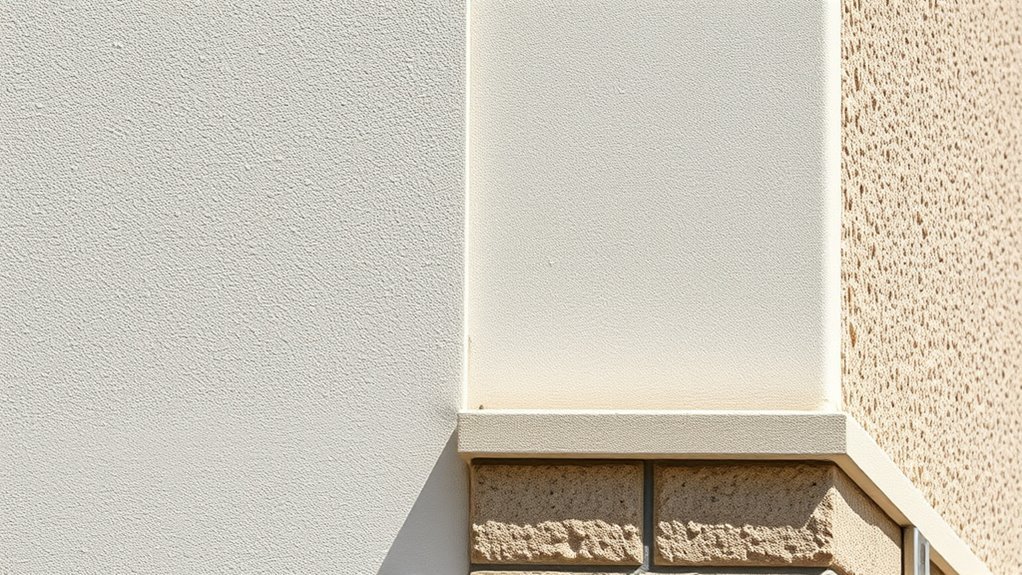
For stucco and textured masonry, pick a breathable, flexible acrylic or elastomeric-modified exterior paint that resists moisture while allowing trapped vapor to escape.
You’ll want stucco paint options formulated to bridge hairline cracks and cling to rough, uneven surfaces. Choose a finish that highlights texture without pooling in crevices; matte or low-sheen works best for authenticity and durability.
Prep includes cleaning, repairing voids, and using a masonry primer if recommended.
Consider these textured masonry finishes and application tips to get consistent coverage and long-lasting protection:
- Elastomeric acrylic for crack resistance
- Breathable masonry primer
- Low-sheen acrylic for texture
- High-build coatings for deep relief
Best Exterior Paint for Brick, Concrete, and Masonry
Moving from textured stucco, brick, concrete and other masonry demand paints that handle denser, less porous surfaces and different moisture dynamics. You’ll want breathable masonry or elastomeric acrylics that resist efflorescence and tolerate temperature shifts. Pick products labeled for masonry; consider mineral-based silicate paints for historic brick. Prep matters: clean, repair mortar, use masonry primer and follow recommended application techniques—roller or masonry brush for penetration. Choose low-VOC, UV-resistant formulas suited to your climate. Compare options in the quick reference below.
| Paint Type | Best Use |
|---|---|
| Elastomeric Acrylic | Cracked concrete |
| Masonry Primer | Bonding |
| Silicate Mineral | Historic brick |
| Latex Masonry | General exterior |
Best Exterior Paint for Metal and Aluminum Siding
Metal and aluminum siding need paints that grip smooth, nonporous surfaces and shrug off rust and moisture, so choose high-adhesion acrylics or oil-based primers paired with 100% acrylic exterior topcoats designed for metal.
You’ll prep by cleaning, de-rusting, and lightly abrading surfaces; then use appropriate metal paint options and aluminum coating techniques to guarantee long life.
Apply thin, even coats and follow manufacturer recoat times. Consider specialized metal primers for bare steel and etch primers for aluminum.
- Clean & degrease
- Sand or etch
- Primer for metal
- Two acrylic topcoats
Best Exterior Paint for Fiber‑Cement and Composite Panels
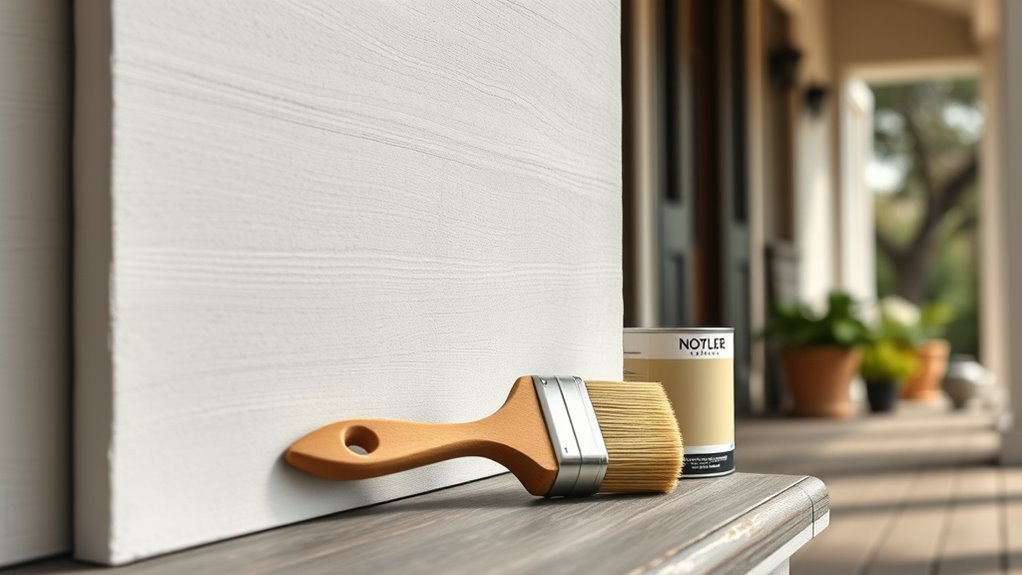
When you’re coating fiber‑cement or composite panels, pick high‑quality 100% acrylic exterior paints or acrylic latex formulas specifically labeled for cementitious surfaces to guarantee adhesion, flexibility, and resistance to cracking and moisture.
You’ll want a primer rated for fiber cement to block tannins and improve bonding, then apply fiber cement paint in two coats for uniform coverage. Choose breathable, mildew‑resistant finishes to handle temperature swings and moisture.
For composite panel coatings, verify compatibility with the substrate and follow manufacturer prep—clean, sand, and use recommended primers.
Proper prep and the right acrylic systems assure long‑lasting, low‑maintenance exterior results.
Paint Choices for Exterior Trim, Doors, and Windows
When you pick paints for trim, doors, and windows, choose durable finishes that stand up to nicks and moisture.
For doors, go with fade-resistant formulas that keep color vivid in sun-exposed spots.
And for window frames, select coatings designed for adhesion and long-term weather protection.
Durable Trim Finishes
Although trim only covers a small portion of your home’s exterior, choosing the right paint for doors, windows, and trim makes a big difference in durability and curb appeal.
Opt for high-quality, exterior-grade acrylic latex or a hybrid alkyd formula designed for trim because they resist cracking, yellowing, and mildew while holding up to frequent handling and weather.
You’ll want durable finishes that suit different trim materials and application methods. Consider these practical choices:
- High-gloss acrylic latex for wood trim — easy to clean, shows detail.
- Satin hybrid alkyd for metal frames — tough, low-maintenance.
- Semi-gloss for PVC or composite — flexible, adhesion-friendly.
- Oil-modified enamel for historic woodwork — hard, long-lasting.
Fade-Resistant Door Paints
You’ve already picked durable finishes for trim, but doors get more sun and handling, so choosing fade-resistant paints matters for long-term color and appearance.
For doors, pick acrylic latex or urethane-modified enamels formulated as fade resistant options; they balance flexibility, impact resistance, and UV protection.
Look for colorfast technologies like lightfast pigments, UV absorbers, and polymer stabilizers that lock pigment in and slow degradation.
Satin or semi-gloss sheens mask wear and are easy to clean.
Prep properly with primers rated for exterior use and follow manufacturer recoat windows so warranties remain valid and color stays true.
Window Frame Coatings
Because window frames sit at the junction of weather and finish, pick coatings that resist moisture, UV, and abrasion while matching the performance of your trim and doors.
You’ll choose based on window frame materials—wood, aluminum, vinyl—and the required weather resistance coatings. Opt for high-quality exterior acrylic latex on wood for flexibility and breathability, and polyurethane or alkyd-modified finishes where abrasion resistance matters.
For metal frames, use rust-inhibiting primers with enamel or epoxy topcoats. Vinyl benefits from specialized acrylics that won’t crack.
Match sheen to maintenance needs, and always prep surfaces and use compatible primers for lasting results.
- Wood: acrylic latex
- Metal: primer + enamel
- Vinyl: specialized acrylic
- High-abrasion: polyurethane
How Sheen Affects Exterior Durability and Cleaning
When you pick a sheen for your exterior paint, you’re deciding how tough the surface will be and how easy it’ll stay clean over time.
You should weigh sheen impact on durability: glossier finishes resist moisture, stains, and abrasion better than flatter ones. That means you’ll scrub less and avoid premature touch-ups.
Also consider cleaning frequency—higher sheen lowers how often you’ll need to wash siding or trim.
However, gloss can highlight surface imperfections, so prep matters.
Keep in mind: glossier finishes reveal flaws more easily, so thorough surface prep is essential for a smooth look.
Choose a sheen that balances resilience and appearance for your climate and exposure, and follow proper maintenance to maximize longevity and curb appeal.
Which Sheen to Use on Walls, Trim, and Accents
For the main walls, you’ll usually want a low- to mid-sheen like satin or eggshell that balances durability with hiding imperfections.
For trim and accents, choose higher sheens—semi-gloss or gloss—so they resist scuffs and provide crisp contrast.
I’ll walk through specific sheen recommendations and when to use each.
Best Sheen For Walls
Which sheen should you pick for each surface around your home? You’ll want to balance durability, appearance, and maintenance when choosing from the best finishes.
Matte hides imperfections and gives a modern, subtle sheen effects; it’s forgiving on large wall areas.
Eggshell offers a slight glow and cleans better.
Satin adds durability and a soft luster for higher-traffic walls.
Semi-gloss is tough and reflective—reserve for small accent walls where you want contrast and easy cleaning.
- Matte — hides flaws, low reflectivity
- Eggshell — subtle glow, moderate cleanability
- Satin — durable, soft luster
- Semi-gloss — high sheen, easy maintenance
Sheen Choices For Trim
Although trim only covers a small area, it frames your rooms and should stand out, so pick a sheen that balances durability and contrast with your walls. You’ll choose between gloss, semi-gloss, and satin based on trim materials and desired contrast. Gloss resists scuffs; semi-gloss is versatile; satin hides flaws. For wood, metal, or PVC, prep and primer matter. Match accents to walls subtly—higher sheen for trim, lower for walls. Use the table below to compare options quickly.
| Sheen | Durability | Best Trim Materials |
|---|---|---|
| Gloss | High | Wood, metal |
| Semi-gloss | Medium-High | Wood, PVC |
| Satin | Medium | Wood, painted MDF |
Priming Basics: When You Must Prime Exterior Surfaces
When you’re prepping exterior walls, priming isn’t optional in several common situations: bare wood, new masonry, metal, patched areas, or surfaces with stains or tannin bleed.
You should use priming techniques that block stains, promote adhesion, and equalize porosity. Essential primers save time and prevent peeling or discoloration, so don’t skip them.
- Seal stains and tannins to stop bleed-through.
- Prime bare or weathered wood to prevent uneven absorption.
- Treat patched drywall or stucco for uniform finish.
- Use rust-inhibiting primer on bare metal before topcoat.
Follow application instructions and dry times for best results.
Primer Selection by Substrate (Wood, Masonry, Metal)
When you pick a primer for exterior walls, match it to the substrate: use a stain-blocking, oil- or alkyd-based primer for bare wood or tannin-heavy surfaces.
For masonry, choose a breathable, masonry-specific primer or masonry paint to handle moisture and efflorescence.
On metal, use a rust-inhibiting primer or one formulated for ferrous or galvanized surfaces to guarantee proper adhesion and corrosion protection.
Wood Surface Primer Choice
Pick a primer that matches the type of wood and the conditions it’ll face: exterior-grade acrylic or oil-based primers for siding and trim, stain-blocking formulas for knotty or tannin-rich species, and bonding primers for smooth, dense hardwoods.
You’ll assess porosity, weather exposure, and previous coatings during surface preparation, then choose among common wood primer types.
Apply according to manufacturer directions, sanding and cleaning between coats, and allow proper dry time before topcoating.
Consider mildew-resistant and UV-stable options for longevity.
- Porous softwood: high-penetration acrylic
- Knotty pine: stain-blocking oil
- Hardwood: bonding primer
- Previously painted: adhesion promoter
Masonry Primer Requirements
Because masonry draws and releases moisture differently than wood, you’ll need primers formulated to seal pores, resist efflorescence, and bond to mineral surfaces. Inspect and clean; masonry surface preparation must remove dust, salts, and loose mortar. Choose a breathable masonry primer or a deep-penetrating acrylic sealer for porous brick, CMU, or stucco. Follow primer application techniques: brush for crevices, roller for broad areas, and allow full cure before topcoat. Test a small patch for adhesion. Use alkaline-resistant, mineral-bonding formulas where efflorescence is likely. Maintain manufacturer wet-film thickness and recoat windows to guarantee lasting protection.
| Surface | Primer type |
|---|---|
| Brick | Masonry acrylic |
| Stucco | Silicate/sealer |
| CMU | Penetrating primer |
| Stone | Mineral primer |
Metal Substrate Priming
Although metal won’t absorb primers the way wood or masonry does, you’ll still need products that bond to slick, often oxidized surfaces and block corrosion; choose a corrosion-inhibiting metal primer formulated for the specific alloy and service conditions.
You should follow metal substrate preparation steps: degrease, remove rust, profile the surface lightly, and apply within recommended flash times. Use primers labeled for corrosion resistance and compatibility with your topcoat (alkyd, epoxy, acrylic).
Consider galvanic issues and environmental exposure. Follow manufacturer cure times and safety.
- Degrease and remove loose rust
- Lightly abrade to profile
- Apply corrosion-inhibiting primer
- Topcoat per compatibility and cure
How Climate Changes Your Paint Choice
When you choose exterior paint, consider your climate first: temperature swings, humidity, sun exposure, and precipitation all affect durability and finish.
You’ll assess climate impact by noting freeze/thaw cycles, coastal salt spray, and prolonged dampness.
Pick flexible formulations for big temperature swings and breathable, mildew-resistant paints for humid regions.
In areas with frequent storms, choose abrasion- and water-resistant coatings with strong adhesion.
For varied microclimates around your property, match paint systems to specific exposures—eaves, south-facing walls, or shaded north sides.
Accounting for weather variations upfront saves maintenance time and keeps finishes performing longer.
Best Exterior Paints for Hot, Sunny Climates
In hot, sunny climates you’ll want paints that cut heat with reflective technologies to keep walls cooler and reduce energy use.
Pick UV-resistant formulas so colors won’t fade or the coating won’t break down under intense sunlight.
Also choose lightweight, breathable finishes that let moisture escape and prevent peeling.
Heat-Reflective Paint Technologies
If you’re dealing with hot, sunny conditions, heat‑reflective paints can cut surface temperatures and reduce indoor cooling loads by bouncing more solar energy away from exterior walls.
You’ll want to choose based on reflectance ratings and resin durability.
Modern heat reflective technologies use lighter pigments and specialized fillers to boost near‑infrared reflectance, while energy efficient coatings often include ceramic microspheres to slow heat transfer.
Apply on well‑prepped substrates for best performance, and follow manufacturer coverage rates.
- High SRI formulations for walls
- Ceramic‑enhanced coatings
- Cool pigments for color retention
- Breathable, water‑resistant binders
UV-Resistant Paint Formulas
Heat‑reflective paints help keep surfaces cooler, but you’ll also want UV‑resistant formulas that protect finish and substrate from intense sunlight.
Choose acrylic or elastomeric exterior coatings with built‑in UV protection to prevent chalking, fading, and binder breakdown.
Look for pigments and stabilizers rated for high UV exposure; these improve color retention and paint longevity so you’ll repaint less often.
Apply per manufacturer specs, including proper surface prep and primer, to maximize adhesion and performance.
In coastal or desert settings, pick formulations with added mildew inhibitors and flexible resins to withstand thermal cycling without cracking or losing protective properties.
Lightweight Breathable Finishes
Choose lightweight, breathable finishes when you need exterior paint that lets moisture escape, reduces blistering, and stays durable under intense sun.
You want breathable finishes that prevent trapped vapor and minimize peeling while keeping heat reflection high. Pick lightweight options for easier application and less thermal load on siding.
Look for acrylic-latex formulas labeled vapor-permeable and UV-stable. Prep surfaces, prime where needed, and apply thin, even coats to preserve breathability. Consider colors with high solar reflectance to lower surface temps.
- Breathable acrylic-latex — vapor-permeable, UV-resistant
- Limewash — natural, highly breathable
- Silicate paint — mineral, durable
- Pigmented elastomeric — flexible, light
Best Exterior Paints for Cold, Freeze‑Thaw Climates
When you live where temperatures swing below freezing and back again, pick an exterior paint formulated to stretch and resist moisture intrusion so it won’t crack or peel during freeze‑thaw cycles.
You’ll want elastomeric or high‑flex acrylics that emphasize cold climate considerations and freeze thaw resistance, plus good adhesion on masonry, wood, or fiber cement.
Look for low‑temperature application ratings, flexible binders, and moisture‑vapor permeability to avoid trapped water.
Primer compatibility matters—use breathable primers for porous substrates.
Apply at recommended temperatures, allow full cure before winter, and maintain caulking and flashing to maximize the coating’s durability.
Best Exterior Paints for High‑Humidity and Coastal Exposure
Because salty air and constant moisture accelerate corrosion and mold, pick exterior paints designed for high‑humidity and coastal exposure that combine strong adhesion with mildew resistance and UV stability.
You’ll want formulations that repel salt, resist chalking, and breathe to avoid trapped moisture. Look for antimicrobial additives and acrylic or elastomeric chemistries rated for coastal climates and proven humidity resistance.
- 100% acrylic exterior paint with mildew inhibitors
- Elastomeric coatings for hairline crack sealing
- Marine-grade finishes for trim and metal
- Breathable, microporous primers to block salt intrusion
Apply on clean, dry surfaces and maintain annual inspections.
Evaluate Durability: Lab Metrics, Real‑World Life, and Warranties
Durability matters more than marketing copy, so look beyond color swatches and study lab metrics, real‑world lifespans, and warranty terms to judge how a paint will actually perform.
You should review durability testing results—UV, abrasion, and adhesion—to see how coatings resist weather.
Compare performance metrics like time to chalk, color retention, and film flexibility under temperature swings.
Check documented field studies or reviews for real‑world life in climates like yours.
Read warranty fine print: what’s covered, for how long, and whether maintenance voids protection.
Use lab and field data together to pick a paint that reliably lasts, not just looks good.
Coverage, Hiding Power, and Longevity: Compare the Metrics
When you pick a paint, check the coverage per coat to estimate how much you’ll need and how many layers the job will require.
Consider hiding power too—stronger pigments can save you extra coats on darker or uneven surfaces.
Then compare claimed longevity so you can weigh upfront cost and labor against how often you’ll need to repaint.
Coverage Per Coat
One coat can look like a bargain until you realize coverage, hiding power, and longevity tell different stories; you’ll want to evaluate all three to know how many coats you really need.
You’ll compare coverage types and match them to application methods—brush, roller, or sprayer—since texture and color contrast affect hiding power. Thicker coatings cover better but may sag; thinner coats level nicely but need more passes.
Check manufacturer’s spread rate and test a small area. Expect two coats for true color fidelity on porous or dark substrates.
- Test small section first.
- Note spread rate.
- Match tool to surface.
- Plan two coats.
Durability Over Time
Because exterior paint has to do more than look good at first glance, you should judge it by three linked metrics: coverage (how much area a coat actually hides), hiding power (ability to mask the underlying color and defects), and longevity (how long the film resists fading, chalking, and failure).
You’ll balance those when choosing paint: high hiding power reduces coats, good coverage cuts labor, and proven longevity delivers long term performance.
Don’t skimp on surface preparation—cleaning, patching, and priming boost all three metrics.
Test candidate paints on a small area and compare dry hide, uniformity, and expected lifespan before committing.
Low‑VOC Exterior Paints: Eco Choices That Still Perform
If you’re looking to cut fumes and environmental impact without sacrificing durability, low‑VOC exterior paints let you do both: they emit far fewer volatile organic compounds than traditional formulas while still providing weather resistance and color retention.
You’ll enjoy low VOC benefits like reduced odor during application and safer air for your family. Choose certified, eco friendly options with strong acrylic binders and mildew inhibitors.
Enjoy lower odors and safer indoor air—opt for certified, eco‑friendly low‑VOC paints with durable acrylic binders and mildew protection
Apply with proper surface prep and breathable primers to optimize adhesion and longevity.
- Breathable acrylic low‑VOC for masonry
- Alkyd‑alternative low‑VOC for trim
- Mold‑resistant low‑VOC blends
- High‑hide low‑VOC coatings
Budget‑Friendly Exterior Paint Options That Work
You can save money without sacrificing durability by choosing quality latex paints that resist cracking and weathering.
Pair them with an affordable exterior primer to improve adhesion and stretch the paint’s lifespan.
With a few smart DIY application tips—proper surface prep, the right tools, and correct drying times—you’ll get professional-looking results on a budget.
Durable Latex Options
Budget-friendly latex paints give you durable, low-maintenance protection without breaking the bank, and they’re a smart choice for most exterior projects.
You’ll get durable finishes and solid weather resistance that stand up to sun, rain, and temperature swings. Pick a 100% acrylic latex for best adhesion, or a polymer blend if you want extra toughness.
Look for mildew inhibitors and UV-stable pigments. Apply on clean, sound surfaces and follow drying times.
- 100% acrylic latex — top durability, great adhesion
- Acrylic latex blend — tougher, cost-effective
- Elastomeric latex — fills hairline cracks
- Masonry latex — for porous surfaces
Affordable Exterior Primers
After you’ve picked a latex finish, don’t skip a primer—an affordable exterior primer locks in adhesion, evens out porosity, and helps your paint resist peeling and stains.
You’ll want primers labeled for exterior masonry, wood, or previously painted surfaces; they’re formulated to block tannins and mold while promoting topcoat coverage.
When comparing affordable options, check coverage per gallon and dry time to avoid hidden costs.
Look for mildew-resistant and alkali-blocking features if you’ve got older surfaces.
Balance upfront price with performance — budget considerations should include longevity and fewer repaints, which saves money over time.
DIY Application Tips
When tackling exterior paint yourself, plan smartly so you get pro-looking results without overspending. You’ll save money choosing budget-friendly paints and focusing on proper surface preparation, good brush techniques, and efficient timing.
Prep once: clean, scrape, sand, and prime trouble spots. Work in sections, keeping wet edges to avoid lap marks. Use a quality angled brush for trim and a roller with the right nap for your siding.
Stretch tasks across days: paint trim first, then walls. Inspect and touch up after drying to lock in durability and a neat, long-lasting finish.
- Clean, scrape, sand
- Prime trouble spots
- Use angled brush and roller
- Keep wet edges
Premium Paints: What Extra Performance You Actually Get
If you invest in a premium exterior paint, you’ll get more than just a richer color — you’re paying for higher-quality binders, better pigments, and advanced additives that improve durability, hide, and resistance to weathering.
You’ll notice premium paint benefits like superior adhesion, longer-lasting color, and mildew inhibitors that cut maintenance.
Performance enhancements include tougher film formation that resists cracking, improved UV and moisture resistance, and better dirt-shedding properties so finishes stay cleaner.
Premium paints form tougher films that resist cracking, boost UV and moisture protection, and shed dirt for cleaner finishes.
That means fewer recoats, less prep over time, and better protection for siding, trim, and masonry.
For long-term value, premium formulations usually pay off.
Color Choice Tips to Reduce Fading and Heat Gain
Choose lighter shades to keep your exterior cooler and cut down on heat absorption.
Look for paints with UV-resistant pigments to slow fading and preserve color longer.
Together, these choices help your walls stay cooler and look newer with less maintenance.
Lighter Shades For Cooling
Lighter shades reflect more sunlight, so painting your exterior in soft neutrals or pale pastels can noticeably reduce heat absorption and slow color fading over time.
You’ll boost energy efficiency and improve temperature control by choosing light colors and finishes that mimic reflective surfaces. Pick shades that suit your climate and architecture, and pair them with durable topcoats for longer life.
Consider contrast trim to maintain visual interest without increasing heat load.
- Cool beige or soft gray for classic curb appeal
- Pale blue or green to blend with landscaping
- Warm ivory for sun-drenched facades
- Soft taupe for understated elegance
UV-Resistant Pigments
Because pigments determine how a surface handles sunlight, picking UV-resistant options will keep your exterior colors truer and your walls cooler over time.
You should choose paints formulated with lightfast pigments and UV absorbers to prevent breakdown from sun exposure.
Combine color selection with UV protection strategies like reflective topcoats and regular maintenance to extend pigment longevity.
Darker hues need special high-performance pigments to resist fading and heat absorption.
When you shop, check technical data for fade ratings and UV-stability testing.
Proper preparation and application also lock in benefits, so your investment lasts and your façade stays vibrant longer.
How to Test Color and Sheen on Your Exterior Wall
Want to be sure your color and sheen look right in real life? Test small first: apply color samples and do a sheen comparison on different wall areas at various times of day. Observe drying shifts, texture effects, and lighting changes. Take photos for reference.
- Paint three 12×12″ swatches: light, mid, dark.
- Do a side-by-side sheen comparison: matte, satin, semi-gloss.
- Check swatches morning, noon, dusk; note reflections and color temperature.
- Live with swatches one week; watch for dirt pickup and weathering.
Decide based on observed contrast, glare, and overall curb appeal.
Prep Checklist for a Long‑Lasting Exterior Paint Job
Before you pick up a brush, get the surface and surroundings ready so the paint can bond properly and last longer. You’ll clean dirt, remove loose paint, sand glossy spots, and mask trim; good surface preparation prevents failures during paint application. Check weather, gather primer, caulk, tape, ladders, and protective gear. Work top-to-bottom, allowing proper drying between steps, and follow manufacturer instructions for coatings.
| Task | Purpose |
|---|---|
| Wash walls | Remove dirt/mildew |
| Sand | Improve adhesion |
| Mask/cover | Protect trim/plants |
| Prime | Seal and uniform surface |
| Check weather | Guarantee proper drying |
Fix Cracks, Spalling, and Rot Before You Paint
Start by evaluating and addressing any cracks, spalling, or rot so your paint has a stable, sound surface to stick to.
Do a damage assessment: mark hairline cracks, spalled patches, and soft wood. Proper surface preparation improves paint adhesion and longevity.
For masonry, use spalling treatment—remove loose material, apply a bonding agent, and fill with a compatible patch.
For wood, prioritize rot prevention: remove affected areas, treat with preservative, and replace if needed.
For cracks, follow crack repair best practices: widen, clean, and fill with flexible sealant.
Finish only when substrates are dry and stable.
- Inspect thoroughly
- Remove damaged material
- Treat and repair
- Verify dryness
Tools & Application: Roller, Brush, or Sprayer?
Choosing the right tool—roller, brush, or sprayer—shapes how quickly and evenly your exterior paint goes on, so pick based on surface texture, coverage area, and the finish you want.
You’ll use roller techniques for broad, flat areas—choose nap length for texture, maintain a wet edge, and load evenly to avoid lap marks.
Use a brush for trim and tight spots, cutting in sharply before rolling.
Consider sprayer advantages when covering complex or large surfaces: you’ll get fast, thin coats and fine atomization, but mask and prep thoroughly to prevent overspray on windows and landscaping.
Pros and Cons of Rollers, Brushes, and Sprayers Outside
Three tools dominate exterior painting—rollers, brushes, and sprayers—and each brings clear trade-offs you should weigh: You’ll choose based on surface, detail, and speed.
Roller vs. brush debates focus on coverage versus control; rollers cover broad areas fast but struggle with trim, while brushes give precision on edges and textured spots.
Sprayers excel in sprayer efficiency, blasting even coats on siding and fences, yet they demand masking and cleanup.
Consider these practical pros and cons:
- Rollers: fast coverage, less finesse on corners.
- Brushes: precise, slower, ideal for trim.
- Sprayers: fastest, uneven overspray risk.
- Hybrid approach: mix tools for best results.
How Many Coats Do Exterior Walls Really Need?
Although the exact number varies with surface, paint quality, and weather, most exterior walls need two coats to achieve durable, even coverage; a primer plus one topcoat can suffice on bare wood or patched areas, while high-quality exterior paints sometimes cover in one coat over similar hues.
You should assess substrate porosity, previous color, and damage before deciding. For best results, control paint application and monitor coat thickness to avoid runs or thin spots.
Textured surfaces often demand extra coverage. If you want long-lasting protection and color uniformity, plan for two coats unless manufacturer guidance indicates otherwise.
Drying Times, Recoat Windows, and Ideal Painting Weather
You’ll want to understand basic drying times so you can plan each coat properly.
Pay attention to the recoat window on your paint can—too soon and you’ll lift the first coat, too late and adhesion can suffer.
Also pick days with moderate temperatures, low humidity, and no rain for the best results.
Drying Time Basics
Wondering how long you should wait between coats and which weather conditions speed or slow drying? You’ll learn how drying conditions and humidity effects change dry times so you can plan painting days.
Aim for moderate temps, light breeze, and low humidity; extremes stall curing. Follow manufacturer times but adjust for conditions.
- Temperature: warmer speeds surface dry, very hot can trap solvents.
- Humidity: high humidity prolongs tackiness and delays curing.
- Wind: gentle airflow helps; strong wind risks uneven drying and dust.
- Shade vs sun: sun dries faster but may cause flash drying and lap marks.
Recoat Window Timing
Now that you know how temperature, humidity, wind, and sun affect drying, it’s time to plan when you’ll apply the next coat.
You’ll check the paint can for recommended recoat timing, but adjust for surface temperature and moisture. Aim for ideal conditions so tack-free paint and proper film formation occur; avoid painting too soon or waiting so long that adhesion suffers.
For latex, you’ll often recoat in 2–4 hours under good conditions; for oil-based, wait 24 hours or more.
Use touch tests and manufacturer guidance, and only recoat when the surface is dry, cool to the touch, and not humid.
Best Weather Conditions
Because weather controls how paint cures, pick days with steady, moderate conditions to get reliable drying and recoat windows.
You’ll aim for the best temperature the manufacturer recommends and stable humidity levels so films form evenly. Avoid direct sun or wind that speeds surface drying and traps solvents.
Time coats for cooler evenings or mornings if days get hot; that preserves sheen and adhesion. Check forecasts for precipitation and dew.
- Choose 50–85°F (best temperature) and 40–60% humidity levels.
- Paint mid-morning to mid-afternoon for steady warmth.
- Avoid windy, dusty days.
- Wait 24–48 hours before heavy exposure.
Common Exterior Paint Problems and How to Fix Them
When your exterior paint starts peeling, blistering, chalking, or fading, you can usually diagnose the cause and fix it without repainting the whole house. This section walks you through the most common problems, how to identify their root causes, and the straightforward repairs and preventive steps that will make your paint last.
Inspect for peeling paint, bubbling paint, or fading issues caused by poor surface preparation, moisture, or weather damage. Treat mildew growth with detergent and bleach, improve ventilation, and repair leaks.
Sand and prime to restore paint adhesion, match color to avoid color mismatch, and use quality exterior coatings.
How to Remove Old Peeling Paint Safely
Before you repaint, remove loose and peeling paint so new coatings can bond properly; you’ll work safely and efficiently.
Wear eye protection, a dust mask or respirator, and gloves to control dust and debris.
Use hand scrapers, wire brushes, and a heat gun or chemical stripper for safe removal—avoid dry sanding if lead is possible.
Use hand scrapers, wire brushes, and controlled heat or chemical strippers; avoid dry sanding if lead might be present.
Clean the surface, let it dry, then prime bare wood or metal.
Seal and dispose of debris per local rules.
Follow these steps to stay safe and get a solid substrate ready for repainting:
- Protect yourself and the area.
- Scrape loose paint.
- Use controlled heat/stripper.
- Clean and prime.
Spot Repair and Touch‑Up: Match Paint Type and Sheen
Now that you’ve removed loose paint and primed bare areas, you can focus on spot repairs and touch‑ups that blend seamlessly with the surrounding finish.
Use spot repair techniques like feathering edges, scuffing glossy areas, and applying thin coats to avoid ridges. Match paint type—latex to latex, oil to oil—to prevent adhesion problems.
For paint sheen matching, view samples in natural light and test small patches, letting each dry fully before evaluating.
Clean the area, use a quality brush or small roller sized to texture, and keep records of original paint formula to simplify future touch‑ups.
Maintenance Schedule to Extend Exterior Paint Life
Although exterior paint can look durable, it needs regular care to last—create a simple maintenance schedule you’ll follow each year.
Although exterior paint seems tough, it needs yearly care—follow a simple maintenance schedule to preserve it.
Use maintenance tips focused on paint longevity: combine seasonal inspections with cleaning techniques, note weather considerations, and keep product recommendations handy.
Prioritize surface preparation before any touch-up, use correct application methods, and adopt DIY strategies when appropriate. Track repair techniques and areas needing attention so small issues don’t grow.
- Spring: deep clean, inspect for cracks, assess weather damage.
- Summer: touch up chips, check sealants, test for blistering.
- Fall: clear gutters, prep surfaces.
- Winter: store products, plan projects.
Repaint vs. Spot Repair: When a Full Repaint Makes Sense
Your yearly inspections and touch-ups will catch many small issues, but sometimes you’ll face broader problems that make a full repaint the smarter choice.
If peeling, widespread discoloration, or multiple failing areas appear, a full repaint restores uniform protection and improves paint longevity.
You’ll choose spot repair when damage is isolated, substrates are sound, and blending won’t show.
Do a quick cost analysis: compare labor, materials, and the likely need to redo patched areas sooner.
Also weigh time and disruption—full repaint costs more up front but often saves money and effort over the next maintenance cycle.
Read Paint Labels & Data Sheets: What Matters for Homeowners
When you’re buying exterior paint, the label and the technical data sheet are your fastest way to confirm a product will perform where you live.
You’ll check weather resistance, recommended substrates, VOC levels and expected coverage.
Do a paint ingredient analysis: binders, pigments, additives and mildewcides tell you longevity and safety.
Product labeling importance can’t be overstated—certifications and warranty terms matter.
Product labeling matters—check certifications and warranty terms to ensure performance and protection.
- Weather rating and UV resistance
- VOC, safety warnings and cleanup instructions
- Surface prep and recommended primer
- Coverage, dry time and recoat window
Read both label and data sheet before you buy.
Questions to Ask Your Paint Supplier or Contractor
Who should you ask before buying exterior paint or hiring a contractor?
Ask about paint quality and paint types suitable for your local climate, and check supplier reputation through customer reviews.
Request color samples and compare application methods—spray, brush, or roller—and confirm crew experience.
Get clear project timelines and written warranty options, including coverage limits and maintenance requirements.
Do price comparisons but weigh long-term value over lowest bid.
Ask for references, past-job photos, and product data sheets.
Make sure communication is prompt and documented so expectations, timelines, and guarantees are enforceable.
Build Your Exterior Paint Budget: Cost vs. Performance
Start by deciding how much of your budget will go toward paint quality versus labor and prep—cheap paint can save money upfront but often costs more in recoats and repairs.
You’ll weigh Paint Types and Price Ranges, use Performance Metrics to forecast longevity, and run a Cost Comparison to inform Project Planning.
Use Budget Strategies that emphasize Quality Assessment and Value Analysis so you don’t overspend on features you won’t need.
Prioritize prep and skilled labor when surfaces demand it. Consider alternatives, like mid-range acrylics, that often deliver the best lifecycle cost.
- Material costs vs labor
- Lifespan estimates
- Warranty trade-offs
- Contingency funds
Quick Buying Checklist for Exterior Wall Paint
Because picking the right exterior paint can save you time and money down the road, use this quick checklist to cover the essentials before you buy:
Inspect surfaces for damage, mildew, and moisture; repair and prime as needed.
Choose durable formulations for your climate—UV resistance for sun, mildewcide for humidity.
Match sheens to surfaces: flat for hides, satin for trim; review paint finishes for longevity.
Confirm coverage rate and calculate gallons with a small margin.
Look for eco friendly options to reduce VOCs and odor.
Check warranty, dry time, and recoat window.
Buy samples and test on the actual wall.
Frequently Asked Questions
Will Exterior Paint Prevent Mold and Mildew Growth Long-Term?
Not completely; exterior paint helps mold prevention and provides mildew resistance, but you’ll need proper surface prep, moisture control, and ventilation too. Choose high-quality, mildewcide-formulated coatings and address underlying damp issues for long-term protection.
Can I Paint Over Lead‑Based Exterior Paint Safely?
Yes — but you shouldn’t sand or scrape lead paint yourself; you’ll follow lead safety precautions, use encapsulation or professional paint removal methods, and hire certified contractors to contain dust, dispose waste, and apply safe topcoats.
How Soon After Installation Can I Paint New Exterior Siding?
You can’t paint new siding the instant it’s installed — wait. Typically you’ll wait 48–72 hours after siding installation for proper paint curing and adhesion, though some materials or weather might require a week or longer.
Will Paint Color Affect Homeowner Insurance or Resale Value?
Yes — color can influence resale value and sometimes insurance perceptions. You’ll use color psychology to appeal broadly, follow neighborhood trends to avoid alienating buyers, and choose neutral, well-maintained tones to maximize marketability.
Can I Use Interior Paint for a Temporary Exterior Fix?
You can use interior paint for temporary solutions, but it won’t withstand weather long; you’re likely to see poor paint adhesion, peeling, and fading. Clean and prime surfaces, and replace with exterior-grade paint soon.
Conclusion
You’re almost at the finish line: picture your home’s walls gleaming in the season’s light, protected by the paint you picked with care. Choose latex for ease, acrylic for lasting color, or elastomeric when cracks whisper for heavy duty repair—then read labels and ask the right questions. Balance cost and performance, and imagine opening the gate, running your hand across a flawless finish. That moment of pride is seconds away.
