
What Sheen for Wall Paint? Choosing the Right Finish
Pick a sheen based on room use, light, and how much wear or texture you want to hide. For low‑traffic, cozy spaces choose flat/matte to soften flaws; eggshell or satin suits living areas and hallways with moderate durability; pick semi‑gloss for trim, kitchens, and bathrooms for moisture resistance; and high‑gloss works for accent trim or cabinetry where you want durability and shine. Test samples in different light to be sure, and keep going to learn practical tips and room‑by‑room choices.
Quick Checklist: Pick the Right Paint Sheen
1 clear rule will save you time: match sheen to the room’s use.
You’ll pick matte for low-traffic, cozy spaces where color psychology matters—muted sheens feel soothing.
Choose satin or eggshell for living areas and hallways; they balance subtle reflection with cleanability.
Use semi-gloss for trim, kitchens, and baths where moisture and scuffs demand durability and finish longevity.
Reserve high-gloss for accents that need impact and easy wiping.
Always test swatches on different walls and view them at varied times of day.
That lets you confirm both hue effects and practical performance before committing.
How Paint Sheen Affects Light, Texture & Flaws
Because sheen controls how much light bounces off your walls, it directly changes how texture and imperfections read in a room.
You’ll notice light diffusion alters texture perception: low sheen softens, higher sheen sharpens. Your sheen selection affects flaw visibility and color intensity, so pick finishes that match room use and desired aesthetic impact.
Consider how directional light highlights bumps or brush marks and how gloss exaggerates repairs.
Use these quick prompts to decide what you want visually and practically:
- Assess natural and artificial light sources
- Test samples under different angles
- Check texture and wall prep quality
- Note how color intensity shifts
- Balance aesthetic impact with durability
Paint Sheen Comparison: Flat to High‑Gloss
When you’re choosing a finish, think of sheen as a tool that controls reflectivity, durability, and how much of the wall’s texture and flaws show through.
You’ll weigh flat, eggshell, satin, semi‑gloss and high‑gloss by how they change color perception and cleanability.
Flat hides imperfections but offers less finish longevity and is harder to clean; eggshell and satin balance subtle sheen with moderate durability for living spaces.
Semi‑gloss resists moisture and scuffs, ideal for trim or kitchens.
High‑gloss maximizes durability and highlights architectural details, but it also amplifies surface flaws and shifts perceived color under bright light.
Flat/Matte: When to Choose It
Flat or matte finishes absorb light and soften a room’s look, so you’ll choose them when you want to hide wall flaws and create a calm, low‑sheen backdrop.
Flat or matte finishes absorb light, softening a room and hiding minor wall flaws for a calm, low‑sheen backdrop
You’ll appreciate matte benefits for living rooms, bedrooms, and ceilings where imperfections show. Matte’s design versatility lets you pair bold colors with subtle texture without glare.
It’s easy to touch up, but not ideal for high‑traffic spots where scrubbability matters. Use it to emphasize art, textiles, or architectural details while keeping walls unobtrusive.
- Hides minor wall flaws
- Soft, non-reflective look
- Great for cozy spaces
- Easy color coordination
- Simple touch-ups
Eggshell: The Practical Choice for Walls
Eggshell gives your walls a durable everyday finish that stands up to light wear and cleaning.
You’ll get a soft, subtle reflection that brightens a room without showing flaws.
Consider eggshell when you want practical durability with a gentle sheen.
Durable Everyday Finish
Think of eggshell as the reliable middle ground for everyday rooms: it gives walls a soft, low-luster sheen that hides minor imperfections while standing up to routine cleaning and wear.
You’ll pick it when you need a finish that pairs durability with subtle style; eggshell handles durable materials and frequent, everyday usage without shouting for attention.
It’s forgiving on slightly uneven surfaces and easy to refresh. Consider these practical benefits:
- Resists scuffs in hallways and family rooms
- Cleans well with a damp cloth
- Recoats smoothly for touch-ups
- Works with most brushes and rollers
- Balances matte look with maintenance-friendly performance
Soft Light Reflection
If you want walls that gently bounce light without glare, eggshell gives you that soft reflection while keeping imperfections discreet.
You’ll notice how soft light brightens a room without the shine of satin, creating a relaxed, lived-in feel. Choose eggshell when you want durability that still looks approachable—it’s easier to clean than flat but hides minor marks.
Use it in living rooms, bedrooms, and hallways to foster a subtle ambiance that supports furnishings and artwork rather than competing with them.
Apply with even strokes and proper prep to get consistent coverage and the understated finish you’re after.
Satin: Best Sheen for Family Homes
Because satin balances durability and a soft glow, it’s the go-to sheen for busy family homes where walls need to look good and stand up to wear.
You’ll appreciate satin for its forgiving finish that hides minor imperfections, offers family friendly options for living rooms and hallways, and makes cleanup easier with straightforward maintenance tips.
Choose mid-tone colors to avoid highlighting scuffs; test in different light. Apply with even strokes for uniform sheen.
- Durable yet soft appearance
- Easy to wipe stains gently
- Works well in high-traffic areas
- Hides small surface flaws
- Pairs with matte trims
Semi‑Gloss & High‑Gloss: Trim, Doors and Kitchens
For trim, doors and kitchen cabinetry, semi‑gloss and high‑gloss finishes give you a hard, reflective surface that stands up to frequent cleaning and shows off crisp lines; choose semi‑gloss for a durable, less mirror‑like look and high‑gloss when you want maximum shine and contrast.
You’ll pick trim finishes to frame rooms and highlight moldings, while high‑gloss cabinets boost kitchen aesthetics with bold reflections.
Consider color coordination carefully—gloss amplifies hue and contrast.
Use maintenance tips like gentle cleaners and microfiber cloths to avoid scratches.
Test samples under your lighting before committing to the final sheen.
Durability & Cleanability by Paint Sheen
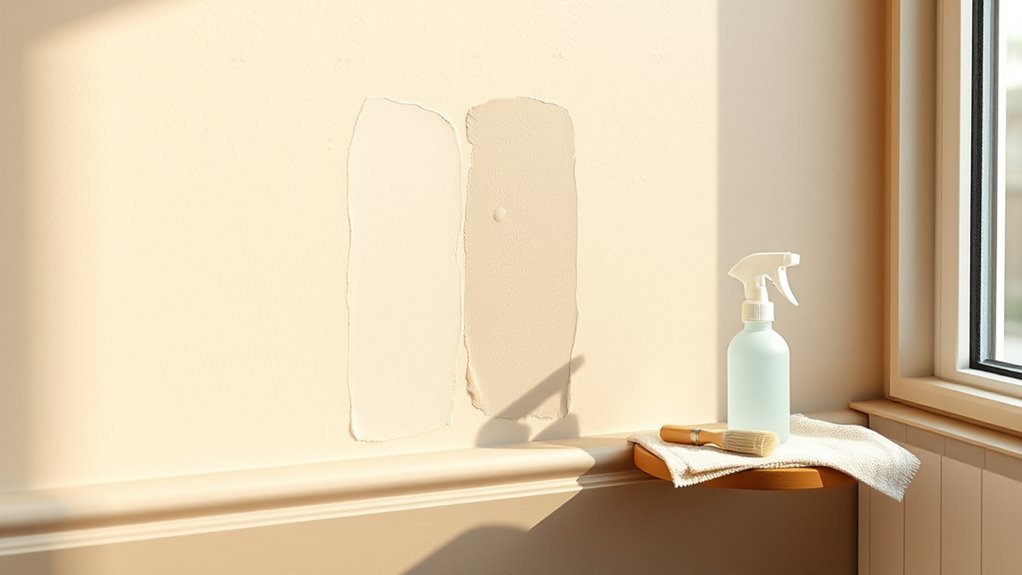
When you’re choosing a sheen, think about how much wear and cleaning each room will see: higher sheens (semi‑gloss, high‑gloss) resist scuffs and wipe clean easily, while lower sheens (matte, eggshell) hide imperfections but need gentler care.
Choose higher sheens for durability and easy cleaning; use lower sheens to conceal flaws and prefer gentle care.
You’ll balance looks with function: pick higher sheen where durability and frequent cleaning matter, and lower sheen where texture and subtlety matter. Consider paint longevity and follow simple maintenance tips to extend finish life.
- Use higher sheen in hallways, kitchens, bathrooms
- Reserve matte for low‑traffic bedrooms
- Spot‑clean with mild soap
- Touch up properly matched paint
- Avoid abrasive scrubbers
How Sheen Changes Color and Room Lighting
When you pick a sheen, you change how a color reads because glossier finishes boost saturation and depth.
Sheen also alters light reflection—matte soaks up light while satin and gloss bounce it, which can make a room feel brighter or harsher.
Think about the mood you want, since finish can shift warmth, contrast, and perceived size.
How Sheen Affects Hue
Although sheen doesn’t change a pigment’s actual color, it can noticeably alter how that color reads in your room by affecting light reflection and depth.
You’ll notice sheen variations shift color perception: glossier finish types reflect more, making hues look brighter and cooler, while matte absorbs light, warming and muting tones.
Consider the room’s lighting and surfaces when choosing; subtle shifts affect coordination with trim and textiles. Use samples on different walls and view at various times to judge.
Sheen also creates visual depth; contrast between finishes can highlight architecture without changing the pigment.
- Test samples under real lighting
- Compare gloss and matte side-by-side
- Observe at morning and evening
- Check interaction with furniture colors
- Remember sheen alters perceived saturation
Light Reflection And Mood
Because sheen controls how much light bounces off your walls, it directly shapes a room’s mood and perceived brightness. You’ll notice higher sheens boost perceived light, intensify colors, and add reflective contrast; lower sheens soften light, mute tones, and create calm. Use sheen deliberately for mood enhancement and to manage light dynamics: glossy for lively, active spaces; matte for cozy, relaxed areas. Consider placement—ceilings, accent walls, and trims react differently. Compare finishes visually:
| Sheen Type | Effect |
|---|---|
| Matte | Soft, diffused light; calming |
| Eggshell | Subtle warmth; balanced |
| Gloss | Bright, vivid; energetic |
Trade‑Offs: Hiding Flaws vs Easy Cleaning
If you want walls that hide imperfections, you’ll often trade off easy cleaning: flatter finishes like matte and eggshell diffuse light and mask texture, but they’re more delicate and stain-prone than semi-gloss or gloss, which wipe clean but highlight bumps and brush strokes.
You’ll choose based on room use: low-traffic rooms benefit from flaw hiding, busy areas need cleaning ease. Balance by picking a slightly higher sheen where durability matters.
Consider lighting and color too; darker shades mask more. Decide which compromise you’ll accept before painting.
Factor in lighting and color—darker hues hide flaws better. Decide which finish compromise you’ll accept before painting.
- Prioritize flaw hiding in bedrooms and ceilings
- Choose cleaning ease for kitchens and hallways
- Use eggshell for modest durability and subtle sheen
- Reserve semi-gloss for trim and high-contact walls
- Test samples under real light before committing
Prep & Application Tips by Sheen (DIY & Pro)
Before you roll or brush, get the surface clean, patched, and sanded so the sheen lays down evenly.
Match your technique to the finish—use a good nap roller and light even coats for eggshell or satin, and a finer brush or foam for gloss to avoid visible strokes.
Whether you’re DIYing or hiring a pro, proper prep and consistent application are what make the finish look professional.
Surface Prep Essentials
Start by stripping away dirt, grease, and loose paint so your new finish can stick properly; prep is as important as the paint you pick.
You’ll focus on prep techniques: thorough surface cleaning, moisture checks, and addressing texture considerations before choosing priming options. Match primer and paint for finish compatibility. Track drying times between steps, and pick the right tool selection for sanding, filling, and cleaning. Small investments here prevent failures later.
- Clean surfaces with degreaser and rinse
- Inspect and repair cracks or nail holes
- Sand to desired texture or smoothness
- Apply compatible primer per substrate
- Confirm dry surface before painting
Application Technique Tips
When you paint, matching your technique to the chosen sheen makes a bigger difference than you might expect; flat and matte finishes hide imperfections and forgive heavier brush strokes, while eggshell, satin, and semi-gloss demand smoother, more controlled application to show their true luster.
You’ll adjust brush techniques and roller methods to suit surface texture and sheen. Prioritize primer choice for adhesion and color uniformity.
Mind application timing between coats and use layering strategies—thin, even coats beat heavy globs.
Practice edge control with angled brushes and quality tape.
Keep touch up tips handy: feather edges and blend wet into wet for invisibility.
One‑Page Plan: Best Sheen for Every Room
Pick the right sheen and you’ll save time and get the look you want: flat or matte hides imperfections and suits low-traffic ceilings and adult bedrooms.
Eggshell offers a soft, forgiving look for living rooms and dining areas. Satin or pearl handles higher-traffic spaces like kitchens and kids’ rooms with easier cleaning.
Eggshell gives living and dining rooms a soft, forgiving finish; satin or pearl withstands kitchens and kids’ rooms.
Semi-gloss or gloss is best for trim, doors, and bathrooms where moisture and scuffs demand durability. Use color psychology and follow current sheen trends to match mood and maintenance.
Choose one sheen per room based on use, light, and desired longevity.
- Prioritize durability where scuffs occur
- Match gloss to trim contrast
- Test samples in real light
- Consider touch-up ease
- Balance sheen with furniture textures
Frequently Asked Questions
Can Paint Sheen Affect VOC Levels or Indoor Air Quality?
Yes — sheen itself won’t change VOC emissions much, but higher-sheen paints often contain more resins and solvents, so they can raise VOC emissions and linger, potentially increasing indoor allergens’ effects until ventilation clears them.
Will Sheen Choice Impact Resale Value or Home Appraisals?
Yes — sheen can subtly influence resale value and appraisals; it’s a compass guiding resale trends and buyer preferences, so you’ll choose neutral, durable finishes that appeal broadly, making spaces read as cared-for and market-ready.
Can I Mix Different Sheens on the Same Wall for Effect?
Yes — you can mix sheens on the same wall for effect; you’ll use sheen blending techniques like stripes, borders, or subtle gradients to create controlled visual texture effects that catch light and add depth without overwhelming the room.
Are Specialty Sheens (Washable, Stain‑Resistant) Different From Satin/Semi‑Gloss?
Yes — specialty sheens like washable finishes and stain resistant options focus on performance, not just gloss, so they’ll feel similar to satin/semi‑gloss but resist cleaning and stains better; you’ll still match sheen for appearance.
Does Sheen Influence Fading From Sunlight Over Time?
Yes — sheen slightly affects fading: glossier paints resist dirt and reflect more light, helping fading prevention, but they lack built-in UV protection; you’ll still need UV‑resistant pigments or coatings and proper primers for best results.
Conclusion
Choose the right sheen and you’ll love your walls every day. Remember: 85% of people notice paint finish before color, so your sheen shapes first impressions. Pick flat or matte to hide flaws, eggshell for living areas, satin for trim and bathrooms, semi‑gloss or gloss where durability matters. With proper prep and the right sheen per room, you’ll get finishes that look great and last—so make that sheen choice count.
