
What Type of Paint for an Exterior Door?
Choose a durable, flexible exterior acrylic‑latex (or waterborne alkyd) in semi‑gloss or gloss for easy cleaning and weather resistance, and always pair it with a primer suited to your door material—rust‑blocking primer for metal, bonding primer for fiberglass, stain‑blocking for wood. Consider UV resistance for sunny sites and moisture‑resistant formulas for humid or coastal areas. Pick low‑VOC if you’re sensitive, and keep a small touch‑up kit handy—keep going and you’ll find tips for each substrate.
Quick Recommendation: Pick the Right Exterior Door Paint
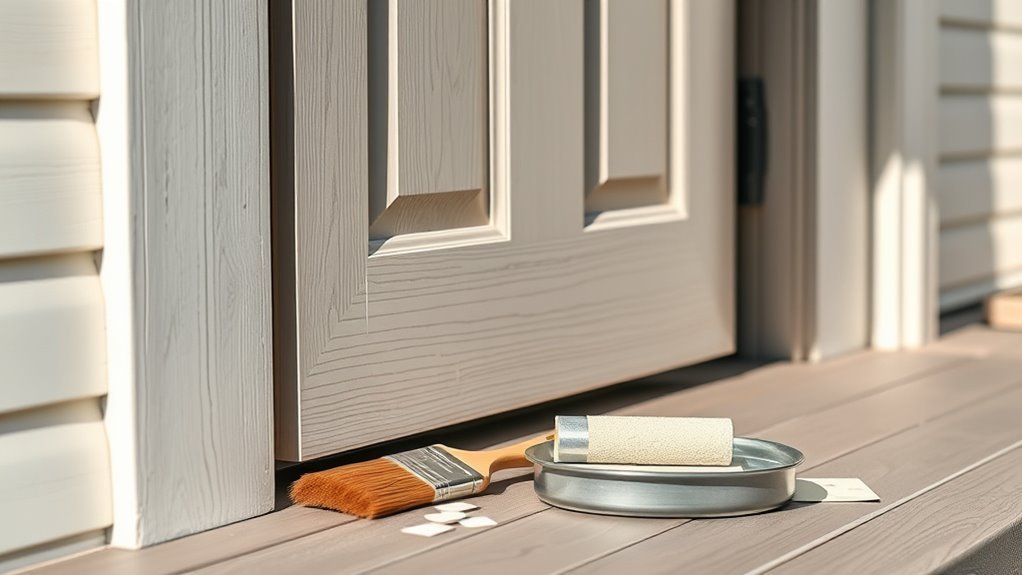
Pick a durable, weather-resistant paint that matches your door material and your local climate. You’ll choose acrylic latex for longevity, easy cleanup, and flexibility in temperature swings.
Consider current color trends but prioritize visibility and curb appeal; neutrals sell homes while bold hues create focal points.
Consider trends, but choose visibility and curb appeal—neutrals sell, bold colors create memorable focal points.
Pick paint finishes that suit function—gloss or semi-gloss resists scuffs and sheds water on high-traffic doors; satin hides imperfections on textured surfaces.
Test samples in different light, inspect dry times, and use a quality primer if needed.
With the right combo, you’ll protect the door and make a strong first impression.
How Door Material Changes Paint Choices
Because each door material responds differently to weather and paint, you’ll want to match your product to the substrate from the start.
You’ll choose based on door material and paint compatibility: wood soaks stain and needs primer then gloss or semi-gloss; metal requires rust-blocking primer and durable enamel; fiberglass wants flexible acrylic latex formulated for adhesion; and PVC/vinyl needs paint rated for plastics with bonding agents.
Consider texture and movement—wood expands, metal contracts—so pick paints that tolerate that.
Test a small area for adhesion and finish. Proper matching avoids peeling and guarantees a long-lasting, attractive exterior door.
How Climate and Sun Affect Exterior Door Paint
Materials and finish choices matter, but you’ll also need to account for the weather where your door lives.
If you’re in a humid climate, moisture can lift paint and promote mildew, so pick formulations resistant to moisture and easy to clean.
In areas with wide temperature swings, choose paints that handle expansion and contraction without cracking.
High sun exposure fades pigments and breaks down binders faster; UV-resistant primers and topcoats help preserve color and adhesion.
Coastal salt air accelerates corrosion on metal doors, so use corrosion-inhibiting undercoats.
Assess local climate impact and sun exposure when selecting products.
Decision Criteria: Durability, Flexibility, and Finish
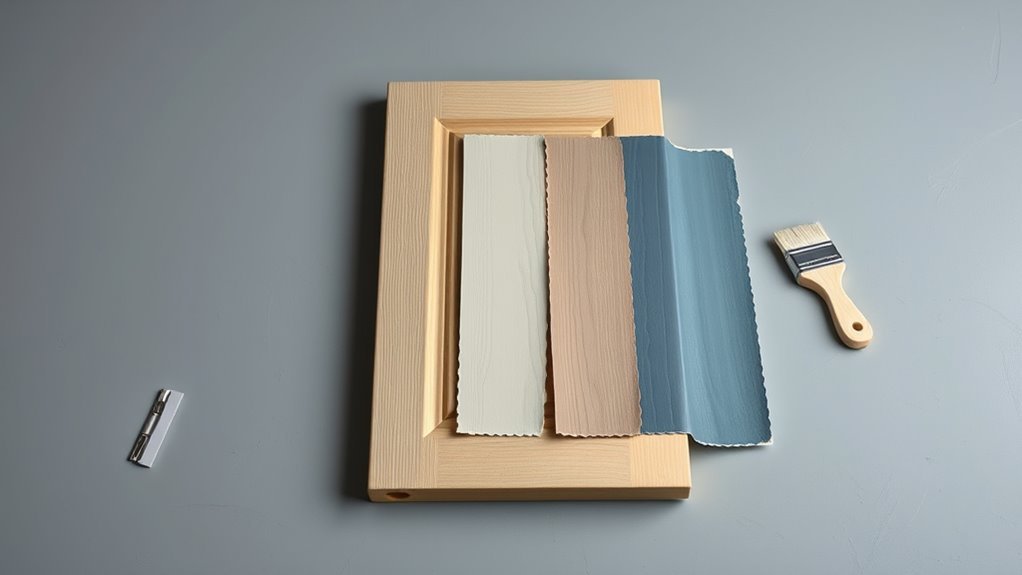
When you pick paint for an exterior door, prioritize long-term durability so the finish resists weather, fading, and chipping.
Also consider flexible finish options—like satin or semi-gloss—that balance protection with the look you want.
We’ll compare how different formulations hold up and what finish best matches your needs.
Durability Over Time
As you judge paints for an exterior door, prioritize how well the coating resists wear, accommodates movement, and keeps its look—durability, flexibility, and finish quality together determine long-term performance.
You want a finish that fights fading, resists chipping, and tolerates seasonal expansion without cracking. Consider maintenance intervals and the environmental impact of VOCs and disposal when choosing coatings.
Match primer and topcoat for adhesion and choose formulations rated for exterior wear.
- UV resistance — preserves color and sheen.
- Chip/abrasion resistance — reduces repainting frequency.
- Elasticity — prevents cracks with temperature swings.
- Cleanability — eases upkeep and extends life.
Flexible Finish Options
Because your door endures sun, rain, and daily use, pick a flexible finish that balances durability, elasticity, and the look you want—this means choosing coatings that resist UV and abrasion, stretch with temperature shifts, and maintain a consistent sheen you can easily clean.
You’ll want acrylic latex or elastomeric formulations for finish longevity; they bend with wood and composite substrates, resisting cracking and peeling.
Consider color psychology when selecting hue and sheen—darker glossier finishes hide scuffs but show heat, while softer sheens read classic and forgiving.
Prep and proper application guarantee that flexibility delivers real, lasting protection.
Comparing Paint Types for Exterior Doors: Overview
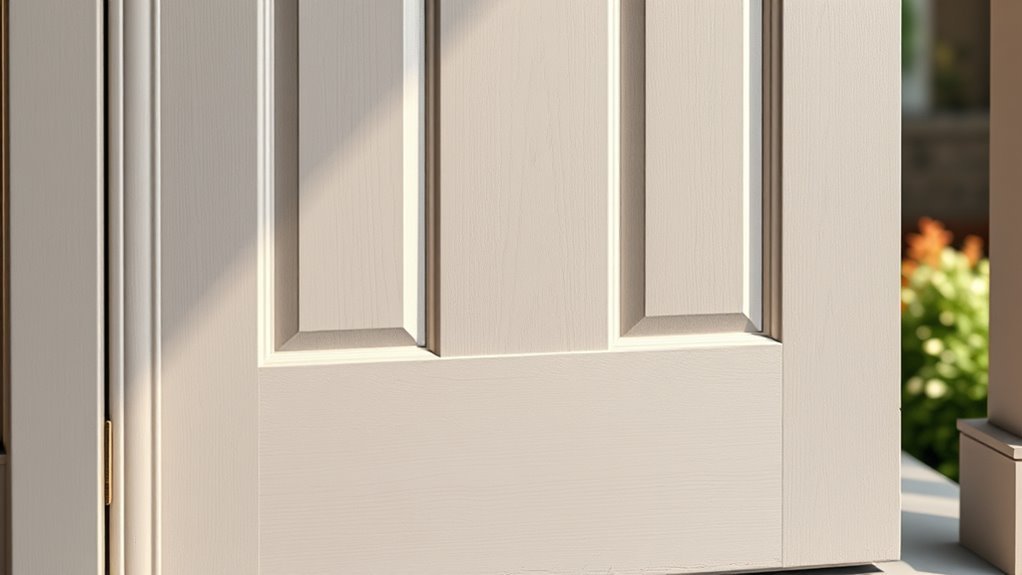
Although you might focus on color first, choosing the right type of paint matters more for durability and finish; oil-based and water-based (latex) formulas each bring distinct strengths and trade-offs, while specialty coatings like acrylic enamel or polyurethane offer extra protection for high-traffic doors.
Color matters, but paint type—oil, latex, or specialty coatings—determines durability, finish, and protection for busy doors.
You’ll weigh longevity, maintenance, drying time, and gloss choices against current color trends and desired paint textures. Consider these practical differences to match performance with style:
- Durability and abrasion resistance
- Drying time and recoat window
- Ease of cleanup and odor control
- Finish options and long-term color retention
Oil-Based Paints: Why Choose Them for Doors
If you want a door that withstands wear and weather, oil-based paints give a durable finish that resists scuffs and moisture.
You’ll find they spread smoothly for a glass-like surface and level out brush marks.
Plus, their excellent adhesion helps paint stick to wood or metal so it lasts longer.
Durable Finish
When you want a tough, long-lasting finish for an exterior door, oil-based paints deliver superior durability and resistance to wear.
You’ll get a hard film that stands up to knocks, scuffs, weather, and slow color fading, so the door keeps its look longer.
Proper surface preparation matters: sand, clean, and prime to help adhesion and prevent peeling.
Expect longer cure times but fewer touch-ups over years.
- Resistant to abrasion and impact
- Strong moisture and weather protection
- Less frequent repainting—reduced maintenance
- Durable gloss retention despite sun exposure
Smooth Application
1 reason to pick oil-based paint for an exterior door is its smooth, level finish: it levels out brush marks and flows into seams so you get a glassy, professional look with fewer visible strokes.
You’ll find oil formulas self-level better than waterborne options, minimizing visible brush strokes even when you brush.
If you use spray techniques, oil paints produce a uniform coat that hides application lines and reduces sanding between coats.
That said, you can combine methods—spray for base coats, then light brushing to tame runs.
The result is a sleek, consistent surface that makes your door look professionally finished.
Excellent Adhesion
Choose oil-based paint for doors when you need a finish that sticks—and stays stuck. You’ll get superior adhesion that resists chipping and handles heavy use.
With proper surface preparation, the paint bonds deeply, so you won’t need constant touch-ups. Use recommended adhesion techniques to roughen glossy areas, remove contaminants, and apply a compatible primer.
- Sand to dull gloss and create a tooth for primer.
- Clean with degreaser to remove oils and dirt.
- Apply an oil-compatible primer for strong bonding.
- Use thin, even coats and allow full cure between layers.
That workflow maximizes longevity and durability.
Oil-Based Paints: When to Avoid Them
Although oil-based paints offer durable, glossy finishes, you should avoid them in settings where long drying times, strong fumes, or frequent temperature changes cause problems. You’ll face oil based drawbacks like persistent odors and slow recoats. If you’re painting in enclosed spaces, busy households, or cold climates, don’t choose them. Application challenges include brush marks and cleanup with solvents. Consider ventilation, scheduling, and surface stability before committing. Use the table to weigh situations:
| Situation | Risk | Recommendation |
|---|---|---|
| Small entryway | High fumes | Avoid |
| Humid climate | Long cure | Avoid |
| Historic door | Needs gloss | Consider |
Acrylic-Latex Paints: Benefits for Exterior Doors
If oil-based paints give you pause because of fumes, slow drying, or cleanup hassles, acrylic-latex offers a practical alternative for exterior doors. You’ll get quick drying, easy water cleanup, and excellent color durability that resists fading.
It flexes with temperature changes, reducing cracking, and bonds well to properly prepped surfaces. For upkeep, keep these maintenance tips in mind:
- Clean with mild soap and water every few months.
- Touch up chips promptly to prevent moisture entry.
- Repaint when gloss wears rather than waiting for peeling.
- Use quality primer and topcoat for best longevity.
Acrylic-Latex Limitations and Common Issues
While acrylic-latex is convenient, it isn’t perfect for every exterior door situation — you’ll run into issues like poor adhesion on glossy or oil-based finishes, susceptibility to staining from tannin bleed on certain woods, and less toughness against heavy knocks compared with high-quality alkyds.
Proper surface prep and using the right primer help, but expect occasional cracking in extreme sun or rapid temperature swings and faster wear on high-traffic doors.
Proper prep and primer help—but expect occasional cracking in extreme sun, temperature swings, and on high-traffic doors.
You should watch for acrylic latex disadvantages such as mildew growth in shaded damp areas, color fading, and chap or flake where movement occurs.
Address common application issues: sand, degrease, prime, and apply thin coats.
Alkyd Waterborne (Hybrid) Paints: Pros and Cons
When you’re weighing hybrid alkyd waterborne paints, consider that they give oil-like durability and flexibility without the long cure time of traditional alkyds.
You’ll appreciate the faster drying for quicker recoats and less downtime.
Cleanup is simple with soap and water, so maintenance stays easy.
Durability And Flexibility
Alkyd waterborne (hybrid) paints give you the toughness of traditional oil-based enamels with the easier cleanup and lower VOCs of waterborne systems, so they resist chipping and hold up well on exterior doors.
You’ll appreciate paint performance that combines durability with flexibility, letting panels expand and contract without cracking while maintaining weather resistance against sun, rain, and salt air. They sand and adhere nicely, too.
- Tough film prevents dings and scrapes.
- Flexible finish accommodates temperature shifts.
- Sustained gloss retains curb appeal longer.
- Repairable surface accepts spot touch-ups without visible seams.
Fast Drying Time
That same balance of toughness and flexibility also affects how quickly alkyd waterborne hybrids dry, and fast drying can be both a benefit and a drawback. You’ll enjoy fast drying benefits when recoating sooner, reducing dust attraction and shortening project time.
However, rapid skinning can trap brush marks or lap lines if you rush. Use proper application techniques: work in manageable sections, maintain a wet edge, and use smooth, even strokes.
If conditions are hot or windy, slow your pace or mist the surface lightly to avoid imperfect blending. With careful technique, you’ll get durable, attractive results without compromise.
Ease Of Cleanup
Because they combine oil-like performance with water cleanup, hybrid alkyd waterborne paints make tidying brushes and spills much simpler—you’ll usually rinse tools with soap and water instead of solvents.
You’ll still want clear cleanup methods: soak, scrub, and dry brushes right away to prevent build-up. For dried spots or heavy mistakes, mild paint removers or fast-acting solvent wipes handle stubborn residue without reverting to harsh turpentine.
Disposal is easier too; waterborne waste is less toxic, but check local rules. Expect shorter clean times and fewer fumes, making post-paint chores quicker and safer for you and anyone nearby.
- Rinse brushes promptly
- Use mild soap and water
- Apply gentle paint removers for cured spots
- Follow local disposal rules
Specialty Formulas for High-Moisture or High-Traffic Doors
When your door faces constant moisture or heavy use, standard exterior paints often won’t hold up. So you’ll want specialty formulas designed for extra durability and moisture resistance.
If your door endures constant moisture or heavy use, opt for specialty paints built for durability and moisture resistance.
You should choose paints labeled for high-moisture environments—marine-grade, waterproofing additives, or exterior acrylics with enhanced moisture resistance—to prevent peeling and mildew.
For busy entrances, pick coatings engineered for traffic durability; these resist scuffs and abrasion and often include tougher binders or alkyd hybrids.
Prep and primer remain essential, and consider products with corrosion inhibitors if hardware is exposed.
Test a small area first to confirm adhesion and finish under your conditions.
Best Sheens for Exterior Doors
You’ll want a semi-gloss for the main door surface because it stands up to scuffs and cleans easily.
Use high-gloss on trim and accents for sharp contrast and extra durability.
If you prefer a softer look that still sheds moisture, satin is a good middle ground.
Durable Semi-Gloss Finish
If you want a finish that stands up to weather and cleans up easily, semi-gloss is the smart choice for exterior doors. You’ll get durable protection and a subtle sheen that highlights details without the glare of high-gloss.
Think about color psychology when choosing bold or calming hues; semi-gloss keeps colors vibrant and true. For upkeep, follow simple maintenance tips: wipe with mild detergent and inspect seals annually.
Visualize results:
- Rain beads off, reducing water damage.
- Scuffs wipe away with a damp cloth.
- Details and panels look crisp.
- UV resistance helps preserve pigment.
High-Gloss For Trim
Because high-gloss reflects light and resists wear, it’s ideal for trim on exterior doors where you want sharp contrast and easy cleaning. You’ll get high gloss benefits like enhanced durability, simple wipe-down maintenance, and colors that pop against a matte or semi-gloss door surface.
Use it sparingly on narrow profiles, panels, and moldings to highlight edges without overpowering the entry. Pay attention to surface prep—smooth, primed trim yields the best sheen and reduces visible imperfections.
Satin For Subtle Sheen
When you want a finish that hides minor flaws while still giving a gentle luster, satin is a smart choice for exterior doors.
You’ll enjoy a satin finish that resists dirt, handles cleaning, and offers a subtle sheen without shouting. It balances durability and softness, so fingerprints and smudges aren’t obvious, and color looks rich in varied light.
- Shows color depth while masking small imperfections.
- Cleans easily—good for high-traffic entries.
- Weather-tolerant when paired with proper exterior paint formulation.
- Works with classic or modern styles, offering understated elegance.
Color Selection: Curb Appeal and Heat Considerations
How do you pick a door color that boosts curb appeal without overheating the entryway? Consider color psychology: bold hues draw attention and express personality, while muted tones offer timeless elegance.
Balance aesthetic impact with climate—darker shades increase heat absorption, which can warp materials or stress seals in sunny locations. If you want a dramatic look, pick heat-resistant finishes or lighter trims to offset warmth.
Test samples on the door and observe at different times of day. Factor neighborhood style and resale value; choose a color that complements siding and landscaping while minimizing thermal effects for longevity.
Comparing Durability: Adhesion, Abrasion, UV Resistance
As you compare exterior paints, focus on three measurable durability factors—adhesion, abrasion resistance, and UV stability—since they determine how long the finish will protect and look good.
You’ll want coatings that pass adhesion testing to stay bonded to wood, metal, or composite doors.
Abrasion resistance matters where people touch or bags brush; tougher films resist scuffs.
UV stability prevents chalking and color fade.
Consider finish flexibility to handle temperature swings without cracking.
- High adhesion for long-term bond
- Proven abrasion resistance for wear areas
- Strong UV stability to resist fading
- Flexibility to avoid cracking
How to Read Technical Labels and Warranties
When you’re choosing paint, read the warranty to know what’s actually covered and for how long.
Check limitations like surface preparation requirements, exclusions for weather damage, and whether color fade is included.
Also compare the technical specs—film thickness, adhesion ratings, and UV resistance—to match the warranty’s claims.
Warranty Coverage Limits
Before you pick a paint based on a glossy label or a bold warranty claim, understand exactly what that coverage includes and what it doesn’t.
Read the fine print: warranty exclusions and coverage periods vary. Note what’s covered (peeling, fading, adhesion) and what’s not (improper prep, environmental damage, labor).
Check whether coverage is pro-rated or full, and whether you’ll need proof of purchase, photos, or professional application.
- Confirm coverage periods and start dates.
- Identify explicit warranty exclusions.
- Learn claim procedures and required documentation.
- Note remedies: repair, replacement, or refund.
Decoding Technical Specs
Although technical labels and warranties can look dense, you can decode them quickly by focusing on a few key headings: durability rating, recommended surfaces, VOC content, and warranty period.
Read the fine print to spot exclusions and required prep steps that might void coverage. Ignore unnecessary technical jargon until you map terms to real-world effects—fade resistance, adhesion, and mildew control.
Check listed paint components to understand solvent vs. water bases and any special additives. Note service conditions like temperature ranges and recoat times.
With that checklist, you’ll compare products confidently and avoid surprises after application.
Removing Old Paint Safely (Lead-Safe Practices)
If your house was built before 1978, assume the old paint may contain lead and take precautions: test the surface, contain dust and debris, and use lead-safe methods or hire a certified pro.
You’ll want to perform lead testing before work, seal the area, and avoid dry scraping. Use wet methods, HEPA vacuums, and disposable tarps to minimize contamination.
If you don’t feel confident, get a certified abatement contractor.
- Wet-sanding or chemical strippers designed for lead-safe removal
- Containment with plastic sheeting and taped seams
- HEPA vacuum cleanup
- Proper disposal of contaminated waste
Choosing Primers for Wood, Metal, and Fiberglass Doors
When choosing a primer, think about what your door is made of—wood, metal, or fiberglass—since each needs a different formulation for best results.
You’ll want a stain-blocking oil or latex primer for wood, a rust-inhibiting metal primer for steel, and a bonding primer for slick fiberglass.
Proper surface prep—cleaning, sanding, and repairing—ensures the primer adheres and the topcoat lasts.
Primer Types By Door
Because each door material absorbs and bonds with paint differently, choosing the right primer is the best way to guarantee adhesion and durability.
You’ll pick primer types based on material: oil-based for bare wood and knotty areas, rust-inhibiting primers for metal, and bonding primers for smooth fiberglass.
Primer benefits include sealing, corrosion resistance, and improved topcoat coverage. Choose fast-drying or high-build formulas as needed. Consider exterior-rated and mildew-resistant options.
- Wood: oil or latex-seal primer for tannin blocking.
- Metal: etching or zinc-rich rust primer.
- Fiberglass: adhesion-promoting bonding primer.
- Universal: alkyd-modified primers for mixed substrates.
Prep And Adhesion
Start by stripping loose finish and cleaning the surface so the primer can bond properly; you’ll sand glossy areas, remove contaminants, and let the substrate dry completely before priming.
For wood, fill gaps, degloss, and use a stain-blocking oil or latex primer to seal tannins.
For metal, remove rust, etch if needed, and apply a rust-inhibiting, bonding primer.
For fiberglass, scuff with fine sandpaper and use a high-adhesion, acrylic or epoxy primer.
These surface preparation techniques and adhesion promotion strategies guarantee uniform coverage, prevent peeling, and create a durable base for topcoats on any exterior door.
Brush, Roller, or Spray: Best Application Method
Although each method has strengths, you’ll usually pick brush, roller, or spray based on the door’s material, the finish you want, and how much prep time you can commit.
You’ll use brush techniques for edges and detail, roller advantages on flat panels for fewer strokes, and spray efficiency when speed and ultra-smooth finish matter.
Consider durability, weather exposure, and cleanup when choosing. Follow basic application tips: thin coats dry evenly and reduce runs.
- Brush: control for trim and grooves.
- Roller: smooth coverage on large, flat areas.
- Spray: fastest, best for factory-like finish.
- Cleanup: solvent vs. water.
Step-by-Step Painting Process for a Smooth Finish
Prep the door and your workspace so you’ll get the smoothest result: remove hardware, clean and sand the surface, fill any dents or gaps, and lay down drop cloths and tack cloths to catch dust. Start with fine sanding techniques, wipe dust, and prime bare spots. Apply thin, even coats—that paint layering gives durability and avoids drips. Lightly sand between coats for a glassy finish, wipe, then add the next coat. Reinstall hardware after a final inspection. Use steady strokes and proper drying intervals to keep edges crisp and the finish uniform.
| Step | Action |
|---|---|
| 1 | Sand & clean |
| 2 | Prime & coat |
| 3 | Sand between coats |
Drying, Curing, and Recoat Times to Respect
When you paint an exterior door, don’t confuse drying time with curing time: drying is when the surface feels tack-free and you can recoat, while curing is the chemical process that gives the finish full hardness and weather resistance, which can take days to weeks depending on the paint.
You’ll respect manufacturer drying times and plan recoat intervals, but also account for the curing process and environmental factors like temperature and humidity.
Follow these practical guidelines to get durable results:
- Wait tack-free per label before sanding or recoating.
- Cold or humid conditions extend drying times.
- Thin coats cure faster overall.
- Allow full cure before heavy use.
Seasonal Maintenance and Simple Touch-Up Steps
Because your door faces the elements year-round, schedule a quick seasonal inspection to catch chips, peeling, or worn edges before they worsen; you’ll spot areas needing attention early.
During seasonal inspections, clean the surface with mild soap and water, dry thoroughly, and sand tiny rough spots lightly. Match the original finish and use compatible primer if bare wood shows.
Apply small, even strokes with a fine brush or mini-roller, feathering edges to blend. Let coats dry between applications per product directions.
Keep a small repair kit with paint, sandpaper, and brushes so touch up techniques stay simple and effective.
Troubleshooting Peeling, Cracking, and Blistering
Seasonal touch-ups will catch minor wear, but persistent peeling, cracking, or blistering signals deeper problems you’ll want to address.
You should inspect causes: moisture, poor paint preparation, or adhesion failure from inadequate surface cleaning. Remove loose paint, sand edges, and strip finishes back to sound substrate. Prime with a compatible primer and choose a paint suited to the door material. Address moisture sources before repainting.
- Moisture intrusion — fix seals, thresholds, and weatherstripping.
- Poor adhesion — remove contaminants and roughen glossy surfaces.
- Old incompatible layers — strip to solid substrate.
- Heat-related blisters — use heat-tolerant exterior formulations.
Budget vs. Premium Paints: When to Spend More
If you’re weighing cost against long-term performance, think about how often you want to repaint and what conditions the door faces.
You’ll balance budget considerations with desired paint longevity: cheaper options lower upfront cost but may need renewal sooner, while premium formulas resist fading, chipping, and weathering longer.
Choose premium if the door sees harsh sun, heavy rain, or high-traffic use, or if you prefer fewer maintenance cycles.
Save with budget paint on sheltered doors or temporary projects.
Factor in prep, primer quality, and labor—spending more upfront can cut lifetime costs and hassle.
Low-VOC and Eco-Friendly Paint Options
Choosing a higher-end paint can cut repainting frequency, but you’ll also want to take into account the environmental and indoor-air impacts of the product you pick.
You’ll prefer low-VOC or zero-VOC formulas to reduce odors and health risks, and eco friendly options now match durability of conventional paints. Look for third-party certifications, simple ingredient lists, and water-based alkyd blends for resilience. Favor brands that practice sustainable practices in sourcing and packaging.
Consider these practical choices:
- Zero-VOC latex for general exterior use
- Low-VOC satin for doors with traffic
- Water-based alkyd for longevity
- Recycled-content primer
Quick Decision Checklist: Pick the Right Paint for Your Door
1 quick checklist will help you narrow options and finish the job right: pick a durable finish (satin or semi-gloss for high-traffic doors), match the paint type to the substrate (water-based alkyd or exterior latex for wood/metal), confirm low- or zero-VOC certifications, choose a compatible primer, and account for weather and application method so the paint lasts. Use color psychology to pick a hue that complements your home and follows current door trends. Quick practical checklist:
| Step | Action | Note |
|---|---|---|
| 1 | Finish | Satin/semi-gloss |
| 2 | Type | Alkyd/latex |
| 3 | Primer | Compatible |
| 4 | VOC | Low/zero |
| 5 | Timing | Weather-friendly |
Frequently Asked Questions
Can I Use Exterior Door Paint on Interior-Facing Side Too?
Yes — you can use exterior door paint on the interior-facing side, but be aware it may smell stronger and feel less smooth. You’ll retain exterior durability, though using interior paint inside often gives a better finish and lower VOCs.
How Do Hardware and Weatherstripping Affect Paint Adhesion?
Hardware and weatherstripping can trap moisture and prevent adhesion, so you’ll remove or mask them, use proper surface preparation techniques, and consider door material considerations to sanding, priming, and choose compatible paint for lasting bond.
Are Spray-Painted Doors More Prone to Chatter Marks?
Yes — spray-painted doors can show chatter marks if you don’t use proper spray paint techniques and door surface preparation. You’ll avoid them by keeping consistent distance, using light passes, proper nozzle, and smooth, well-sanded primed surfaces.
Will Paint Color Void My Door Manufacturer’s Warranty?
Think of your warranty coverage like a leash: you’ll usually be fine changing paint color if you use approved paint types and follow prep instructions, but altering finishes or using incompatible coatings can void parts of the warranty.
How Long Before Reinstalling Decorative Hardware After Painting?
You should wait until paint’s fully cured—typically 24–72 hours—after drying time; during hardware removal you’ll let finish set so reinstalling decorative hardware won’t stick or scratch, and you’ll avoid damaging the fresh surface.
Conclusion
You might worry that spending more on premium exterior paint is overkill for a single door, but the right paint saves time and money by preventing peeling and fading. Choose paint matched to your door material and climate—urethane-modified acrylics or high-quality exterior enamel are safe bets—and pick a finish you’ll maintain. Invest a little now, and you’ll avoid frequent repainting, protect your door, and keep your home looking sharp longer.
