
What Type of Paint for Front Door Exterior?
You should use a high-quality exterior acrylic latex for most front doors because it gives UV resistance, color retention, fast drying, low fumes, and easy soap-and-water cleanup; choose a durable oil‑based enamel only if you want an extra-hard, scuff-resistant finish on very heavy-use doors and don’t mind longer cure times and solvent cleanup. Match paint and primer to your door material, pick an appropriate sheen, prep well, and keep using proper techniques to guarantee lasting results—keep going to learn practical tips and fixes.
Quick Recommendation: Best Paint for Front Doors
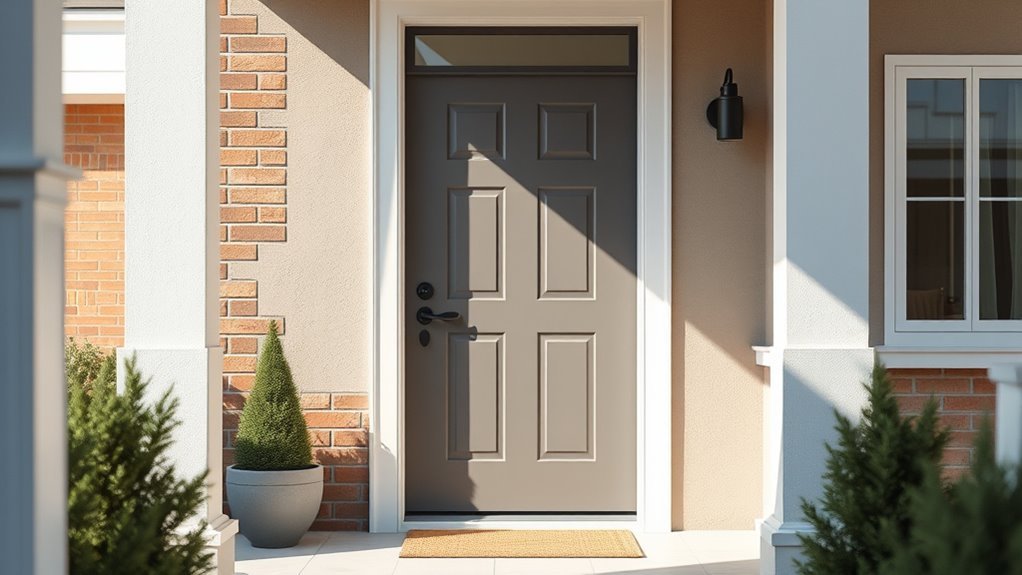
When you’re choosing paint for a front door, pick a durable exterior acrylic latex or a high-quality oil-based enamel for maximum weather resistance and a smooth finish.
You’ll want a finish that resists chipping and cleans easily. Test small samples to see how door color shifts in sunlight and shade.
Consider well-reviewed paint brands that offer UV protection and mildew inhibitors. Apply proper primer if surface needs it, and follow drying times between coats.
A satin or semi-gloss sheen balances durability and curb appeal. Maintain the finish with periodic cleaning to keep your entrance looking fresh.
How to Choose: Key Criteria (Durability, Climate, Material, Finish)
Because your front door faces weather, traffic, and daily use, choose paint based on four practical criteria: durability, climate, door material, and finish.
Start by evaluating durability factors like abrasion resistance, UV stability, and adhesion—these determine how long the coat lasts under knocks and sunlight.
Check climate considerations: humid, wet, or very sunny regions need mildew-resistant and UV-protective formulations.
Match paint to material—wood needs flexible, breathable coatings; metal requires rust-inhibiting primers; fiberglass benefits from adhesion-promoting formulas.
Finally, pick a finish balancing protection and appearance: gloss for durability and wipeability, satin for subtle sheen and easier touch-ups.
Why Exterior Acrylic Latex Is Usually Best for Front Doors
Given those criteria, exterior acrylic latex often checks the most boxes for front doors.
You’ll get durable adhesion to wood, metal, or fiberglass without heavy fumes, and it dries fast so you can recoat sooner. Its color retention stays strong under sun exposure, reducing frequent touchups, and built‑in weather resistance handles rain, humidity, and temperature swings.
You can choose satin or semi‑gloss sheens for easy cleaning and a polished look. Application is straightforward with brushes, rollers, or sprayers, and cleanup uses soap and water, making acrylic latex a practical, low‑hassle choice for most homeowners.
Oil‑Based Enamel: When to Use It for Front Doors
If you need an exceptionally hard, glossy finish that resists scuffs and holds up to heavy use, oil‑based enamel is worth considering for a front door. You’ll choose it when durability matters more than quick recoat times; its oil based advantages include superior adhesion, tough film build, and stain resistance.
Prepare the door by sanding, degreasing, and ensuring good ventilation. Use slow, steady strokes and a high‑quality brush or foam roller to avoid lap marks—these application techniques yield a smooth surface.
Expect longer cure times and solvent cleanup; weigh maintenance needs and local VOC rules before committing.
Finish Guide: High‑Gloss, Semi‑Gloss, Satin, Eggshell
Finish choices affect both appearance and performance, so pick the sheen that matches how your front door will be used and how it should look.
For a glossy, modern look choose high‑gloss: it highlights details and is easiest to wipe clean but can show imperfections.
Semi‑gloss balances shine and forgiveness, making it a common choice.
Satin reduces glare with moderate washability for busy entries.
Eggshell offers a soft, low‑sheen finish that masks flaws but needs gentler cleaning.
Use a finish comparison and durability assessment: consider traffic, exposure, and maintenance to match sheen to your lifestyle and the door’s condition.
Primer Choice: Adhesion, Durability, and Compatibility
Because your primer bridges the door’s surface and the topcoat, pick one that nails adhesion, boosts durability, and matches the paint type you’ll use.
Choose stain-blocking or bonding primers for problem surfaces, and use solvent-based primers for tougher adhesion where recommended.
Prep thoroughly—clean, sand, and degloss—to maximize adhesion techniques.
Match primer chemistry to topcoat (acrylic to acrylic, alkyd to alkyd) to avoid peeling.
Look for primers rated for exterior use and UV resistance, and consult durability testing results when available to guarantee long-term performance.
Apply thin, even coats and follow recoat windows for best compatibility and longevity.
Front‑Door Paint for Wood, Metal, Fiberglass, and PVC
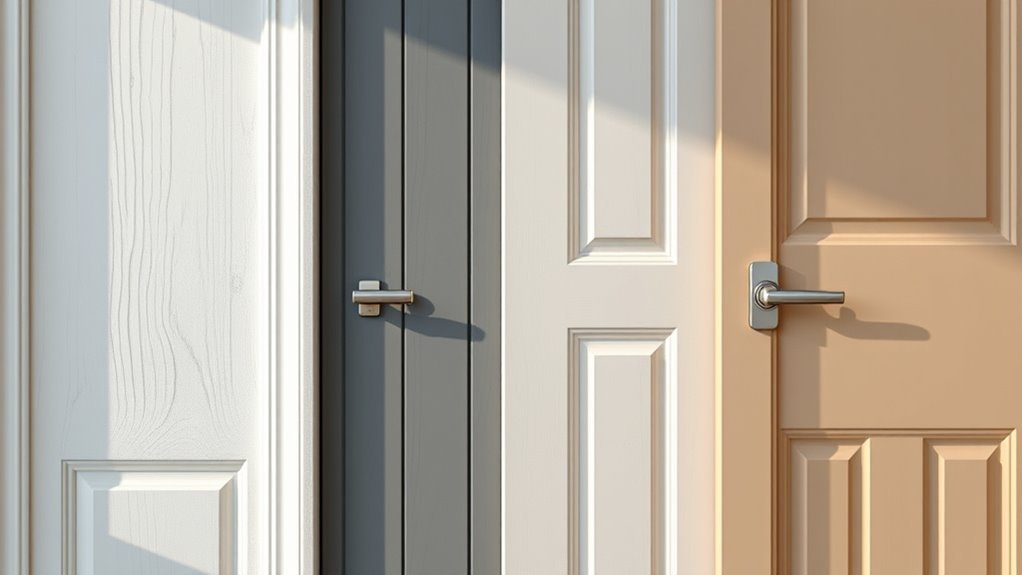
Now that you’ve matched primers and prep to your door, pick a paint system suited to the door material: wood, metal, fiberglass, and PVC each demand different formulations and application techniques.
For wood, use a durable exterior latex or oil-based enamel after proper wood treatment to seal and prevent tannin bleed.
For metal, choose rust-inhibiting primers and alkyd or bonded acrylics; focus on metal preparation to remove rust and create adhesion.
For fiberglass, pick flexible, UV-resistant acrylics and follow fiberglass care to avoid solvents that craze.
For PVC, use specially formulated coatings and PVC maintenance routines to guarantee adhesion and prevent peeling.
Pick Paint for Your Climate: Sun, Salt, Humidity, Cold
If you live where the sun beats down, pick a paint with strong UV resistance so colors won’t fade or chalk.
In coastal areas, choose coatings formulated to resist salt air corrosion and prevent metal or finish breakdown.
Consider humidity and cold too, but start by matching UV and salt protection to your local exposure.
Sun And UV Resistance
When your front door faces relentless sun, pick a paint that resists UV degradation and keeps color from fading and chalking.
You’ll want high-quality exterior acrylic or urethane-modified paints that advertise UV protection; they form a flexible film that handles sun exposure without cracking.
Choose lighter or fade-resistant pigments for long-lasting vibrancy, and look for UV-stable additives and clear topcoats designed for exterior use.
Prep and prime properly to improve adhesion and reduce breakdown.
Refinish sooner in very intense climates, and inspect annually for chalking or gloss loss so you can touch up before damage spreads.
Salt Air Corrosion Resistance
Because salty air attacks metal and eats away paint faster than inland humidity, you’ll want coatings formulated to resist chloride-driven corrosion and salt fog.
Choose marine-grade or high-performance acrylics and urethanes that include corrosion inhibitors and flexible binders so the finish won’t crack under salt stress.
Prime exposed metal with a zinc-rich or epoxy primer for added corrosion prevention, then topcoat with a durable, low-permeability enamel.
Maintain regularly: rinse salt deposits, inspect for blistering, and touch up chips promptly.
If you live on the coast, prioritize products labeled for salt air and marine environments to extend door lifespan.
Color Tips for Longevity and Curb Appeal
Pick a pigment that resists fading so your door keeps its color under sun and weather.
Balance shade and contrast with your siding and trim to make the entrance pop without overwhelming the facade.
You’ll get longer-lasting curb appeal by choosing durable tones and a complementary contrast.
Color Fading Resistance
If you want your front door’s color to stay vibrant year after year, choose pigments and finishes that resist UV breakdown and weathering. You’ll use color retention strategies and weigh pigment quality considerations when picking durable, fade-resistant paints.
Opt for high-UV additives, fade-tested colorants, and quality binders to lock pigments into the film. Maintain finishes with gentle cleaning and timely touch-ups to prolong life.
- Choose acrylic latex with UV stabilizers
- Prefer lightfast, inorganic pigments
- Select satin or semi-gloss for easier cleaning
- Use exterior-specific topcoats when needed
- Test small areas before full application
Shade And Contrast
A well-chosen balance of shade and contrast can boost curb appeal while helping your front door weather gracefully over time.
You should favor mid-tones that hide dust and fading yet still reflect enough light to resist heat buildup; thoughtful shade selection reduces visible wear and keeps colors vibrant longer.
Use contrast techniques to outline architectural details — trim in a lighter or darker hue sharpens profiles and masks minor chips.
Test samples at different times of day to see how sunlight alters perception.
Pick durable exterior paints and maintain finish with seasonal cleaning to preserve that intentional balance.
Surface Prep Steps Before Painting a Front Door
Before you open a can of paint, you’ll need to get the door clean, smooth, and free of old finishes so the new coat will stick and look professional.
First, remove hardware and mask glass. Wash with a mild detergent, rinse, and let dry; consider weather conditions so moisture won’t trap under paint.
Strip flaking paint with a chemical stripper or heat gun, then sand to feather edges—choose grit wisely for sandpaper selection.
Fill gouges with exterior filler and sand smooth. Wipe with a tack cloth before priming to guarantee a flawless base.
- Remove hardware and mask
- Clean and dry thoroughly
- Strip and sand edges
- Fill imperfections
- Tack cloth wipe
Brushing, Rolling, and Spraying Techniques for a Smooth Finish
Choose the application method that matches your paint type, door material, and skill level, because brushing, rolling, and spraying each give different textures, coverage, and control.
You’ll use brushing techniques for edges and detail—pick a high-quality angled sash brush, load it lightly, and stroke with the grain to avoid brush marks.
Use a short-nap foam or microfiber roller for flat panels to reduce stipple; keep a wet edge and feather overlaps.
Use a short-nap foam or microfiber roller on flat panels to minimize stipple—keep a wet edge and feather overlaps.
If you opt for spraying methods, thin and strain the paint, practice on scrap, and mask thoroughly to protect hardware and surrounding trim.
Work in thin, even passes.
Curing Times, Maintenance, and Common Problem Fixes (Bubbling, Cracking, Fading, Runs)
While paint may feel dry to the touch within hours, full curing can take days to weeks depending on type, temperature, and humidity.
So you’ll need to plan use and maintenance accordingly. Know manufacturer curing times, avoid heavy use until cured, and follow maintenance tips like gentle cleaning and seasonal inspection.
For bubbling issues, remove loose paint, sand, prime, and repaint. For cracking solutions, address moisture or movement, fill, sand, then repaint. For fading prevention, choose UV-resistant finishes and sheltered exposure. For run fixes, sand smooth and recoat with thinner layers.
- Check cure before hardware reattachment
- Clean with mild detergent
- Sand raised bubbles
- Use flexible fillers
- Recoat in recommended conditions
Frequently Asked Questions
Can I Paint a Door With Existing Lead‑Based Paint Without Testing First?
No — you shouldn’t paint over suspected lead without testing first. You’ll protect yourself by prioritizing lead paint safety, doing careful door preparation, using safe containment, and hiring pros if tests confirm lead presence.
How Do I Match Paint Sheen to an Existing Painted Door?
You check the existing sheen by rubbing a small area with mineral spirits, compare sheen types (flat, eggshell, satin, semi-gloss, gloss), and choose matching sheen durability; contractors’ samples help confirm visual and wear resistance.
Are Specialty Finishes (Chalk, Milk, Metallic) Suitable for Exterior Doors?
Ye olde yes—you can use specialty finishes, but you’ll need to guard them: chalk paint durability is limited outdoors, milk paint needs sealing, and metallic paint maintenance demands touch-ups and clearcoat to resist weathering and wear.
Can I Change Door Color Without Repainting the Trim and Frame?
Yes — you can change door color without repainting trim and frame. You’ll choose door color options that contrast or coordinate, use careful trim painting techniques like edge masking and angled brushes, and avoid overlap for a clean finish.
How Does Paint Color Affect Home Resale Value?
You’ll boost curb appeal and perceived home aesthetics with a tasteful door color, aligning choices to neighborhood trends; buyers often favor neutral, classic tones, so pick colors that attract broader interest and enhance resale value.
Conclusion
Choose the right paint and you’ll protect your door and boost curb appeal for years. For most doors, exterior acrylic latex gives durability, easy cleanup, and flexible performance; use oil‑based enamel only for high‑traffic doors needing extreme hardness. Prep thoroughly, pick a semi‑gloss or high‑gloss for easy cleaning, and follow curing times. For example, my neighbor switched to acrylic latex and a semi‑gloss blue last spring; after heavy rain and sun, the finish still looks like new.
