
What Type of Paint Is Best for Concrete Walls
For most concrete walls you’ll want a breathable acrylic-latex paint indoors and an epoxy or polyurethane system where durability, chemical resistance, or heavy traffic is expected. Prep the surface—clean, remove salts, fix cracks—and use a compatible primer for porous or previously painted concrete. Choose sheen by function: flat hides flaws, semi-gloss cleans easier. For exterior or moisture-prone areas, pick vapor‑permeable masonry or silicate formulas. Keep going and you’ll get tips on prep, application, and troubleshooting.
Quick Decision Guide: Choose the Right Concrete Paint
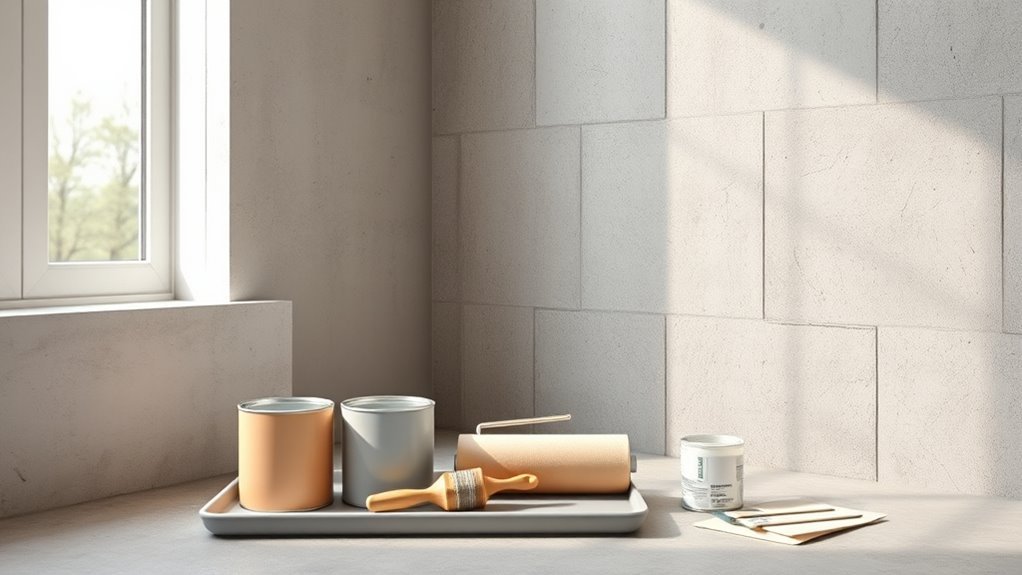
If you need a fast, reliable pick for concrete walls, start by matching paint type to location and wear. You’ll pick acrylic for indoor, breathable protection, or epoxy for high-traffic, stain-resistant surfaces.
Consider masonry formulas where moisture’s occasional but not chronic.
Check Color options early so you don’t compromise performance for shade; some pigments suit specific binders.
Think about Texture enhancement if you want to hide imperfections or add grip on floors.
Measure coverage, drying time, and compatibility with primers or sealers.
Test a small patch to confirm adhesion and finish before tackling the whole wall.
Decide Your Goal: Durability, Moisture Control, or Appearance
When you pick paint for concrete walls, first decide whether durability, moisture control, or appearance matters most, because your choice should match the primary performance need.
If durability tops your list, choose tough epoxy or polyurethane systems that resist abrasion and cleaning; they’ll protect high-traffic areas.
If moisture control is critical, prioritize vapor-permeable masonry sealers or elastomeric coatings that block water but allow breathability.
If appearance leads, explore decorative finishes and prioritize Color selection, texture, and sheen to achieve the look you want.
Balance priorities—sometimes you’ll need a compromise product or a primer-topcoat system to meet multiple goals.
When to Use Latex Paint on Interior Concrete
You’ve weighed durability, moisture control, and appearance, so next decide whether latex paint fits your interior concrete project.
You’ll choose latex when the wall is dry, clean, and free of efflorescence, since latex bonds well to properly prepared masonry.
Use it for spaces where interior aesthetics and easy maintenance matter—basements, garages converted to living areas, and utility rooms.
Pick a high-quality latex for better adhesion and stain resistance, and test your preferred paint color under room lighting.
If moisture, heavy abrasion, or extreme chemical exposure are concerns, consider more specialized coatings instead.
When Acrylic-Latex Beats Basic Latex
You’ll pick acrylic-latex when you need paint that actually sticks to concrete rather than sitting on top of it. It offers better adhesion, so it resists peeling and chalking on rough or porous surfaces.
Plus, its added flexibility and durability stand up to small movement and wear better than basic latex.
Better Adhesion To Concrete
Although basic latex paints can work on smooth, well-prepped concrete, acrylic-latex bonds more reliably to rough, porous, or slightly damp surfaces, so you’ll get fewer failures and longer-lasting results.
You’ll notice better surface sealing when acrylic-latex wets and penetrates pores, reducing flaking. Its formulation adapts to variations in paint texture, bridging tiny gaps where basic latex might lift.
When you prep by cleaning and etching, acrylic-latex still tolerates minor moisture and unevenness that would harm basic latex adhesion.
Choose acrylic-latex for adherence-driven jobs, and focus prep on removing contaminants rather than obsessing over perfect dryness.
Superior Durability And Flexibility
When you need a finish that withstands temperature swings, foot traffic, and the small structural shifts concrete experiences, acrylic-latex delivers more durable, flexible protection than basic latex. You’ll notice it bridges hairline cracks and adapts to varying surface texture without sacrificing adhesion. Its elasticity improves longevity where walls flex or settle, and paint compatibility with primers and sealers reduces failure risk. Choose acrylic-latex for exterior and high-use interior concrete walls to minimize peeling and frequent recoats.
| Property | Benefit |
|---|---|
| Elasticity | Resists cracking |
| Adhesion | Bonds to rough textures |
| Compatibility | Works with primers |
| Durability | Longer service life |
Use Epoxy or Polyurethane for Garages and High-Traffic Walls

When you need extreme durability and wear resistance for a garage or busy hallway, epoxy and polyurethane coatings are your best bet.
They also give strong chemical and stain protection for oil, cleaners, and spills.
Keep in mind they require careful application and longer curing times than regular paints.
Durability And Wear Resistance
Because garages and certain high-traffic areas take constant abuse from cars, tools, and foot traffic, you’ll want a coating that stands up to impact, abrasion, and chemicals. You should choose epoxy or polyurethane because they bond tightly to concrete, preserving surface texture while resisting chipping and scuffing.
They form a tough, flexible film so you won’t see premature wear where vehicles or carts pass. These coatings also maintain color retention over time, so finishes stay uniform instead of fading patchily.
Apply per manufacturer instructions, guarantee proper curing, and consider a thicker mil build for the highest durability.
Chemical And Stain Protection
Having chosen a durable film like epoxy or polyurethane for high-traffic walls, you’ll also get strong chemical and stain resistance that protects concrete from oil, grease, solvents, and household cleaners.
You’ll appreciate epoxy’s dense, cross-linked surface for superior chemical resistance, while polyurethane offers UV-stable options that resist yellowing.
Both provide excellent stain prevention—spills bead up and wipe away instead of seeping into pores. For garages and utility rooms, that means easier maintenance and longer-lasting appearance.
Choose a product labeled for concrete, and confirm its resistance to the specific chemicals you expect to encounter to guarantee reliable protection.
Application And Curing Time
If you’re prepping garage or high-traffic concrete walls for epoxy or polyurethane, a clean, dry surface and the right ambient conditions are essential before you start. You’ll use specific application techniques: roll thin coats, maintain wet edges, and back-roll for even coverage. Temperature and humidity affect the curing process; follow manufacturer specs to avoid tacky finishes. Expect initial cure in 24–48 hours and full chemical resistance in 7 days. Protect the area during cure. Use the table below to track steps, times, and tips.
| Step | Timeframe | Tip |
|---|---|---|
| Prep | 1–2 hrs | Clean, etch |
| Prime | 1–2 hrs | Thin coat |
| Coat | 2–4 hrs | Roll, back-roll |
| Cure | 24–48 hrs | Ventilate |
| Full cure | 7 days | Avoid traffic |
Masonry and Silicate Paints for Exterior Concrete
When you need a durable, breathable finish for exterior concrete, masonry and silicate paints are often the best choice. They bond to alkaline surfaces, resist moisture, and let vapor escape so you avoid trapped damp that leads to peeling and mold.
You’ll find silicate paints form a mineral bond, offering longevity and colorfastness, while masonry acrylics give flexibility and easier application.
Consider color options carefully—silicates favor mineral tones, acrylics handle bright hues. Both come in various texture finishes to hide imperfections.
Prepare surfaces by cleaning and repairing cracks, and follow manufacturer primer and application guidelines for best results.
Breathable Paints: Prevent Moisture and Efflorescence
Masonry and silicate paints give you a breathable finish for exterior concrete, but choosing the right breathable paint goes further to prevent moisture build-up and efflorescence. You want breathable coatings that allow vapor to escape while shedding liquid water; that balance stops salts migrating and forming white deposits.
Avoid impermeable moisture barriers that trap vapor, which causes blistering and salt leaching. Pick mineral-based or acrylic-modified breathable coatings with high vapor permeability ratings.
Apply on clean, dry surfaces and follow manufacturer limits for humidity and substrate temperature. Properly chosen breathable paint prolongs appearance and reduces maintenance from efflorescence.
Primers That Bond to Porous or Painted Concrete
Before you prime porous or previously painted concrete, you’ll need to etch and prep the surface so the primer can grab properly.
Choose a primer formulated to bond to bare masonry or to adhere over existing paint—bonding latex and acrylic primers are common, depending on your topcoat.
With correct prep and the right bonding primer, you’ll get a durable base for whatever finish you apply.
Etching And Surface Prep
If your concrete is smooth, sealed, or painted, you’ll need to open the surface so primers can bond—etching or mechanical abrasion removes film and exposes a porous profile that grips paint. You’ll test for surface sealing and clean oils or efflorescence first; stain resistance depends on removing contaminants. Use methods that match condition and safety.
- Acid etch: fast, effective for mild sealing, rinse thoroughly.
- Grinding/sanding: best for heavy coatings or slick finishes, vacuum dust.
- Degreasing/pressure washing: removes oils and loose particles, let dry.
Finish with a compatible primer designed for porous concrete.
Bonding Latex And Acrylic
With the surface prepped—etched, abraded, and free of oils—you’ll choose a primer that actually bonds to porous or previously painted concrete.
You’ll weigh bonding techniques: solvent-based primers penetrate deep; acrylic-styrene primers form flexible films; and high-build latex primers bridge hairline voids.
For new porous concrete, penetrating acrylic or specialty bonding latex soaks in, sealing and creating mechanical grip.
On painted or smooth surfaces, use high-adhesion acrylic primers or modified latex designed for slick substrates.
Test a small area, then coat per manufacturer directions.
Your choice—latex vs. acrylic—depends on porosity, exposure, and desired flexibility.
Concrete Surface Prep That Determines Paint Longevity
Because paint only performs as well as the surface beneath it, how you prep concrete determines how long coatings will last. You’ll remove dirt, efflorescence, and loose material, then check for moisture and repairs.
Because paint reflects the surface beneath it, thorough concrete prep—cleaning, de‑efflorescing, and moisture checks—ensures lasting coatings
Prioritize surface sealing to block water and improve adhesion, which boosts stain resistance and durability.
- Clean: pressure-wash and use degreaser for oils and contaminants.
- Repair: patch cracks and spalls with compatible mortar or epoxy.
- Prime/Seal: apply a breathable primer or sealer to control moisture and guarantee uniform adhesion.
Do these steps, and your paint will resist peeling, stains, and premature failure.
Pick Sheen and Color for Concrete Surfaces
Now that the surface is clean, repaired, and sealed, you’ll pick a sheen and color that match the concrete’s function and appearance.
For Sheen selection, choose flat or matte for hiding imperfections and reducing glare in living spaces. Satin or eggshell works for moderate durability in basements or hallways. Semi-gloss or gloss suits high-traffic, washable areas.
For color coordination, consider light tones to brighten enclosed spaces and darker hues to conceal stains.
Test samples on the wall to observe drying shifts and lighting effects.
Balance aesthetics with maintenance needs, and let practical use guide your final choices.
Roller, Sprayer, or Brush: Best Application Methods
When you’re ready to apply paint, choose the tool that matches the texture, size, and location of the concrete surface. You’ll pick based on roughness, coverage needs, and ventilation.
Consider these Application techniques for efficient Paint application:
Consider these application techniques for efficient paint application: choose roller, sprayer, or brush for best results.
- Roller: Fast for large, flat walls; use a thick nap for rough concrete and work in sections.
- Sprayer: Best for textured surfaces and speed; mask nearby areas and thin paint per manufacturer instructions.
- Brush: Use for edges, touch-ups, and small patches where precision matters.
Match method to job size and finish expectations, and always prep and prime for durable results.
Common Problems After Painting Concrete : And Fixes
If your freshly painted concrete starts showing problems—peeling, blistering, efflorescence, or uneven coverage—you’ll want to diagnose and fix the cause quickly to avoid redoing the whole job.
First, check moisture: efflorescence and peeling mean water intrusion; remove salts with stiff brushing and appropriate cleaning techniques, repair leaks, then apply a breathable primer.
Blisters often come from painting over damp surfaces or using incompatible coatings; strip loose paint, let the slab dry, and use compatible masonry paint.
For uneven coverage or color consistency issues, sand rough spots, clean dust, prime, and recoat with even strokes using recommended tools.
Cost, Drying Time, and Lifespan by Paint Type
Because different paint chemistries and finishes perform differently on concrete, you’ll see clear trade-offs in cost, drying time, and lifespan—acrylic latex is affordable, dries quickly (touch dry in 1–2 hours, recoat in 4–6), and lasts 5–10 years on exterior masonry.
Epoxy is pricier, cures slower (tack-free in 6–12 hours, full cure in 3–7 days) but resists abrasion and chemicals for 7–15 years on floors.
Polyurethane and silane/siloxane sealers sit at the high end for cost yet deliver longer lifespans (up to 10–20 years for quality sealers) and different drying/cure windows you should check on the product label.
- Acrylic latex: low cost, quick dry, many color options.
- Epoxy: higher cost, longer cure, excellent durability.
- Sealers: highest cost, long lifespan, consider environmental impact.
Frequently Asked Questions
Can I Paint Concrete That Has Hairline Cracks Without Repairing Them First?
You can, but you shouldn’t: hairline cracks need surface preparation before painting; otherwise paint may fail, show cracks, or peel. You’ll get better adhesion and a longer-lasting finish by cleaning, filling, and priming those cracks first.
Will Painted Concrete Walls Off-Gas Harmful VOCS After Drying?
Yes — freshly painted concrete can off-gas VOC emissions, but they’ll drop as paint cures; choose low-VOC or zero-VOC paints, ventilate well, and monitor air quality to minimize lingering odors and health risks.
Can I Use the Same Paint for Concrete Ceilings and Walls?
Yes, you can use the same paint for concrete ceilings and walls, but you’ll consider Color choices and Finish options to suit lighting and splatter resistance; ceilings often use flatter finishes while walls tolerate satin or semi-gloss.
How Do Seasonal Temperature Changes Affect Painted Concrete Adhesion?
Like a contracting drum, seasonal temperature changes make concrete expand and contract, and you’ll see temperature fluctuations weaken paint adhesion if you don’t use flexible, breathable coatings and proper prep; they’ll crack or peel over time.
Is Painted Concrete Safe for Vegetable Garden Beds or Edible Areas?
Yes — you can use painted concrete for vegetable beds if you choose food-safe, low-VOC coatings and sealants; you’ll prioritize garden safety, avoid lead or toxic paints, and maintain barriers to protect edible gardening and soil health.
Conclusion
Pick paint that matches your goal — durability, moisture control, or looks — and stick to it like a compass points north. For interiors, latex or acrylic-latex works; for garages and high-traffic areas, epoxy or polyurethane gives long-lasting protection. Choose sheen and color for appearance, and apply with the right tool: roller, sprayer, or brush. Expect common issues like peeling or efflorescence, address them before painting, and factor in cost, drying time, and lifespan.
