
What Type of Paint Is Best for Living Room Walls
You should pick a low‑VOC, mid‑sheen acrylic latex in a neutral tone for living room walls because it gives durable, washable coverage and shows true color in varied light. Neutral beiges, soft grays or warm whites create a calming backdrop and work with many furnishings. Eggshell or satin balances flaw‑hiding with cleanability, while semi‑gloss suits trim. Prep well and apply two coats for best results — keep going to see how light, size and finish affect your final choice.
Quick Pick: Best Paint for Most Living Rooms
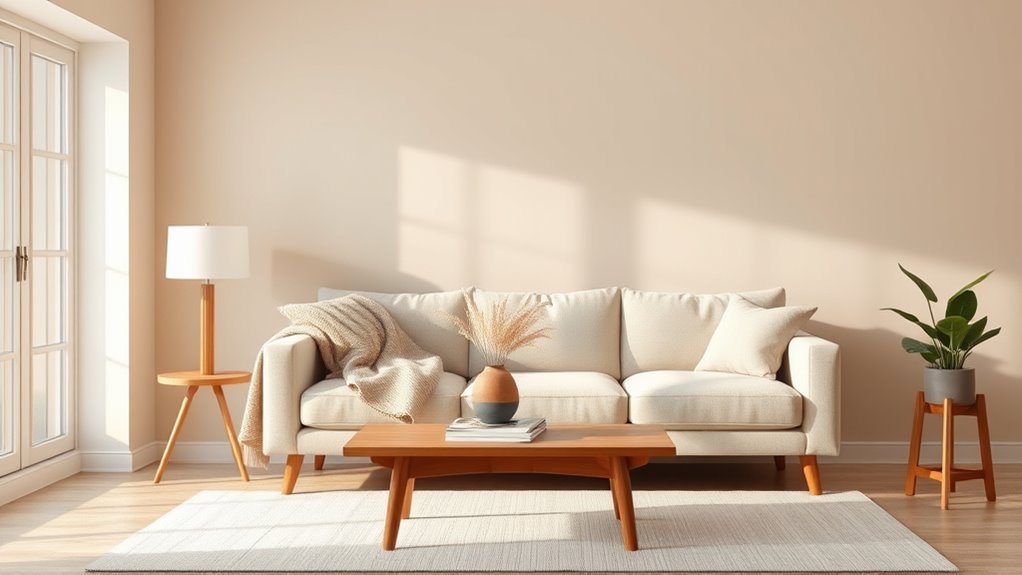
When you want a reliable, easy-to-live-with choice for most living rooms, go with a mid-sheen acrylic latex in a neutral tone—it balances durability, washability, and color fidelity without shouting for attention.
You’ll pick neutrals that support color psychology—calming beiges, soft grays, or warm whites—to set mood without dominating décor.
Choose low-VOC or zero-VOC formulations and certified eco friendly options to protect indoor air and the planet while keeping performance.
Apply with proper prep and two coats for even coverage.
This approach gives you a versatile, long-lasting backdrop that complements furniture and accents effortlessly.
Choose Paint by Light, Size, and Mood (How to Decide)
Because light, room size, and mood all shape how color reads, pick paint with those three factors in mind. Assess natural and artificial light—north-facing rooms stay cooler, south-facing get warmer—then test swatches at different times.
Consider light, room size, and mood—test swatches at different times to see how color truly reads.
In small spaces, lighter hues open the room; in large rooms, deeper tones add coziness.
Use color psychology to choose hues that support the room’s purpose: calming blues for relaxation, energizing yellows for activity.
Consider paint finish options for durability and ease of cleaning, but balance practicality with the atmosphere you want.
Always sample full-size patches before committing.
Matte vs Eggshell vs Satin vs Semi‑Gloss: Pros and Cons

If you want walls that hide imperfections, look rich, or stand up to wear, choosing the right finish matters—matte, eggshell, satin, and semi‑gloss each trade off appearance for durability and cleanability.
You’ll pick matte for a velvety, sophisticated feel that favors color psychology tied to calmness, though it’s less washable.
Eggshell balances subtle sheen and forgiveness of flaws, fitting casual elegance.
Satin adds sparkle and resilience in lively areas.
Semi‑gloss shines, resists scuffs, and highlights trim.
Consider eco-friendly paints in any finish to reduce VOCs; test swatches to match mood, light, and maintenance needs.
Durability & Cleaning: Paints That Survive Kids and Traffic
Although kids and busy households put walls through nonstop wear, choosing the right paint finish and formula means you won’t be repainting every season. You’ll want durable, washable paints designed to resist scuffs, stains, and frequent cleaning without fading.
Consider how color psychology influences perceived cleanliness and mood—lighter, warmer hues can hide marks less than mid-tones, while darker colors hide grime but show dust.
Pay attention to paint texture: smoother surfaces wipe clean easier, while textured finishes disguise imperfections but can trap dirt.
Pick a hardy, washable product and plan routine spot-cleaning to keep your living room looking fresh.
Buying & Painting Tips: Sheen, Brand, Samples, and Application
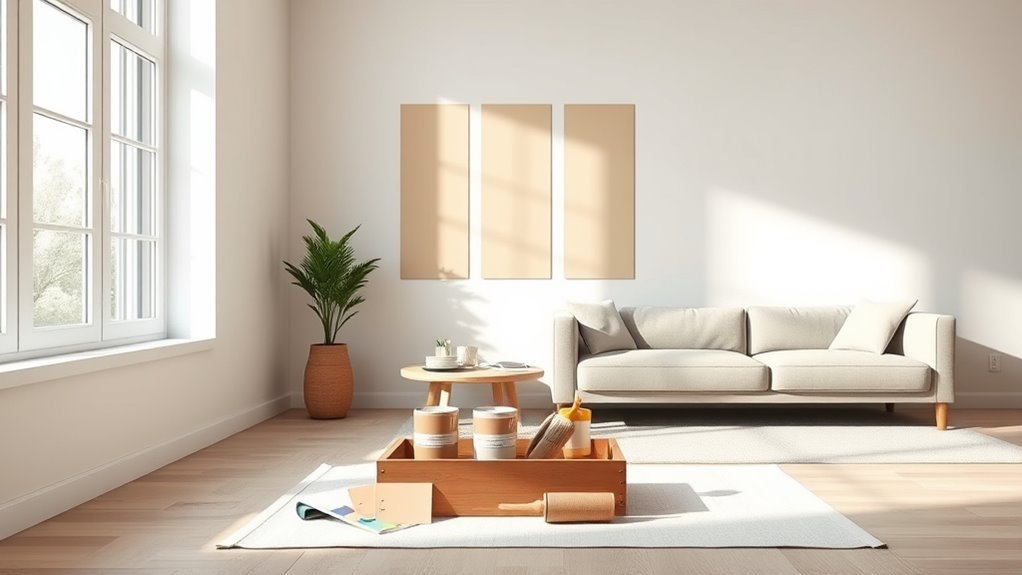
When you shop for living room paint, focus first on sheen and quality—these determine how the color reads, how the surface cleans, and how long the finish will last. Choose eggshell or satin for balance: they hide flaws yet wipe clean.
Pick a reputable brand with good coverage to save coats. Test samples on different walls and view at various times to judge Color psychology effects.
Consider eco friendly options if indoor air matters. Prep—clean, patch, prime—so paint performs.
Use proper rollers, angled brushes, and maintain a wet edge to avoid lap marks for a flawless finish.
Frequently Asked Questions
Are Low-Voc Paints Necessary for Sensitive Occupants?
Yes, you should choose low-VOC paints for sensitive occupants. You’ll protect health and indoor air quality, enjoy VOC reduction benefits, and still get attractive, eco friendly finishes that minimize odors and chemical exposure.
Can I Paint Over Wallpaper Without Removing It?
Yes — you can, but treat it like gardening: you’ll need thorough wall preparation, remove loose paper and do adhesive removal where it peels, repair seams, prime with a suitable bonding primer, then paint for a smooth finish.
How Long Does Freshly Painted Air Quality Remain Affected?
You’ll notice fresh paint effects for a few days to weeks; air quality duration usually peaks within 24–72 hours but can linger up to several weeks depending on ventilation, paint type, and humidity, so ventilate consistently.
What Paint Colors Increase a Room’s Resale Value?
Like a calm sea, you should pick neutral tones—soft grays, warm beiges, and off‑whites—since color psychology favors them and buyers appreciate versatility; they also highlight wall durability and help rooms feel spacious, clean, and marketable.
Is Tinting Paint at the Store Color-Accurate?
Yes — store tinting can be color-accurate, but you’ll want to verify it. You should check color matching with samples, confirm tint consistency across batches, and test swatches under your room’s lighting before buying large quantities.
Conclusion
You’ve seen the options—now pick what fits your room, light, and lifestyle. Want softness and low sheen? Go eggshell. Need wipeable durability for kids or pets? Choose satin or semi-gloss. Don’t forget samples and the right primer; even great paint can underperform on a bad surface. Ready to test a few swatches and transform your living room into a space you actually love? Go for it—your perfect finish is waiting.
