
What Type of Paint to Use for Bedroom Walls
Choose a low‑VOC, water‑based latex in an eggshell or satin finish for bedroom walls so you get easy cleaning, durability, and minimal odor. Use matte for ceilings and low‑traffic accent areas to hide imperfections and keep a cozy feel. Pick muted blues, soft greens, warm greys or dusty lavenders for calm, and test samples under your light at different times of day. Keep consistent sheens for cohesion, and keep going to learn specific brands, prep, and maintenance tips.
Quick Answer: Best Paint for Bedroom Walls
If you want a fuss-free recommendation, pick a low-VOC, eggshell or satin latex paint in a neutral or muted tone—these balance durability, easy cleaning, and a pleasant, non-glossy finish that suits most bedrooms.
You’ll get durability without harsh fumes, and the subtle sheen hides imperfections while allowing soft light.
Choose colors that support current wallpaper trends if you plan an accent wall, and consider wall art placement before finalizing shade so frames and textiles harmonize.
Test samples on different walls and live with them for days. That way you’ll avoid costly repainting and create a cohesive, restful space.
What Bedroom Paint Does: Finishes, Color, and Mood
Although paint might seem purely decorative, the finish, color, and tone you choose shape how a bedroom looks, feels, and functions—gloss levels affect light and surface visibility, while hue and saturation influence mood and perceived space. You’ll pick matte for cozy depth, satin for balance, or semi-gloss where you need stain resistance and easy cleaning; consider wall texture since sheen highlights imperfections. Match color warmth to the atmosphere you want and prioritize paint durability for high-traffic areas. Compare options:
| Finish | Effect | Best Use |
|---|---|---|
| Matte | Soft, concealing | Low-traffic walls |
| Satin | Subtle sheen | Living spaces |
| Semi-gloss | Durable, reflective | Trim, doors |
How Natural Light Alters Paint Color Perception
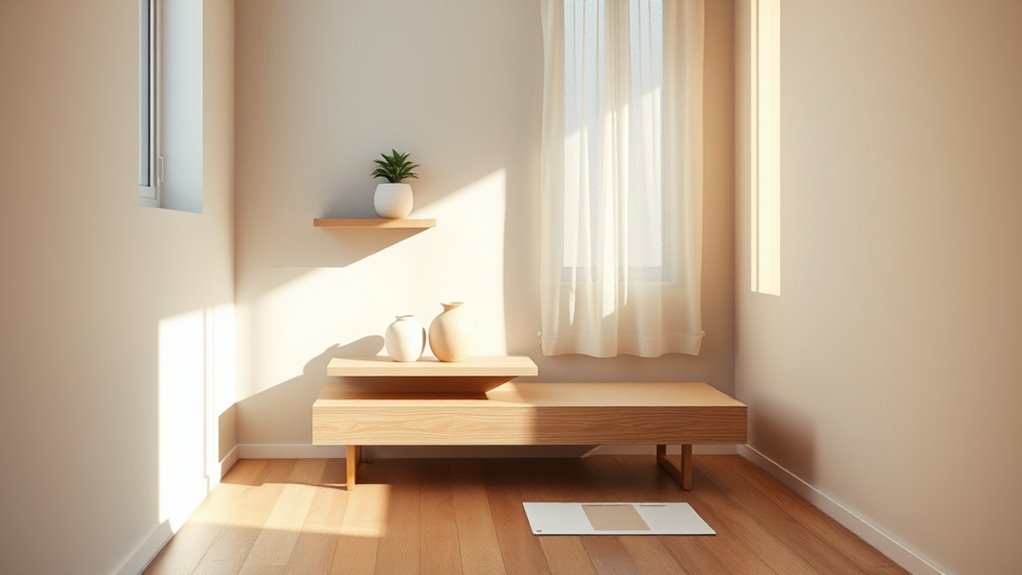
How does natural light change the way paint reads in your bedroom? Natural light shifts throughout the day, warming mornings, flattening midday, cooling evenings, so a color you choose can feel different hour to hour.
You’ll notice undertones reveal themselves: cool blues turn neutral in bright sun, warm creams glow in afternoon light. Test samples on multiple walls and observe across times; vintage techniques like hand-mixing or glazing help you preview subtle shifts.
Look to historical palettes for guidance—those time-tested combos respond predictably to light. Plan with light direction in mind so your chosen hue behaves as you expect.
How Paint Finish Changes Perceived Depth and Tone
When you pick a paint finish, you’re not just choosing shine—you’re shaping how depth, texture, and color read in the room. You’ll notice matte finishes mute highlights, softening contrasts and favoring subtle color blending across walls.
Satin and eggshell add a gentle sheen that lifts midtones, making hues read warmer and surfaces feel slightly more dimensional. Semi-gloss reflects light sharply, boosting perceived depth where beams hit and exaggerating texture enhancement on imperfect walls.
Match finish to the effect you want: conceal flaws with flat, emphasize architectural details with glossier finishes, and use consistent finish choices for cohesive color relationships.
Choosing Paint by Bedroom Activity Level
Think about how active your bedroom is when you pick paint—low-traffic guest rooms can handle softer, more delicate finishes.
While busy family or kid rooms need tougher, washable options.
You’ll want matte or eggshell for calm, low-use spaces and satin or semi-gloss where scuffs and stains are likely.
Choosing the right finish keeps the room looking fresh with less upkeep.
Low-Traffic Bedrooms
Because you spend less time moving furniture or dealing with spills in a low-traffic bedroom, you can prioritize color and finish for comfort and mood rather than extreme durability.
You’ll enjoy experimenting with color palettes that soothe or energize without worrying about frequent repainting. Choose a matte or eggshell finish for a cozy look; both hide imperfections and feel soft.
If you change your mind later, simple paint removal or light sanding makes updates easy.
Consider these options:
- Soft matte for restful, modern bedrooms
- Eggshell for a bit more washability
- Accent wall with a richer hue for depth
High-Activity Spaces
If your bedroom sees lots of activity—kids playing, pets running, or frequent guests,you’ll want paint that stands up to scuffs and is easy to clean without sacrificing color. Choose washable eggshell or satin finishes for durability; consider paint texture that hides minor damage. Pick mid-tone hues with warm or cool color temperature to conceal marks and maintain mood. For trim, use semi-gloss for easy wipe-downs. Maintain finish consistency for touch-ups.
| Area | Recommended Finish | Benefit |
|---|---|---|
| Walls | Eggshell/Satin | Washable, hides flaws |
| Trim | Semi-gloss | Easy cleaning |
| Accent | Matte | Subtle depth |
| Touch-ups | Same batch | Seamless repair |
Matte vs Eggshell vs Satin: Choosing the Right Sheen
When you’re choosing paint for a bedroom, the sheen affects both look and performance, so pick one that matches your style and daily needs. You want a finish that balances paint texture, durability, and color coordination with furniture and lighting.
Matte hides imperfections and feels cozy; eggshell offers a slight luster and easy cleaning; satin is more durable with a subtle sheen. Choose based on traffic, how often you’ll clean, and the mood you want.
- Matte: soft, conceals flaws, low reflectivity
- Eggshell: versatile, gentle sheen, forgiving
- Satin: durable, slightly reflective, easy wipeability
When to Use Semi‑Gloss or Gloss on Trim and Doors
Although trim and doors don’t cover as much surface as walls, you’ll notice their sheen instantly—semi‑gloss and gloss finishes give crisp definition, stand up to scuffs, and clean far more easily than matte or eggshell, so choose them where durability and a sharp look matter most.
Use semi‑gloss on interior doors and baseboards for a balanced shine; pick gloss for high‑contact or statement pieces.
You can spotlight decorative painting details or Faux finishes with higher sheen to enhance depth and contrast.
Avoid glossy textures where flaws show; test small areas to confirm light reflection and overall harmony with wall sheens.
Primer Needs: When and What to Prime in Bedrooms
After you’ve picked wall sheens and finished trim, think about primer—it’s what makes paint stick, hides stains, and evens out porous or repaired surfaces so your chosen color looks its best. You’ll prime in these situations to get consistent coverage and durability.
Consider substrate, stain-blocking needs, and whether you’ll change from dark to light.
- New drywall or patched areas
- Bare wood trim or stained patches
- High-moisture walls or smell-prone spots
Don’t forget ceilings with heavy textures may need special primers. Label cans carefully and follow paint storage guidelines to keep leftover primer usable for touch-ups.
Testing Paint Samples in Your Bedroom
Before you commit, put a few paint samples directly on your bedroom walls so you can see how they read against your trim and furnishings.
Watch those swatches at different times of day and under both natural and artificial light to catch color shifts. That quick test will save you from choosing a shade that looks great in the can but wrong in the room.
Test Samples On Walls
When you test paint samples on your bedroom walls, you’ll see how light and surrounding colors change the shade throughout the day. So always apply multiple swatches in different spots and view them at morning, midday, and evening.
Apply thumb-sized patches on varied wall texture and near furniture to judge finish and depth. Keep small sample jars sealed for paint storage and note brands.
Consider these quick checks:
- Stand at different distances to check uniformity and coverage.
- Run your hand to feel sheen and reveal texture interaction.
- Photograph patches under artificial light to compare later.
Observe At Different Times
Because light shifts throughout the day, observe your paint samples at several times—morning, midday, late afternoon, and under evening artificial lighting—to see how color, depth, and warmth change.
Place samples on different walls to compare orientation and wall textures, noting how sunlight grazes bumps or hides imperfections.
Stand at various distances and view from bed and doorway to judge real-life impact.
Photograph each sample under consistent framing and label shots with time.
Keep leftover swatches in proper paint storage so you can retest later or match undertones for trim.
Use these observations to pick a shade you’ll enjoy day and night.
Washable Bedroom Paints for High‑Traffic Rooms
If you want bedroom walls that stay fresh despite constant use, choose washable paints designed for high-traffic rooms. You’ll prefer options that clean easily, resist stains, and keep color longer.
Look for Eco friendly finishes and Moisture resistant coatings when selecting products so you minimize odors and mildew risk.
Consider these practical features:
- Scrubbability rating (higher is better for frequent cleaning)
- Low-VOC or zero-VOC formulations for healthier indoor air
- Finish type: satin or semi-gloss balances appearance with cleanability
Test a small patch, follow manufacturer cleaning guidelines, and repaint with the same product for consistent performance.
Durable Paints for Rentals and Kids’ Bedrooms
When you need something that stands up to sticky fingers and frequent touch-ups, high-performance eggshell offers durable coverage with a soft, low-sheen finish.
For areas that get aggressive scrubbing—like a rental turnover or a busy kid’s room—scrubbable semi-gloss holds up to repeated cleaning without losing color.
Pick the sheen that balances wear resistance and your desired look so you don’t sacrifice style for durability.
High-Performance Eggshell
Looking for a finish that stands up to scuffs, frequent cleanings, and everyday life in rentals or kids’ rooms? You’ll appreciate high-performance eggshell: it balances durability with a soft sheen, hiding imperfections while reflecting natural light gently. It cleans better than flat without the shine of glossier options, so you can wipe marks without damaging paint.
Consider these practical uses and benefits:
- Low-maintenance walls that resist mild abrasion and stains
- Subtle sheen that keeps rooms cozy yet bright in natural light
- Good for rental touch-ups and families needing tougher surfaces
Choose quality formulations labeled “high-performance” for best results.
Scrubbable Semi-Gloss
High-performance eggshell handles everyday scuffs well, but for rooms that see heavy wear—kids’ bedrooms, hallways, or rental units—you’ll want scrubbable semi-gloss. You’ll get a tougher finish that wipes clean without ghosting, so stickers, crayons, and spills don’t linger. Choose a scrubbable semi gloss labeled moisture resistant paint for bathrooms or humid climates. It stands up to repeated cleaning and maintains sheen. Consider low-VOC formulas for bedrooms. Below is a quick comparison to guide you.
| Feature | Benefit |
|---|---|
| Durability | Resists scuffs |
| Cleanability | Repeated wiping |
| Sheen | Slight reflective |
| Moisture | Moisture resistant paint |
Low‑/No‑VOC & Eco Certifications for Sensitive Sleepers
Because air quality and chemical sensitivity directly affect how well you sleep, choosing low- or no‑VOC paints and verified eco-certified products matters more than aesthetics alone. You’ll sleep easier with eco-friendly options that limit off-gassing and VOC-free benefits that reduce headaches and irritation. Look for clear labeling and third-party verification.
Choose low- or no‑VOC, eco-certified paints to limit off‑gassing, reduce irritation, and protect sleep quality.
- Choose low-/no‑VOC formulas for bedrooms.
- Verify certifications to confirm claims.
- Prioritize paints with minimal additives and fragrance.
You’ll also ventilate during and after painting, use proper respirators while applying, and wait recommended cure times before reoccupying the room.
Eco Paint Options & Trusted Certifications
When you’re choosing paint for a bedroom, pick brands that combine low‑ or no‑VOC formulas with verified eco certifications so you know their health and environmental claims are backed by a third party.
Look for Eco friendly options like water‑based acrylics, natural clay, or plant‑based paints that reduce fumes and allergens.
Check Certification standards such as Green Seal, GREENGUARD, and EU Ecolabel to confirm emissions, ingredient limits, and lifecycle practices.
Read labels for odor, VOC limits, and third‑party logos.
Buy from reputable manufacturers, request data sheets, and test a small area to ensure performance and comfort before committing.
How Humidity and Ventilation Affect Paint Choice
If your bedroom traps moisture or stays stuffy, it can change how paint dries, adheres, and wears over time. You should consider humidity levels and ventilation effects when choosing finish and formulation.
High humidity can slow drying and promote mildew; poor airflow increases odor persistence and surface problems. Choose mildew-resistant, quick-dry paints and plan drying time accordingly. Improve airflow during and after painting.
- Pick paints labeled for high-humidity rooms to resist mold.
- Use low-VOC formulas and fans to mitigate ventilation effects.
- Allow extra cure time in damp conditions and avoid glossy finishes that trap moisture.
Picking Paint for Cool vs Warm Bedroom Schemes
Although cool and warm palettes both create inviting bedrooms, they do very different jobs: cool tones calm and recede, while warm tones energize and cozy up a space. When choosing, consider color psychology: blues and greens soothe for restful sleep, while soft yellows and terracottas boost warmth and intimacy.
Pick finishes that match function—eggshell hides imperfections and suits most bedrooms; satin is tougher for active rooms. Also factor paint durability if you expect scuffs or frequent cleaning.
Test samples under your lighting, then pick the shade and finish that supports mood, maintenance needs, and the room’s daily use.
Matching Paint to Room Size and Ceiling Height
You’ve picked a palette that sets the mood; now tune the paint to the room’s proportions so the color works with the space, not against it. For small rooms pick lighter, warm neutrals to open space; tall ceilings favor soft, darker tones to bring warmth down. Consider bedroom wall textures when choosing sheen—matte hides flaws, eggshell adds subtle depth. Test swatches at different times of day and against furniture.
- Use vertical stripes or lighter ceilings to feel taller.
- Use low-contrast trims to visually expand compact rooms.
- If repainting, research paint removal techniques for safe prep.
Accent Walls and Simple Specialty Finishes
For a quick style boost, pick an accent wall color that complements your main palette and highlights a focal point like the headboard or a fireplace.
You can add subtle shimmer with metallic or pearl finishes to reflect light without overwhelming the room.
If you want more texture, consider simple techniques like sand, suede, or rag-rolling to create depth without a full remodel.
Choosing Accent Wall Colors
When you pick an accent wall color, think of it as the room’s focal point—something that anchors the space and sets the mood without overwhelming it. Choose a hue that complements bedding and trim, or go bold to energize.
Consider decorative wall murals for pattern or storytelling, and remember ceiling paint options to balance vertical space. Test samples at different times of day.
Think about finish: matte hides flaws, eggshell reflects a bit. Use this quick checklist to decide:
- Match undertones with existing colors
- Test full-size swatches on the wall
- Coordinate finish with room lighting and texture
Metallic And Pearl Finishes
Looking to add subtle shine or a dramatic shimmer to a bedroom, metallic and pearl finishes give you options that catch light and change mood throughout the day. You can highlight an accent wall with metallic finishes for a luxe, reflective look or use pearl accents for softer, iridescent glow.
These finishes work best on smooth, well-primed surfaces and behind simple furniture so the effect reads intentional, not busy. Apply sparingly—one wall or a panel—to avoid overwhelming the room.
Test samples at different times to see how artificial and natural light alter the sheen before committing.
Textured Paint Techniques
If you want an accent wall that adds depth without clutter, textured paint techniques give you tactile interest and subtle drama with minimal fuss. You can pick a finish that fits your style, from soft suede to bold relief. Use texture to hide imperfections and create Wall patterns that guide the eye. Try a small test area, then scale up.
- Skip complex tools: use rollers or trowels for quick texture.
- Layer glazes lightly to emphasize relief without heaviness.
- Combine neutral tones so texture, not color, defines the space.
Textured techniques stay stylish and surprisingly low-maintenance.
Color Psychology: Paints That Promote Calm and Sleep
Because your bedroom sets the stage for rest, choosing paint with calming undertones helps your mind unwind and prepares your body for sleep. Pick muted blues, soft greens, warm greys, or dusty lavenders; they lower heart rate and reduce stimulation.
Use color combinations sparingly—accent walls or trim in slightly deeper tones add depth without overwhelming. Matte or eggshell sheens minimize glare and promote a cozy feel.
When you paint, follow straightforward paint application techniques: prime, work top to bottom, and use even strokes for uniform coverage. Keep lighting soft and consistent to preserve the soothing effect of your chosen palette.
Tips for Painting Over Dark or Glossy Surfaces
When repainting over a dark or glossy surface, start by scuffing or sanding the old finish so your new paint will adhere properly. Glossy sheens and deep colors resist coverage and can cause peeling if you skip prep.
You’ll also clean, prime, and choose the right sheen. Use color blending to avoid stark progressions and apply paint techniques that build even coverage.
- Sand lightly, then wipe with a tack cloth.
- Apply a high-adhesion primer tinted toward your topcoat.
- Use thin, overlapping coats with a brush for edges and a roller for flats.
These steps guarantee durability and smooth, consistent results.
Maintenance: Cleaning and Caring for Different Finishes
After you’ve prepped and painted properly, keeping finishes looking their best comes down to tailored cleaning and care.
For flat or matte walls, dust with a microfiber cloth and spot-clean gently using a damp sponge and mild detergent; avoid scrubbing which can remove pigment.
Eggshell and satin resist moisture better, so you can use a soft cloth and low-abrasive cleaner for tougher marks.
Semi-gloss and gloss tolerate more vigorous cleaning and are ideal near trim or high-traffic areas.
Consider wallpaper options where frequent washing’s needed.
Know simple wall repair methods—touch-up techniques and small-fill patches—to restore finish without full repainting.
Best Bedroom Paint Brands and Product Types
If you want durable, attractive bedroom walls, choose a paint brand and product type that match your room’s needs—look for low-VOC formulas for better indoor air quality, washable finishes for kids’ rooms, and premium pigments for truer color and fewer coats.
Pick reputable manufacturers offering interior acrylics, eggshell or satin sheens, and specialty faux finishes if you want texture.
Consider ease of application and smell, and plan Paint storage to preserve leftovers.
- Interior acrylic latex: easy cleanup, durable
- Satin/eggshell: soft sheen, hides imperfections
- Faux finishes & glazes: for accent walls and depth
Cost vs Performance: Choosing Budget Paints That Perform
Although budget paints can save you money up front, you’ll want to weigh upfront cost against factors like coverage, durability, and touch-up ease to avoid repainting sooner than necessary.
You should test small samples to compare tint accuracy and finish across color palettes, since cheaper formulas sometimes shift when mixed. Look for reviews emphasizing paint durability, stain resistance, and how many coats a brand truly needs.
Prioritize a product that balances price with expected lifespan—better coverage can cut labor and materials.
In bedrooms, modestly higher spend on proven performance often saves time and keeps walls looking fresher longer.
Quick Checklist to Finalize Your Bedroom Paint Choice
When you’re ready to pick the final paint, use a short checklist to confirm coverage, finish, VOC levels, true color, and touch-up availability so you don’t get surprises later. Check samples on your wall at different times of day, near windows and by garden decor reflections.
Consider how finish affects cleaning around bedside tables and furniture placement. Ask about VOCs for indoor air quality, especially if you sleep near painted walls. Confirm touch-up paint availability and batch codes.
Test a 12×12″ swatch. Verify manufacturer warranty and return policy before buying.
- Sample lighting on walls
- VOC and finish specs
- Touch-up and batch code availability
Frequently Asked Questions
Can Paint Color Affect Indoor Allergens or Mold Growth?
Yes — you can reduce airborne allergens and aid mold prevention by choosing low-VOC paints and antimicrobial or mold-resistant formulations; you’ll cut off allergen sources, inhibit mold growth, and make cleaning and ventilation more effective.
How Long Should I Wait Before Moving Furniture Back After Painting?
Funny enough, you can’t rush it—wait 24–48 hours for touchable dryness, 7–14 days for full cure before moving furniture; consider paint finish and color selection since sheen and pigment can affect drying and visibility of imperfections.
Are There Paints That Help With Soundproofing a Bedroom?
Yes — you can use Soundproofing coatings and Acoustic paint to reduce echoes and slightly dampen noise, but they won’t fully soundproof; you’ll still want insulation, mass-loaded barriers, or double walls for serious noise control.
Can Wall Paint Be Applied Over Wallpaper Without Removal?
You can sometimes paint over wallpaper, but you’ll risk poor paint adhesion and future peeling; consider Wallpaper removal or at least priming with a quality bonding primer first, and repair loose seams so the finish lasts.
How Do Temperature Extremes Affect Paint Curing and Longevity?
Like a slow-burning fuse, you’ll see temperature fluctuations stress paint durability: extremes slow curing or cause blushing, cracking, peeling, and reduced lifespan. You’ll want controlled conditions and proper formulas to preserve finish and longevity.
Conclusion
You’ve got the tools to pick paint that fits your bedroom’s light, use, and vibe—so go with a low- or matte-sheen for calm, eggshell for balance, or semi-gloss where you need durability. Remember: 60–80% of people say a room’s color affects their mood, so your choice really matters. Choose a trusted brand, test samples in different light, and you’ll create a space that looks great and feels right every day.
