
Essential Features for a Wheelchair-Accessible Bathroom
When designing a wheelchair accessible bathroom, you’ll want to include several essential features. Start with wide doorways and roll-in showers for easy access. Install grab bars for safety and choose accessible vanities with knee space. Non-slip flooring and ample turning space help prevent accidents. Wall-mounted toiletries and easy-access storage simplify your daily routine. Raised toilets and adjustable showerheads provide added comfort and independence. Ascertain lighting is sufficient and switches are in reach, too. By incorporating these features, you enhance usability and safety. Discover more handy tips to create the perfect accessible bathroom setup that meets all your needs.
Wide Doorways
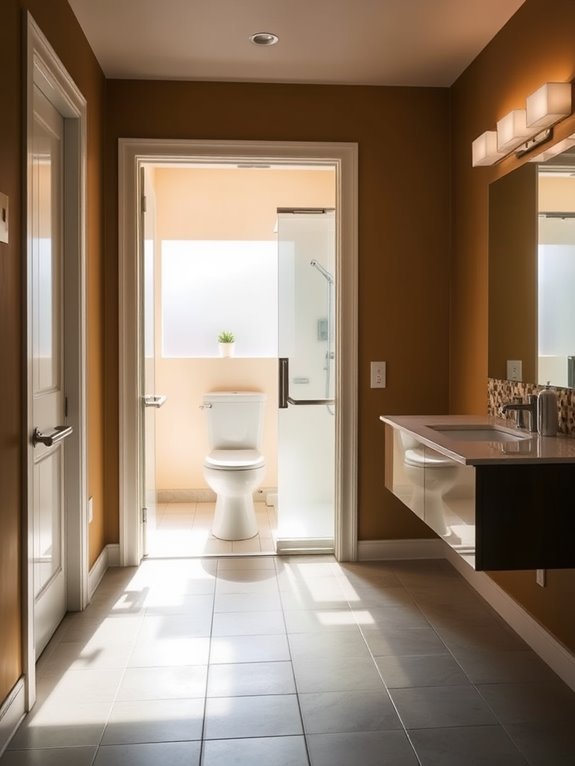
Wide doorways are essential for creating an accessible bathroom that accommodates wheelchair users.
By ensuring door widths of at least 32 inches, you make navigation easier and safer. This feature not only allows for smooth entry and exit but also enhances overall usability.
When designing your space, consider the layout to minimize obstacles, ensuring a comfortable experience for everyone.
Roll-In Showers
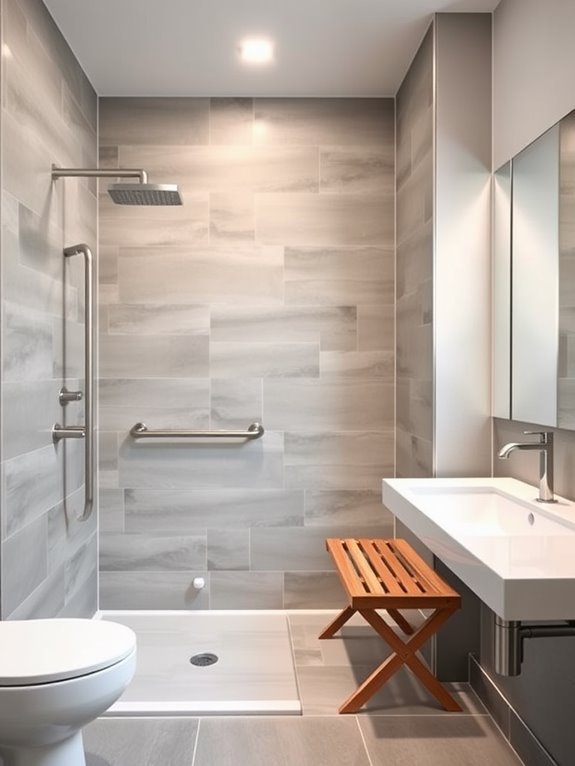
When designing a wheelchair accessible bathroom, incorporating roll-in showers can greatly enhance the user experience.
These showers eliminate barriers, allowing easy access without stepping over a tub or curb. You can choose adjustable showerheads and non-slip flooring to guarantee safety and comfort.
With ample space, roll-in showers provide freedom of movement, making daily routines more enjoyable and stress-free.
Grab Bars
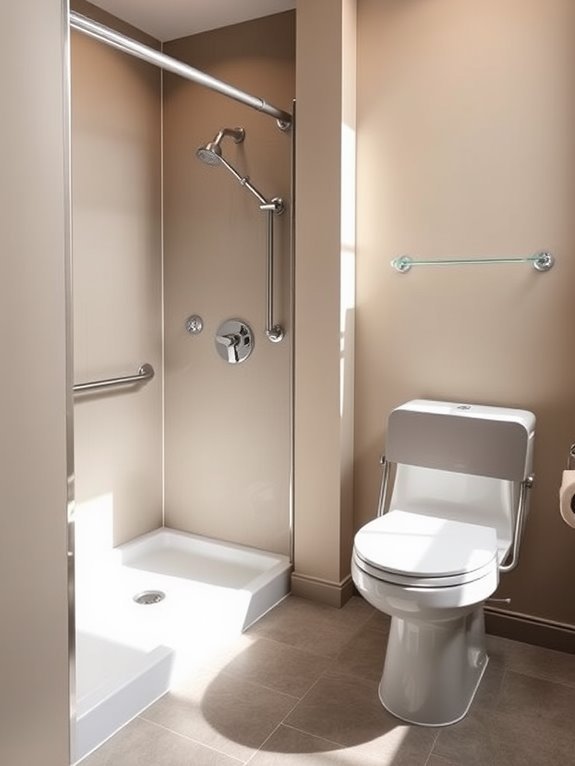
Grab bars are essential for enhancing safety and independence in a wheelchair accessible bathroom. They provide support when transferring or stabilizing yourself. Install them near the toilet and shower for maximum benefit. Choose bars made of durable materials for long-lasting use. Here’s a simple guide to help you select the right grab bars:
| Type | Location | Material |
|---|---|---|
| Straight Bar | Shower | Stainless Steel |
| L-Shaped Bar | Toilet | Plastic Coated |
| Foldable Bar | Bathtub | Aluminum |
Accessible Vanities
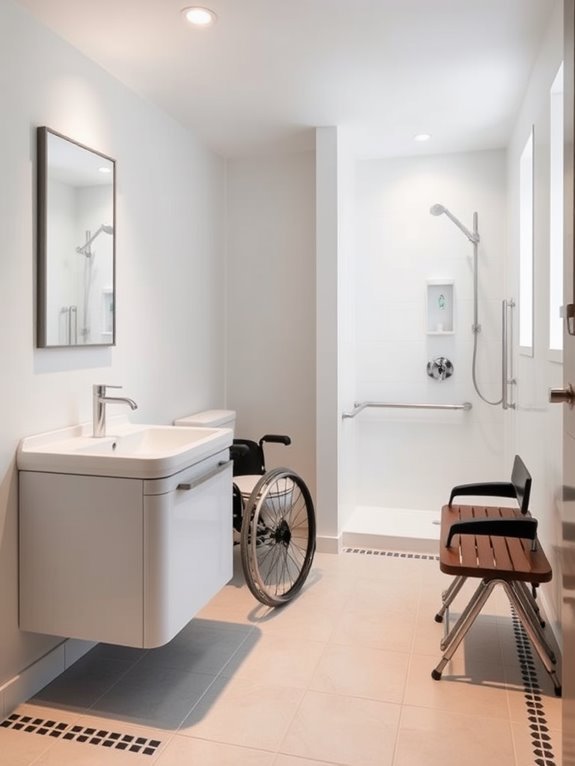
Accessible vanities play an essential role in creating a functional and comfortable bathroom for individuals using wheelchairs.
They should have sufficient knee space underneath, allowing you to roll up comfortably.
Consider adjustable heights to accommodate different needs.
Also, choose easy-to-reach storage for toiletries and grooming items.
With thoughtful design, accessible vanities enhance independence and ease of use for everyone.
Non-Slip Flooring
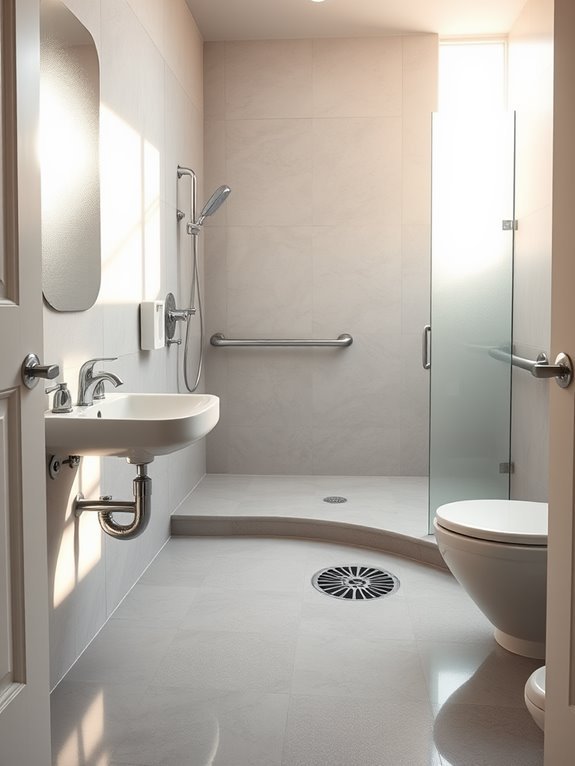
Safety is paramount in a wheelchair accessible bathroom, and non-slip flooring is an essential feature that helps prevent accidents.
Choosing the right flooring can make a significant difference. Consider these factors:
- Material: Opt for rubber or textured tiles for better grip.
- Maintenance: Guarantee it’s easy to clean and resistant to moisture.
- Style: Select designs that complement your bathroom decor while prioritizing safety.
Adjustable Showerheads
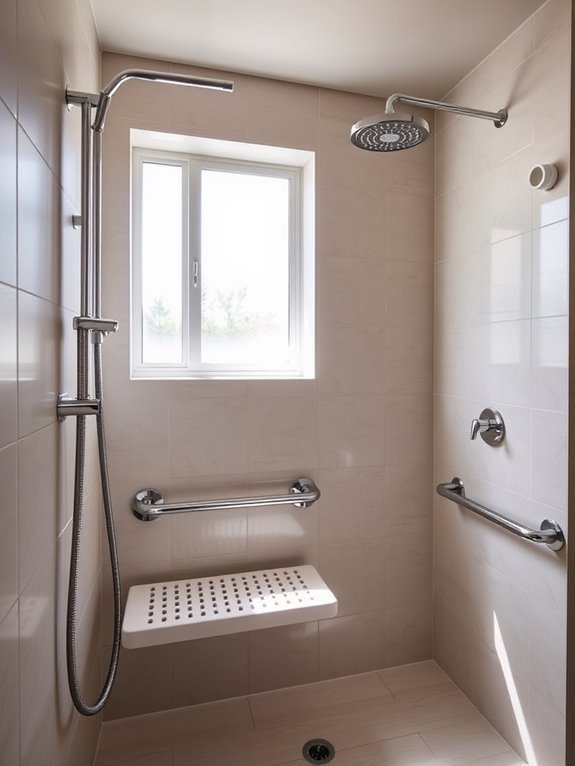
When you’re setting up a wheelchair accessible bathroom, adjustable showerheads can make a big difference.
You’ll appreciate the height adjustability, allowing you to customize the shower experience to your needs.
Plus, the flexible spray options guarantee you can enjoy a comfortable and effective shower every time.
Height Adjustability Benefits
Have you ever considered how much height adjustability can enhance your showering experience?
Adjustable showerheads provide flexibility, ensuring comfort for everyone. Here are three key benefits:
- Personalization: Tailor the height to your needs, making each shower more enjoyable.
- Accessibility: Easily reach the showerhead from a wheelchair or seated position.
- Convenience: Quickly adjust for different users, ensuring everyone feels accommodated.
Flexible Spray Options
While you mightn’t think about it often, having flexible spray options in adjustable showerheads can greatly enhance your bathing experience.
With features like handheld sprays and various spray patterns, you can easily customize your shower to suit your needs. This flexibility makes it simpler for you to reach all areas, ensuring a thorough and comfortable clean every time you bathe.
Lowered Light Switches
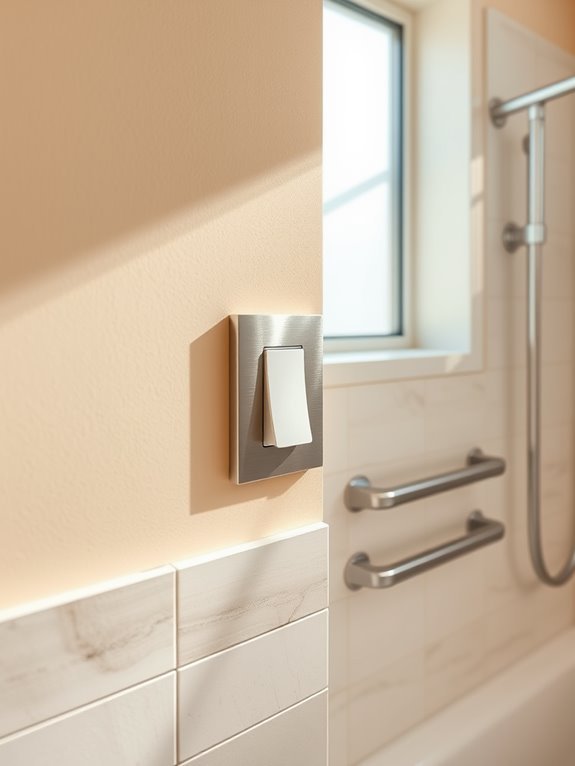
When designing a wheelchair accessible bathroom, you need to take into account lowered light switches for ideal reach.
These switches should meet safety and accessibility standards, ensuring everyone can easily control the lighting.
Placement height is essential, so you can comfortably access them without straining.
Optimal Reach for Users
How can you guarantee that users easily access light switches in a wheelchair accessible bathroom?
Consider these important features:
- Height: Install switches no higher than 48 inches from the floor.
- Location: Position them near the entrance for easy reach.
- Type: Use rocker or paddle switches for effortless operation.
These adjustments make sure that everyone can comfortably control lighting in the space.
Safety and Accessibility Standards
Ensuring that light switches aren’t only easily accessible but also compliant with safety and accessibility standards is essential in a wheelchair accessible bathroom.
You’ll want to install switches that require minimal effort to operate. This enhances your safety and convenience.
Additionally, using contrasting colors can help you locate them easily, ensuring that your bathroom experience is both functional and user-friendly.
Placement Height Considerations
The placement height of light switches in a wheelchair accessible bathroom plays an essential role in overall functionality.
To guarantee ease of use, consider these guidelines:
- Install switches 15-48 inches above the floor.
- Position them near the door for accessibility.
- Ascertain they’re easy to reach without stretching or straining.
These adjustments help create a more comfortable and functional space for everyone.
Raised Toilets
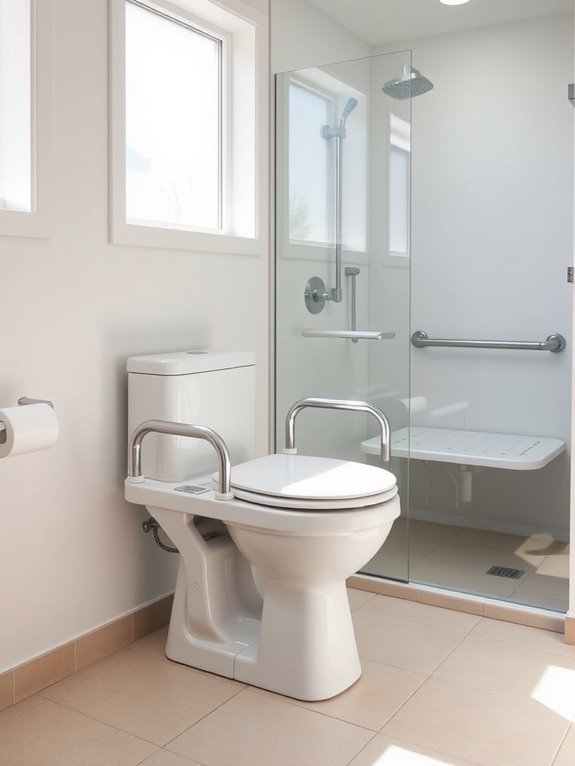
Raised toilets are essential for creating a comfortable and accessible bathroom experience for those with mobility challenges.
They typically stand 2 to 6 inches higher than standard toilets, making it easier for you to sit down and stand up.
This added height can reduce strain on your knees and back, enhancing your overall safety and independence in the bathroom.
Wheelchair-Height Sinks
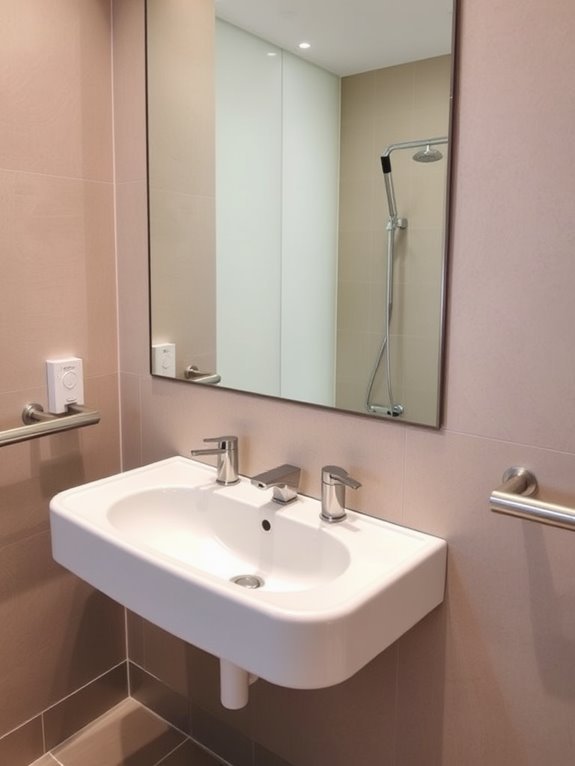
When designing a wheelchair-accessible bathroom, incorporating wheelchair-height sinks is essential for maximizing usability and comfort.
These sinks should be easily reachable so you can maintain independence.
Consider these key features:
- Adjustable height for personalized comfort.
- Clear space underneath for wheelchair maneuverability.
- Lever or touchless faucets for easy operation.
These elements enhance your experience and guarantee a functional space.
Curbless Shower Entry
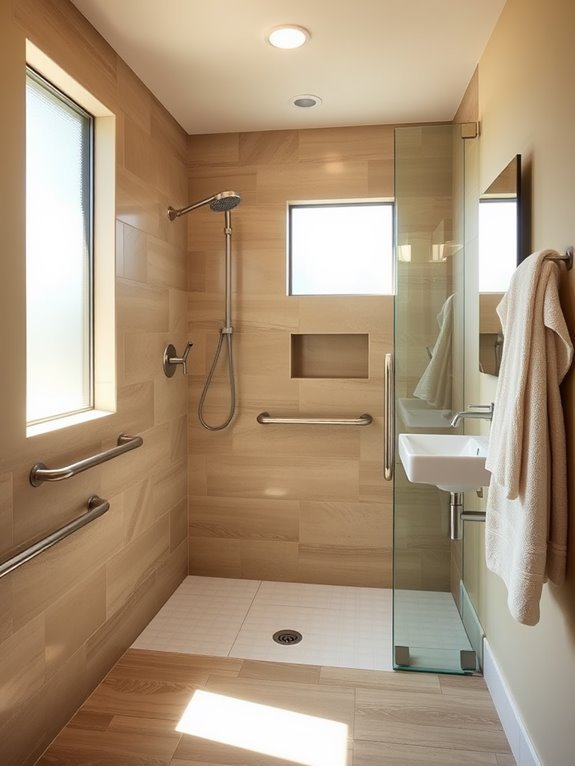
A curbless shower entry transforms your bathing experience, making it more accessible and inviting.
You can easily roll in or step inside without worrying about tripping over a threshold. This design not only enhances safety but also creates a seamless flow in your bathroom.
Plus, it allows for more creative bathroom tile options, giving your space a modern, open feel.
Touchless Faucets
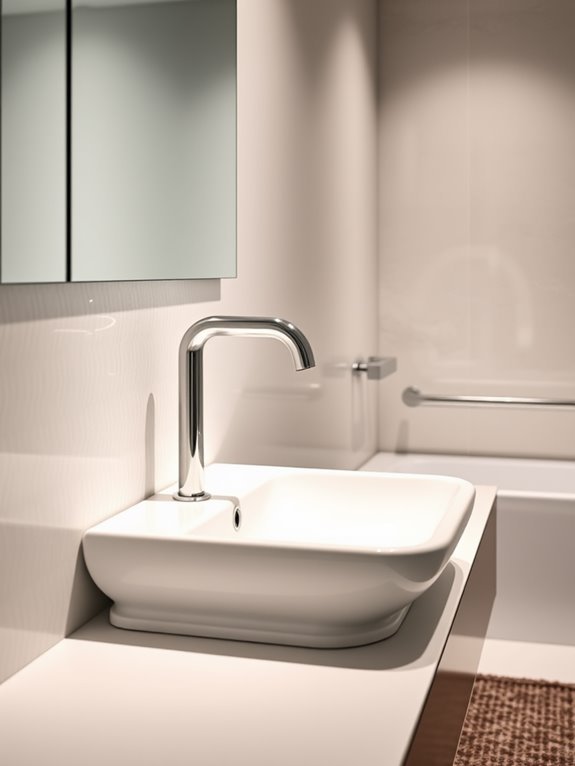
After enjoying the benefits of a curbless shower entry, the next step in creating an accessible bathroom is incorporating touchless faucets.
These faucets make it easier to maintain hygiene without needing to touch handles.
Consider these features:
- Sensor activation – Water flows automatically when you place your hands under the faucet.
- Temperature control – Set your preferred temperature for comfort.
- Easy installation – Many models fit standard plumbing setups.
Ample Turning Space
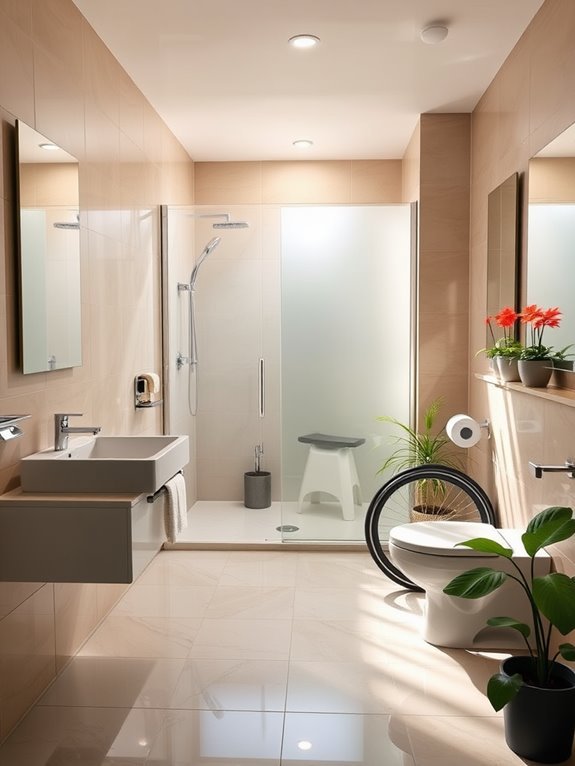
Creating an accessible bathroom requires at least 5 feet of turning space for wheelchair users. This space guarantees smooth navigation and safety. By planning your layout wisely, you can avoid obstacles and enhance usability. Here’s a quick reference table for ideal turning space:
| Feature | Recommended Size | Purpose |
|---|---|---|
| Turning Radius | 5 feet | Easy maneuvering |
| Door Width | 32 inches | Accessibility |
| Clear Path Width | 36 inches | Unobstructed movement |
Slip-Resistant Mats
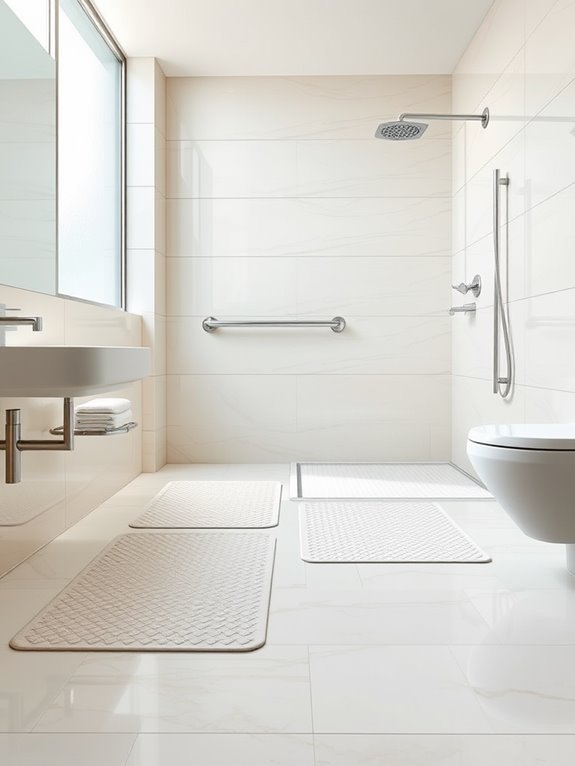
When designing a wheelchair accessible bathroom, incorporating slip-resistant mats is essential for ensuring safety.
These mats provide stability and help prevent accidents. Here are three key benefits to contemplate:
- Enhanced Traction: Reduces the risk of slipping on wet surfaces.
- Comfort: Cushions your feet while standing or transferring.
- Easy Maintenance: Most mats are machine washable and durable.
Wall-Mounted Toiletries
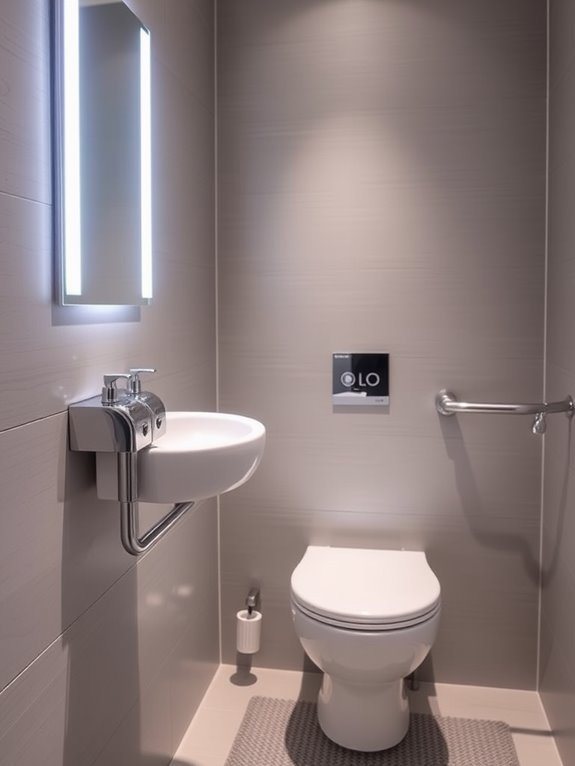
Incorporating wall-mounted toiletries in a wheelchair accessible bathroom can greatly enhance both functionality and independence.
By installing shelves, soap dispensers, and towel racks at accessible heights, you’ll find it easier to reach your essentials.
This setup not only saves space but also minimizes clutter, making your bathroom more organized and user-friendly.
Enjoy the convenience of having everything within arm’s reach!
Easy-Access Storage
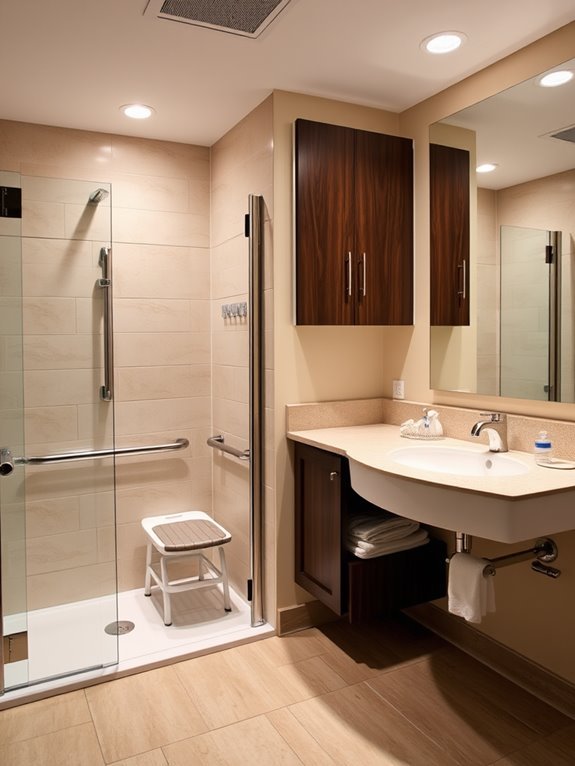
Easy-access storage is essential for maximizing convenience in a wheelchair accessible bathroom.
You want to guarantee that all your toiletries and essentials are within easy reach.
Consider incorporating:
- Pull-out shelves for easy access to items.
- Open shelving to keep frequently used products visible.
- Lowered cabinets that allow you to reach everything without straining.
These features make daily routines smoother and more efficient.
Conclusion
Creating an accessible bathroom isn’t just about meeting needs; it’s about weaving comfort and independence into everyday life. With wide doorways welcoming you like open arms and roll-in showers that embrace freedom, each feature plays a crucial role. Grab bars stand like sturdy friends, and non-slip flooring guarantees safety beneath your feet. By incorporating these essential elements, you transform a space into a sanctuary—where every moment flows smoothly, and every visit feels like a gentle reminder of your strength.
