
Which Walls to Paint in a Room? Design Tips
Start with the largest, most visible wall to set the room’s tone and make cutting in easier, then pick an accent wall that frames a focal point like the bed, sofa, or a reading nook. Factor in light, sightlines, scale and function — use stronger hues in well-lit areas and softer tones in shadowed spots, match finishes to traffic, and test swatches near seating. Keep harmony with furnishings and trim, and keep going for deeper tips.
Quick Answer : Walls to Paint First
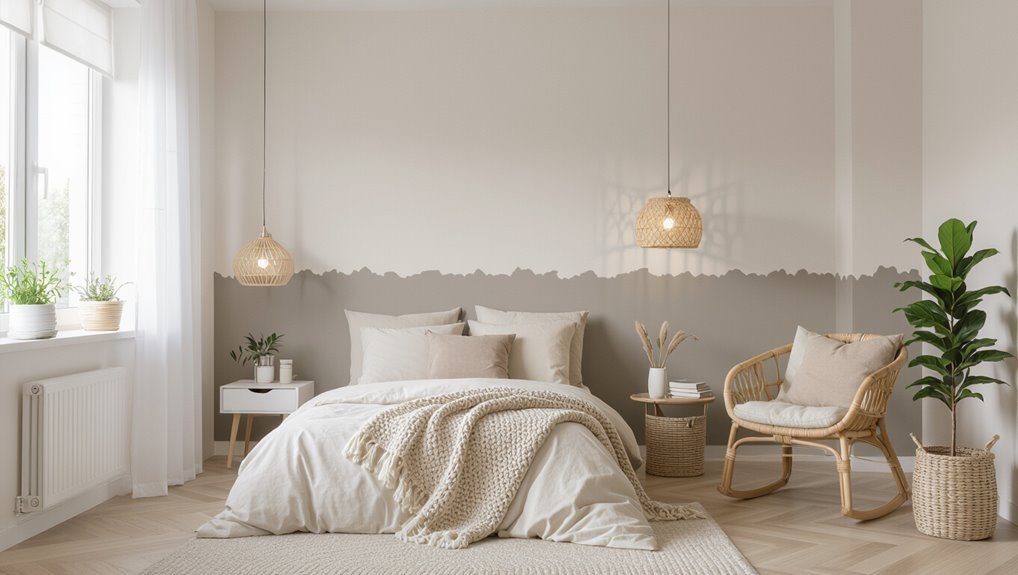
Start with the largest, most visible walls first—you’ll set the room’s tone and make cutting in around doors and windows easier.
You’ll consider Room Function and Mood Setting to choose Accent Colors that support activity and comfort.
Balance Color Harmony across surfaces, think about Texture Play and Surface Finishes to add depth, and use Visual Flow to guide sightlines toward focal points.
Stay aware of Design Trends but prioritize Personal Style so the space feels yours.
Factor Seasonal Changes for lighting shifts that alter perception.
Paint those prominent walls first, then tackle secondary planes to maintain consistency and control.
A Simple Framework for Choosing Walls
Pick three guiding criteria—function, focal point, and light—to quickly decide which walls to paint. You’ll assess how each wall supports activities, directs attention, and interacts with natural or artificial light.
Choose walls that enhance color harmony with furnishings and finishes, and consider wall textures that change perceived depth. Paint walls that frame key functions—reading nooks, media areas, or workspace—while leaving less important surfaces neutral.
Use stronger hues where light boosts vibrancy, and softer tones where shadows fall. This framework keeps choices purposeful: prioritize usability, visual focus, and illumination to make confident, cohesive painting decisions.
How to Pick a Focal Wall
Which wall grabs your eye the moment you enter the room? You’ll choose a focal wall by balancing focal wall colors with wall texture options to suit room size impacts and avoid overpowering small spaces.
Consider wall paint finishes for sheen and durability, and weigh visual weight considerations so heavier hues anchor rather than crowd.
Apply color harmony principles to tie the focal wall to surrounding surfaces. Plan accent wall placement near seating or architectural features.
Coordinate wall art integration and test lighting effects analysis to guarantee visibility.
Experiment with wall pattern combinations subtly to add interest without competing with the room.
Evaluating Light, Sightlines, and Scale
How does light move through your room, and how will that affect the paint you choose? You’ll assess light intensity and color temperature at different times and note seasonal changes that shift mood.
Consider sightlines and spatial perception: low ceilings benefit from lighter hues, long walls can bear stronger visual weight.
Match wall texture and paint finish to room function and furniture arrangement so surfaces read consistently.
Use color harmony to tie focal points and secondary walls to your personal style.
Test swatches near seating and walkways to guarantee balanced light, scale, and movement before committing to a full wall paint.
When to Paint the Wall Behind Bed or Sofa?
Think about painting the wall behind your bed or sofa when you want a clear focal point that ties the room together.
Consider balance and proportion so the color or pattern complements furniture size and keeps the space from feeling top-heavy.
Also weigh practical factors like natural light, wear from contact, and how often you’ll want to update the look.
Focal Point Accent
A painted wall behind your bed or sofa can immediately anchor the room and give your layout a clear focal point. Choose it when you want to direct attention, define a zone, or add mood without rearranging furniture.
When you pick a focal wall, use color psychology to influence mood setting: deep hues feel cozy, while light tones expand spatial perception.
Combine accent colors and wall textures for feature highlights and tactile interest. Follow design principles to guarantee color harmony and subtle contrast so the focal wall complements nearby elements.
This approach creates impact while preserving overall visual balance and cohesion.
Balance And Proportion
After you’ve picked a focal wall behind your bed or sofa, consider balance and proportion so the accent doesn’t overwhelm the room.
You’ll gauge scale: a bold wall needs furniture and artwork that match its size to avoid disproportion. Use color harmony to tie the accent to surrounding walls, textiles, and rugs so shifts feel intentional.
Mind visual weight—deep or saturated hues pull focus, so balance them with lighter opposite walls or mirrored elements.
If the room’s layout is asymmetrical, offset the heavy wall with grouped lighting or tall plants.
Aim for equilibrium so the accent enhances, not dominates.
Practical Considerations
When you decide whether to paint the wall behind your bed or sofa, weigh practical factors like sunlight, furniture placement, and daily use so the finish stays attractive and functional.
Consider wall textures and how they hide wear; smoother surfaces suit bold color trends, textured ones handle darker tones.
Match paint finishes to traffic: washable sheens for busy areas, matte for low-traffic mood setting.
Assess room dimensions and light effects before introducing wall patterns or dramatic color combinations.
Coordinate paint types with existing design styles and upholstery, and plan for maintenance where sunlight fades or contact points need frequent cleaning.
Which Wall to Paint to Make a Room Look Larger
To make a room feel bigger, paint the farthest wall a lighter shade than the others so it visually pushes the space back.
You can also add vertical accent stripes on that wall to draw the eye upward and boost perceived height.
Try these together for a simple, effective illusion of more space.
Paint Farthest Wall Light
Want a quick, simple trick to make your room feel bigger? Paint the farthest wall light. You’ll use the farthest wall strategy to push visual depth, making the room recede and appear more spacious.
Choose a soft, pale hue with good reflectance; natural and artificial light bounce better, amplifying light wall benefits. Keep adjacent walls slightly warmer or darker to preserve contrast without closing the space.
This approach works whether the far wall has a window or artwork—lighter paint reduces visual weight and draws the eye outward. It’s an easy, cost-effective way to expand perceived space.
Use Vertical Accent Stripes
Try painting one wall with vertical accent stripes to make your room feel taller and more open. Use vertical stripe techniques like varying widths and spacing to create height illusions without overwhelming the space.
Choose accent stripe colors that complement your palette and try stripe pattern variations—narrow, wide, or alternating—for visual interest.
Consider stripe finishes options (matte or satin) and wall texture effects when taping and sealing.
Follow stripe placement tips: center on focal walls, align with windows or door frames, and balance by pairing with decor that echoes stripe tones.
You’ll transform proportions with confident, intentional stripes.
Adding Depth in a Narrow Room
When a room feels cramped, paint can visually stretch it: painting the long walls a lighter, cooler shade and the short end walls a slightly darker or warmer tone pulls the eye along the length, creating depth.
Use color contrast and color harmony to enhance depth perception while respecting room proportions and visual balance.
Consider wall textures and design cohesion so finishes read consistently. Boost spatial awareness with lighting that emphasizes planes.
Try these simple tactics:
- Paint long walls in cool, pale hues.
- Use a warmer accent on short ends.
- Add subtle texture on focal walls.
- Keep trim and ceiling light for continuity.
Paint the Wall Opposite the Entry to Draw the Eye
If you paint the wall opposite the entry in a bolder or more saturated color, you’ll create an immediate focal point that pulls people into the room and sets the tone for the space.
Choose a hue that complements existing finishes so your entryway impact feels intentional, not jarring.
Position artwork, a console, or a light fixture to reinforce that focus without crowding it. That painted wall guides visual flow, leading the eye across seating or circulation paths.
Keep surrounding walls lighter to emphasize contrast, and test samples at different times of day to guarantee the color reads as you intend.
Highlighting Architectural Features With Paint
Beyond choosing a focal wall, use paint to celebrate the room’s built-in character. You’ll amplify architectural accents and create feature focus by pairing color contrasts with texture highlights.
Consider historical elements—trim, molding, arches—and use paint techniques that respect period detail while boosting visual interest and room flow.
- Paint trim slightly lighter or darker for subtle spatial awareness.
- Use glaze or wash to reveal molding depth.
- Accent niches or door surrounds to anchor sightlines.
- Tie accents into a palette to guarantee design cohesion.
Choose tones that guide the eye and reinforce the room’s structure.
Emphasizing Built-Ins and Shelving
If you want your built-ins to stand out, paint their borders a shade that frames them against the wall.
You can coordinate the border color with the main wall hue for a seamless look, or pick a contrasting paint for the shelves themselves to create depth.
Either approach will make your shelving feel intentional and visually striking.
Highlight Built-In Borders
When you want built-ins or shelving to stand out, paint their borders a contrasting or complementary shade so the architecture reads clearly against the wall plane; this frames the unit, draws the eye to its function, and turns storage into a deliberate design element.
You’ll be accentuating features and enhancing depth without overworking the room.
Try these focused moves:
- Define trim with a darker hue to create visual punctuation.
- Use a subtle contrast for a refined, built-in look.
- Paint internal shelves lighter to make contents pop.
- Add a glossy finish on borders for durability and subtle shine.
Coordinate With Wall Color
After framing built-ins with a contrasting border, coordinate their interior and surrounding wall color so the unit feels integrated rather than pasted on. You’ll pick hues that promote color harmony between shelves, back panels, and nearby walls, avoiding jarring shifts.
Match or gently vary saturation to keep focus on objects, not paint. Consider wall texture: a matte backdrop softens displays, while subtle grain or plaster adds depth that complements wood or metal shelving.
Test swatches at different times of day and view with your furniture. That way built-ins read as intentional architecture, not an afterthought.
Use Contrasting Shelving Paint
Contrast draws the eye, so paint your built-ins a different shade than the surrounding walls to make shelves read as purposeful features rather than background.
You can use contrasting colors to highlight niches, frame collections, or calm busy rooms. Pick finishes that suit shelving styles—matte for subtlety, gloss for drama.
Consider scale and lighting so the contrast feels intentional.
- Choose a palette that complements main wall color.
- Test swatches under room light before committing.
- Use trim color to tie shelves to architecture.
- Keep hardware and accessories consistent to unify the look.
Painting Around Windows and Doors
Because trim and glazing interrupt smooth wall surfaces, painting around windows and doors calls for a steadier hand and a few careful steps to get crisp lines and even coverage.
You’ll prep by cleaning surfaces, sanding rough spots, and applying painter’s tape to protect window treatments and hardware.
Use an angled brush for trim accents and tight corners, cutting in before you roll adjacent walls.
Consider how door colors and surrounding walls interact with architectural features so contrasts look intentional.
Work in thin coats, feather edges for seamless blends, and remove tape while paint’s tacky to avoid peeling for professional results.
How Floors and Ceilings Change Wall Choices
Your floor’s tone will affect which wall colors feel balanced, so you’ll want to coordinate warm or cool hues accordingly.
Remember that ceiling height and color change how a room reads—lighter ceilings open a space while darker ones make it cozier.
Don’t forget baseboards and trim: contrasting them against walls can define edges and tie floors and ceilings together.
Floor Tone Coordination
Floors and ceilings shape how paint reads on your walls, so consider their tones before picking a color. You’ll balance wall choices with floor texture, floor patterns, floor color and floor materials to keep harmony.
Think about floor finishes and floor styles to set mood, then use floor accents to add interest. Match or contrast thoughtfully based on floor contrasts and floor designs tied to room function and floor themes.
- Use warm walls with warm floors for cohesion.
- Choose cool walls to calm busy floor patterns.
- Dark floors need lighter walls for balance.
- Test samples in varied light.
Ceilings Influence Perception
Just as you considered how floor tones guide wall color, look up—ceilings change how paint reads and how a room feels.
You’ll pick ceiling colors to enhance height perception: pale, reflective tones lift a low room; darker, warmer hues cozy a cavernous space.
Consider texture effects and light reflection—matte absorbs, gloss bounces light and alters color warmth.
Intentional ceiling designs, like beams or coffers, add visual depth and direct focus, so match wall choices accordingly.
Because the ceiling influences mood, test samples under real light before committing, ensuring cohesion between walls, floors, and overhead treatments.
Baseboard And Trim Contrast
Because baseboards and trim frame the floor-to-ceiling composition, their contrast with walls can either sharpen or soften a room’s overall palette.
You’ll use baseboard colors and trim styles to create visual hierarchy and accentuating details. Consider:
- Paint trim bright for crisp architectural impact.
- Match trim tones for subtle color shifts and design cohesion.
- Use contrasting finishes to highlight moldings without overwhelming surfaces.
- Introduce texture contrasts—wood, matte, or gloss—to add depth while keeping style consistency.
Choose combinations that respect floors and ceilings, so walls read clearly and the room feels balanced and intentional.
Using Paint to Accent Trim and Wainscoting
Painting trim and wainscoting lets you define a room’s lines and add contrast without repainting every wall; choose a shade that either complements your wall color for subtle refinement or contrasts sharply to create a striking, architectural look.
Use trim accents and wainscoting highlights to establish visual hierarchy and emphasize architectural detailing.
Trim accents and wainscoting highlights create visual hierarchy, drawing attention to and celebrating architectural details.
Pick paint texture and finish selection carefully—semi-gloss for durability, matte for subtlety—to balance maintenance with look.
Apply decorative borders to frame panels, ensuring style cohesion and design continuity throughout adjoining rooms.
Test samples under different light, then commit to the combination that best supports your room’s purpose.
Choosing Walls in Open-Plan Living Areas
Which walls should you treat as distinct zones in an open-plan living area? You’ll decide which walls anchor open plan zones by evaluating layout impact and desired space delineation.
Choose walls that support color flow and visual shift to preserve flow continuity. Aim for wall harmony to maintain design cohesion and aesthetic unity across sightlines.
Consider area balance so one painted wall doesn’t overwhelm the plan.
Practical picks:
- The wall behind the main seating to define the living zone.
- The wall opposite dining to create a gentle visual shift.
- A kitchen back wall to reinforce function without breaking cohesion.
- A hallway wall to guide flow.
Which Wall to Paint to Define Zones in Studios
In a studio, pick one anchor wall to give each function a clear visual home and make furniture arrangement feel intentional.
Use a contrasting paint color or accent stripe to act as a color divider between living, sleeping, and work zones. That simple change will help you read the space at a glance and keep areas feeling distinct without physical barriers.
Anchor Wall For Function
Pick the wall that naturally faces the room as your anchor—it’s the backdrop that will define each zone in a studio without adding furniture.
You’ll use functionality focus and anchor aesthetics to guide wall selection for clear functional zones. Consider design impact and room dynamics to achieve visual emphasis and practical usage.
- Choose a wall opposite entry for instant style statement and orientation.
- Paint behind the bed or sofa to signal private or social zones.
- Use color coordination to link kitchen or work areas cohesively.
- Keep adjacent walls neutral so the anchor remains prominent and functional.
Divider Through Color
After anchoring a focal wall for function, you can use color to carve out separate zones in a studio without building walls.
Use color theory to assign purpose: warm hues for social areas, cool tones for sleeping or working spots. Paint the back wall of a bed nook a richer shade, or give a kitchenette a durable, lighter tone to reflect light.
Mix finishes—matte sleeping alcoves, satin cooking walls—to contrast wall textures and signal changes. Keep a cohesive palette so spaces feel connected.
Use rugs, lighting, and art to reinforce painted dividers and maintain flow.
Walls to Paint in Small Bedrooms for Coziness
When you want a small bedroom to feel snug, choose warm, muted tones that wrap the space without overwhelming it. You’ll use cozy colors to create color harmony and mood setting, balancing bedroom accents and wall textures so the room feels layered, not cluttered.
Focus on paint finishes that reflect light gently and support space optimization. Maintain design flow by painting the focal wall deeper and keeping adjacent walls lighter.
- Pick a warm focal wall.
- Use matte or eggshell finishes.
- Add textured accents sparingly.
- Keep trim and ceiling soft contrast.
Preventing Cavernous Feel in Large Rooms
If a large room risks feeling cavernous, bring it down to scale by introducing warmer, mid-tone colors on at least one or two walls and anchoring the space with layered textiles and furniture groupings that create cozy zones.
You’ll combat a cavernous atmosphere by choosing a cohesive color palette and adding cozy textures through soft furnishings and rugs.
Use strategic lighting—floor lamps, sconces, and dimmers—to focus areas and enhance mood enhancement.
Position furniture placement to form intimate arrangements, hang wall art to add visual interest, and highlight architectural elements with trim or paint to make the room feel deliberately scaled.
Balancing Asymmetrical Rooms With Color
Large-scale rooms benefit from color choices that create intimate zones, and you can apply that same thinking to rooms with uneven proportions.
Use color to achieve asymmetrical balance and restore aesthetic flow by adjusting visual weight through strategic color placement. Focus on color harmony to support overall room dynamics and meaningful color zones.
Use color to balance visual weight and restore flow, creating harmonious zones through strategic placement.
Consider:
- Anchor a larger wall with deeper hue to counterbalance heavy furniture.
- Paint a smaller wall in accent tone to create spatial illusion of depth.
- Use mid-tones across sightlines for emotional impact and cohesion.
- Blend patterns subtly to reinforce design principles without chaos.
How Light Direction Affects Wall Choice
When you choose which wall to paint, consider the light source wall first since it receives the most direct illumination and will show color truest.
Painting the opposite accent wall can add depth and balance when natural light comes from one side.
Also think about a slightly warmer or brighter window-facing hue to keep the room feeling lively without overpowering the space.
Light Source Wall
Because natural and artificial light change how paint reads, consider the wall that gets the most direct light first.
You’ll use light reflection techniques and wall color psychology to decide whether to highlight or soften that surface. Ask how morning, midday, and evening light alter tone.
- Face the brightest wall with your boldest color to energize the room.
- Use lighter shades on sunlit walls to amplify brightness and perceived space.
- Pick warmer hues where warm light dominates to maintain balance.
- Reserve deep, matte finishes for walls that receive indirect or minimal light to prevent flatness.
Opposite Accent Wall
One smart move is to paint the wall opposite your main light source as the accent—this lets you control how color reads by catching reflected light rather than direct glare.
When you choose that wall, test swatches at different times so the hue stays balanced under indirect illumination.
Use color contrast to make furniture and art pop without fighting harsh highlights.
Consider texture layering—matte paint absorbs light, satin reflects softly—so combine finish and textiles for depth.
Position mirrors or light-colored floors to gently bounce light back, enhancing the accent without creating hotspots, and keep the rest of the room subdued.
Window-Facing Hue
Choose walls that face your windows with their light direction in mind, since sunlight shifts color temperature and intensity throughout the day and changes how paint reads.
You’ll choose hues that work with natural light effects and room mood influences. Consider window treatment colors and texture pairing tips to balance glare and depth.
Think about color psychology insights and seasonal color trends when planning. Coordinate lighting fixture coordination and wall art considerations for cohesion.
- Test swatches at different times.
- Match treatments to peak light.
- Use finishes that soften contrast.
- Reassess by season for best results.
Walls to Paint When Natural Light Is Limited
If your room gets little natural light, paint choices can make it feel brighter and more spacious. You’ll prioritize color selection that maximizes light reflection—soft whites, warm neutrals, and pale pastels—and use paint finishes strategically. Consider wall textures to add depth without absorbing light; subtle sheen boosts reflection. Balance color contrast for space definition while maintaining visual harmony. Tailor choices to room purpose, choosing mood enhancement through warmer or cooler tones. Use lighter accent walls to open sightlines and avoid heavy, dark expanses.
| Strategy | Effect |
|---|---|
| Light finishes | Increase light reflection |
| Subtle textures | Add depth without darkening |
| Pale accents | Define space with contrast |
Picking Walls Based on Room Function
Which walls should you emphasize to match how the room will be used? You’ll pick walls that support room ambiance and functional aesthetics, using color symbolism and texture contrast to guide mood enhancement and space perception.
Consider:
- Focal wall behind seating to boost mood enhancement and visual continuity.
- Wall supporting work areas for functional aesthetics and design cohesion.
- Accent beside windows to adjust space perception with seasonal changes in light.
- Gallery or display wall to allow personal expression while maintaining texture contrast.
Plan paint to balance room ambiance, color symbolism, design cohesion, and visual continuity for practical, expressive results.
Walls to Paint in Kitchens and Dining Rooms
When you paint kitchens and dining rooms, focus on walls that balance appetite-boosting color, practical splatter resistance, and sightlines that connect cooking and eating zones.
Paint kitchen and dining walls to boost appetite, resist splatter, and maintain clear sightlines between cooking and dining.
You’ll pick a kitchen color that energizes cooking while choosing dining room accents that calm conversation.
Define functional zones with durable wall finishes near stoves and moisture-prone areas, and softer textures where meals linger.
Use texture contrasts and seasonal palettes to shift mood setting across the year, keeping color harmony between spaces for smooth design flow.
Consider light reflections when positioning bold hues so surfaces read true and dining feels inviting.
Walls to Paint in Bathrooms and Powder Rooms
Bathrooms and powder rooms benefit from paint choices that handle moisture, resist stains, and set the room’s mood without overwhelming the small space.
You’ll pick bathroom colors with moisture considerations and durable paint finishes, balancing tile compatibility and decor coordination.
Consider lighting effects and space perception to keep small rooms airy or intimate. Explore texture options and wall treatments for personality without clutter.
- Use semi-gloss or satin for splash zones.
- Paint accent wall behind vanity for depth.
- Match grout and tile tones for cohesion.
- Test swatches under real light before committing.
Walls to Paint in Home Offices for Focus
After handling moisture-prone spaces like bathrooms, you’ll want to rethink color and finish for a home office where focus matters.
Choose focus enhancing colors like muted blues, soft greens, or warm neutrals on three walls, leaving one accent wall in a deeper tone to ground the room without distraction. Use matte or eggshell finishes to reduce glare.
Add subtle productivity boosting patterns—thin stripes, textured wallpaper, or a small geometric mural—on the accent wall or behind your desk to guide attention.
Keep contrasts gentle, trim minimal, and lighting adjustable so your painted choices support sustained concentration.
Walls to Paint in Kids’ Rooms and Playrooms
Think about using a bold accent wall to add energy or define a play zone without overwhelming the whole room.
Choose durable, washable paints and finishes so you can wipe off crayon marks and frequent scuffs.
You’ll get a playful, practical space that grows with your child.
Accent Wall Ideas
Want a quick way to spark imagination and define play zones? Use an accent wall to balance room themes and personal preferences while keeping style consistency.
Choose bold colors or unexpected patterns for mood enhancement and artistic expressions. Consider textured finishes for tactile interest and seasonal changes to refresh the space. Follow color trends selectively so the room stays playful yet timeless.
- Paint a mural matching room themes.
- Use stripes or geometric unexpected patterns.
- Apply subtle textured finishes near reading nooks.
- Swap accent hues with seasonal changes for variety.
Durable, Washable Finishes
When kids test boundaries with markers, mud, or sticky hands, choose paints that stand up to scrubbing and wear so your walls keep looking fresh; washable, durable finishes let you clean messes without stripping color or sheen. You’ll pick family friendly choices emphasizing paint durability and color longevity. Focus on surface preparation, then select finish options—satin or semi-gloss—for washable surfaces and easier wall maintenance. Consider texture variety to hide imperfections. Test swatches for finish sheen. Below is a quick comparison to guide choices.
| Feature | Recommendation |
|---|---|
| Best sheen | Satin/Semi-gloss |
| Cleaning | Mild detergent |
| Prep needed | Prime, repair |
| Hides marks | Light texture |
| Longevity tip | Quality paint |
Walls to Paint in Hallways and Transitions
Hallways and passage spaces set the tone between rooms, so you’ll want to treat their walls as connectors rather than afterthoughts: Use hallway colors and linking techniques to guide movement, emphasize wall continuity, and create visual connections.
Consider accent placements that highlight doorways without overpowering color flow. Define space with contrast or subtle shifts to support corridor themes and avoid jarring breaks.
- Use a unifying hue for wall continuity to link rooms.
- Add accents near openings to signal linkages.
- Vary finish or saturation for subtle space definition.
- Maintain color flow to reinforce visual connections and calm movement.
Using Stripes, Blocks, and Color Blocking
After guiding movement between rooms with unified hues and subtle shifts, you can use stripes, color blocks, and strong geometric sections to add rhythm and personality to walls. You’ll pick stripe patterns or block designs to create visual interest and playful contrasts, balancing color harmony with bold combinations. Focus on accent placement to anchor furniture, and use texture layering to soften hard edges. Test proportions with samples and consider scale for your room.
| Pattern Type | Best Use | Tip |
|---|---|---|
| Stripes | Height illusion | Thin vs wide |
| Blocks | Feature wall | Anchor seating |
| Color block | Modern staging | Palette test |
| Geometric | Focal drama | Scale carefully |
When Two Painted Walls Work Better Than One
If you want to define a space without overwhelming it, painting two adjacent walls creates balance and direction while keeping the room open.
You’ll use an accent color on linking walls to frame seating or a bed, creating wall harmony without boxing the room in. Choose tones that read cohesive from multiple angles and keep adjoining walls lighter.
Consider these quick tips:
Consider these quick tips to harmonize two painted walls for balanced, open, and cohesive rooms.
- Place two painted walls where natural sightlines meet.
- Use a deeper accent color on the shorter wall pair.
- Maintain trim and ceiling contrast for crisp edges.
- Test samples to guarantee harmony in different light.
Which Wall to Paint for Gallery and Art Displays
Pick a focal wall to anchor your gallery—usually the longest uninterrupted wall or the one you face when entering the room.
Consider how light and contrast will affect each piece, choosing paint that enhances detail without washing out colors.
Arrange frames with consistent spacing and varied sizes to create rhythm and keep sightlines balanced.
Focal Wall Choice
When you’re choosing a focal wall for a gallery or art display, prioritize visibility and context: pick the wall people see first when they enter, one with enough uninterrupted space to let pieces breathe, and a surface that complements—not competes with—the artwork.
Choose focal wall materials and consider focal wall textures that enhance pieces. Explore focal wall colors, patterns, and themes to support your vision.
Think about focal wall shapes and focal wall designs that accommodate frames or sculptural works. Match focal wall styles to the room. Balance focal wall ideas with subtle focal wall lighting to highlight without overpowering the art.
- Assess sightlines
- Size pieces to wall
- Keep spacing consistent
- Test color samples
Lighting And Contrast
Having chosen a focal wall, turn your attention to how lighting and contrast will make artwork sing: natural and artificial light change perceived color and texture, so pick a wall that gets consistent, controllable illumination and offers the right backdrop contrast to your pieces.
You’ll use lighting techniques to balance contrast effects and encourage pleasing shadow play without glare. Consider color temperature and ambient influences—warm bulbs soften whites, cool ones sharpen tones.
Aim for daylight simulation when true color’s essential, and plan surfaces for subtle light reflection. Choose paint hues that support hue harmony with your art and room lighting.
Frame Arrangement Tips
Start by choosing a wall that gives your frames room to breathe and consistent sightlines—ideally a flat, unobstructed surface at eye level where you can group pieces without crowding corners or architectural interruptions.
Use frame styles and frame sizes to create visual balance and theme coordination. Consider color themes and texture variations to tie art placement to decor choices. Plan gallery layouts with measured wall spacing.
- Arrange by size then refine placement.
- Mix textures; repeat a color theme.
- Keep consistent spacing for visual balance.
- Anchor groups with a focal piece for cohesive art placement.
Contrasting vs Complementary Wall Choices
Curious which approach will make your room pop: contrasting or complementary walls? You’ll weigh contrasting colors against complementary hues to control visual interest and mood influence.
Use color psychology to set tone—bold contrasts energize, harmonized complements soothe—while keeping design harmony and aesthetic balance in mind.
Think about spatial perception: darker contrasts can recede or define, softer complements expand.
Consider wall texture and an accent strategy to add depth without clutter.
Decide whether you want a focal statement or a tranquil backdrop, then test swatches in different light.
That focused plan will guide confident, cohesive choices.
Matching Painted Walls to Furniture and Rugs
Start by anchoring the room with a feature wall that echoes a dominant tone in your furniture.
Let the rug’s hues guide accent choices so everything feels coordinated.
If your pieces are warm, counterbalance with a cool wall (or vice versa) to keep the space balanced.
Anchor With A Feature Wall
A feature wall can instantly ground a room by echoing the tones of your furniture and rug. So pick one focal surface that carries a stronger, slightly deeper version of a dominant color already in the space.
Use a feature wall to increase color impact and guide visual flow, balancing texture contrast with smoother adjacent walls. Consider paint finish and wall proportions to tune spatial perception and room harmony.
For an effective accent strategy:
- Choose the dominant hue and deepen it slightly.
- Test finishes in natural light.
- Add textured elements sparingly.
- Keep remaining walls neutral for design cohesion.
Coordinate With Rug Tones
Once you’ve anchored the room with a feature wall, let the rug guide your broader color decisions—its woven tones already map the palette and can tie furniture and walls together. You’ll use rug color coordination to pick complementary tones for paint, balancing rug texture influence with surface finishes. Match accent rug harmony to upholstery through rug pattern selection and rug style pairing, so rug and wall speak the same language. Focus on color relationship and visual flow to create cohesive design elements. Use the quick guide below to compare rug tones, textures, and suggested wall treatments.
| Rug Tone | Texture | Wall Tip |
|---|---|---|
| Warm beige | Plush | Soft warm-neutral paint |
| Deep blue | Flatweave | Muted blue-gray accent |
| Muted green | Low pile | Soft earthy green |
Balance Warm And Cool
While you balance warm and cool tones, let furniture and rugs set the room’s temperature so paint supports rather than competes with them.
You’ll achieve color harmony by reading dominant undertones and choosing paint that complements, not overpowers. Use warm cool contrast to add depth without clashing.
- Sample paint next to upholstery and rug in different lights.
- Pick a neutral wall hue that leans warm or cool to echo textiles.
- Use an accent wall when warm cool contrast feels too bold.
- Tie finishes (wood, metal) into the palette to maintain consistent color harmony throughout the space.
Budget-Friendly Wall-Painting Strategies
Start by prioritizing which walls will give you the biggest visual impact for the least cost: pick one or two focal walls to paint and leave the rest neutral, so you cut paint and labor while still transforming the room.
Under budget constraints, choose cost effective materials and simple paint finishes that suit existing wall textures to avoid expensive prep. Use DIY techniques—rolling, cutting in, and small patching—to save labor.
Smart color selection stretches impact: darker or accent hues on a single wall read richer. Include temporary solutions if needed and set a clear planning timeline to control spending and disruption.
Temporary Options: Peelable Paints and Wallpapers
If you want a short-term change, peelable paints give you easy removal and fewer surface worries.
You can also pick from lots of temporary wallpaper styles to match your room’s mood without commitment.
I’ll cover quick removal tips and simple care so you don’t damage the wall when it’s time to switch things up.
Peelable Paint Pros
Peelable paint gives you the look of a fresh coat without the commitment, letting you change colors or patterns in days instead of months.
You’ll appreciate peelable paint benefits like low-residue removal and minimal surface prep, and its easy application means projects finish fast.
It’s ideal if you rent, like frequent updates, or want a trial run before a permanent color.
- Temporary: removes cleanly without damage.
- Fast redo: recoat or change in hours.
- Low mess: reduced fumes and splatter.
- Trial-friendly: test bold choices without long-term risk.
Temporary Wallpaper Styles
When you want big pattern impact without long-term commitment, temporary wallpaper gives you bold looks that peel off cleanly when you’re ready for a change. Vinyl, fabric-backed, and self-adhesive paper come in everything from subtle textures to graphic murals, so you can try scale, color, and repeat before deciding on something permanent.
You can mix vintage patterns with geometric designs or pair floral motifs and nature themes for accent walls. Look for textured finishes or metallic accents to add depth.
Removable decals add flexibility, child-friendly options keep playrooms safe, and minimalist styles suit modern spaces without overwhelming them.
Removal Tips And Care
After enjoying the flexibility of temporary wallpapers and bold peel-and-stick paints, you’ll want to know how to remove them cleanly and care for the walls afterward.
You can preserve surfaces by using gentle removal techniques and basic paint care. Follow steps below, testing a small area first and working slowly to avoid damage.
- Warm seams with a hair dryer and peel at a low angle to release adhesive.
- Use a soft scraper or fishing line for stubborn spots; avoid metal blades.
- Clean residue with mild detergent or adhesive remover, rinsing thoroughly.
- Repair nicks with light sanding, primer, and matching paint.
Which Paint Sheen for Focal Walls
Wondering which paint sheen will make your focal wall stand out without shouting for attention? You’ll balance focal wall colors and accent wall ideas by matching paint texture options to your room’s function and style.
Use sheen selection tips: low-sheen for subtle depth, satin for washable warmth, and eggshell to soften bold hues.
Apply color harmony strategies so finish and tone work together, and weigh visual weight considerations—higher sheen reads heavier and more modern.
Consider paint finish influences on durability, and anticipate light reflection effects that amplify color.
Choose sheen to enhance, not overpower, your chosen focal statement.
Preparing Walls to Avoid Painting Mistakes
Because a smooth, well-prepped wall is the foundation of a flawless paint job, you’ll want to clean, repair, and prime before you even open a can. Use these wall preparation tips to prevent problems and enable smooth application.
- Surface cleaning techniques: degrease, sand glossy spots, and remove dust.
- Patching imperfections: fill holes, sand, and inspect texture for consistency.
- Priming walls: choose primer for substrate and desired paint finish options.
- Selecting paint tools and color testing methods: test swatches, pick rollers/brushes for wall texture considerations and explore simple wall treatment ideas for focal impact.
Common Mistakes and How to Fix Them
While even careful painters run into issues, most common mistakes are easy to spot and fix if you know what to look for. You’ll face common pitfalls like poor color selection, wrong paint finishes, and ignoring room functionality. Fix by prioritizing color harmony and design coherence: balance accent strategies with texture contrast and watch light reflection to boost mood enhancement. Patch flaws, sand glossy spots, and choose finishes that fit use. If an accent overwhelms, repaint a smaller area or mute tones. Use lamps and textiles to adjust perceived color and texture, aligning aesthetics with practical needs.
| Emotional cue | Practical fix |
|---|---|
| Frustration | Patch, sand, retest |
| Regret | Limit accents, adjust finishes |
Testing Colors: Swatches and Sample Boards
Before you commit, test multiple swatches on different walls to compare how each color reads against the room’s features.
Check those samples at morning, afternoon, and evening to see how changing light alters the hue.
Make portable sample boards so you can move colors around and view them next to furniture and fabrics.
Test Multiple Swatches
Want to be sure a color really works? You’ll want to test multiple swatches across the room to evaluate swatch placement and how adjacent colors alter perception.
Do sample testing with varied color combinations and finish types to see texture effects and paint durability. Consider light reflection and mood influence without waiting for specific times.
Account for seasonal changes in daylight and bring furniture into the trial.
Try this checklist:
- Apply 3–4 large swatches on different walls.
- Note interactions with existing adjacent colors.
- Test matte, eggshell, and satin finishes.
- Inspect texture effects under artificial light.
Observe At Different Times
How will the color read at noon versus dusk? You should check swatches under different light variations to judge color temperature and mood enhancement. Note how wall textures shift tones and how seasonal changes alter perception. Consider room purpose, art placement, furniture layout, and design styles when observing. Track personal preferences across times and days.
| Time | Light Quality | Notes |
|---|---|---|
| Morning | Cool, indirect | |
| Noon | Bright, neutral | |
| Dusk | Warm, low |
Return later; compare notes and choose paint that stays true to purpose and preference.
Create Portable Sample Boards
When you’re ready to test paint beyond taped swatches, make portable sample boards you can move around the house to see colors under real conditions.
They’ll help you compare hues next to furniture, trim, and artwork without committing to a full wall. Use sample board materials like foam core or plywood for durable, portable display solutions.
Practice quick sample application and color swatch comparison on each board, and try color layering methods to see depth.
- DIY sample creation steps for consistent sizing.
- Paint finish selection and texture exploration tips.
- Size consideration tips for sightlines.
- Visual testing techniques for placement.
Layering Color: Base, Accent, Trim, Ceiling
Although it might seem simple to pick one color and paint every wall, layering color—choosing a base, an accent, trim, and ceiling—gives your room structure and visual interest while guiding how light and furniture read the space.
Use color theory and layering techniques to select a base that anchors the room and an accent that highlights architectural or furniture features.
Choose a grounding base color, then layer a contrasting accent to highlight architecture and key furnishings.
Balance color harmony with contrasting color combinations and complementary paint finishes.
Consider wall textures when placing highlights.
Apply design principles to guarantee visual balance: trim and ceiling should coordinate, accentuating features without overwhelming, supporting overall mood setting and cohesion.
Color Psychology: Pick Walls to Set Mood
Now that you’ve layered base, accent, trim, and ceiling to shape the room’s look, think about how those colors will make you feel day to day.
Use color meanings and color associations to guide choices; note psychological effects and emotional impact so the room atmosphere supports your routines.
Aim for color harmony and color balance for comfortable mood enhancement and theme consistency.
Consider sensory experience: saturation, lightness, and contrast change perception.
Try this checklist:
- Calming: soft blues, muted greens.
- Energizing: warm yellows, bright corals.
- Neutral grounding: beiges, greys.
- Focus: deep blues, moss greens.
Changing Wall Choices When Staging to Sell
If you’re staging to sell, rethink bold personal choices and pick colors that appeal to a broad buyer pool: neutral, light tones make spaces look larger, brighter, and easier to imagine as someone else’s home.
You’ll choose staging colors that follow buyer psychology—soft neutrals and warm grays—to create inviting spaces and emotional resonance.
Use neutral palettes for main walls, then apply strategic contrasts with subtle accent choices to define focal points and improve room flow.
Keep visual appeal aligned with market trends, declutter, and test lighting.
These moves help buyers picture themselves living there and move offers faster.
When to Repaint: Signs Your Color Isn’t Working
How do you know when a paint color has stopped working for a room? Watch how color perception and mood influence daily use: if the hue clashes with room function or personal style, it’s a sign.
- Colors that upset color harmony or create heavy visual weight despite good paint longevity.
- Shades that reveal texture effects or flaws under changing light.
- Tones that feel stale as seasonal changes or color trends shift.
- Paint that no longer supports activities, mood, or resale goals.
When these occur, repainting restores balance, aligns function and feeling, and refreshes your space.
Quick Decision Checklist: Which Walls to Paint Today
Which wall should you tackle first? Use this quick checklist: face the room and pick the wall that greets you — it sets the tone.
Consider paint color: choose a hue that complements furniture and lighting.
Check wall texture; smoother walls reflect light differently than textured ones, affecting finish choice.
Prioritize walls with damage, stains, or heavy wear.
If you want a focal point, select the wall behind a bed, sofa, or fireplace.
For small rooms, paint all walls the same light color; for drama, paint one accent wall darker.
Gather tools, test a swatch, then start with the chosen wall.
Frequently Asked Questions
Can Textured Paint Hide Wall Imperfections Effectively?
Yes — you can hide many imperfections with textured paint; you’ll use texture techniques and careful paint application to mask minor flaws, but deep cracks or uneven surfaces need repair first for a long-lasting, professional-looking finish.
How Does Mold or Moisture Affect Paint Choices for Walls?
Mold and moisture force you to choose mold resistant coatings and avoid moisture absorbing paints in damp areas; you’ll practically need armor-grade finishes, you’ll pick mildew-resistant primers, proper ventilation, and breathable, water-repellent paints to protect surfaces.
Are There Voc-Free Paints Suitable for Nurseries?
Yes — you can choose VOC-free paints for nurseries; you’ll find eco friendly options labeled zero-VOC or VOC-free, prioritizing nursery safety, natural ingredients, low odor, and third-party certifications to minimize irritants and fumes.
How Long Should Painted Walls Cure Before Hanging Heavy Items?
You should wait about two weeks for paint drying and surface cure before hanging heavy items; guarantee proper wall preparation, cleaning, and using anchors suitable for the wall type so paint and substrate won’t crack or pull away.
Can Color-Changing/Thermochromic Paints Be Used on Interior Walls?
Yes — they work indoors, though they behave like mood-shifting chameleons: you’ll balance color psychology with careful application techniques, test adhesion and light exposure, and expect limited durability, temperature range constraints, and occasional touch-ups.
Conclusion
You’ve got the paintbrush now—trust your eye and pick the wall that wants the spotlight. Let light be your compass, sightlines your roadmap, and the biggest wall your stage. A bold focal wall can sing while softer hues hum, and changing mood or market is just a repaint away. When colors crack, fade, or fight the room, listen and redo. Paint isn’t permanent poetry—it’s a fresh stanza you can rewrite.
