
Why Does Paint Feel Sticky After It Dries?
If your paint still feels sticky after it seems dry, it’s usually because the surface skinned while solvents or curing reactions underneath are still finishing. High humidity, cold, poor ventilation, incompatible primer, contaminants, old or slow-curing formulations, or added retarders can all slow curing. You can speed drying with ventilation and warmth, test tackiness gently, or sand and recoat when safe. Keep going and you’ll find practical tests, fixes, and when to call a pro.
Quick Fixes When Paint Feels Sticky Now
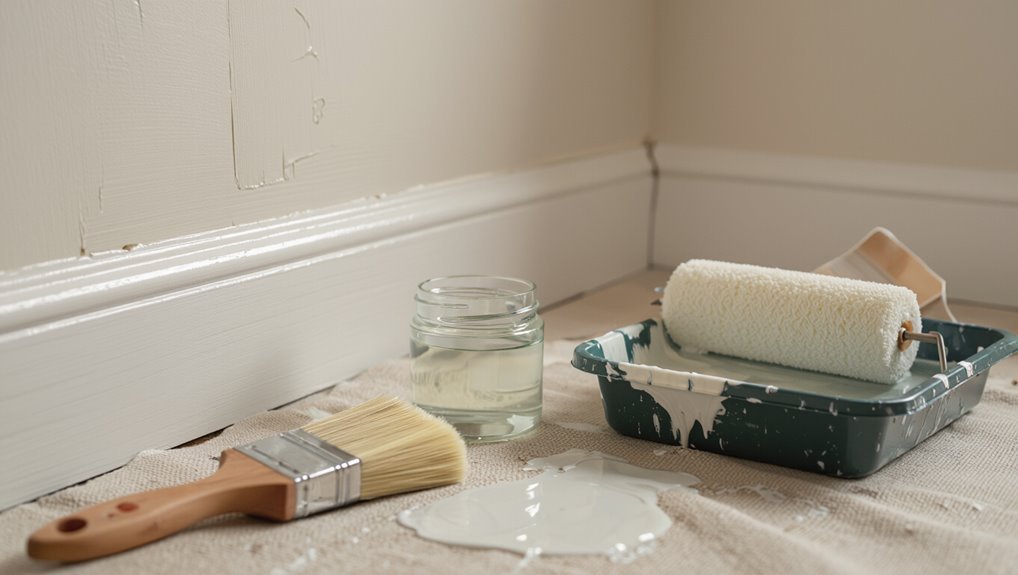
If your paint still feels tacky, don’t panic—there are a few fast steps you can try right now to speed drying and remove stickiness.
You can adjust environmental factors: increase airflow, lower humidity, and raise temperature slightly to help drying techniques work.
Check application methods; thin coats dry faster than thick ones.
Apply paint in thinner, even coats — they dry quicker and reduce tackiness compared to thick, heavy layers.
Remove surface contaminants with a gentle wipe once paint’s surface skins over.
Consider compatible paint additives or curing agents for future jobs, but don’t mix blindly now.
For immediate fixes, use a hairdryer on low and wait before light finishing touches to avoid trapping moisture.
Dry vs Cured: When Paint Is Touch-Dry vs Fully Hardened
Although the paint may feel dry to the touch within hours, that doesn’t mean it’s fully cured; touch-dry simply means the surface skin has formed, while curing is a deeper chemical hardening that can take days to weeks.
You’ll notice distinct drying stages: tacky, touch-dry, and hard; each reflects solvent evaporation and initial polymer bonding.
The curing process continues after the surface seems ready, involving cross-linking or oxidation depending on paint type.
If you handle or stress the film too soon, you’ll deform or pick up residue.
Be patient—full hardness develops over time, improving durability and chemical resistance.
Can You Recoat or Sand Tacky Paint Safely?
Wondering whether you can recoat or sand paint that still feels tacky? You can, but follow safe practices: identify the paint types and whether curing agents are active.
For light tack, use gentle recoat methods—wait longer or apply a compatible topcoat.
For firmer tack, employ cautious sanding techniques with fine grit to avoid damage, then clean before recoating.
Consider tacky solutions like accelerator additives only if compatible.
Plan layering strategies to prevent trapping solvents.
Perform finish assessments after a small test patch.
If uncertain, let curing complete or consult manufacturer guidance to avoid adhesion or finish failures.
Simple Test to Identify Why Paint Is Tacky
Before you start sanding or reapplying anything, run a quick hands-on check to pinpoint why the paint feels tacky.
Lightly press a clean finger into an inconspicuous spot: note tacky texture, stickiness, or transfer. Smell for solvent odor—strong scent suggests incomplete chemical drying.
Touch several areas to compare surface feel; consistent tackiness implies formulation or insufficient drying time, while isolated spots point to contamination or poor adhesion.
Press a piece of clear tape, then peel—residue indicates uncured film.
Record conditions and wait additional drying time if needed before intervening. These simple steps help diagnose the root cause efficiently.
Humidity and Tacky Paint: Why Paint Stays Sticky
When humidity’s high, paint can stay sticky because moisture interferes with the solvent evaporation and chemical curing that harden the film.
When humidity’s high, paint stays tacky as moisture slows solvent evaporation and prevents proper chemical curing.
You’ll notice humidity effects quickly: high moisture levels slow drying conditions and reduce paint adhesion to substrates.
That weather impact means environmental factors like sustained damp or poor air circulation prevent solvents from leaving and reactive polymers from linking.
When you plan a paint application, check humidity forecasts and improve ventilation so coatings can set.
If you rush recoating or paint during soggy conditions, tackiness persists, attracts dust, and undermines finish durability, forcing rework once conditions improve.
Temperature: How Cold or Hot Affects Drying
If the air’s too cold, paint’s solvents and water evaporate slowly and the chemical reactions that harden the film stall, leaving a tacky surface; conversely, extreme heat can make solvents flash off too fast, trapping unreacted resins and causing blistering or a brittle finish.
You’ll notice temperature impact immediately: drying dynamics shift with thermal factors and surface temperatures. Cold influence slows cure, while heat effects accelerate evaporation but can undermine film formation.
Consider climate considerations and seasonal variations when scheduling painting so you don’t fight conditions that promote stickiness.
Monitor thermostat and choose formulations rated for the expected temperature range.
Poor Ventilation and Sticky Paint : What to Do
Poor ventilation traps solvent and moisture vapors, slowing evaporation and keeping paint tacky longer than it should, so you’ll want to improve airflow right away to speed curing. Open windows, run fans, and consider temporary exhaust to boost air circulation. Check surface conditions and adjust application techniques; thin coats dry faster. Use approved paint additives or drying agents sparingly, testing compatibility. Account for environmental factors and plan project timing for drier periods. If tackiness persists, gently wipe with recommended solvent and re-evaluate ventilation before recoating.
| Action | Benefit |
|---|---|
| Open windows | More air circulation |
| Use fans | Faster solvent removal |
| Exhaust | Removes moist air |
| Thin coats | Better curing |
| Test additive | Avoid finish issues |
Paint Thickness: Why Heavy Coats Stay Tacky
If you slap on a heavy coat, you’ll create excessive film build that can trap solvents and slow evaporation.
That thicker layer keeps lower layers from fully curing, so the surface stays tacky even after it seems dry.
Apply thinner, even coats and give each layer time to dry to prevent incomplete curing.
Excessive Film Build
Think of paint as layers of plastic: when you apply heavy coats, the film gets so thick that solvents can’t escape quickly, and the surface stays tacky long after it looks dry. You’ll notice film thickness, application techniques, drying conditions, paint types, surface materials, environmental factors, product quality, finish sheen, layering methods, and drying aids all affect cure. Adjust technique and thin coats to avoid excess build. Use compatible products and follow recoat times. Monitor humidity and temperature. If tack persists, sand and remove excess, then reapply thin layers. Below is a quick comparison:
| Issue | Fix |
|---|---|
| Thick film | Thin coats |
| Wrong sheen | Match product |
| Poor quality | Upgrade |
| Bad conditions | Control environment |
Slowed Solvent Evaporation
Because solvents have to travel from deep within the wet film to the surface, heavy coats trap those volatile compounds and slow evaporation, so the paint feels tacky even after the surface seems dry.
You’ll notice solvent balance and evaporation rates vary with paint types and paint chemistry; thick layers extend drying times.
Environmental factors and climate impacts—humidity, temperature, airflow—alter how drying agents work.
Poor application techniques or low product quality magnify tackiness, especially on problematic surface conditions.
To avoid this, apply thinner coats, allow extended airing between layers, choose suitable drying agents, and match product specs to your climate.
Incomplete Curing Layers
Solvent hang-ups aren’t the only reason a thick paint film stays sticky: the chemistry that cures the coating can’t finish when layers are too heavy.
You’ll notice that curing reactions—oxidation, coalescence, or crosslinking—need oxygen, heat, or time; in a bulky film those factors get limited. That leads to incomplete curing, so the surface feels tacky and may attract dust.
Thick coats can also weaken paint adhesion because solvents trapped underneath keep the layer from bonding properly to the substrate.
To fix this, sand back, apply thinner coats, and allow proper drying conditions so curing can complete.
Solvents and Binders: What Evaporates and What Cures
You’ll notice that some solvents evaporate fast while others linger, and that affects how quickly the surface feels dry.
The binder needs time to crosslink and chemically cure, so even if the solvent’s gone the film can remain tacky.
High humidity slows solvent loss and can interfere with cure, so conditions matter as much as formulation.
Solvent Evaporation Rates
When paint feels tacky after drying, it’s usually because some ingredients evaporated faster than others—leaving behind slower‑moving binders or reactive components that still need to cure.
You should know solvent types (water, low‑VOC glycol ethers, mineral spirits) matter because each vaporizes at different rates.
Evaporation factors like temperature, humidity, air movement, film thickness, and solvent volatility change how quickly solvents leave the film. If fast solvents escape first, the surface skins over while deeper solvent lingers, causing tackiness.
You can reduce problems by adjusting ventilation, choosing appropriate solvents for conditions, and applying thinner coats for more uniform drying.
Binder Crosslinking Process
Although some ingredients evaporate away, binders stay behind and undergo chemical crosslinking to form the paint film you touch. This curing process links polymer chains into a woven network that gradually turns a liquid coating into a solid surface.
You’ll notice different binder types—acrylics, alkyds, epoxies—each cures via distinct crosslinking mechanisms: acrylics often air-dry and polymerize, alkyds oxidize and form peroxides, epoxies use chemical hardeners to create strong covalent bonds.
If curing is incomplete you’ll feel tackiness, since networks aren’t fully formed. Understanding binder types and crosslinking mechanisms helps you choose coatings that cure properly for your project.
Humidity And Cure
Because moisture in the air alters both solvent evaporation and binder chemistry, humidity plays a big role in whether paint cures fully or stays tacky.
You’ll notice high humidity slows solvent escape, dilutes surface concentration, and interrupts the curing process of binders that need dry conditions.
Low humidity can dry too fast, trapping solvents inside and preventing proper crosslinking.
You can influence outcomes by controlling ventilation and timing.
- You feel frustration when tackiness lingers.
- You worry about ruined finishes.
- You breathe easier with proper humidity control.
- You gain confidence by understanding humidity impact on curing process.
Painting Over Semi-Wet Layers: Trapped Moisture Explained
If you slap a new coat over paint that’s still tacky, you can trap moisture between layers and create a persistently sticky surface.
When you paint over semi-wet layers, solvents and water can’t evaporate properly, causing moisture trapping that delays cure. That trapped dampness weakens layer adhesion, so the topcoat may remain soft or tacky long after it looks dry.
Painting over semi-wet layers traps solvents and moisture, delaying cure and leaving the topcoat soft or persistently tacky.
To avoid this, wait recommended recoat times, test tack with a fingertip, and guarantee proper ventilation and temperature.
If you rush, you’ll force the system into a slow cure, risking sagging, blushing, and prolonged stickiness that’s hard to fix.
Incompatible Primer: How It Prevents Proper Drying
When you prime with a product that’s chemically mismatched to your topcoat, the primer can block solvent escape, interfere with cross-linking, or repel the finish so the paint never fully cures.
You’ll notice sticky areas when primer compatibility fails: wrong primer types, rushed primer application, or poor primer adhesion.
Smart primer selection prevents primer issues and preserves primer performance. Check labels, test small areas, and allow full primer drying before topcoating.
- You feel frustration when tacky spots ruin a finish.
- You regret skipping compatibility checks.
- You worry about wasted time and money.
- You breathe easier after proper selection.
Contaminants (Grease, Silicone) That Stop Curing
If you get grease on a surface before painting, it can block the chemical reactions that cure the paint and leave it tacky.
Even tiny traces of silicone contaminate the film and prevent proper adhesion and hardening.
You should clean and degrease thoroughly to stop these contaminants from ruining the finish.
Grease Blocking Curing
Someone’s finger oil or a stray smear of silicone can wreck a paint job by preventing the coating from curing properly.
You’ll notice tacky spots when surface contaminants block curing agents; grease interferes with paint additives and stops polymer networks forming.
Check paint types and drying conditions—temperature, humidity, and paint storage affect curing time.
Use proper grease removal before you apply, follow recommended application techniques, and control environmental factors to avoid sticky failures.
The frustration is real:
- You cleaned, but oil remained.
- The finish never hardened.
- Touch-ups spread the mess.
- Time and money wasted.
Silicone Surface Contamination
Though you might wipe a surface clean and still get tacky paint, invisible silicone contaminants are often to blame.
You’ll spot adhesion issues when paint beads or won’t cure despite correct curing agents. Identify contamination sources like polishes, release agents, or workshop lubricants.
For surface cleaning, use dedicated silicone removal solvents and follow product recommendations; don’t rely on water or detergents alone.
Practice prevention methods: avoid silicone-containing products near prep areas and use clean tools.
Test compatibility with paint compatibility checks and surface testing before full application.
Adjust application techniques and re-clean stubborn areas to restore proper curing and finish.
Old or Expired Paint: Signs It Won’t Dry
A few telltale signs will show when paint’s past its prime and won’t dry properly: it may smell sour or unusually strong, feel tacky even after hours, separate into watery and clumpy layers, or form a skin in the can.
If you suspect expired paint, check the can date and remember typical paint shelf life—stored poorly, it degrades faster.
Don’t gamble with a project; ruined finish and wasted time hurt. Trust your senses and discard doubtful cans.
- Frustration — tacky walls ruin mood.
- Regret — wasted money stings.
- Anxiety — missed deadlines.
- Relief — replace it and move on.
Oil-Based vs Latex: Why They Dry Differently
When you’re choosing paint, remember that oil-based and latex paints dry by different processes: oil-based cures through oxidation and crosslinking, while latex dries as water evaporates and the polymer particles fuse. You’ll notice oil based drying feels slower and can remain tacky longer as crosslinks form; latex drying is faster but can feel soft until coalescence completes. Understanding paint chemistry explains why tackiness varies and guides your expectations for drying times.
| Oil-Based Visual | Latex Visual |
|---|---|
| slow sheen | matte shift |
| amber tint | uniform film |
| hard finish | flexible feel |
| longer cure | quick dry |
Waterborne Alkyds/Hybrids: Reasons They Can Stay Tacky
Bridging the gap between traditional oil and latex, waterborne alkyds (and hybrid formulations) combine alkyd resins with waterborne carriers, so they both dry by water evaporation and cure by oxidative crosslinking.
You can still get tackiness when paint formulation, binder types, and curing agents aren’t balanced. Improper application techniques, high moisture levels, or wrong paint additives slow crosslinking.
Poor paint storage or incompatible surfaces spoil film formation. Environmental factors like low temperature and high humidity delay cure, leaving sticky spots.
- Frustration when tacky paint ruins your finish.
- Anxiety about wasted materials.
- Urgency to fix before damage.
- Relief after proper cure.
High-Solids or Low-VOC Paints: Drying Trade-Offs
If you choose high-solids or low-VOC paints, you’ll often get more pigment and binder per coat but a slower chemical cure.
That slower cure can leave tacky or residue-rich surfaces longer than conventional formulas.
You’ll want to balance the benefits of lower emissions against the chance of extended stickiness.
Higher Solids, Slower Cure
Because high-solids and low-VOC formulations pack more resin and less solvent, they cure more slowly than traditional paints. You’ll often notice a tacky feel long after the surface seems dry to the touch.
You’ll want to understand how high solids in a paint formulation change drying mechanisms: binder properties and paint additives slow solvent escape, altering surface tension and prolonging curing times.
Environmental factors and application techniques — thickness, temperature, humidity — amplify the effect. Different paint types behave differently, so adjust methods to avoid frustration.
- Anxiety at extended tackiness
- Impatience with slow cure
- Relief when informed
- Confidence to adapt
Low-VOC, More Residue
High-solids, low-VOC paints cut harmful emissions but leave more non-volatile residue on the surface, which can feel tacky as the binder continues to set. You’ll enjoy low voc advantages and reduced environmental impact, yet residue concerns mean you must adjust application techniques and monitor drying conditions. In product comparisons you’ll see trade-offs; user experiences often note longer tack times. For best results, use thin coats, keep airflow steady, and follow maintenance tips like gentle washing after full cure to remove surface film.
| Pros | Cons |
|---|---|
| Low VOC | More residue |
| Eco-friendly | Slower cure |
Additives and Retarders: Why They Lengthen Tack Time
When manufacturers add retarders or other additives to paint, they intentionally slow the chemical reactions that lead to surface drying.
So you’ll notice a longer tack time as the film forms more slowly. You’ll feel slight stickiness because additive effects change evaporation and polymer crosslinking rates.
Different retarder types—glycols, alcohols, or specialty solvents—delay skinning so you can work longer, but that leaves the surface soft.
You can avoid smudges by waiting longer, improving ventilation, or choosing formulations with fewer slow-acting agents.
Consider how each choice affects your project and patience.
- Frustration
- Relief
- Caution
- Satisfaction
Dark or Glossy Finishes: Why Stickiness Shows More
When you run your hand over a glossy or dark-painted surface, the sheen makes any tackiness stand out more than on a flat or light color.
Dark pigments and higher binder levels often concentrate in those finishes, which can slow cure and leave more residual stickiness.
Gloss Enhances Perceived Stickiness
A glossy or dark finish makes any tackiness more obvious because it reflects light and highlights surface irregularities. So you’ll notice sticky spots as bright streaks or dull patches against the sheen.
Higher gloss levels amplify tiny bumps and wet-looking areas, so you’ll instinctively touch to confirm. Gloss changes perceived texture, making smooth surfaces seem uneven when tacky. You’ll feel annoyance or worry if a fresh coat doesn’t cure evenly.
- You expect a flawless shine and feel disappointed.
- You dread fingerprints ruining the surface.
- You worry about dust trapping in wet spots.
- You want reassurance it’ll dry fully.
Pigment And Binder Concentration
Gloss can make tacky spots scream visually, but the real reason dark or shiny finishes show stickiness more often lies in what’s mixed into the paint: pigment and binder concentration.
You’ll notice pigment balance shifts color depth and can crowd binder, slowing cure. Binder properties determine film formation and tack; heavy binders feel sticky if drying agents aren’t matched in the paint formulation.
Poor layer interaction or rapid topcoats trap solvents, causing adhesion issues. Your application techniques and environmental factors—temperature, humidity—change evaporation and polymer crosslinking.
Control formulation, use proper drying agents, adjust layers, and apply correctly to minimize post-dry tack.
Interior vs Exterior Conditions That Change Drying
If you’re painting indoors, the room’s temperature, humidity, and ventilation will steer how fast the paint cures, while outdoor conditions like sun, wind, and sky humidity create a very different drying profile.
Understanding those contrasts helps you prevent tacky paint and plan the right timing for recoats. You’ll notice interior humidity slows cure, especially with water-based paint types, while exterior temperature and wind can flash-dry surfaces.
Consider paint composition, application techniques, surface materials, and seasonal impacts; environmental factors demand different schedules.
Adjust room ventilation or wait for mild exterior drying conditions to avoid sticky results.
- Anxiety over slow cures
- Relief from proper timing
- Frustration with tacky finishes
- Satisfaction after success
How Surface Prep and Cleaning Affect Final Drying
Beyond timing and environment, what you do to the surface before painting determines whether the finish dries hard or stays tacky. You should focus on surface preparation: remove grease, dust, and old loose paint with proper cleaning techniques so residue removal is complete. That improves paint adhesion and prevents tacky spots.
Consider substrate compatibility when choosing cleaners and primers; mismatches trap solvents and alter drying conditions. Remember environmental factors like humidity and temperature during prep and application methods—thin, even coats dry more reliably.
If you prep carefully and match materials, you’ll minimize sticky finishes and get a durable, properly cured surface.
When to Remove Tacky Paint and How to Do It Safely
Wondering whether you should wait or intervene when paint stays tacky? If tackiness causes worry, check cure time on the can and environmental factors first.
If it’s been beyond recommended drying, act carefully: protect skin, ventilate, and test a small area. Use gentle removal techniques—mild solvent or light sanding—only as needed to avoid damage.
If unsure, wait longer or consult a pro.
- Fear: you don’t want ruined finishes.
- Frustration: sticky surfaces disrupt use.
- Relief: safe removal restores function.
- Confidence: correct techniques prevent repeat problems.
Preventive Checklist for Your Next Paint Job
Before you open the can, plan the job so you avoid common causes of tacky paint: check the label for recommended temperature and humidity, pick the right primer and finish for your surface, and make certain the area is clean and well-ventilated.
Use preparation techniques that address surface conditions—clean, sand, and repair before you coat. Make careful paint selection and confirm product compatibility with primers and existing coatings.
Monitor environmental factors and set realistic drying expectations. Follow recommended application methods and timing strategies, maintain tools with equipment maintenance, and follow cleanup practices to prevent contamination and guarantee a smooth, non-tacky finish.
When to Blame the Paint Maker : Warranty and Returns
If your paint stays sticky after it should be dry, check the manufacturer’s warranty to see what defects are covered and for how long.
You’ll also want to confirm the return window limits so you don’t miss your chance to get a refund or replacement.
Keep receipts, photos, and application details handy because proof and documentation are usually required to make a successful claim.
Warranty Coverage Details
When paint stays tacky after the recommended dry time, check your warranty before assuming user error. Manufacturers often cover specific defects like formulation problems or improper curing instructions but exclude misuse or environmental causes.
You should read warranty limitations carefully so you know what’s covered, what documentation you need, and how paint return policies apply. If coverage fits, file a claim with photos and receipts. If denied, ask for a written explanation.
- You’ll feel relieved when a defect is acknowledged.
- You’ll feel frustrated if denied.
- You’ll feel empowered with clear proof.
- You’ll feel cautious about future purchases.
Return Window Limits
After checking warranty terms and preparing your claim, you’ll want to confirm the product’s return window so you know whether the maker can still be held responsible.
You should note purchase date, label claims, and how long returns are allowed for different coating types and paint composition. Returns often expire before long-term adhesion problems surface, so act fast if sticky finish appears.
Consider whether environmental factors or improper drying conditions, poor surface preparation, flawed paint application, or product compatibility issues likely caused the failure; if so, the maker may not accept liability.
Timely reporting within the return window strengthens your case.
Proof And Documentation Requirements
Because you’ll need solid evidence to trigger a warranty claim, gather clear before-and-after photos, the original receipt or order confirmation, and the product label showing batch or lot numbers.
You’ll want to follow documentation standards the manufacturer specifies and meet their proof requirements. Keep timestamps, environmental notes (temperature, humidity), and application details.
If possible, record short video clips showing stickiness and touch tests. Organize files so you can send a concise packet.
- Photos: damage and context
- Receipt: purchase proof
- Label: batch/lot info
- Notes: conditions, dates, testers
Signs It’s Time to Call a Professional Painter
If your freshly painted walls stay tacky for days, show bubbling, or keep peeling despite proper drying time, it’s a clear sign you should call a professional painter—especially if the problem affects large areas, multiple surfaces, or returns after attempts to fix it yourself.
You’ll want a professional assessment to identify causes like humidity, incompatible primers, or surface contamination. A pro will recommend corrective steps and use proven painting techniques to guarantee adhesion and proper curing.
Don’t keep reapplying paint; that wastes time and money. Call early to prevent mold, structural damage, or costly repaints.
Common Myths About Sticky Paint : Debunked
Once you call in a pro or start troubleshooting, you’ll likely hear a bunch of explanations for sticky paint—some accurate, some not. You’ll want clear answers, not assumptions.
Expect lots of explanations for sticky paint—some true, some not. Get clear answers, not assumptions.
Here are common sticky paint myths debunked so you won’t panic over paint drying misconceptions:
- “It’s always humidity” — sometimes, but not always; wrong prep or incompatible products can cause tackiness.
- “More dry time fixes everything” — not if chemistry is wrong.
- “All primers prevent stickiness” — only the right primer for your surface will help.
- “Touch-ups won’t show” — mismatched sheen and additives make flaws obvious.
Frequently Asked Questions
Can Sticky Paint Cause Mold or Mildew Growth on the Surface?
Yes — sticky paint causes a tacky, moisture-attracting surface that can encourage mold or mildew growth. You should dry and cure paint fully, fix humidity, and use proper mold prevention like biocidal additives or ventilation.
Is It Safe to Use Heat Guns to Speed up Tacky Paint Drying?
You can, but you shouldn’t rush: heat application with a heat gun can speed drying techniques, yet it risks blistering, softening, or emitting fumes, so you’ll prefer gentler ventilation, fans, or controlled warmth instead.
Will Sticky Paint Affect Adhesion of Wallpaper or Decals Later?
Yes — sticky paint can harm adhesion concerns; it’ll prevent wallpaper or decals from bonding properly, cause bubbling or peeling, and reduce wallpaper longevity, so you’ll want paint fully cured or remove/prime the surface before applying.
Can Pets or Children Get Chemical Exposure From Tacky-Painted Surfaces?
Yes — if paint stays tacky, you’re exposing kids or pets to chemical residues and potential surface toxicity; keep them away, ventilate, dry or remove the paint, and wash hands or paws to reduce ingestion or skin contact.
Do Colorants or Tints Increase the Likelihood of Tackiness?
Yes — certain colorant types can increase tackiness because they interact with paint formulations, altering drying and film formation; you’ll want compatible pigments and proper pigment load to avoid slower curing and sticky finishes.
Conclusion
Sticky paint’s frustrating, but you can often fix it without redoing the whole job. If it’s tacky from humidity or slow curing, increase ventilation and warmth; if it’s a bad mix or incompatible coats, you’ll need to sand and recoat. You might worry that sanding will ruin the finish—do it lightly and clean well, then apply a proper primer and topcoat. If problems persist, contact the manufacturer or hire a pro to avoid repeat mistakes.
